Escitalopram tablets should be administered once daily, in the morning or evening, with or without food.
Escitalopram tablets, USP are film-coated, round tablets containing escitalopram oxalate in strengths equivalent to 5 mg, 10 mg and 20 mg escitalopram base. The 10 and 20 mg tablets are scored. 5 mg tablets are debossed with '135' on one side and '5' on other side. 10 mg tablets are debossed with break line on one side, separating '11' and '36' on one side, and '10' on other side. 20 mg tablets are debossed with break line on one side, separating '11' and '37' on one side, and '20' on other side.
Dose Dependency of Adverse Reactions
The potential dose dependency of common adverse reactions (defined as an incidence rate of ≥5% in either the 10 mg or 20 mg escitalopram groups) was examined on the basis of the combined incidence of adverse reactions in two fixed-dose trials. The overall incidence rates of adverse events in 10 mg escitalopram-treated patients (66%) was similar to that of the placebo-treated patients (61%), while the incidence rate in 20 mg/day escitalopram-treated patients was greater (86%). Table 4 shows common adverse reactions that occurred in the 20 mg/day escitalopram group with an incidence that was approximately twice that of the 10 mg/day escitalopram group and approximately twice that of the placebo group.
TABLE 4 |
Incidence of Common Adverse Reactions in Patients with Major Depressive
Disorder |
Adverse Reaction | Placebo | 10 mg/day | 20 mg/day |
| (N=311) | Escitalopram | Escitalopram |
| | (N=310) | (N=125) |
Insomnia | 4% | 7% | 14% |
Diarrhea | 5% | 6% | 14% |
Dry Mouth | 3% | 4% | 9% |
Somnolence | 1% | 4% | 9% |
Dizziness | 2% | 4% | 7% |
Sweating Increased | <1% | 3% | 8% |
Constipation | 1% | 3% | 6% |
Fatigue | 2% | 2% | 6% |
Indigestion | 1% | 2% | 6% |
Male and Female Sexual Dysfunction with SSRIs
Although changes in sexual desire, sexual performance, and sexual satisfaction often occur as manifestations of a psychiatric disorder, they may also be a consequence of pharmacologic treatment. In particular, some evidence suggests that SSRIs can cause such untoward sexual experiences.
Reliable estimates of the incidence and severity of untoward experiences involving sexual desire, performance, and satisfaction are difficult to obtain, however, in part because patients and physicians may be reluctant to discuss them. Accordingly, estimates of the incidence of untoward sexual experience and performance cited in product labeling are likely to underestimate their actual incidence.
TABLE 5 |
Incidence of Sexual Side Effects in Placebo-Controlled Clinical Trials |
Adverse Event | Escitalopram | Placebo |
| In Males Only |
| (N=407) | (N=383) |
Ejaculation Disorder
(primarily ejaculatory delay) | 12% | 1% |
Libido Decreased | 6% | 2% |
Impotence | 2% | <1% |
| In Females Only |
| (N=737) | (N=636) |
Libido Decreased | 3% | 1% |
Anorgasmia | 3% | <1% |
There are no adequately designed studies examining sexual dysfunction with escitalopram treatment.
Priapism has been reported with all SSRIs.
While it is difficult to know the precise risk of sexual dysfunction associated with the use of SSRIs, physicians should routinely inquire about such possible side effects.
Vital Sign Changes
Escitalopram and placebo groups were compared with respect to (1) mean change from baseline in vital signs (pulse, systolic blood pressure, and diastolic blood pressure) and (2) the incidence of patients meeting criteria for potentially clinically significant changes from baseline in these variables. These analyses did not reveal any clinically important changes in vital signs associated with escitalopram treatment. In addition, a comparison of supine and standing vital sign measures in subjects receiving escitalopram indicated that escitalopram treatment is not associated with orthostatic changes.
Weight Changes
Patients treated with escitalopram in controlled trials did not differ from placebo-treated patients with regard to clinically important change in body weight.
Laboratory Changes
Escitalopram and placebo groups were compared with respect to (1) mean change from baseline in various serum chemistry, hematology, and urinalysis variables, and (2) the incidence of patients meeting criteria for potentially clinically significant changes from baseline in these variables. These analyses revealed no clinically important changes in laboratory test parameters associated with escitalopram treatment.
ECG Changes
Electrocardiograms from escitalopram (N=625) and placebo (N=527) groups were compared with respect to outliers defined as subjects with QT c changes over 60 msec from baseline or absolute values over 500 msec post-dose, and subjects with heart rate increases to over 100 bpm or decreases to less than 50 bpm with a 25% change from baseline (tachycardic or bradycardic outliers, respectively). None of the patients in the escitalopram group had a QT cF interval >500 msec or a prolongation >60 msec compared to 0.2% of patients in the placebo group. The incidence of tachycardic outliers was 0.2% in the escitalopram and the placebo group. The incidence of bradycardic outliers was 0.5% in the escitalopram group and 0.2% in the placebo group.
QT cF interval was evaluated in a randomized, placebo and active (moxifloxacin 400 mg) controlled cross-over, escalating multiple-dose study in 113 healthy subjects. The maximum mean (95% upper confidence bound) difference from placebo arm were 4.5 (6.4) and 10.7 (12.7) msec for 10 mg and supratherapeutic 30 mg escitalopram given once daily, respectively. Based on the established exposure-response relationship, the predicted QT cF change from placebo arm (95% confidence interval) under the C max for the dose of 20 mg is 6.6 (7.9) msec. Escitalopram 30 mg given once daily resulted in mean C max of 1.7-fold higher than the mean C max for the maximum recommended therapeutic dose at steady state (20 mg). The exposure under supratherapeutic 30 mg dose is similar to the steady state concentrations expected in CYP2C19 poor metabolizers following a therapeutic dose of 20 mg.
Other Reactions Observed During the Premarketing Evaluation of Escitalopram Tablets
Following is a list of treatment-emergent adverse events, as defined in the introduction to the ADVERSE REACTIONS section, reported by the 1,428 patients treated with escitalopram tablets for periods of up to one year in double-blind or open-label clinical trials during its premarketing evaluation. The listing does not include those events already listed in Tables 2 & 3, those events for which a drug cause was remote and at a rate less than 1% or lower than placebo, those events which were so general as to be uninformative, and those events reported only once which did not have a substantial probability of being acutely life threatening. Events are categorized by body system. Events of major clinical importance are described in the Warnings and Precautions section ( 5).
Cardiovascular - hypertension, palpitation.
Central and Peripheral Nervous System Disorders - light-headed feeling, migraine.
Gastrointestinal Disorders - abdominal cramp, heartburn, gastroenteritis.
General - allergy, chest pain, fever, hot flushes, pain in limb.
Metabolic and Nutritional Disorders - increased weight.
Musculoskeletal System Disorders - arthralgia, myalgia jaw stiffness.
Psychiatric Disorders - appetite increased, concentration impaired, irritability.
Reproductive Disorders/Female - menstrual cramps, menstrual disorder.
Respiratory System Disorders - bronchitis, coughing, nasal congestion, sinus congestion, sinus headache.
Skin and Appendages Disorders - rash.
Special Senses - vision blurred, tinnitus.
Urinary System Disorders - urinary frequency, urinary tract infection.
The following have been reported with escitalopram tablet overdosage:
- Seizures, which may be delayed, and altered mental status including coma.
- Cardiovascular toxicity, which may be delayed, incuding QRS, and QTc interval prolongation, wide complex tachyarrhythmias, and torsade de pointes. Hypertension most commonly seen, but rarely can see hypotension alone or with co-ingestants incuding alcohol.
- Serotonin syndrome (patients with a multiple drug overdosage with other proserotonergic drugs may have a higher risk).
Prolonged cardiac monitoring is recommended in escitalopram tablets overdosage ingestions due to the arrhythmia risk.
Gastrointestinal decontamination with activated charcoal should be considered in patients who present early after a escitalopram overdose.
Consider contacting a poison center (1-800-221-2222) or a medical toxicologist for overdosage management recommendations.
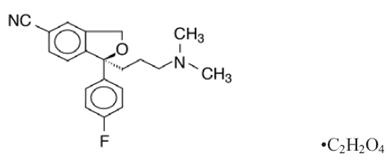
Escitalopram tablets contain escitalopram oxalate, an orally administered selective serotonin reuptake inhibitor (SSRI). Escitalopram is the pure S-enantiomer (single isomer) of the racemic bicyclic phthalane derivative citalopram. Escitalopram oxalate is designated S-(+)-1-[3-(dimethyl-amino)propyl]-1-( p-fluorophenyl)-5-phthalancarbonitrile oxalate with the following structural formula:
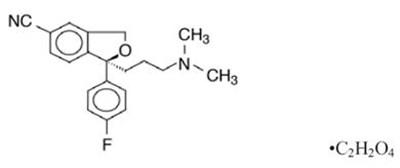
1 (Afe9596b 3231 4248 891c 5f2f9e6dd83a 01)
The molecular formula is C 20H 21FN 2O • C 2H 2O 4 and the molecular weight is 414.40.
Escitalopram oxalate, USP occurs as a fine, white to slightly-yellow powder and is freely soluble in methanol and dimethyl sulfoxide (DMSO), soluble in isotonic saline solution, sparingly soluble in water and ethanol, slightly soluble in ethyl acetate, and insoluble in heptane.
Escitalopram oxalate, USP is available as tablets for oral administration.
Escitalopram tablets, USP are white to off-white, round, biconvex, film-coated tablets containing 6.38 mg, 12.75 mg and 25.55 mg escitalopram oxalate in strengths equivalent to 5 mg, 10 mg, and 20 mg, respectively, of escitalopram base. The 10 and 20 mg tablets are scored. The tablets also contain the following inactive ingredients: cellulose microcrystalline, colloidal silicon dioxide, croscarmellose sodium, magnesium stearate, povidone and talc. The film coating contains hypromellose, polyethylene glycol 400 and titanium dioxide.
Meets USP Dissolution Test 2.
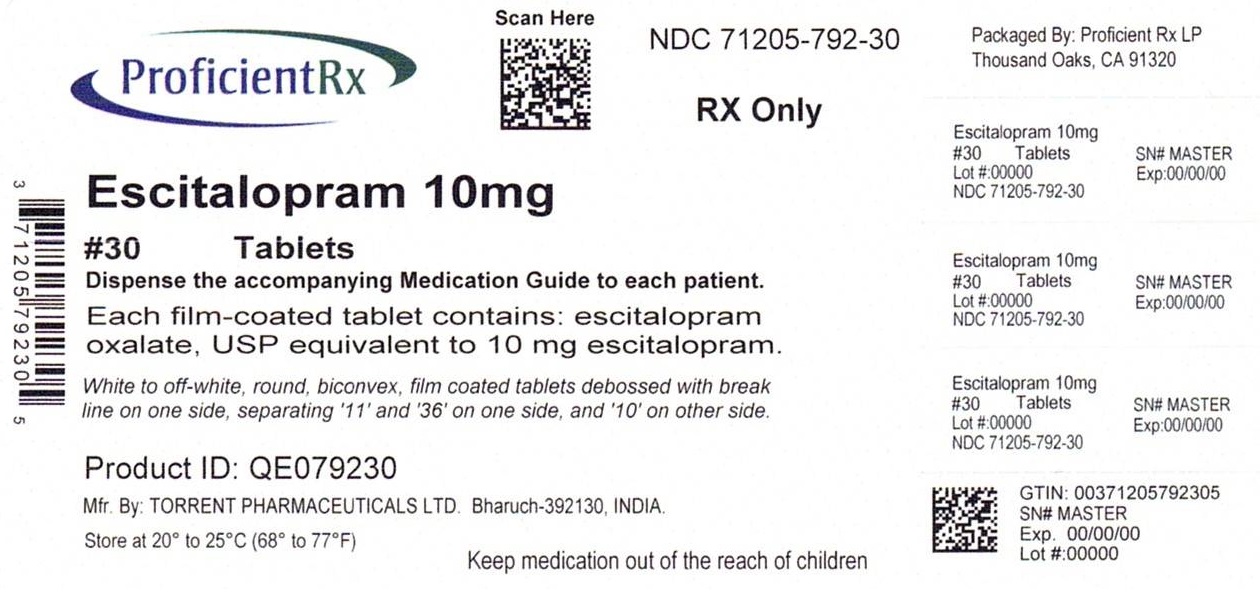
Escitalopram tablets, USP 10 mg are white to off-white, round, biconvex, film coated tablets debossed with break line on one side, separating '11' and '36' on one side, and '10' on other side.
Bottles of 30 NDC 71205-792-30
Bottles of 60 NDC 71205-792-60
Bottles of 90 NDC 71205-792-90
Storage and Handling
Store at 20° to 25°C (68° to 77°F); excursions permitted to 15° to 30°C (59° to 86°F) [see USP Controlled Room Temperature].
See FDA-approved Medication Guide
Advise the patient to read the FDA-approved patient labeling (Medication Guide).
Suicidal Thoughts and Behaviors
Advise patients, their families and caregivers to look for the emergence of suicidal ideation and behavior, especially during treatment and when the dose is adjusted up or down, and instruct them to report such symptoms to their healthcare provider [see Boxed Warning and Warnings and Precautions ( 5.1)].
Serotonin Syndrome
Patients should be cautioned about the risk of serotonin syndrome with the concomitant use of escitalopram with other serotonergic drugs including triptans, tricyclic antidepressants, fentanyl, lithium, tramadol, tryptophan, buspirone, amphetamines and St. John’s Wort, and with drugs that impair metabolism of serotonin (in particular, MAOIs, both those intended to treat psychiatric disorders and also others, such as linezolid) [see Warnings and Precautions ( 5.2)].
Activation of Mania or Hypomania
Advise patients and their caregivers to observe for signs of activation of mania/hypomania and instruct them to report such symptoms to the healthcare provider [see Warnings and Precautions ( 5.5)].
Abnormal Bleeding
Patients should be cautioned about the concomitant use of escitalopram and NSAIDs, aspirin, warfarin, or other drugs that affect coagulation since combined use of psychotropic drugs that interfere with serotonin reuptake and these agents has been associated with an increased risk of bleeding [see Warnings and Precautions ( 5.7)].
Angle Closure Glaucoma
Patients should be advised that taking escitalopram tablets can cause mild pupillary dilation, which in susceptible individuals, can lead to an episode of angle closure glaucoma. Pre-existing glaucoma is almost always open-angle glaucoma because angle closure glaucoma, when diagnosed, can be treated definitively with iridectomy. Open-angle glaucoma is not a risk factor for angle closure glaucoma. Patients may wish to be examined to determine whether they are susceptible to angle closure, and have a prophylactic procedure (e.g., iridectomy), if they are susceptible [see Warnings and Precautions ( 5.9)].
Sexual Dysfunction
Advise patients that use escitalopram may cause symptoms of sexual dysfunction in both male and female patients. Inform patients that they should discuss any changes in sexual function and potential management strategies with their healthcare provider [see Warnings and Precautions ( 5.11)] .
Concomitant Medications
Since escitalopram is the active isomer of racemic citalopram (Celexa), the two agents should not be coadministered. Patients should be advised to inform their physician if they are taking, or plan to take, any prescription or over-the-counter drugs, as there is a potential for interactions.
Continuing the Therapy Prescribed
While patients may notice improvement with escitalopram tablets therapy in 1 to 4 weeks, they should be advised to continue therapy as directed.
Interference with Psychomotor Performance
Because psychoactive drugs may impair judgment, thinking, or motor skills, patients should be cautioned about operating hazardous machinery, including automobiles, until they are reasonably certain that escitalopram tablets therapy does not affect their ability to engage in such activities.
Alcohol
Patients should be told that, although escitalopram has not been shown in experiments with normal subjects to increase the mental and motor skill impairments caused by alcohol, the concomitant use of escitalopram and alcohol in depressed patients is not advised.
Pregnancy
Advise pregnant women to notify their healthcare providers if they become pregnant or intend to become pregnant during treatment with escitalopram tablets.
Advise patients that escitalopram use later in pregnancy may lead to increased risk for neonatal complications requiring prolonged hospitalization, respiratory support, tube feeding, and/or persistent pulmonary hypertension (PPHN) of the newborn [see Use in Specific Populations ( 8.1)].
Advise women that there is a pregnancy exposure registry that monitors pregnancy outcomes in women exposed to escitalopram during pregnancy [see Use in Specific Populations ( 8.1)].
Lactation
Advise breastfeeding women using escitalopram to monitor infants for excess sedation, restlessness, agitation, poor feeding and poor weight gain and to seek medical care if they notice these signs [see Use in Specific Populations ( 8.2)].
Need for Comprehensive Treatment Program
Escitalopram tablets are indicated as an integral part of a total treatment program for MDD that may include other measures (psychological, educational, social) for patients with this syndrome. Drug treatment may not be indicated for all adolescents with this syndrome. Safety and effectiveness of escitalopram in MDD has not been established in pediatric patients less than 12 years of age. Antidepressants are not intended for use in the adolescent who exhibits symptoms secondary to environmental factors and/or other primary psychiatric disorders. Appropriate educational placement is essential and psychosocial intervention is often helpful. When remedial measures alone are insufficient, the decision to prescribe antidepressant medication will depend upon the physician’s assessment of the chronicity and severity of the patient’s symptoms.

Logo (Afe9596b 3231 4248 891c 5f2f9e6dd83a 02)
Manufactured by:
TORRENT PHARMACEUTICALS LTD., INDIA.
Manufactured for:
TORRENT PHARMA INC., Basking Ridge, NJ 07920
Repackaged by:
PROFICIENT RX LP
Thousand Oaks, CA 91320
8092207 Revised: March 2023