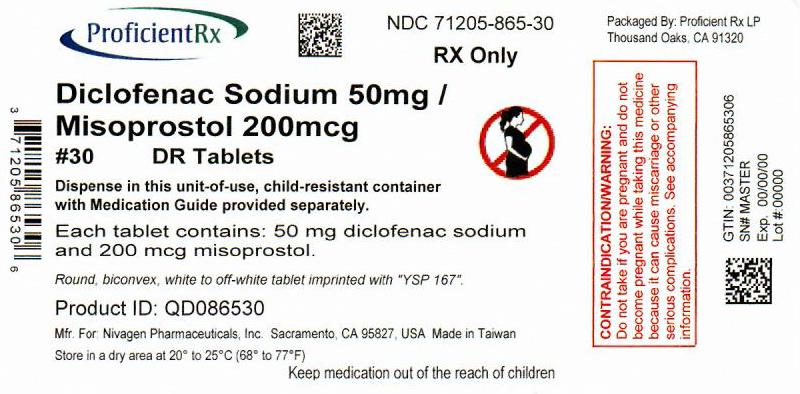
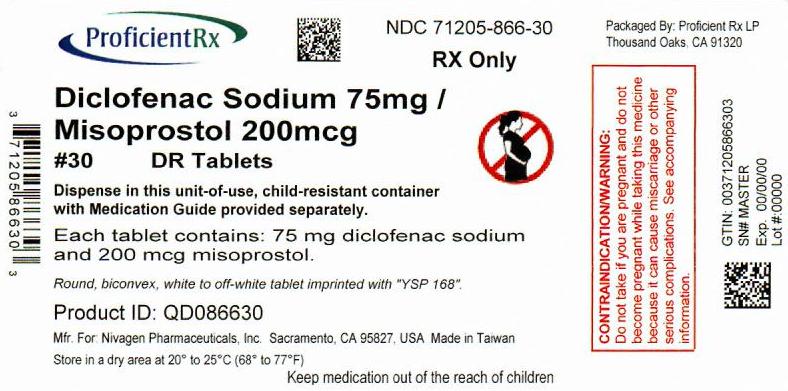
Long-term administration of NSAIDs has resulted in renal papillary necrosis and other renal injury. Renal toxicity has also been seen in patients in whom renal prostaglandins have a compensatory role in the maintenance of renal perfusion. In these patients, administration of an NSAID may cause a dose-dependent reduction in prostaglandin formation and, secondarily, in renal blood flow, which may precipitate overt renal decompensation. Patients at greatest risk of this reaction are those with impaired renal function, dehydration, hypovolemia, heart failure, liver dysfunction, those taking diuretics and ACE inhibitors or ARBs, and the elderly. Discontinuation of NSAID therapy is usually followed by recovery to the pretreatment state.
No information is available from controlled clinical studies regarding the use of diclofenac sodium and misoprostol delayed-release tablets in patients with advanced renal disease. The renal effects of diclofenac sodium and misoprostol delayed-release tablets may hasten the progression of renal dysfunction in patients with pre-existing renal disease.
Correct volume status in dehydrated or hypovolemic patients prior to initiating diclofenac sodium and misoprostol delayed-release tablets. Monitor renal function in patients with renal or hepatic impairment, heart failure, dehydration, or hypovolemia during use of diclofenac sodium and misoprostol delayed-release tablets [see Drug Interactions (7)]. Avoid the use of diclofenac sodium and misoprostol delayed-release tablets in patients with advanced renal disease unless the benefits are expected to outweigh the risk of worsening renal function. If diclofenac sodium and misoprostol delayed-release tablets are used in patients with advanced renal disease, monitor patients for signs of worsening renal function.
Increases in serum potassium concentration, including hyperkalemia, with use of NSAIDs, even in some patients without renal impairment. In patients with normal renal function, these effects have been attributed to a hyporeninemic-hypoaldosteronism state.
Misoprostol during pregnancy can result in maternal and fetal harm.
NSAIDs, including diclofenac, increase the risk of premature closure of the fetal ductus arteriosus at about 30 weeks of gestation and later.
- Use of NSAIDs, including diclofenac, at about 20 weeks gestation or later in pregnancy may cause fetal renal dysfunction leading to oligohydramnios and, in some cases, neonatal renal impairment. These adverse outcomes are seen, on average, after days to weeks of treatment, although oligohydramnios has been infrequently reported as soon as 48 hours after NSAID initiation. Oligohydramnios is often, but not always, reversible with treatment discontinuation. Complications of prolonged oligohydramnios may, for example, include limb contractures and delayed lung maturation. In some postmarketing cases of impaired neonatal renal function, invasive procedures such as exchange transfusion or dialysis were required [see Use in Specific Populations (8.1)].
Gastrointestinal
GI disorders had the highest reported incidence of adverse reactions for patients receiving diclofenac sodium and misoprostol delayed-release tablets. These events were generally minor, but led to discontinuation of therapy in 9% of patients on diclofenac sodium and misoprostol delayed-release tablets and 5% of patients on diclofenac sodium. For GI ulcer rates, [see Clinical Studies (14)].
| GI disorder | Diclofenac Sodium and Misoprostol Delayed-Release Tablets | Diclofenac Sodium |
|---|
Abdominal pain | 21% | 15% |
Diarrhea | 19% | 11% |
Dyspepsia | 14% | 11% |
Nausea | 11% | 6% |
Flatulence | 9% | 4% |
Diclofenac sodium and misoprostol delayed-release tablets can cause more abdominal pain, diarrhea, and other GI symptoms than diclofenac alone.
Diarrhea and abdominal pain developed early in the course of therapy, and were usually self-limited (resolved after 2 to 7 days). Rare instances of profound diarrhea leading to severe dehydration have been reported in patients receiving misoprostol. Patients with an underlying condition such as inflammatory bowel disease, or those in whom dehydration, were it to occur, would be dangerous, should be monitored carefully if diclofenac sodium and misoprostol delayed-release tablets are prescribed. The incidence of diarrhea can be minimized by administering diclofenac sodium and misoprostol delayed-release tablets with food and by avoiding coadministration with magnesium-containing antacids.
Gynecological
Gynecological disorders previously reported with misoprostol use have also been reported for women receiving diclofenac sodium and misoprostol delayed-release tablets (see below). Postmenopausal vaginal bleeding may be related to administration of diclofenac sodium and misoprostol delayed-release tablets. If it occurs, diagnostic workup should be undertaken to rule out gynecological pathology [see Boxed Warnings, Contraindications (4) and Warnings and Precautions (5)].
Elderly
Overall, there were no significant differences in the safety profile of diclofenac sodium and misoprostol delayed-release tablets in over 500 patients 65 years of age or older compared with younger patients.
Other adverse experiences reported occasionally with diclofenac sodium and misoprostol delayed-release tablets, diclofenac or other NSAIDs, or misoprostol are:
Body as a whole: asthenia, fatigue, malaise.
Central and peripheral nervous system: dizziness, drowsiness, headache, insomnia, paresthesia, vertigo.
Digestive: anorexia, appetite changes, constipation, dry mouth, dysphagia, esophageal ulceration, esophagitis, eructation, gastritis, gastroesophageal reflux, GI neoplasm benign, peptic ulcer, tenesmus, vomiting.
Female reproductive disorders: breast pain, dysmenorrhea, menstrual disorder, menorrhagia, vaginal hemorrhage.
Hemic and lymphatic system: epistaxis, leukopenia, melena, purpura, decreased hematocrit.
Metabolic and nutritional: alanine aminotransferase increased, alkaline phosphatase increased, aspartate aminotransferase increased, dehydration, hyponatremia.
Musculoskeletal system: arthralgia, myalgia.
Psychiatric: anxiety, concentration impaired, depression, irritability.
Respiratory system: asthma, coughing, hyperventilation.
Skin and appendages: alopecia, eczema, pemphigoid reaction, photosensitivity, sweating increased, pruritus.
Special senses: taste perversion, tinnitus.
Renal and urinary disorders: dysuria, nocturia, polyuria, proteinuria, urinary tract infection.
Vision: diplopia.
Risk Summary
Diclofenac sodium and misoprostol delayed-release tablets are contraindicated in pregnant women [see Contraindications (4)].
There are no adequate and well-controlled studies of diclofenac sodium and misoprostol delayed-release tablets in pregnant women; however, there is information available about the active drug components of diclofenac sodium and misoprostol delayed-release tablets, diclofenac sodium and misoprostol. Administration of misoprostol to pregnant women can cause abortion, premature birth, birth defects or uterine rupture. Congenital anomalies sometimes associated with fetal death have been reported subsequent to the unsuccessful use of misoprostol as an abortifacient, but the drug's teratogenic mechanism has not been demonstrated. Use of NSAIDS, including diclofenac a component of diclofenac sodium and misoprostol delayed-release tablets, can cause premature closure of the fetal ductus arteriosus and fetal renal dysfunction leading to oligohydramnios and, in some cases, neonatal renal impairment (see Data). There are clinical considerations when misoprostol and diclofenac are used in pregnant women (see Clinical Considerations). In reproduction studies with pregnant rabbits, there were no skeletal or visceral malformations when the combination of diclofenac sodium and misoprostol was administered during organogenesis at doses less than the maximum recommended human doses (MRHD); however, embryotoxicity was observed at this exposure (see Data). Based on animal data, prostaglandins have been shown to have an important role in endometrial vascular permeability, blastocyst implantation, and decidualization. In animal studies, administration of prostaglandin synthesis inhibitors such as diclofenac, resulted in increased pre- and post-implantation loss. If a woman becomes pregnant while taking diclofenac sodium and misoprostol delayed-release tablets, discontinue the drug and advise the woman of the potential risks to her and to a fetus.
The estimated background risk of major birth defects and miscarriage for the indicated population is unknown. All pregnancies have a background risk of birth defect, loss, or other adverse outcomes. The estimated background risk of major birth defects and miscarriage in clinically recognized pregnancies is 2% to 4% and 15% to 20%, respectively.
Clinical Considerations
Maternal Adverse Reactions
Misoprostol may produce uterine contractions, uterine bleeding, and expulsion of the products of conception. Misoprostol has been used to ripen the cervix, to induce labor, and to treat postpartum hemorrhage, outside of its approved indication. A major adverse effect of these uses is hyperstimulation of the uterus. Uterine rupture, amniotic fluid embolism, severe bleeding, shock, and maternal death have been reported when misoprostol was administered to pregnant women to induce labor to induce abortion beyond the eight week of pregnancy. Higher doses of misoprostol, including the 100 mcg tablet, may increase the risk of complications from uterine hyperstimulation. Diclofenac sodium and misoprostol delayed-release tablets, which contains 200 mcg of misoprostol, is likely to have a greater risk of uterine hyperstimulation than the 100 mcg tablet of misoprostol. Abortions caused by misoprostol may be incomplete.
Cases of amniotic fluid embolism, which resulted in maternal and fetal death, have been reported with use of misoprostol during pregnancy. Severe vaginal bleeding, retained placenta, shock, and pelvic pain have also been reported. These women were administered misoprostol vaginally and/or orally over a range of doses. If a woman is or becomes pregnant while taking this drug, the drug should be discontinued and the patient apprised of the potential hazard to the fetus.
Diclofenac sodium and misoprostol delayed-release tablets are contraindicated in pregnant women [see Contraindications (4)].
Fetal/Neonatal Adverse Reactions
Misoprostol
Misoprostol may endanger pregnancy (may cause abortion) and thereby cause harm to the fetus when administered to a pregnant woman. Use of misoprostol for the induction of labor in the third trimester was associated with uterine hyperstimulation with resulting changes in the fetal heart rate (fetal bradycardia) and fetal death. Diclofenac sodium and misoprostol delayed-release tablets are contraindicated in pregnant women [see Contraindications (4)].
Diclofenac
Premature Closure of Fetal Ductus Arteriosus:
NSAIDs, including diclofenac, can cause premature closure of the fetal ductus arteriosus at about 30 weeks gestation and later in pregnancy (see Data).
Oligohydramnios/Neonatal Renal Impairment:
Use of NSAIDs, including diclofenac, at about 20 weeks gestation or later in pregnancy has been associated with cases of fetal renal dysfunction leading to oligohydramnios, and in some cases, neonatal renal impairment (see Data).
Labor or Delivery
There are no studies on the effects of diclofenac sodium and misoprostol delayed-release tablets or diclofenac during labor or delivery. In animal studies, NSAIDS, including diclofenac, are known to inhibit prostaglandin synthesis, cause delayed parturition, and increase the incidence of stillbirth. In humans, some case reports and studies have associated misoprostol with risk of stillbirth, uterine hyperstimulation, perineal tear, amniotic fluid embolism, severe bleeding, shock, uterine rupture and death. The risk of uterine rupture associated with misoprostol use in pregnancy may occur at any gestational age, and increases with advancing gestational ages and with prior uterine surgery, including cesarean delivery. Grand multiparity also appears to be a risk factor for uterine rupture.
Data
Human Data
Misoprostol
Several reports in the literature associate the use of misoprostol during the first trimester of pregnancy with skull defects, cranial nerve palsies, facial malformations, and limb defects.
Diclofenac
Data from observational studies regarding potential embryo-fetal risks of NSAID use (including diclofenac) in the first or second trimesters of pregnancy are inconclusive.
Premature Closure of Fetal Ductus Arteriosus:
Published literature reports that the use of NSAIDs at about 30 weeks of gestation and later in pregnancy may cause premature closure of the fetal ductus arteriosus.
Oligohydramnios/Neonatal Renal Impairment:
Published studies and postmarketing reports describe maternal NSAID use at about 20 weeks gestation or later in pregnancy associated with fetal renal dysfunction leading to oligohydramnios, and in some cases, neonatal renal impairment. These adverse outcomes are seen, on average, after days to weeks of treatment, although oligohydramnios has been infrequently reported as soon as 48 hours after NSAID initiation. In many cases, but not all, the decrease in amniotic fluid was transient and reversible with cessation of the drug. There have been a limited number of case reports of maternal NSAID use and neonatal renal dysfunction without oligohydramnios, some of which were irreversible. Some cases of neonatal renal dysfunction required treatment with invasive procedures, such as exchange transfusion or dialysis.
Methodological limitations of these postmarketing studies and reports include lack of a control group; limited information regarding dose, duration, and timing of drug exposure; and concomitant use of other medications. These limitations preclude establishing a reliable estimate of the risk of adverse fetal and neonatal outcomes with maternal NSAID use. Because the published safety data on neonatal outcomes involved mostly preterm infants, the generalizability of certain reported risks to the full-term infant exposed to NSAIDs through maternal use is uncertain.
Animal Data
The reproductive and developmental effects of both the combination of diclofenac sodium and misoprostol and each component of diclofenac sodium and misoprostol delayed-release tablets alone have been studied in animals. In all studies there was no evidence of teratogenicity. In an oral teratology study in pregnant rabbits, diclofenac sodium and misoprostol delayed-release tablets were administered at dose combinations (diclofenac and misoprostol, 250:1 ratio) up to 10 mg/kg/day diclofenac sodium (120 mg/m2/day, 0.8 times the MRHD based on body surface area) and 0.04 mg/kg/day misoprostol (0.48 mg/m2/day, 0.8 times the MRHD based on body surface area) and there was no evidence of teratogenicity. At the high dose, there was evidence of embryotoxicity (resorption and decreased fetal body weight) and maternal toxicity (decreased food intake and weight gain).
In oral teratology studies with misoprostol in pregnant rats at doses up to 1.6 mg/kg/day (9.6 mg/m2/day, 16 times the MRHD based on body surface area) and pregnant rabbits at doses up to 1.0 mg/kg/day (12 mg/m2/day, 20 times the MRHD based on body surface area), there was no evidence of teratogenicity.
In oral teratology studies with diclofenac sodium in pregnant mice at doses up to 20 mg/kg/day (60 mg/m2/day, 0.4 times the MRHD based on body surface area), pregnant rats at doses up to 10 mg/kg/day (60 mg/m2/day, 0.4 times the MRHD based on body surface area) and pregnant rabbits at doses up to 10 mg/kg/day (120 mg/m2/day, 0.8 times the MRHD based on body surface area), there was no evidence of teratogenicity.
Risk Summary
No lactation studies have been conducted with diclofenac sodium and misoprostol delayed-release tablets; however, limited published literature reports that diclofenac and the active metabolite of misoprostol are present in breast milk [see Clinical Pharmacology (12.3)]. The developmental and health benefits of breastfeeding should be considered along with the mother's clinical need for diclofenac sodium and misoprostol delayed-release tablets and any potential adverse effects on the breastfed infant from the diclofenac sodium and misoprostol delayed-release tablets or from the underlying maternal condition.
Pregnancy Testing
Verify pregnancy status for females of reproductive potential within 2 weeks prior to initiating diclofenac sodium and misoprostol delayed-release tablets.
Contraception
Females
Diclofenac sodium and misoprostol delayed-release tablets can cause fetal harm when administered to a pregnant woman [see Use in Specific Populations (8.1)]. Advise females of reproductive potential to use effective contraception during treatment with diclofenac sodium and misoprostol delayed-release tablets.
Infertility
Females
Based on the mechanism of action, the use of prostaglandin-mediated NSAIDs, including diclofenac, a component of diclofenac sodium and misoprostol delayed-release tablets, may delay or prevent rupture of ovarian follicles, which has been associated with reversible infertility in some women [see Clinical Pharmacology (12.1)]. Published animal studies have shown that administration of prostaglandin synthesis inhibitors has the potential to disrupt prostaglandin-mediated follicular rupture required for ovulation. Small studies in women treated with NSAIDs have also shown a reversible delay in ovulation. Consider withdrawal of NSAIDs, including diclofenac sodium and misoprostol delayed-release tablets, in women who have difficulties conceiving or who are undergoing investigation of infertility.
Diclofenac
Symptoms following acute NSAID overdosages have been typically limited to lethargy, drowsiness, nausea, vomiting, and epigastric pain, which have been generally reversible with supportive care. Gastrointestinal bleeding has occurred. Hypertension, acute renal failure, respiratory depression, and coma have occurred, but were rare [see Warnings and Precautions (5.1, 5.2, 5.4, 5.6)].
Clinical signs that may suggest diclofenac sodium overdose include GI complaints, confusion, drowsiness, or general hypotonia.
Manage patients with symptomatic and supportive care following an NSAID overdosage. There are no specific antidotes. Consider emesis and/or activated charcoal (60 to 100 grams in adults, 1 to 2 grams per kg of body weight in pediatric patients) and/or osmotic cathartic in symptomatic patients seen within four hours of ingestion or in patients with a large overdosage (5 to 10 times the recommended dosage). Forced diuresis, alkalinization of urine, hemodialysis, or hemoperfusion may not be useful due to high protein binding.
Misoprostol
The toxic dose of misoprostol in humans has not been determined. Cumulative total daily doses of 1600 mcg have been tolerated, with only symptoms of GI discomfort being reported. Clinical signs that may indicate an overdose are sedation, tremor, convulsions, dyspnea, abdominal pain, diarrhea, fever, palpitations, hypotension, or bradycardia.
Diclofenac sodium and misoprostol delayed-release tablets
Symptoms of overdosage with diclofenac sodium and misoprostol delayed-release tablets should be treated with supportive therapy. In case of acute overdosage, gastric lavage is recommended. Induced diuresis may be beneficial because diclofenac sodium and misoprostol metabolites are excreted in the urine. The effect of dialysis or hemoperfusion on the elimination of diclofenac sodium (99% protein bound) and misoprostol acid remains unproven. The use of oral activated charcoal may help to reduce the absorption of diclofenac sodium and misoprostol.
For additional information about overdosage treatment contact a poison control center (1-800-222-1222).
Diclofenac
The mechanism of action of diclofenac, like that of other NSAIDs, is not completely understood but involves inhibition of cyclooxygenase (COX-1 and COX-2).
Diclofenac is a potent inhibitor of prostaglandin (PG) synthesis in vitro. Diclofenac concentrations reached during therapy have produced in vivo effects. Prostaglandins sensitize afferent nerves and potentiate the action of bradykinin in inducing pain in animal models. Prostaglandins are mediators of inflammation. Because diclofenac is an inhibitor of prostaglandin synthesis, its mode of action may be due to a decrease of prostaglandins in peripheral tissues.
Misoprostol
Misoprostol is a synthetic PGE1 analog with gastric antisecretory and mucosal protective properties. NSAIDs inhibit prostaglandin synthesis. A deficiency of prostaglandins within the gastric and duodenal mucosa may lead to diminishing bicarbonate and mucus secretion and may contribute to the mucosal damage caused by NSAIDs.
Misoprostol can increase bicarbonate and mucus production, but it has been shown at doses 200 mcg and above that are also antisecretory. It is therefore not possible to differentiate whether the ability of misoprostol to reduce the risk of gastric and duodenal ulcers is the result of its antisecretory effect, its mucosal protective effect, or both.
In vitro studies on canine parietal cells using titrated misoprostol acid as the ligand have led to the identification and characterization of specific prostaglandin receptors. Receptor binding is saturable, reversible, and stereo-specific. The sites have a high affinity for misoprostol, for its acid metabolite, and for other E type prostaglandins, but not for F or I prostaglandins and other unrelated compounds, such as histamine or cimetidine. Receptor-site affinity for misoprostol correlates well with an indirect index of antisecretory activity. It is likely that these specific receptors allow misoprostol taken with food to be effective topically, despite the lower serum concentrations attained.
Misoprostol, over the range of 50 mcg to 200 mcg, inhibits basal and nocturnal gastric acid secretion, and acid secretion in response to a variety of stimuli, including meals, histamine, pentagastrin, and coffee. Activity is apparent 30 minutes after oral administration and persists for at least 3 hours. In general, the effects of 50 mcg were modest and shorter-lived, and only the 200 mcg dose had substantial effects on nocturnal secretion or on histamine- and meal-stimulated secretion.
Misoprostol also produces a moderate decrease in pepsin concentration during basal conditions, but not during histamine stimulation. It has no significant effect on fasting or postprandial gastrin nor intrinsic factor output.
General pharmacokinetic characteristics
The pharmacokinetic profiles of diclofenac and misoprostol administered as the fixed combination (diclofenac sodium and misoprostol delayed-release tablets, 50 mg/200 mcg or diclofenac sodium and misoprostol delayed-release tablets, 75 mg/200 mcg) are similar to the profiles when the two drugs are administered as separate tablets (see Table 2). No pharmacokinetic interaction between the two drugs has been observed following multiple dosing. The diclofenac total exposure [area under the curve (AUC)] is dose-proportional within the range of 25 mg to 150 mg. Approximately dose-proportional increase in misoprostol exposure was also observed within the range of 200 mcg to 400 mcg. Neither diclofenac nor misoprostol accumulated in plasma following repeated doses of diclofenac sodium and misoprostol delayed-release tablets given every 12 hours under fasted conditions.
Table 2: Pharmacokinetic Parameters of Diclofenac and Misoprostol Acid Following Single Oral Doses of Diclofenac Sodium and Misoprostol Delayed-Release Tablets or Separate Products in Healthy Subjects| SD: Standard deviation of the mean; AUC: Area under the curve; Cmax: Peak concentration; Tmax: Time to peak concentration |
MISOPROSTOL ACID Mean (SD) |
Treatment (n=36) | Cmax (pg/mL) | Tmax (hr) | AUC (0–4h)
(pg∙hr/mL) |
Diclofenac sodium and misoprostol delayed-release tablets, 50 mg/200 mcg | 441 (137) | 0.30 (0.13) | 266 (95) |
Misoprostol | 478 (201) | 0.30 (0.10) | 295 (143) |
Diclofenac sodium and misoprostol delayed-release tablets, 75 mg/200 mcg | 304 (110) | 0.26 (0.09) | 177 (49) |
Misoprostol | 290 (130) | 0.35 (0.12) | 176 (58) |
DICLOFENAC Mean (SD) |
Treatment (n=36) | Cmax (ng/mL) | Tmax (hr) | AUC (0–12h)
(ng∙hr/mL) |
Diclofenac sodium and misoprostol delayed-release tablets, 50 mg/200 mcg | 1207 (364) | 2.4 (1.0) | 1380 (272) |
Diclofenac Sodium | 1298 (441) | 2.4 (1.0) | 1357 (290) |
Diclofenac sodium and misoprostol delayed-release tablets, 75 mg/200 mcg | 2025 (2005) | 2.0 (1.4) | 2773 (1347) |
Diclofenac Sodium | 2367 (1318) | 1.9 (0.7) | 2609 (1185) |
Absorption
Diclofenac: Diclofenac is completely absorbed from the GI tract after oral administration under fasted condition, and peak plasma levels are achieved in 2 hours (range 1–4 hours), and the area under the plasma concentration curve (AUC) is dose-proportional within the range of 25 mg to 150 mg. Peak plasma levels are less than dose-proportional and are approximately 1.5 and 2.0 mcg/mL for 50 mg and 75 mg doses, respectively. The diclofenac in diclofenac sodium and misoprostol delayed-release tablets is in a pharmaceutical formulation that resists dissolution in the low pH of gastric fluid but allows a rapid release of drug in the higher pH environment of the duodenum. Only 50% of the absorbed dose is systemically available due to first pass metabolism (i.e., oral bioavailability is 50%).
Misoprostol: Misoprostol is rapidly absorbed following oral administration of diclofenac sodium and misoprostol delayed-release tablets, and misoprostol acid (active metabolite) reaches a maximum plasma concentration in approximately 20 minutes. Maximum plasma concentrations of misoprostol acid are diminished when the dose is taken with food, and total availability of misoprostol acid is reduced by use of concomitant antacid. Clinical trials were conducted with concomitant antacid; this effect does not appear to be clinically important.
Food decreases the multiple-dose bioavailability profile of diclofenac sodium and misoprostol delayed-release tablets, 50 mg/200 mcg and diclofenac sodium and misoprostol delayed-release tablets, 75 mg/200 mcg.
Distribution
Diclofenac: The volume of distribution of diclofenac is approximately 0.55 L/kg. More than 99% of diclofenac is bound to plasma albumin.
Misoprostol: The plasma protein binding of misoprostol acid is less than 90% and is concentration-independent in the therapeutic range.
After a single oral dose of misoprostol to nursing mothers, misoprostol acid was excreted in breast milk. The maximum concentration of misoprostol acid in expressed breast milk was achieved within 1 hour after dosing and was 7.6 pg/mL (CV 37%) and 20.9 pg/mL (CV 77%) after single 200 mcg and 600 mcg misoprostol administration, respectively. The misoprostol acid concentrations in breast milk declined to <1 pg/mL at 5 hours post-dose. These data may not reflect drug level in mature milk and in a daily dosing regimen for osteoarthritis or rheumatoid arthritis.
Elimination
Metabolism
Diclofenac: Metabolism is predominantly mediated via CYP2C9 in the liver. Five metabolites (4'hydroxy-, 5-hydroxy-, 3'-hydroxy-, 4',5-dihydroxy- and 3'-hydroxy-4'-methoxy diclofenac) have been identified. The major metabolite (4'-hydroxy-diclofenac) has very weak pharmacologic activity.
Both diclofenac and its oxidative metabolites undergo glucuronidation or sulfation followed by biliary excretion. Acylglucuronidation mediated by UGT2B7 and oxidation mediated by CYP2C8 may also play a role in diclofenac metabolism. CYP3A4 is responsible for the formation of minor metabolites, 5-hydroxy and 3'-hydroxy-diclofenac.
Misoprostol: Undergoes rapid and extensive metabolism to its biologically active metabolite, misoprostol acid.
Excretion
Diclofenac: Diclofenac is eliminated through metabolism and subsequent urinary and biliary excretion of the glucuronide and the sulfate conjugates of the metabolites. Approximately 65% of the dose is excreted in the urine and 35% in the bile. The elimination half-life of diclofenac is approximately 2 hours. The clearance of diclofenac is approximately 350 mL/min (equivalent to 21 L/h).
Conjugates of unchanged diclofenac account for 5% to 10% of the dose excreted in the urine and for less than 5% excreted in the bile. Little or no unchanged unconjugated drug is excreted. Conjugates of the principal metabolite account for 20% to 30% of the dose excreted in the urine and for 10% to 20% of the dose excreted in the bile.
Conjugates of three other metabolites together account for 10% to 20% of the dose excreted in the urine and for small amounts excreted in the bile. The elimination half-life values for these metabolites are shorter than those for the parent drug. Urinary excretion of an additional metabolite (half-life = 80 hours) accounts for only 1.4% of the oral dose. The degree of accumulation of diclofenac metabolites is unknown. Some of the metabolites may have activity.
Misoprostol: After oral administration of radio-labeled misoprostol, approximately 70% of detected radioactivity appears in the urine. The elimination half-life is approximately 30 minutes.
Specific Populations
Age: Geriatric Population
A 4-week study, comparing plasma level profiles of diclofenac (50 mg two times a day) in younger adults (26–46 years, N=10) versus elderly subjects (66–81 years, N=10), did not show differences between age groups. In subjects over 64 years of age, the AUC for misoprostol acid was increased.
In a multiple-dose crossover study of 24 elderly subjects aged 65 years or older, the misoprostol contained in diclofenac sodium and misoprostol delayed-release tablets (two times a day) did not affect the pharmacokinetics of diclofenac.
Race
Pharmacokinetic differences due to race have not been identified.
Renal Impairment
In patients with renal impairment (N=5, creatinine clearance 3 to 42 mL/min) following intravenous administration of 50 mg diclofenac, AUC values and elimination rates were comparable to those in healthy subjects.
Pharmacokinetic studies with misoprostol in patients with varying degrees of renal impairment showed an approximate doubling of elimination half-life, Cmax, and AUC compared to healthy subjects.
Hepatic Impairment
In patients with biopsy-confirmed cirrhosis or chronic active hepatitis (variably elevated transaminases and mildly elevated bilirubin, N=10), diclofenac concentrations and urinary elimination values following administration of 100 mg oral solution were comparable to those in healthy subjects.
In a study of subjects with mild to moderate hepatic impairment, mean misoprostol acid AUC and Cmax showed approximately twice high as the mean values obtained in healthy subjects. Three subjects who had the lowest antipyrine and lowest indocyanine green clearance values had the highest misoprostol acid AUC and Cmax values.
Drug Interaction Studies
Diclofenac
Aspirin: When diclofenac sodium and misoprostol delayed-release tablets were administered with aspirin, the protein binding of diclofenac was reduced, although the clearance of the free diclofenac was not altered. The clinical significance of this interaction is not known. See table 1 for clinically significant drug interactions of NSAIDs with asprin [see Drug Interactions (7)].
Voriconazole: When a single dose diclofenac (50 mg) was coadministered with the last dose of voriconazole (400 mg every 12 hours on Day 1, followed by 200 mg every 12 hours on Day 2), the mean Cmax and AUC of diclofenac were increased by 114% and 78%, respectively, when compared to diclofenac alone [see Drug Interactions (7)].
In vitro, diclofenac interferes minimally with the protein binding of prednisolone (10% decrease in binding). Benzylpenicillin, ampicillin, oxacillin, chlortetracycline, doxycycline, cephalothin, erythromycin, and sulfamethoxazole have no influence, in vitro, on the protein binding of diclofenac in human serum.
Other drugs: In small groups of patients (7 to 10 patients/interaction study), the concomitant administration of azathioprine, gold, chloroquine, D-penicillamine, prednisolone, doxycycline or digitoxin did not significantly affect Cmax and AUC of diclofenac.
Misoprostol
Diazepam: Misoprostol given for 1 week had no effect on the steady state pharmacokinetics of diazepam when the two drugs were administered 2 hours apart.
Other drugs: Pharmacokinetic studies also showed a lack of drug interaction with antipyrine or propranolol given with misoprostol.
Carcinogenesis
Long-term animal studies to evaluate the potential for carcinogenesis and animal studies to evaluate the effects on fertility have been performed with each component of diclofenac sodium and misoprostol delayed-release tablets given alone.
In a 24-month rat carcinogenicity study, misoprostol administered orally at doses up to 2.4 mg/kg/day (14.4 mg/m2/day, 24 times the MRHD of 0.6 mg/m2/day) was not tumorigenic. In a 21-month mouse carcinogenicity study, misoprostol administered orally at doses up to 16 mg/kg/day (48 mg/m2/day), 80 times the MRHD based on body surface area, was not tumorigenic.
In a 24-month rat carcinogenicity study, diclofenac sodium administered orally at up to 2 mg/kg/day (12 mg/m2/day) was not tumorigenic. In a 24-month mouse carcinogenicity study, oral diclofenac sodium at doses up to 0.3 mg/kg/day (0.9 mg/m2/day, 0.006 times the MRHD based on body surface area) in males and 1 mg/kg/day (3 mg/m2/day, 0.02 times the MRHD based on body surface area) in females was not tumorigenic.
Mutagenesis
Diclofenac sodium and misoprostol combinations in 250:1 ratio was not genotoxic in the Ames test, the Chinese hamster ovary cell (CHO/HGPRT) forward mutation test, the rat lymphocyte chromosome aberration test, or the mouse bone marrow micronucleus test.
Impairment of Fertility
The effects of diclofenac sodium and misoprostol on male or female fertility have not been studied in animals; however, there are data with diclofenac sodium and misoprostol given alone. Misoprostol, when administered to male and female breeding rats in an oral dose range of 0.1 to 10 mg/kg/day (0.6 to 60 mg/m2/day, 1 to 100 times the MRHD based on body surface area) produced dose-related pre- and postimplantation losses and a significant decrease in the number of live pups born at the highest dose (60 mg/m2/day, 100 times the MRHD based on body surface area). Diclofenac sodium at oral doses up to 4 mg/kg/day (24 mg/m2/day, 0.16 times the MRHD based on body surface area) was found to have no effect on fertility and reproductive performance of male and female rats.
Osteoarthritis
Diclofenac sodium, as a single ingredient or in combination with misoprostol, has been shown to be effective in the management of the signs and symptoms of osteoarthritis.
Rheumatoid arthritis
Diclofenac sodium, as a single ingredient or in combination with misoprostol, has been shown to be effective in the management of the signs and symptoms of rheumatoid arthritis.
Upper gastrointestinal safety
Diclofenac, and other NSAIDs, have caused serious gastrointestinal toxicity, such as bleeding, ulceration, and perforation of the stomach, small intestine or large intestine. Misoprostol has been shown to reduce the incidence of endoscopically diagnosed NSAID-induced gastric and duodenal ulcers. In a 12-week, randomized, double-blind, dose-response study, misoprostol 200 mcg administered four, three or two times a day, was significantly more effective than placebo in reducing the incidence of gastric ulcer in osteoarthritis and rheumatoid arthritis patients using a variety of NSAIDs. The three times a day regimen was therapeutically equivalent to misoprostol 200 mcg four times a day with respect to the prevention of gastric ulcers. Misoprostol 200 mcg given two times a day was less effective than 200 mcg given three or four times a day. The incidence of NSAID-induced duodenal ulcer was also significantly reduced with all three regimens of misoprostol compared to placebo (see Table 3).
Table 3| Misoprostol 200 mcg Dosage Regimen |
|---|
| Placebo | two times a day | three times a day | four times a day |
|---|
| N=1623; 12 weeks |
Gastric ulcer | 11% | 6% Misoprostol significantly different from placebo (p<0.05) | 3% | 3% |
Duodenal ulcer | 6% | 2% | 3% | 1% |
Results of a study in 572 patients with osteoarthritis demonstrate that patients receiving diclofenac sodium and misoprostol delayed-release tablets have a lower incidence of endoscopically defined gastric ulcers compared to patients receiving diclofenac sodium (see Table 4).
Table 4| Osteoarthritis patients with history of ulcer or erosive disease (N=572), 6 weeks | Incidence of ulcers |
|---|
| Gastric | Duodenal |
|---|
Diclofenac sodium and misoprostol delayed-release tablets, 50 mg/200 mcg three times a day | 3% Statistically significantly different from diclofenac (p<0.05) | 6% |
Diclofenac sodium and misoprostol delayed-release tablets, 75 mg/200 mcg two times a day | 4% | 3% |
Diclofenac sodium 75 mg two times a day | 11% | 7% |
Placebo | 3% | 1% |
Embryo-Fetal Toxicity
- Advise females that diclofenac sodium and misoprostol delayed-release tablets are contraindicated in pregnant women. Use of misoprostol, a component of diclofenac sodium and misoprostol delayed-release tablets during pregnancy can result in maternal and fetal harm, including abortion, premature birth, birth defects and uterine rupture. Use of diclofenac may cause oligohydramnios/fetal renal dysfunction and premature closure of the fetal ductus arteriosus [see Warnings and Precautions (5.11), Use in Specific Populations (8.1)].
- Advise patients not to give diclofenac sodium and misoprostol delayed-release tablets to other females of reproductive potential [see Boxed Warning].
- Advise females of reproductive potential of the potential risk to a fetus and to use effective contraception during treatment with diclofenac sodium and misoprostol delayed-release tablets. Advise females to inform their healthcare provider of a known or suspected pregnancy [see Contraindications (4) and Use in Specific Populations (8.3)].
Infertility
Advise females of reproductive potential that diclofenac sodium and misoprostol delayed-release tablets may delay or prevent rupture of ovarian follicles, which has been associated with reversible infertility in some women [see Use in Specific Populations (8.3)].
Cardiovascular Thrombotic Events
Advise patients to be alert for the symptoms of cardiovascular thrombotic events, including chest pain, shortness of breath, weakness, or slurring of speech, and to report any of these symptoms to their health care provider immediately [see Warnings and Precautions (5.1)].
Gastrointestinal Bleeding, Ulceration, and Perforation
Advise patients to report symptoms of ulcerations and bleeding, including epigastric pain, dyspepsia, melena, and hematemesis to their health care provider. In the setting of concomitant use of low-dose aspirin for cardiac prophylaxis, inform patients of the increased risk for and the signs and symptoms of GI bleeding [see Warnings and Precautions (5.2)].
Hepatotoxicity
Inform patients of the warning signs and symptoms of hepatotoxicity (e.g., nausea, fatigue, lethargy, pruritus, diarrhea, jaundice, right upper quadrant tenderness, and "flu-like" symptoms). If these occur, instruct patients to stop diclofenac sodium and misoprostol delayed-release tablets and seek immediate medical therapy [see Warnings and Precautions (5.3)].
Heart Failure and Edema
Advise patients to be alert for the symptoms of congestive heart failure including shortness of breath, unexplained weight gain, or edema and to contact their healthcare provider if such symptoms occur [see Warnings and Precautions (5.5)].
Anaphylactic Reactions
Inform patients of the signs of an anaphylactic reaction (e.g., difficulty breathing, swelling of the face or throat). Instruct patients to seek immediate emergency help if these occur [see Contraindications (4) and Warnings and Precautions (5.7)].
Serious Skin Reactions, including DRESS
Advise patients to stop taking diclofenac sodium and misoprostol delayed-release tablets immediately if they develop any type of rash or fever and contact their healthcare provider as soon as possible [see Warnings and Precautions (5.9, 5.10)].
Avoid Concomitant Use of NSAIDs
Inform patients that the concomitant use of diclofenac sodium and misoprostol delayed-release tablets with other NSAIDs or salicylates (e.g., diflunisal, salsalate) is not recommended due to the increased risk of gastrointestinal toxicity, and little or no increase in efficacy [see Warnings and Precautions (5.2) and Drug Interactions (7)]. Alert patients that NSAIDs may be present in "over the counter" medications for treatment of colds, fever, or insomnia.
Use of NSAIDS and Low-Dose Aspirin
Inform patients not to use low-dose aspirin concomitantly with diclofenac sodium and misoprostol delayed-release tablets until they talk to their healthcare provider [see Drug Interactions (7)].
Manufactured for:
Nivagen Pharmaceuticals, Inc.
Sacramento, CA 95827, USA
Toll free number: 1-877-977-0687
Made in Taiwan
Repackaged and Relabeled by:
Proficient Rx LP
Thousand Oaks, CA 91320
The brands listed are trademarks or register marks of the respective owners.
Revised: 10/2021