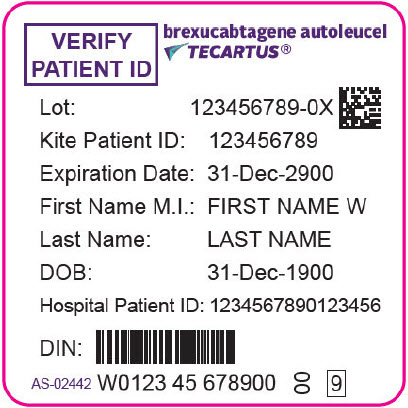
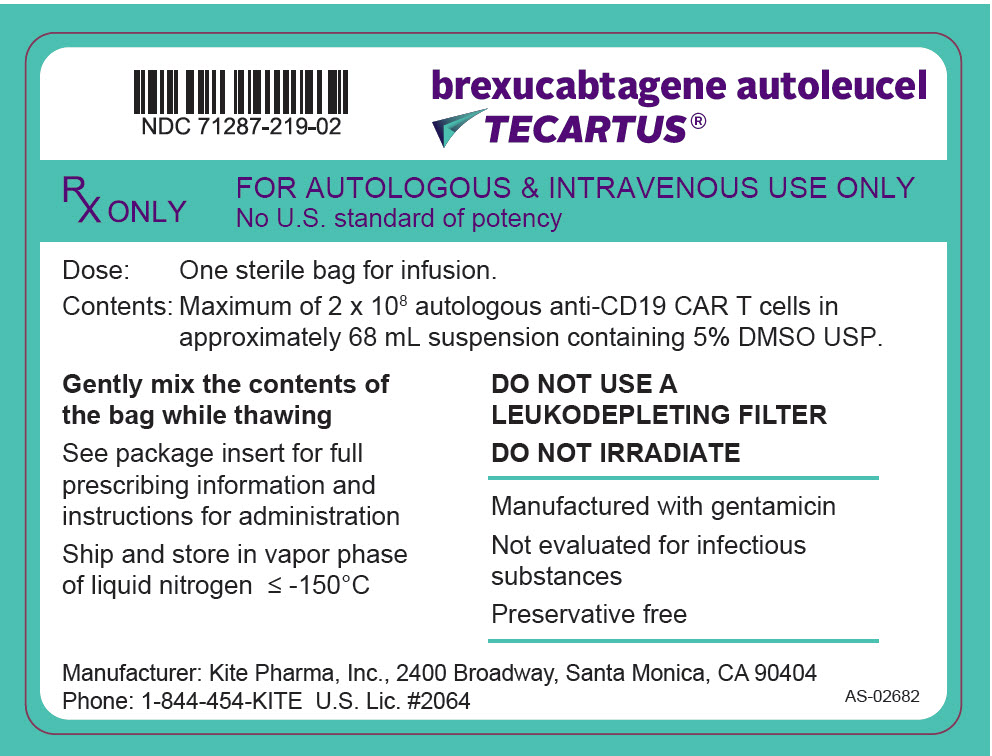
TECARTUS contains human blood cells that are genetically modified with replication-incompetent retroviral vector. Follow universal precautions and local biosafety guidelines for handling and disposal of TECARTUS to avoid potential transmission of infectious diseases.
- Administer TECARTUS at a certified healthcare facility.
- Monitor patients at the certified healthcare facility daily for at least seven days following infusion for signs and symptoms of Cytokine Release Syndrome (CRS) and neurologic events.
- Instruct patients to remain within proximity of the certified healthcare facility for at least four weeks following infusion.
Cytokine Release Syndrome
Identify CRS based on clinical presentation [see Warnings and Precautions (5.1)]. Evaluate for and treat other causes of fever, hypoxia, and hypotension. If CRS is suspected, manage according to the recommendations in Table 1. Patients who experience Grade 2 or higher CRS (e.g., hypotension, not responsive to fluids, or hypoxia requiring supplemental oxygenation) should be monitored with continuous cardiac telemetry and pulse oximetry. For patients experiencing severe CRS, consider performing an echocardiogram to assess cardiac function. For severe or life-threatening CRS, consider intensive care supportive therapy.
Table 1. CRS Grading and Management Guidance| CRS Grade Lee et al. 2014. | Tocilizumab | Corticosteroids |
|---|
Grade 1
Symptoms require symptomatic treatment only (e.g., fever, nausea, fatigue, headache, myalgia, malaise). | If not improving after 24 hours, administer tocilizumab Refer to tocilizumab Prescribing Information for details. 8 mg/kg intravenously over 1 hour (not to exceed 800 mg). | Not applicable. |
Grade 2
Symptoms require and respond to moderate intervention.
Oxygen requirement less than 40% FiO2 or hypotension responsive to fluids or low dose of one vasopressor or Grade 2 organ toxicity.Refer to Table 2 for management of neurologic toxicity. | Administer tocilizumab 8 mg/kg intravenously over 1 hour (not to exceed 800 mg).
Repeat tocilizumab every 8 hours as needed if not responsive to intravenous fluids or increasing supplemental oxygen. Limit to a maximum of 3 doses in a 24-hour period; maximum total of 4 doses if no clinical improvement in the signs and symptoms of CRS.
If improving, discontinue tocilizumab. | Manage per Grade 3 if no improvement within 24 hours after starting tocilizumab.
If improving, taper corticosteroids. |
Grade 3
Symptoms require and respond to aggressive intervention.
Oxygen requirement greater than or equal to 40% FiO2 or hypotension requiring high-dose or multiple vasopressors or Grade 3 organ toxicity or Grade 4 transaminitis. | Per Grade 2
If improving, discontinue tocilizumab. | Administer methylprednisolone 1 mg/kg intravenously twice daily or equivalent dexamethasone (e.g., 10 mg intravenously every 6 hours) until Grade 1, then taper corticosteroids.
If improving, manage as Grade 2.
If not improving, manage as Grade 4. |
Grade 4
Life-threatening symptoms.
Requirements for ventilator support or continuous veno-venous hemodialysis (CVVHD), or Grade 4 organ toxicity (excluding transaminitis). | Per Grade 2
If improving, discontinue tocilizumab. | Administer methylprednisolone 1000 mg intravenously per day for 3 days.
If improving, taper corticosteroids, and manage as Grade 3.
If not improving, consider alternate immunosuppressants. |
Neurologic Toxicity
Monitor patients for signs and symptoms of neurologic toxicities (Table 2). Rule out other causes of neurologic symptoms. Patients who experience Grade 2 or higher neurologic toxicities should be monitored with continuous cardiac telemetry and pulse oximetry. Provide intensive care supportive therapy for severe or life-threatening neurologic toxicities. Consider non-sedating anti-seizure medicines (e.g., levetiracetam) for seizure prophylaxis for any Grade 2 or higher neurologic toxicities.
Table 2. Neurologic Toxicity Grading and Management Guidance| Neurologic Event Severity based on Common Terminology Criteria for Adverse Events. | Concurrent CRS | No Concurrent CRS |
|---|
| Abbreviation: ADLs, activities of daily living. |
Grade 1
Examples include:
Somnolence – mild drowsiness or sleepiness
Confusion – mild disorientation
Encephalopathy – mild limiting of ADLs
Dysphasia– not impairing ability to communicate | Administer tocilizumab per Table 1 for management of Grade 1 CRS. | Supportive care. |
Grade 2
Examples include:
Somnolence – moderate limiting instrumental ADLs
Confusion – moderate disorientation
Encephalopathy - limiting instrumental ADLs
Dysphasia moderate impairing ability to communicate spontaneously
Seizure(s) | Administer tocilizumab per Table 1 for management of Grade 2 CRS.
If not improving within 24 hours after starting tocilizumab, administer dexamethasone 10 mg intravenously every 6 hours until the event is Grade 1 or less, then taper corticosteroids.
If improving, discontinue tocilizumab.
If still not improving, manage as Grade 3. | Administer dexamethasone 10 mg intravenously every 6 hours until the event is Grade 1 or less.
If improving, taper corticosteroids. |
| Consider non-sedating, anti-seizure medicines (e.g., levetiracetam) for seizure prophylaxis. |
Grade 3
Examples include:
Somnolence – obtundation or stupor
Confusion – severe disorientation
Encephalopathy - limiting self-care ADLs
Dysphasia – severe receptive or expressive characteristics, impairing ability to read, write, or communicate intelligibly | Administer tocilizumab per Table 1 for management of Grade 2 CRS.
In addition, administer dexamethasone 10 mg intravenously with the first dose of tocilizumab and repeat dose every 6 hours. Continue dexamethasone use until the event is Grade 1 or less, then taper corticosteroids.
If improving, discontinue tocilizumab and manage as Grade 2.
If still not improving, manage as Grade 4. | Administer dexamethasone 10 mg intravenously every 6 hours.
Continue dexamethasone use until the event is Grade 1 or less, then taper corticosteroids
If not improving, manage as Grade 4. |
| Consider non-sedating anti-seizure medicines (e.g., levetiracetam) for seizure prophylaxis. |
Grade 4
Life-threatening consequences
Urgent intervention indicated
Requirement for mechanical ventilation
Consider cerebral edema | Administer tocilizumab per Table 1 for management of Grade 2 CRS.
Administer methylprednisolone 1000 mg intravenously per day with first dose of tocilizumab and continue methylprednisolone 1000 mg intravenously per day for 2 more days.
If improving, then manage as Grade 3.
If not improving, consider alternate immunosuppressants. | Administer methylprednisolone 1000 mg intravenously per day for 3 days.
If improving, then manage as Grade 3.
If not improving, consider alternate immunosuppressants. |
| Consider non-sedating anti-seizure medicines (e.g., levetiracetam) for seizure prophylaxis. |
Viral Reactivation
Hepatitis B virus (HBV) reactivation, in some cases resulting in fulminant hepatitis, hepatic failure, and death, can occur in patients treated with drugs directed against B cells. Perform screening for HBV, hepatitis C virus (HCV), and human immunodeficiency virus (HIV) in accordance with clinical guidelines before collection of cells for manufacturing.
Patients with Relapsed/Refractory Mantle Cell Lymphoma (MCL)
The safety of TECARTUS was evaluated in a Phase 2 single-arm clinical study (ZUMA-2) in which a total of 82 patients with relapsed/refractory MCL received a single dose of CAR-positive viable T cells (2 × 10⁶ or 0.5 × 10⁶ anti-CD19 CAR T cells/kg) that was weight-based [see Clinical Studies (14.1)].
The most common adverse reactions (incidence ≥ 20%) were pyrexia, CRS, hypotension, encephalopathy, fatigue, tachycardia, arrhythmia, infection – pathogen unspecified, chills, hypoxia, cough, tremor, musculoskeletal pain, headache, nausea, edema, motor dysfunction, constipation, diarrhea, decreased appetite, dyspnea, rash, insomnia, pleural effusion, and aphasia. Serious adverse reactions occurred in 66% of patients. The most common serious adverse reactions (> 2%) were encephalopathy, pyrexia, infection – pathogen unspecified, CRS, hypoxia, aphasia, renal insufficiency, pleural effusion, respiratory failure, bacterial infections, dyspnea, fatigue, arrhythmia, tachycardia, and viral infections.
The most common (≥ 10%) Grade 3 or higher reactions were anemia, neutropenia, thrombocytopenia, hypotension, hypophosphatemia, encephalopathy, leukopenia, hypoxia,pyrexia, hyponatremia, hypertension, infection-pathogen unspecified, pneumonia, hypocalcemia, and lymphopenia.
Table 3 summarizes the adverse reactions that occurred in at least 10% of patients treated with TECARTUS and Table 4 describes the laboratory abnormalities of Grade 3 or 4 that occurred in at least 10% of patients.
Table 3. Summary of Adverse Reactions Observed in at Least 10% of Patients Treated with TECARTUS in ZUMA-2 (N=82)| Adverse Reaction | Any Grade (%) | Grade 3 or Higher (%) |
|---|
| Blood and Lymphatic System Disorders |
| Coagulopathy Coagulopathy includes coagulopathy, disseminated intravascular coagulation, international normalized ratio increased. | 10 | 2 |
| Cardiac Disorders |
| Tachycardias Tachycardias includes tachycardia, sinus tachycardia. | 45 | 0 |
| Bradycardias Bradycardias includes bradycardia, sinus bradycardia. | 10 | 0 |
| Non-ventricular Arrhythmias Non-ventricular arrhythmias includes atrial fibrillation, atrial flutter, cardiac flutter, palpitations, supraventricular tachycardia. | 10 | 4 |
| Gastrointestinal Disorders |
| Nausea | 35 | 1 |
| Constipation | 29 | 0 |
| Diarrhea | 28 | 5 |
| Abdominal pain Abdominal pain includes abdominal pain, abdominal pain lower, abdominal pain upper, abdominal tenderness. | 17 | 0 |
| Oral pain Oral pain includes oral pain, gingival pain, lip pain, oral mucosal erythema, oropharyngeal pain. | 16 | 0 |
| Vomiting Vomiting includes vomiting, retching. | 13 | 0 |
| Dysphagia | 10 | 2 |
| General Disorders and Administration Site Conditions |
| Pyrexia | 94 | 15 |
| Fatigue Fatigue includes fatigue, lethargy, malaise. | 48 | 1 |
| Chills | 41 | 0 |
| Edema Edema includes eyelid edema, face edema, generalized edema, localised edema, edema, edema peripheral, periorbital edema, peripheral swelling, scrotal edema, swelling face. | 35 | 2 |
| Pain Pain includes pain, allodynia, dysaesthesia, ear pain, facial pain, non-cardiac chest pain. | 17 | 2 |
| Immune System Disorders |
| Cytokine release syndrome | 91 | 18 |
| Hypogammaglobulinemia Hypogammaglobulinemia includes hypogammaglobulinemia, blood immunoglobulin G decreased. | 16 | 1 |
| Infections and Infestations |
| Infection – pathogen unspecified | 43 | 24 |
| Viral infections | 18 | 4 |
| Bacterial infections | 13 | 6 |
| Metabolism and nutrition disorders |
| Decreased appetite | 26 | 0 |
| Musculoskeletal and Connective Tissue Disorders |
| Musculoskeletal pain Musculoskeletal pain includes musculoskeletal pain, arthralgia, back pain, bone pain, dysarthria, flank pain, groin pain, myalgia, neck pain, pain in extremity. | 37 | 2 |
| Motor dysfunction Motor dysfunction includes asthenia, intensive care acquired weakness, mobility decreased, muscle twitching, muscular weakness, myopathy. | 17 | 4 |
| Nervous System Disorders |
| Encephalopathy Encephalopathy includes encephalopathy, altered state of consciousness, amnesia, balance disorder, cognitive disorder, confusional state, disturbance in attention, dysgraphia, dyskinesia, memory impairment, mental status changes, neurotoxicity, somnolence. | 51 | 24 |
| Tremor | 38 | 2 |
| Headache Headache includes headache, migraine. | 35 | 1 |
| Aphasia Aphasia includes aphasia, communication disorder. | 20 | 7 |
| Dizziness Dizziness includes dizziness, presyncope, syncope. | 18 | 6 |
| Neuropathy Neuropathy includes hyperaesthesia, neuropathy peripheral, paraesthesia, paraesthesia oral. | 13 | 2 |
| Psychiatric Disorders |
| Insomnia | 21 | 0 |
| Delirium Delirium includes delirium, agitation, disorientation, hallucination, hypomania, irritability, nervousness, personality change. | 18 | 5 |
| Anxiety | 16 | 0 |
| Renal and Urinary Disorders |
| Renal insufficiency Renal insufficiency includes acute kidney injury, blood creatinine increased. | 18 | 9 |
| Urine output decreased Urine output decreased includes urine output decreased, urinary retention. | 11 | 1 |
| Respiratory, Thoracic and Mediastinal Disorders |
| Hypoxia | 40 | 20 |
| Cough Cough includes cough, upper-airway cough syndrome. | 38 | 0 |
| Dyspnea Dyspnea includes dyspnea, dyspnea exertional. | 24 | 6 |
| Pleural effusion | 21 | 5 |
| Skin and Subcutaneous Tissue Disorders |
| Rash Rash includes rash, erythema, rash erythematous, rash maculo-papular, rash pustular. | 22 | 4 |
| Vascular Disorders |
| Hypotension Hypotension includes hypotension, orthostatic hypotension. | 57 | 27 |
| Hypertension | 18 | 11 |
| Thrombosis Thrombosis includes thrombosis, deep vein thrombosis, embolism, pulmonary embolism. | 17 | 4 |
Other clinically important adverse reactions that occurred in less than 10% of patients treated with TECARTUS include the following:
- Gastrointestinal disorders: dry mouth (7%)
- Infections and infestations disorders: fungal infections (9%)
- Metabolism and nutrition disorders: dehydration (6%)
- Nervous system disorders: ataxia (7%), seizure (5%), increased intracranial pressure (2%)
- Respiratory, thoracic and mediastinal disorders: respiratory failure (6%), pulmonary edema (4%)
- Skin and subcutaneous tissue disorders: rash (9%)
- Vascular disorders: hemorrhage (7%)
Table 4. Grade 3 or 4 Laboratory Abnormalities Occurring in ≥ 10% of Patients in ZUMA-2 Following TECARTUS Infusion (N = 82) | Grades 3 or 4 (%) |
|---|
| Leukopenia | 95 |
| Neutropenia | 95 |
| Lymphopenia | 86 |
| Thrombocytopenia | 63 |
| Anemia | 55 |
| Hypophosphatemia | 30 |
| Hypocalcemia | 21 |
| Blood uric acid increased | 17 |
| Hyponatremia | 16 |
| Aspartate Aminotransferase increased | 15 |
| Alanine Aminotransferase increased | 15 |
| Hypokalemia | 10 |
Risk Summary
There are no available data with TECARTUS use in pregnant women. No animal reproductive and developmental toxicity studies have been conducted with TECARTUS to assess whether TECARTUS can cause fetal harm when administered to a pregnant woman. It is not known if TECARTUS has the potential to be transferred to the fetus. Based on the mechanism of action of TECARTUS, if the transduced cells cross the placenta, they may cause fetal toxicity, including B cell lymphocytopenia. Therefore, TECARTUS is not recommended for women who are pregnant. Pregnancy after TECARTUS infusion should be discussed with the treating physician.
In the U.S. general population, the estimated background risk of major birth defects and miscarriage in clinically recognized pregnancies is 2% – 4% and 15% – 20%, respectively.
Risk Summary
There is no information regarding the presence of TECARTUS in human milk, the effect on the breastfed infant, and the effects on milk production. The developmental and health benefits of breastfeeding should be considered along with the mother's clinical need for TECARTUS and any potential adverse effects on the breastfed infant from TECARTUS or from the underlying maternal condition.
Pregnancy Testing
Pregnancy status of females with reproductive potential should be verified. Sexually active females of reproductive potential should have a negative pregnancy test prior to starting treatment with TECARTUS.
Contraception
See the prescribing information for fludarabine and cyclophosphamide for information on the need for effective contraception in patients who receive the lymphodepleting chemotherapy.
There are insufficient exposure data to provide a recommendation concerning duration of contraception following treatment with TECARTUS.
Infertility
There are no data on the effect of TECARTUS on fertility.
Manufactured by, Packed by, Distributed by:
Kite Pharma, Inc.
Santa Monica, CA 90404
US License No 2064
© 2020 Kite Pharma, Inc. All Rights Reserved.
125703-GS-000