CONTEPO is supplied as a dry powder in a single-dose vial that must be constituted and further diluted prior to intravenous infusion as described below. CONTEPO does not contain preservatives. Aseptic technique must be used for constitution and dilution prior to IV infusion.
- Constitute the vial with 30 mL of Sterile Water for Injection, USP and gently mix to completely dissolve contents. A slight degree of warming occurs when the powder is dissolved. The constituted solution should appear clear and colorless. Parenteral drug products should be inspected visually for particulate matter and discoloration prior to administration, whenever solution and container permit. The constituted solution is not for direct injection and must be further diluted immediately with Sterile Water for Injection, USP [see Dosage and Administration (2.4)] before intravenous infusion.
- To prepare the infusion solution, first remove 80 mL from a 250 mL intravenous bag of Sterile Water for Injection, USP for infusion so that it contains approximately 170 mL.
- Then add the required volume of constituted solution to the infusion bag according to Table 2. Discard unused portion. The constituted and further diluted solution of CONTEPO has a pH of 7.4 to 7.8.
Table 2 Preparation of CONTEPO Doses | CONTEPO Dose | Volume to Withdraw from Constituted Vial | Volume of Final Infusion Bag
(Approximate) | Final Infusion Concentration of CONTEPO
(Approximate) |
| 6 grams | 32.6 mL
(Entire Contents) | 202 mL | 30 mg/mL |
| 5 grams | 27 mL | 197 mL | 25 mg/mL |
| 4 grams | 21.5 mL | 192 mL | 20 mg/mL |
| 3 grams | 16 mL | 186 mL | 15 mg/mL |
Serious Adverse Reactions and Adverse Reactions Leading to Discontinuation
Serious adverse reactions occurred in 2.1% (5/233) CONTEPO and 2.6% (6/231) piperacillin/tazobactam-treated patients, respectively. Treatment was discontinued due to adverse reactions in 3% (7/233) of patients receiving CONTEPO and in 2.6% (7/231) of patients receiving piperacillin/tazobactam. The most common adverse reactions resulting in discontinuation of CONTEPO were gastrointestinal disorders (nausea, vomiting, and abdominal pain) in 1.3% (3/233) of patients. No deaths occurred in the clinical trial.
Common Adverse Reactions
Table 3 lists adverse reactions occurring in 2% or greater of patients receiving CONTEPO in Trial 1. These adverse reactions were reversible upon completion of therapy.
Table 3 Adverse Reactions Occurring in 2% or Greater of Patients with cUTI Receiving CONTEPO in Trial 1 |
|
| Adverse Reaction | |
CONTEPO
N=233
% | Piperacillin/Tazobactam
N=231
% |
| Gastrointestinal Disorders |
| Nausea | 4.3 | 1.3 |
| Diarrhea | 3.9 | 4.8 |
| Vomiting | 3.9 | 0.4 |
| Laboratory Investigations |
| Transaminase elevations a | 10.3 | 4.8 |
| Hypokalemia | 9.9 | 1.7 |
| Hypophosphatemia | 2.1 | 0.0 |
| Hypocalcemia | 3.9 | 2.6 |
| Hypernatremia | 3.4 | 0.9 |
| Blood and Lymphatic System Disorders |
| Neutropeniab | 6.4 | 3.9 |
| Nervous System Disorders |
| Headache | 2.6 | 2.2 |
Adverse Reactions Occurring in < 2% of Patients Receiving CONTEPO in Trial 1:
Blood and lymphatic system disorders: anemia, thrombocytopenia
Cardiac disorders: atrial fibrillation, palpitations, tachycardia, heart failure
Ear and labyrinth disorders: hearing loss
Gastrointestinal disorders: constipation
General disorders and administration site conditions: asthenia, infusion site reactions, peripheral edema
Hepatobiliary disorders: hepatic steatosis, hepatomegaly
Infections and infestations: vaginal infection, vaginitis
Investigations: increase creatinine kinase
Metabolism and nutritional disorders: hyperglycemia
Nervous system disorders: dysgeusia, syncope
Respiratory, thoracic, and mediastinal disorders: dyspnea
Skin and subcutaneous disorders: urticaria, rash, pruritis
Risk Summary
Available data from observational studies and pharmacovigilance reports with fosfomycin use in pregnant women are insufficient to identify a drug-associated risk of major birth defects, miscarriage, or adverse maternal or fetal outcomes. Fosfomycin crosses the placental barrier. There are no animal data that meet current standards for nonclinical developmental toxicity studies. However, some reproductive toxicity data are available from published literature. Intravenous or intraperitoneal fosfomycin-sodium did not cause malformations in rabbits or rats, respectively, but showed evidence of fetotoxicity (see Data). The clinical relevance of these animal data is uncertain.
The background risk of major birth defects and miscarriage for the indicated population is unknown. All pregnancies have a background risk of birth defect, loss or other adverse outcomes. In the U.S. general population, the estimated background risk of major birth defect and miscarriage in clinically recognized pregnancies is 2% to 4% and 15% to 20%, respectively.
Data
Animal Data
Fosfomycin crosses the placenta in rats and rabbits. In rats administered intraperitoneal fosfomycin sodium on Days 7 to 17 of gestation (during organogenesis), there were increased numbers of dead or resorbed fetuses at 1500 mg/kg (approximately 0.8 times the recommended human dose of 18 g/day, based on body surface area comparisons), a dose associated with maternal toxicity . Rabbits were administered intravenous fosfomycin sodium on Days 6 to 18 of gestation (during organogenesis) at doses 800 mg/kg (approximately 0.9 times the recommended human dose). No malformations were observed in rabbits or rats after intravenous or intraperitoneal fosfomycin sodium, respectively.
In a pre- and post-natal developmental study in rats (dosed intraperitoneally with fosfomycin tromethamine between gestational day 6 and postnatal Day 21), no effects were observed in first-generation offspring at doses up to 1000 mg/kg, about 0.5 times the clinical dose, based on body surface area comparisons. Survival and postnatal body growth also were normal in the second-generation offspring at all doses.
Cardiac Electrophysiology
The effect of CONTEPO on 12-lead electrocardiogram parameters was evaluated in a Phase 1 randomized, placebo and positive controlled, double-blind, single-dose crossover study in 36 healthy adult subjects. At single doses of 6 grams and 12 grams (2 times the maximum single recommended dosage), CONTEPO demonstrated a dose dependent increase in QTcF. Mean placebo-corrected QTcF change from baseline was 8.3 msec (90% CI: 5.39 to 11.30) and 17.0 msec (90% CI: 14.06 to 20.01) for single doses of 6 grams and 12 grams, respectively, compared to 13.4 msec (90% CI: 10.48 to 16.39) observed with the active control, oral moxifloxacin. There were no subjects receiving CONTEPO with QTcF change from baseline greater than 60 msec or a QTcF greater than 480 msec [see Warnings and Precautions (5.2)]. A 1-hour CONTEPO infusion of the studied doses did not have a clinically meaningful effect on heart rate or on cardiac conduction, i.e., the PR and QRS interval.
Specific Populations
No clinically significant differences in the pharmacokinetics of fosfomycin based on sex, body weight/body surface area, race/ethnicity or age (18 to 89 years of age, when adjusted for renal function) were identified.
Patients with Renal Impairment
Dosage adjustment is required for patients whose creatinine clearance is 50 mL/min or less [see Dosage and Administration (2.2), Use in Specific Populations (8.6)]. When fosfomycin is administered prior to hemodialysis in patients on periodic or chronic hemodialysis, 61-79% of the fosfomycin dose is removed.
Patients with Hepatic Impairment
CONTEPO is not metabolized through the liver. The effect of hepatic impairment on the pharmacokinetics of CONTEPO is unknown. Monitoring fluid overload and electrolyte abnormalities is recommended for patients with severe hepatic impairment [see Warnings and Precautions (5.1), Use in Specific Populations (8.7)].
Drug Interaction Studies
In Vitro Studies
Fosfomycin at clinically relevant concentrations does not inhibit CYP1A2, CYP2B6, CYP2C8, CYP2C9, CYP2C19, CYP2D6, and CYP3A4/5. Fosfomycin does not induce CYP1A2, CYP2B6, and CYP3A4. Fosfomycin is not a substrate for P-gp, BCRP, OATP1B1, OATP1B3, OAT1, OAT3, OCT2, MATE1 or MATE2-K. Fosfomycin inhibits MATE1 and MATE2-K with the observed IC50 values of 30.0 mM (4142 mcg/mL) and 56.4 mM (7787 mcg/mL), respectively. Fosfomycin does not inhibit P-gp, BCRP, OATP1B1, OATP1B3, OAT1, OAT3, OCT1, and OCT2.
Mechanism of Action
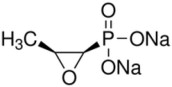
Fosfomycin is an epoxide antibacterial drug that disrupts bacterial cell wall synthesis by covalently binding and inhibiting phosphoenolpyruvate transferase (MurA), thereby blocking the synthesis of peptidoglycan. Fosfomycin is bactericidal against Enterobacterales. Transport of fosfomycin into the bacterial cell occurs via two different transport systems, glycerol-3-phosphate (GlpT) and/or hexose-6-phosphate (UhpT).
Resistance
Resistance to fosfomycin may occur by chromosomal mutations leading to alterations of bacterial transport systems and/or modification of the fosfomycin binding site in MurA (Cys115). Spontaneous mutations conferring various levels of fosfomycin resistance in E. coli and other Enterobacterales in vitro have been shown to occur in the structural transport genes (glpT and uhpT), transport regulatory genes (uhpA, uhpB, and uhpC) and genes involved in cAMP synthesis (cyaA, ptsI), all causing a decrease in fosfomycin uptake. Diminished activity of both transport systems is also evident when inactivation of cAMP-CRP occurs.
Plasmid-borne resistance mechanisms may result in enzymatic inactivation of fosfomycin by binding to glutathione, or by cleavage of the carbon-phosphorus-bond in the fosfomycin molecule. The enzymes responsible for this type of resistance are fosfomycin hydrolyzing enzymes (FosA, FosB, FosX) and fosfomycin kinases (FomA, FomB and FosC).
Resistance to fosfomycin due to spontaneous mutations occurs at frequencies between 10-7 to 10-9 for E. coli and 10-5 to 10-8 for K. pneumoniae at 4 times the fosfomycin Minimum Inhibitory Concentration (MIC).
There is no known cross-resistance to other antibacterial drug classes.
Interaction With Other Antimicrobials
In vitro studies have not demonstrated antagonism between CONTEPO and the following antibacterial drugs: amikacin, gentamicin, aztreonam, ceftazidime, ceftriaxone, piperacillin/tazobactam, meropenem, levofloxacin, tigecycline, minocycline, linezolid, rifampin, trimethoprim-sulfamethoxazole, vancomycin, penicillin and colistin. The clinical significance of these findings is unknown.
Animal Infection Models
Fosfomycin demonstrated activity in neutropenic thigh infection models caused by either E. coli (KPC and NDM producing) or K. pneumoniae (KPC and VIM producing) isolates.
Antimicrobial Activity
CONTEPO has been shown to be active against most isolates of the following microorganisms, both in vitro and in clinical infections [see Indications and Usage (1.1)].
Aerobic bacteria
Gram-negative bacteria
Escherichia coli
Klebsiella pneumoniae
The following in vitro data are available, but their clinical significance is unknown. At least 90 percent of the following bacteria exhibit an in vitro minimum inhibitory concentration (MIC) less than or equal to the susceptible breakpoint for CONTEPO against isolates of similar genus or organism group. However, the efficacy of CONTEPO in treating clinical infections caused by these bacteria has not been established in adequate and well-controlled clinical trials.
Aerobic bacteria
Gram-negative bacteria
Citrobacter koseri
Enterobacter aerogenes
Klebsiella oxytoca
Proteus mirabilis
Serratia marcescens
Susceptibility Testing
For specific information regarding susceptibility test interpretive criteria, and associated test methods and quality control standards recognized by FDA for this drug, please see: https://www.fda.gov/STIC.
Carcinogenesis
Long-term carcinogenicity studies have not been conducted with fosfomycin.
Mutagenesis
Fosfomycin did not show evidence of mutagenic activity in standard tests that included bacterial reverse mutation assay, chromosomal aberration assay with Chinese hamster lung fibroblast cells and human peripheral blood lymphocytes, and the mouse bone marrow micronucleus assay.
Impairment of Fertility
In a fertility study, male and female rats were dosed intraperitoneally with fosfomycin disodium (for 7 or 14 days, respectively, before mating, for 14 days during cohabitation, and in mated females up to gestation day 7 at doses of 125, 250, 750 or 1500 mg/kg. Maternal toxicity (mortality) was observed at the 1500 mg/kg dose (about 0.8 times the clinical dose based on body surface area comparisons) along with increases in the number of dead or resorbed fetuses and a reduction in the number of live fetuses. There were no effects on fertility at 750 mg/kg (approximately 0.4 times the clinical dose).
How Supplied
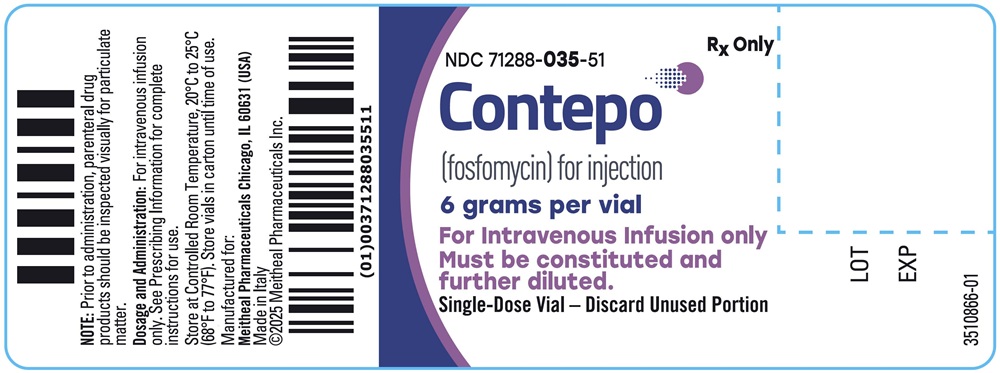
CONTEPO for injection is supplied as a white to almost white sterile powder containing 6 grams of fosfomycin in a single-dose vial. Each gram of fosfomycin disodium contains 330 mg of sodium (i.e., each vial contains 1,980 mg of sodium).
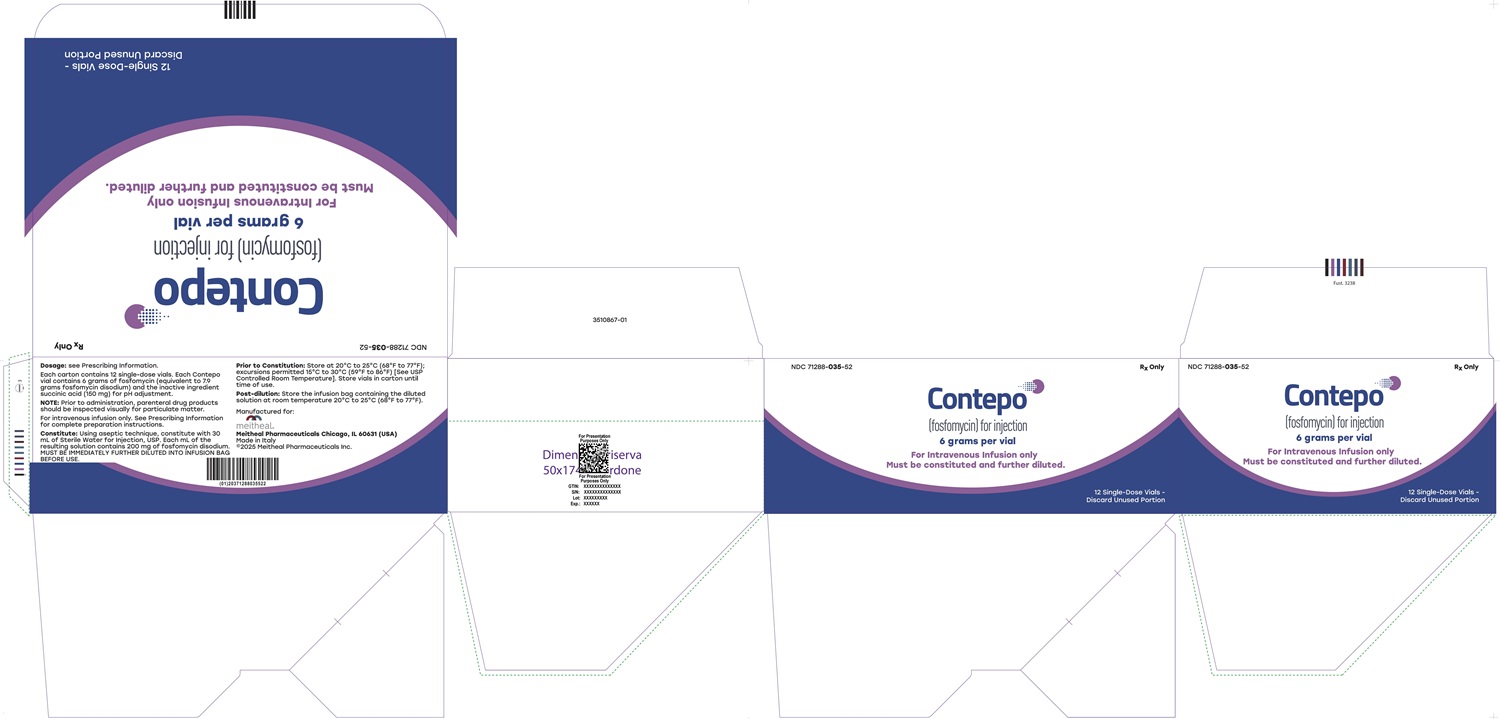
CONTEPO is supplied in a clear Type I glass single-dose vial (NDC 71288-035-51) with a rubber closure and a twist-off cap. Twelve (12) vials are supplied in each carton (NDC 71288-035-52).
Storage and Handling
Store CONTEPO vials at 20°C to 25°C (68°F to 77°F); excursions permitted to 15°C to 30°C (59°F to 86°F) [See USP Controlled Room Temperature]. Store CONTEPO in the carton until time of use [see Dosage and Administration (2.4)].
Electrolyte Abnormalities
Advise patients that a low sodium diet is recommended during CONTEPO treatment because the high sodium load (each vial of CONTEPO contains 1,980 mg sodium) may cause changes in electrolytes or increased edema [see Warnings and Precautions (5.1)]. Blood tests to monitor electrolytes will be required. If peripheral edema develops, tell the patient to contact their health care provider.
Serious Allergic Reactions
Advise patients that allergic reactions, including serious allergic reactions, could occur and that serious reactions require immediate treatment. Ask patient about any previous hypersensitivity reactions to CONTEPO, fosfomycin or other allergens [see Warnings and Precautions (5.2)].
Potentially Serious Diarrhea
Advise patients that diarrhea is a common problem caused by antibacterial drugs, including CONTEPO. Sometimes, frequent watery or bloody diarrhea may occur and may be a sign of a more serious intestinal infection. If severe watery or bloody diarrhea develops, tell patient to contact his or her healthcare provider [see Warnings and Precautions (5.6)].
Antibacterial Resistance
Patients should be counseled that antibacterial drugs including CONTEPO should only be used to treat bacterial infections. They do not treat viral infections (e.g. the common cold). When CONTEPO is prescribed to treat a bacterial infection, patients should be told that although it is common to feel better early in the course of therapy, the medication should be taken exactly as directed. Skipping doses or not completing the full course of therapy may (1) decrease the effectiveness of the immediate treatment and (2) increase the likelihood that bacteria will develop resistance and will not be treatable by CONTEPO or other antibacterial drugs in the future [see Warnings and Precautions (5.7)].
Lactation
Advise females not to breastfeed during treatment with CONTEPO and for 24 hours after the final dose [see Use in Specific Populations (8.2)].
Manufactured for Meitheal Pharmaceuticals
Chicago, IL 60631 (USA)
Made in Italy
©2025 Meitheal Pharmaceuticals Inc.
CONTEPO is a trademark of Meitheal Pharmaceuticals, Inc.
All rights reserved
3510868-02