Parenteral drug products should be inspected visually for particulate matter and discoloration prior to administration whenever solution and container permit.
Mitomycin for injection should be given intravenously only, using care to avoid extravasation of the compound. If extravasation occurs, cellulitis, ulceration, and slough may result.
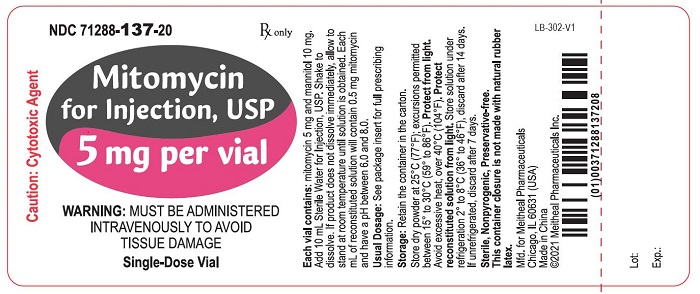
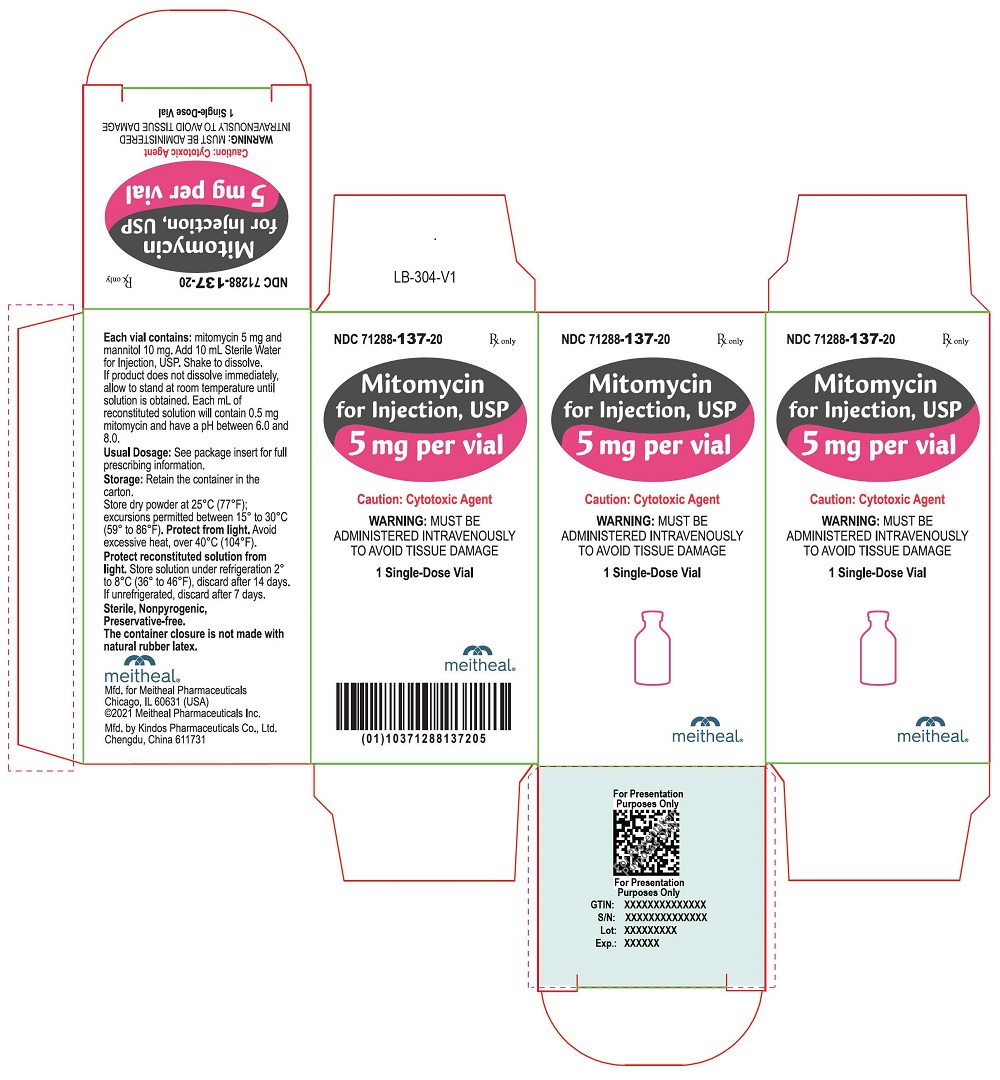
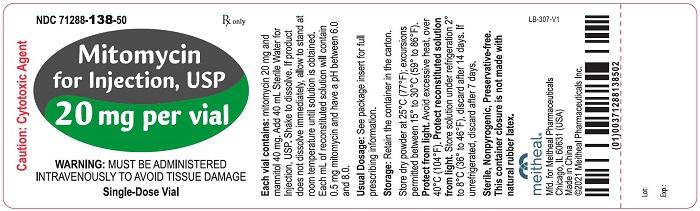
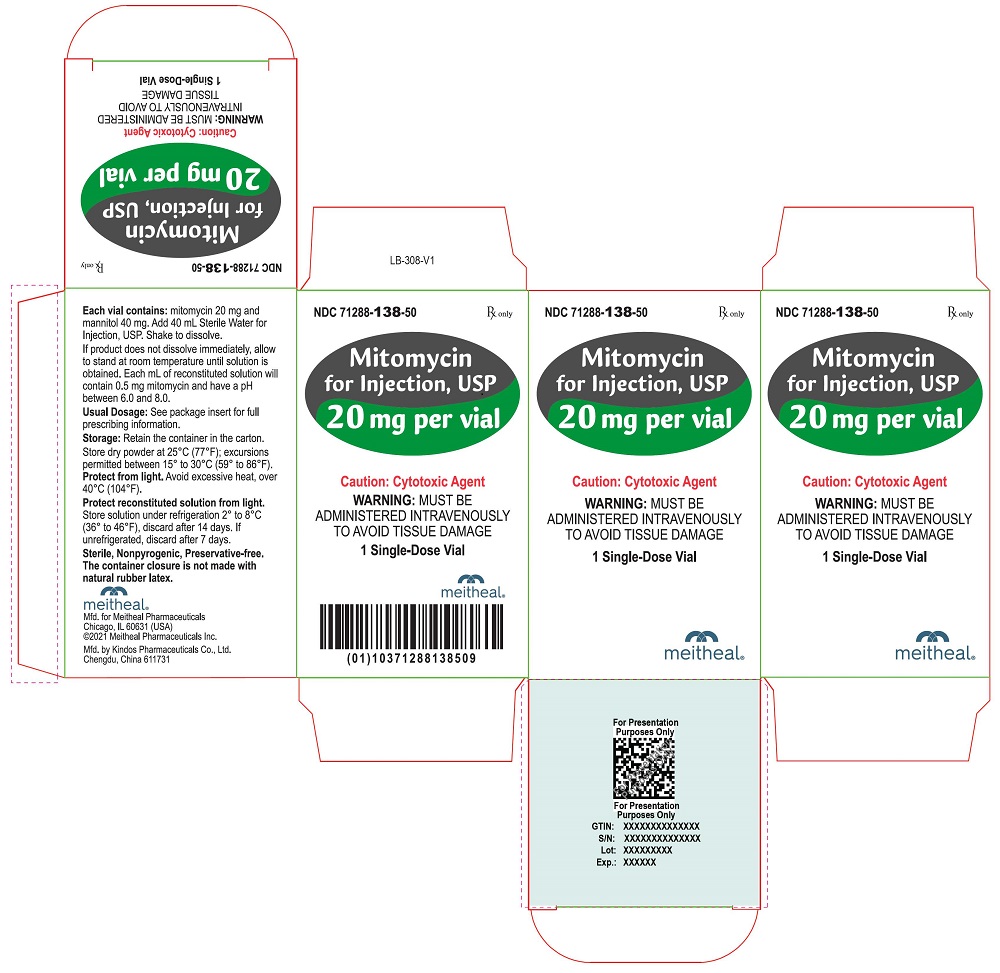
Each single-dose vial contains either mitomycin 5 mg and mannitol 10 mg or mitomycin 20 mg and mannitol 40 mg. To administer, add sterile water for injection, 10 mL or 40 mL respectively. Shake to dissolve. If product does not dissolve immediately, allow to stand at room temperature until solution is obtained.
After full hematological recovery (see guide to dosage adjustment) from any previous chemotherapy, the following dosage schedule may be used at 6 to 8 week intervals:
20 mg/m2 intravenously as a single dose via a functioning intravenous catheter.
Because of cumulative myelosuppression, patients should be fully reevaluated after each course of mitomycin for injection, and the dose reduced if the patient has experienced any toxicities. Doses greater than 20 mg/m2 have not been shown to be more effective, and are more toxic than lower doses.
The following schedule is suggested as a guide to dosage adjustment:
| Nadir After Prior Dose |
| Leukocytes/mm3 | Platelets/mm3 | Percentage of Prior Dose to be Given |
| > 4000
| > 100,000
| 100%
|
| 3000 - 3999
| 75,000 - 99,999
| 100%
|
| 2000 - 2999
| 25,000 - 74,999
| 70%
|
| < 2000
| < 25,000
| 50%
|
No repeat dosage should be given until leukocyte count has returned to 4,000/mm3 and a platelet count to 100,000/mm3.
When mitomycin for injection is used in combination with other myelosuppressive agents, the doses should be adjusted accordingly. If the disease continues to progress after two courses of mitomycin for injection, the drug should be stopped since chances of response are minimal.