Duloxetine Capsule, Delayed Release Pellets
Product Images NDC 71335-1445

View Photos of Packaging, Regulatory Labels, and Product Appearance

Product Visual Gallery

This gallery contains 14 technical images submitted to the FDA as part of the official labeling for Duloxetine (NDC 71335-1445). Unlike standard consumer photos, these assets often include clinical data figures, molecular chemical structures, and official manufacturer packaging layouts.

As provided by Bryant Ranch Prepack, these visuals offer a comprehensive scientific overview of the product's physical and chemical identity, aiding pharmacists and researchers in product verification and study.

FDA Label Image

1 (Image 1)

1 (Image 1)
Escitalopram 60 mg/1 oral tablet unit dose packaging by Bryant Ranch Prepack. The image depicts a single blister pack card containing individual tablets, each housed in a clear plastic bubble with foil backing, labeled with dosage information and manufacturer details.*
FDA Label Image

Figure6 (Image 10)

Figure6 (Image 10)
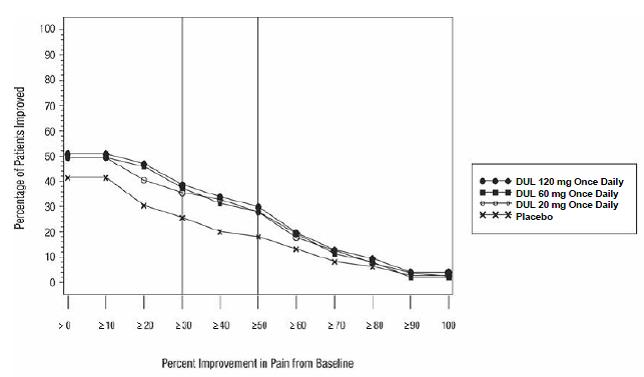
A line graph showing the percentage of patients improved versus percent improvement in pain from baseline, comparing four groups: DUL 120 mg once daily, DUL 60 mg once daily, DUL 20 mg once daily, and placebo. The graph depicts how patient improvement decreases as pain improvement percentage thresholds increase from >0 to 100%.*
FDA Label Image

Figure8 (Image 11)

Figure8 (Image 11)
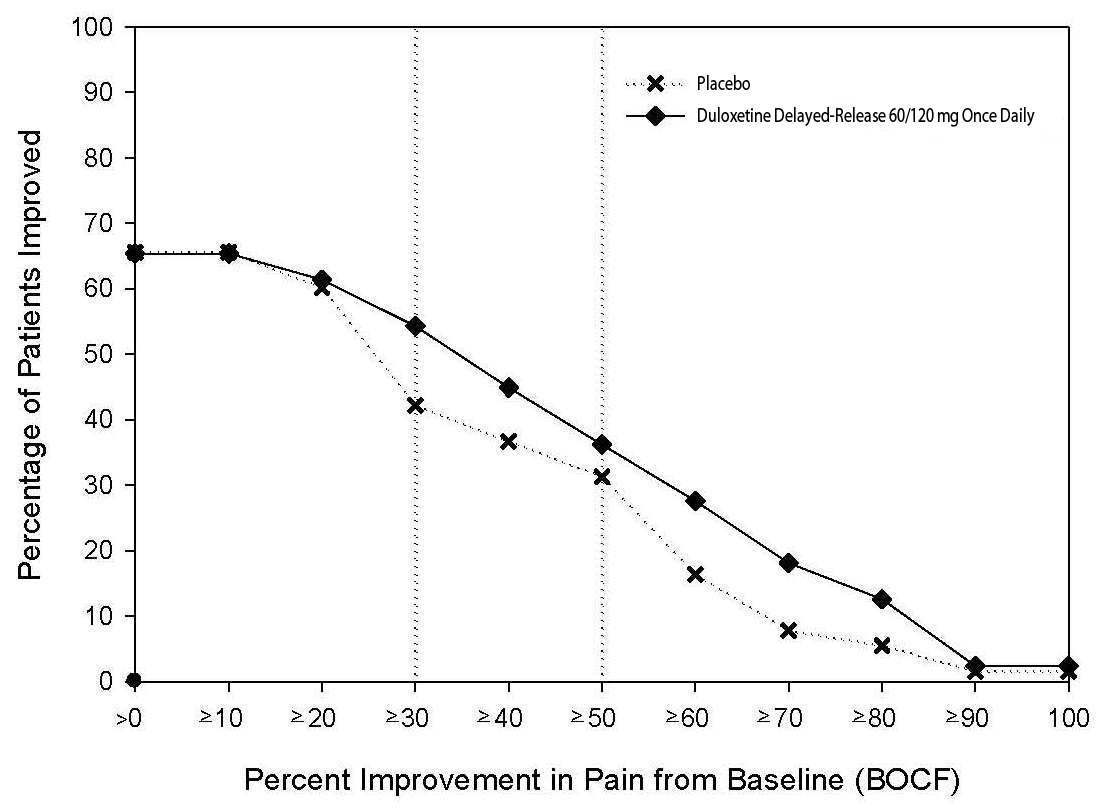
Line graph comparing percentage of patients improved versus percent improvement in pain from baseline (BOCF). Two lines represent Placebo and Duloxetine Delayed-Release 60/120 mg once daily, showing higher percentages with Duloxetine across the improvement range.*
FDA Label Image

Figure9 (Image 12)

Figure9 (Image 12)
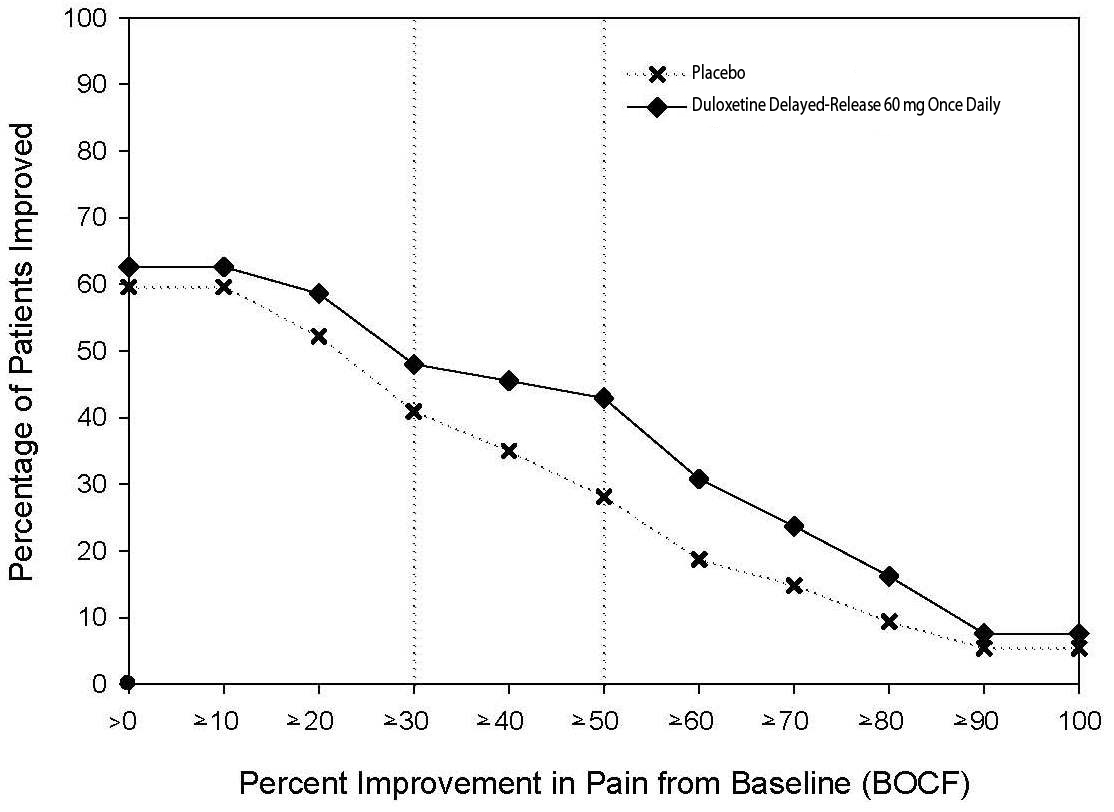
A line chart comparing the percentage of patients improved versus percent improvement in pain from baseline (BOCF). It features two lines: one representing placebo marked with crosses and a dotted line, and the other representing Duloxetine Delayed-Release 60 mg once daily marked with diamonds and a solid line. The chart shows decreasing percentages of patient improvement as percent pain improvement thresholds increase from >0 to 100%.*
FDA Label Image

Figure10 (Image 13)

Figure10 (Image 13)
A line chart depicting the percentage of patients improved versus percent improvement in pain from baseline (BOCF). It compares two groups: placebo (marked with x's and dotted line) and Duloxetine Delayed-Release 60/120 mg once daily (marked with diamonds and solid line), showing higher improvement percentages for Duloxetine across the range.*
FDA Label Image

1 (Image 2)

1 (Image 2)
Escitalopram 60 mg/1 dosage form packaged by Bryant Ranch Prepack. The image shows a rectangular carton box with the brand name Escitalopram prominently displayed. The strength and single unit count are visible, along with the labeler’s name Bryant Ranch Prepack and product NDC 71335-1445.*
FDA Label Image

1 (Image 3)

1 (Image 3)
The label shows Escitalopram 60 mg, a single unit tablet packaged by Bryant Ranch Prepack. The image highlights a blister pack containing one round white tablet with one side scored and no visible logos or additional markings on the tablet's surface.*
FDA Label Image

1 (Image 4)

1 (Image 4)
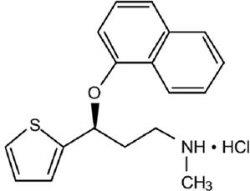
Chemical structure diagram depicting the molecular configuration of escitalopram, showing key components such as the bicyclic group, thiophene ring, and amine group with hydrochloride salt.*
FDA Label Image

Figure1 (Image 5)

Figure1 (Image 5)
A Kaplan-Meier curve graph showing the proportion of patients with relapse over time (days) from randomization. It compares Duloxetine Delayed-Release Capsules with placebo, illustrating a lower relapse proportion in the duloxetine treatment group over approximately 200 days.*
FDA Label Image

Figure2 (Image 6)

Figure2 (Image 6)
A Kaplan-Meier survival curve comparing time from randomization to relapse in days between patients treated with Duloxetine Delayed-Release Capsules and a placebo group. The vertical axis represents the proportion of patients with relapse, and two lines depict the treatment groups, with the placebo group showing a higher relapse proportion over time.*
FDA Label Image

Figure3 (Image 7)

Figure3 (Image 7)
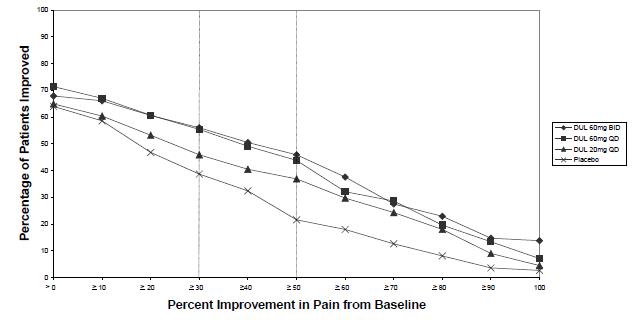
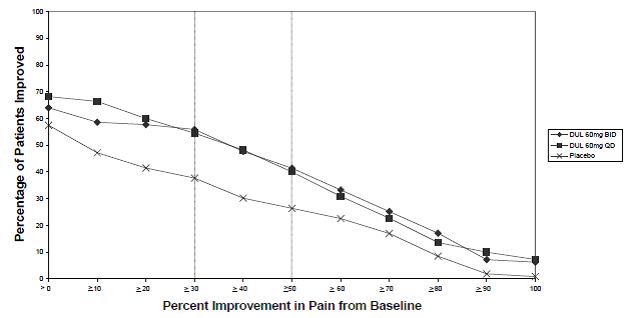
A line graph showing the percentage of patients improved against the percent improvement in pain from baseline. The graph compares four groups: DUL 60 mg BID, DUL 60 mg QD, DUL 20 mg QD, and placebo, each represented by different markers. The data illustrates trends in patient improvement with various dosages of DUL versus placebo.*
FDA Label Image

Figure4 (Image 8)

Figure4 (Image 8)
A line graph comparing the percentage of patients improved against the percent improvement in pain from baseline for three groups: DUL 60 mg BID, DUL 60 mg QD, and Placebo. The graph shows a decline in the percentage of patients improved as pain improvement thresholds increase, with data points and lines representing each group.*
FDA Label Image

Figure5 (Image 9)

Figure5 (Image 9)
A line graph comparing the percentage of patients improved by different treatments plotted against the percent improvement in pain from baseline. Three lines represent DUL 60 mg twice daily, DUL 60 mg once daily, and placebo. The graph shows a higher percentage of patient improvement with DUL doses than placebo across the improvement percentages.*
FDA Label Image

Label (Lbl713351445)

Label (Lbl713351445)
Label for Duloxetine Delayed-Release Capsules, USP, containing 60 mg strength per capsule. The label states the active ingredient is Duloxetine Hydrochloride equivalent to 60 mg Duloxetine. It is relabeled by Bryant Ranch Prepack, Inc., and manufactured by Actavis Pharma, Inc. The package contains 30 capsules. Storage and dispensing instructions are also provided.*

* About these descriptions: Image descriptions on this page are generated by automated AI analysis of the product label images from the manufacturer's FDA label submission (SPL). They are provided for reference only and may contain errors or omissions. Always rely on the printed label itself and the official FDA labeling, and consult a pharmacist or healthcare professional with any questions about this product.