Simvastatin Tablet, Film Coated
Product Images NDC 71335-1891

12 FDA label images from Bryant Ranch Prepack · Packaging, Regulatory Labels, and Product Appearance

Product Visual Gallery

This gallery contains 12 technical images submitted to the FDA as part of the official labeling for Simvastatin (NDC 71335-1891). Unlike standard consumer photos, these assets often include clinical data figures, molecular chemical structures, and official manufacturer packaging layouts.

As provided by Bryant Ranch Prepack, these visuals offer a comprehensive scientific overview of the product's physical and chemical identity, aiding pharmacists and researchers in product verification and study.

FDA Label Image

Footnote For Table 3 (Footnote For Table 3)

Footnote For Table 3 (Footnote For Table 3)
A text panel presenting detailed notes related to simvastatin, including chemical assay results, potential CYP3A4 inhibitors, pharmacokinetic study conditions involving grapefruit juice, and references to simvastatin acid as the beta-hydroxyacid form of simvastatin. The text provides explanatory footnotes relevant to drug interaction studies and metabolic considerations.*
FDA Label Image

Label (Lbl713351891)

Label (Lbl713351891)
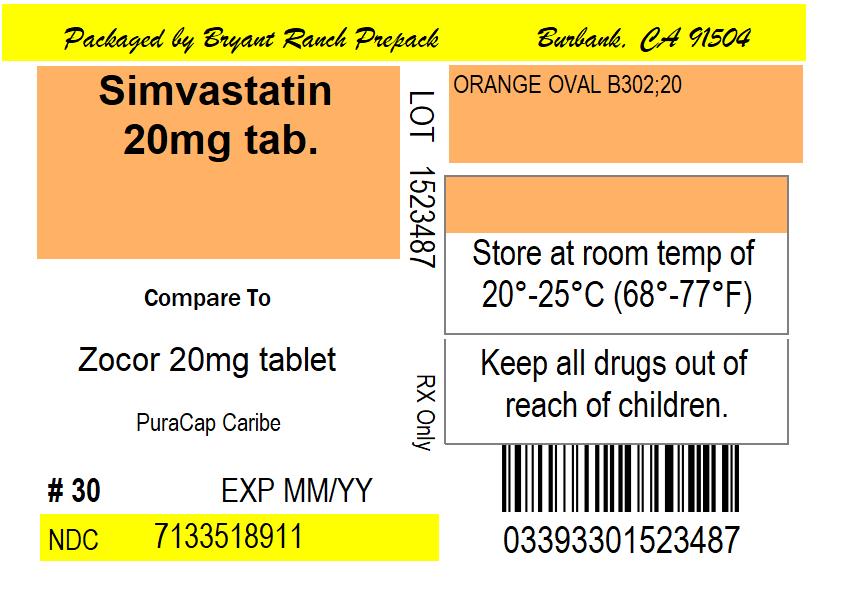
Simvastatin 20 mg film-coated tablet packaging label by Bryant Ranch Prepack. The label specifies it is to be compared to Zocor 20 mg tablet from PuraCap Caribe. It includes storage instructions at 20°-25°C (68°-77°F) and a caution to keep drugs out of reach of children. The package contains 30 tablets and features NDC 71335-18911 with a barcode and lot number.*
FDA Label Image

Figure 9 (Simvastatin 10)

Figure 9 (Simvastatin 10)
A data table titled 'Lipid-Lowering Effects of Simvastatin in Adolescent Patients with Heterozygous Familial Hypercholesterolemia (Mean Percent Change from Baseline).' It compares lipid measures including Total-C, LDL-C, HDL-C, and Apo B for placebo and simvastatin groups over 24 weeks, showing percent changes and mean baseline values with standard deviations.*
FDA Label Image

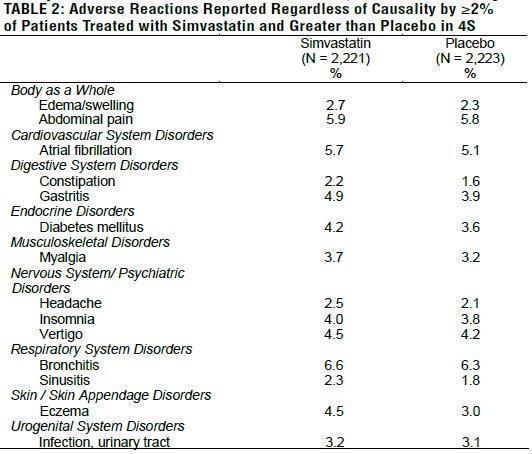
Table2 (Simvastatin 2)

Table2 (Simvastatin 2)
A data table titled 'Adverse Reactions Reported Regardless of Causality by ≥2% of Patients Treated with Simvastatin and Greater than Placebo in 4S'. It compares the percentage of patients experiencing various adverse reactions across different body systems between Simvastatin (N=2,221) and Placebo (N=2,223) groups. Categories include Body as a Whole, Cardiovascular, Digestive, Endocrine, Musculoskeletal, Nervous/Psychiatric, Respiratory, Skin, and Urogenital disorders with specific symptoms listed under each.*
FDA Label Image

Structure (Simvastatin 3)

Structure (Simvastatin 3)
Chemical structure of simvastatin depicted as a molecular diagram showing atoms and bonds characteristic of its chemical composition.*
FDA Label Image

Table 3 (Simvastatin 4)

Table 3 (Simvastatin 4)
Table displaying drug interaction and dosing adjustment information for Simvastatin 20 mg oral tablets. It includes coadministered drugs or grapefruit juice with their dosing, geometric mean ratio of Simvastatin with and without interaction, and recommendations for dose adjustments or avoidance based on clinical and post-marketing experience.*
FDA Label Image

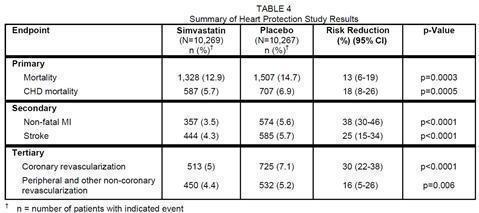
Table 4 (Simvastatin 5)

Table 4 (Simvastatin 5)
A data table titled 'Summary of Pilot Metron Study Results' presenting comparative outcomes between Simvastatin and placebo groups across primary, secondary, and tertiary endpoints, including mortality, CHD mortality, non-fatal MI, stroke, and types of revascularization, with associated risk reductions and p-values.*
FDA Label Image

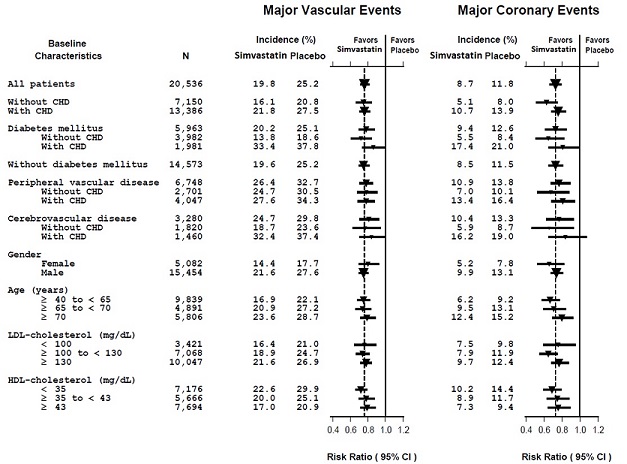
Figure 5 (Simvastatin 6)

Figure 5 (Simvastatin 6)
A clinical risk ratio plot showing the incidence of major vascular and major coronary events among various patient subgroups comparing Simvastatin with placebo. The chart includes groups by baseline characteristics such as presence of coronary heart disease, diabetes status, peripheral vascular disease, cerebrovascular disease, gender, age, LDL-cholesterol, and HDL-cholesterol levels, with risk ratios and 95% confidence intervals displayed.*
FDA Label Image

Figure 6 (Simvastatin 7)

Figure 6 (Simvastatin 7)
A data table titled 'Mean Response in Patients with Primary Hyperlipidemia and Combined (mixed) Hyperlipidemia' showing percent change from baseline after 6 to 24 weeks of treatment. It compares various dosages of Simvastatin and placebo, presenting data on total cholesterol (TOTAL-C), LDL cholesterol (LDL-C), and HDL cholesterol (HDL-C) levels for different patient groups in multiple studies.*
FDA Label Image

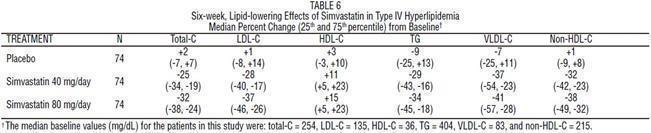
Figure 7 (Simvastatin 8)

Figure 7 (Simvastatin 8)
A data table titled 'Six-week, Lipid-lowering Effects of Simvastatin in Type IV Hyperlipidemia' showing median percent changes in various lipid parameters (Total-C, LDL-C, HDL-C, TG, VLDL-C, Non-HDL-C) from baseline across three treatment groups: Placebo, Simvastatin 40 mg/day, and Simvastatin 80 mg/day, with sample sizes and value ranges included.*
FDA Label Image

Figure 8 (Simvastatin 9)

Figure 8 (Simvastatin 9)
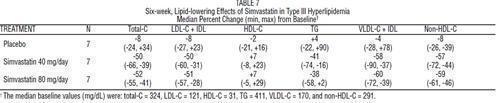
A data table titled 'Six-week, Lipid-lowering Effects of Simvastatin in Type III Hyperlipidemia' showing median percent changes from baseline for various lipid measures including Total-C, LDL-C, IDL, VLDL-C, and Non-HDL-C under different treatments: Placebo, Simvastatin 40 mg/day, and Simvastatin 80 mg/day. The table provides sample sizes and percent changes with ranges for each measure.*
FDA Label Image

Table 1 (Table1)

Table 1 (Table1)
A data table outlining drug interactions associated with increased risk of myopathy or rhabdomyolysis when taking simvastatin. It lists interacting agents such as strong CYP3A4 inhibitors, niacin, verapamil, amiodarone, lomitapide, daptomycin, and grapefruit juice, along with prescribing recommendations including contraindications, dosage limits, temporary suspension, or avoidance advice.*

* About these descriptions: Image descriptions on this page are generated by automated AI analysis of the product label images from the manufacturer's FDA label submission (SPL). They are provided for reference only and may contain errors or omissions. Always rely on the printed label itself and the official FDA labeling, and consult a pharmacist or healthcare professional with any questions about this product.