Scopolamine Patch, Extended Release
Product Images NDC 71335-3014

View Photos of Packaging, Regulatory Labels, and Product Appearance

Product Visual Gallery

This gallery contains 9 technical images submitted to the FDA as part of the official labeling for Scopolamine (NDC 71335-3014). Unlike standard consumer photos, these assets often include clinical data figures, molecular chemical structures, and official manufacturer packaging layouts.

As provided by Bryant Ranch Prepack, these visuals offer a comprehensive scientific overview of the product's physical and chemical identity, aiding pharmacists and researchers in product verification and study.

FDA Label Image

Label (Lbl713353014)
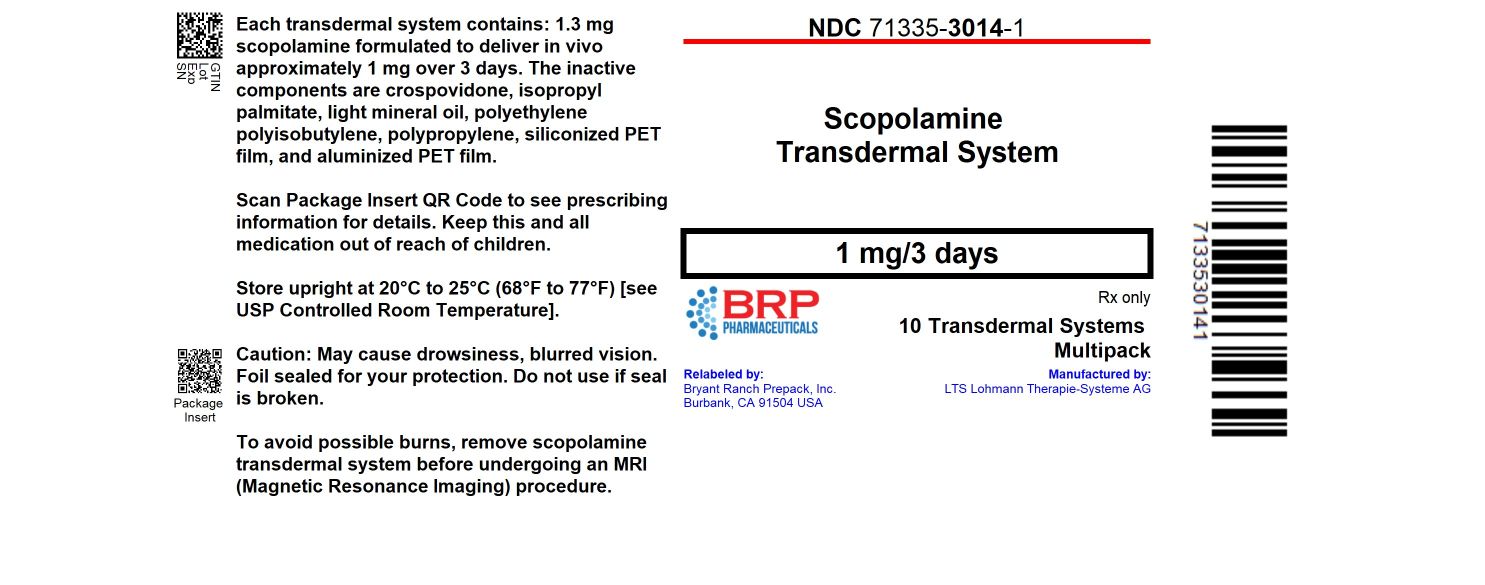
Label (Lbl713353014)
Label for Scopolamine Transdermal System 1 mg/3 days patch, extended release, multipack of 10 transdermal systems. Labeled by Bryant Ranch Prepack, manufactured by LTS Lohmann Therapie-Systeme AG. Includes storage instructions, cautions, and barcode.*
FDA Label Image

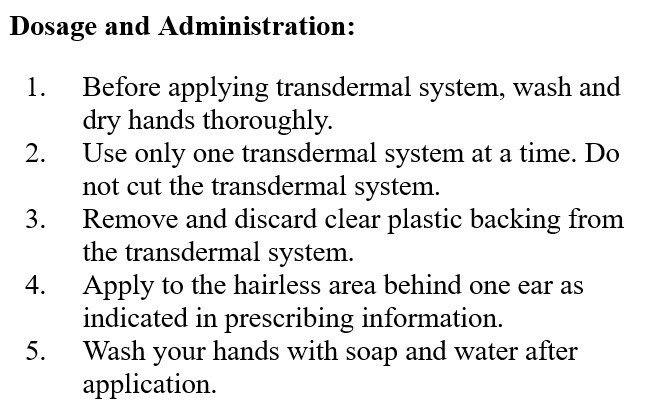
Extended Label Label (Lbl713353014extendedlabel)

Extended Label Label (Lbl713353014extendedlabel)
Text panel titled 'Dosage and Administration' providing instructions for the use of a transdermal system, including washing hands beforehand, using one system at a time without cutting, removing the plastic backing, applying behind one ear to the hairless area, and washing hands after application.*
FDA Label Image

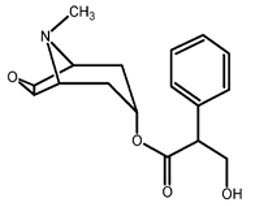
Chemical Structure (Scopolamine 01)

Chemical Structure (Scopolamine 01)
Chemical structure diagram of Scopolamine, showing its molecular framework including a tropane ring system linked to an aromatic phenyl group and functional groups such as hydroxyl and ketone.*
FDA Label Image

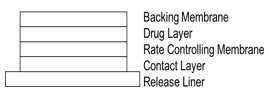
Image (Scopolamine 02)

Image (Scopolamine 02)
An illustration diagram showing the layered structure of a transdermal drug delivery patch. The layers are labeled from top to bottom as Backing Membrane, Drug Layer, Rate Controlling Membrane, Contact Layer, and Release Liner, representing the components of the Scopolamine extended-release patch.*
FDA Label Image

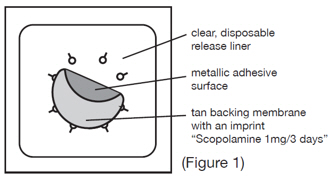
Figure 1 (Scopolamine 03)

Figure 1 (Scopolamine 03)
An instructional diagram showing a transdermal Scopolamine patch with labeled parts including a clear disposable release liner, metallic adhesive surface, and tan backing membrane imprinted with "Scopolamine 1 mg/3 days." This diagram visually details the patch's components that deliver medication over three days.*
FDA Label Image

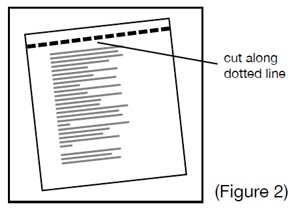
Figure 2 (Scopolamine 04)

Figure 2 (Scopolamine 04)
An instructional diagram showing a sheet of paper with a dotted line near the top edge and an arrow pointing to the dotted line labeled 'cut along dotted line.' The figure is identified as 'Figure 2.' This image appears to illustrate where to cut on the sheet.*
FDA Label Image

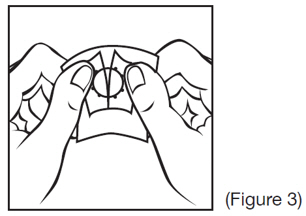
Figure 3 (Scopolamine 05)

Figure 3 (Scopolamine 05)
An instructional illustration showing two hands holding a transdermal patch with wings, positioned for application. The image is likely part of directions for use for Scopolamine transdermal patch, extended release, indicating how to handle the patch before applying it to the skin.*
FDA Label Image

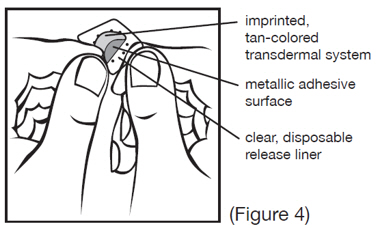
Figure 4 (Scopolamine 06)

Figure 4 (Scopolamine 06)
An instructional diagram showing a close-up of hands peeling a Scopolamine transdermal patch from its clear, disposable release liner. The patch has an imprinted tan-colored drug delivery system and a metallic adhesive surface. The illustration details the components of the patch during application preparation.*
FDA Label Image

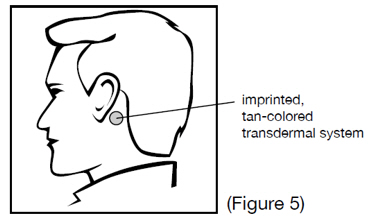
Figure 5 (Scopolamine 07)

Figure 5 (Scopolamine 07)
An instructional diagram showing the placement of a tan-colored extended release scopolamine transdermal patch behind the ear on the side of a person's head. The patch is imprinted and positioned on the skin behind the ear, illustrating correct application location for transdermal delivery.*

* About these descriptions: Image descriptions on this page are generated by automated AI analysis of the product label images from the manufacturer's FDA label submission (SPL). They are provided for reference only and may contain errors or omissions. Always rely on the printed label itself and the official FDA labeling, and consult a pharmacist or healthcare professional with any questions about this product.