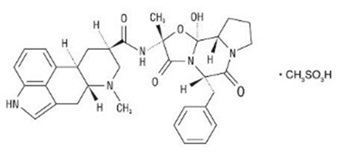
Dihydroergotamine Mesylate Injection, Solution
Product Images NDC 71357-013
View Photos of Packaging, Regulatory Labels, and Product Appearance
Product Visual Gallery
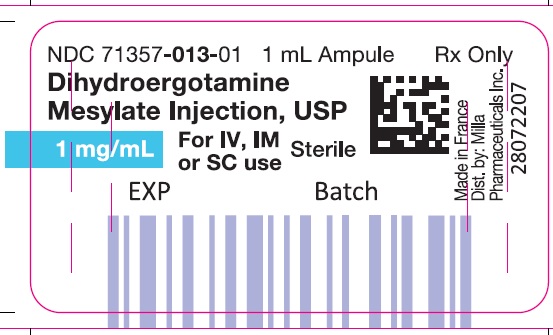
This gallery contains 5 technical images submitted to the FDA as part of the official labeling for Dihydroergotamine Mesylate (NDC 71357-013). Unlike standard consumer photos, these assets often include clinical data figures, molecular chemical structures, and official manufacturer packaging layouts.
As provided by Milla Pharmaceuticals Inc., these visuals offer a comprehensive scientific overview of the product's physical and chemical identity, aiding pharmacists and researchers in product verification and study.
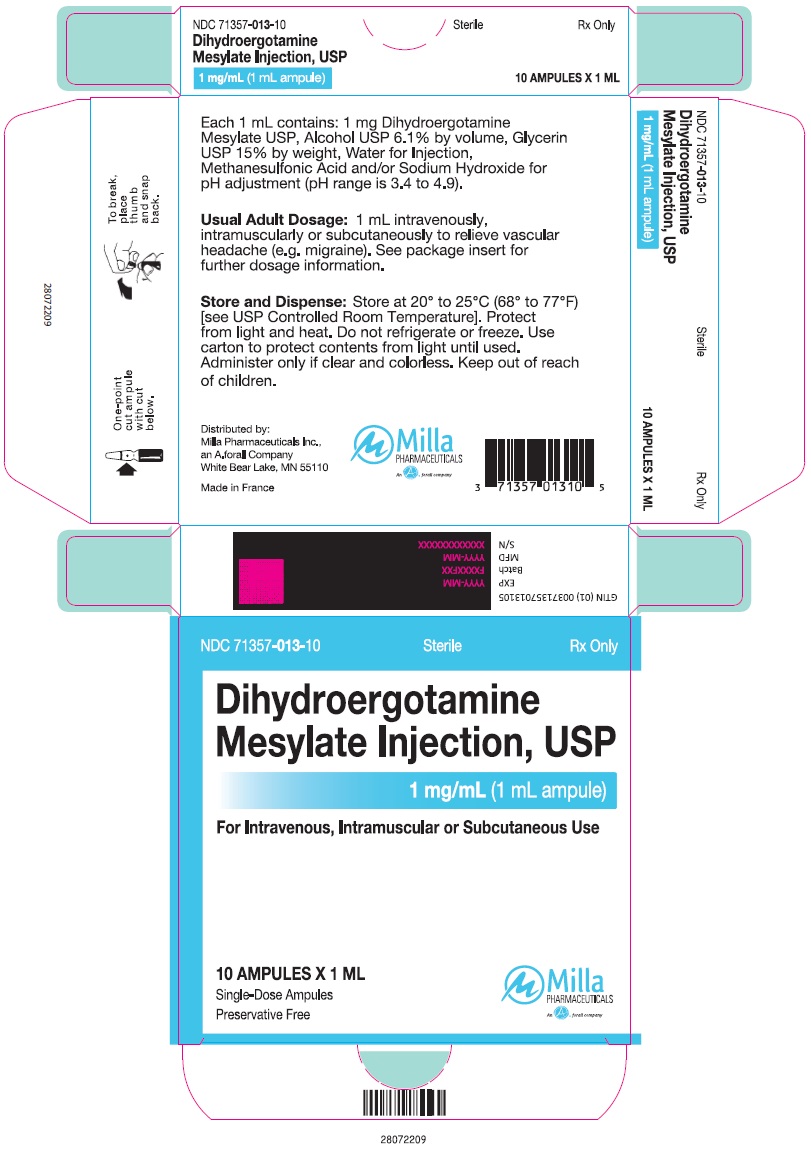
"image Description" (Dihydroergotamine Mesylate Inj 10 Ampules Carton Label)
This text provides information about a medication labeled as NDC 71357-013-10, namely Dihydroergotamine Mesylate Injection, USP. Each 1 mL ampule contains 1 mg of Dihydroergotamine Mesylate USP, along with other components like Alcohol USP and Glycerin. The medication is recommended for the relief of vascular migraines. The dosing instructions, storage details, and manufacturing origin (France) are also included. It is important to follow the package insert instructions for proper usage.*
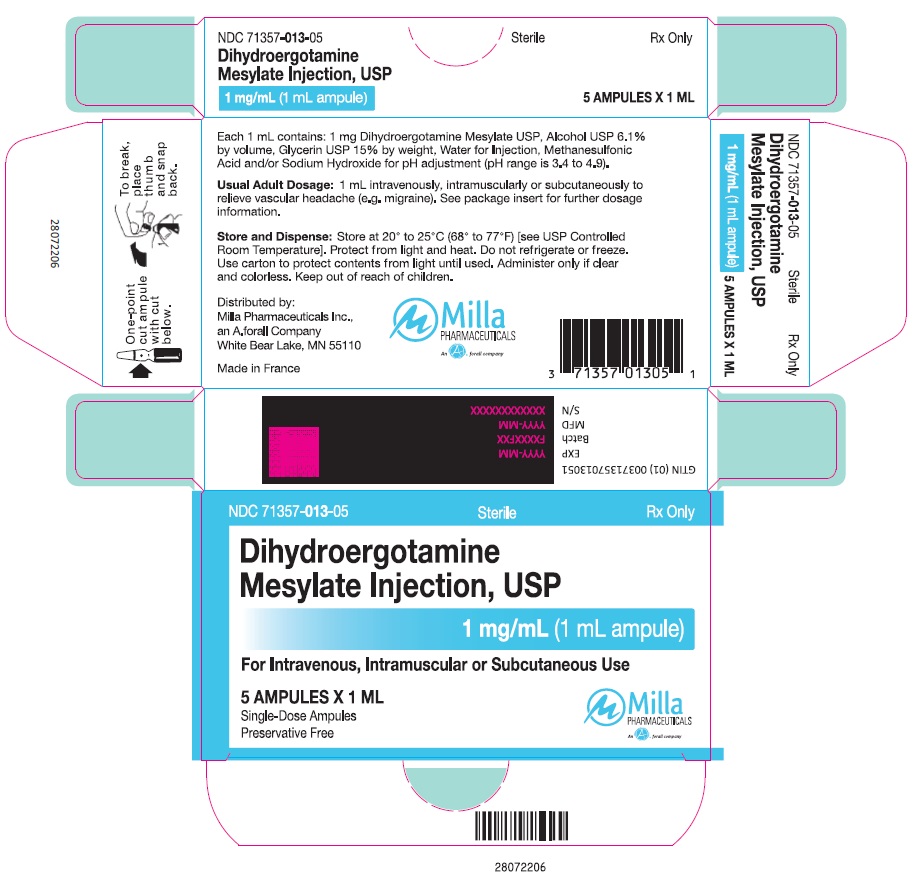
"image Description" (Dihydroergotamine Mesylate Inj 5 Ampules Carton Label)
This text is a description of a pharmaceutical product with the National Drug Code (NDC) 7135701305. It is a Dihydroergotamine Mesylate Injection, USP containing 1 mg/mL in a 1 mL ampule. The product is meant for intravenous, intramuscular, or subcutaneous use and comes in a package of 5 ampules. The formulation includes dihydroergotamine mesylate, alcohol, glycerin, water for injection, and pH adjusters. It is stored and dispensed at controlled room temperature. The text also includes information about dosage, administration, storage, and distribution details.*
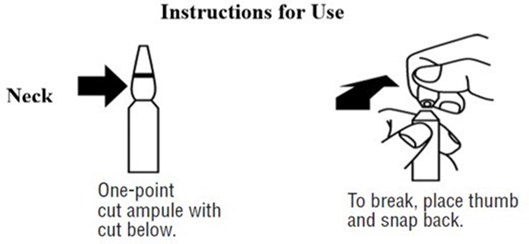
"image Description" (Dihydroergotamine Mesylate Inj Ifu)
"image Description" (Dihydroergotamine Mesylate Inj Structure)
* These product label images have been analyzed using experimental machine learning. Please verify findings with the primary label text.