Kodatef Tablet, Film Coated
Product Images NDC 71475-258

View Photos of Packaging, Regulatory Labels, and Product Appearance

Product Visual Gallery

This gallery contains 62 technical images submitted to the FDA as part of the official labeling for Kodatef (NDC 71475-258). Unlike standard consumer photos, these assets often include clinical data figures, molecular chemical structures, and official manufacturer packaging layouts.

As provided by 60 Degrees Pharmaceuticals, Inc, these visuals offer a comprehensive scientific overview of the product's physical and chemical identity, aiding pharmacists and researchers in product verification and study.

Product Images & Figures Index

FDA Label Image

Dear Hcp Letter Page 1 (Dear Hcp Letter Kodatef 7feb2025 Page 01)
Dear Hcp Letter Page 1 (Dear Hcp Letter Kodatef 7feb2025 Page 01)
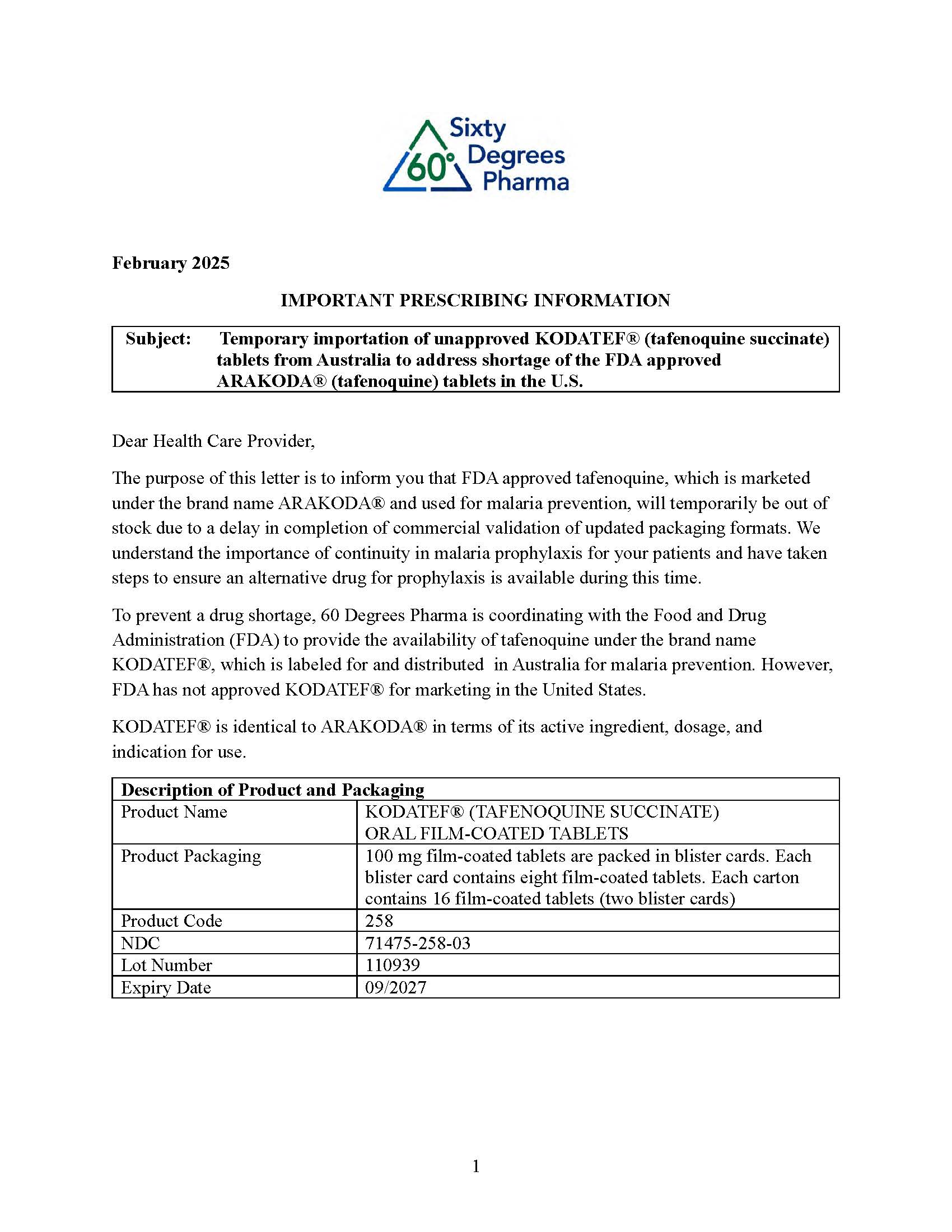
The letter provides prescribing information regarding the temporary importation of unapproved KODATEF® (tafenoquine succinate) tablets from Australia to address a shortage of the FDA-approved ARAKODA® tablets in the U.S. It explains that KODATEF® is identical to ARAKODA® in terms of active ingredient, dosage, and indication for use. The product is available in 100 mg film-coated tablets packed in blister cards with each containing eight tablets, and the carton contains 16 tablets in total. The product code is 258, NDC is 71475-258-03, lot number is 110939, and the expiry date is 09/2027. This alternative drug aims to ensure continuity in malaria prophylaxis for patients until the stock of ARAKODA® is replenished.*
FDA Label Image

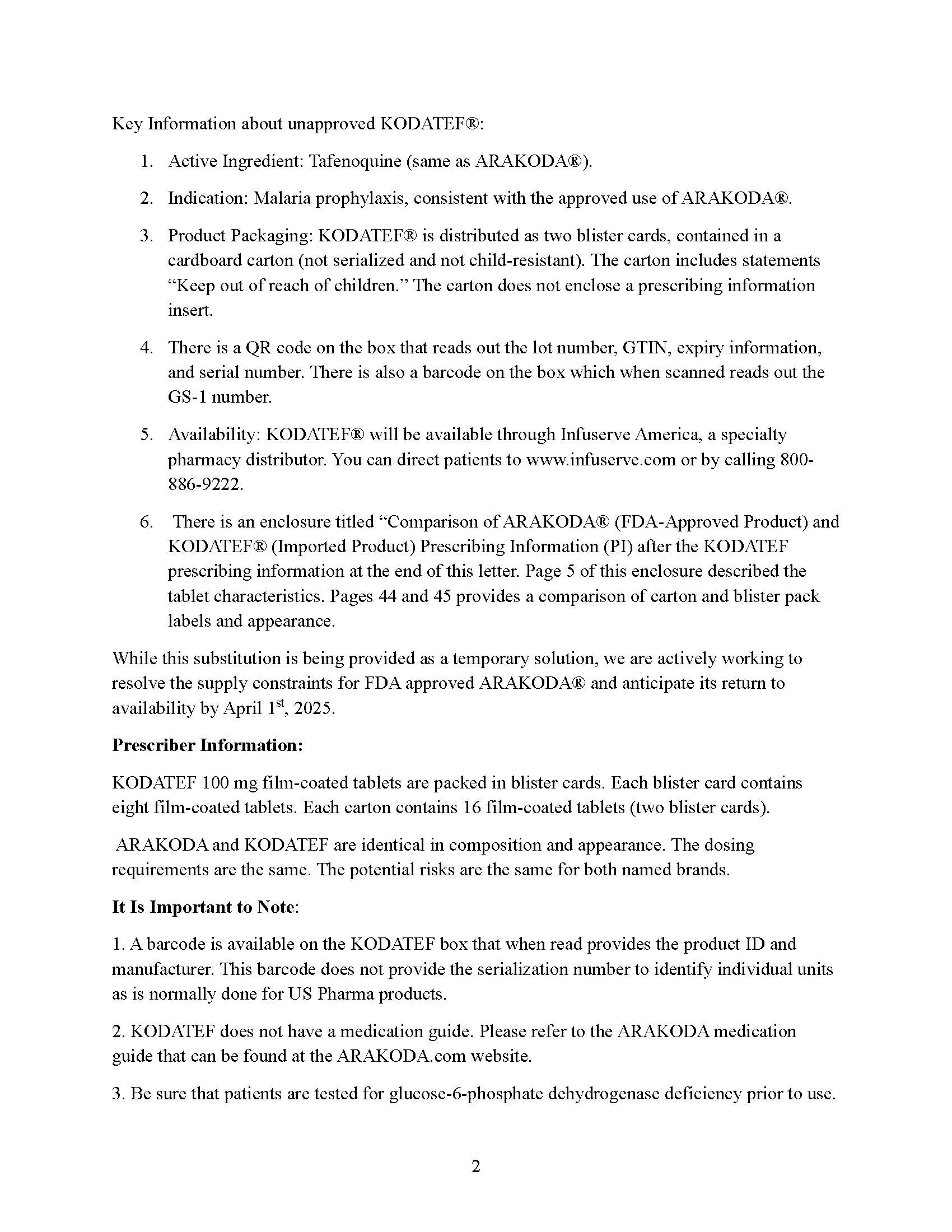
Dear Hcp Letter Page 2 (Dear Hcp Letter Kodatef 7feb2025 Page 02)

Dear Hcp Letter Page 2 (Dear Hcp Letter Kodatef 7feb2025 Page 02)
This text provides key information about the unapproved KODATEF® tablets, which contain Tafenoquine, the same active ingredient as ARAKODA®. KODATEF® is intended for malaria prophylaxis and is distributed in blister cards within a cardboard carton. The product includes a QR code and barcode for product information. Availability is through Infuserve America. Despite being a temporary solution for supply constraints, KODATEF® is currently identical to ARAKODA® in composition and appearance. Prescribers are advised to note that KODATEF® lacks a medication guide, with guidance to refer to the ARAKODA guide online. It is highlighted that patients should be tested for glucose-6-phosphate dehydrogenase deficiency before use.*
FDA Label Image

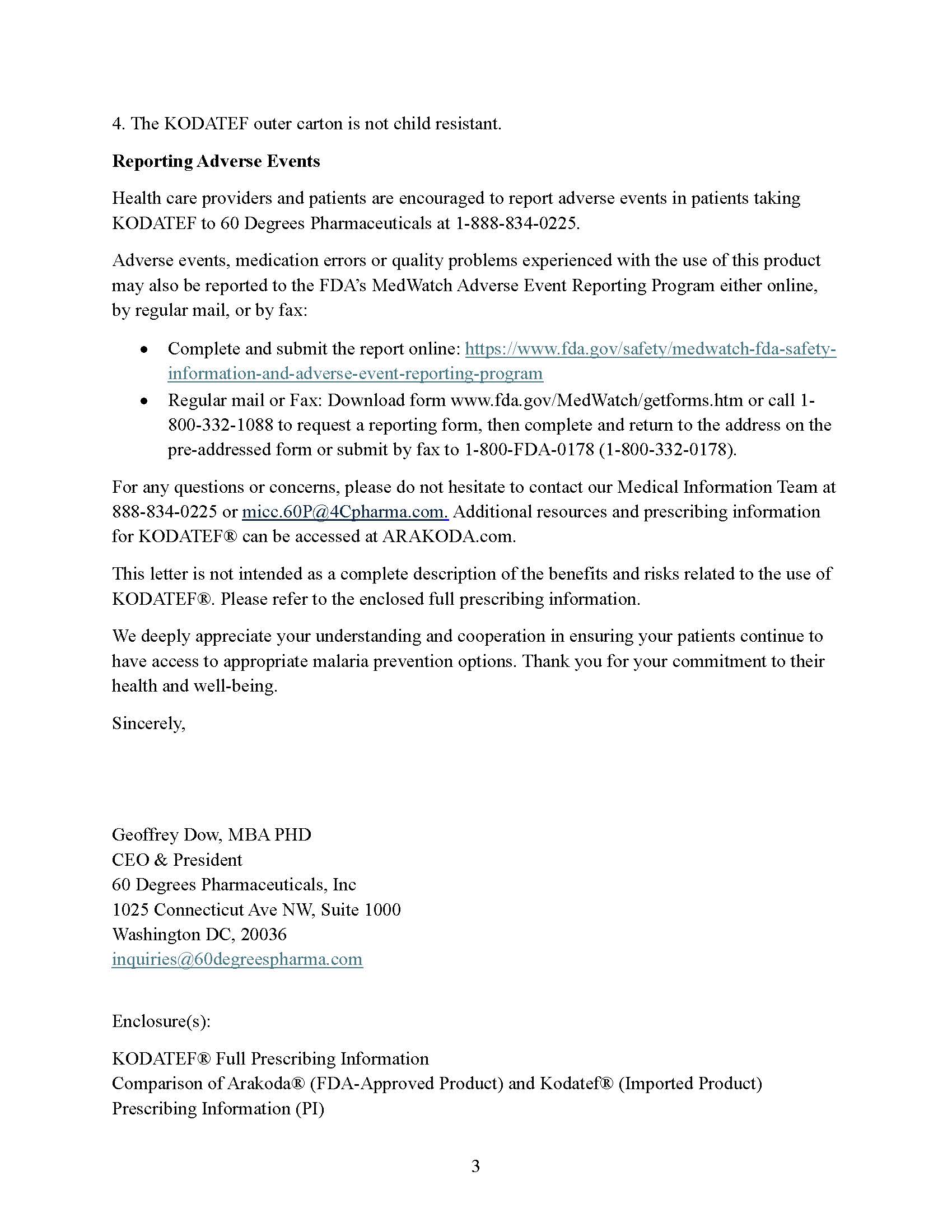
Dear Hcp Letter Page 3 (Dear Hcp Letter Kodatef 7feb2025 Page 03)

Dear Hcp Letter Page 3 (Dear Hcp Letter Kodatef 7feb2025 Page 03)
This text provides important information about reporting adverse events related to KODATEF medication. Health care providers and patients are encouraged to report any adverse events, medication errors, or quality problems by contacting 60 Degrees Pharmaceuticals at 1-888-834-0225 or through the FDA's MedWatch Adverse Event Reporting Program. There are multiple ways to report these issues, including online submission, regular mail, or fax. Contact information for additional questions or concerns is provided, along with resources for prescribing information on KODATEF®. The letter emphasizes the importance of ensuring patients have access to appropriate malaria prevention options and expresses gratitude for cooperation in patient care. It is signed by Geoffrey Dow, the CEO & President of 60 Degrees Pharmaceuticals, Inc.*
FDA Label Image

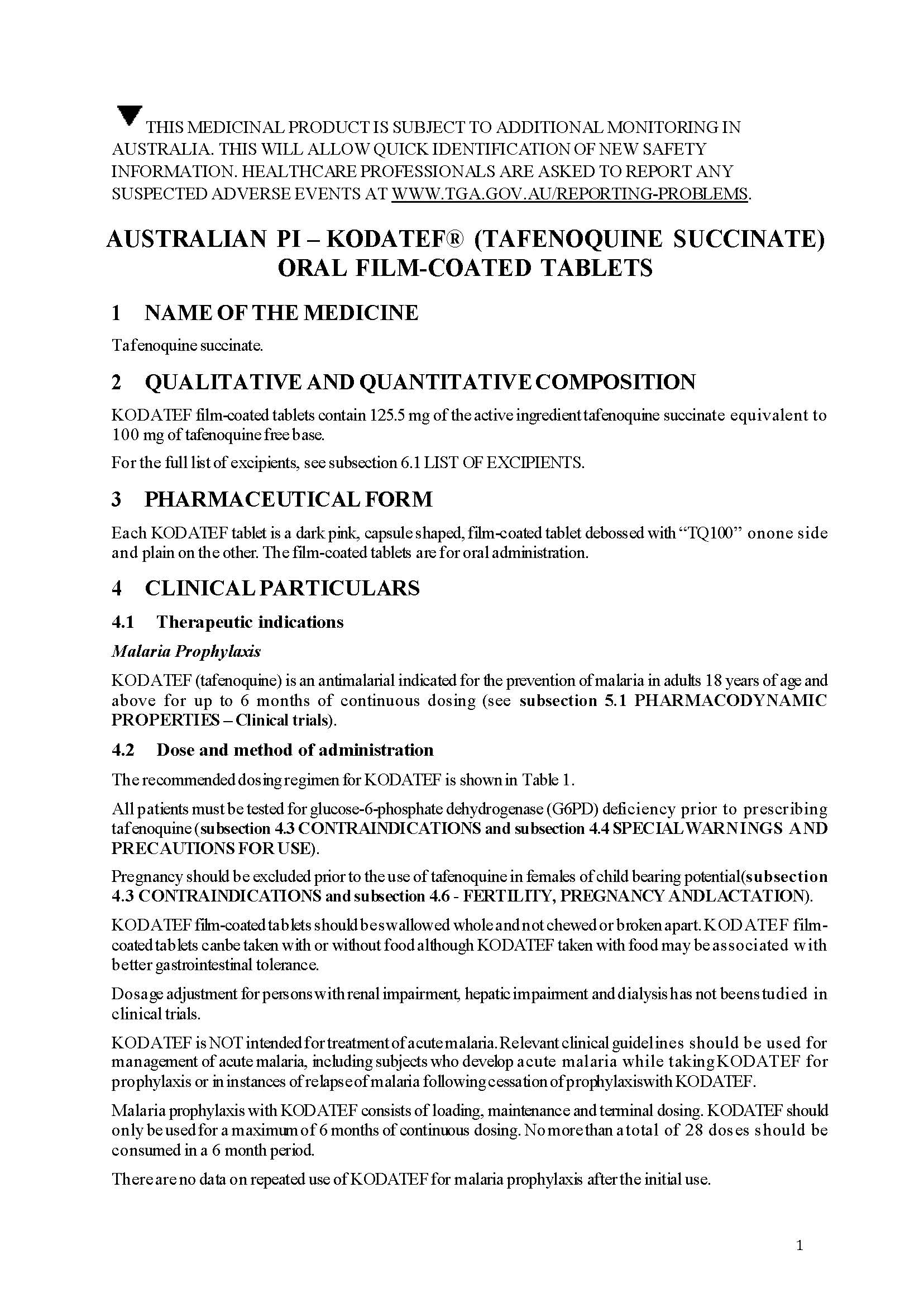
Dear Hcp Letter Page 4 (Dear Hcp Letter Kodatef 7feb2025 Page 04)

Dear Hcp Letter Page 4 (Dear Hcp Letter Kodatef 7feb2025 Page 04)
This text provides detailed information about the medicinal product KODATEF, which is an antimalarial drug indicated for malaria prophylaxis in adults. It contains tafenoquine succinate and comes in a film-coated tablet form. Healthcare professionals in Australia are required to report any suspected adverse events associated with this medication. The recommended dosing regimen, contraindications, precautions, and administration instructions are all outlined in the text. It emphasizes the importance of testing for G6PD deficiency and excluding pregnancy before prescribing KODATEF. Additionally, it states that the drug is not intended for the treatment of acute malaria and provides guidelines for managing such cases. KODATEF should be used for a maximum of 6 months with specific dosing instructions outlined.*
FDA Label Image

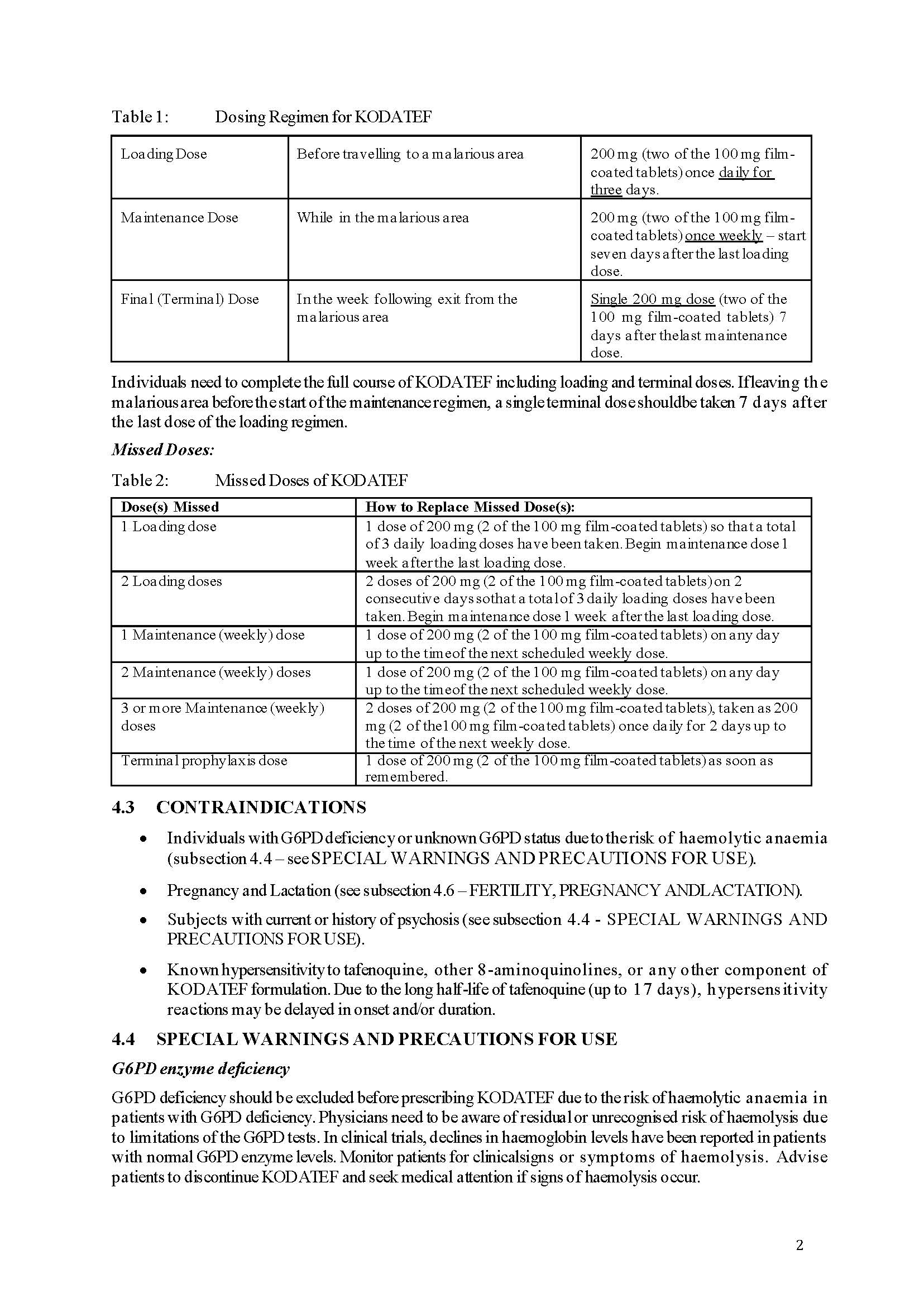
Dear Hcp Letter Page 5 (Dear Hcp Letter Kodatef 7feb2025 Page 05)

Dear Hcp Letter Page 5 (Dear Hcp Letter Kodatef 7feb2025 Page 05)
This text provides information on the dosing regimen for KODATEF, a medication used for malaria prophylaxis. It includes details on the loading dose before traveling to a malarious area, maintenance dose while in the area, and terminal dose after leaving. It also covers instructions for missed doses and contraindications for individuals with G6PD deficiency, pregnancy, lactation, and history of psychosis. Special warnings highlight the importance of monitoring G6PD enzyme deficiency and potential risks of hemolytic anemia. Users must complete the full course of KODATEF to ensure effectiveness.*
FDA Label Image

Dear Hcp Letter Page 6 (Dear Hcp Letter Kodatef 7feb2025 Page 06)

Dear Hcp Letter Page 6 (Dear Hcp Letter Kodatef 7feb2025 Page 06)
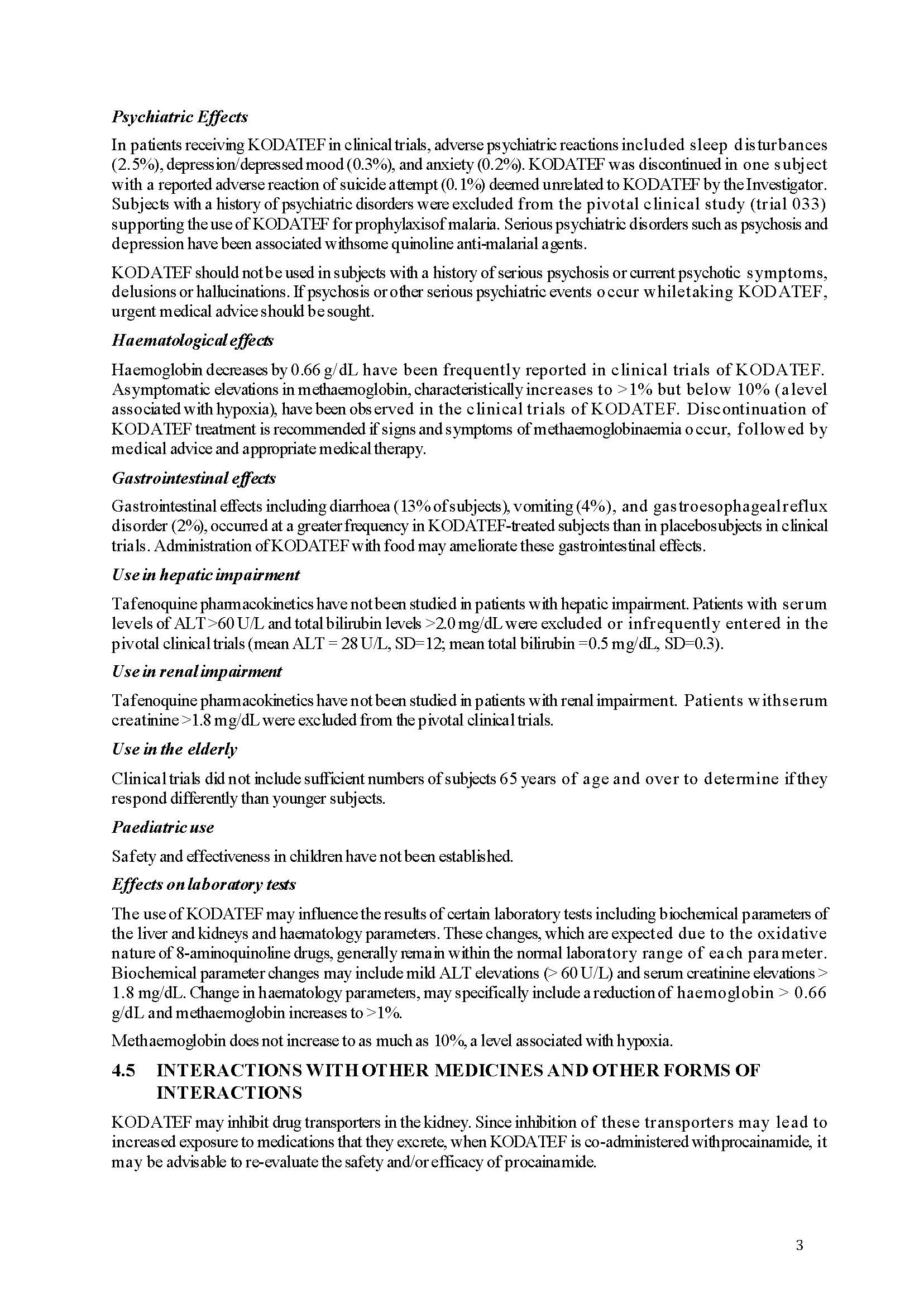
KODATEF is a medication used for prophylaxis of malaria that may cause adverse psychiatric reactions such as sleep disturbances, depression, and anxiety. It is important to note that individuals with a history of serious psychosis should not use KODATEF. The medicine can also lead to haematological effects like a decrease in hemoglobin and asymptomatic elevations in methemoglobin. Gastrointestinal effects such as diarrhea and vomiting are common, but these may be reduced by taking KODATEF with food. Additionally, the use of KODATEF in patients with hepatic or renal impairment, the elderly, and pediatric populations is not well-studied. It is advised to monitor laboratory parameters regularly while using KODATEF, as it may influence liver and kidney function tests. Considering drug interactions, KODATEF may inhibit certain kidney transporters, potentially affecting the safety and efficacy of co-administered medications like procainamide.*
FDA Label Image

Dear Hcp Letter Page 7 (Dear Hcp Letter Kodatef 7feb2025 Page 07)

Dear Hcp Letter Page 7 (Dear Hcp Letter Kodatef 7feb2025 Page 07)
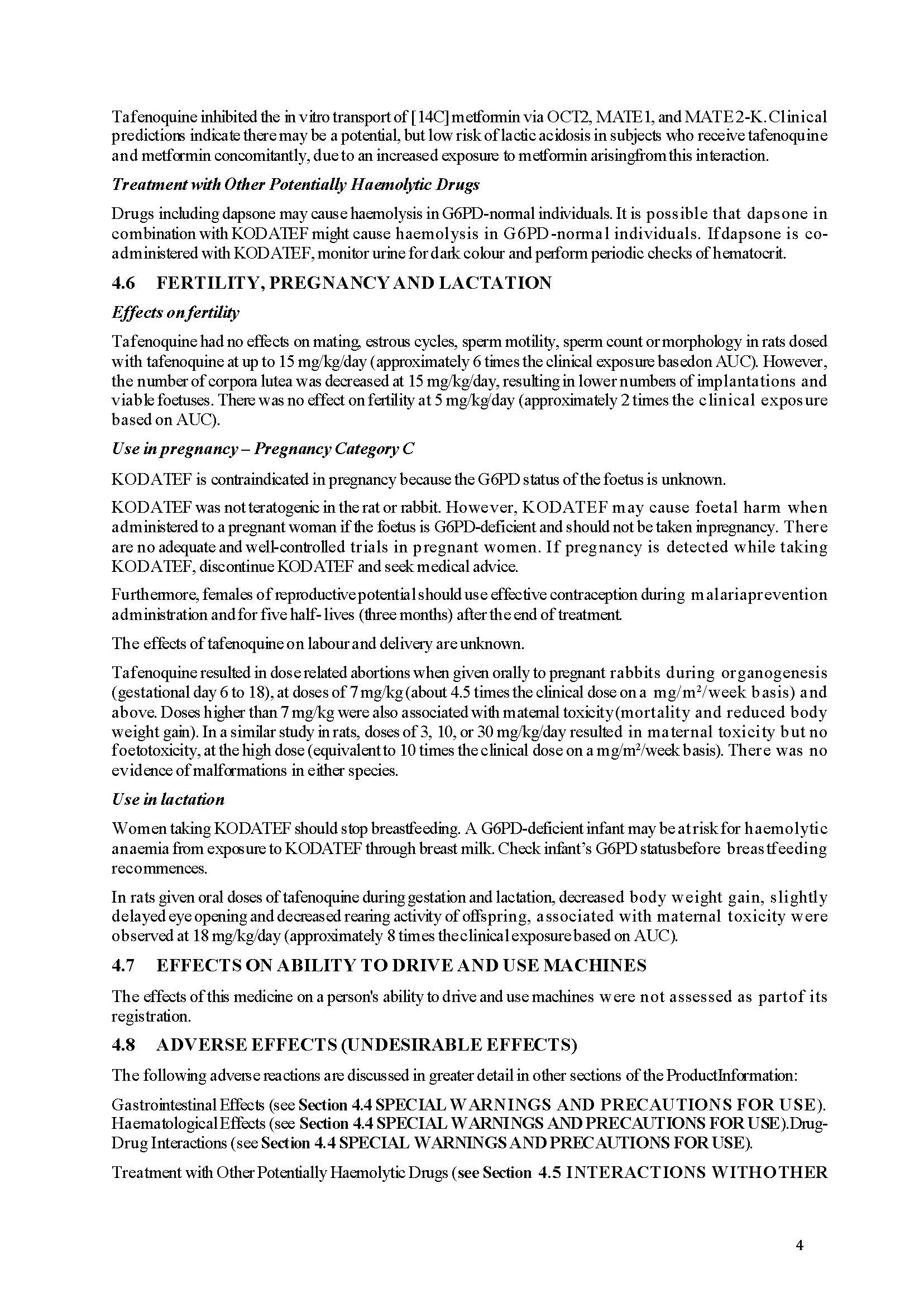
Tafenoquine is a medication that inhibits the transport of metformin in the body, potentially leading to an increased risk of lactic acidosis when taken together. It may also cause potential harm to the fetus if taken during pregnancy, especially if the fetus is G6PD-deficient. Tafenoquine had no significant effects on mating or sperm parameters in rats but showed some impact on fertility at higher doses. The drug should be avoided during pregnancy, and breastfeeding should be stopped while taking it. Additionally, caution should be taken with potential hemolytic drugs. The effects of tafenoquine on driving or machine operation are not well-documented. Various adverse effects including gastrointestinal and hematological issues can occur with its use. It is vital to monitor for negative interactions with other medications and to seek medical advice in case of pregnancy while on tafenoquine.*
FDA Label Image

Dear Hcp Letter Page 8 (Dear Hcp Letter Kodatef 7feb2025 Page 08)

FDA Label Image

Dear Hcp Letter Page 9 (Dear Hcp Letter Kodatef 7feb2025 Page 09)

Dear Hcp Letter Page 9 (Dear Hcp Letter Kodatef 7feb2025 Page 09)
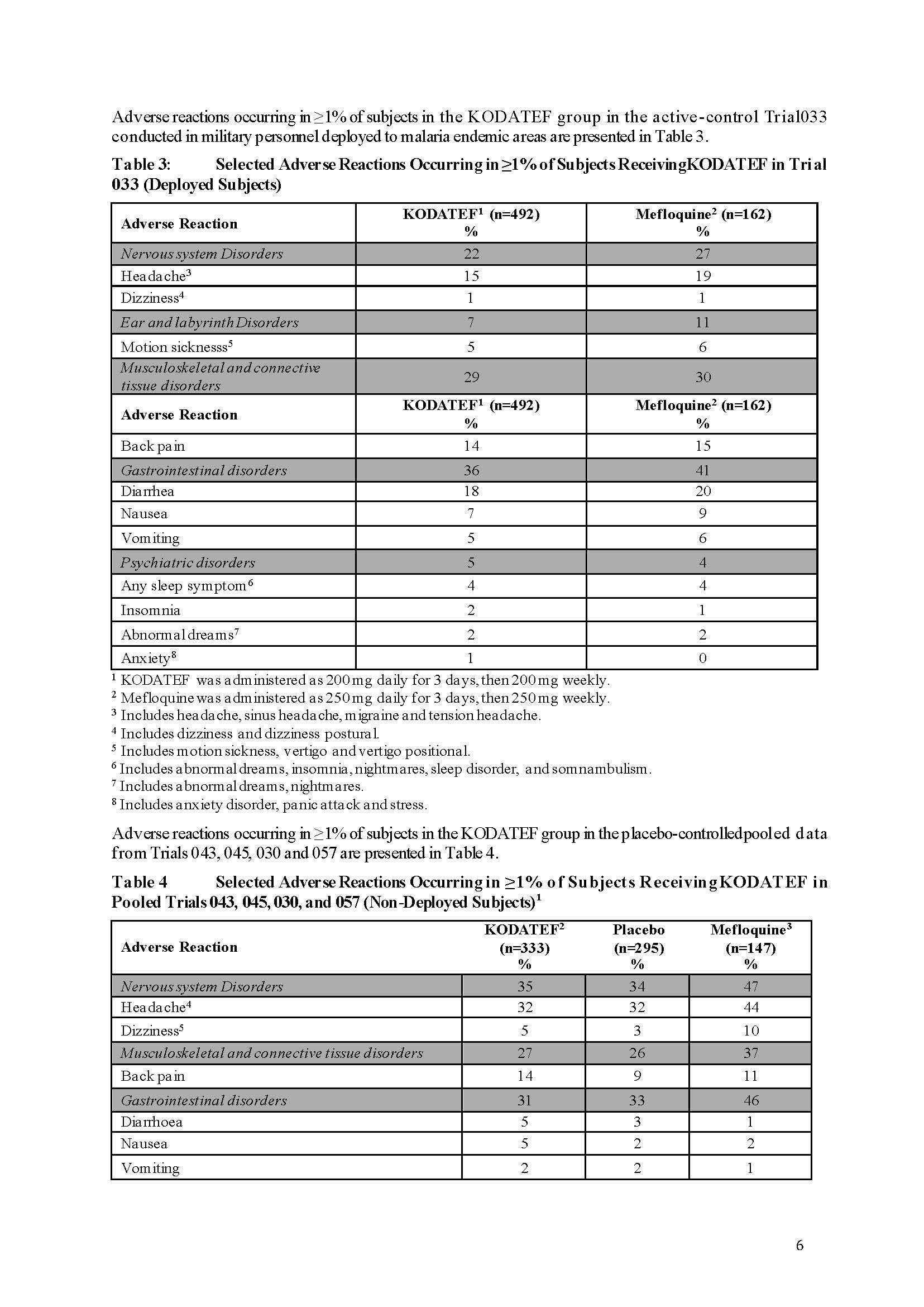
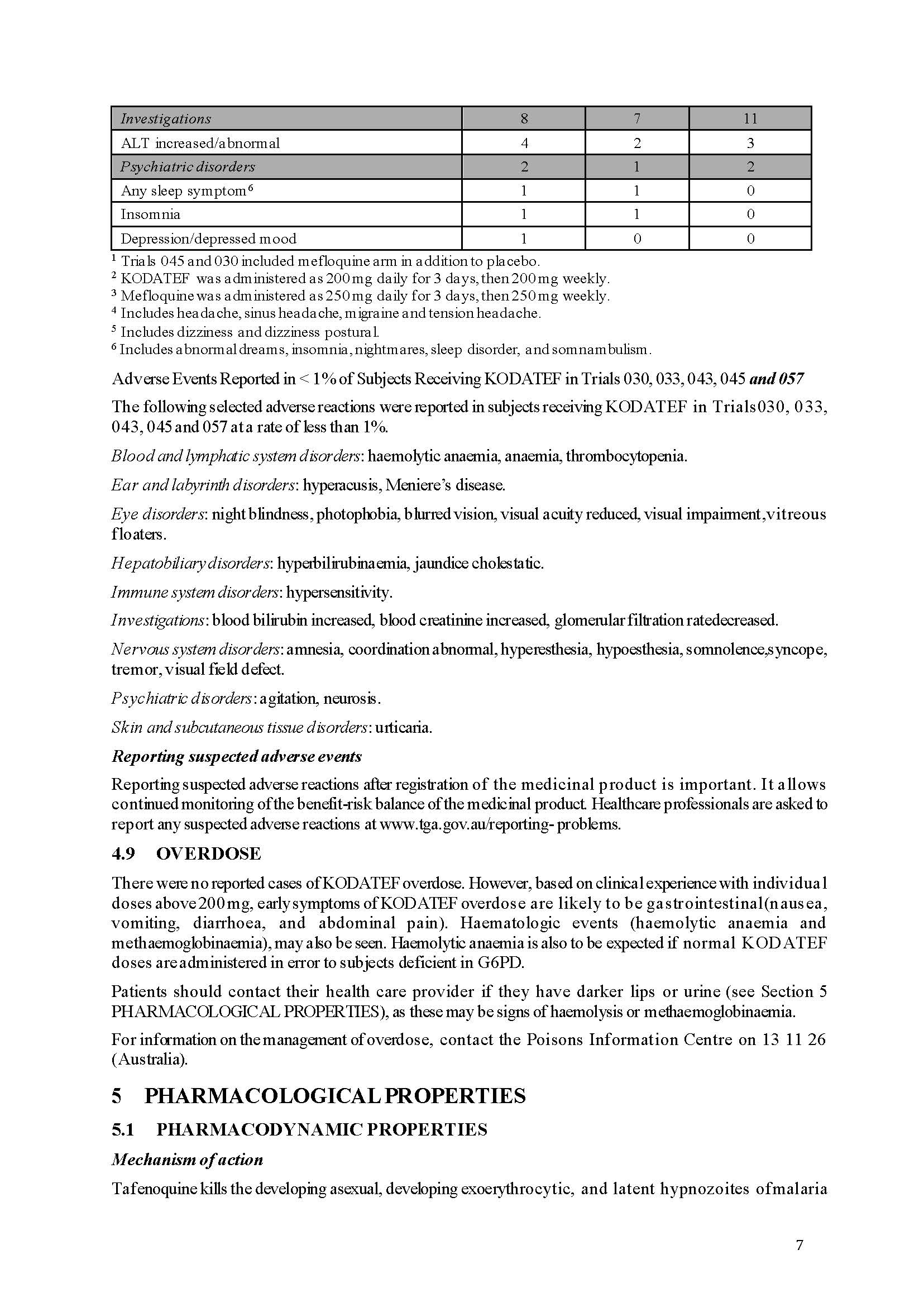
The text provides information on adverse reactions experienced by subjects in different trials involving KODATEF, an antimalarial drug. It includes details on the percentage of subjects experiencing various adverse reactions, such as headache, dizziness, back pain, gastrointestinal issues, and psychiatric disorders. The adverse reactions are compared between active-control trials conducted on deployed military personnel and placebo-controlled pooled data from non-deployed subjects. The data can help in evaluating the safety and tolerability of KODATEF in different populations.*
FDA Label Image

Dear Hcp Letter Page 10 (Dear Hcp Letter Kodatef 7feb2025 Page 10)

Dear Hcp Letter Page 10 (Dear Hcp Letter Kodatef 7feb2025 Page 10)
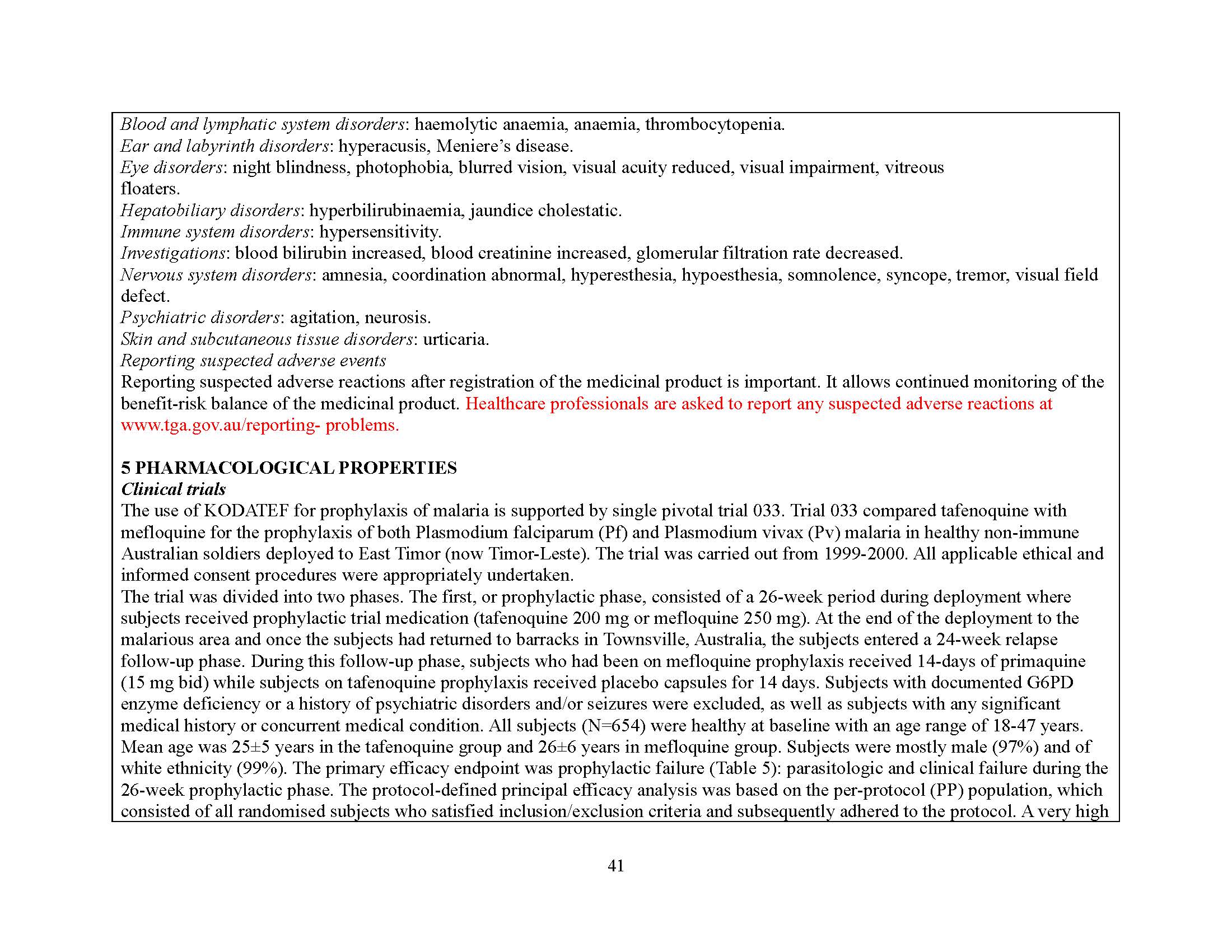
Description: The text provides information related to investigations, reported adverse events, and overdose cases associated with the medication "KODATEF" used in trials. It lists various adverse reactions and symptoms such as gastrointestinal issues, neurological disorders, psychiatric disorders, skin reactions, immune system disorders, and more. Additionally, it outlines the recommended actions in case of suspected adverse reactions and overdose. The text also briefly explains the pharmacological properties and mechanism of action of Tafenoquine, the active ingredient in KODATEF, in treating malaria.*
FDA Label Image

Dear Hcp Letter Page 11 (Dear Hcp Letter Kodatef 7feb2025 Page 11)

Dear Hcp Letter Page 11 (Dear Hcp Letter Kodatef 7feb2025 Page 11)
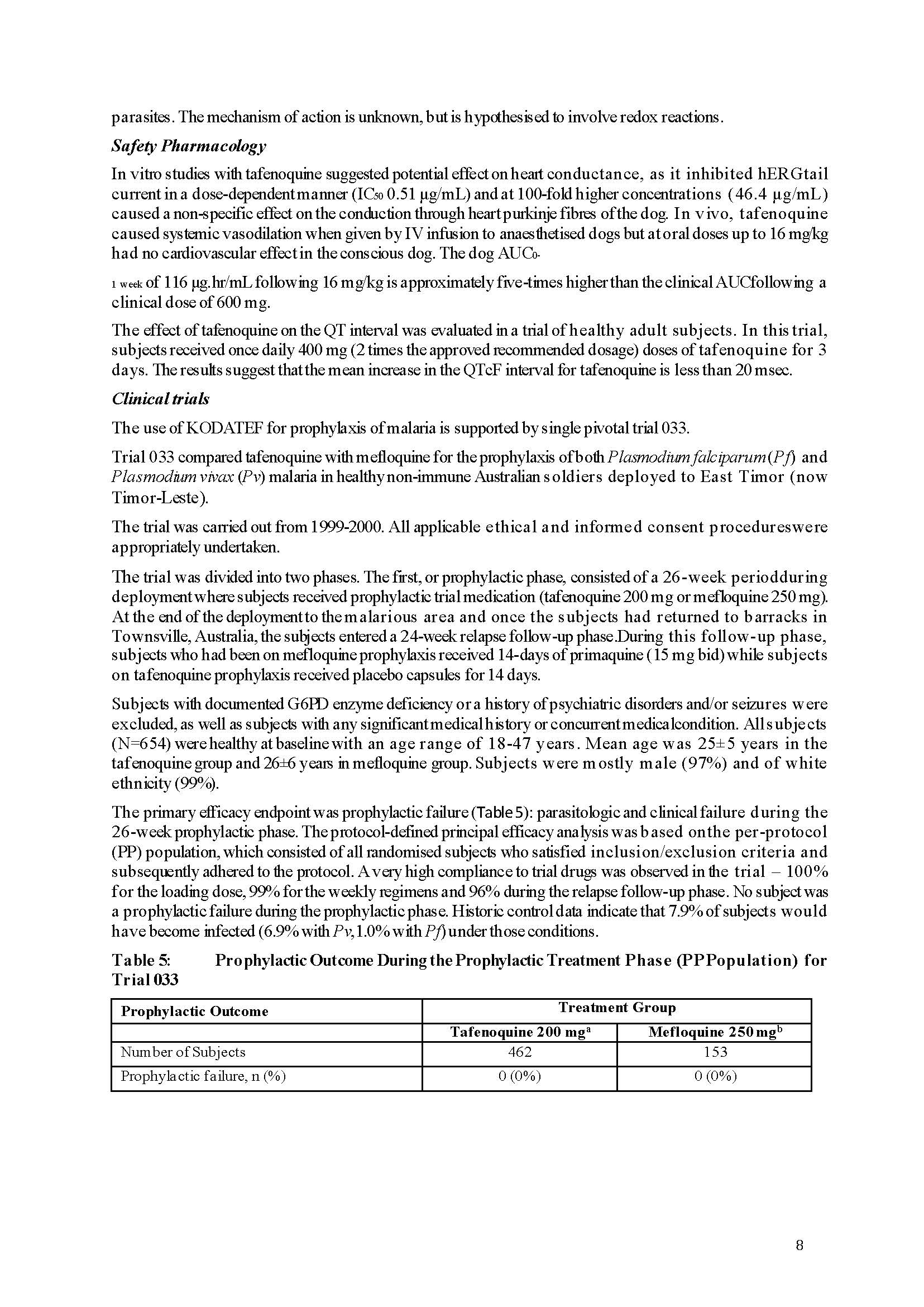
Tafenoquine is a medication used for the prophylaxis of malaria, particularly in non-immune individuals. The drug's mechanism of action is speculated to involve redox reactions. Safety pharmacology studies have suggested potential effects on heart conductance, with in vitro and in vivo findings related to its impact on heart function. Clinical trials such as Trial 033 compared tafenoquine with mefloquine in preventing Plasmodium falciparum and Plasmodium vivax malaria in Australian soldiers. The trial showed high compliance rates and no prophylactic failure with tafenoquine during the study period. Additional information about the drug's impact on the QT interval and other safety parameters is available from various studies.*
FDA Label Image

Dear Hcp Letter Page 12 (Dear Hcp Letter Kodatef 7feb2025 Page 12)

Dear Hcp Letter Page 12 (Dear Hcp Letter Kodatef 7feb2025 Page 12)
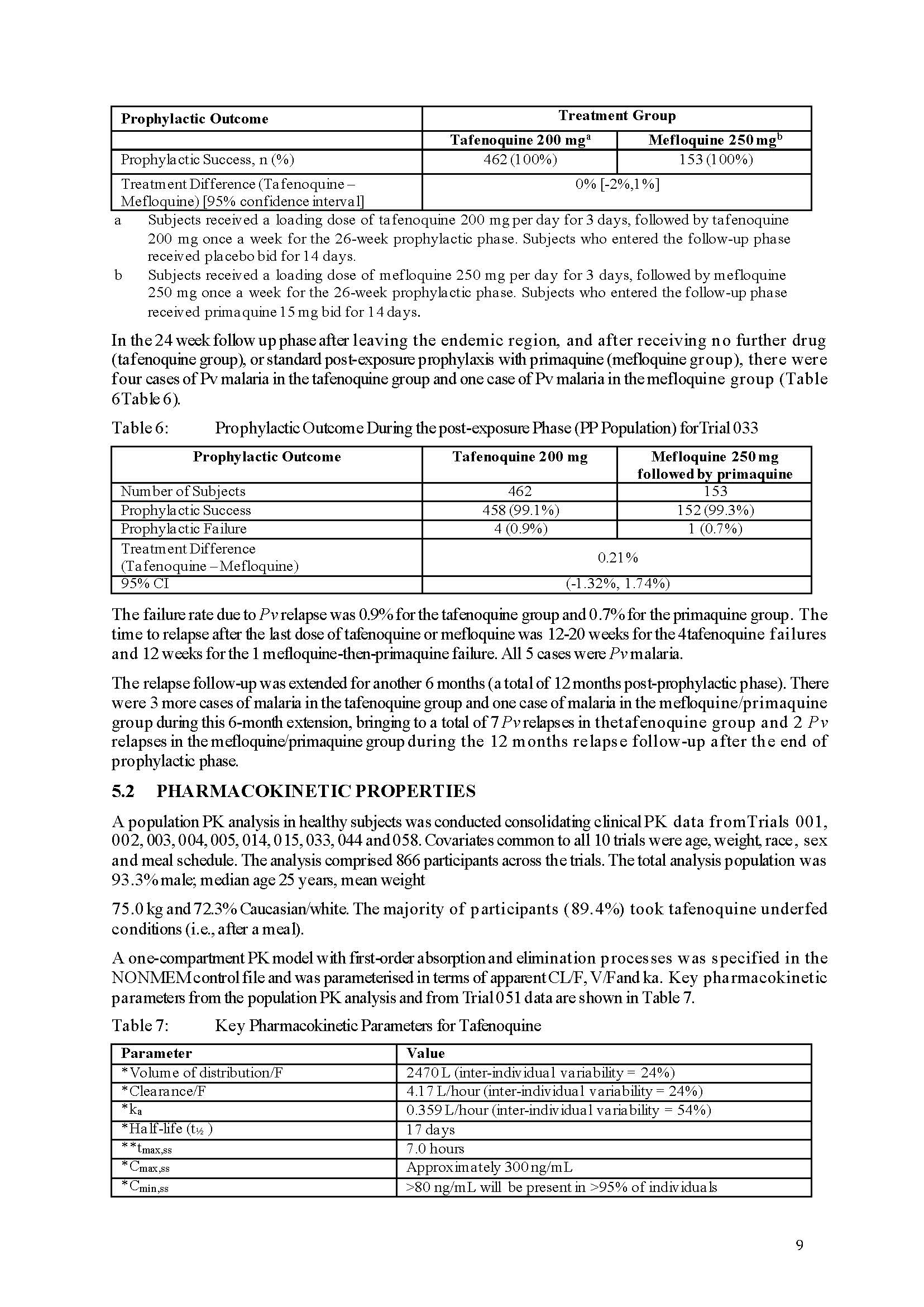
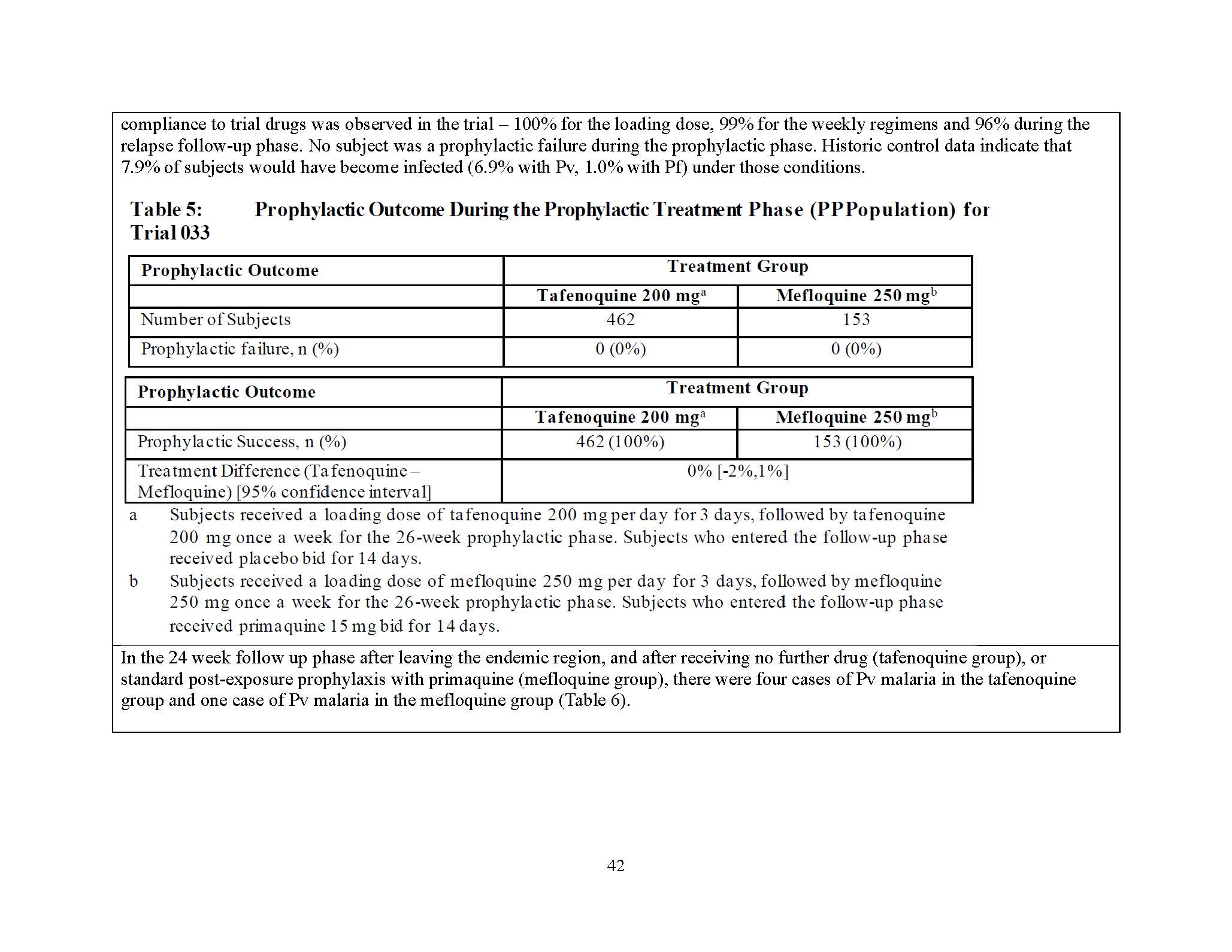
The text provides detailed information about a clinical trial comparing the prophylactic efficacy of tafenoquine and mefloquine in preventing malaria. It evaluates treatment success rates, prophylactic phases, follow-up phases, failures, and relapses in both groups. Additionally, it presents pharmacokinetic properties of tafenoquine, such as volume of distribution, clearance, half-life, and peak concentrations. The data includes statistics, confidence intervals, and outcomes, making it a valuable resource for understanding the effectiveness of these drugs in preventing malaria.*
FDA Label Image

Dear Hcp Letter Page 13 (Dear Hcp Letter Kodatef 7feb2025 Page 13)

Dear Hcp Letter Page 13 (Dear Hcp Letter Kodatef 7feb2025 Page 13)
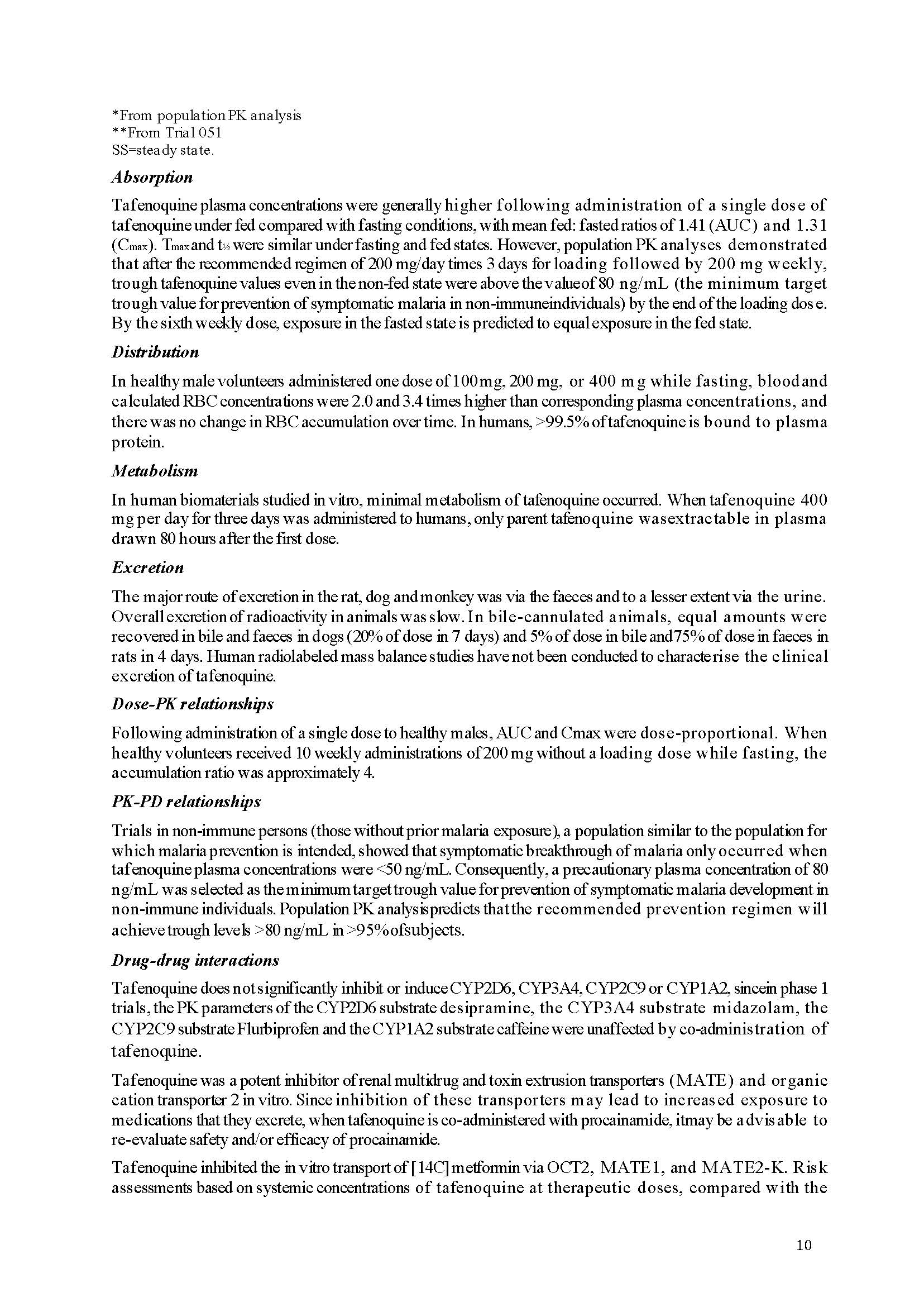
The extracted text provides detailed pharmacokinetic information about tafenoquine, an antimalarial drug. It covers aspects such as absorption, distribution, metabolism, excretion, dose-PK relationships, PK-PD relationships, and drug-drug interactions. Notably, it mentions that the recommended regimen of tafenoquine leads to trough levels above 80 ng/mL for malaria prevention. Additionally, it discusses the low metabolism of tafenoquine, its excretion routes, and the lack of significant drug interactions with key metabolic enzymes. Furthermore, it highlights the potential interaction of tafenoquine with renal transporters, suggesting caution when co-administered with medications excreted by these transporters.*
FDA Label Image

Dear Hcp Letter Page 14 (Dear Hcp Letter Kodatef 7feb2025 Page 14)

Dear Hcp Letter Page 14 (Dear Hcp Letter Kodatef 7feb2025 Page 14)
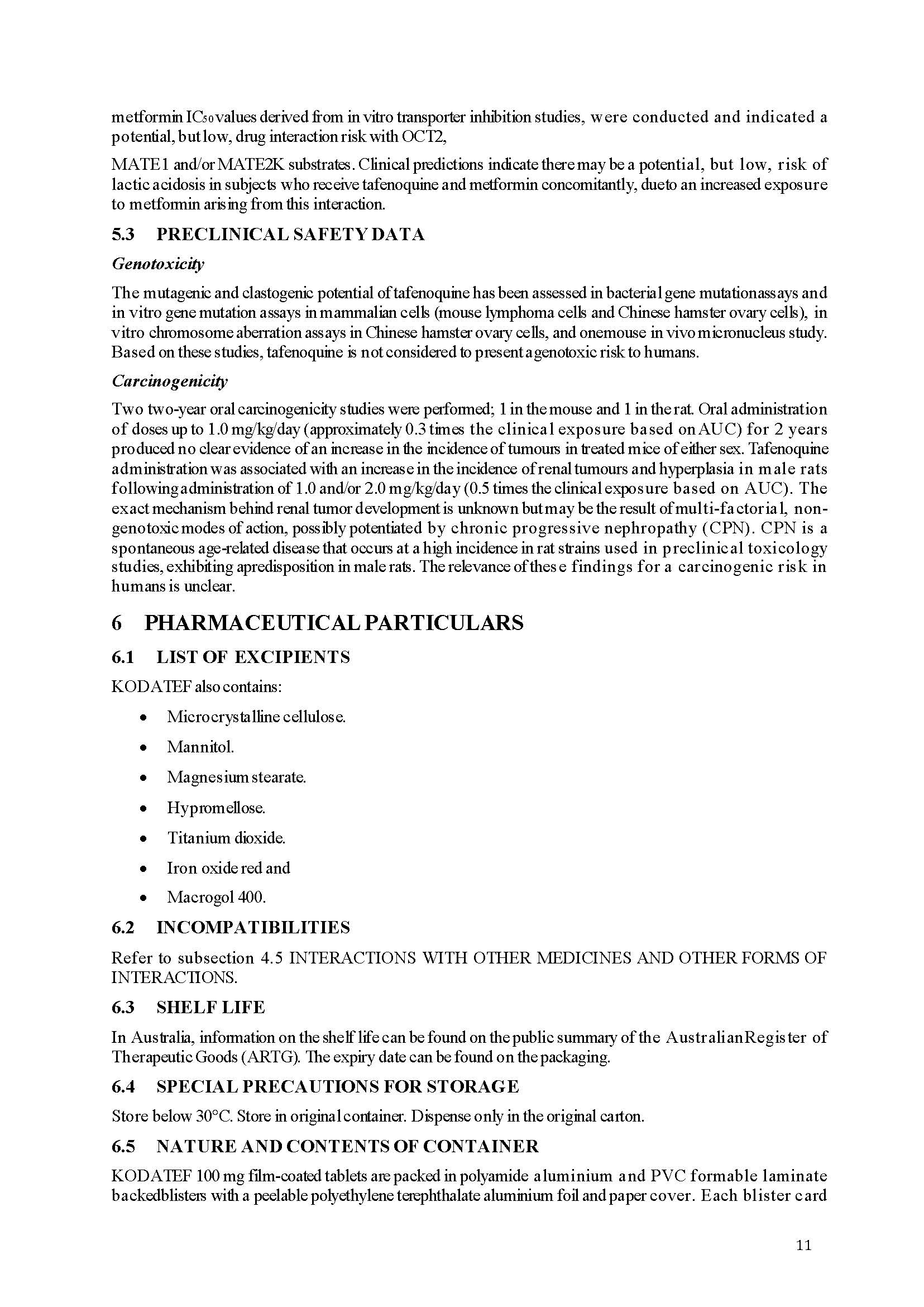
The text provides information on the potential drug interaction risk of metformin with OCT2, MATE1, and MATE2K substrates. It also mentions a potential risk of lactic acidosis when tafenoquine is taken with metformin. The preclinical safety data includes assessments of genotoxicity and carcinogenicity of tafenoquine, indicating that it is not considered genotoxic but might have some renal tumor development effects in rats. It also lists the excipients present in KODATEF, such as microcrystalline cellulose, mannitol, and magnesium stearate. Shelf life details and storage precautions are provided for KODATEF tablets. The tablets are packed in polyamide aluminum and PVC blister packs.*
FDA Label Image

Dear Hcp Letter Page 15 (Dear Hcp Letter Kodatef 7feb2025 Page 15)

Dear Hcp Letter Page 15 (Dear Hcp Letter Kodatef 7feb2025 Page 15)
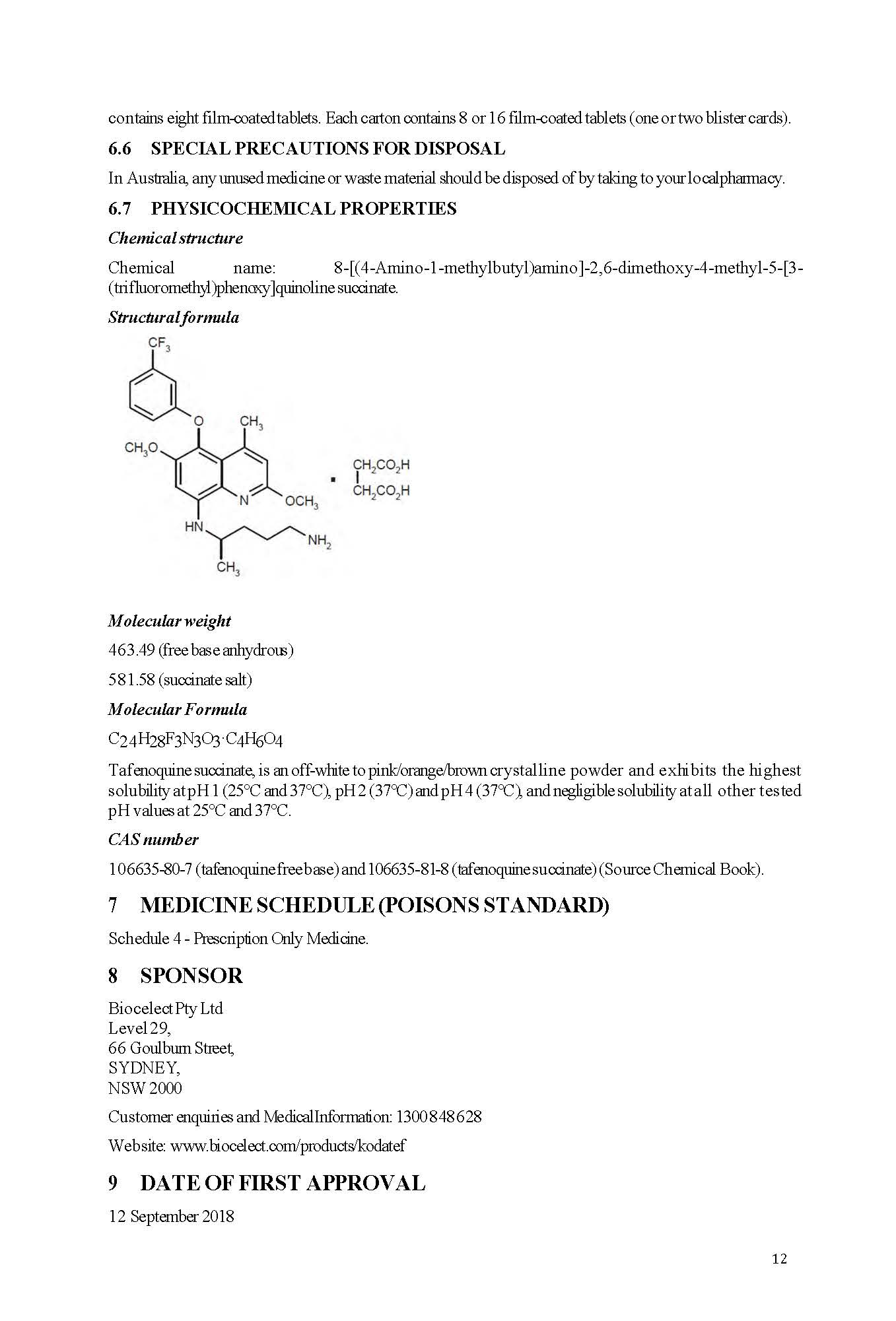
This product is a medication containing tafenoquine succinate in film-coated tablets. Each carton comes with either 8 or 16 tablets. It is important to dispose of any unused medicine properly by taking it to your local pharmacy. The product's chemical structure, physicochemical properties, molecular weight, molecular formula, and CAS number are provided. Tafenoquine succinate is an off-white to pink/orange/brown crystalline powder, with specific solubility properties. It is categorized as a Schedule 4 - Prescription Only Medicine. The sponsor of this medication is Biocelect Pty Ltd, located in Sydney, Australia. For customer inquiries and medical information, the contact number is 1300848628. The product was first approved on September 12, 2018. For more information, you can visit their website at www.biocelect.com/products/kodatef.*
FDA Label Image

Dear Hcp Letter Page 16 (Dear Hcp Letter Kodatef 7feb2025 Page 16)

Dear Hcp Letter Page 16 (Dear Hcp Letter Kodatef 7feb2025 Page 16)
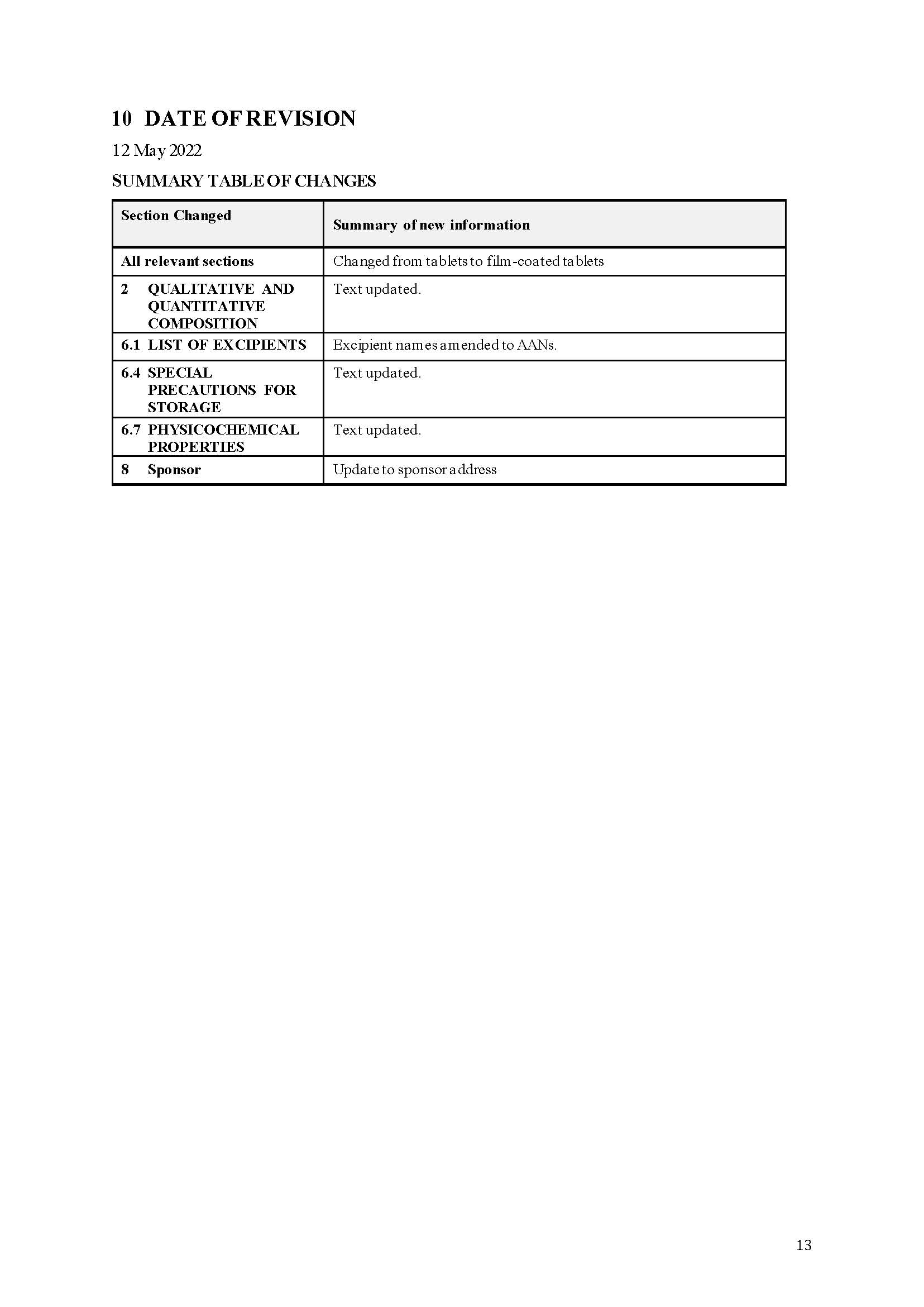
This is a revision summary of a pharmaceutical product. The changes include switching from tablets to film-coated tablets, updating the qualitative and quantitative composition text, amending excipient names to AANs in the list of excipients, updating special precautions for storage, and updating physicochemical properties information. Additionally, there is an update to the sponsor address. The revision date is May 12, 2022.*
FDA Label Image

Dear Hcp Letter Page 17 (Dear Hcp Letter Kodatef 7feb2025 Page 17)

Dear Hcp Letter Page 17 (Dear Hcp Letter Kodatef 7feb2025 Page 17)
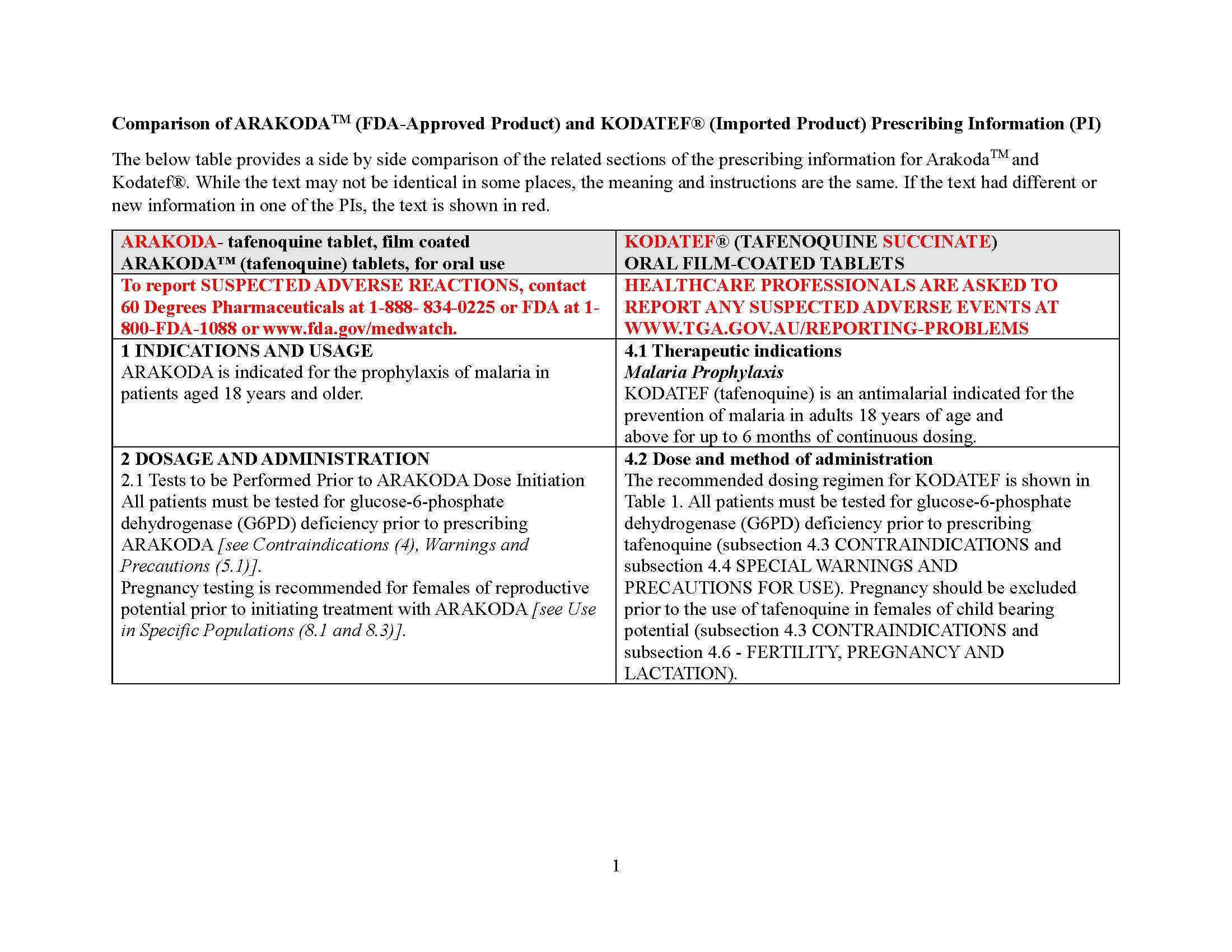
This text compares the prescribing information of two antimalarial products: ARAKODA™ and KODATEF®. The information includes details on indications, dosage, and administration for patients aged 18 years and older. Both products require testing for glucose-6-phosphate dehydrogenase deficiency and pregnancy testing in females of reproductive potential before initiating treatment. Adverse reactions can be reported to the respective pharmaceutical companies or health authorities.*
FDA Label Image

Dear Hcp Letter Page 18 (Dear Hcp Letter Kodatef 7feb2025 Page 18)

Dear Hcp Letter Page 18 (Dear Hcp Letter Kodatef 7feb2025 Page 18)
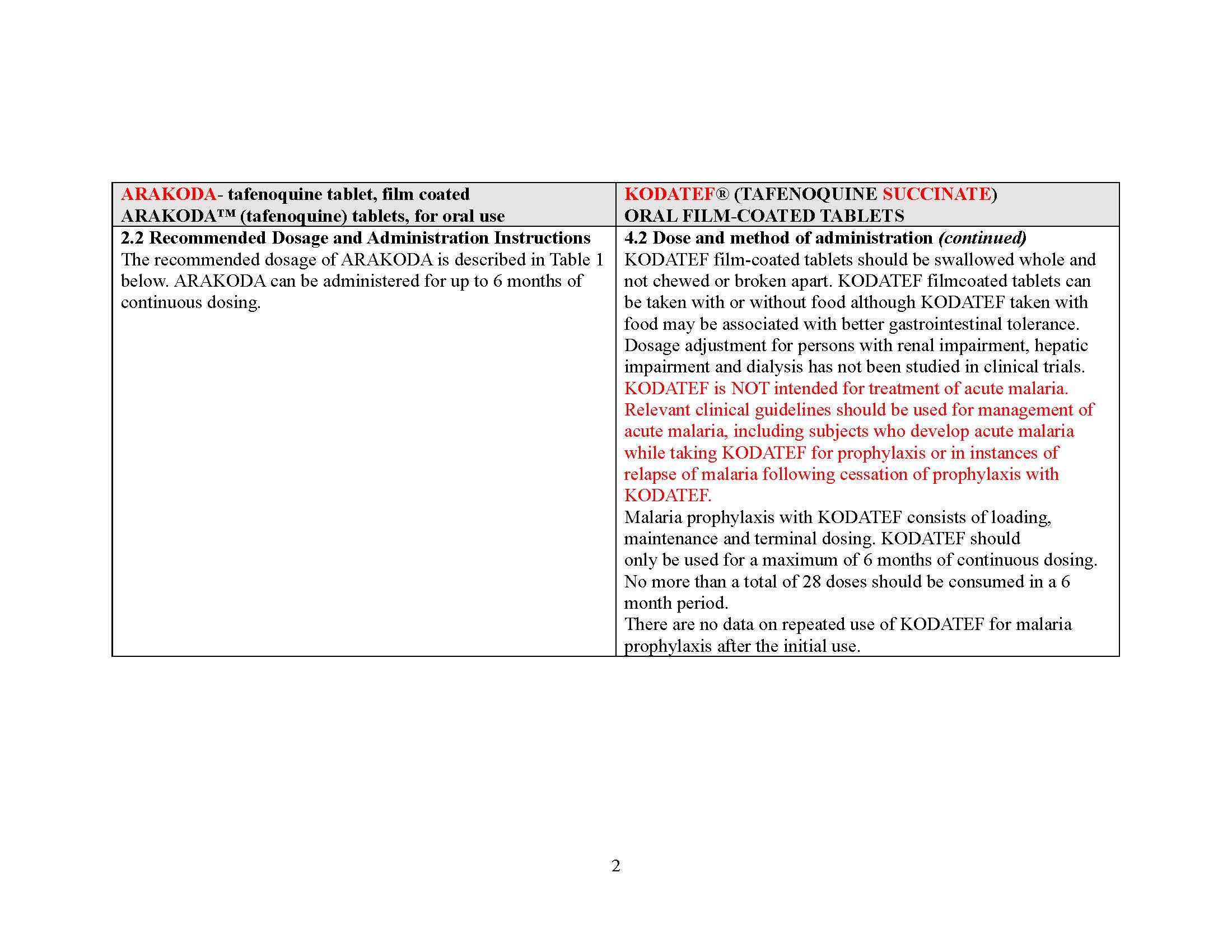
This is a description of ARAKODA (tafenoquine) tablets and KODATEF (TAFENOQUINE SUCCINATE) oral film-coated tablets for oral use as a malaria prophylaxis. The text provides dosage and administration instructions, emphasizing that the tablets should be swallowed whole and not chewed or broken. It discusses the recommended duration of use and dosage limits for both ARAKODA and KODATEF tablets. Additionally, it mentions that KODATEF is not intended for the treatment of acute malaria and advises consulting relevant clinical guidelines for managing acute malaria. Dosage adjustments for renal or hepatic impairment have not been studied, and the text highlights the importance of following proper guidelines for prophylactic use of these tablets.*
FDA Label Image

Dear Hcp Letter Page 19 (Dear Hcp Letter Kodatef 7feb2025 Page 19)

Dear Hcp Letter Page 19 (Dear Hcp Letter Kodatef 7feb2025 Page 19)
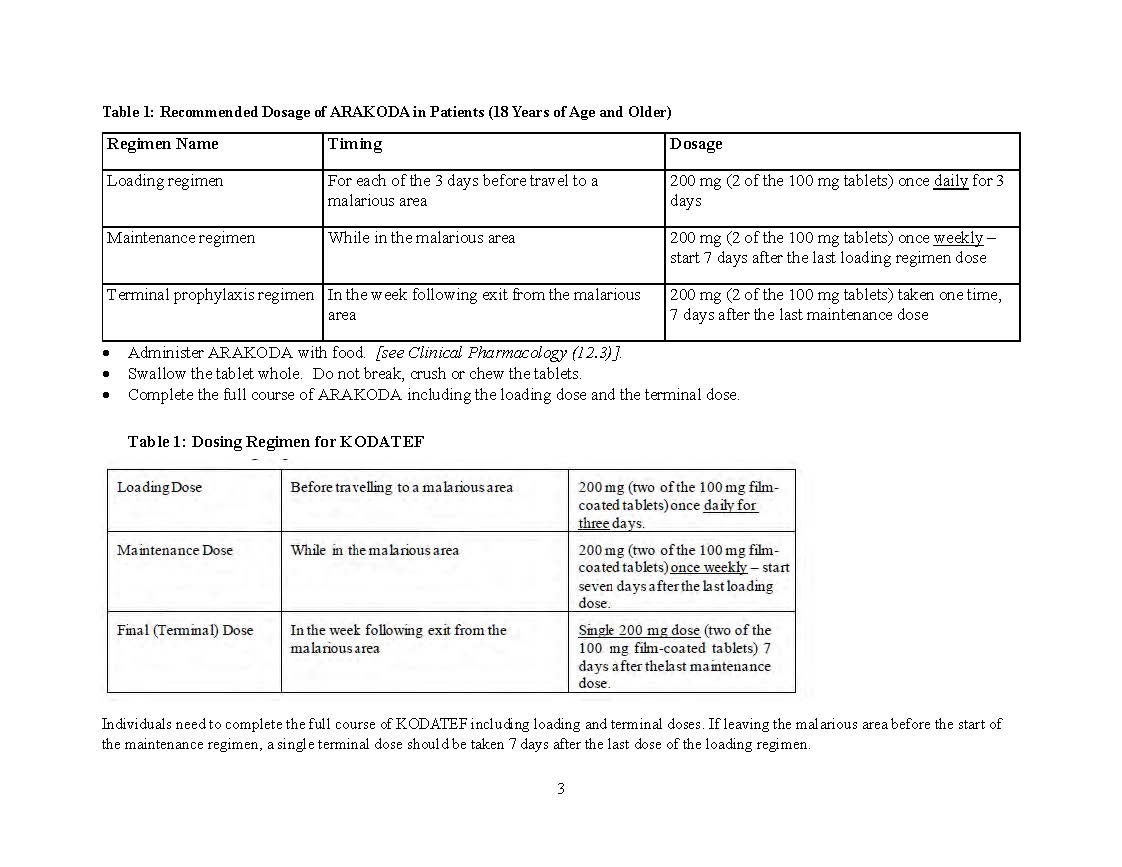
Table 1 provides the recommended dosage of ARAKODA and KODATEF for patients aged 18 years and older traveling to malarious areas. For ARAKODA, the loading regimen consists of 200mg once daily for 3 days before travel, the maintenance regimen is 200mg once weekly while in the malarious area starting 7 days after the loading regimen, and the terminal prophylaxis regimen is a single 200mg dose in the week following exit from the malarious area. It is advised to administer ARAKODA with food, swallow the tablets whole, and complete the full course, including both the loading dose and the terminal dose. For KODATEF, the loading dose is 200mg once daily for three days before travel, the maintenance dose is 200mg once weekly while in the malarious area starting seven days after the loading dose, and the final (terminal) dose is a single 200mg dose 7 days after the last maintenance dose. It is also recommended to complete the full course of KODATEF, including both loading and terminal doses.*
FDA Label Image

Dear Hcp Letter Page 20 (Dear Hcp Letter Kodatef 7feb2025 Page 20)

Dear Hcp Letter Page 20 (Dear Hcp Letter Kodatef 7feb2025 Page 20)
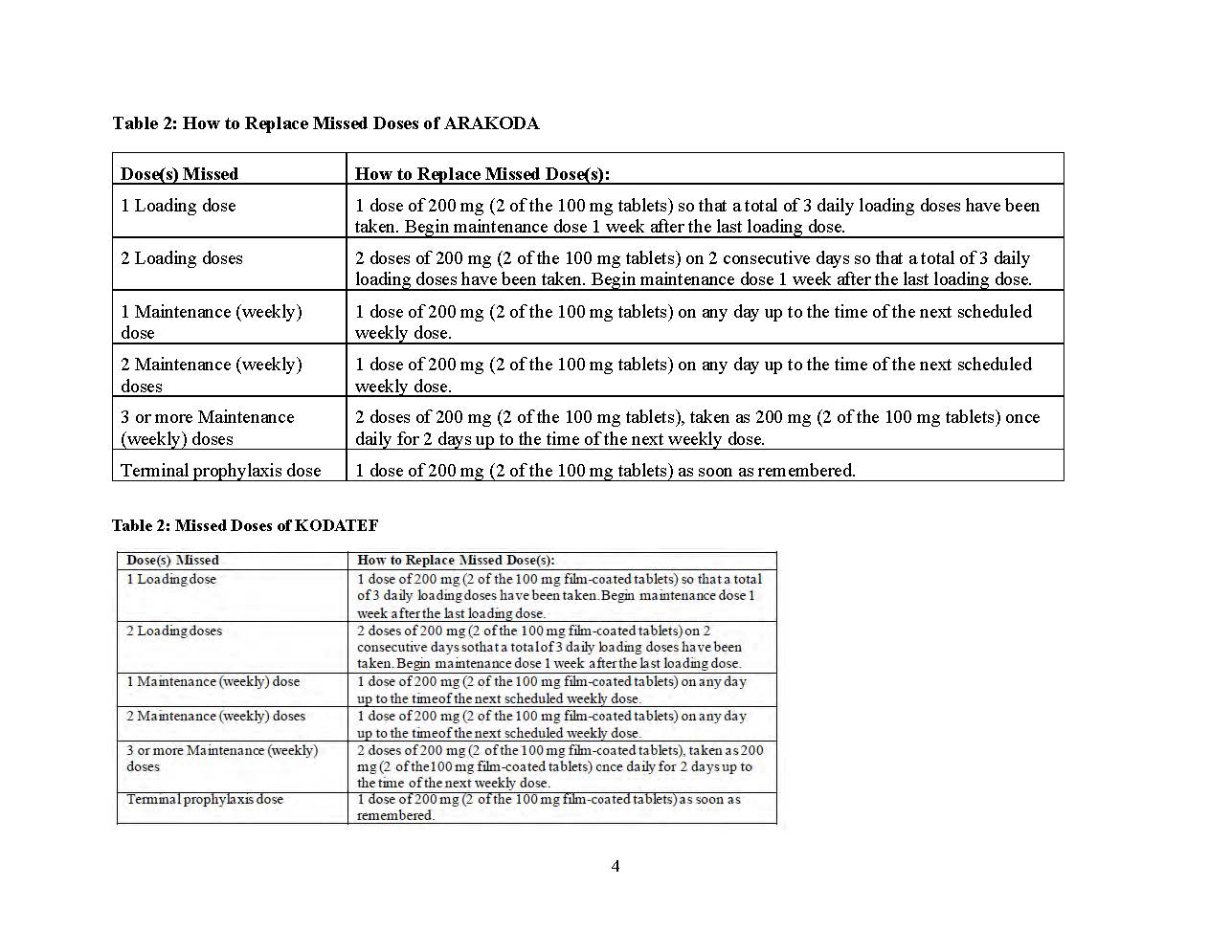
This text provides instructions on how to replace missed doses of ARAKODA and KODATEF tablets. It outlines the specific actions to be taken depending on the number of missed doses, whether it's a loading dose, maintenance dose, or terminal prophylaxis dose. The information is detailed and can be used as a guideline for managing missed doses of these medications.*
FDA Label Image

Dear Hcp Letter Page 21 (Dear Hcp Letter Kodatef 7feb2025 Page 21)

Dear Hcp Letter Page 21 (Dear Hcp Letter Kodatef 7feb2025 Page 21)
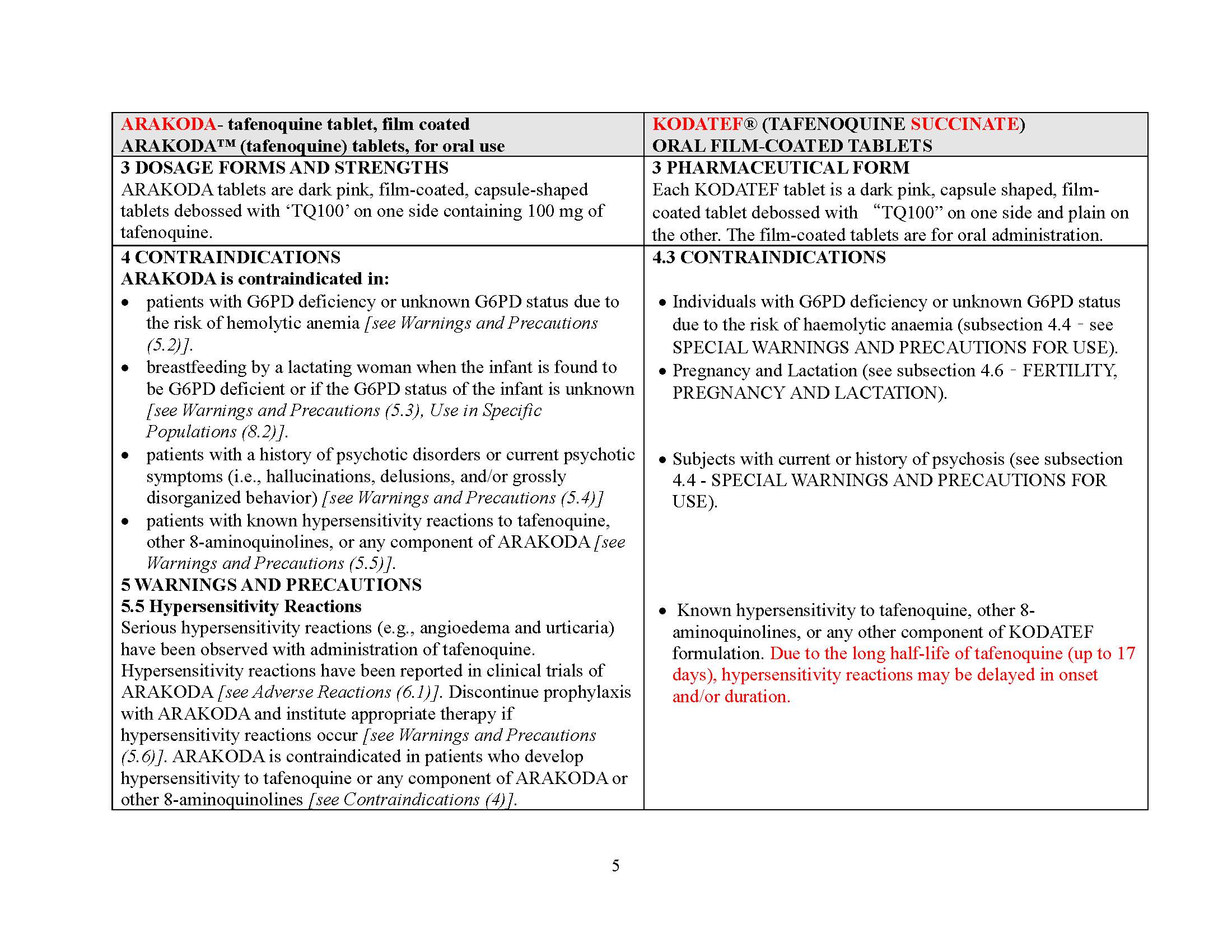
This text provides information about ARAKODA and KODATEF tablets containing tafenoquine for oral use. It includes details on dosage forms, strengths, pharmaceutical form, contraindications (including G6PD deficiency, breastfeeding, psychotic disorders, and hypersensitivity reactions), warnings, and precautions. ARAKODA is contraindicated in specific patient groups, and discontinuation is recommended if hypersensitivity reactions occur. The text emphasizes the importance of considering these contraindications and precautions before using tafenoquine tablets.*
FDA Label Image

Dear Hcp Letter Page 22 (Dear Hcp Letter Kodatef 7feb2025 Page 22)

Dear Hcp Letter Page 22 (Dear Hcp Letter Kodatef 7feb2025 Page 22)
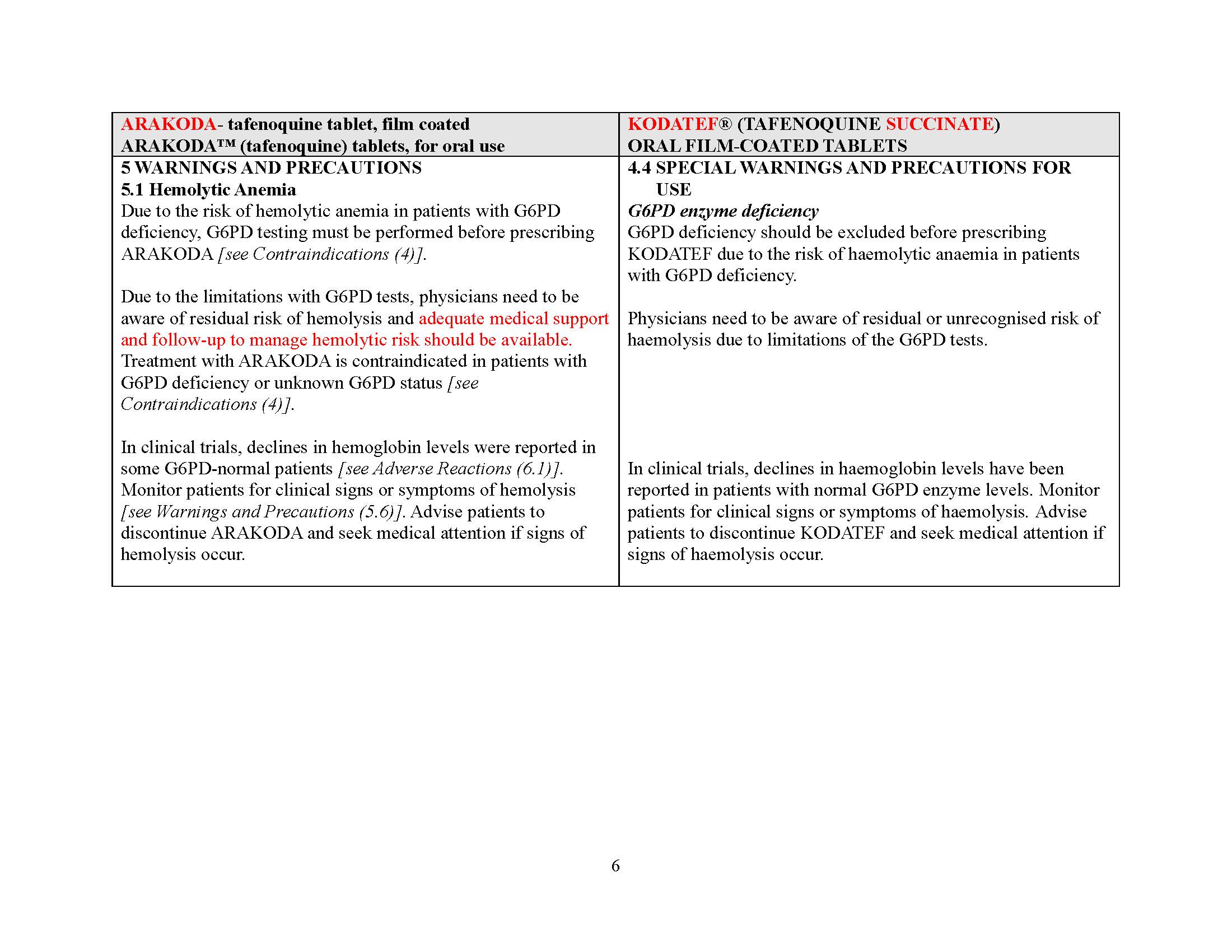
This text provides detailed information about ARAKODA and KODATEF (Tafenoquine) tablets for oral use. It emphasizes warnings and precautions related to hemolytic anemia, especially in patients with G6PD deficiency. Physicians are advised to conduct G6PD testing before prescribing ARAKODA and KODATEF to mitigate the risk of hemolysis. The text also highlights the importance of monitoring patients for signs of hemolysis and providing adequate medical support. Users are instructed to discontinue the medication and seek medical attention if symptoms of hemolysis occur.*
FDA Label Image

Dear Hcp Letter Page 23 (Dear Hcp Letter Kodatef 7feb2025 Page 23)

Dear Hcp Letter Page 23 (Dear Hcp Letter Kodatef 7feb2025 Page 23)
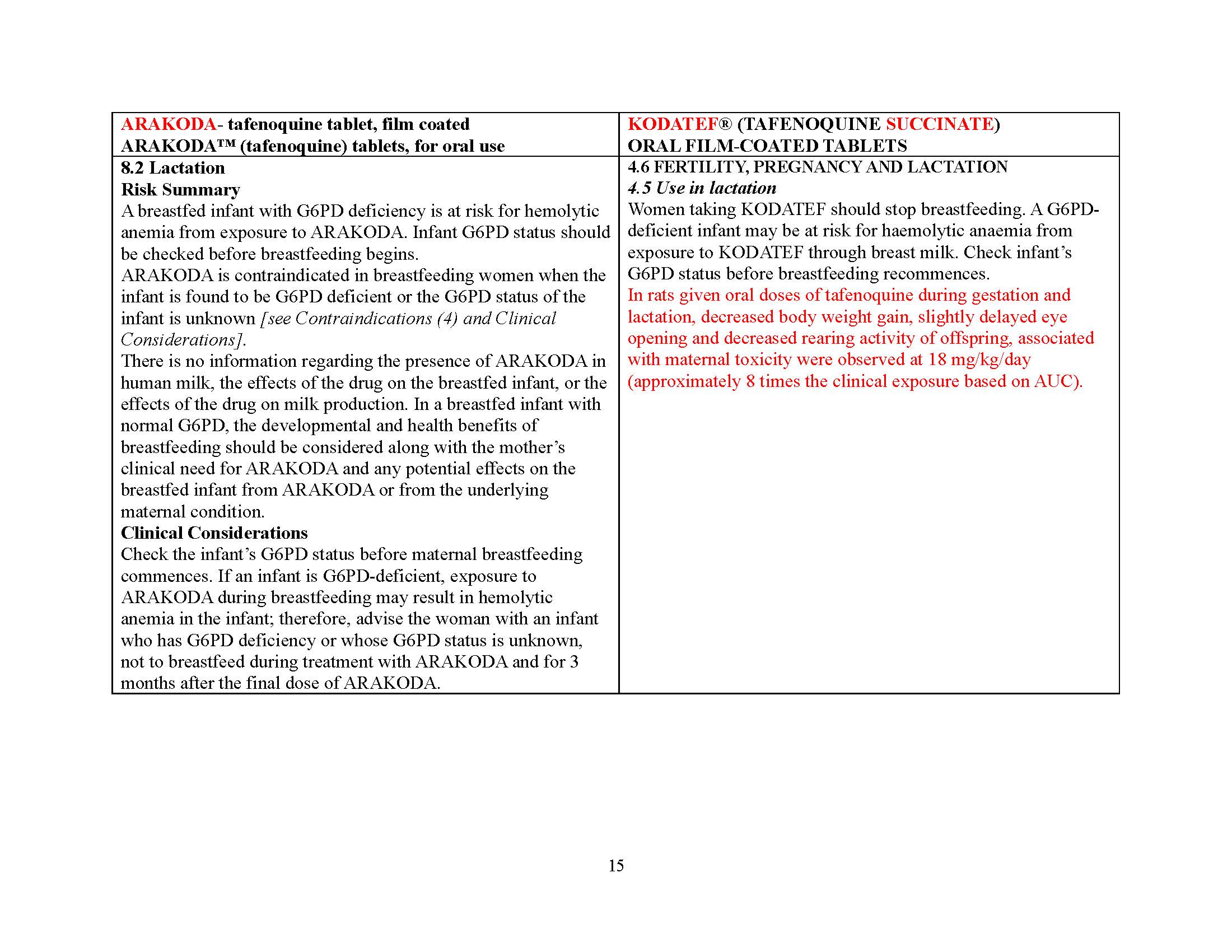
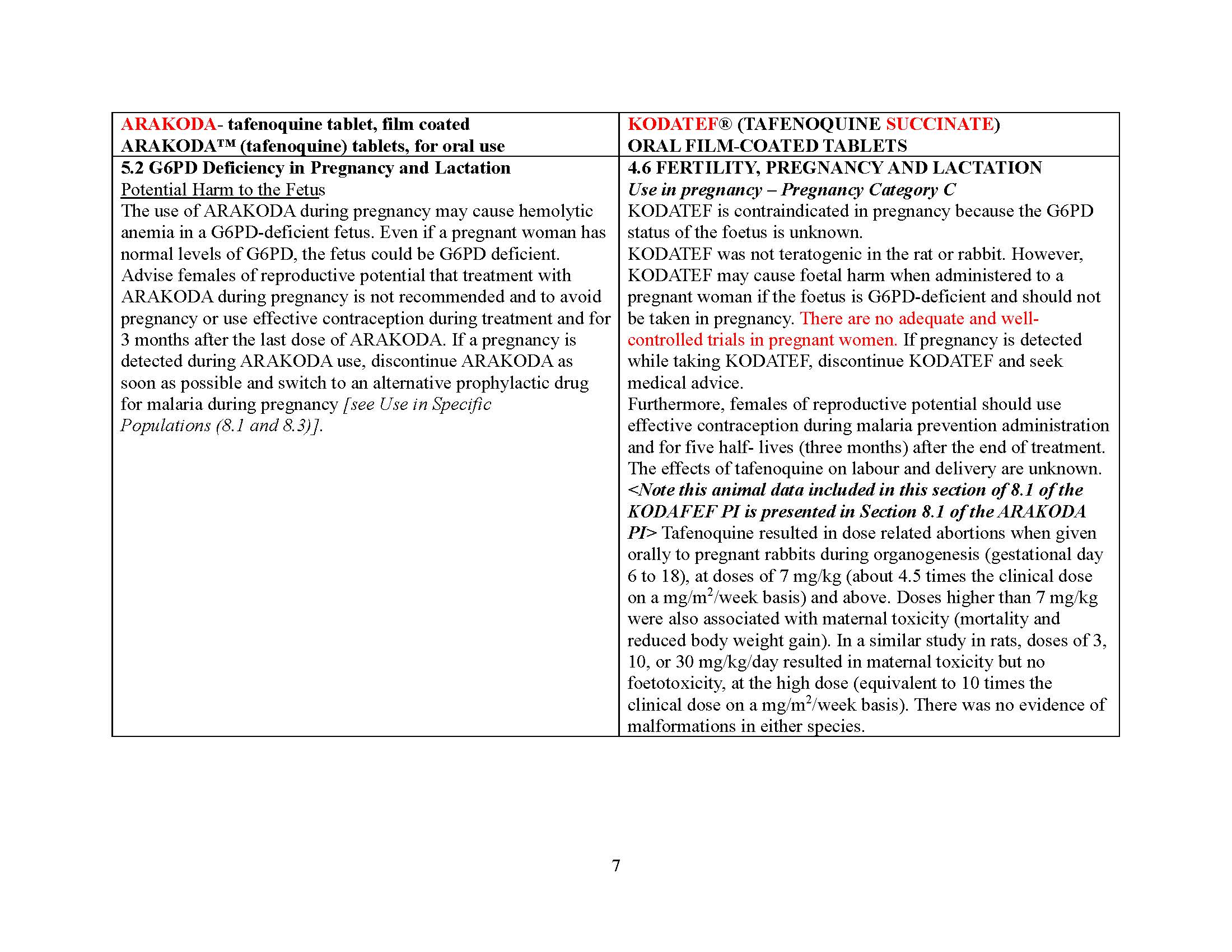
This text provides important information about ARAKODA (tafenoquine) tablets, particularly regarding the risks associated with G6PD deficiency in pregnancy and lactation. It emphasizes the potential harm to the fetus if a pregnant woman with normal G6PD levels takes ARAKODA, as the fetus could be G6PD deficient. The text advises against using ARAKODA during pregnancy and recommends avoiding pregnancy or using effective contraception both during treatment and for 3 months after the last dose. Additionally, it mentions the contraindication of KODATEF (TAFENOQUINE SUCCINATE) in pregnancy due to unknown G6PD status of the fetus and the need for discontinuation and seeking medical advice if pregnancy is detected while taking KODATEF. The text also states the lack of adequate trials in pregnant women and provides insights from animal studies on the potential harm to the fetus when exposed to tafenoquine. Overall, this information highlights the importance of understanding the risks associated with tafenoquine use during pregnancy to ensure the safety of both the mother and the fetus.*
FDA Label Image

Dear Hcp Letter Page 24 (Dear Hcp Letter Kodatef 7feb2025 Page 24)

Dear Hcp Letter Page 24 (Dear Hcp Letter Kodatef 7feb2025 Page 24)
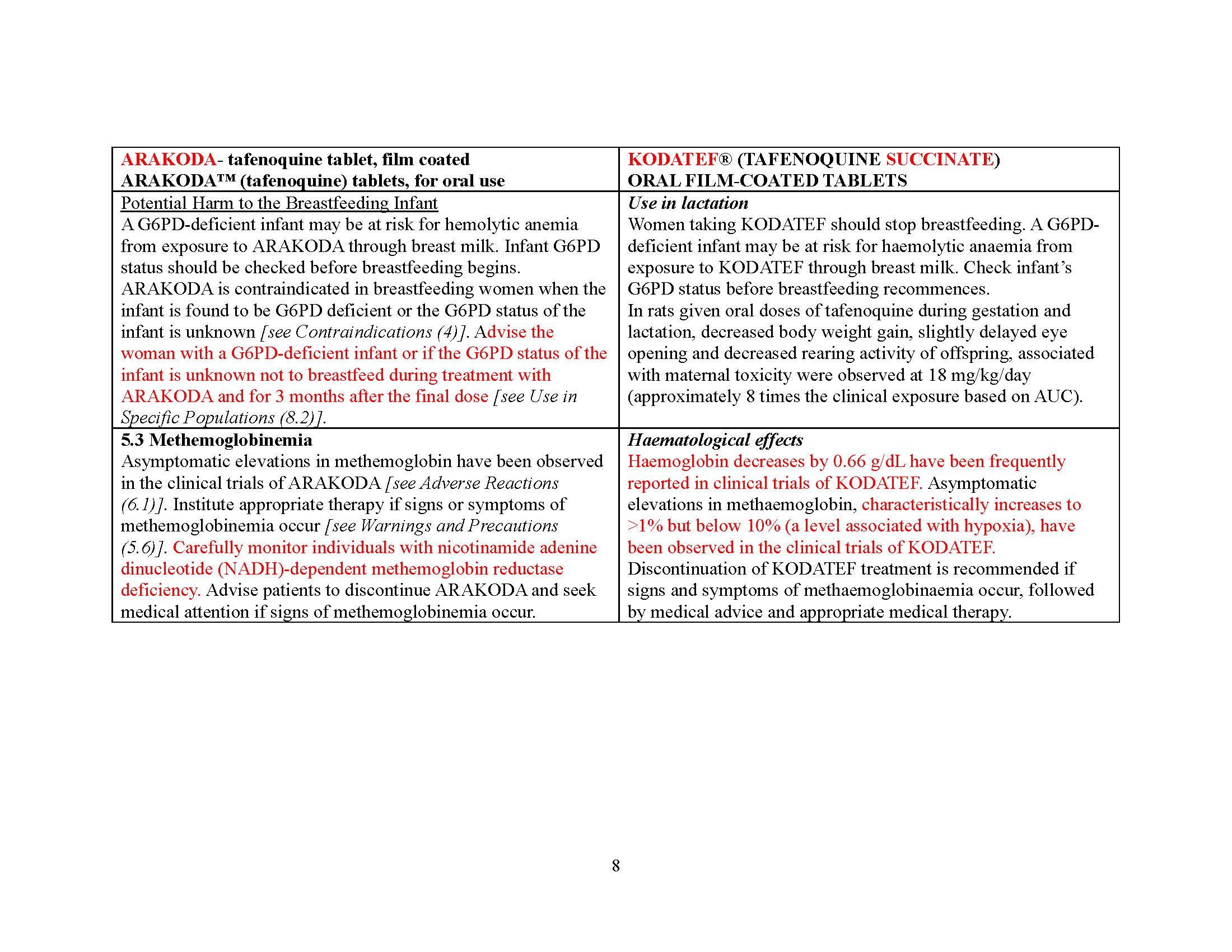
ARAKODA and KODATEF tablets are medications for oral use primarily used to prevent malaria. It is important to assess G6PD deficiency in infants before breastfeeding begins if the mother is taking these medications. Breastfeeding should be avoided if the infant is G6PD deficient or the status is unknown. Potential harm to the infant could result in hemolytic anemia. It is also advised to discontinue breastfeeding when taking KODATEF due to potential risks of hemolytic anemia. Monitoring for methemoglobinemia and hematological effects is crucial, and medical attention should be sought if symptoms occur. It is essential to follow the medical advice and guidance when using these medications to ensure the safety and well-being of both the mother and infant.*
FDA Label Image

Dear Hcp Letter Page 25 (Dear Hcp Letter Kodatef 7feb2025 Page 25)

Dear Hcp Letter Page 25 (Dear Hcp Letter Kodatef 7feb2025 Page 25)
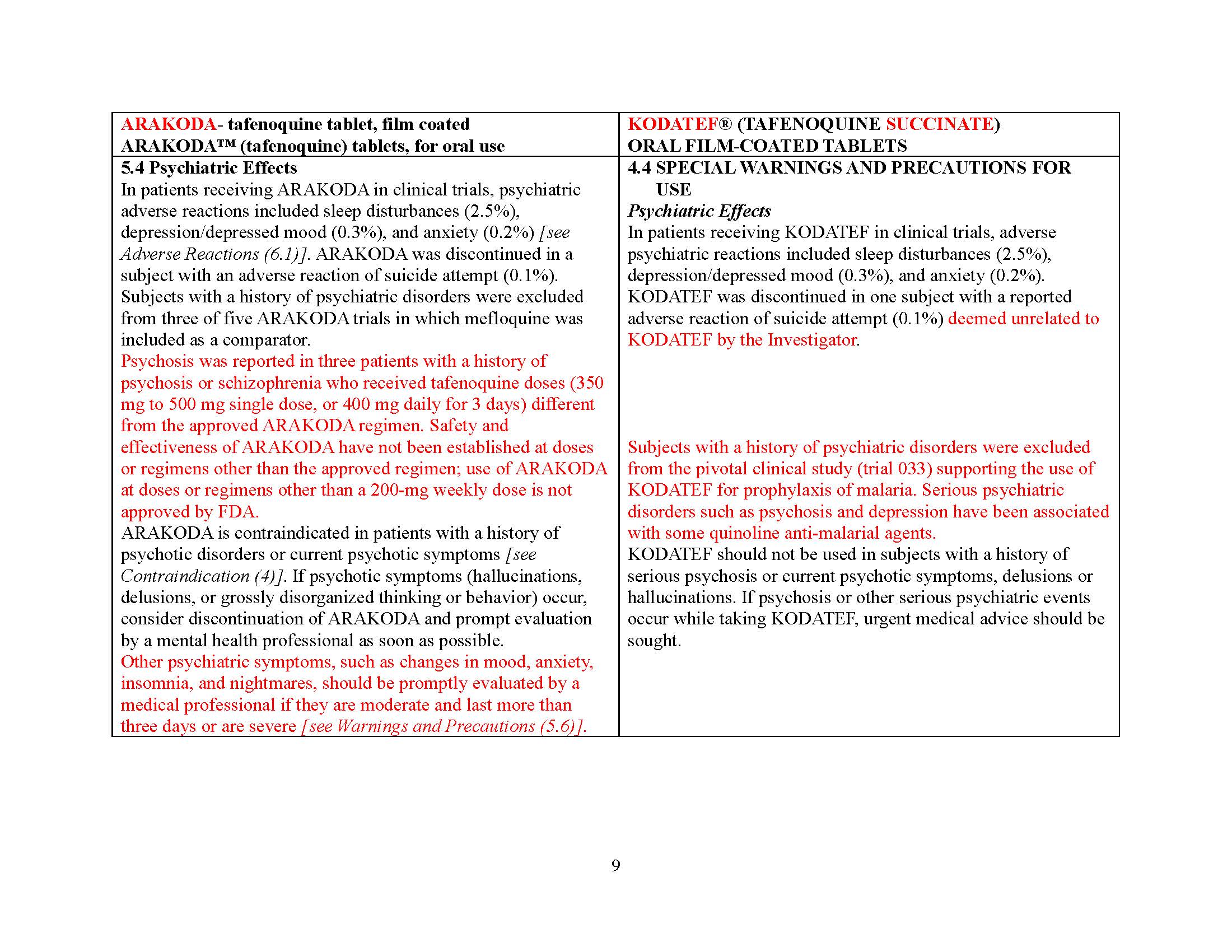
ARAKODA and KODATEF are oral tablets used for prophylaxis of malaria. Both medications contain tafenoquine and are film-coated. While effective for malaria prevention, they have potential psychiatric side effects such as sleep disturbances, depression, anxiety, and in rare cases, psychosis. Notably, those with a history of psychotic disorders should avoid these medications due to the risk of exacerbating psychiatric symptoms. Medical attention is advised if any severe psychiatric symptoms occur during treatment. It is crucial to follow the approved regimen and dosage to ensure safety and effectiveness.*
FDA Label Image

Dear Hcp Letter Page 26 (Dear Hcp Letter Kodatef 7feb2025 Page 26)

Dear Hcp Letter Page 26 (Dear Hcp Letter Kodatef 7feb2025 Page 26)
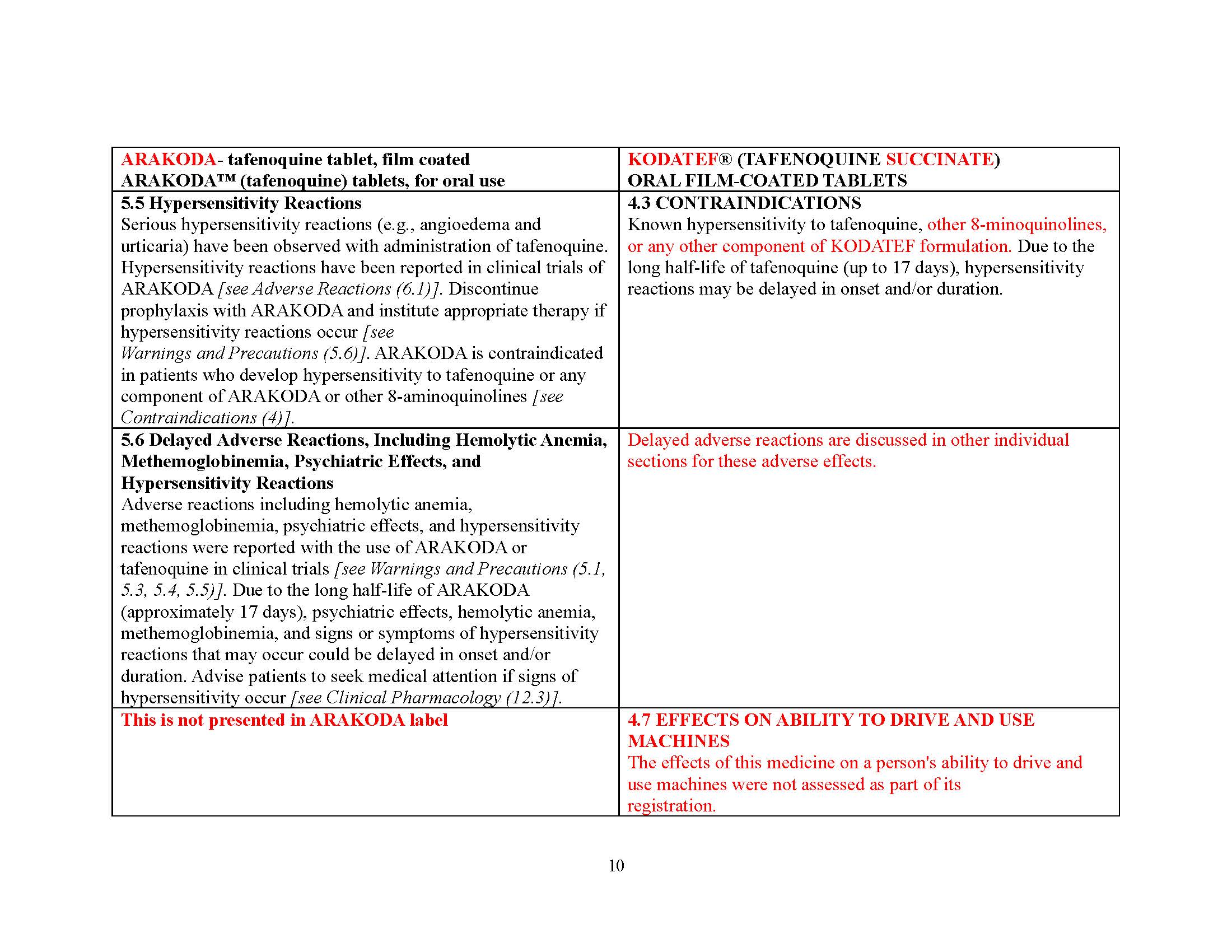
ARAKODA (tafenoquine) is a tablet taken orally to prevent certain malaria infections. People with hypersensitivity to tafenoquine or any of its components should not take ARAKODA. Serious hypersensitivity reactions like angioedema and urticaria have been reported in clinical trials. Furthermore, delayed adverse effects such as hemolytic anemia, methemoglobinemia, psychiatric effects, and more could occur due to the long half-life of ARAKODA. If any signs of hypersensitivity arise, medical attention should be sought. It is advised not to drive or use machinery while taking ARAKODA as its effects on these activities were not evaluated during registration.*
FDA Label Image

Dear Hcp Letter Page 27 (Dear Hcp Letter Kodatef 7feb2025 Page 27)

Dear Hcp Letter Page 27 (Dear Hcp Letter Kodatef 7feb2025 Page 27)
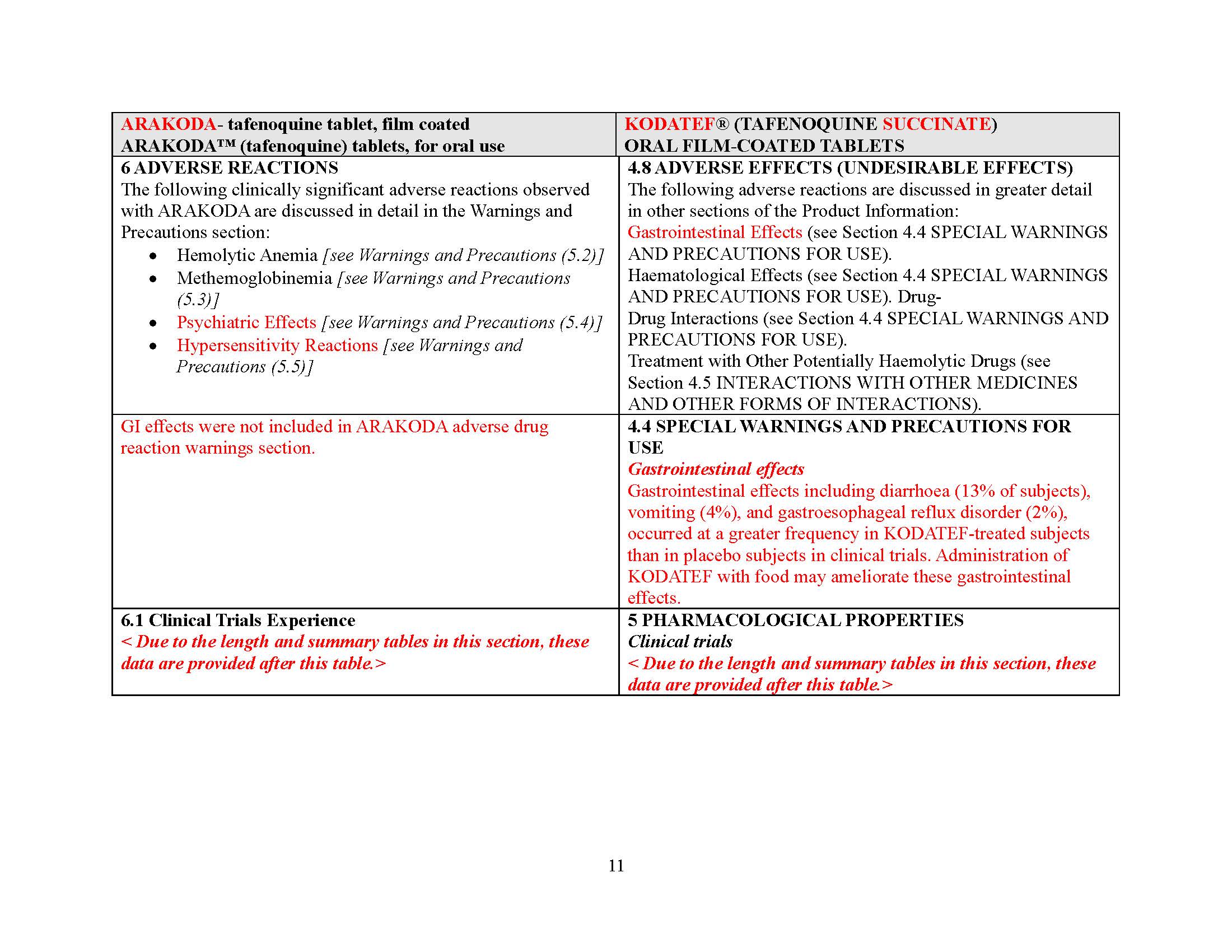
This text provides information about the drug ARAKODA (tafenoquine) in tablet form for oral use. It discusses adverse reactions and effects such as Hemolytic Anemia, Methemoglobinemia, Psychiatric Effects, and Hypersensitivity Reactions. It highlights gastrointestinal effects like diarrhea, vomiting, and gastroesophageal reflux disorder associated with the drug. The text also mentions drug-drug interactions and the importance of taking KODATEF with food to alleviate gastrointestinal effects. Additional details on clinical trials and pharmacological properties are available in the document.*
FDA Label Image

Dear Hcp Letter Page 28 (Dear Hcp Letter Kodatef 7feb2025 Page 28)

Dear Hcp Letter Page 28 (Dear Hcp Letter Kodatef 7feb2025 Page 28)
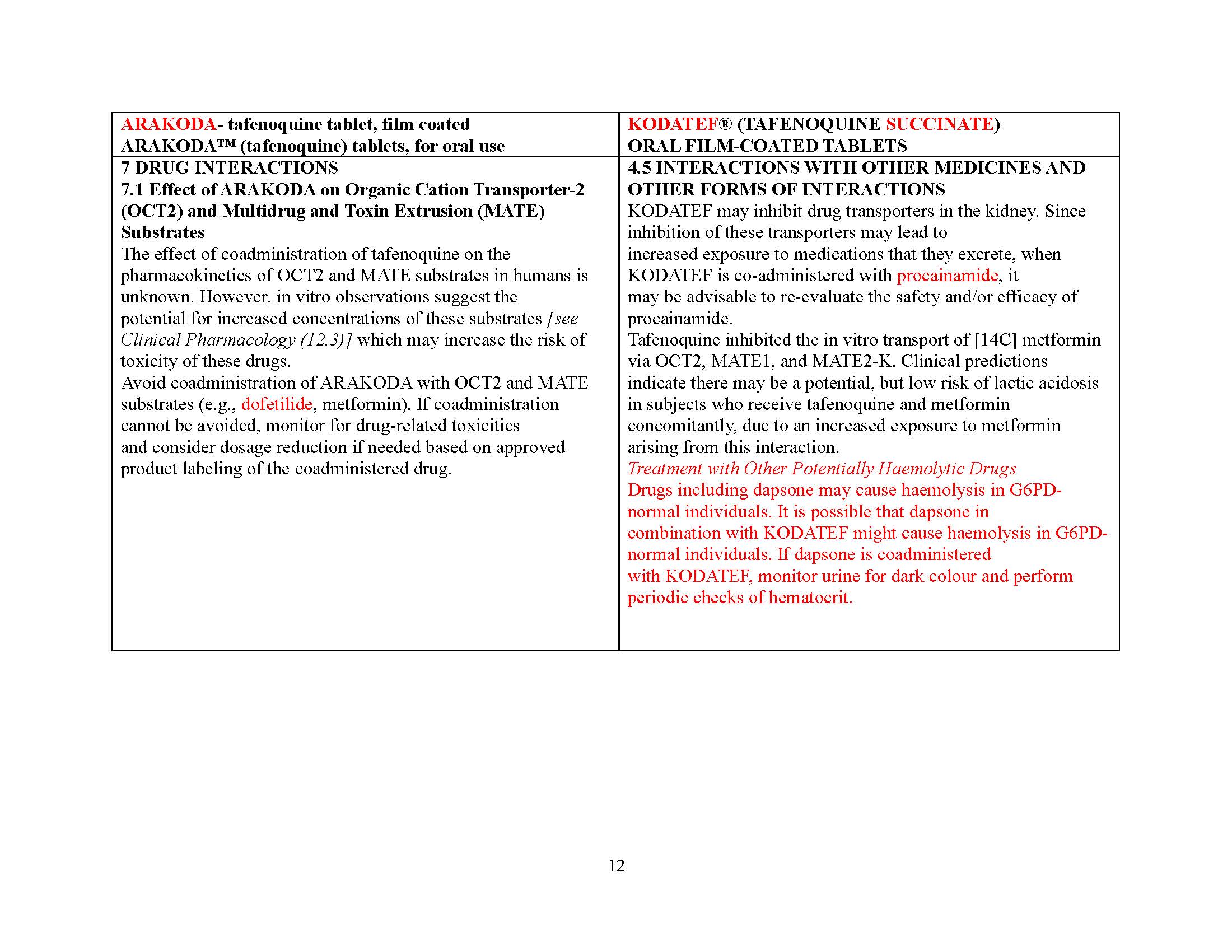
ARAKODA (tafenoquine) is a film-coated tablet prescribed for oral use. This medication may interact with certain drugs affecting Organic Cation Transporter-2 (OCT2) and Multidrug and Toxin Extrusion (MATE) substrates, leading to increased concentrations of these drugs and a higher risk of toxicity. It is important to avoid coadministration of ARAKODA with medications like dofetilide and metformin; however, if unavoidable, monitoring for drug-related toxicities is recommended, along with potential dosage adjustments based on the label of the coadministered drug. The drug KODATEF, containing Tafenoquine succinate, may inhibit kidney drug transporters, affecting the excretion of medications like procainamide, necessitating a reassessment of safety and efficacy when used in combination. Additionally, coadministration of Tafenoquine and metformin may pose a low risk of lactic acidosis due to increased metformin exposure. Be cautious when combining drugs that may induce haemolysis like dapsone with KODATEF, especially if the individual has G6PD deficiency, by monitoring urine color and hematocrit levels periodically.*
FDA Label Image

Dear Hcp Letter Page 29 (Dear Hcp Letter Kodatef 7feb2025 Page 29)

Dear Hcp Letter Page 29 (Dear Hcp Letter Kodatef 7feb2025 Page 29)
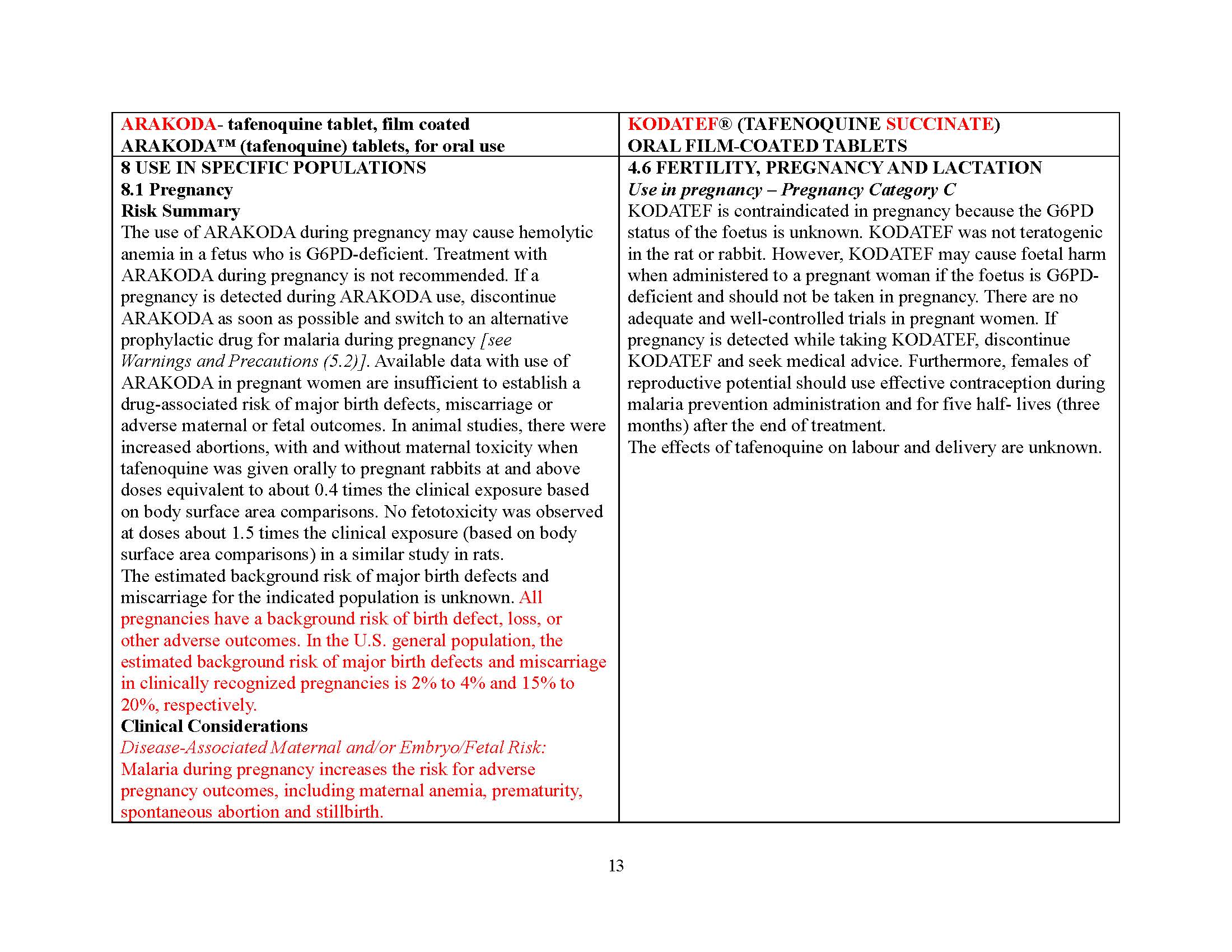
ARAKODA and KODATEF are tablets used for oral administration to prevent malaria. These medications contain tafenoquine and are contraindicated during pregnancy due to potential risks of hemolytic anemia in fetuses who are G6PD-deficient. If pregnancy is detected, immediate discontinuation of the drugs is advised along with switching to alternative prophylactic medications. While data on the use of tafenoquine in pregnant women are limited, caution is recommended. Women of reproductive potential are advised to use effective contraception during treatment and for a specified period after completion. The impact of tafenoquine on labor and delivery is not known. Malaria during pregnancy can lead to adverse outcomes such as maternal anemia, prematurity, miscarriage, and stillbirth.*
FDA Label Image

Dear Hcp Letter Page 30 (Dear Hcp Letter Kodatef 7feb2025 Page 30)

Dear Hcp Letter Page 30 (Dear Hcp Letter Kodatef 7feb2025 Page 30)
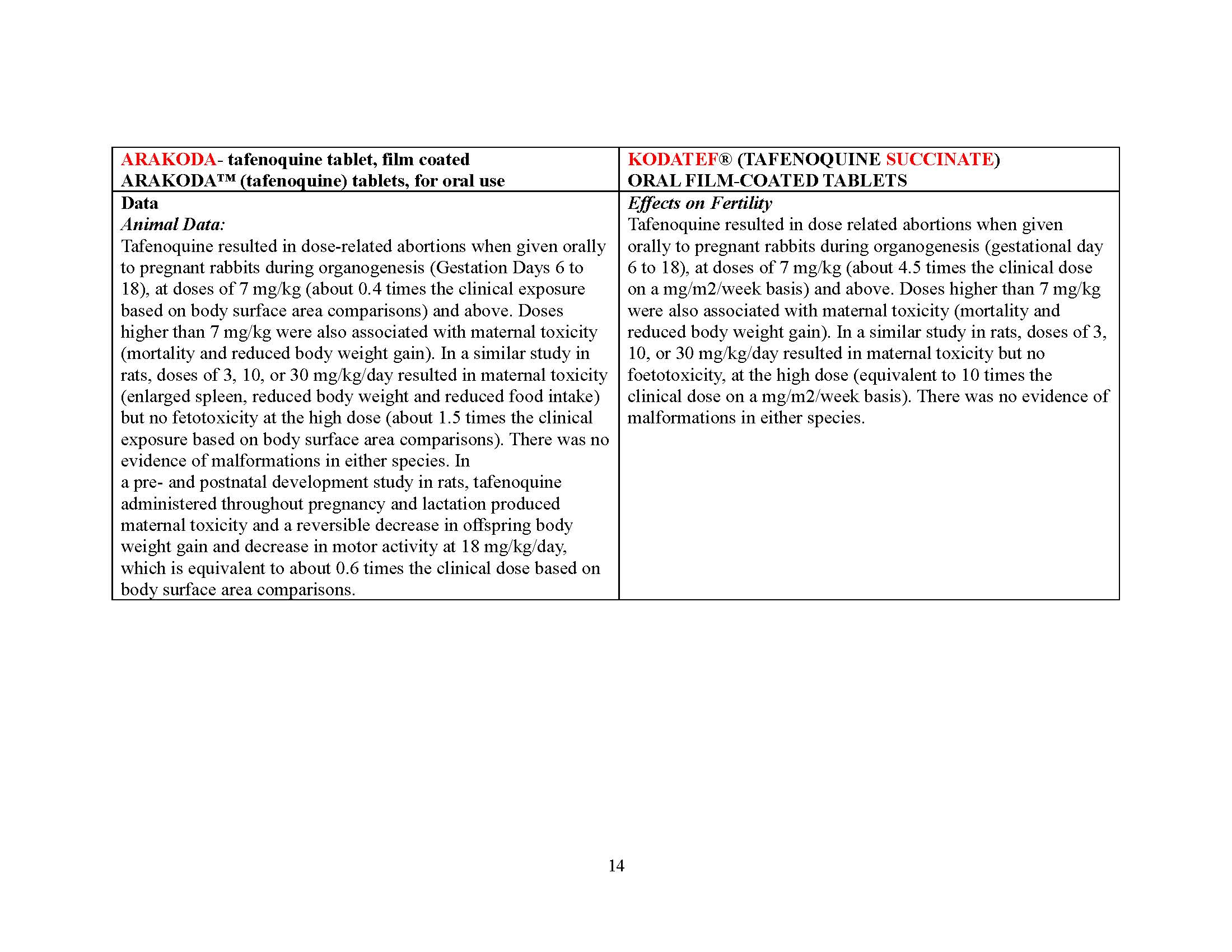
ARAKODA is a tafenoquine tablet available for oral use. A study on animals showed dose-related abortions and maternal toxicity at certain dosage levels. Effects on fertility were also observed, but no malformations were reported in either species. It is important to consult healthcare providers before using this medication.*
FDA Label Image

Dear Hcp Letter Page 31 (Dear Hcp Letter Kodatef 7feb2025 Page 31)

Dear Hcp Letter Page 31 (Dear Hcp Letter Kodatef 7feb2025 Page 31)
This text provides information about the use of ARAKODA (tafenoquine) tablets in lactating women. It emphasizes the potential risk of hemolytic anemia in breastfed infants with G6PD deficiency exposed to ARAKODA. It suggests checking the infant's G6PD status before breastfeeding and recommends against breastfeeding if the infant is G6PD deficient or if their status is unknown. Additionally, it mentions the lack of data on the presence of ARAKODA in human milk and its effects on breastfed infants. The text also discusses the impact of tafenoquine on maternal health and potential effects on milk production during lactation. It provides clinical considerations for women taking KODATEF who should also stop breastfeeding due to the risk of hemolytic anemia in G6PD-deficient infants exposed to the drug through breast milk.*
FDA Label Image

Dear Hcp Letter Page 32 (Dear Hcp Letter Kodatef 7feb2025 Page 32)

Dear Hcp Letter Page 32 (Dear Hcp Letter Kodatef 7feb2025 Page 32)
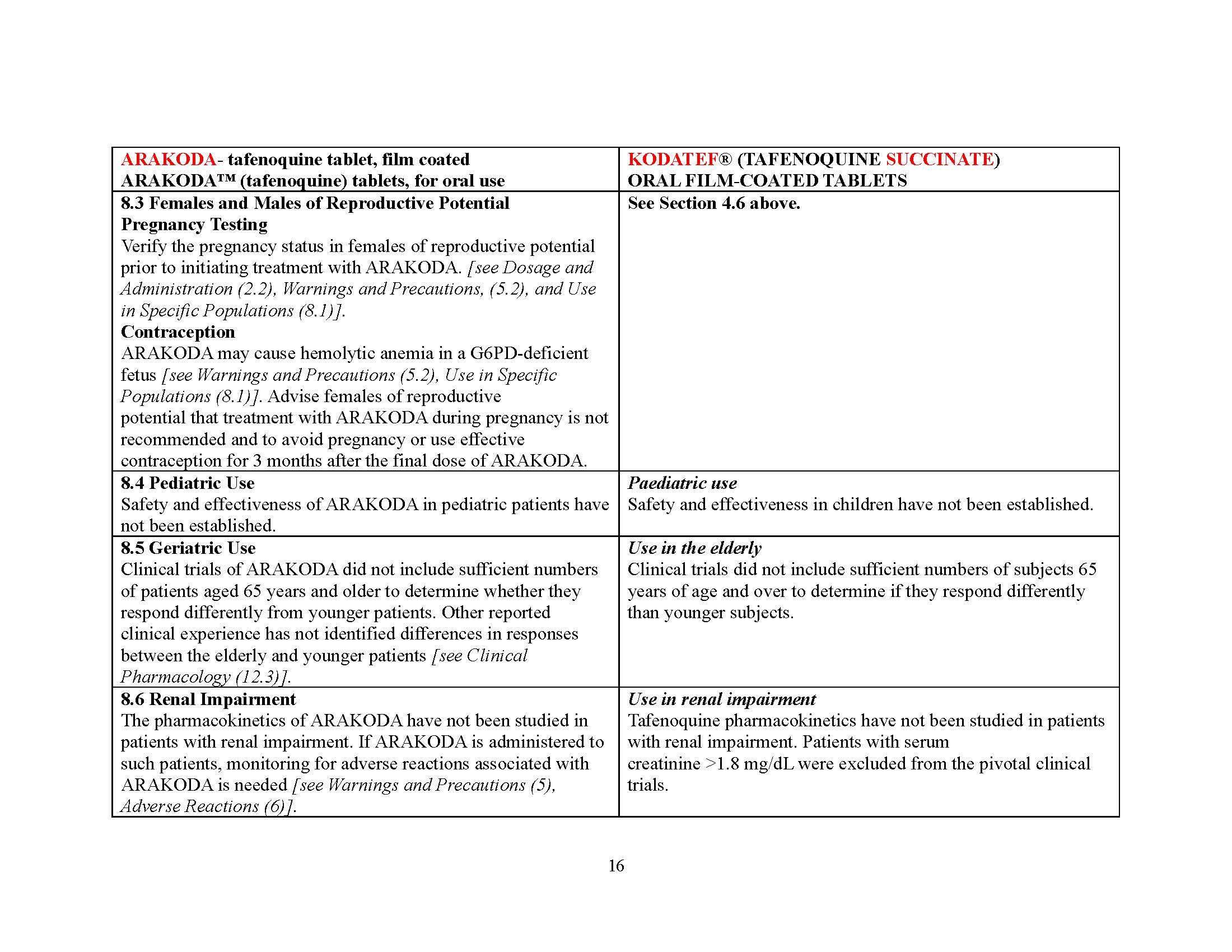
The text provides information about ARAKODA (tafenoquine) tablets for oral use, discussing different aspects of its use such as pregnancy testing, contraception, pediatric use, geriatric use, and renal impairment. It emphasizes the importance of verifying pregnancy status before treatment, advising caution in G6PD-deficient fetuses, and recommending effective contraception during and after treatment. The text also mentions the lack of established safety and effectiveness data for pediatric and geriatric populations, as well as the need for monitoring in patients with renal impairment. These details offer valuable insights for healthcare professionals and individuals considering or undergoing treatment with ARAKODA.*
FDA Label Image

Dear Hcp Letter Page 33 (Dear Hcp Letter Kodatef 7feb2025 Page 33)

Dear Hcp Letter Page 33 (Dear Hcp Letter Kodatef 7feb2025 Page 33)
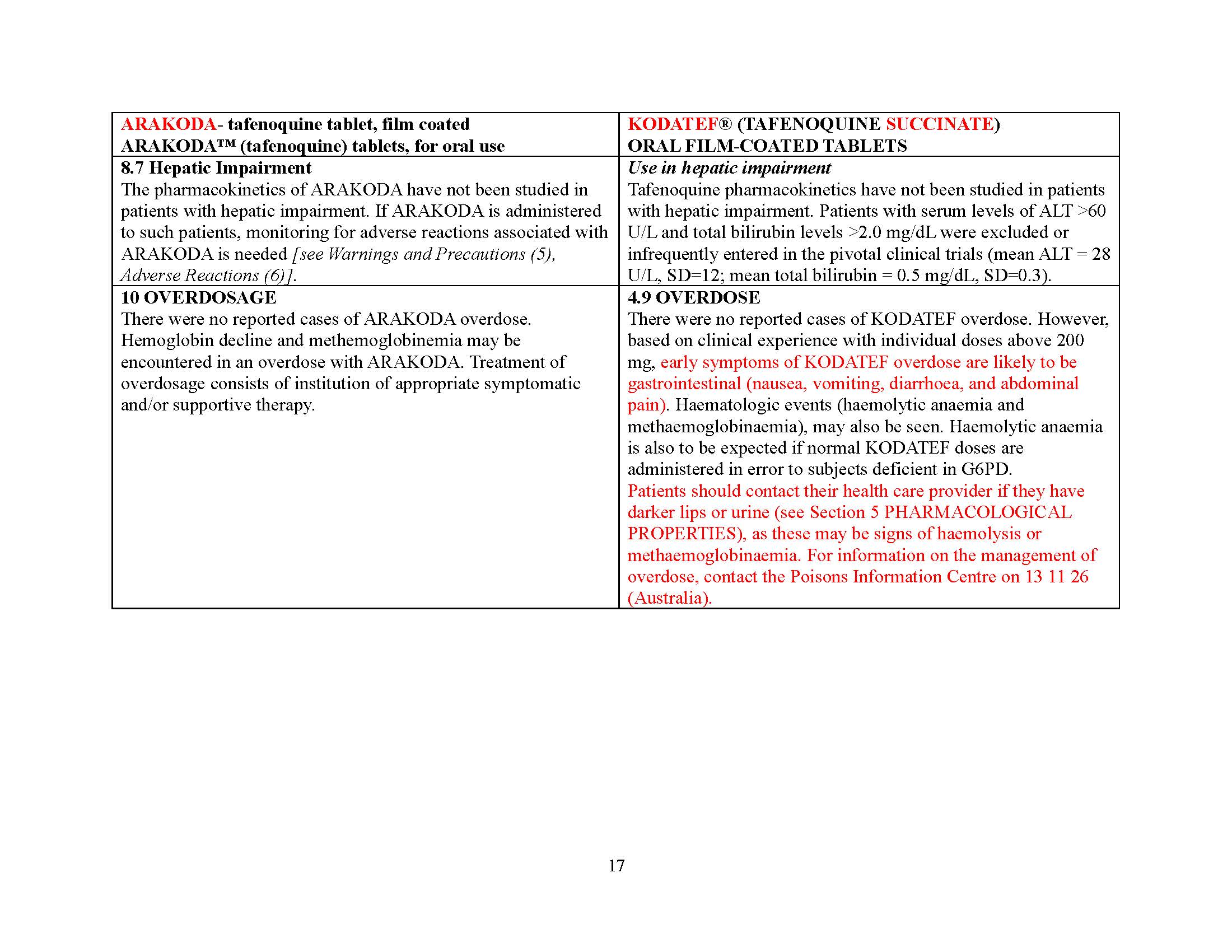
This text provides information about ARAKODA, a tafenoquine tablet used for oral administration. It discusses the implications of hepatic impairment on the pharmacokinetics of ARAKODA and the need for monitoring for adverse reactions in such patients. Furthermore, it addresses the potential risks and symptoms of overdose with ARAKODA, including hemoglobin decline, methemoglobinemia, and gastrointestinal issues. It also mentions the exclusion of certain patients with hepatic impairment in clinical trials and provides guidance on managing overdose cases. The text highlights the importance of consulting a healthcare provider if experiencing symptoms like darker lips or urine, which may indicate haemolysis or methaemoglobinaemia.*
FDA Label Image

Dear Hcp Letter Page 34 (Dear Hcp Letter Kodatef 7feb2025 Page 34)

Dear Hcp Letter Page 34 (Dear Hcp Letter Kodatef 7feb2025 Page 34)
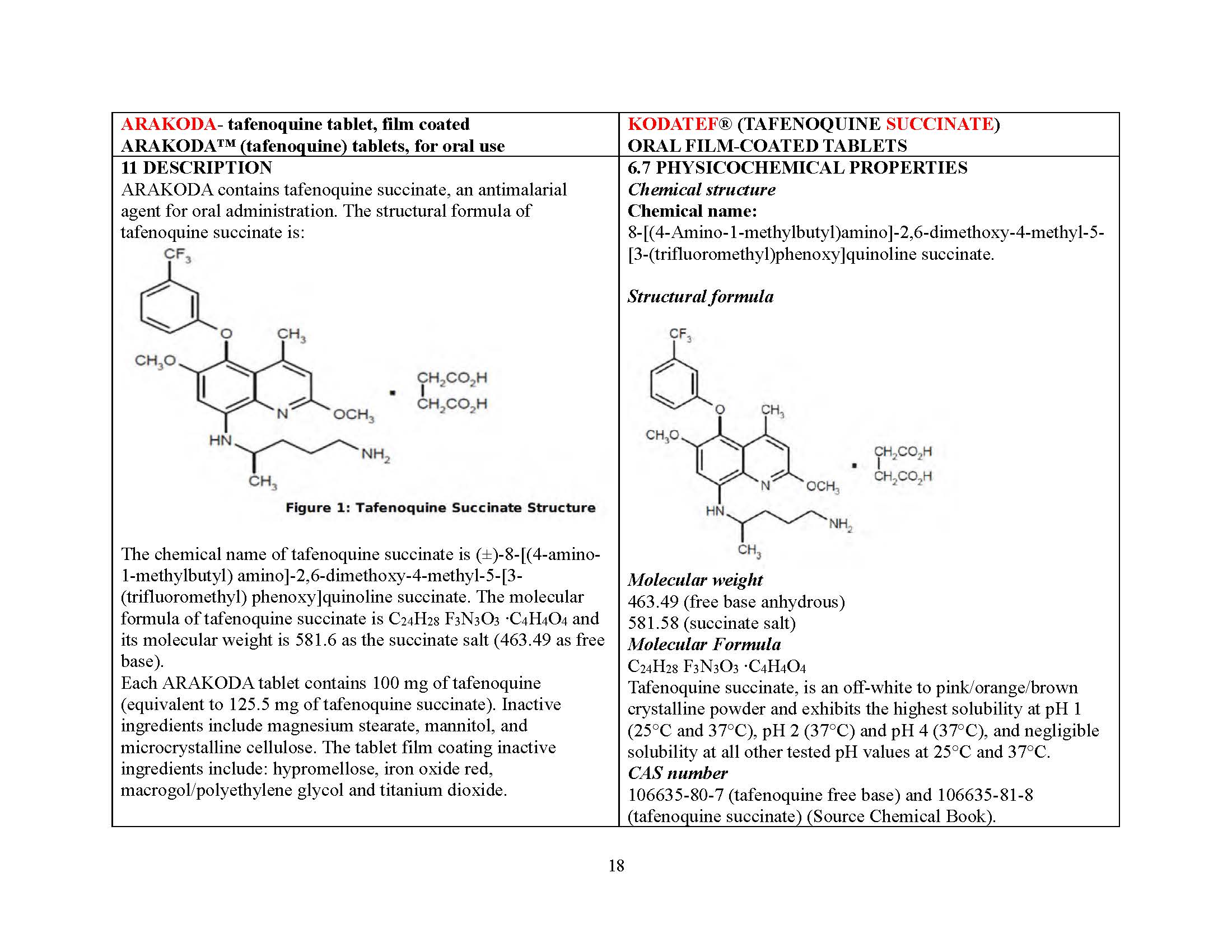
ARAKODA is a tafenoquine tablet used for oral administration as an antimalarial agent. Each tablet contains 100 mg of tafenoquine succinate. The molecular formula of tafenoquine succinate is C24H23F3N3O8CaH4O4 and its molecular weight is 581.6 as the succinate salt. The tablet also contains inactive ingredients like magnesium stearate, mannitol, and microcrystalline cellulose. The physical and chemical properties of tafenoquine succinate include an off-white to pink/orange/brown crystalline powder with specific solubility characteristics at different pH values.*
FDA Label Image

Dear Hcp Letter Page 35 (Dear Hcp Letter Kodatef 7feb2025 Page 35)

Dear Hcp Letter Page 35 (Dear Hcp Letter Kodatef 7feb2025 Page 35)
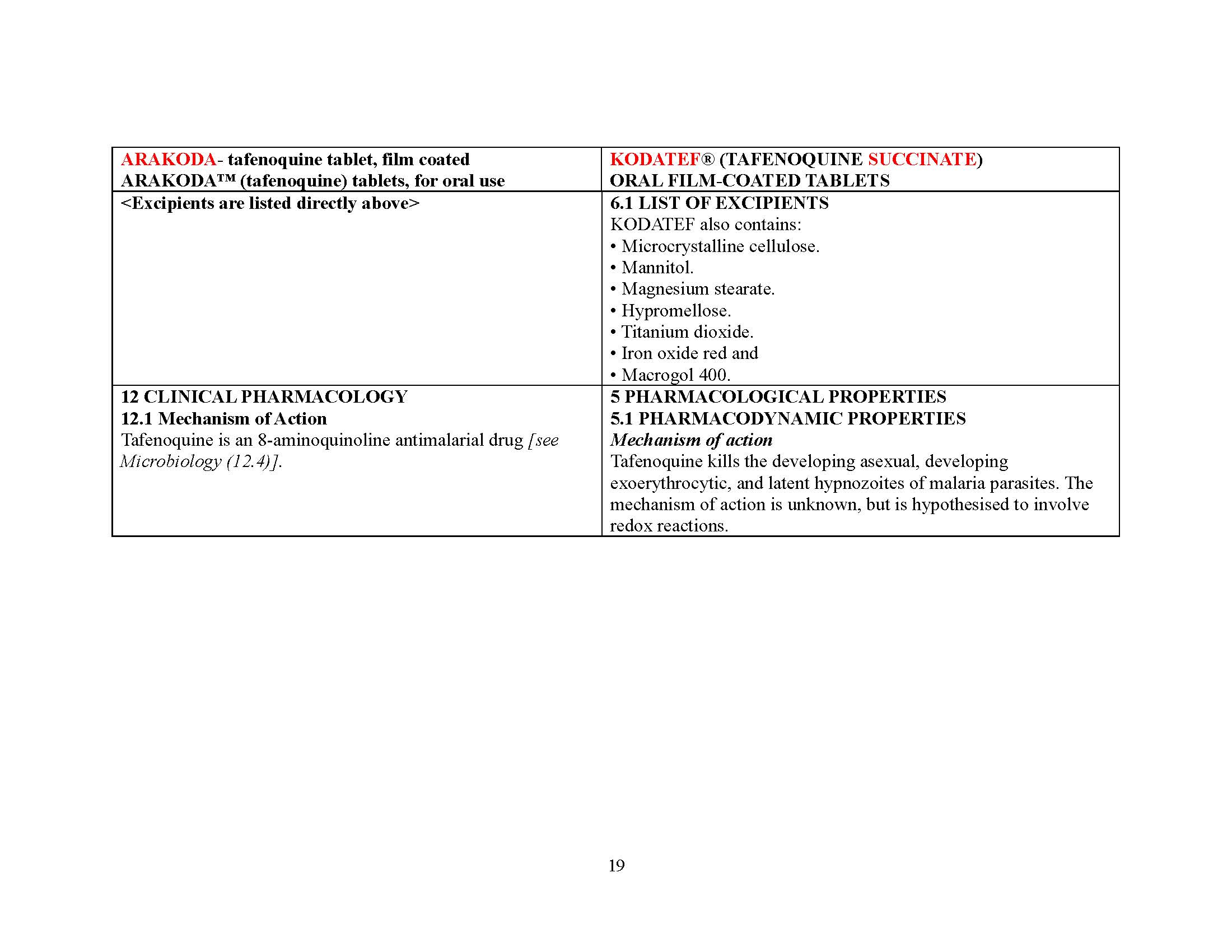
ARAKODA is a tafenoquine tablet used for oral administration. It contains tafenoquine succinate and various excipients such as Microcrystalline cellulose, Mannitol, Magnesium stearate, Hypromellose, Titanium dioxide, Iron oxide red, and Macrogol 400. The drug has antimalarial properties and is known to kill various stages of malaria parasites including asexual, exoerythrocytic, and latent hypnozoites. The mechanism of action involves redox reactions, although it is not fully understood.*
FDA Label Image

Dear Hcp Letter Page 36 (Dear Hcp Letter Kodatef 7feb2025 Page 36)

Dear Hcp Letter Page 36 (Dear Hcp Letter Kodatef 7feb2025 Page 36)
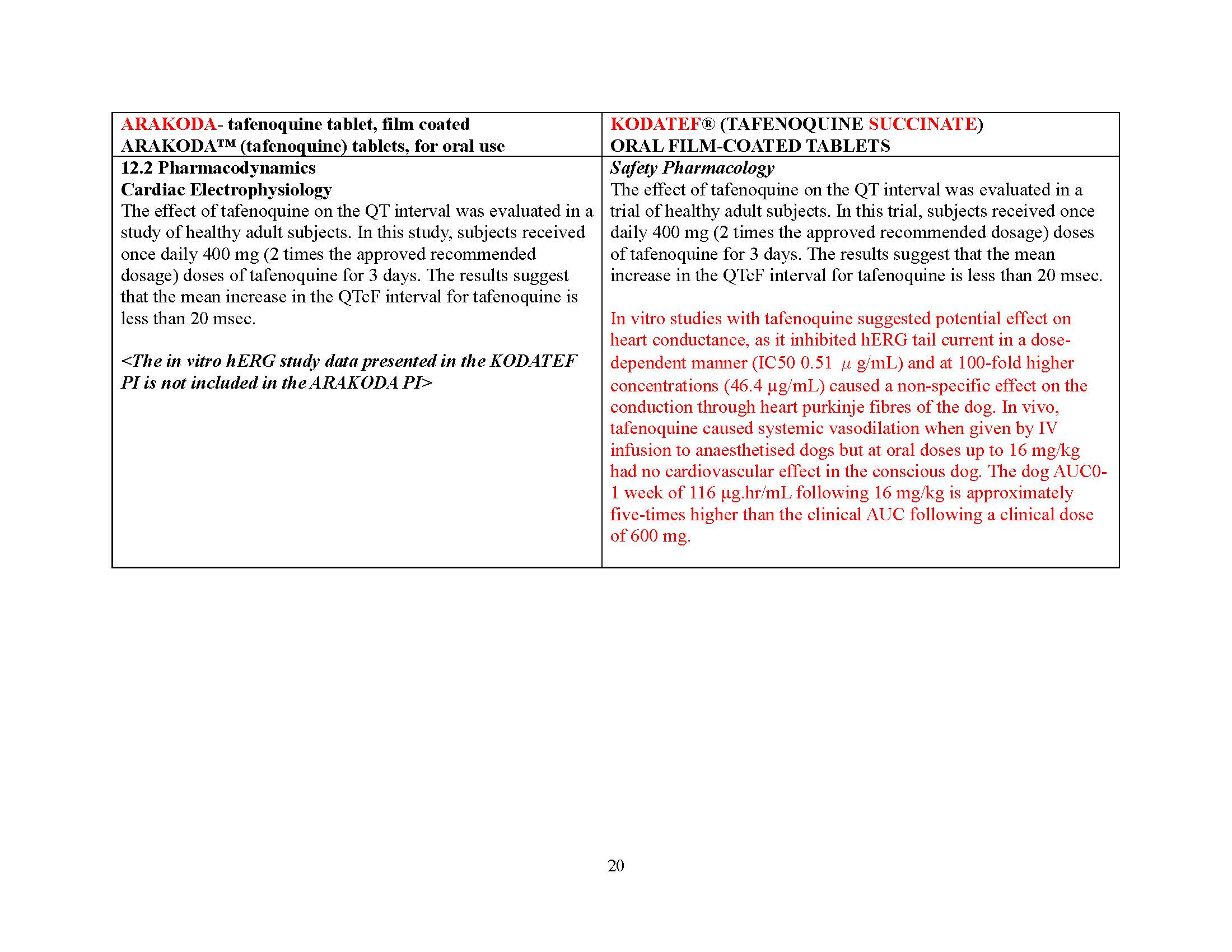
This is information about ARAKODA (tafenoquine) tablets, used for oral consumption. The text discusses the pharmacodynamics of tafenoquine, including its effect on the QT interval in healthy adult subjects. It mentions that the increase in the QTcF interval for tafenoquine is less than 20 msec when a daily 400 mg dosage is administered. Additionally, in vitro studies have shown that tafenoquine may have an impact on heart conductance and can cause systemic vasodilation in dogs. The text also compares the dog AUCO-1 week value to the clinical AUC after a standard dose of 600 mg.*
FDA Label Image

Dear Hcp Letter Page 37 (Dear Hcp Letter Kodatef 7feb2025 Page 37)

Dear Hcp Letter Page 37 (Dear Hcp Letter Kodatef 7feb2025 Page 37)
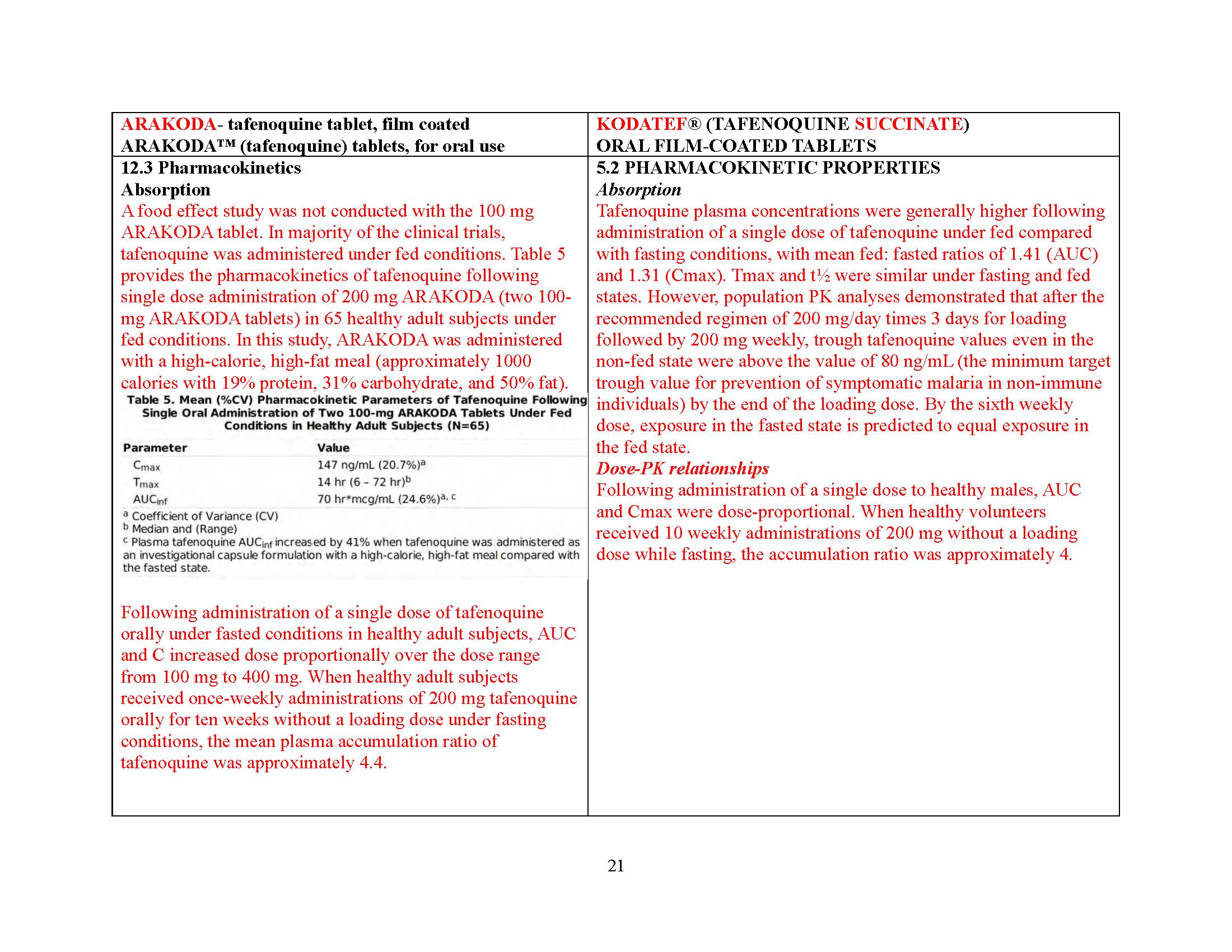
This text provides detailed information on the pharmacokinetics and absorption of ARAKODA (tafenoquine) tablets. It includes data on the impact of food on tafenoquine absorption, as well as the dose-proportional relationships observed in healthy adult subjects. The text also discusses the plasma concentrations of tafenoquine under different conditions and the recommended dosage regimen for the prevention of symptomatic malaria in non-immune individuals.*
FDA Label Image

Dear Hcp Letter Page 38 (Dear Hcp Letter Kodatef 7feb2025 Page 38)

Dear Hcp Letter Page 38 (Dear Hcp Letter Kodatef 7feb2025 Page 38)
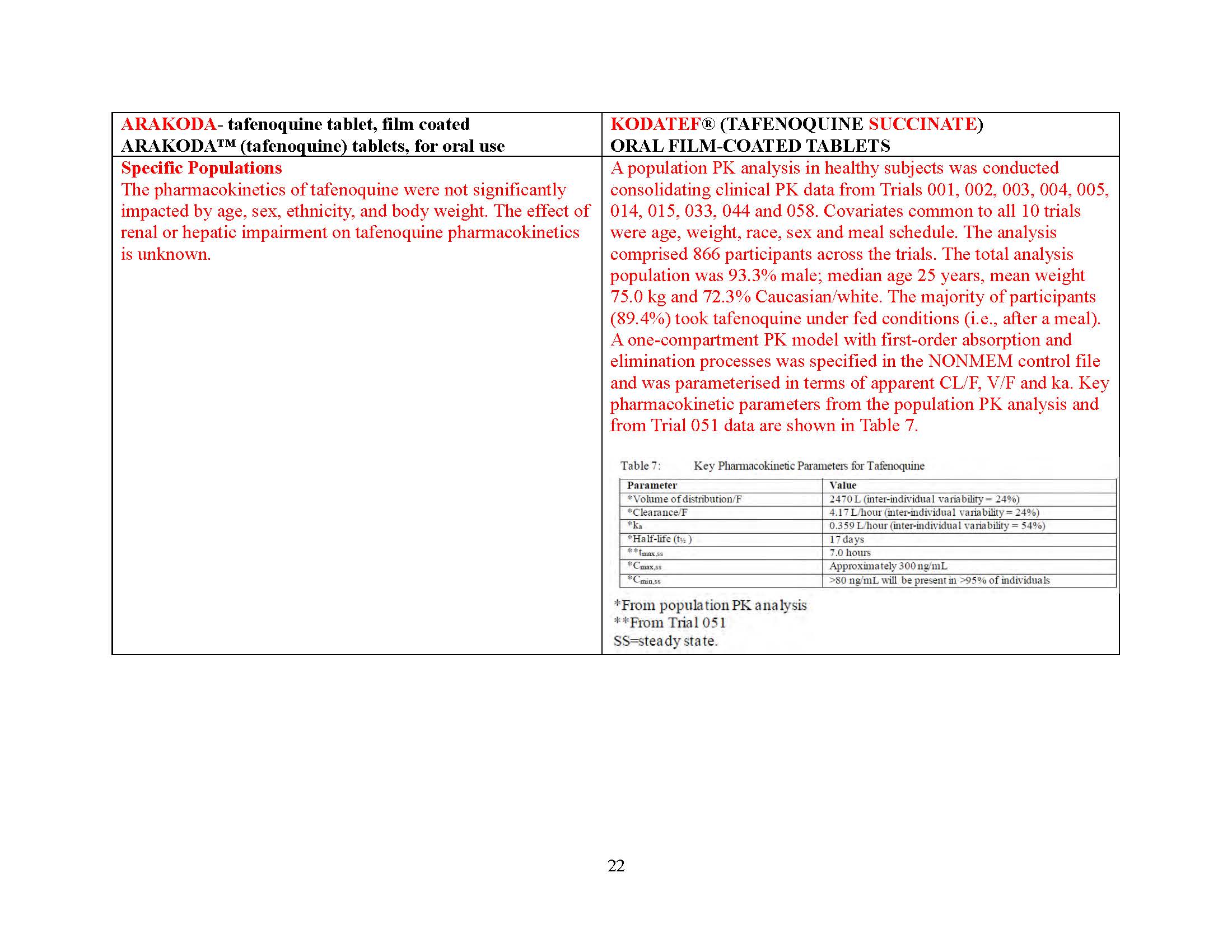
This is a description of ARAKODA (tafenoquine) tablets, a medication for oral use. The text provides information on the pharmacokinetics of tafenoquine, indicating that factors such as age, sex, ethnicity, and body weight do not significantly impact its effects. The influence of renal or hepatic impairment on tafenoquine pharmacokinetics is unknown. A population pharmacokinetic analysis was conducted in healthy subjects from various clinical trials, showing key parameters such as volume of distribution, clearance, absorption rate, and half-life of tafenoquine. The text also mentions the typical concentration levels of tafenoquine in the body and its characteristics when taken under fed conditions.*
FDA Label Image

Dear Hcp Letter Page 39 (Dear Hcp Letter Kodatef 7feb2025 Page 39)

Dear Hcp Letter Page 39 (Dear Hcp Letter Kodatef 7feb2025 Page 39)
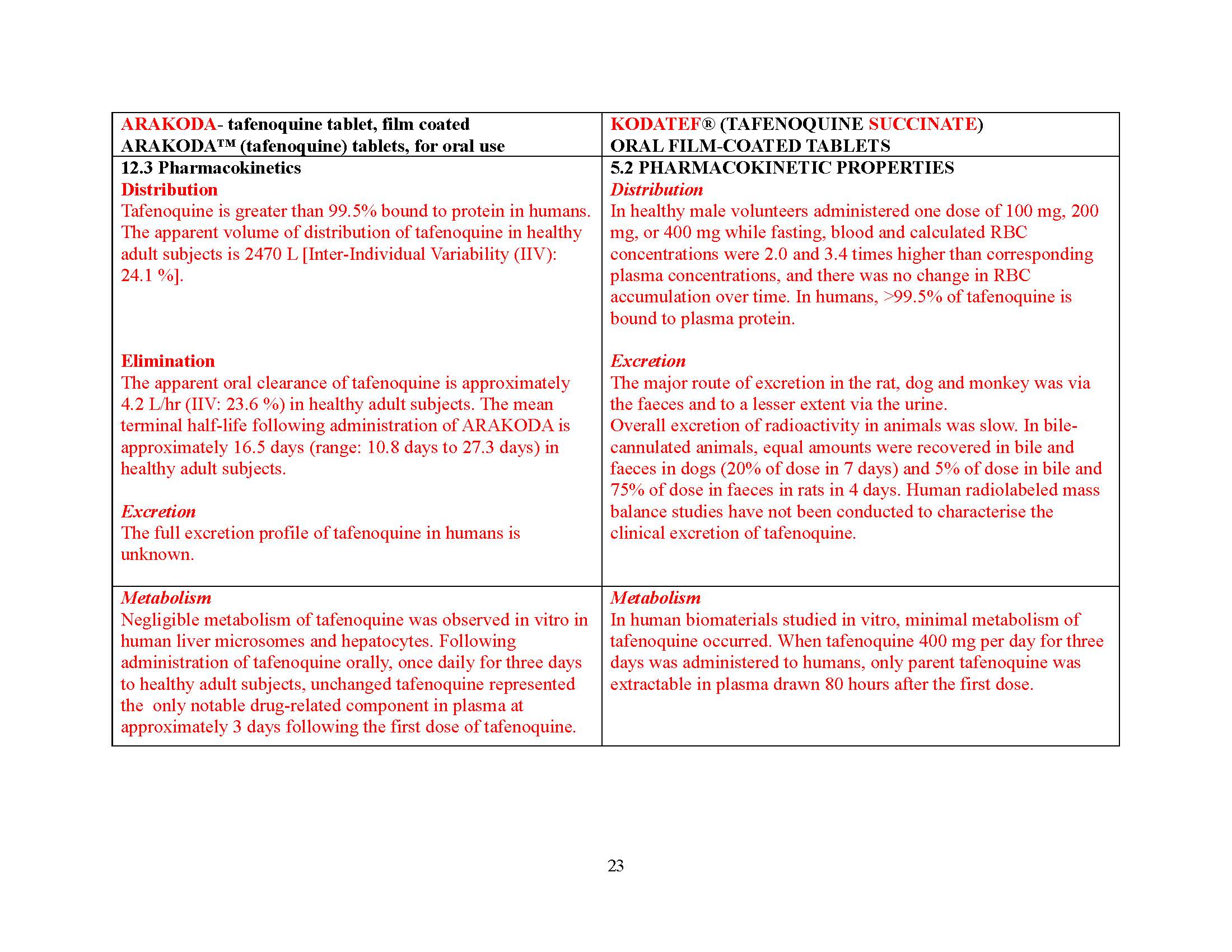
This is a description of the pharmacokinetic properties of ARAKODA (tafenoquine) tablets and KODATEF (TAFENOQUINE SUCCINATE) oral film-coated tablets. The text provides information on the distribution, elimination, excretion, and metabolism of tafenoquine in healthy adult subjects. It mentions that tafenoquine is highly bound to protein, has an apparent volume of distribution of 2470 L, and a mean terminal half-life of approximately 16.5 days. It also discusses the excretion profile of tafenoquine in humans, as well as its excretion route in rat, dog, and monkey. The text indicates that negligible metabolism of tafenoquine was observed in human liver microsomes and hepatocytes, and only parent tafenoquine was found in plasma samples after administration to humans.*
FDA Label Image

Dear Hcp Letter Page 40 (Dear Hcp Letter Kodatef 7feb2025 Page 40)

Dear Hcp Letter Page 40 (Dear Hcp Letter Kodatef 7feb2025 Page 40)
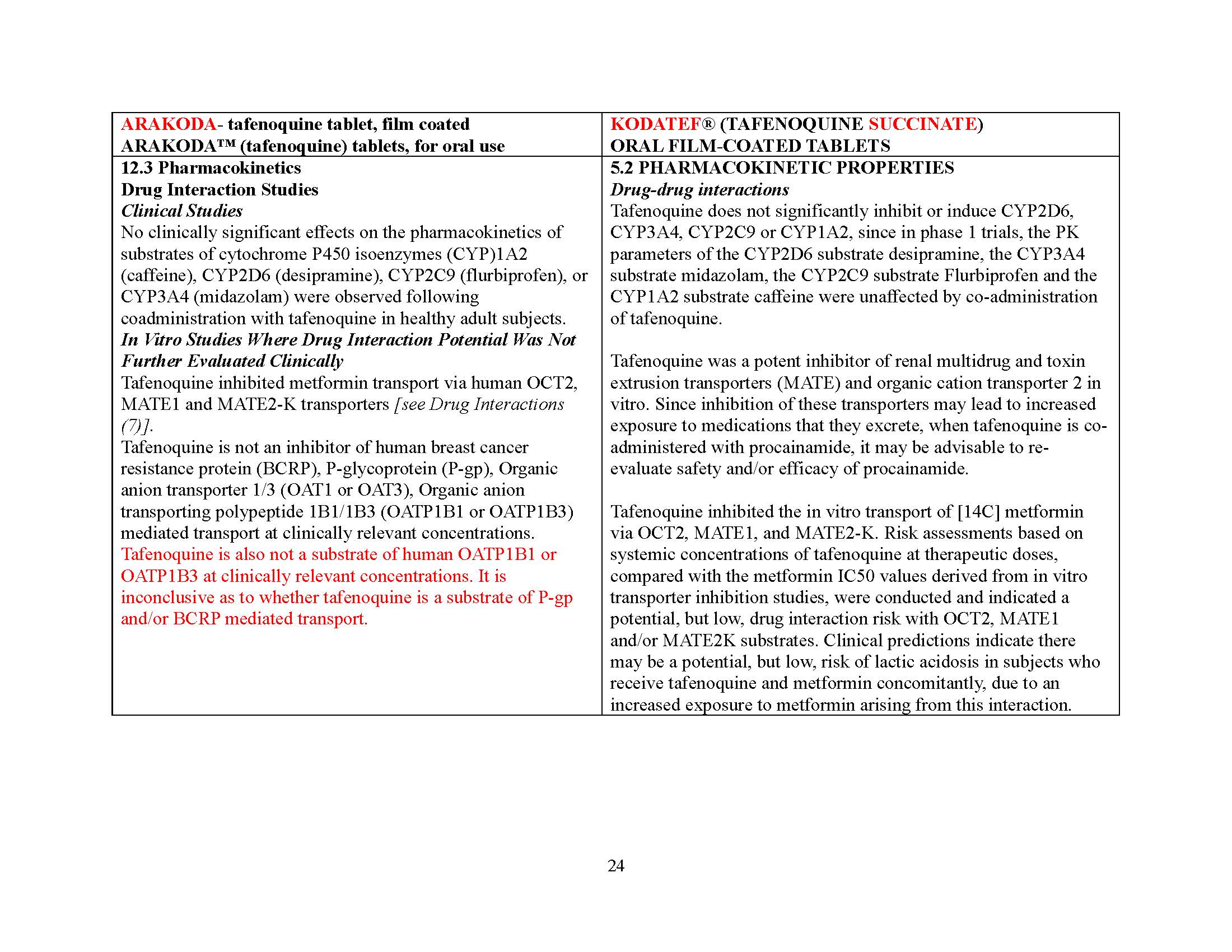
This text provides information about the pharmacokinetics and drug interactions of ARAKODA (tafenoquine) tablets. It mentions that tafenoquine does not have significant effects on various cytochrome P450 isoenzymes and provides details on its inhibitory effects on certain transporters. The text also discusses the potential drug interactions of tafenoquine with medications like procainamide and metformin, emphasizing the need for safety evaluations in specific cases. Furthermore, it addresses the risks associated with co-administration of tafenoquine and metformin, suggesting a low potential for lactic acidosis.*
FDA Label Image

Dear Hcp Letter Page 41 (Dear Hcp Letter Kodatef 7feb2025 Page 41)

Dear Hcp Letter Page 41 (Dear Hcp Letter Kodatef 7feb2025 Page 41)
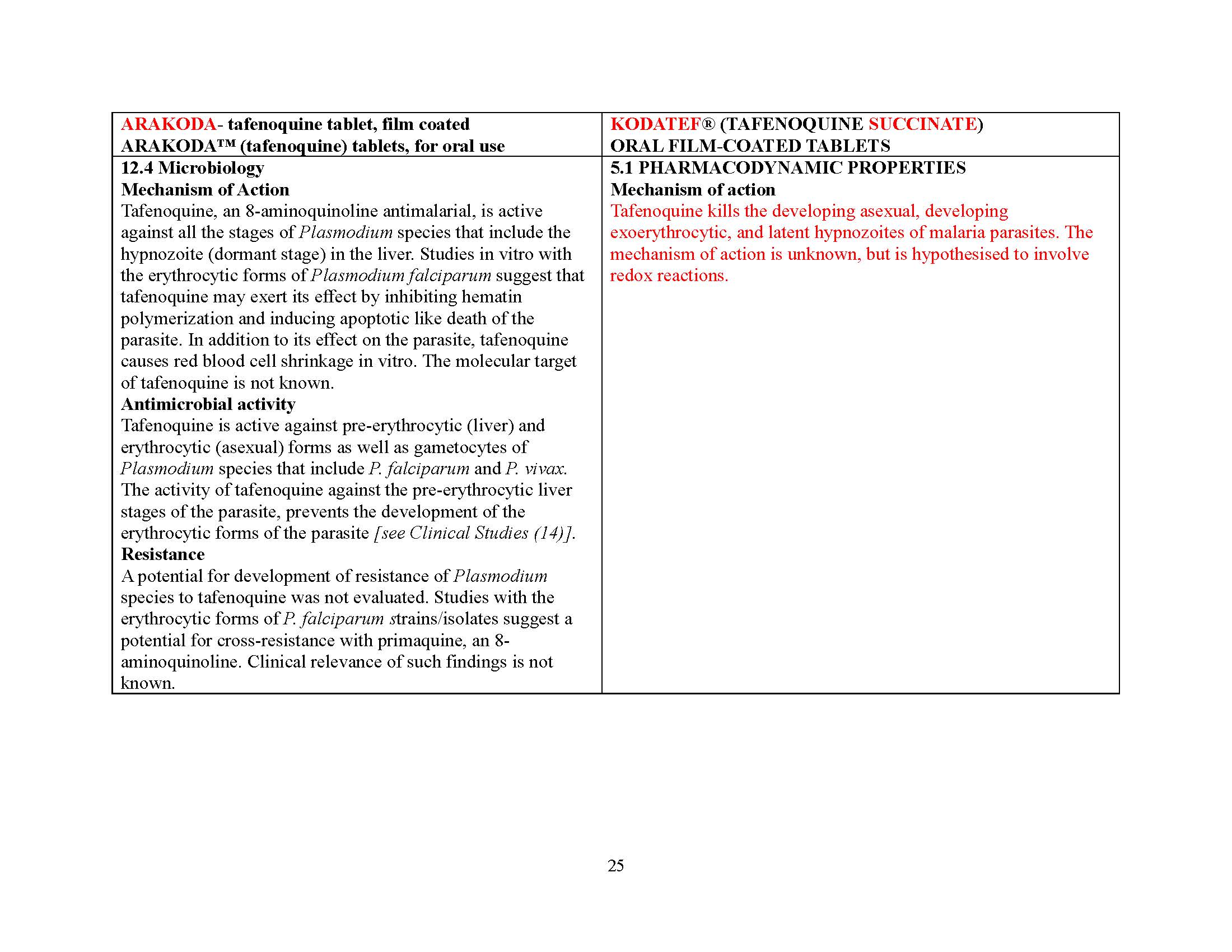
ARAKODA and KODATEF are tablets containing tafenoquine, an 8-aminoquinoline antimalarial with activity against all stages of Plasmodium species. Its mechanism of action includes inhibiting hematin polymerization and inducing apoptotic-like death of the parasite. Tafenoquine is active against liver and asexual forms of the parasite, preventing development into erythrocytic forms. Its pharmacodynamic properties involve killing developing malaria parasites through redox reactions. The potential for resistance development and cross-resistance with primaquine has been noted.*
FDA Label Image

Dear Hcp Letter Page 42 (Dear Hcp Letter Kodatef 7feb2025 Page 42)

Dear Hcp Letter Page 42 (Dear Hcp Letter Kodatef 7feb2025 Page 42)
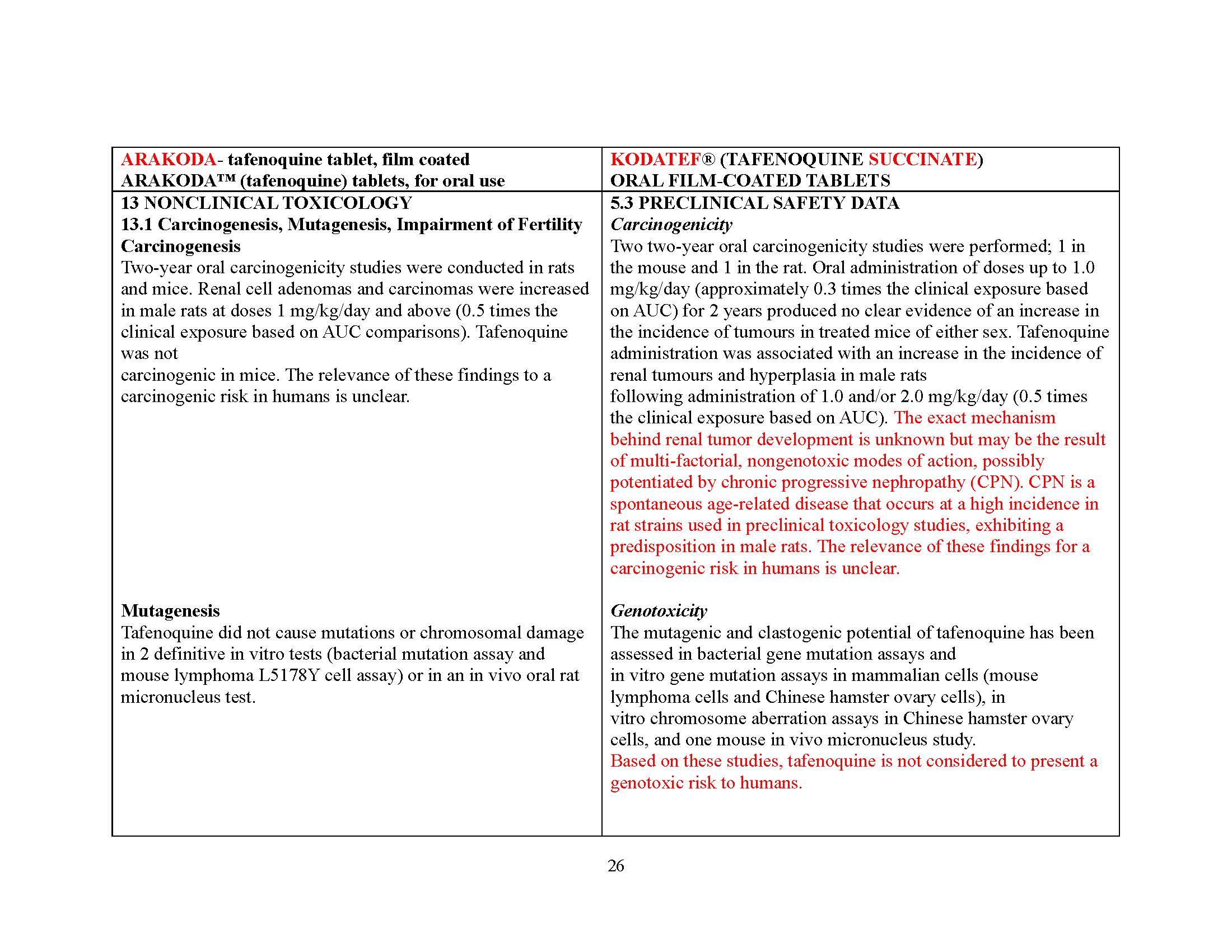
ARAKODA is a tafenoquine tablet for oral use. The tablet is film-coated and belongs to the KODATEF brand. Nonclinical toxicology studies indicate that tafenoquine did not cause mutations or chromosomal damage in various tests. Carcinogenicity studies in rats and mice showed an increase in renal cell adenomas and carcinomas in male rats at certain doses. However, the relevance of these findings to human carcinogenic risk is unclear. Tafenoquine was not cancer-causing in mice. Overall, based on preclinical safety data, tafenoquine is not considered to pose a genotoxic risk to humans.*
FDA Label Image

Dear Hcp Letter Page 43 (Dear Hcp Letter Kodatef 7feb2025 Page 43)

Dear Hcp Letter Page 43 (Dear Hcp Letter Kodatef 7feb2025 Page 43)
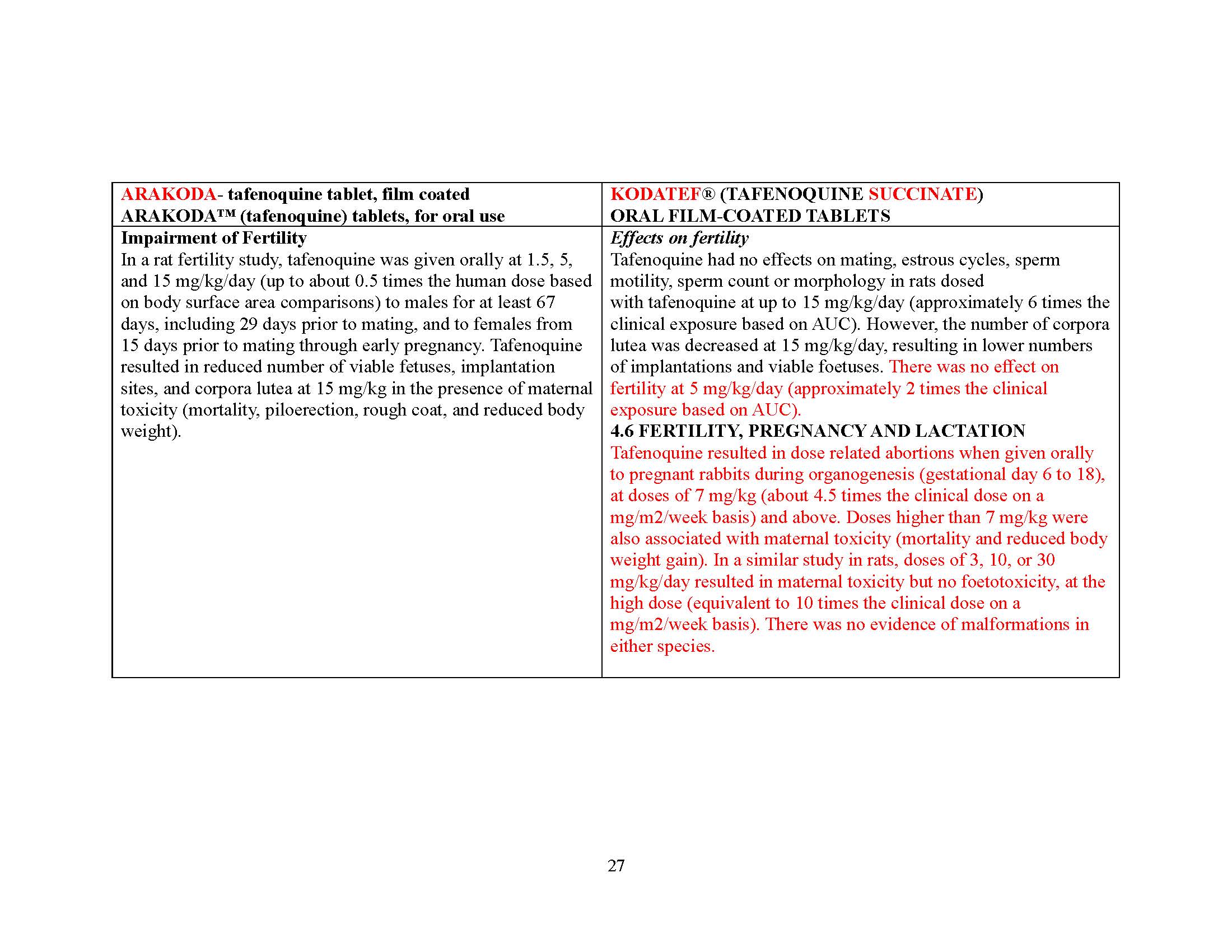
This text provides information regarding the effects of tafenoquine on fertility in rats and rabbits. It discusses the impact of different doses of tafenoquine on pregnancy outcomes, including the number of viable fetuses, implantation sites, and corpora lutea. The text also mentions the absence of effects on mating, estrous cycles, sperm motility, sperm count, or morphology in rats at specific doses of tafenoquine. Additionally, it touches upon the dose-related abortions seen in pregnant rabbits and maternal toxicity associated with higher doses of tafenoquine. This information can be useful for individuals studying the reproductive effects of tafenoquine.*
FDA Label Image

Dear Hcp Letter Page 44 (Dear Hcp Letter Kodatef 7feb2025 Page 44)

Dear Hcp Letter Page 44 (Dear Hcp Letter Kodatef 7feb2025 Page 44)
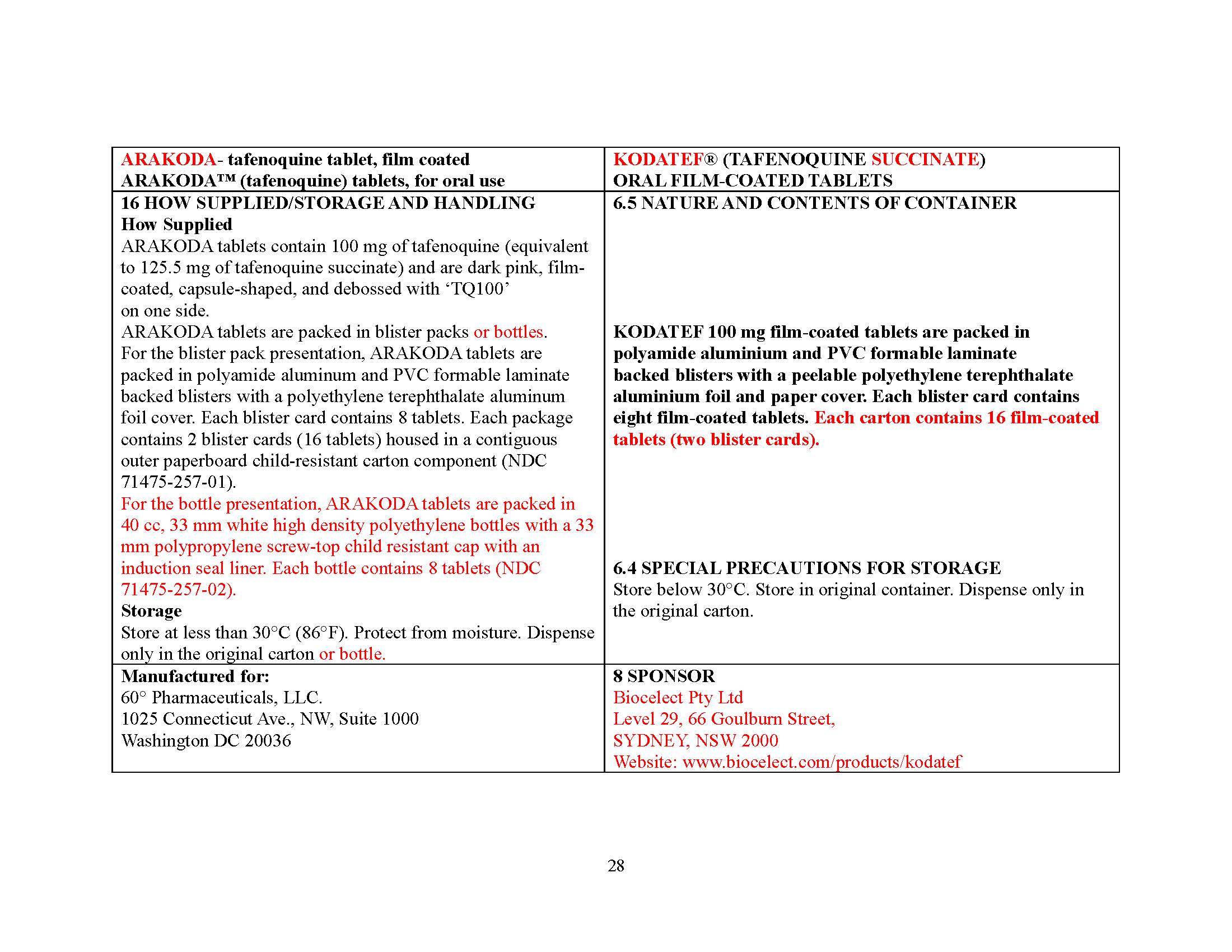
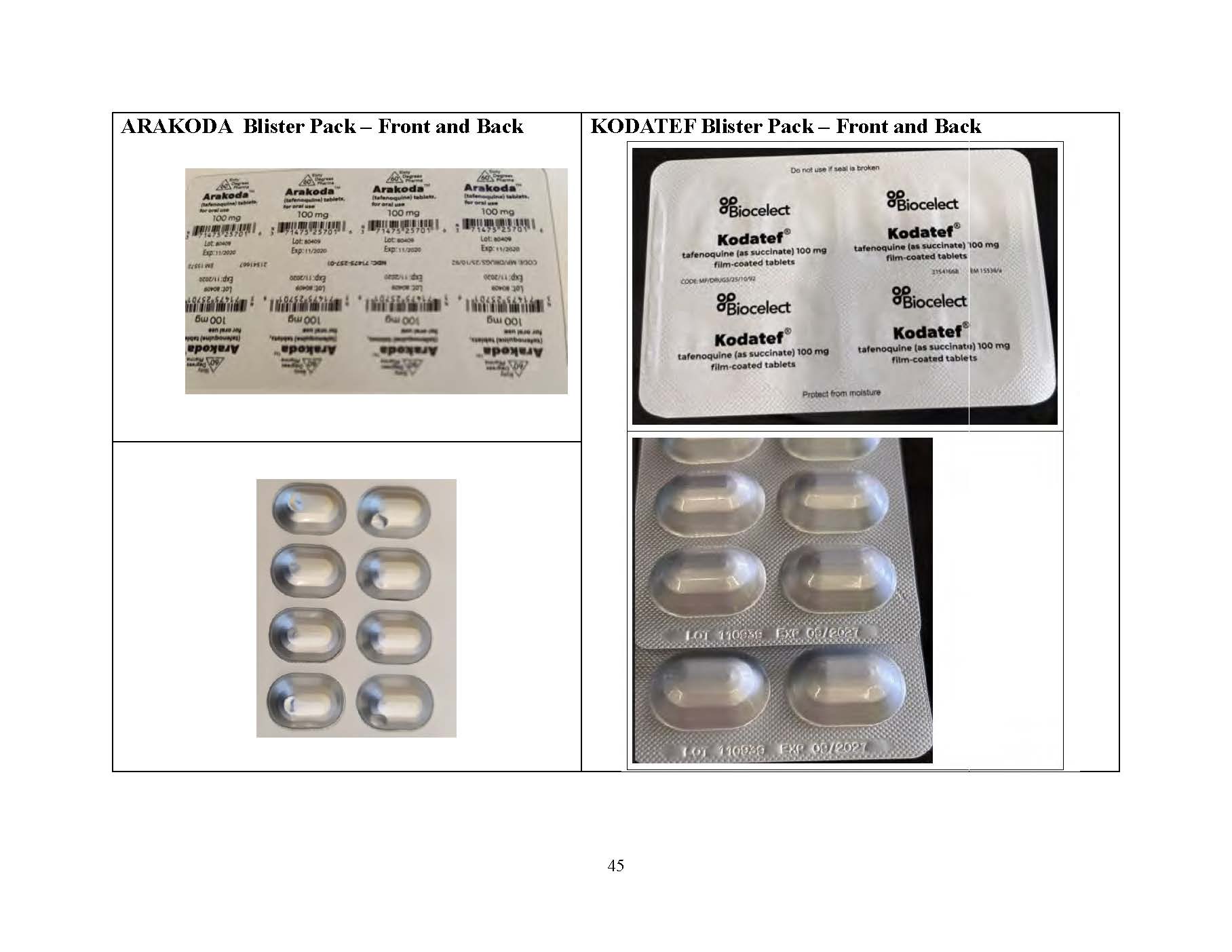
This text provides detailed information about ARAKODA, a tafenoquine tablet designed for oral use. The tablets are film-coated and contain 100 mg of tafenoquine. They are dark pink, capsule-shaped, and imprinted with 'TQ100'. The product is supplied in blister packs or bottles. The blister pack includes 16 tablets in total, while the bottle contains 8 tablets. It is advised to store the tablets at less than 30°C and protect them from moisture. The manufacturing and sponsorship details are also provided in the text.*
FDA Label Image

Dear Hcp Letter Page 45 (Dear Hcp Letter Kodatef 7feb2025 Page 45)

Dear Hcp Letter Page 45 (Dear Hcp Letter Kodatef 7feb2025 Page 45)
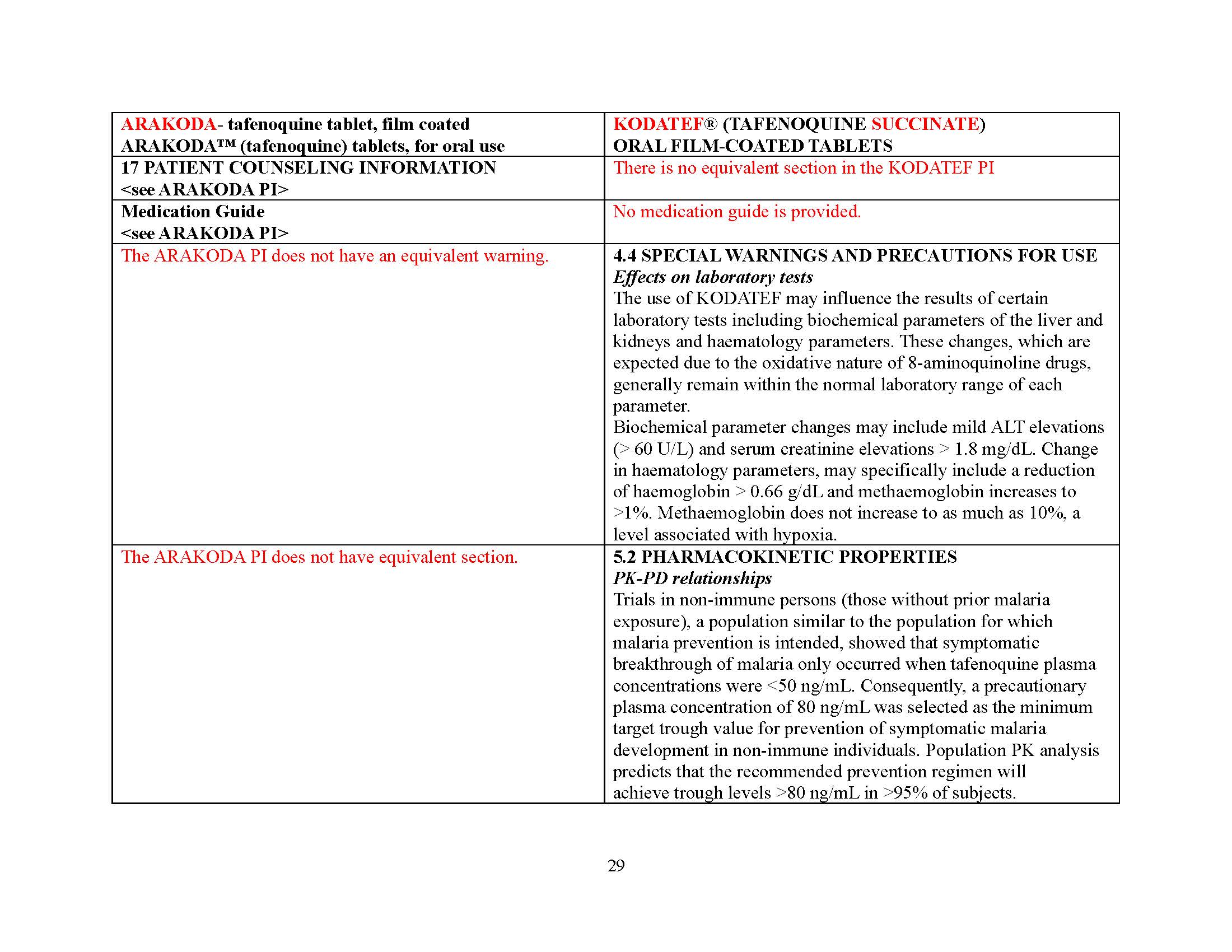
This text provides information about ARAKODA (tafenoquine) tablets for oral use. It includes details about patient counseling, special warnings and precautions for use, pharmacokinetic properties, and the effectiveness of the medication in preventing symptomatic malaria. The warnings mention that the use of KODATEF may influence certain laboratory test results, with expected changes remaining within the normal range. Also, trials showed that a minimum plasma concentration of 80 ng/mL is required for preventing symptomatic malaria in non-immune individuals.*
FDA Label Image

Dear Hcp Letter Page 46 (Dear Hcp Letter Kodatef 7feb2025 Page 46)

Dear Hcp Letter Page 46 (Dear Hcp Letter Kodatef 7feb2025 Page 46)
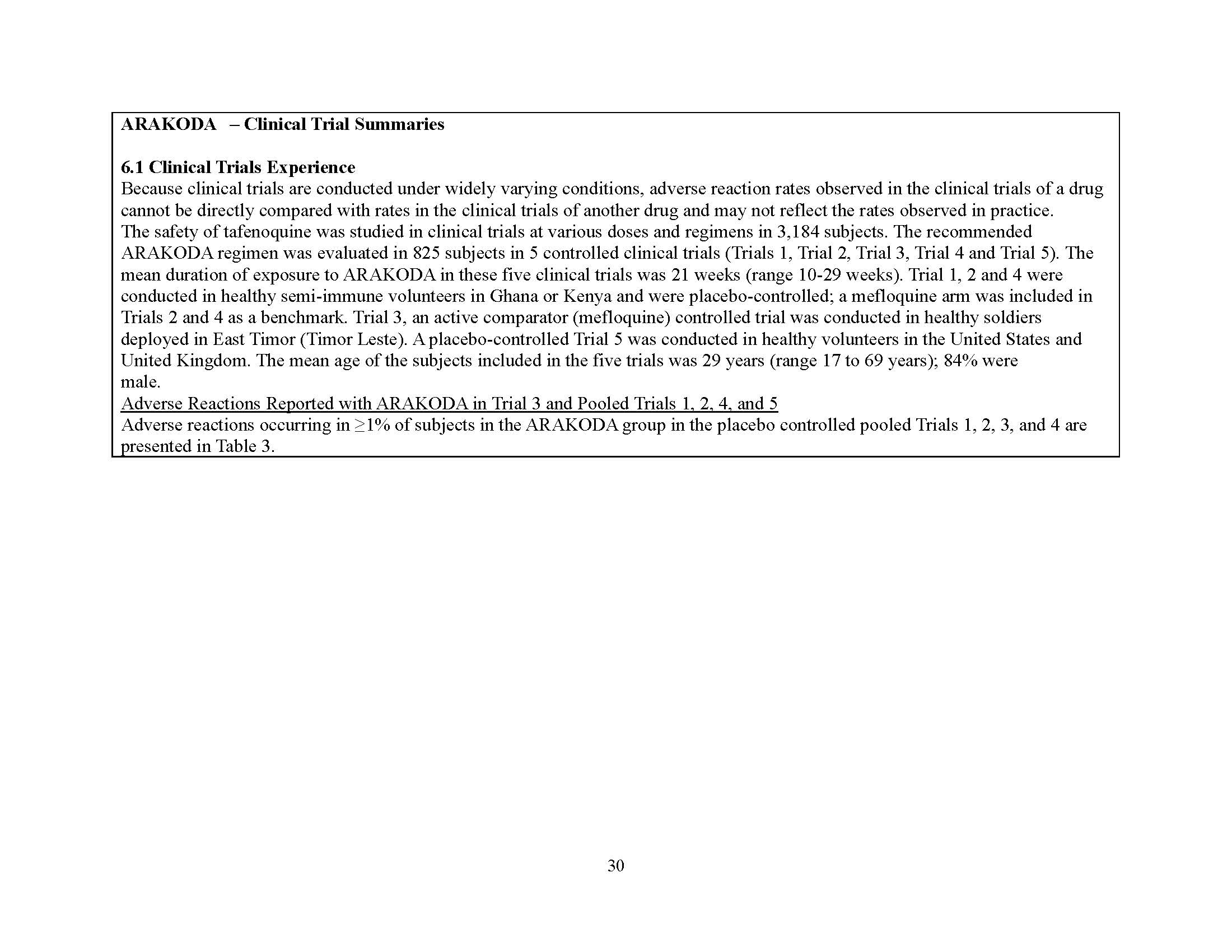
The text provides a summary of clinical trials conducted to study the safety and efficacy of ARAKODA (tafenoquine) involving 3,184 subjects. The recommended regimen was evaluated in controlled trials with durations ranging from 10 to 29 weeks. The trials included healthy volunteers and soldiers in different countries. Adverse reactions reported in >1% of subjects included in the placebo-controlled pooled trials are detailed.*
FDA Label Image

Dear Hcp Letter Page 47 (Dear Hcp Letter Kodatef 7feb2025 Page 47)

Dear Hcp Letter Page 47 (Dear Hcp Letter Kodatef 7feb2025 Page 47)
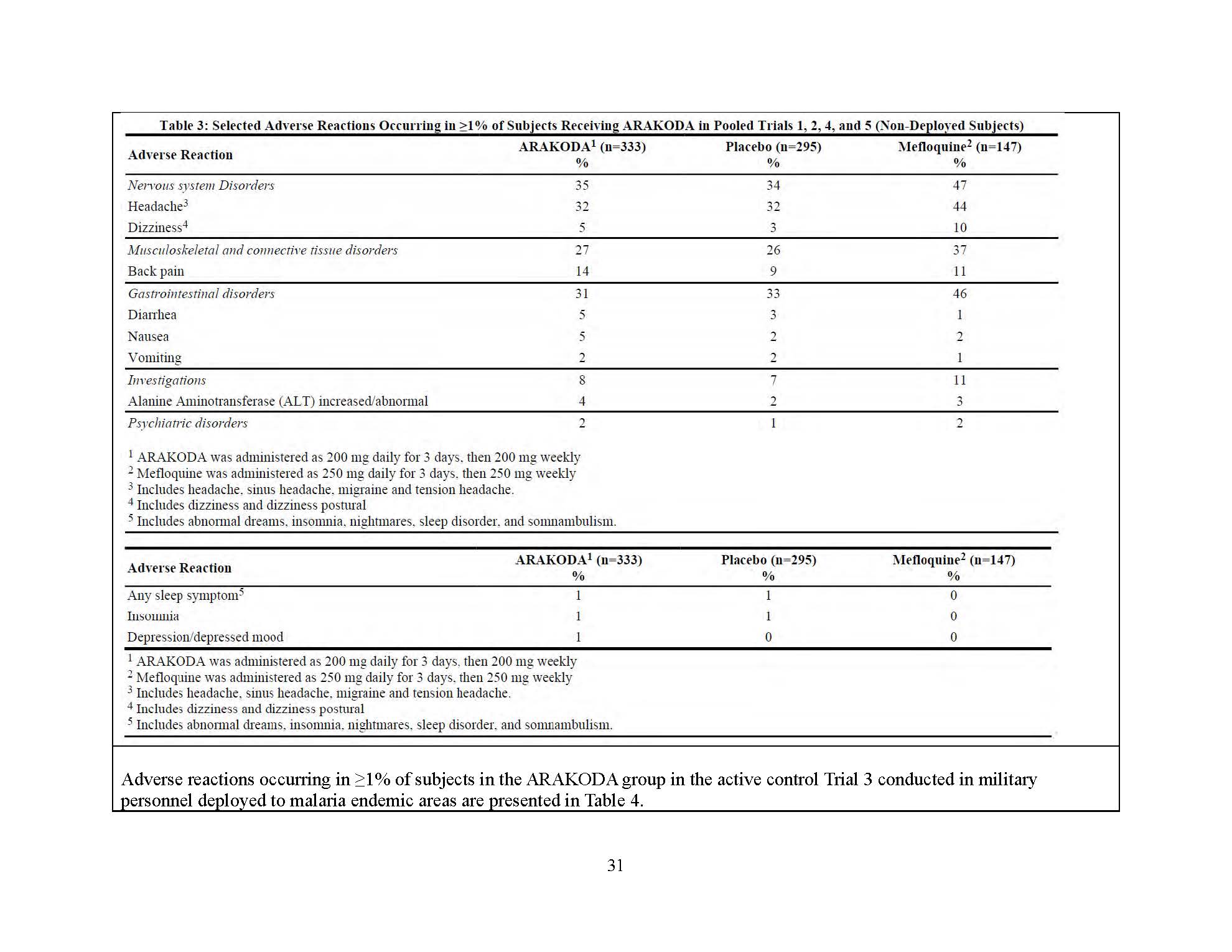
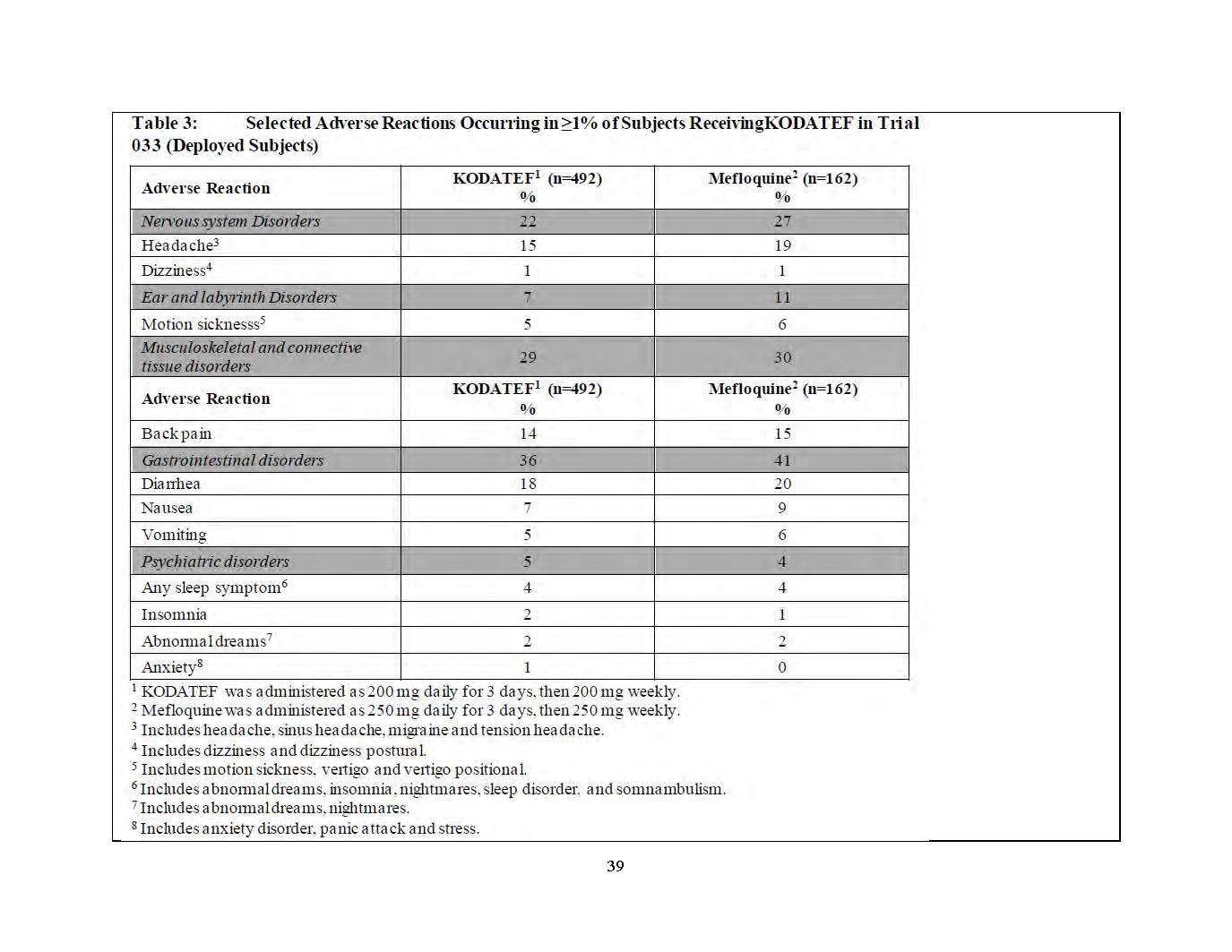
This is a report on adverse reactions to medications, ARAKODA and Mefloquine, used for malaria prevention. The table lists various side effects categorized by body system, including nervous system disorders, musculoskeletal issues, gastrointestinal problems, and psychiatric disorders. The text also specifies the dosage regimen for the medications and mentions common adverse reactions such as headache, dizziness, and sleep disturbances. It is based on a clinical trial conducted on military personnel deployed to malaria-endemic areas.*
FDA Label Image

Dear Hcp Letter Page 48 (Dear Hcp Letter Kodatef 7feb2025 Page 48)

Dear Hcp Letter Page 48 (Dear Hcp Letter Kodatef 7feb2025 Page 48)
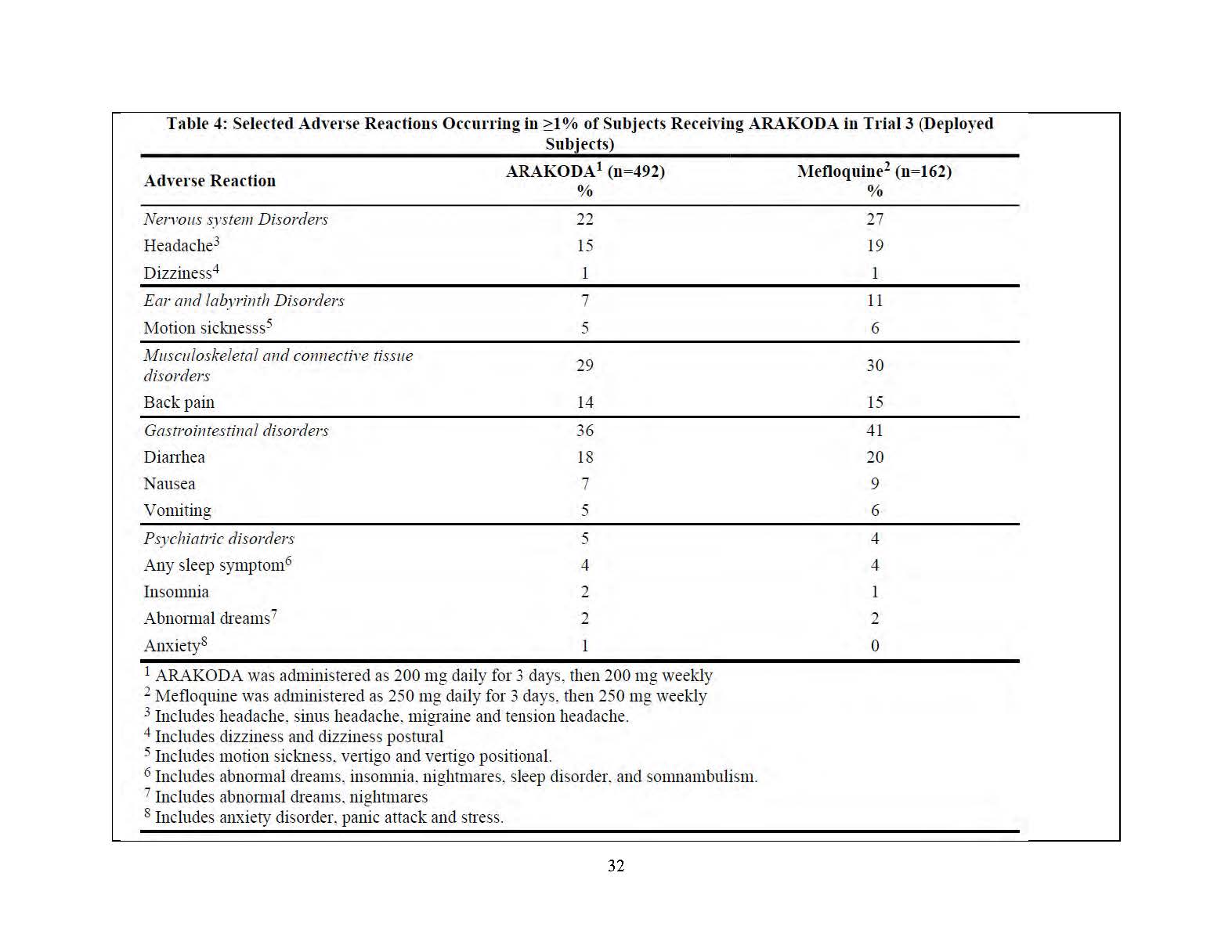
This is a table showing selected adverse reactions occurring in more than 1% of subjects receiving ARAKODA in a trial involving deployed subjects. It includes percentages of subjects experiencing different disorders such as Nervous system disorders, Ear and labyrinth disorders, Musculoskeletal and connective tissue disorders, Gastrointestinal disorders, and Psychiatric disorders. Adverse reactions mentioned include headache, dizziness, motion sickness, back pain, diarrhea, nausea, vomiting, insomnia, abnormal dreams, and anxiety. The table also provides information about the administration of ARAKODA and Mefloquine during the trial.*
FDA Label Image

Dear Hcp Letter Page 49 (Dear Hcp Letter Kodatef 7feb2025 Page 49)

Dear Hcp Letter Page 49 (Dear Hcp Letter Kodatef 7feb2025 Page 49)
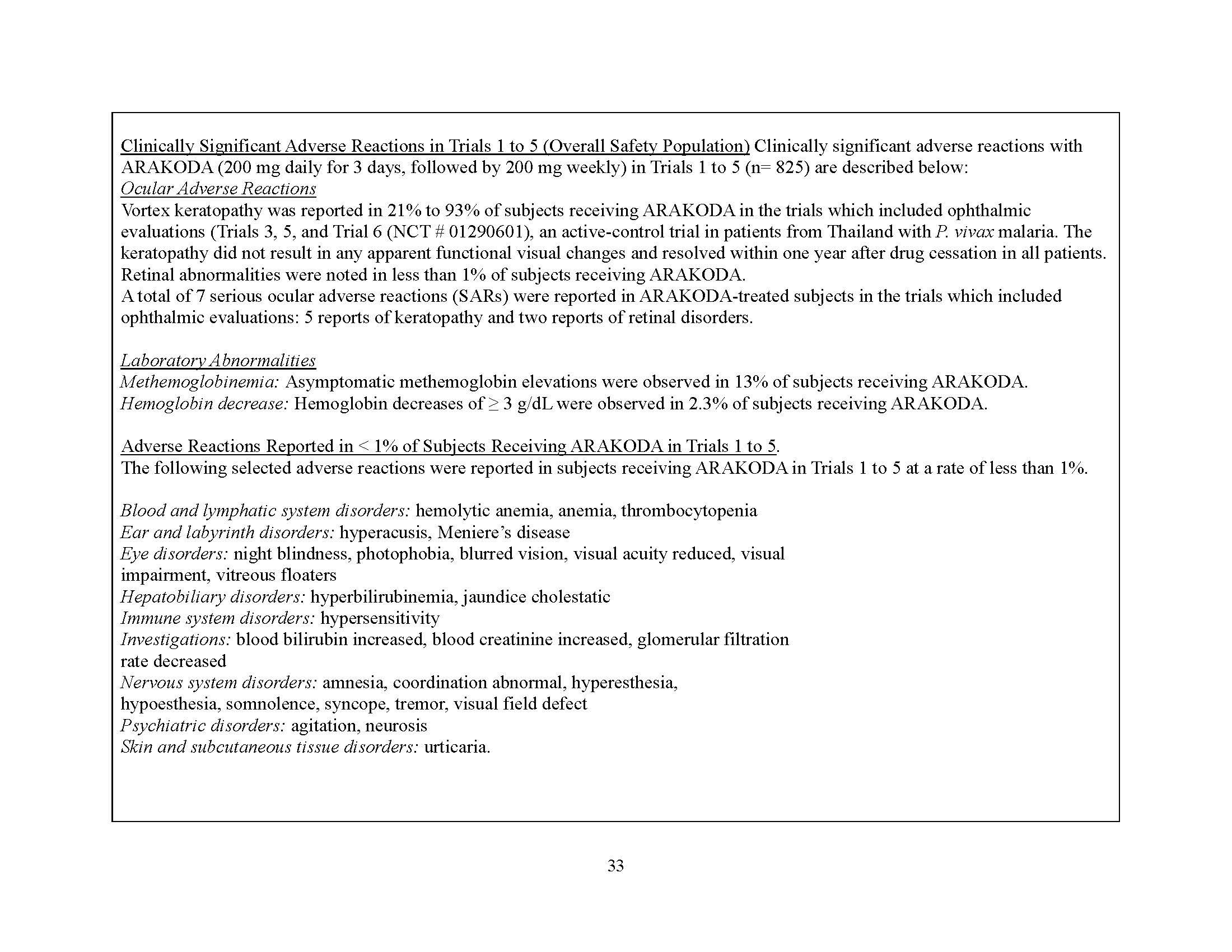
This text is a description of the clinically significant adverse reactions found in Trials 1 to 5 with ARAKODA (200 mg daily for 3 days, followed by 200 mg weekly). Adverse reactions include ocular reactions like vortex keratopathy and retinal abnormalities, as well as laboratory abnormalities such as methemoglobinemia and hemoglobin decrease. Additionally, it mentions various adverse reactions reported in less than 1% of subjects, including disorders related to the blood, ear, eye, hepatobiliary system, immune system, nervous system, psychiatric conditions, and skin. Each section provides detailed information on the specific adverse reactions associated with the medication.*
FDA Label Image

Dear Hcp Letter Page 50 (Dear Hcp Letter Kodatef 7feb2025 Page 50)

Dear Hcp Letter Page 50 (Dear Hcp Letter Kodatef 7feb2025 Page 50)
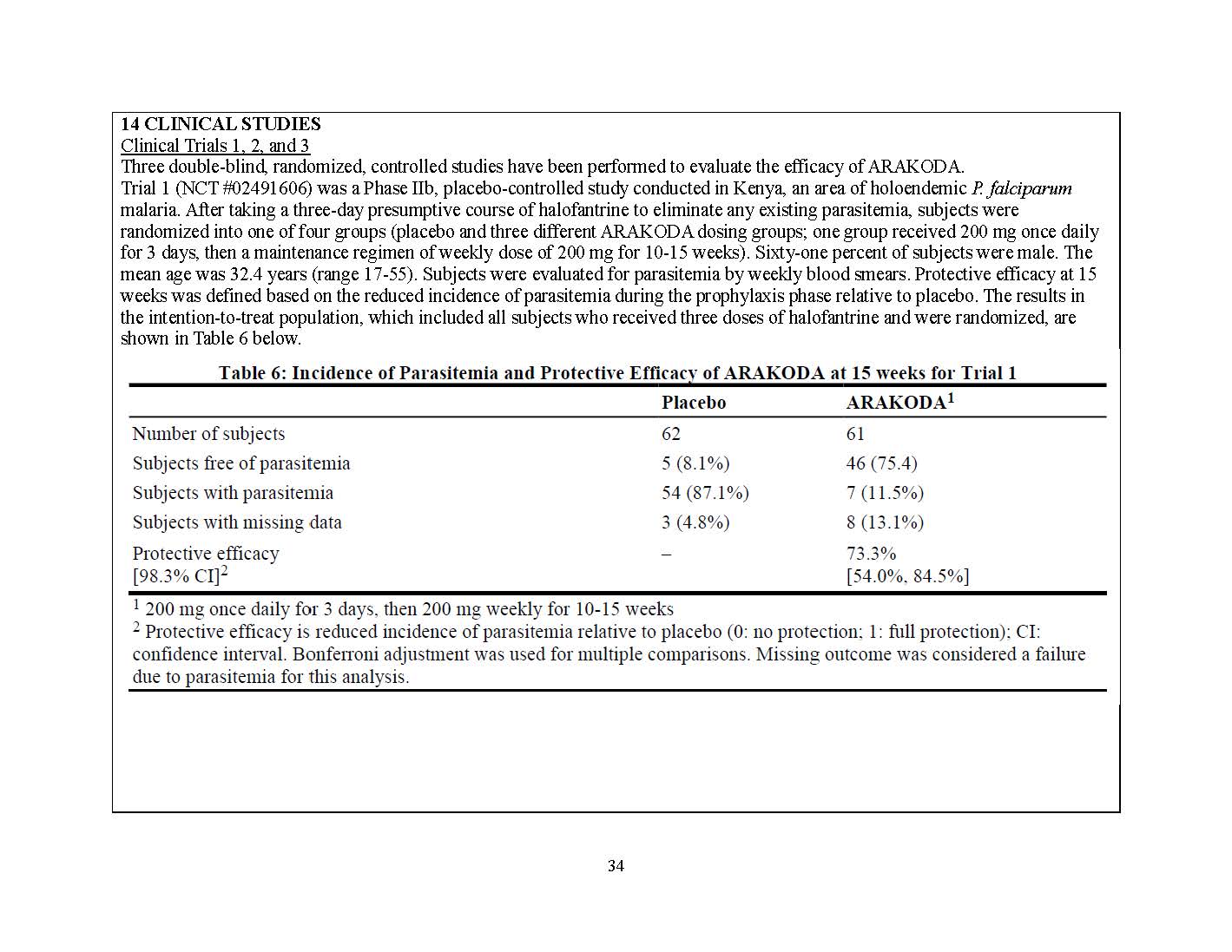
This -provided text describes the results of a clinical trial (Trial 1) evaluating the efficacy of ARAKODA in preventing parasitemia in individuals in a malaria-endemic area. The study was double-blind and placebo-controlled, conducted in Kenya. The participants received different dosages of ARAKODA, with one group receiving 200 mg once daily for 3 days followed by a weekly maintenance dose for 10-15 weeks. The results suggest a significant protective efficacy of ARAKODA in reducing the incidence of parasitemia compared to placebo. The study provides detailed information on the number of subjects, incidence of parasitemia, and protective efficacy percentages.*
FDA Label Image

Dear Hcp Letter Page 51 (Dear Hcp Letter Kodatef 7feb2025 Page 51)

Dear Hcp Letter Page 51 (Dear Hcp Letter Kodatef 7feb2025 Page 51)
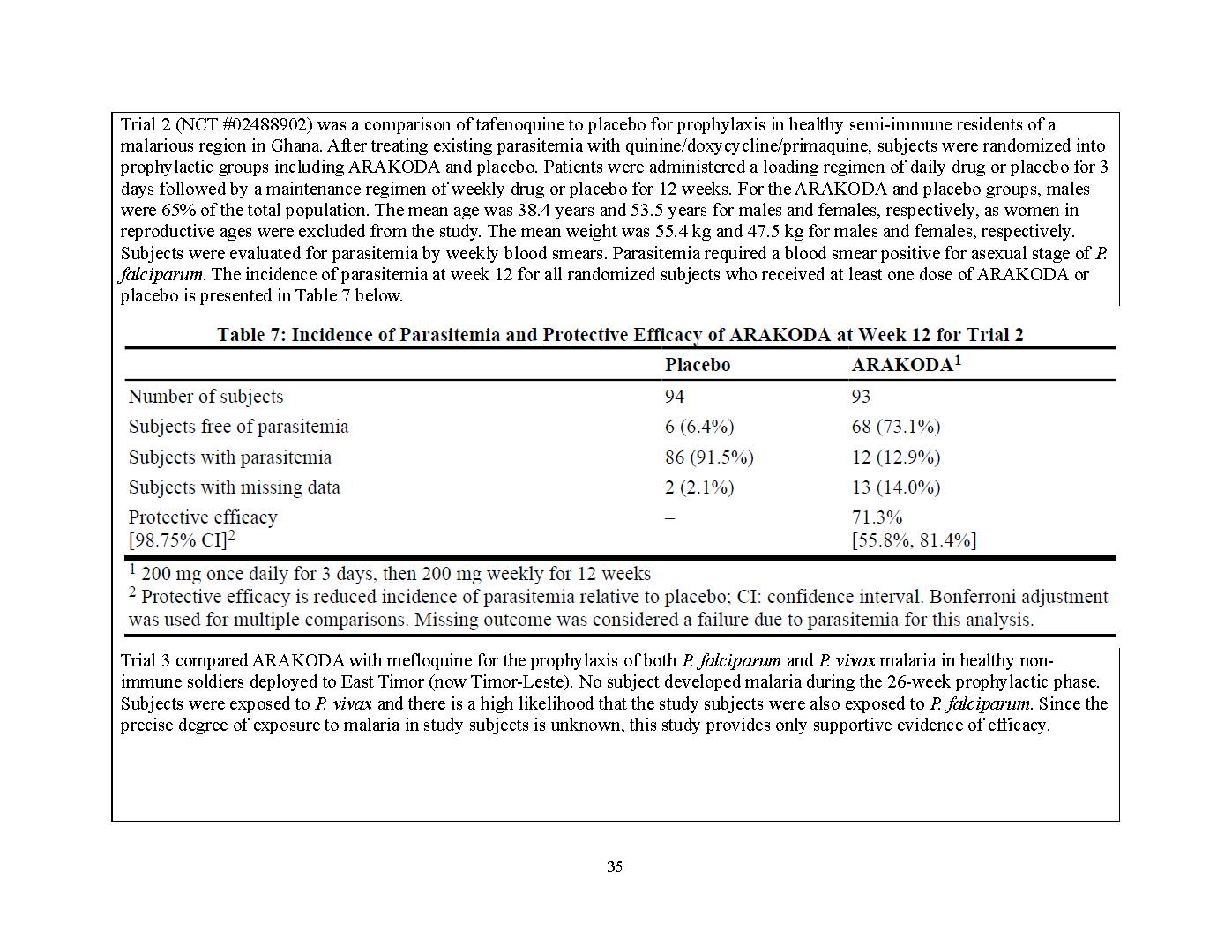
Trial 2 (NCT #02488902) evaluated the efficacy of tafenoquine (ARAKODA) compared to placebo as prophylaxis for malaria in semi-immune residents of a malarious region in Ghana. Subjects were treated for existing parasitemia and then randomized into groups receiving either ARAKODA or placebo for 12 weeks. The study found that ARAKODA significantly reduced the incidence of parasitemia compared to placebo, with a protective efficacy of 71.3%. This trial demonstrated the effectiveness of ARAKODA in preventing malaria infections in this population.*
FDA Label Image

Dear Hcp Letter Page 52 (Dear Hcp Letter Kodatef 7feb2025 Page 52)

Dear Hcp Letter Page 52 (Dear Hcp Letter Kodatef 7feb2025 Page 52)
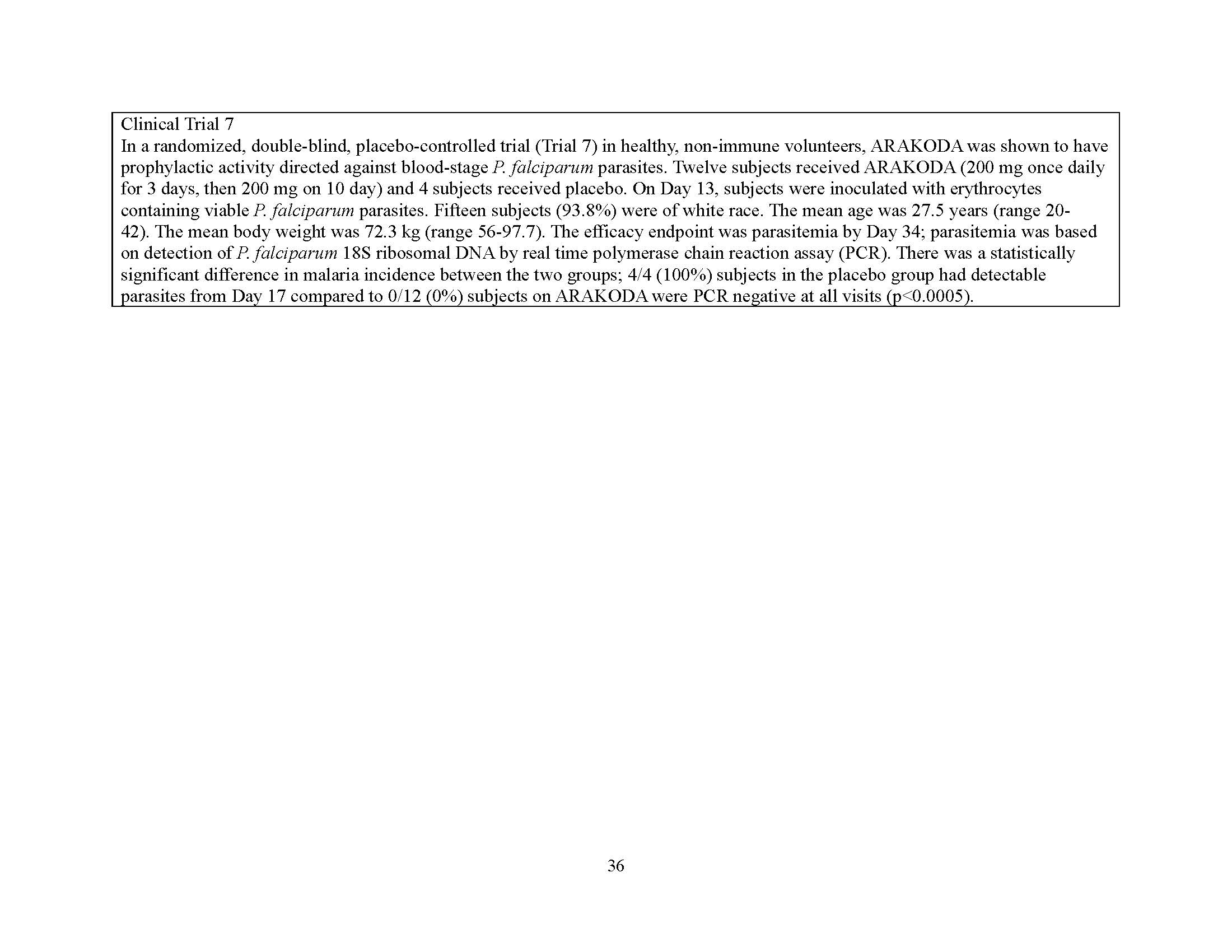
This text provides a summary of Clinical Trial 7 involving ARAKODA in healthy volunteers. It highlights the prophylactic activity of ARAKODA against blood-stage P. falciparum parasites. The trial was randomized and double-blind with 12 subjects receiving ARAKODA and 4 receiving a placebo. The study showed a statistically significant difference in malaria incidence between the two groups, with all subjects in the placebo group having detectable parasites compared to none in the ARAKODA group. The efficacy endpoint was parasitemia by Day 34, measured by real-time PCR. The text also includes demographics like race, age, and body weight of the participants.*
FDA Label Image

Dear Hcp Letter Page 53 (Dear Hcp Letter Kodatef 7feb2025 Page 53)

Dear Hcp Letter Page 53 (Dear Hcp Letter Kodatef 7feb2025 Page 53)
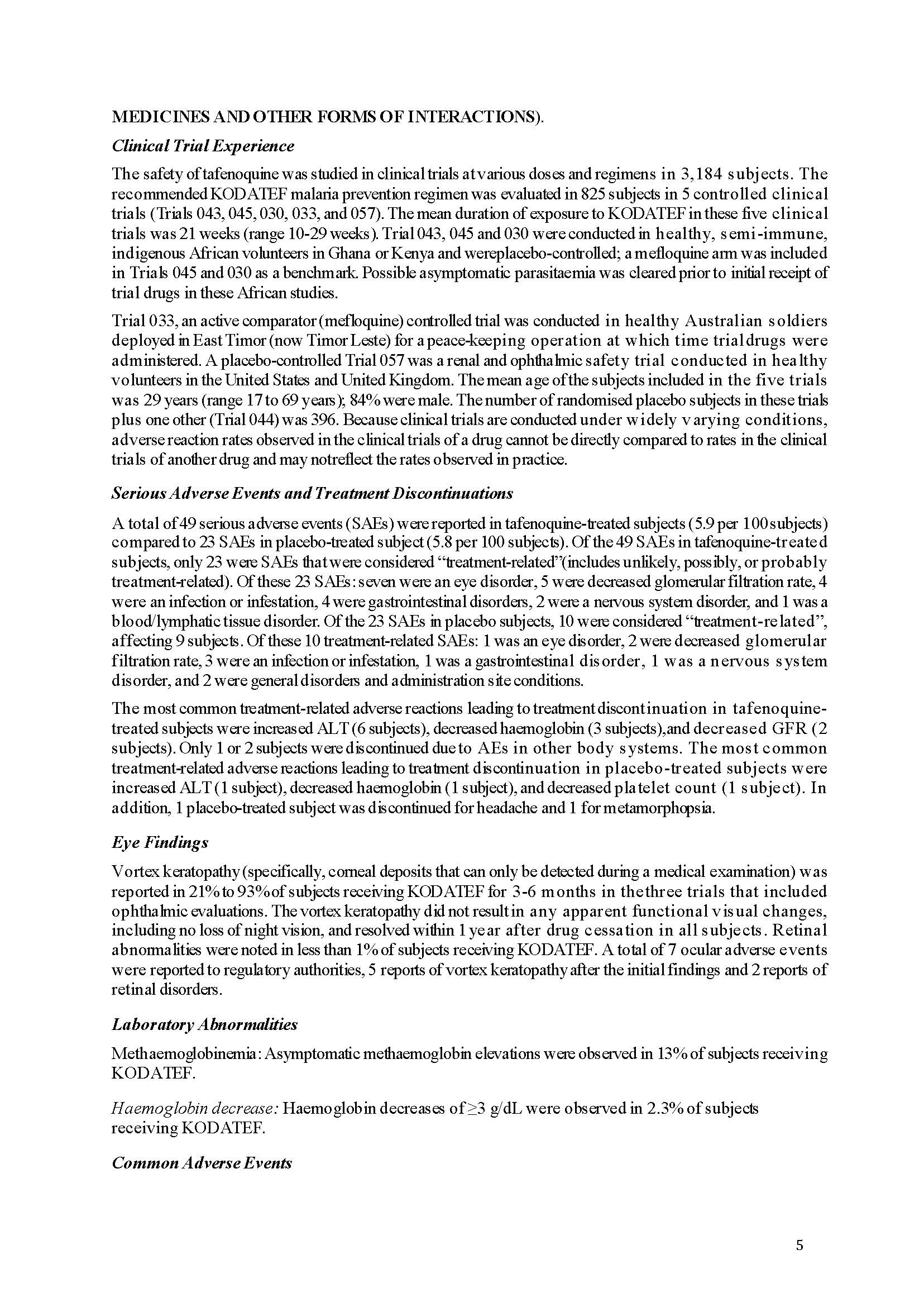
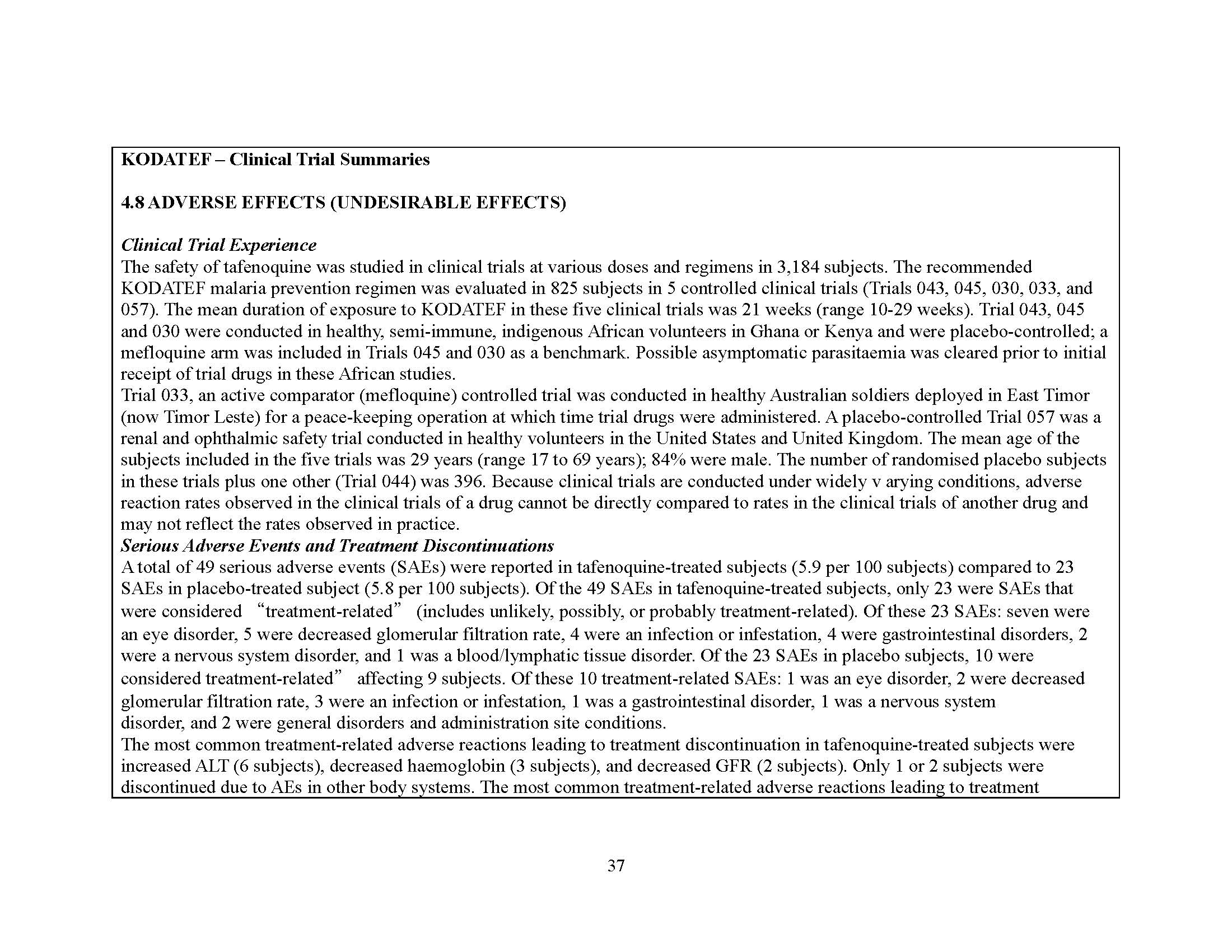
The text provides a detailed overview of the clinical trial summaries for KODATEF, a malaria prevention regimen studied in 3,184 subjects across various doses and regimens. The safety profile, adverse effects, and serious adverse events experienced by trial participants are described, including information on treatment discontinuations. Adverse reactions such as eye disorders, decreased glomerular filtration rate, infections, and gastrointestinal disorders were reported, with specific prevalence rates and details on treatment-related adverse events. The text highlights the importance of considering adverse reaction rates within the specific context of each clinical trial.*
FDA Label Image

Dear Hcp Letter Page 54 (Dear Hcp Letter Kodatef 7feb2025 Page 54)

Dear Hcp Letter Page 54 (Dear Hcp Letter Kodatef 7feb2025 Page 54)
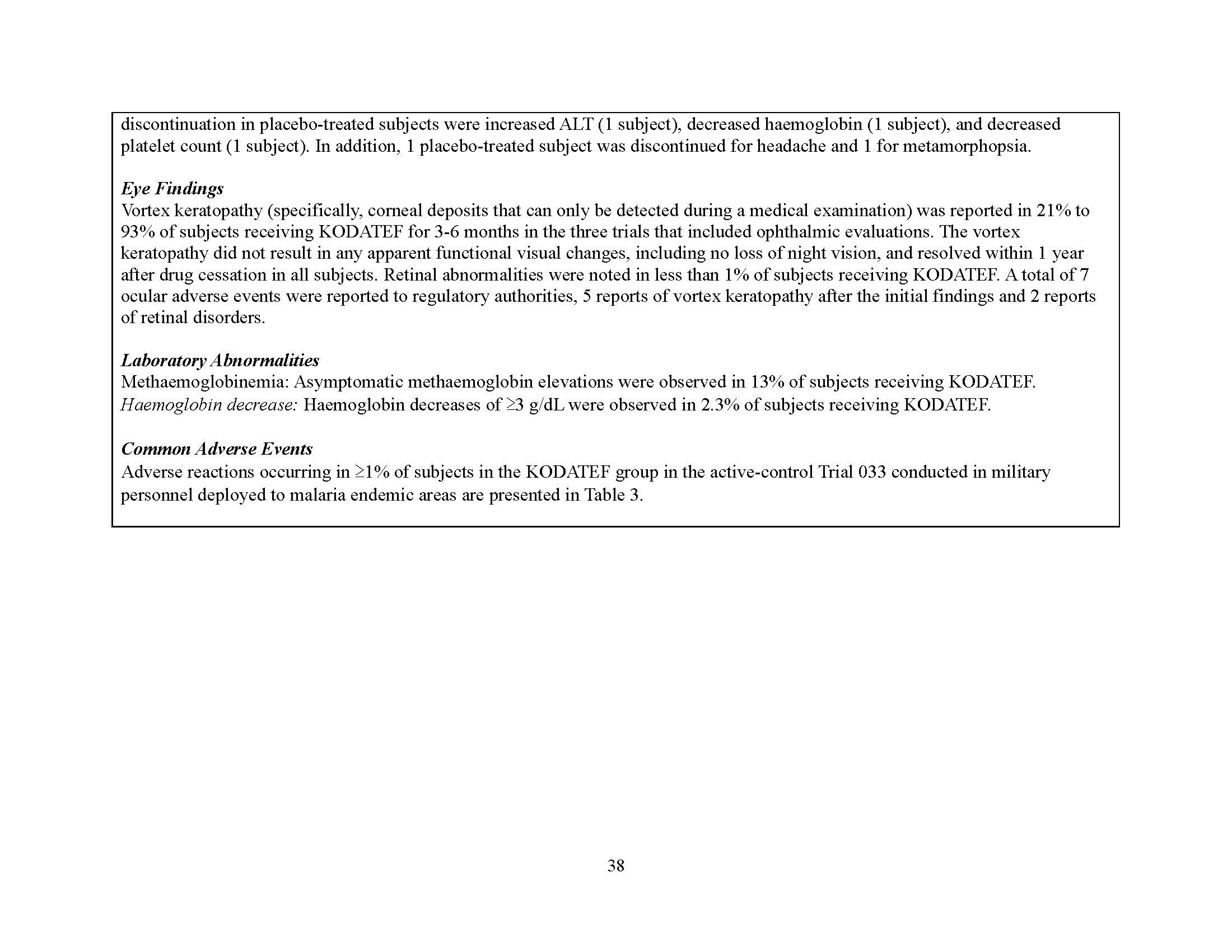
The text provides information on adverse effects such as increased ALT, decreased hemoglobin, decreased platelet count, and eye findings including vortex keratopathy and retinal abnormalities in subjects receiving KODATEF. It also mentions laboratory abnormalities like methemoglobinemia and hemoglobin decrease. Additionally, common adverse events in the KODATEF group are outlined based on the active-control Trial 033 conducted in military personnel deployed to malaria endemic areas.*
FDA Label Image

Dear Hcp Letter Page 55 (Dear Hcp Letter Kodatef 7feb2025 Page 55)

FDA Label Image

Dear Hcp Letter Page 56 (Dear Hcp Letter Kodatef 7feb2025 Page 56)

Dear Hcp Letter Page 56 (Dear Hcp Letter Kodatef 7feb2025 Page 56)
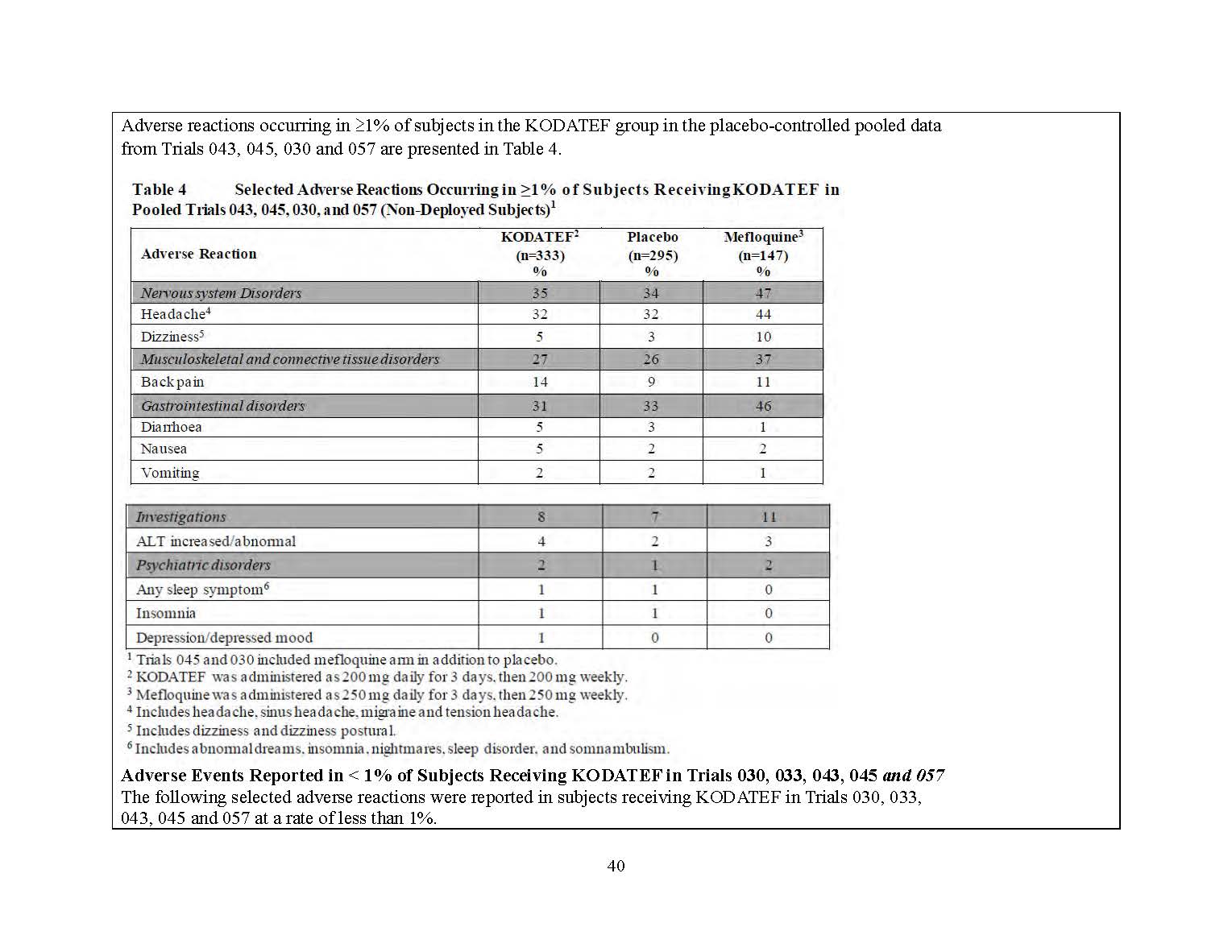
The provided text describes adverse reactions occurring in over 1% of subjects in the KODATEF group in a placebo-controlled pooled data from multiple trials. The adverse reactions are categorized by systems affected, including nervous system disorders, musculoskeletal and connective tissue disorders, gastrointestinal disorders, investigations, and psychiatric disorders, among others. Specific adverse reactions listed include headaches, dizziness, back pain, diarrhea, nausea, vomiting, increased ALT levels, sleep symptoms, insomnia, and depression. Additionally, it mentions that the trials included the mefloquine arm in addition to the placebo and provides details on the dosages and administration schedules for KODATEF and mefloquine. Some adverse events reported in less than 1% of subjects receiving KODATEF in the mentioned trials are also listed.*
FDA Label Image

Dear Hcp Letter Page 57 (Dear Hcp Letter Kodatef 7feb2025 Page 57)

Dear Hcp Letter Page 57 (Dear Hcp Letter Kodatef 7feb2025 Page 57)
This text provides information on potential adverse reactions, pharmacological properties, and a clinical trial related to a medicinal product named KODATEF used for the prophylaxis of malaria. Adverse reactions mentioned include blood disorders, ear and eye disorders, hepatobiliary disorders, immune system disorders, nervous system disorders, psychiatric disorders, and skin disorders. Healthcare professionals are encouraged to report any suspected adverse reactions. The clinical trial mentioned compares tafenoquine with mefloquine for malaria prophylaxis in Australian soldiers. The trial involved a prophylactic phase and a relapse follow-up phase and excluded individuals with certain medical histories or conditions. The study found that tafenoquine was effective in preventing malaria in healthy individuals.*
FDA Label Image

Dear Hcp Letter Page 58 (Dear Hcp Letter Kodatef 7feb2025 Page 58)

Dear Hcp Letter Page 58 (Dear Hcp Letter Kodatef 7feb2025 Page 58)
The text provided contains information about the compliance rates of trial drugs for a specific study. It includes details on the success rates of prophylactic treatments using Tafenoquine and Mefloquine. The data also mentions the outcomes during the follow-up phase and the incidence of malaria cases in the tafenoquine and mefloquine groups. This information is valuable for evaluating the effectiveness of these drugs in preventing malaria.*
FDA Label Image

Dear Hcp Letter Page 59 (Dear Hcp Letter Kodatef 7feb2025 Page 59)

Dear Hcp Letter Page 59 (Dear Hcp Letter Kodatef 7feb2025 Page 59)
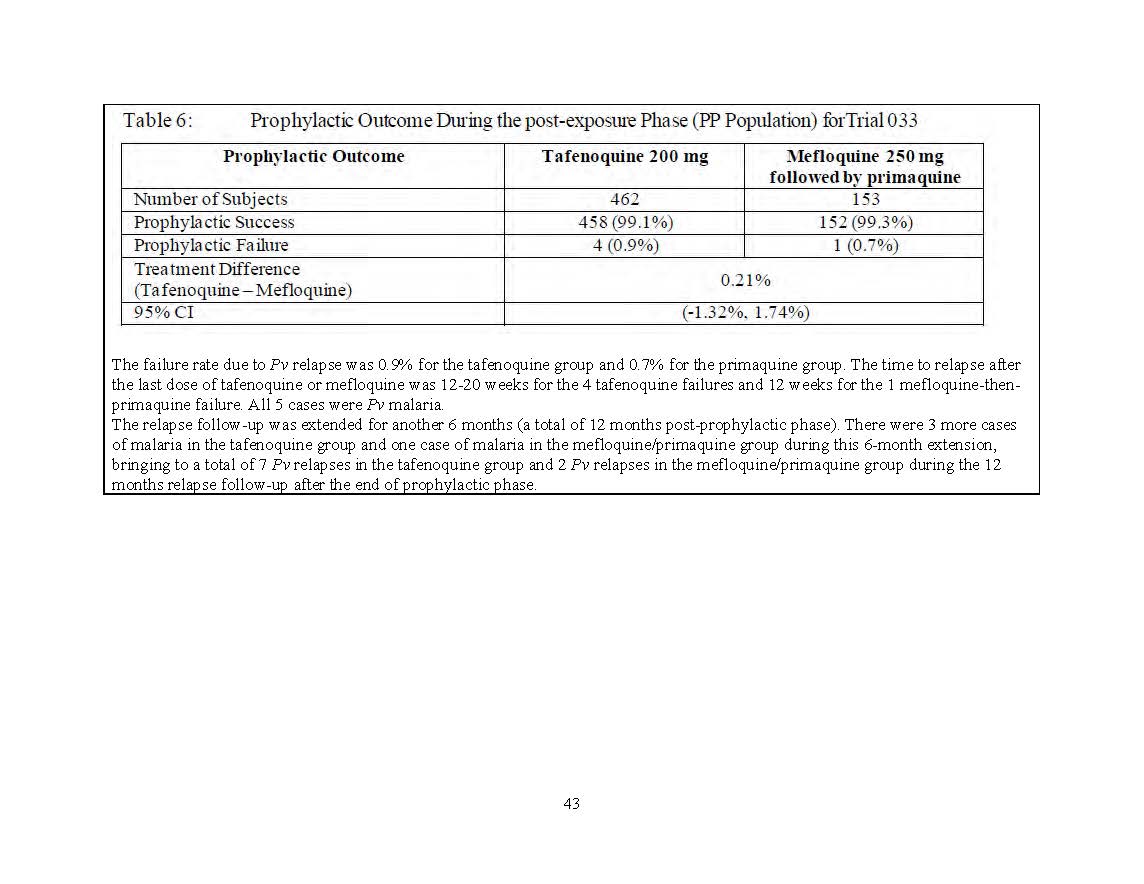
Table 6 shows the comparison of prophylactic outcomes between Tafenoquine 200 mg and Mefloquine 250 mg followed by primaquine for Trial 033. The table includes the number of subjects, prophylactic success rates, and treatment differences between the two groups. The failure rate due to Py relapse was slightly higher in the tafenoquine group compared to the primaquine group. The follow-up for relapse was extended for 6 months, revealing additional cases of malaria in both groups. This data provides insights into the prophylactic efficacy and relapse rates of the two treatments.*
FDA Label Image

Dear Hcp Letter Page 60 (Dear Hcp Letter Kodatef 7feb2025 Page 60)

Dear Hcp Letter Page 60 (Dear Hcp Letter Kodatef 7feb2025 Page 60)
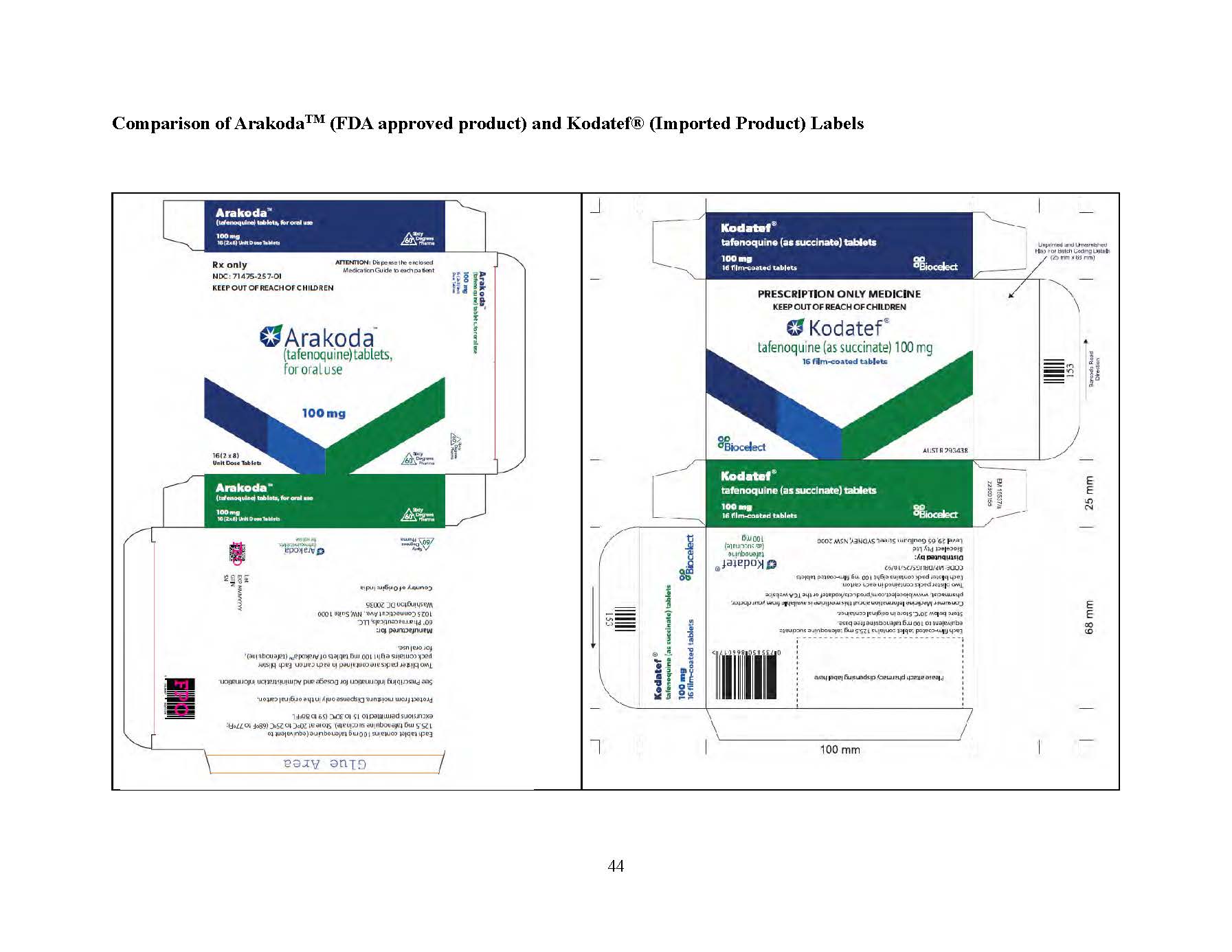
Comparison of Arakoda™ (FDA approved product) and Kodatef® (Imported Product) Labels. Arakoda™ (iferonine ity s 100mg) tablets, for oral use. Arakoda™ (sfenoquine) tablet, for oral use 100mg. Kodatef® tafenoquine (as succinate) tablets 100 mg, 16 film-coated tablets. This information compares the labels of two pharmaceutical products, Arakoda and Kodatef, providing details on their dosage form and ingredients.*
FDA Label Image

Dear Hcp Letter Page 61 (Dear Hcp Letter Kodatef 7feb2025 Page 61)

FDA Label Image

Kodatef Carton Label (Kodatef Carton Label)

Kodatef Carton Label (Kodatef Carton Label)
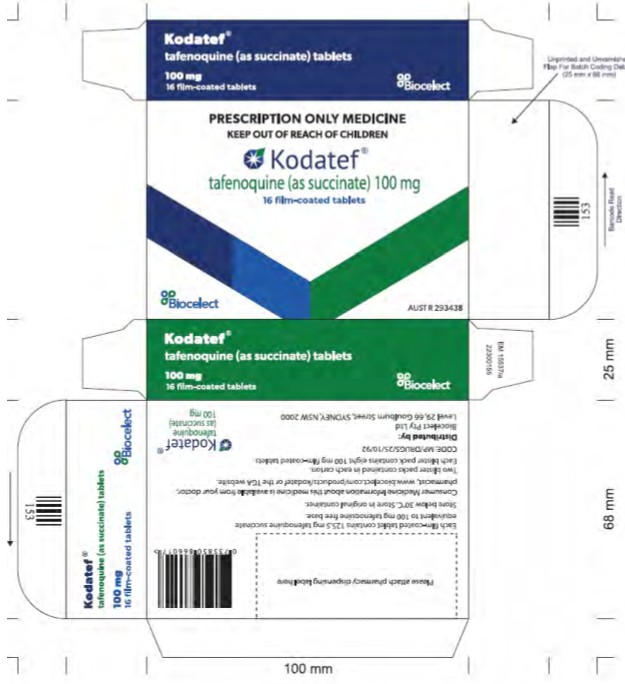
This is a prescription medication called Kodatef, which contains tafenoquine as succinate in 100 mg tablets. The pack includes 16 film-coated tablets with specific dimensions of 25mm x 68mm x 100mm. It is important to keep this medicine out of reach of children.*

* These product label images have been analyzed using experimental machine learning. Please verify findings with the primary label text.