Gabapentin Tablet, Film Coated
Product Images NDC 71610-069

View Photos of Packaging, Regulatory Labels, and Product Appearance

Product Visual Gallery

This gallery contains 8 technical images submitted to the FDA as part of the official labeling for Gabapentin (NDC 71610-069). Unlike standard consumer photos, these assets often include clinical data figures, molecular chemical structures, and official manufacturer packaging layouts.

As provided by Aphena Pharma Solutions - Tennessee, Llc, these visuals offer a comprehensive scientific overview of the product's physical and chemical identity, aiding pharmacists and researchers in product verification and study.

FDA Label Image

71610 0069 45

71610 0069 45
This is a medication labeled as Gavmpentin with a unique identification code NDCH 73630-00K-45. It appears to have been manufactured by a company named "B Totratied oo gupesci B A." The medication is available at all drug outlets. The additional alphanumeric codes are likely batch and lot numbers, with the expiration date of 12/2024. The GTIN code is also included for tracking and inventory purposes.*
FDA Label Image

Aphena Pharma Solutions (TN)

FDA Label Image

Spl-gabapentin-figure1 (Spl Gabapentin Figure1)

Spl-gabapentin-figure1 (Spl Gabapentin Figure1)
The text provides a chart (Figure 1) of a clinical study evaluating the effectiveness of Gabapentin in reducing pain scores. The study was conducted over an 8-week period, which included a 4-week dose titration period followed by a 4-week fixed dose period. The chart shows the weekly mean pain scores for the observed cases, including a baseline measurement. The study compared the pain scores for those taking Gabapentin at a dose of 3,600 mg/day with those on a placebo.*
FDA Label Image

Spl-gabapentin-figure2 (Spl Gabapentin Figure2)

Spl-gabapentin-figure2 (Spl Gabapentin Figure2)
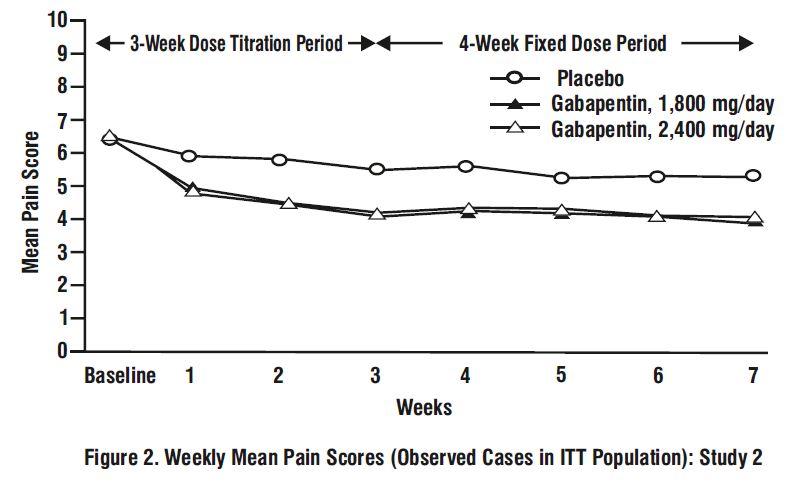
This is a chart depicting the Mean Pain Score over a 7-week period divided into a 3-week Dose Titration Period and a 4-week Fixed Dose Period. The study had three groups: a placebo group, a Gabapentin 1,800 mg/day group, and a Gabapentin 2,400 mg/day group. The figure shows the weekly mean pain scores for the ITT population observed cases in Study 2.*
FDA Label Image

Spl-gabapentin-figure3 (Spl Gabapentin Figure3)

Spl-gabapentin-figure3 (Spl Gabapentin Figure3)
This is a figure that represents the proportion of responders in controlled studies on Postherpetic Neuralgia (PHN), which is a pain condition caused by nerve damage from shingles. The graph shows the percentage of patients who had greater than 50% reduction in their pain score at the endpoint of the study. The results are separated into two groups: one that received placebo (PBO) and the other that received gabapentin (GBP), a medication commonly used to treat neuropathic pain. The graph shows that the proportion of responders is higher in the GBP group compared to the PBO group. There are also statistical significance markers (*, ***) indicating the p-value for the results at different levels of confidence.*
FDA Label Image

Spl-gabapentin-figure4 (Spl Gabapentin Figure4)

FDA Label Image

Spl-gabapentin-formula (Spl Gabapentin Formula)

Spl-gabapentin-formula (Spl Gabapentin Formula)
This is a formula used to estimate renal function in adults based on their age, weight, and serum creatinine levels. The formula is different for female patients, where the product is multiplied by 0.85.*
FDA Label Image

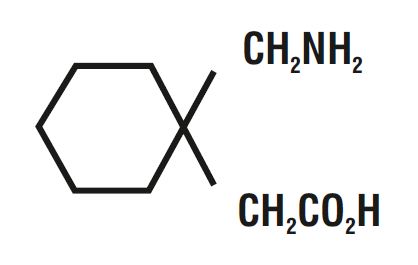
Spl-gabapentin-structure (Spl Gabapentin Structure)

* These product label images have been analyzed using experimental machine learning. Please verify findings with the primary label text.