Pregabalin
Product Images NDC 71610-352

View Photos of Packaging, Regulatory Labels, and Product Appearance

Product Visual Gallery

This gallery contains 25 technical images submitted to the FDA as part of the official labeling for Pregabalin (NDC 71610-352). Unlike standard consumer photos, these assets often include clinical data figures, molecular chemical structures, and official manufacturer packaging layouts.

As provided by Aphena Pharma Solutions - Tennessee, Llc, these visuals offer a comprehensive scientific overview of the product's physical and chemical identity, aiding pharmacists and researchers in product verification and study.

FDA Label Image

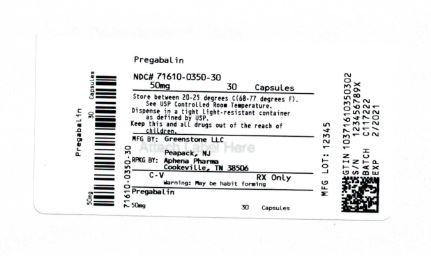
Bottle Label 50 mg (71610 0350 30)
FDA Label Image

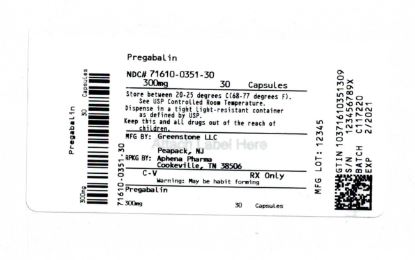
Bottle Label 300 mg (71610 0351 30)

FDA Label Image

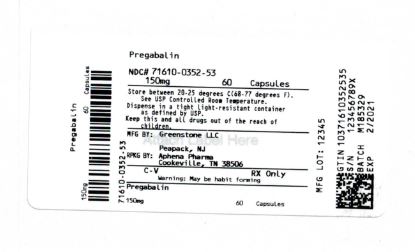
Bottle Label 150 mg (71610 0352 53)

FDA Label Image

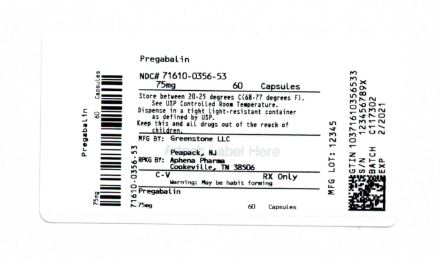
Bottle Label 75 mg (71610 0356 53)

FDA Label Image

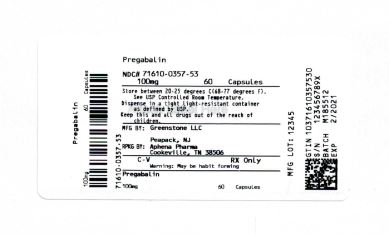
Bottle Label 100 mg (71610 0357 53)

FDA Label Image

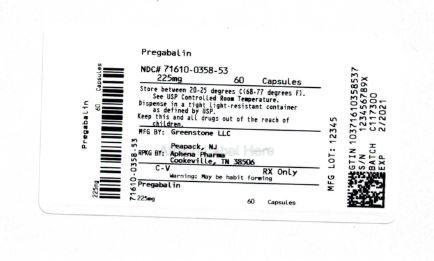
Bottle Label 225 mg (71610 0358 53)

FDA Label Image

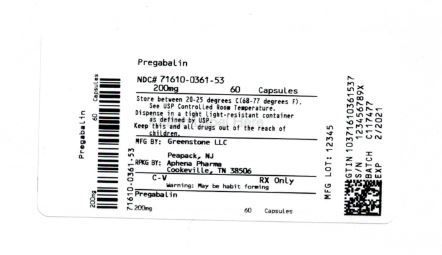
Bottle Label 200 mg (71610 0361 53)

FDA Label Image

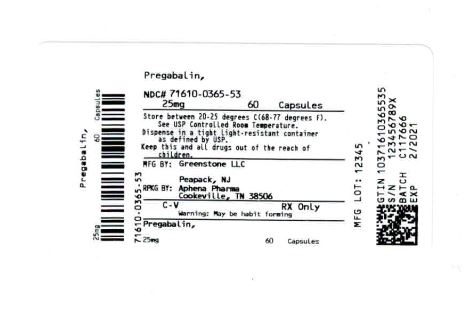
Bottle Label 25 mg (71610 0365 53)

Bottle Label 25 mg (71610 0365 53)
This is a description of a medication called Pregabatin with a Nock number of 71610-0365-53. There are some illegible characters, but no useful information is available.*
FDA Label Image

Aphena Pharma Solutions (TN)

Aphena Pharma Solutions (TN)
Not available.*
FDA Label Image

Figure (Pregabalin 01)

Figure (Pregabalin 01)
The text contains laboratory results for serum creatinine, specified for female patients. It includes the numeric values of 1050 and 72. No further information is available.*
FDA Label Image

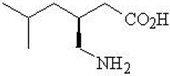
Chemical Structure (Pregabalin 02)

FDA Label Image

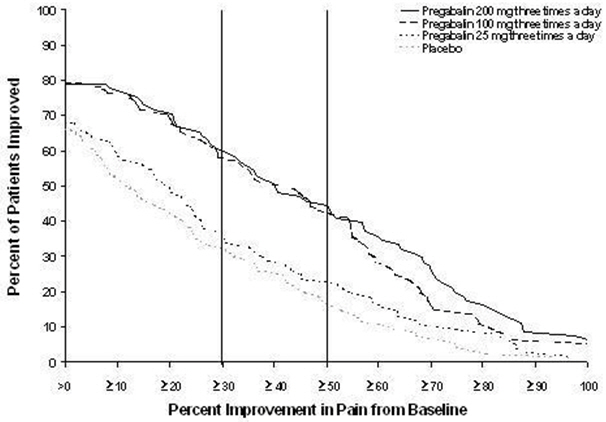
Figure 1 (Pregabalin 03)

FDA Label Image

Figure 2 (Pregabalin 04)

Figure 2 (Pregabalin 04)
The table displays the percentage of patients who showed improvement in pain after taking Pregabalin 106 mg three times per day. There are three values in the first column representing the percentage of patients improved - 100%, 20% and 10%. The second column reads "Pregabalin 106 mg three times a day". The rest of the text is not-readable, appearing to be scrambled output.*
FDA Label Image

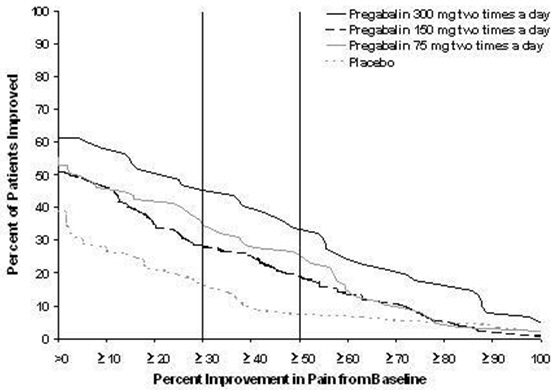
Figure 3 (Pregabalin 05)

Figure 3 (Pregabalin 05)
The text shows a chart representing the percentage of improvement in pain from a baseline for different doses of Pregabalin and Placebo. However, specific details about the chart's context are not available.*
FDA Label Image

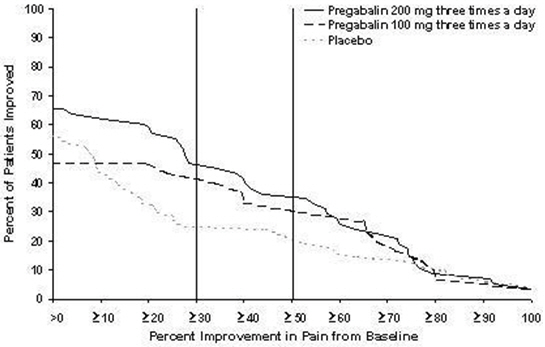
Figure 4 (Pregabalin 06)

Figure 4 (Pregabalin 06)
This appears to be a chart showing the percent of patients who improved with different treatments (Pregabalin 200 mg, Pregabalin 100 mg, and Placebo) and the percent improvement in pain from baseline. Unfortunately, there seems to be some missing or unreadable characters, making the chart difficult to interpret properly.*
FDA Label Image

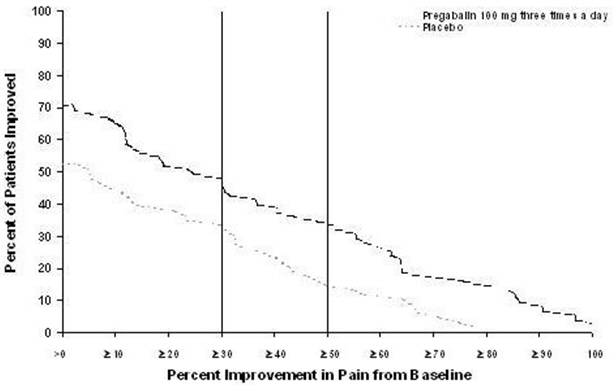
Figure 5 (Pregabalin 07)

Figure 5 (Pregabalin 07)
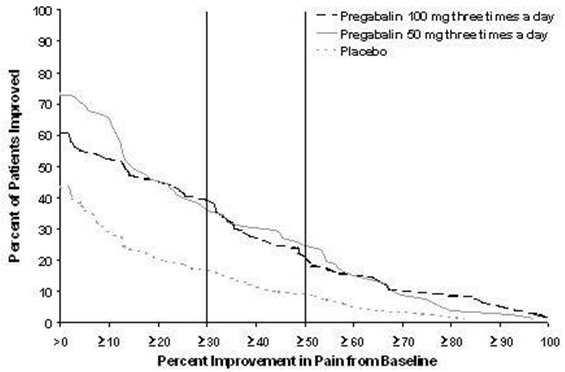
This is a graph showing the percentage of patients' improvement in pain from the baseline. The X-axis represents the percentage of improvement, and the Y-axis represents different treatments: Pregabalin 100 mg three times a day, Pregabalin 60 mg three times a day, and Placeno. However, the graph seems to be corrupted and has some random characters that make it difficult to interpret.*
FDA Label Image

Figure 6 (Pregabalin 08)

FDA Label Image

Figure 7 (Pregabalin 09)

FDA Label Image

Figure 8 (Pregabalin 10)

Figure 8 (Pregabalin 10)
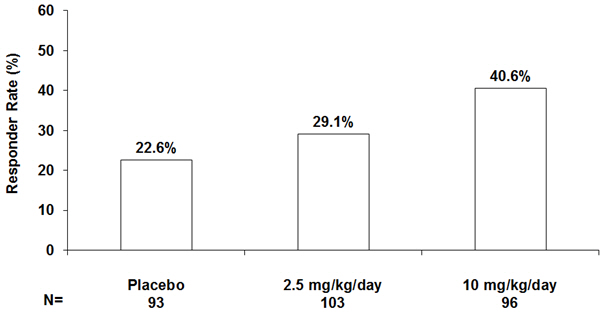
This appears to be a table displaying the responder rate (%) for different treatments. The table shows three different responder rates corresponding to placebo, 2.5 mg/kg/day, and 10 mg/kg/day treatments. The values for placebo, 2.5 mg/kg/day, and 10 mg/kg/day are 40.6%, 29.1%, and 22.6%, respectively. The table also lists the number of responders for each treatment, with 93 responders for placebo treatment, 103 responders for the 2.5 mg/kg/day treatment, and 96 responders for the 10 mg/kg/day treatment.*
FDA Label Image

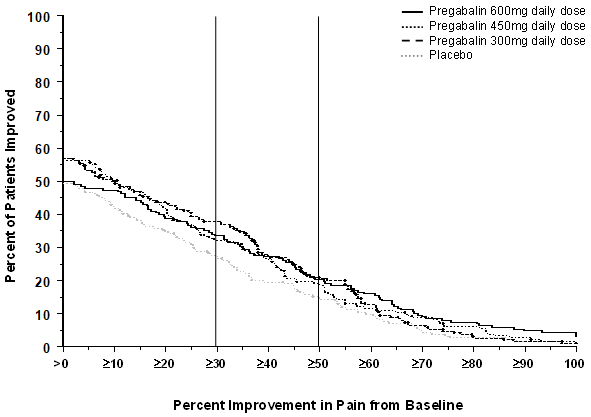
Figure 9 (Pregabalin 11)

Figure 9 (Pregabalin 11)
This is a chart showing the percentage of patients who have experienced improvement in pain from baseline using different doses of Pregabalin. The chart includes a daily dose of 600mg, 450mg, and 300mg. The placebo is also shown in the chart. The percentages range from 2% to 90%.*
FDA Label Image

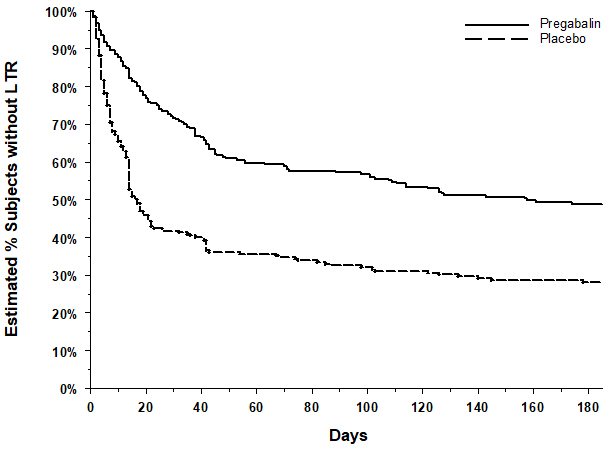
Figure 10 (Pregabalin 12)

Figure 10 (Pregabalin 12)
This appears to be a graph showing the estimated percentage of subjects without LTR (likely to respond) in a study involving a placebo and Pregabalin over a period of 180 days. The x-axis indicates the number of days while the y-axis shows the percentage of subjects without LTR. The graph shows that there is a higher percentage of subjects without LTR in the Pregabalin group compared to the placebo group.*
FDA Label Image

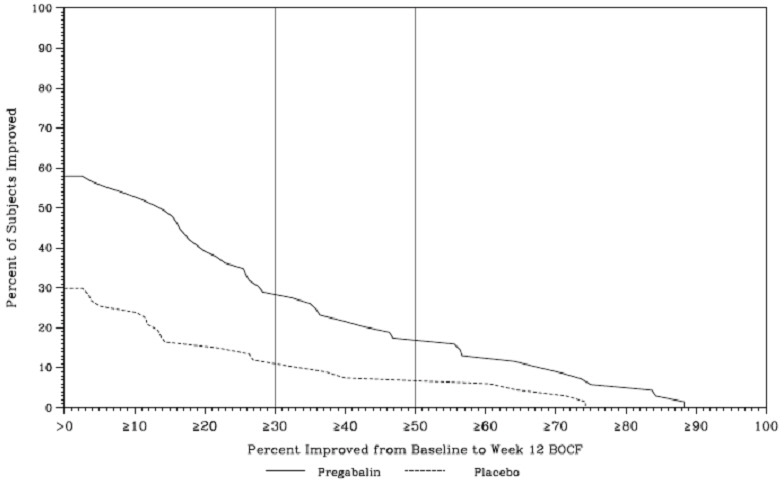
Figure 11 (Pregabalin 13)

Figure 11 (Pregabalin 13)
This is a table that shows the percentage of subjects improved on Pregabalin and Placebo over 12 weeks. The table also displays the number of subjects that improved.*
FDA Label Image

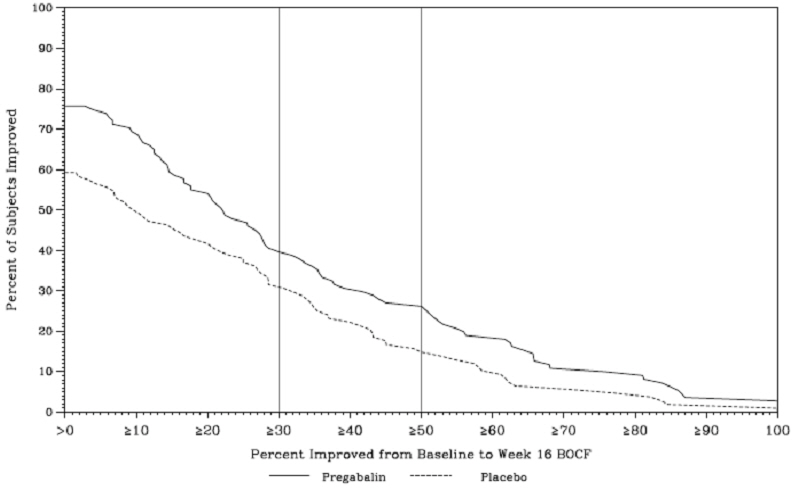
Figure 12 (Pregabalin 14)

FDA Label Image

Logo (Pregabalin 15)

Logo (Pregabalin 15)
This is a text regarding the Greenstone brand. It is distributed by Greenstone LLC located at Peapack, NJ 07977.*
FDA Label Image

Logo (Pregabalin 15a)

Logo (Pregabalin 15a)
This is a description of Greenstone LLC, a distributor of a brand called GREENSTONE® located in Peapack, NJ 07977.*

* These product label images have been analyzed using experimental machine learning. Please verify findings with the primary label text.