Alogliptin Tablet, Film Coated
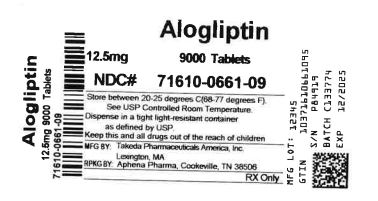
Product Images NDC 71610-661
View Photos of Packaging, Regulatory Labels, and Product Appearance
Product Visual Gallery
This gallery contains 7 technical images submitted to the FDA as part of the official labeling for Alogliptin (NDC 71610-661). Unlike standard consumer photos, these assets often include clinical data figures, molecular chemical structures, and official manufacturer packaging layouts.
As provided by Aphena Pharma Solutions - Tennessee, Llc, these visuals offer a comprehensive scientific overview of the product's physical and chemical identity, aiding pharmacists and researchers in product verification and study.
Aphena Pharma Solutions (TN)
Chemical Structure (Alogliptin 01)
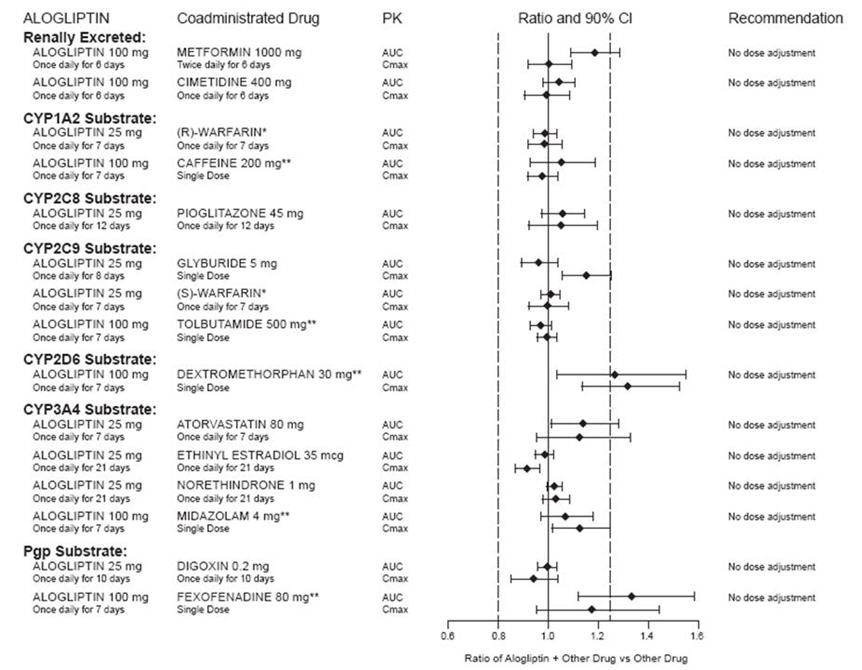
Figure 1 (Alogliptin 02)
This text provides information on the use of Alogliptin in combination with several other drugs. It outlines the dosage, frequency, and duration of intake of Alogliptin with each drug, along with whether Alogliptin is a substrate for particular CYP enzymes or Pgp. However, there is no information on what Alogliptin is used for.*
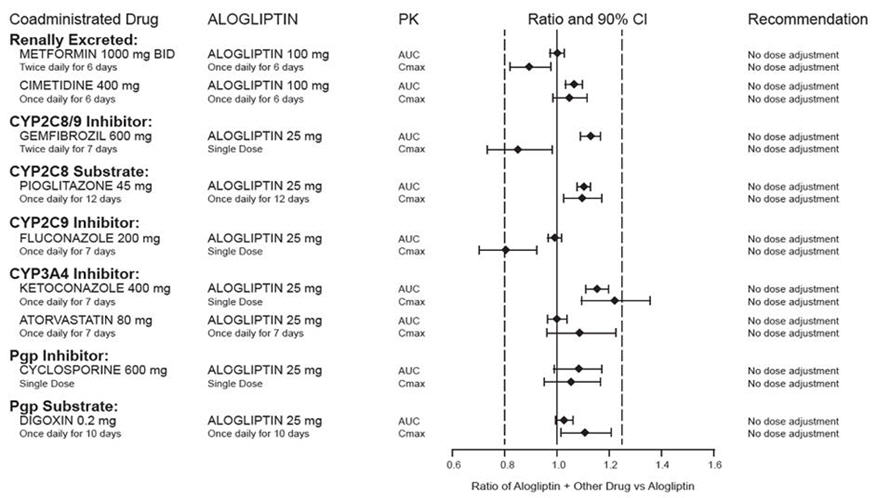
Figure 2 (Alogliptin 03)
This text seems to describe a list of drugs with their dosages and administration schedules, as well as the effect of co-administration of other drugs on them. It also includes recommendations for dose adjustments based on the interaction of drugs with enzymes that metabolize them. Some of the drugs are metabolized by kidney (renally excreted), some by CYP2C8/9, CYP2C8, CYP2CS9, and CYP3A4 enzymes, and Pgp enzyme. There are no specific indications for these drugs, and the text doesn't provide any clinical context.*
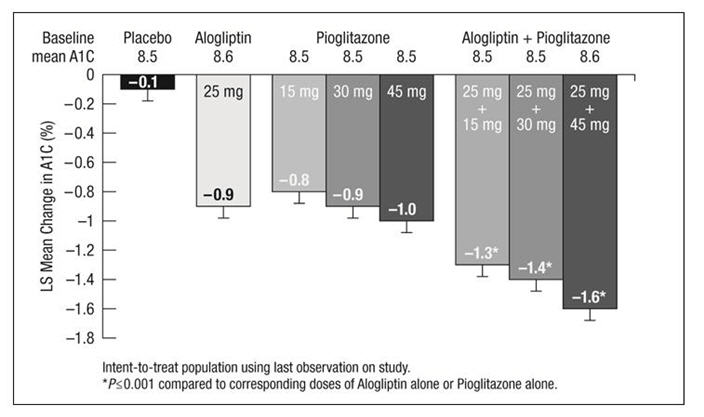
Figure 3 (Alogliptin 04)
The text seems to describe the baseline mean A1C and its change in percentage for a study that compares the effects of Alogliptin, Pioglitazone, and their combination on type 2 diabetes patients. Different doses for both drugs are mentioned, but there is no clear information on their specific effects or results. The study used the last observation, and the changes in A1C are compared with a placebo group. There is a significant result indicated by P<0.001 for the combination treatment compared to the single-drug treatments.*
Figure 4 (Alogliptin 05)
* These product label images have been analyzed using experimental machine learning. Please verify findings with the primary label text.