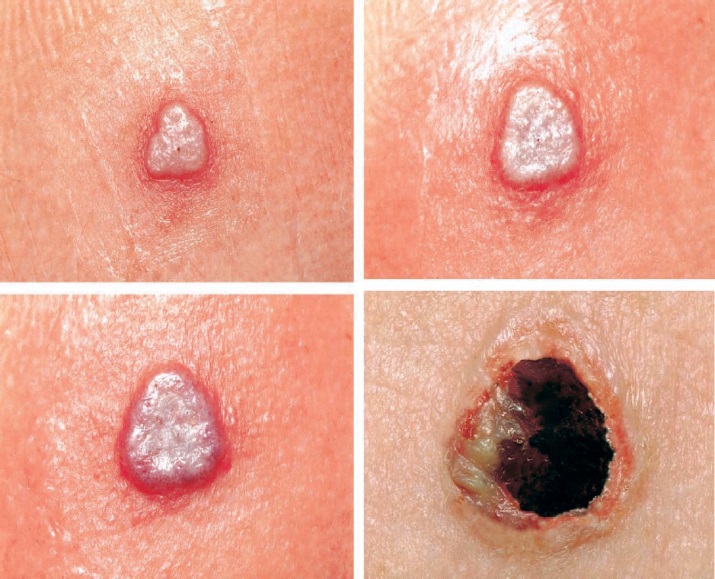
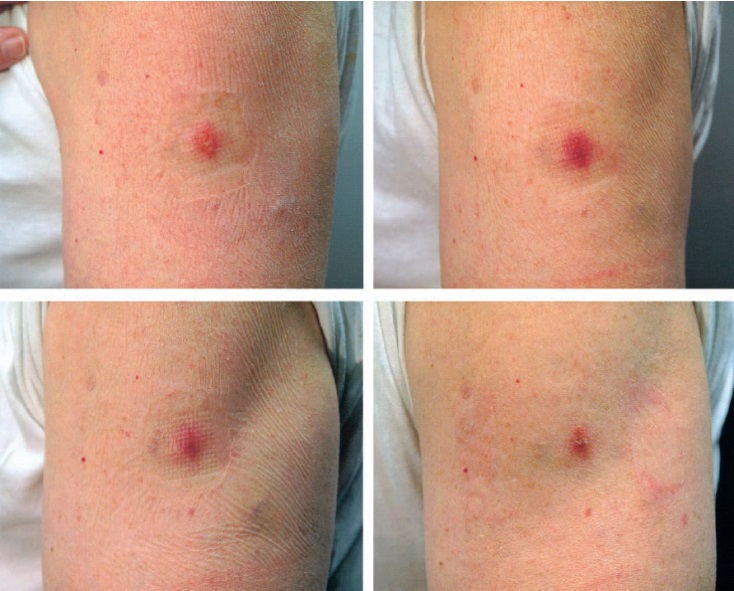
Vaccine efficacy was assessed by comparing the immunologic response of ACAM2000 to another US-licensed live vaccinia virus smallpox vaccine, Dryvax®, in two randomized, multi-center active-controlled clinical trials; one study in subjects who previously had not been vaccinated with smallpox vaccine (i.e., vaccinia‑naïve subjects) and one study in subjects who had been vaccinated with smallpox vaccine >10 years previously (i.e., previously vaccinated subjects). In both trials, the co-primary efficacy endpoints were the proportion of subjects with a successful vaccination/revaccination and the geometric mean neutralizing antibody titer (GMT) on Day 30. Successful primary vaccination was defined as a major cutaneous reaction on Day 7 or 10 (Days 6 to 11, with allowable visit window). Successful revaccination was defined as development of any cutaneous lesion on Day 7 (± 1 day) of a measurable size. Successful revaccination was determined by a panel of experts who reviewed digital photographs of the cutaneous lesions.
The statistical method used to compare the proportion of subjects who were successfully vaccinated in the two treatment groups was a test of non‑inferiority of ACAM2000 to the active comparator intended to rule out a greater than 5% margin of superiority of the comparator for successful primary vaccination (Study 1) and a 10% margin of superiority of the comparator for successful revaccination (Study 2). Non‑inferiority was to be declared if the lower bound of the 1‑sided 97.5% confidence interval (CI) for the percent difference between ACAM2000 and the comparator exceeded -5% in naïve subjects and ‑10% in previously vaccinated subjects.
Analysis of the GMT was performed using a test of non‑inferiority of neutralizing antibody titer between ACAM2000 and the comparator, intended to ensure that the ratio of the GMTs of ACAM2000: comparator vaccine was at least 0.5 (equivalent to the difference of the log10 (GMT) being at least ‑0.301).
In Study 1, a total of 1037 male and female vaccinia-naïve subjects, aged 18 to 30 years inclusive,primarily Caucasian (76%) were randomized in a 3:1 ratio to receive ACAM2000 (780 subjects) or comparator (257 subjects). The ACAM2000 subjects were further stratified to receive one of three lots (Lots A, B and C) at a 1:1:1 ratio (258, 264, and 258 subjects, respectively). All subjects were to be evaluated for their cutaneous response and a random subset was selected for evaluation of neutralizing antibody response.
In Study 2, a total of 1647 male and female previously-vaccinated subjects, aged 31 to 84 years inclusive, primarily Caucasian (81%) were randomized in a 3:1 ratio to receive ACAM2000 (1242 subjects) or the comparator (405 subjects). The ACAM2000 subjects were further stratified to receive one of three lots (Lots A, B and C) at a 1:1:1 ratio (411, 417, and 414 subjects, respectively). All subjects were evaluated for their cutaneous response and a random subset was to be selected for evaluation of neutralizing antibody response.
Tables 4 and 5 present the results of the primary efficacy analyses for both studies.
Table 4 - Cutaneous Response (Vaccination Success) in Subjects Given ACAM2000 vs. Comparator Vaccine, Studies 1 and 2 | Study 1 ACAM2000 | Study 1 Comparator | Study 2 ACAM2000 | Study 2 Comparator |
|---|
Size of Evaluable Population(a) | 776 | 257 | 1189 | 388 |
Number of Vaccination Successes (%) | 747 (96)(b) | 255 (99) | 998 (84)(d) | 381 (98) |
97.5% 1-sided CI by normal approx. on percent difference between ACAM2000-Comparator | -4.67% (c) | -- | -17% (e) | -- |
Non-Inferiority to Comparator | Yes | -- | No | -- |
- a)Subjects who received study vaccine and were evaluated for a local cutaneous reaction within the protocol‑designated timeframe were included in the efficacy evaluable (EE) population.
- b)Results for vaccine lots, A, B and C were 95%, 98% and 96%.
- c)Since the critical value for the evaluation was declared to be -5%, ACAM2000 is considered to be non-inferior to Comparator for this parameter.
- d)Results for vaccine lots, A, B and C were 79%, 87% and 86%.
- e)Since the critical value for the evaluation was declared to be -10%, ACAM2000 is not considered to be non-inferior to Comparator for this parameter.
Table 5 - Neutralizing Antibody Response in Subjects Given ACAM2000 vs. Comparator Vaccine, Studies 1 and 2
| Study 1 ACAM2000 | Study 1 Comparator | Study 2 ACAM2000 | Study 2 Comparator |
|---|
Size of Evaluable Population(a) | 565 | 190 | 734 | 376 |
GMT(b) | 166 | 255 | 286 | 445 |
Log10 mean | 2.2 | 2.4 | 2.5 | 2.6 |
97.5% 1-sided CI by ANOVA on difference between ACAM2000-Comparator | -0.307(c) | -- | -0.275(d) | -- |
Meets Non-Inferiority to Comparator | No | -- | Yes | -- |
- a)A randomly selected sample of subjects who received study vaccine and had samples collected for neutralizing antibody response at Baseline and at the designated time‑point post-treatment were included in the antibody evaluable (AnE) population.
- b)GMT – Geometric mean neutralizing antibody titer as measured by Vaccinia 50% plaque reduction neutralization test.
- c)Since the critical value for the evaluation was declared to be -0.301, ACAM2000 is not considered to be non-inferior to Comparator for this parameter.
- d)Since the critical value for the evaluation was declared to be -0.301, ACAM2000 is considered to be non-inferior to Comparator for this parameter.
The primary determinant for an effective immune response in those naïve to vaccine is a major cutaneous reaction. ACAM2000 was non-inferior to comparator in this population with regard to eliciting a major cutaneous reaction. The measure of the strength of the generated antibody response was similar but did not meet the predefined criterion for non-inferiority. Among subjects who were previously vaccinated, development of a major cutaneous response after revaccination with vaccinia-based vaccines may not provide an accurate measure of the strength of the immune response because the pre‑existing immunity modifies the scope of the cutaneous response. In previously vaccinated subjects, ACAM2000 was non-inferior to the comparator with regard to the strength of the neutralizing antibody immune response. Therefore, ACAM2000 was non-inferior to the comparator in the rate of major cutaneous reaction in those naïve to the vaccine, and the strength of the neutralizing antibody immune response in those previously exposed to vaccinia-based smallpox vaccines.