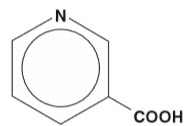
The role of low-density lipoprotein (LDL) cholesterol in atherogenesis is supported by pathological observations, clinical studies, and many animal experiments. Observational epidemiological studies have clearly established that high total or LDL cholesterol and low high-density lipoprotein (HDL) cholesterol are risk factors for coronary heart disease. The Coronary Drug Project1, completed in 1975, was designed to assess the safety and efficacy of nicotinic acid and other lipid-altering drugs in men 30 to 64 years old with a history of myocardial infarction (MI). Over an observation period of five years, nicotinic acid showed a statistically significant benefit in decreasing nonfatal, recurrent myocardial infarctions. The incidence of definite, nonfatal MI was 8.9% for the 1,119 patients randomized to nicotinic acid versus 12.2% for the 2,789 patients who received placebo (p< 0.004). Though total mortality was similar in the two groups at five years (24.4% with nicotinic acid versus 25.4% with placebo; p = N.S.), in a fifteen year cumulative follow-up there were 11% (69) fewer deaths in the nicotinic acid group compared to the placebo cohort (52.0% versus 58.2%; p= 0.0004)2.
The Cholesterol-Lowering Atherosclerosis Study (CLAS) was a randomized, placebo-controlled, angiographic trial testing combined colestipol and nicotinic acid therapy in 162 non-smoking males with previous coronary bypass surgery3. The primary, per subject cardiac endpoint was global coronary artery change score. After two years, 61% of patients in the placebo cohort showed disease progression by global change score (N=82), compared with only 38.8% of drug-treated subjects (N=80), when both native arteries and grafts were considered (p<0.005). In a follow-up to this trial in a subgroup of 103 patients treated for four years, again, significantly fewer patients in the drug-treated group demonstrated progression than in the placebo cohort (48% versus 85%, respectively; p< 0.0001)4.
The Familial Atherosclerosis Treatment Study (FATS) in 146 men ages 62 and younger with apolipoprotein B levels ≥125 mg/dL, established coronary artery disease, and family histories of vascular disease, assessed change in severity of disease in the proximal coronary arteries by quantitative arteriography5. Patients were given dietary counseling and randomized to treatment with either conventional therapy with double placebo (or placebo plus colestipol if the LDL cholesterol was elevated); lovastatin plus colestipol; or nicotinic acid plus colestipol. In the conventional therapy group, 46% of patients had disease progression (and no regression) in at least one of nine proximal coronary segments. In contrast, progression (as the only change) was seen in only 25% in the nicotinic acid plus colestipol group. Though not an original endpoint of the trial, clinical events (death, myocardial infarction, or revascularization for worsening angina) occurred in 10 of 52 patients who received conventional therapy, compared with 2 of 48 who received nicotinic acid plus colestipol.
Nicotinic acid (but not nicotinamide) in gram doses produces an average 10% to 20% reduction in total and LDL cholesterol, a 30% to 70% reduction in triglycerides, and an average 20% to 35% increase in HDL cholesterol. The magnitude of individual lipid and lipoprotein responses may be influenced by the severity and type of underlying lipid abnormality. The increase in total HDL is associated with a shift in the distribution of HDL sub-fractions (as defined by ultra-centrifugation) with an increase in the HDL2:HDL3 ratio and an increase in apolipoprotein A-I content. The mechanism by which nicotinic acid exerts these effects is not entirely understood, but may involve several actions, including a decrease in esterification of hepatic triglycerides. Nicotinic acid treatment also decreases the serum levels of apolipoprotein B-100 (apo B), the major protein component of the very low-density lipoprotein (VLDL) and LDL fractions, and of lipoprotein a [Lp(a)], a variant form of LDL independently associated with coronary risk. The effect of nicotinic acid-induced changes in lipids/lipoproteins on cardiovascular morbidity or mortality in individuals without pre-existing coronary disease has not been established.