Laboratory Tests
Decrease in Platelet Count: TRYNGOLZA can cause reductions in platelet count. Across all trials (Trials 1, 2, and 3), mean decreases from baseline through Week 53 ranging from 6% (50 mg, Trial 2 and Trial 3) to 10% (80 mg across all trials), were observed in TRYNGOLZA-treated patients, whereas placebo-treated patients showed an increase of 22% in Trial 1 or no change in Trial 2 and Trial 3. The proportion of patients experiencing a bleeding adverse event was similar between the TRYNGOLZA and placebo groups. There were no major bleeding events associated with low platelet counts.
Increase in Glucose: Increases in average values in fasting glucose (≤17 mg/dL) and HbA1c (<0.2 percentage points) were observed over time with TRYNGOLZA treatment in the FCS population in Trial 1. The incidence of hyperglycemia (defined as adverse events, new antidiabetic medication, or laboratory values) was higher in patients with FCS treated with TRYNGOLZA without a medical history of diabetes at baseline (52%) compared to placebo-treated patients (35%).
In Trials 2 and 3, increases in average values in fasting glucose (≤9 mg/dL) and HbA1c (<0.3 percentage points) were observed over time in the sHTG population treated with TRYNGOLZA. These increases were more pronounced in patients with a history of diabetes at baseline; however, increases in fasting glucose and HbA1c were also observed more frequently with TRYNGOLZA compared to placebo in patients without a history of diabetes at baseline.
Increase in Liver Enzymes: Mean liver enzyme values increased from baseline with TRYNGOLZA treatment but remained within the normal range. These increases occurred within the first 6 months of treatment and stabilized. However, when evaluating any liver enzyme increase in patients with sHTG, increases in liver enzymes greater than or equal to three times the upper limit of normal were reported more frequently with TRYNGOLZA 80 mg (7%) compared to TRYNGOLZA 50 mg (3%) and placebo (3%). Liver enzymes returned toward baseline with discontinuation of TRYNGOLZA.
Increase in Hepatic Fat Fraction: Hepatic fat fraction (HFF) was assessed in patients with sHTG in a substudy within Trial 2 and Trial 3. Mean HFFs were elevated at baseline (17% TRYNGOLZA 50 mg, 14% TRYNGOLZA 80 mg, 14% placebo). Dose-dependent changes in HFF at 12 months of treatment were a mean increase of 2 percentage points in the TRYNGOLZA 50 mg group and 4 percentage points in the TRYNGOLZA 80 mg group versus 0 percentage points in the placebo group. The clinical meaningfulness of these findings remains uncertain.
Increase in LDL-cholesterol: In all trials, increases were observed in LDL-C in TRYNGOLZA-treated patients compared with placebo. These increases were accompanied by decreases in non–high-density lipoprotein cholesterol (non-HDL-C). Among patients with FCS, total apolipoprotein B (apoB) increased, whereas among patients with sHTG, apoB decreased
[see Clinical Studies (14)]
.
Risk Summary
There are no available data on TRYNGOLZA use in pregnant women to inform drug-associated risk of major birth defects, miscarriage, or adverse maternal or fetal outcomes. Patients with FCS or sHTG are at risk for pancreatitis during pregnancy because of increased TG levels
(see
Clinical Considerations)
.
In animal reproduction studies conducted with the unconjugated antisense oligonucleotide (lacking
N-acetylgalactosamine [GalNAc]) in rabbits and mice, no adverse effects on development or pregnancy were observed at doses 21 times or 20 times, respectively, the maximum recommended clinical dose.
The background risk of major birth defects and miscarriage for the indicated populations are unknown. All pregnancies have a background risk of birth defect, loss, or other adverse outcomes. In the U.S. general population, the estimated background risk of major birth defects and miscarriage in clinically recognized pregnancies is 2-4% and 15-20%, respectively.
Clinical Considerations
Disease-Associated Maternal and/or Embryo-Fetal Risk
Triglyceride levels increase during the third trimester of pregnancy. In patients with underlying defects in triglyceride metabolism, severe gestational hypertriglyceridemia may occur, increasing the risk of acute pancreatitis during pregnancy.
Data
Animal Data
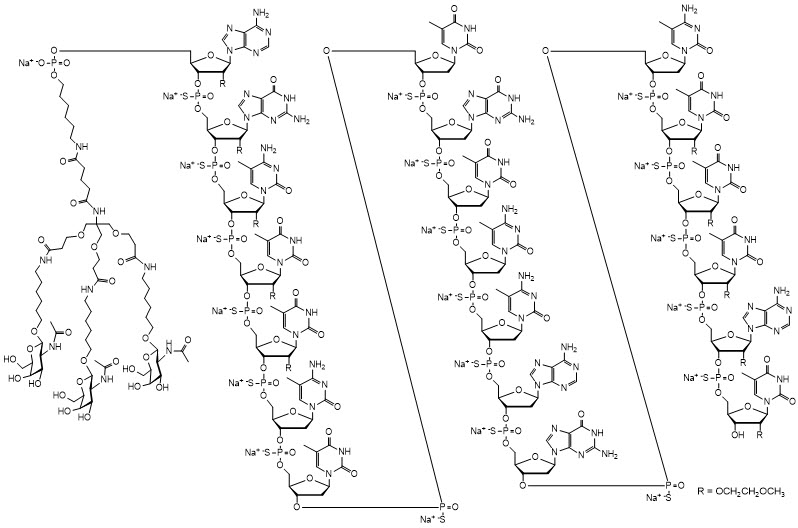
Olezarsen was not evaluated for potential effects on embryofetal development (EFD). However, effects of the administration of the unconjugated antisense oligonucleotide (ASO), which shares the same nucleotide sequence but lacks the (GalNAc) moiety
[see
Description (11)]
, were evaluated.
In a combined fertility and embryo-fetal development study in mice, the unconjugated ASO was administered to male and female mice by subcutaneous injection at doses of 10.5, 35, and 87.5 mg/kg/week prior to mating and through to the completion of organogenesis (gestation day 15). No adverse developmental outcomes occurred at doses up to 87.5 mg/kg/week (approximately 21-times the monthly maximum recommended human dose (MRHD) based on a body surface area (BSA) comparison of the unconjugated ASO).
In an embryo-fetal development study in pregnant rabbits, the unconjugated ASO was administered by subcutaneous injection at doses of 10.5, 21, and 52.5 mg/kg/week during the period of organogenesis (gestation days 6 to 18). No adverse developmental effects were observed at doses up to 21 mg/kg/week (approximately 20-times the monthly MRHD based on a BSA comparison of the unconjugated ASO).
In a pre-/postnatal toxicity study in mice, the unconjugated ASO was administered at 10.5, 35, or 87.5 mg/kg/week during the period of organogenesis and continuing until weaning (gestation day 6 through lactation day 21). Offspring body weights at 87.5 mg/kg/week (21-times the monthly MRHD based on BSA) were lower throughout their lives and were associated with slight delays in the attainment of morphological and developmental landmarks. No adverse effects on offspring were observed at 35 mg/kg/week (approximately 9-times the monthly MRHD based on a BSA comparison of the unconjugated ASO).
Risk Summary
There are no data on the presence of olezarsen in either human or animal milk, the effects on the breastfed infant, or the effects on milk production. However, the unconjugated antisense ASO, which shares the same nucleotide sequence but lacks GalNAc, was present in the milk of lactating mice at low levels. When a drug is present in animal milk, it is likely that the drug will be present in human milk. Oligonucleotide-based products typically have poor oral bioavailability; therefore, it is considered unlikely that low levels present in milk will lead to clinically relevant levels in breastfed infants. The developmental and health benefits of breastfeeding should be considered along with the mother’s clinical need for TRYNGOLZA and any potential adverse effects on the breastfed infant from TRYNGOLZA or from the underlying maternal condition.
Cardiac Electrophysiology
At a dose 1.5-times the maximum approved recommended dosage, TRYNGOLZA does not prolong the QT interval to any clinically relevant extent.
Absorption
Olezarsen time to C
max (T
max) is approximately 2 hours following subcutaneous administration.
Distribution
The population estimates for the apparent central volume of distribution is 96.1 L and 127 L and the apparent peripheral volume of distribution is 3,920 L and 6,660 L, for patients with FCS and sHTG, respectively, for olezarsen. Olezarsen is greater than 99% bound to plasma proteins,
in vitro.
Olezarsen distributes primarily to the liver and kidney after subcutaneous dosing.
Elimination
Olezarsen terminal elimination half-life is approximately 4 weeks.
Metabolism
Olezarsen is metabolized by endo- and exonucleases to short oligonucleotide fragments of varying sizes within the liver.
Excretion
Less than 1% of olezarsen administered dose is eliminated unchanged in urine within 24 hours.
Specific Populations
No clinically significant differences in the pharmacokinetics of olezarsen were observed based on age (<65 to ≥75 years), body weight, sex, race (White, Black or African American, Asian, Japanese, American Indian or Alaska Native, Native Hawaiian or Pacific Islander), mild-to-moderate renal impairment (eGFR ≥30 to <90 mL/min) [CKD-EPI], mild hepatic impairment (total bilirubin ≤ULN and AST >ULN, or total bilirubin >1 to 1.5 x ULN and any AST, National Cancer Institute Organ Dysfunction Working Group criteria), or moderate hepatic impairment (Child-Pugh Class B score of 7 to 9). The effect of severe renal impairment (eGFR<30 mL/min), end-stage renal disease, or severe hepatic impairment (total bilirubin >3x ULN with any AST) on olezarsen pharmacokinetics is unknown.
Drug Interaction Studies
In Vitro Studies
CYP450 Enzymes: Olezarsen is not an inhibitor or inducer of CYP450 enzymes.
Transporter Systems: Olezarsen is not a substrate or inhibitor of OAT1, OAT3, OCT1, OCT2, OATP1B1, OATP1B3, MATE1, MATE2-K, BCRP, P-gp, and BSEP.
Protein Binding: Olezarsen does not displace warfarin and ibuprofen from plasma protein binding sites.
Carcinogenesis
No long-term carcinogenicity studies were conducted with olezarsen in animals. However, the unconjugated antisense oligonucleotide (ASO) lacking GalNAc was administered weekly in mice and rats at subcutaneous doses of 0, 6, 25 and 40 mg/kg/week (along with a mouse-specific surrogate ASO at 25 mg/kg/week) and 0, 0.2, 1 and 5 mg/kg/week, respectively, for 2 years. In male mice, there were statistically significant increases in the incidences of hepatocellular adenomas and carcinomas at ≥25 mg/kg/week and hemangiomas and hemangiosarcomas at all doses. In female mice, there were statistically significant increases in the incidences of histiocytic sarcomas at all doses (including the mouse-specific surrogate) and pituitary gland adenomas at 25 mg/kg/week. In rats, the incidence of malignant fibrous histiocytoma at the injection site was increased in both sexes at doses ≥1 mg/kg/week. These tumors are considered a response to chronic tissue irritation and inflammation caused by repeated subcutaneous injection. The clinical significance of these findings is uncertain.
Mutagenesis
Olezarsen was negative for genotoxicity
in vitro(bacterial reverse mutation assay and chromosome aberration assay in Chinese hamster lung cells) and
in vivo(mouse bone marrow micronucleus assay).
Impairment of Fertility
Olezarsen was administered at doses of 0, 5, 10, or 20 mg/kg given every other week to male and female mice prior to mating, followed by every other day dosing after mating and until gestation day 6 in females. There was no effect on fertility in mice administered olezarsen at doses up to 20 mg/kg (approximately 2-times the monthly maximum recommended human dose based on body surface area).
Hypersensitivity
Inform patients that serious hypersensitivity reactions, including bronchospasm, diffuse erythema, facial swelling, urticaria, chills, and myalgia, have been reported in patients treated with TRYNGOLZA. Advise patients on the signs and symptoms of hypersensitivity reactions and instruct them to stop taking TRYNGOLZA and seek medical advice promptly if such symptoms occur
[see
Warnings and Precautions (5.1)]
.
Liver Enzyme Abnormalities
Inform patients that TRYNGOLZA may cause liver enzyme elevations. Advise patients to promptly report fatigue, anorexia, right upper abdominal discomfort, dark urine, or jaundice
[see
Warnings and Precautions (5.2)]
.
Adherence to Diet
Advise patients to maintain a low-fat diet in conjunction with TRYNGOLZA. Instruct patients with FCS to consume 20 g of fat or less per day
[see
Dosage and Administration (2)]
.
Missed Dose
Instruct patients to take TRYNGOLZA as prescribed. If a dose is missed, instruct patients to take it as soon as they remember. Resume dosing at monthly intervals from the date of the most recently administered dose
[see
Dosage and Administration (2.2)]
.
Distributed by: Ionis Pharmaceuticals, Inc., Carlsbad, CA 92010
TRYNGOLZA is a registered trademark of Ionis Pharmaceuticals, Inc. All other trademarks are the property of their respective owners.
© 2026 IONIS Pharmaceuticals, Inc.