Hemangeol Solution
Product Images NDC 71863-132

View Photos of Packaging, Regulatory Labels, and Product Appearance

Product Visual Gallery

This gallery contains 18 technical images submitted to the FDA as part of the official labeling for Hemangeol (NDC 71863-132). Unlike standard consumer photos, these assets often include clinical data figures, molecular chemical structures, and official manufacturer packaging layouts.

As provided by Eton Pharmaceuticals, Inc., these visuals offer a comprehensive scientific overview of the product's physical and chemical identity, aiding pharmacists and researchers in product verification and study.

FDA Label Image

50 Container (50 mL Container)
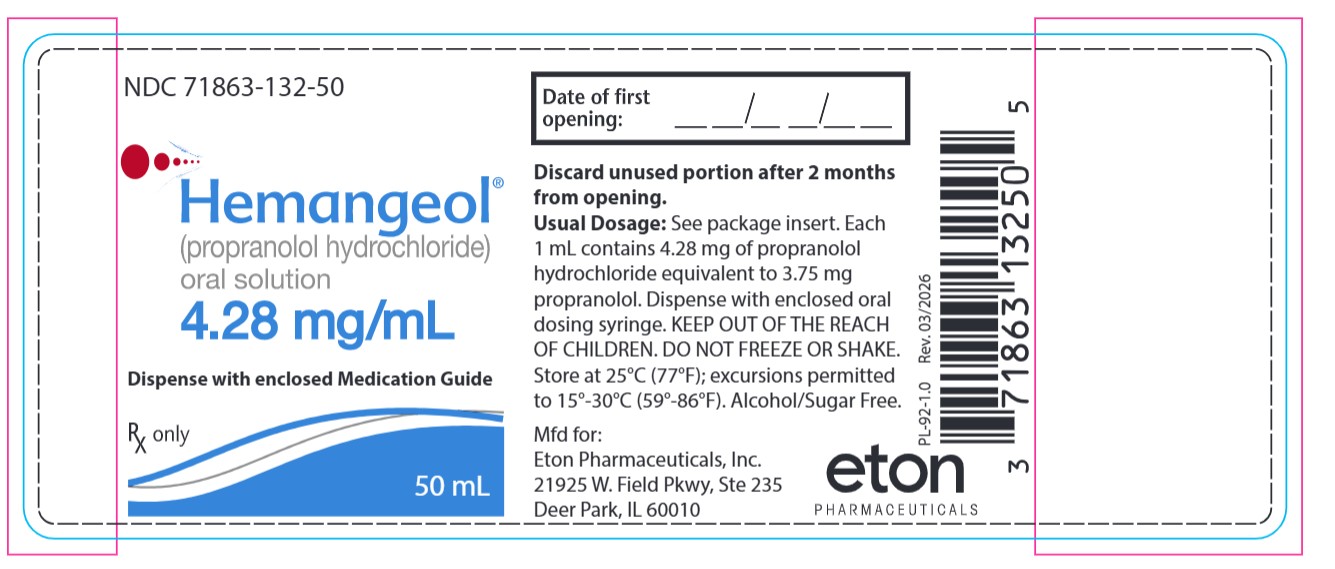
50 Container (50 mL Container)
Label for HEMANGEOL oral solution containing propranolol hydrochloride 4.28 mg/mL in a 50 mL bottle. The label includes dosage instructions, storage conditions, and a warning to discard unused portion after 2 months of opening. The product is manufactured by Eton Pharmaceuticals, Inc. and has NDC 71863-132-50.*
FDA Label Image

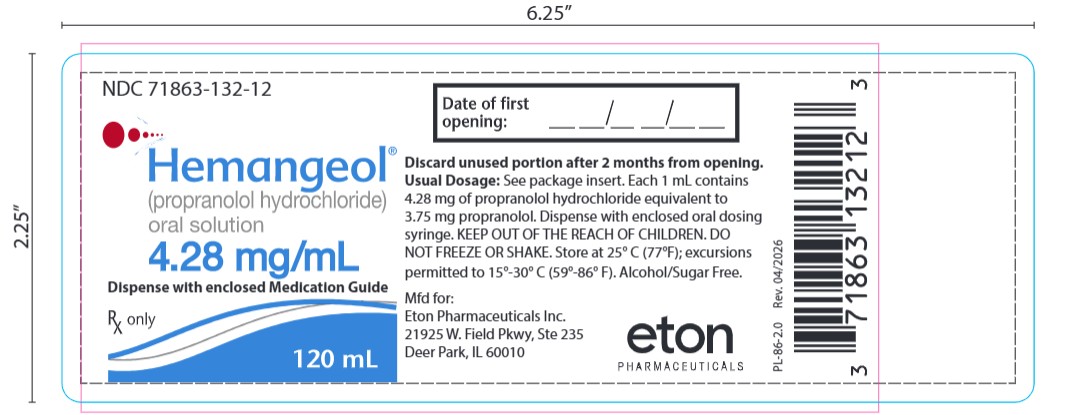
120 Container (Pl 86 2.0 Container 120ml)

120 Container (Pl 86 2.0 Container 120ml)
Label of HEMANGEOL oral solution with 4.28 mg/mL propranolol hydrochloride by Eton Pharmaceuticals, Inc. The label states 120 mL volume, dosing information, storage instructions, and a barcode. The label includes directions to discard unused portions 2 months after opening, and advises to use enclosed dosing syringe.*
FDA Label Image

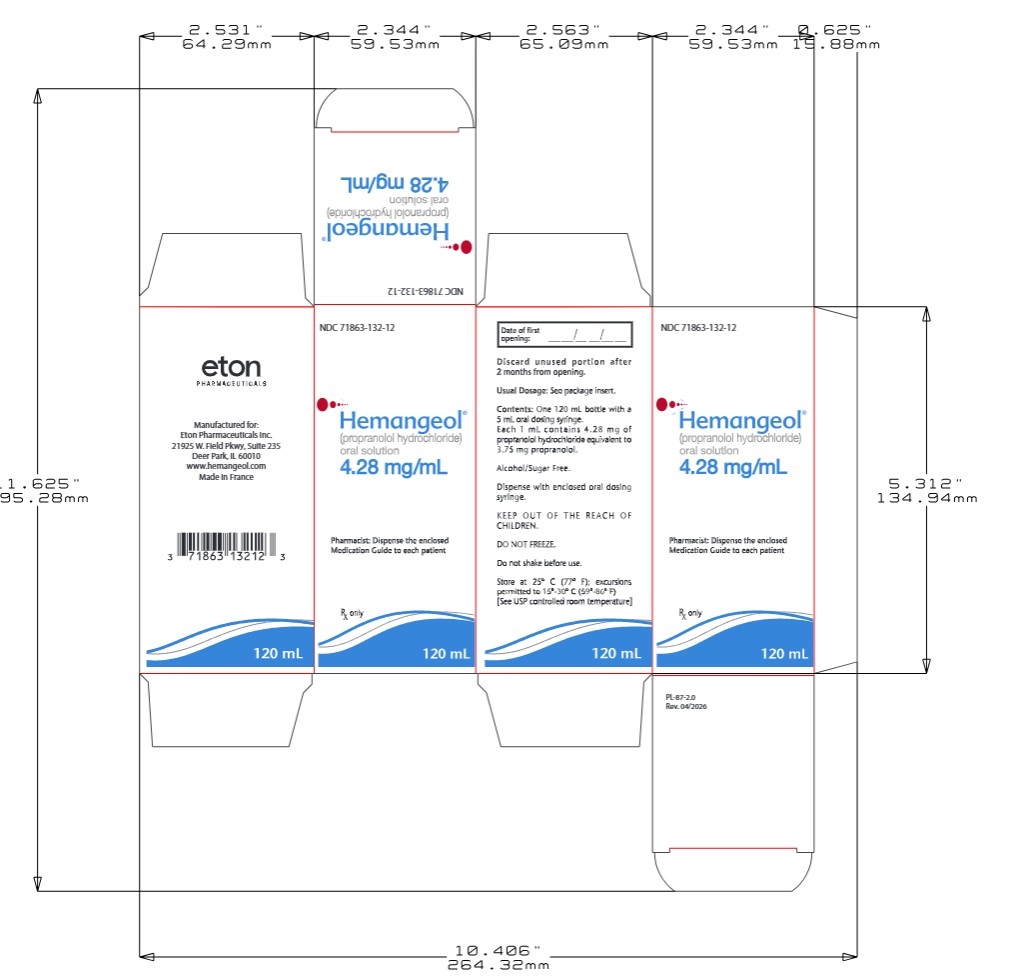
120 Carton (Pl 87 2.0 Carton Label 120 mL)

120 Carton (Pl 87 2.0 Carton Label 120 mL)
Packaging label for Hemangeol oral solution containing propranolol hydrochloride 4.28 mg/mL. The label indicates a 120 mL bottle with included dosing syringe. Manufactured by Eton Pharmaceuticals, Inc., the label includes storage and usage instructions, barcode, and emphasizes the product is for prescription use only.*
FDA Label Image

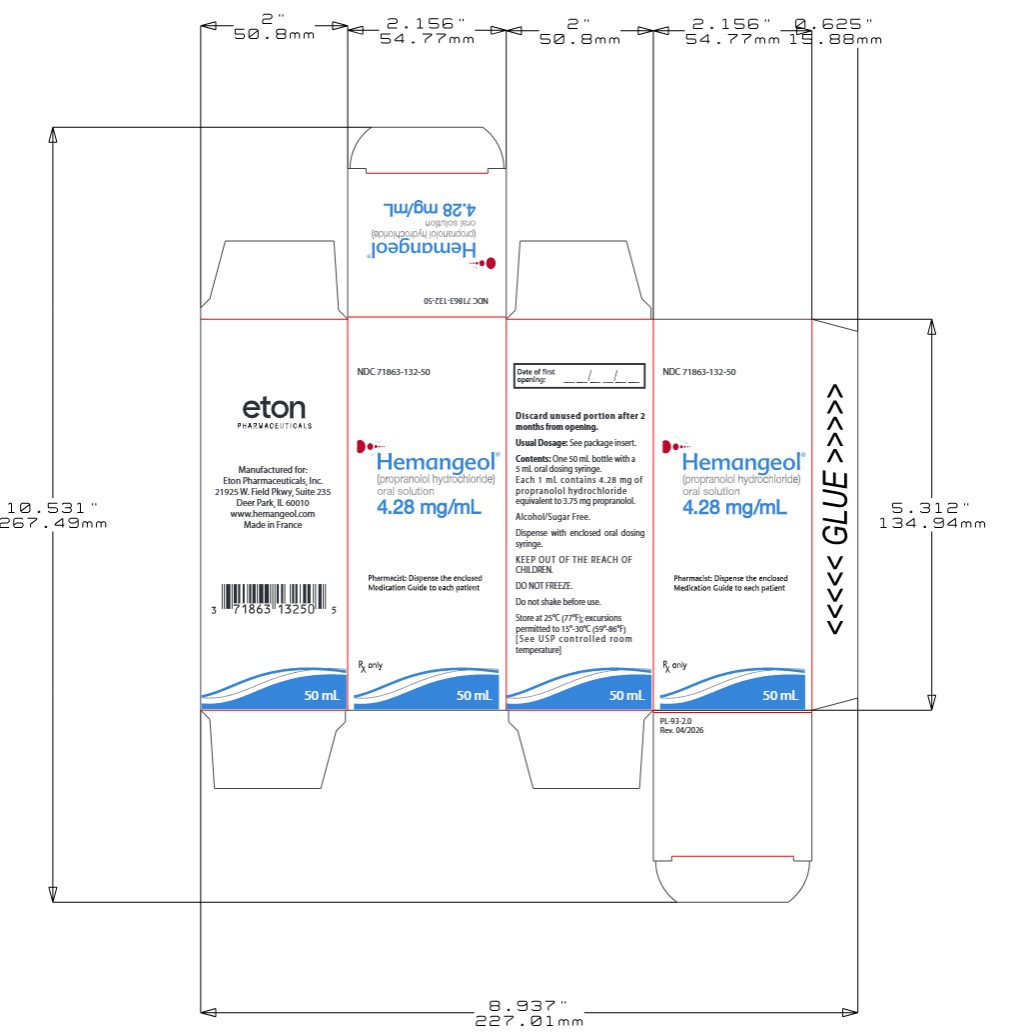
50 Carton (Pl 97 2.0 Carton 50ml)

50 Carton (Pl 97 2.0 Carton 50ml)
Carton packaging label for HEMANGEOL (propranolol hydrochloride) oral solution, 4.28 mg/mL, by Eton Pharmaceuticals, Inc. The label includes product and manufacturer information, dosing instructions, storage and safety warnings, and a 50 mL volume indication. The design uses blue and red text on a white background, with the labeler website and barcode visible.*
FDA Label Image

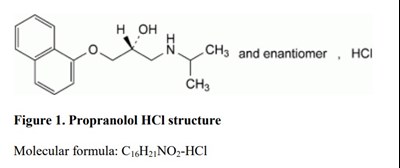
Structure (Structure)

Structure (Structure)
Chemical structure of Propranolol Hydrochloride (Propranolol HCl) showing its molecular structure with atoms and bonds, indicating the stereochemistry and functional groups, accompanied by the molecular formula C16H21NO2-HCl.*
FDA Label Image

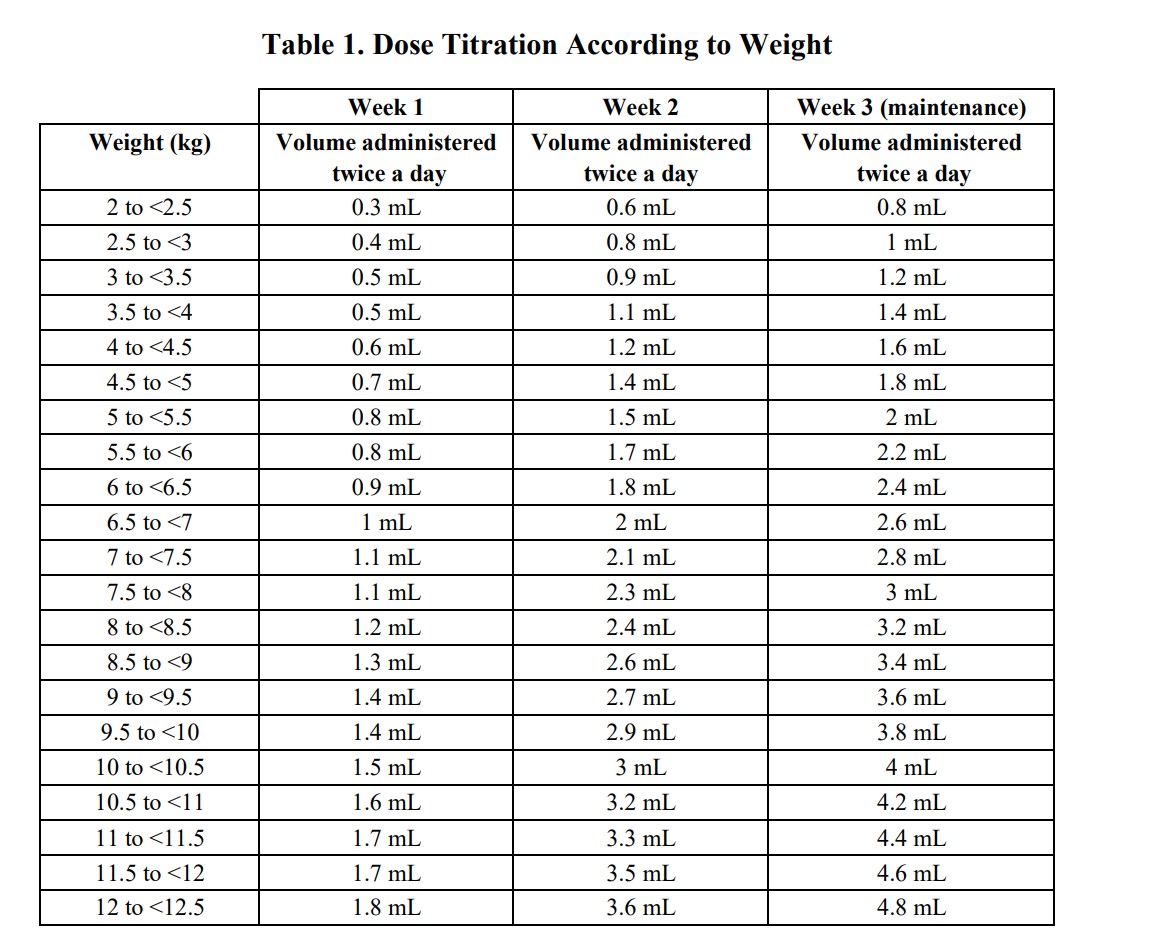
Table 1 (Table 1)

Table 1 (Table 1)
A data table titled 'Dose Titration According to Weight' showing volume administered twice daily over three weeks for different weight ranges in kilograms. The table lists weight categories from 2 to less than 12.5 kg and corresponding volumes in milliliters for Week 1, Week 2, and Week 3 (maintenance), with increasing volumes over time.*
FDA Label Image

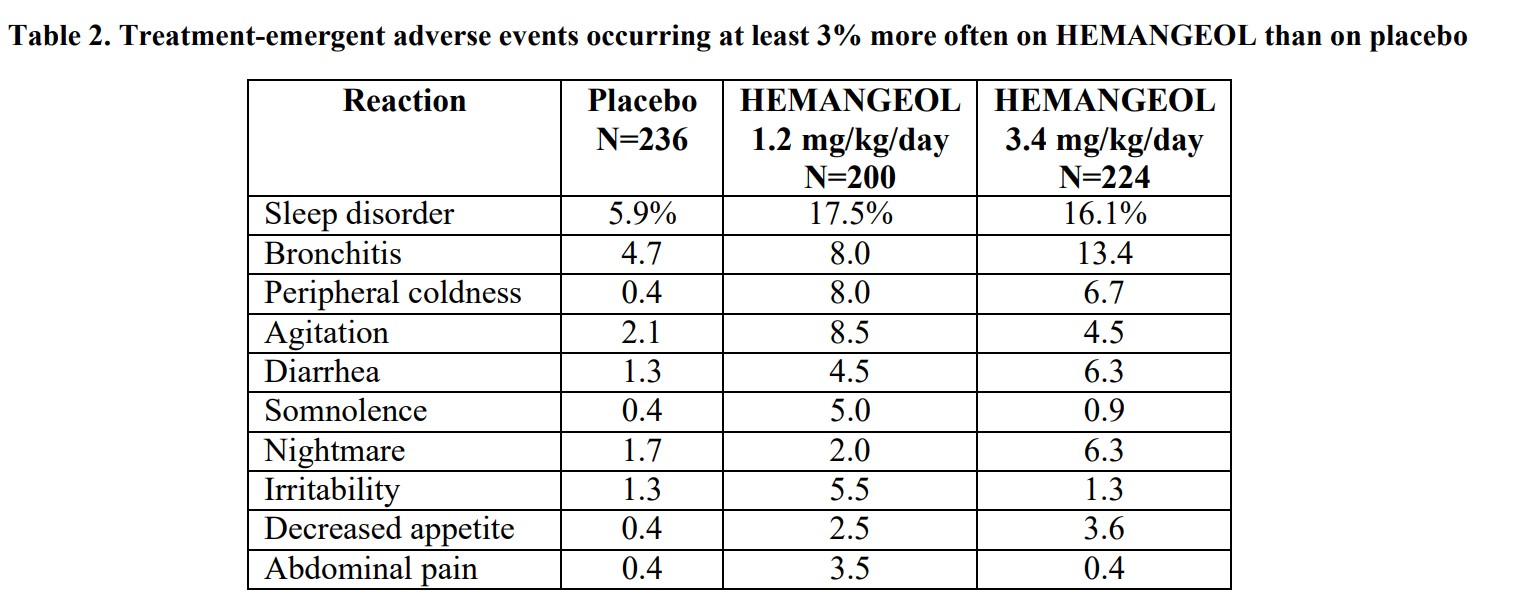
Table 2 (Table 2 Hemangeol)

Table 2 (Table 2 Hemangeol)
A data table titled 'Treatment-emergent adverse events occurring at least 3% more often on HEMANGEOL than on placebo.' It lists adverse reactions with their respective incidence percentages for placebo (N=236), HEMANGEOL 1.2 mg/kg/day (N=200), and HEMANGEOL 3.4 mg/kg/day (N=224) groups, including sleep disorder, bronchitis, peripheral coldness, agitation, diarrhea, somnolence, nightmare, irritability, decreased appetite, and abdominal pain.*
FDA Label Image

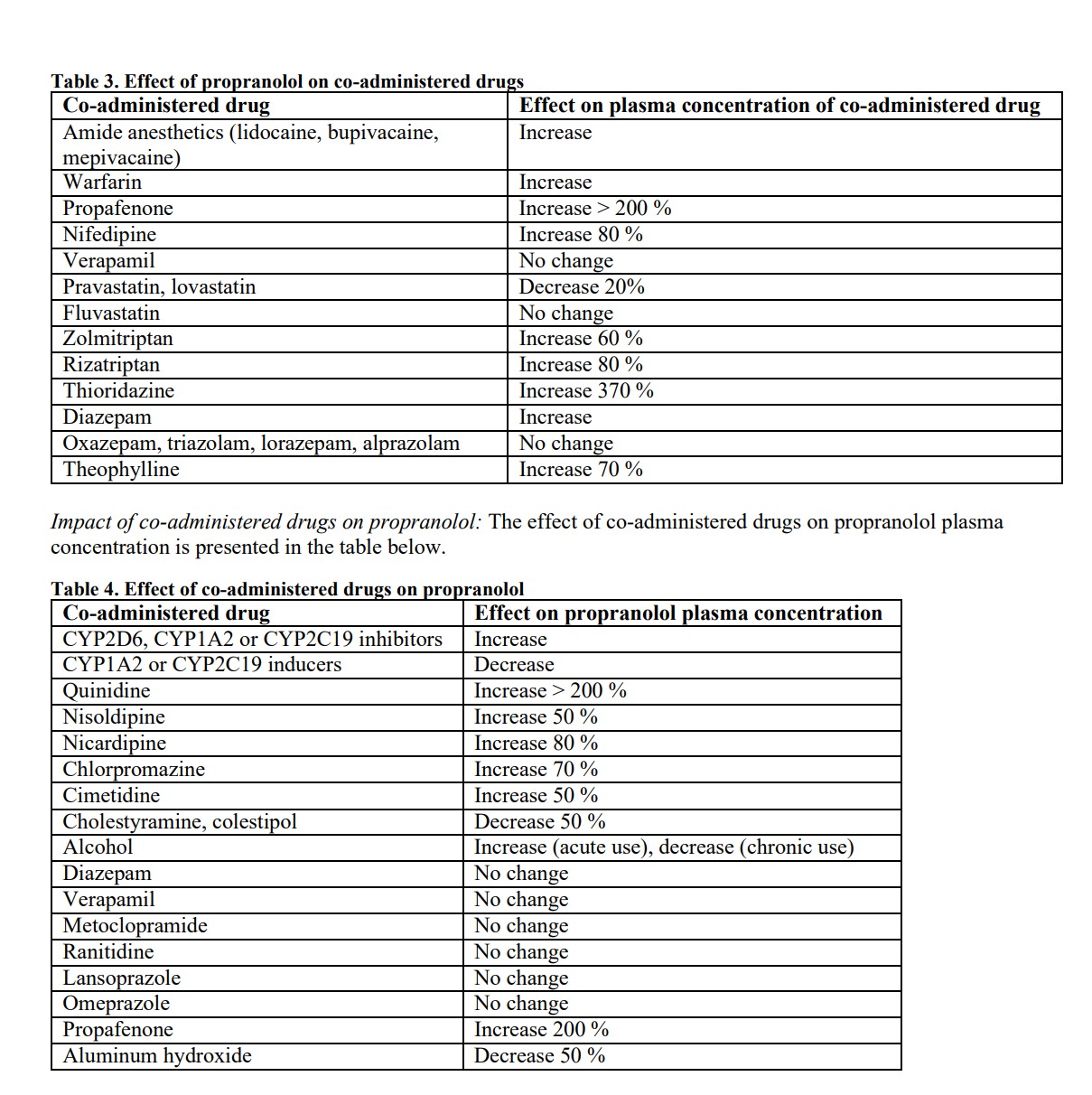
Table 3 And 4 (Table 3 And 4)

Table 3 And 4 (Table 3 And 4)
Two tables detailing drug interaction effects with propranolol. Table 3 lists co-administered drugs (amides, warfarin, propafenone, etc.) and their impact on plasma concentration, ranging from increase, decrease, to no change. Table 4 describes effects of various drugs (CYP inhibitors/inducers, quinidine, diazepam, verapamil, etc.) on propranolol plasma concentration, also showing increases, decreases, or no changes.*
FDA Label Image

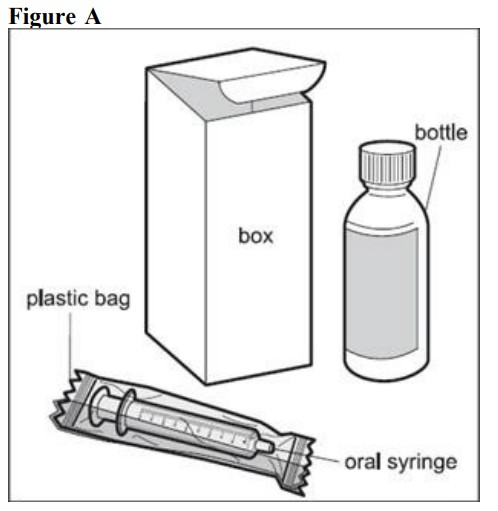
A (A)

A (A)
An instructional illustration showing components associated with HEMANGEOL oral solution packaging. The figure depicts a box, a bottle presumably containing the solution, and a plastic bag holding an oral syringe for dosing. Each component is labeled accordingly.*
FDA Label Image

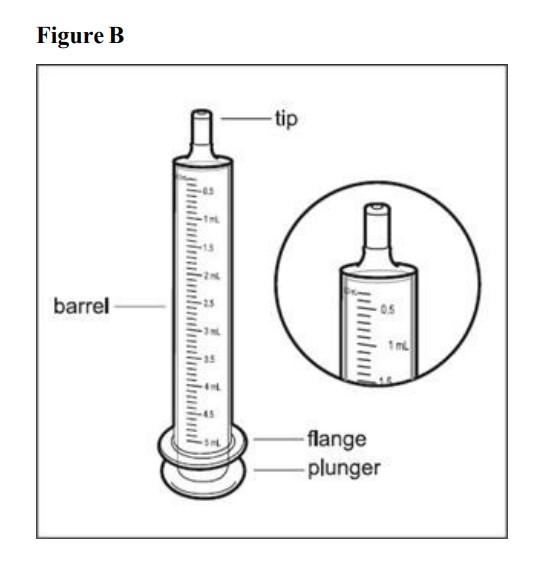
B (B)

B (B)
An instructional diagram showing a syringe-like oral dosing device with labeled parts: tip, barrel with volume markings from 0.5 to 5 mL, flange, and plunger. A zoomed inset highlights the tip and volume markings from 0.5 to 2 mL. The illustration is related to dosing measurement for HEMANGEOL oral solution (Propranolol Hydrochloride).*
FDA Label Image

C (C)

C (C)
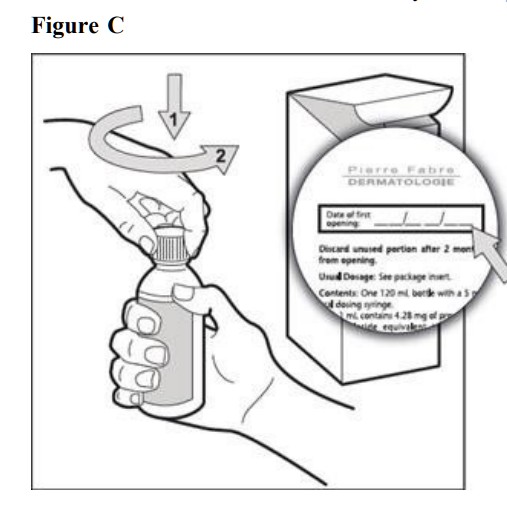
An instructional illustration depicting how to open a bottle of solution by turning the cap counterclockwise. A callout shows a close-up of the label area where the date of first opening is to be recorded, along with usage and content information.*
FDA Label Image

D (D)

D (D)
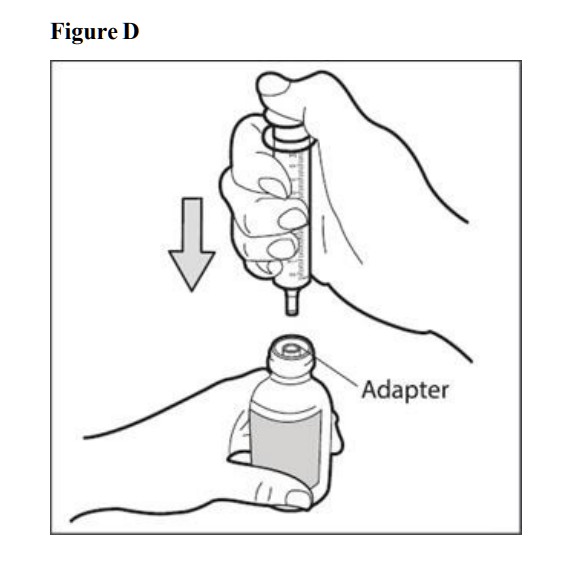
An instructional illustration showing the use of an adapter on a bottle of oral solution. One hand holds the bottle with the adapter attached to the opening, while the other hand holds a syringe aligned to insert into the adapter, indicating how to draw medication from the bottle using the syringe.*
FDA Label Image

E (E)

E (E)
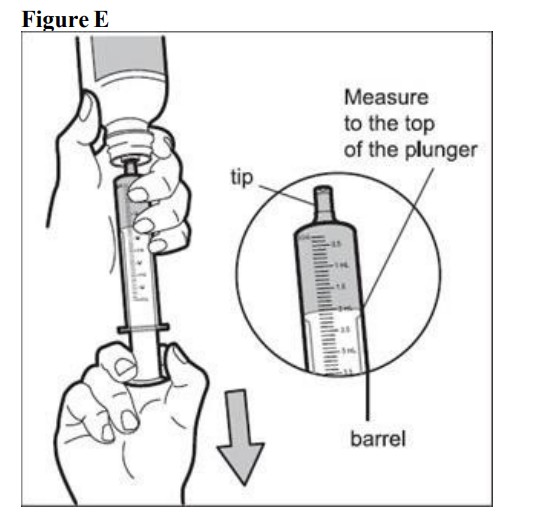
An instructional illustration showing how to measure liquid medication using a syringe. It depicts a hand drawing solution from a bottle into a syringe, with a close-up of the syringe tip, barrel, and plunger. The image advises measuring to the top of the plunger for accurate dosing.*
FDA Label Image

F (F)

F (F)
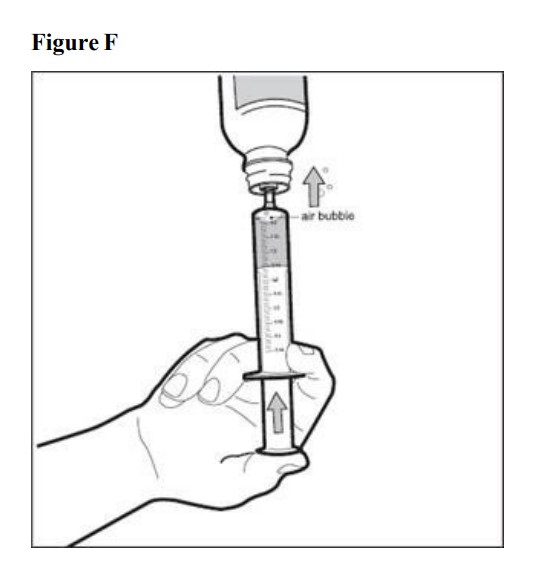
An instructional illustration showing a hand holding a syringe vertically while drawing liquid from an inverted bottle. The image highlights the presence and upward movement of an air bubble inside the syringe.*
FDA Label Image

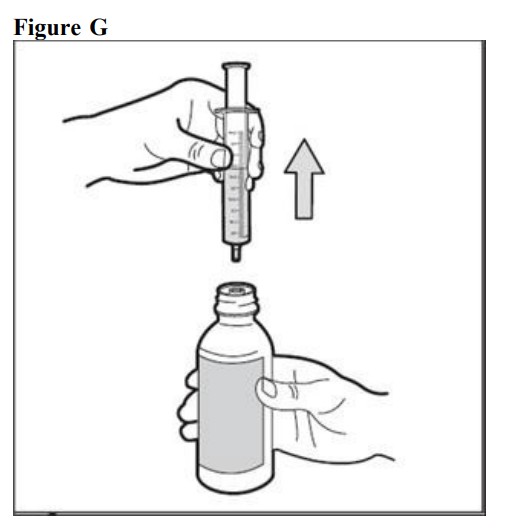
G (G)

G (G)
An instructional illustration showing a hand holding a dosing syringe above an open bottle, with an upward arrow indicating the syringe being removed from the bottle. This figure likely demonstrates proper syringe removal after drawing medication from the bottle.*
FDA Label Image

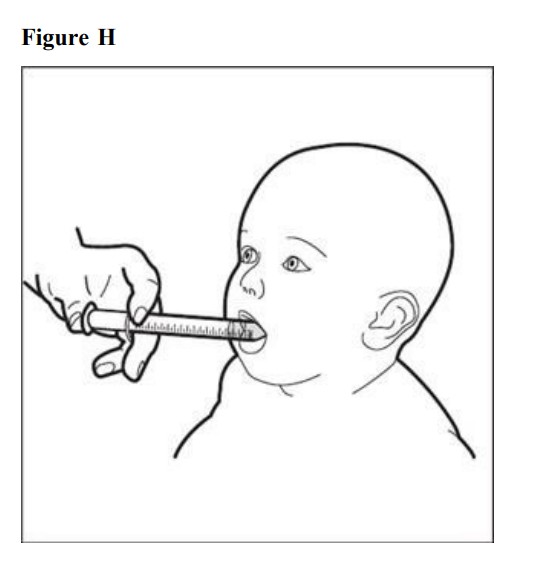
H (H)

H (H)
Illustration showing a person administering oral medication to a baby using a syringe placed in the infant's mouth. The drawing depicts correct positioning for oral dosing in infants.*
FDA Label Image

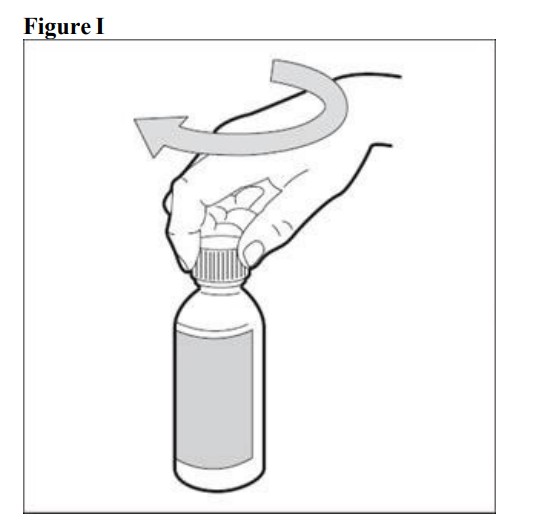
I (I)

I (I)
An instructional diagram showing a hand grasping the cap of a bottle and turning it counterclockwise, indicating how to open the bottle. The bottle likely represents a medication container, consistent with the context of HEMANGEOL oral solution.*
FDA Label Image

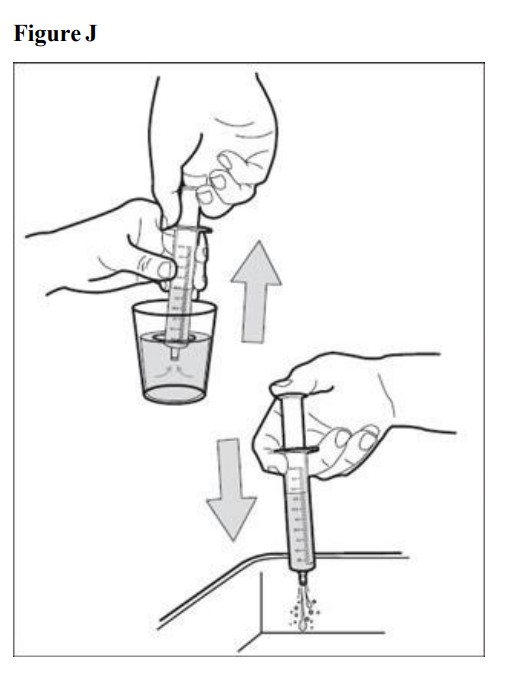
J (J)

J (J)
An instructional illustration showing hands using a syringe to draw liquid from a cup and then expel it. The arrows indicate the motion of pulling the syringe up to draw liquid and pushing it down to release the liquid, likely demonstrating how to properly use the dosing syringe for oral administration.*

* About these descriptions: Image descriptions on this page are generated by automated AI analysis of the product label images from the manufacturer's FDA label submission (SPL). They are provided for reference only and may contain errors or omissions. Always rely on the printed label itself and the official FDA labeling, and consult a pharmacist or healthcare professional with any questions about this product.