Impavido Capsule
Product Images NDC 71863-135

13 FDA label images from Eton Pharmaceuticals, Inc. · Packaging, Regulatory Labels, and Product Appearance

Product Visual Gallery

This gallery contains 13 technical images submitted to the FDA as part of the official labeling for Impavido (NDC 71863-135). Unlike standard consumer photos, these assets often include clinical data figures, molecular chemical structures, and official manufacturer packaging layouts.

As provided by Eton Pharmaceuticals, Inc., these visuals offer a comprehensive scientific overview of the product's physical and chemical identity, aiding pharmacists and researchers in product verification and study.

FDA Label Image

Structural Formula (11 Sf)

Structural Formula (11 Sf)
Chemical structure of miltefosine, the active ingredient in IMPAVIDO, shown as a detailed molecular diagram with carbon, oxygen, phosphorus, and nitrogen atoms corresponding to its chemical composition.*
FDA Label Image

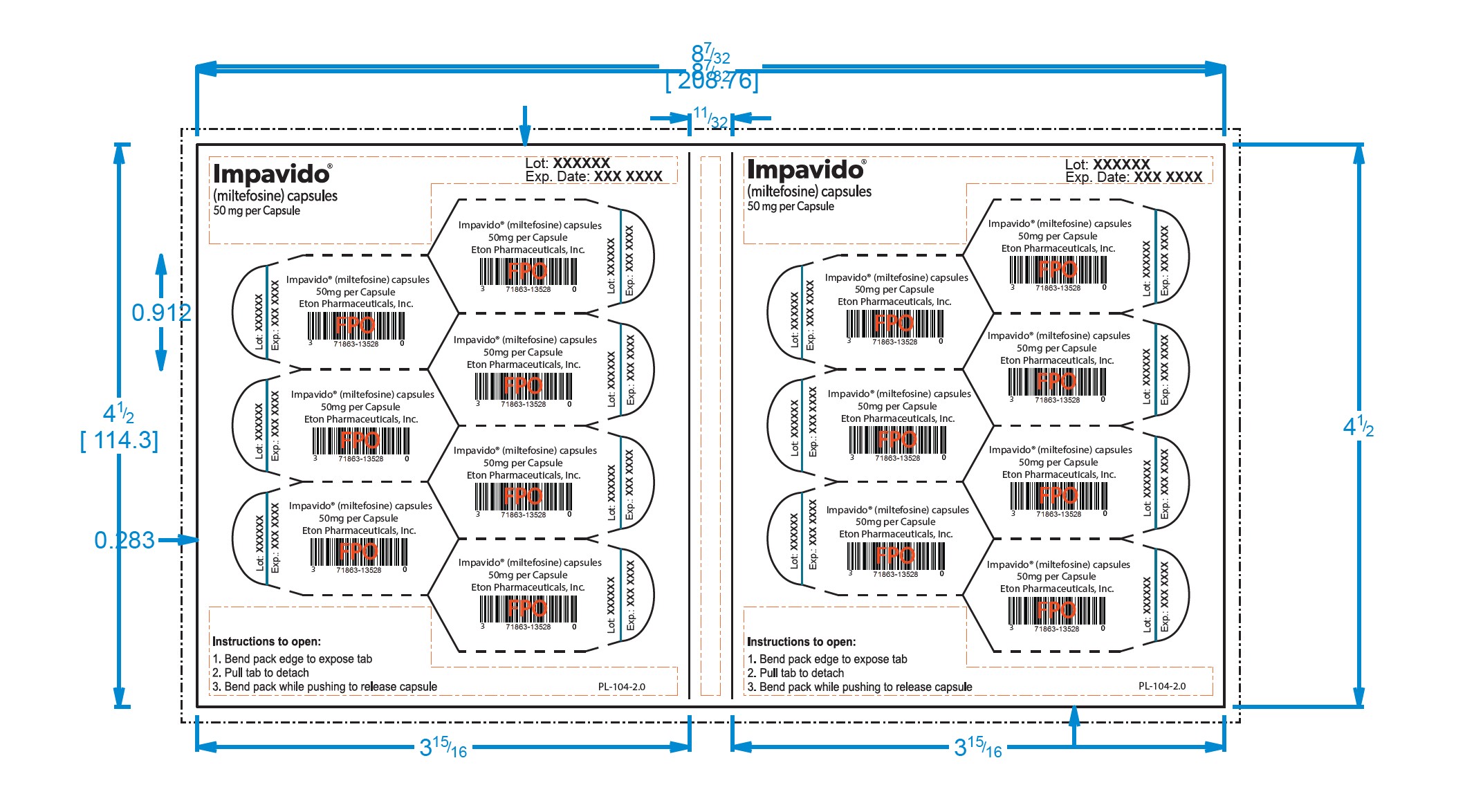
Blister (Impavido Blister Artwork)

Blister (Impavido Blister Artwork)
IMPAVIDO 50 mg capsules label featuring the proprietary and generic name miltefosine. The label includes packaging details from Eton Pharmaceuticals, Inc. It shows multiple replicate capsule labels with lot and expiration date placeholders, barcodes marked with FPO for demonstration, and instructions to open the pack. The design dimensions and cutting lines are also visible.*
FDA Label Image

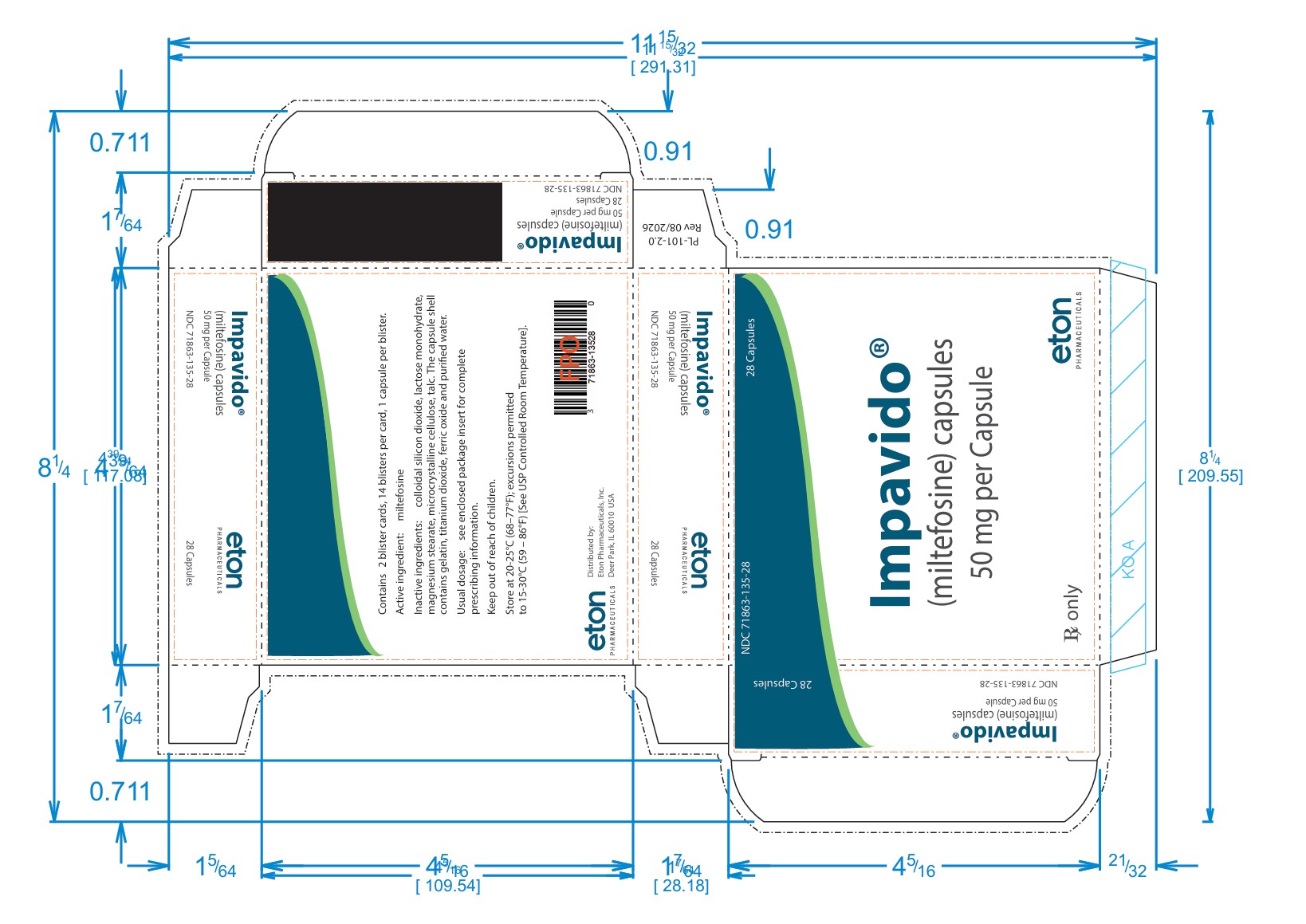
Carton (Impavido Carton 2.0)

Carton (Impavido Carton 2.0)
Packaging label of IMPAVIDO 50 mg capsules (miltefosine) by Eton Pharmaceuticals, Inc. The carton indicates 28 capsules per container with prescription only status and includes dimensions of the packaging. The label displays the product name, active ingredient, strength, quantity, manufacturer name, and NDC number 71863-135-28.*
FDA Label Image

Table 1 (Impavido Table 1)

Table 1 (Impavido Table 1)
A data table titled 'IMPAVIDO Dosage' showing dosage and administration recommendations based on patient weight categories. For patients weighing 30 kg to 44 kg, the dosage is one 50 mg capsule twice daily with food (breakfast and dinner). For patients 45 kg or greater, the dosage is one 50 mg capsule three times daily with food (breakfast, lunch, and dinner).*
FDA Label Image

Table 2.1 (Impavido Table 2.1)

Table 2.1 (Impavido Table 2.1)
Table presenting data on the incidence of decreased appetite, showing counts and percentages in two groups with 69 (23.1%) in one group and 22 (22.2%) in the other.*
FDA Label Image

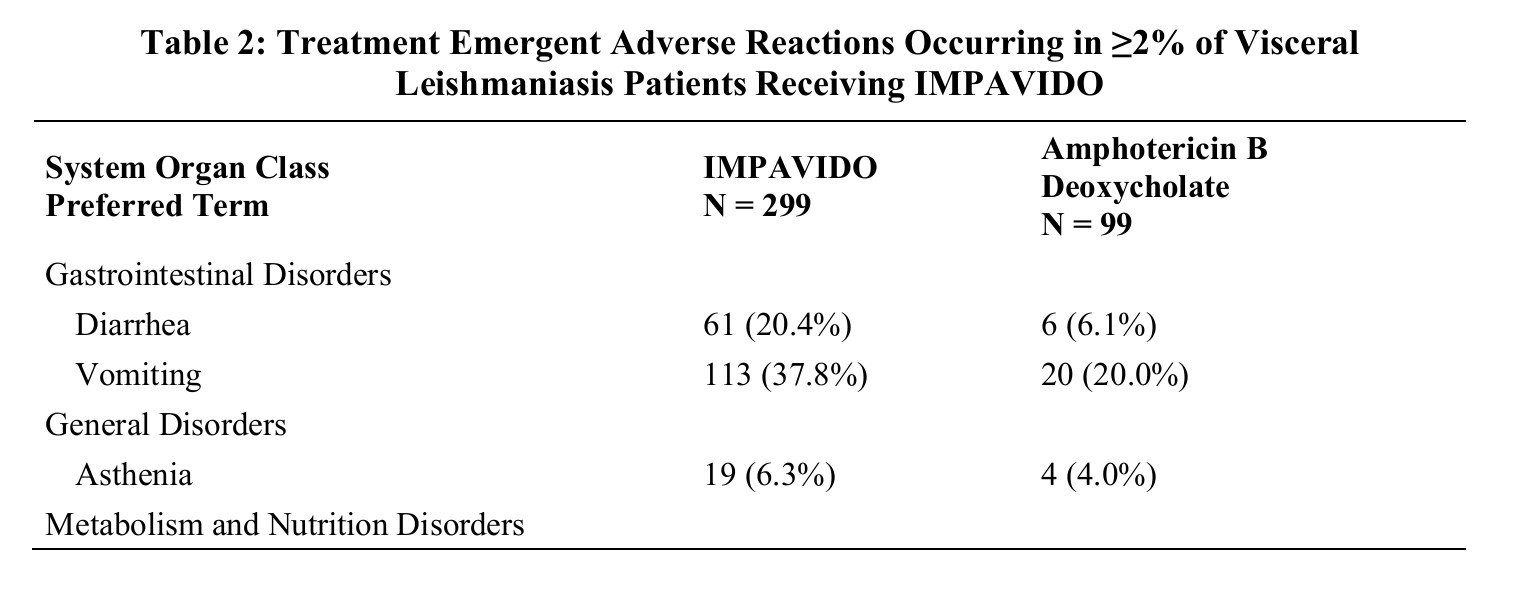
Table 2 (Impavido Table 2)

Table 2 (Impavido Table 2)
Data table showing treatment emergent adverse reactions occurring in 2% or more of visceral leishmaniasis patients receiving IMPAVIDO (N=299) compared to Amphotericin B Deoxycholate (N=99). It lists gastrointestinal disorders (diarrhea and vomiting) and general disorders (asthenia) with the number and percentage of patients experiencing each reaction for both treatments.*
FDA Label Image

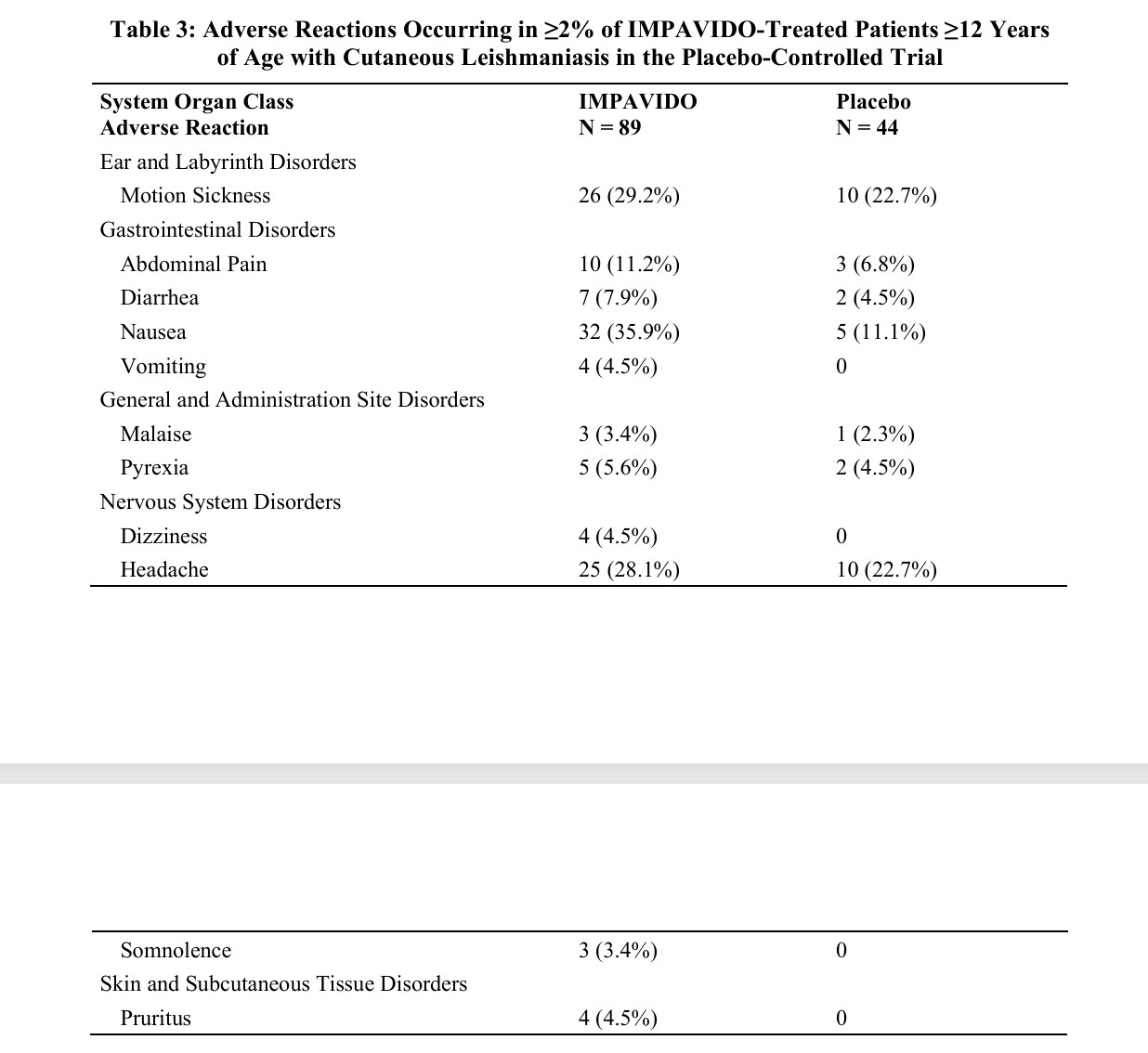
Table 3 (Impavido Table 3)

Table 3 (Impavido Table 3)
A clinical data table showing adverse reactions occurring in 2% or more of IMPAVIDO-treated patients aged 12 years and older with cutaneous leishmaniasis in a placebo-controlled trial. The table compares frequencies of reactions, such as motion sickness, abdominal pain, diarrhea, nausea, vomiting, malaise, pyrexia, dizziness, headache, somnolence, and pruritus, between IMPAVIDO (N=89) and placebo groups (N=44) across various system organ classes.*
FDA Label Image

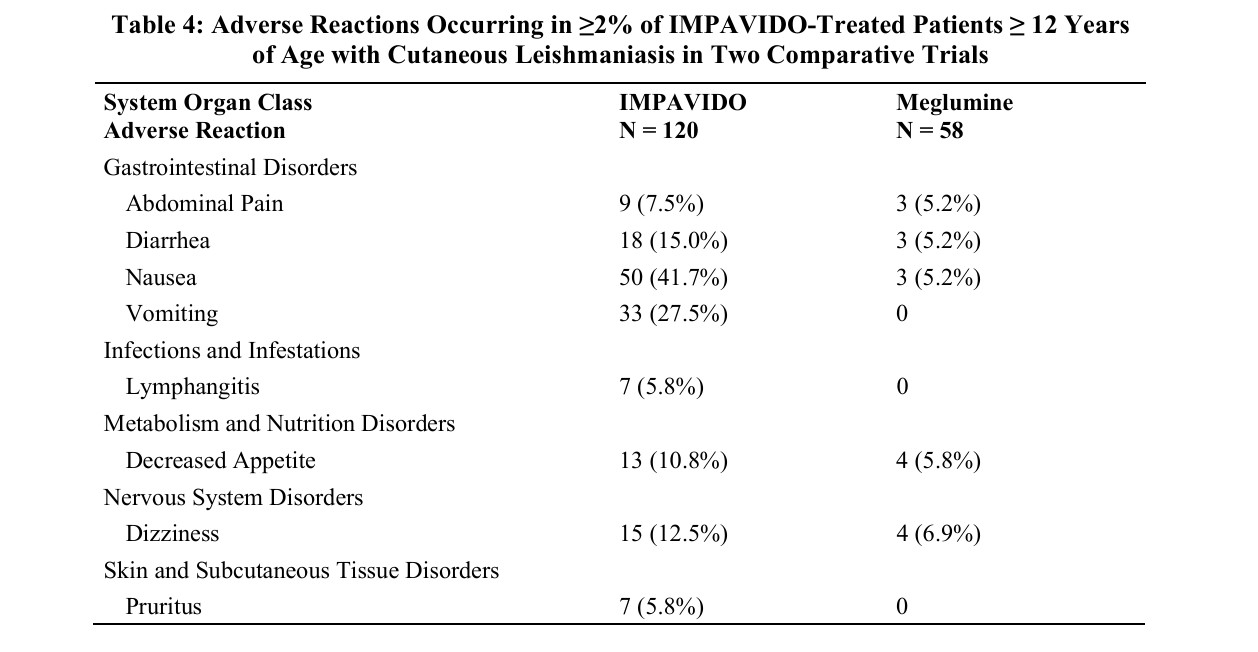
Table 4 (Impavido Table 4)

Table 4 (Impavido Table 4)
A data table showing adverse reactions occurring in 2% or more of IMPAVIDO-treated patients aged 12 years and older with cutaneous leishmaniasis from two comparative trials. It lists system organ classes, specific adverse reactions, and their occurrence percentages for IMPAVIDO (N=120) and Meglumine (N=58) groups.*
FDA Label Image

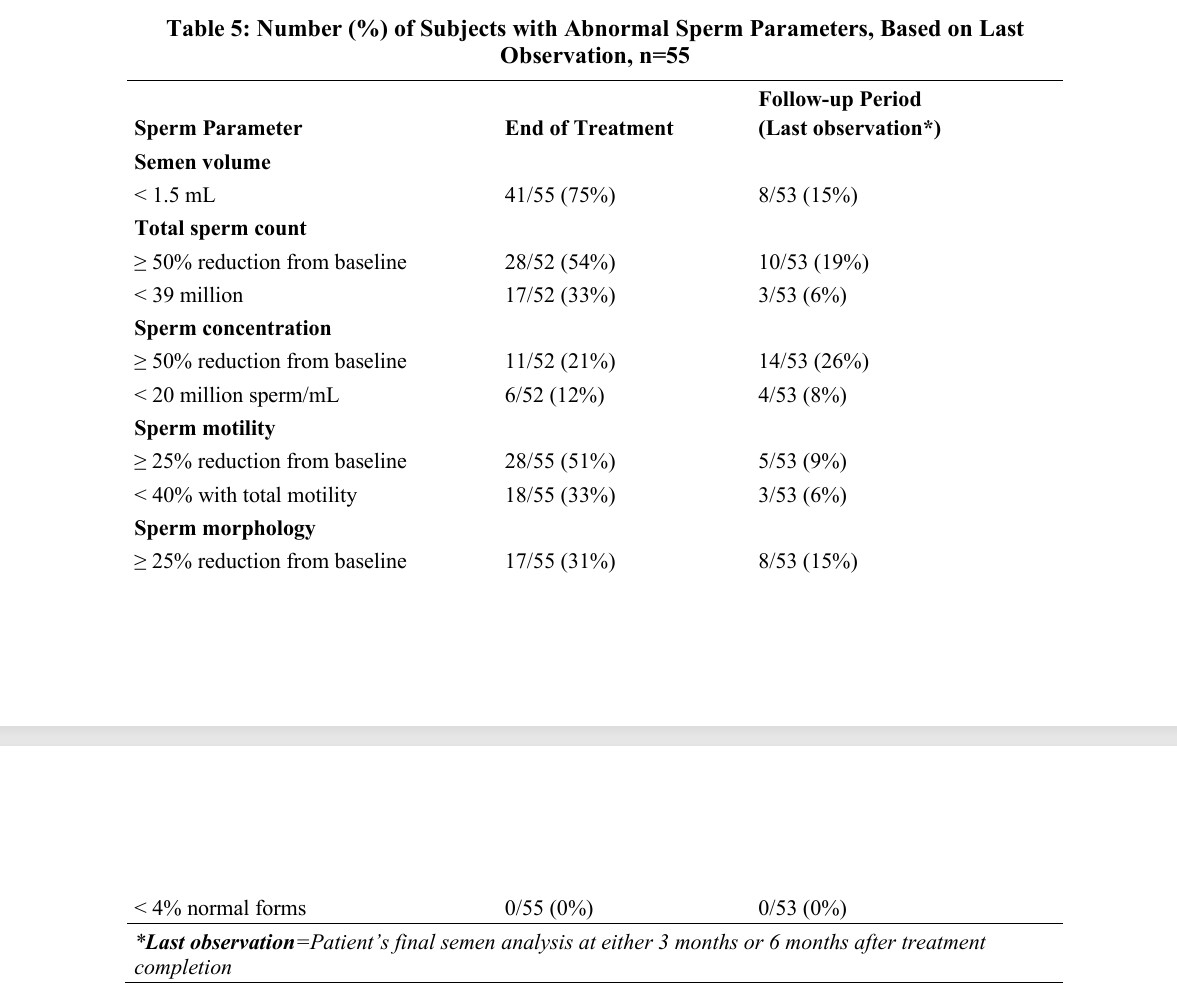
Table 5 (Impavido Table 5)

Table 5 (Impavido Table 5)
Table showing number and percentage of subjects with abnormal sperm parameters based on last observation in a study of 55 subjects. Parameters include semen volume, total sperm count, sperm concentration, motility, and morphology, with values reported at end of treatment and follow-up periods. Follow-up observation occurred at 3 or 6 months after treatment completion.*
FDA Label Image

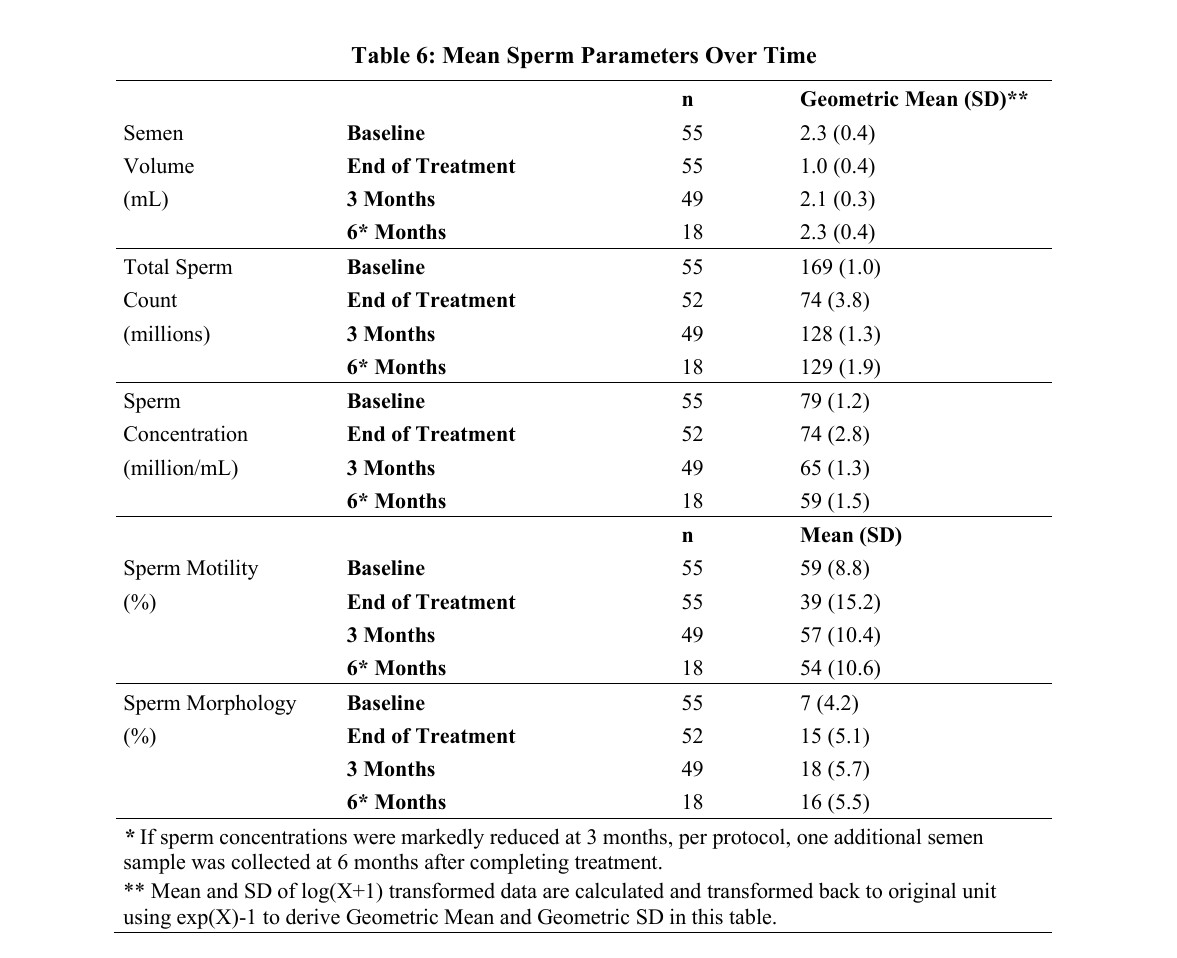
Table 6 (Table 6)

Table 6 (Table 6)
Data table titled 'Mean Sperm Parameters Over Time' presenting geometric means and standard deviations of sperm volume, total sperm count, sperm concentration, sperm motility, and sperm morphology at baseline, end of treatment, 3 months, and 6 months. The table includes sample sizes and notes on data transformation and follow-up sampling at 6 months if reductions at 3 months were marked.*
FDA Label Image

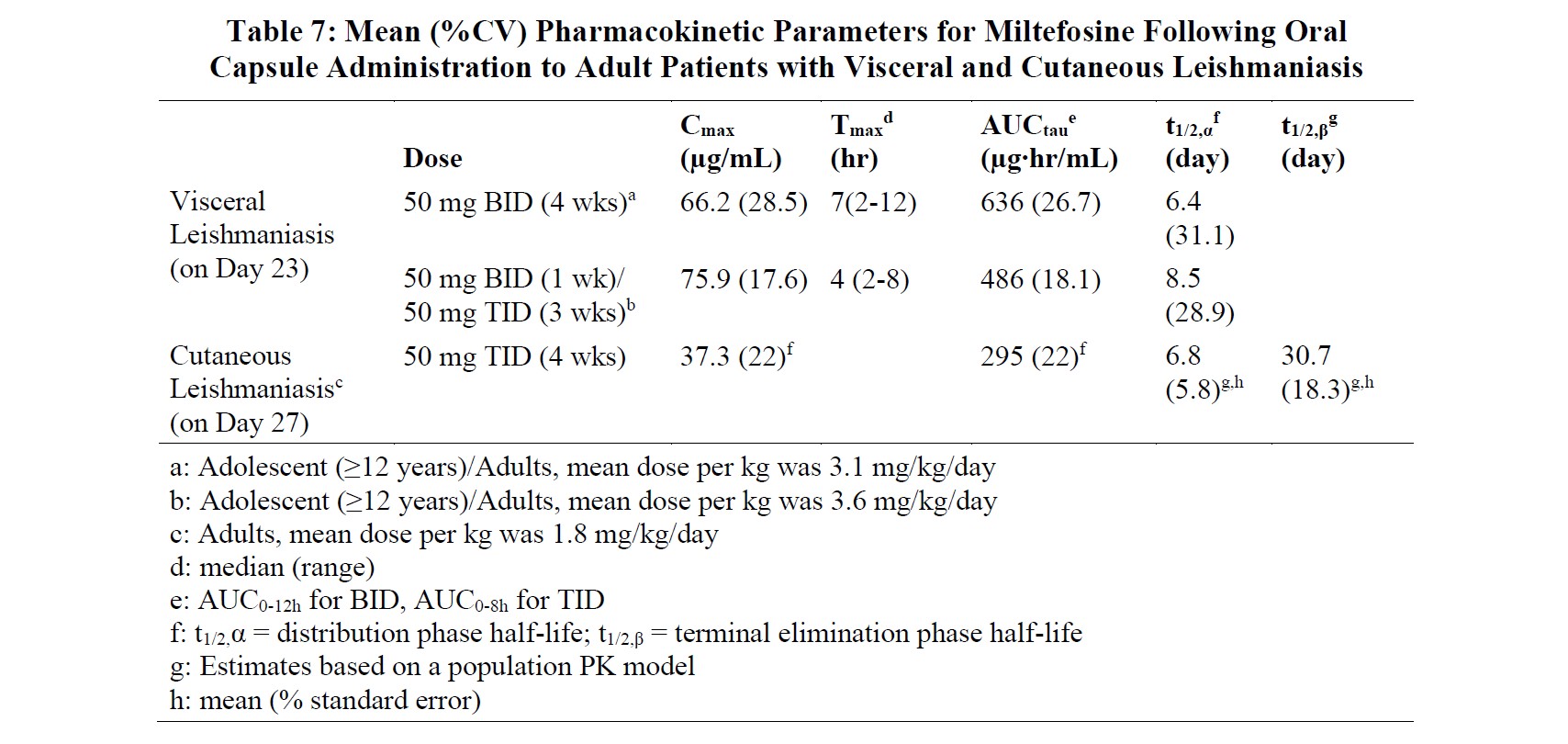
Table 7 (Table 7)

Table 7 (Table 7)
A data table titled 'Mean (%CV) Pharmacokinetic Parameters for Miltefosine Following Oral Capsule Administration to Adult Patients with Visceral and Cutaneous Leishmaniasis.' It presents pharmacokinetic parameters including Cmax, Tmax, AUCtau, and half-lives (t1/2,α and t1/2,β) for Miltefosine oral capsules at doses of 50 mg BID and TID over different durations. The table includes footnotes explaining dosages, population, and calculation details.*
FDA Label Image

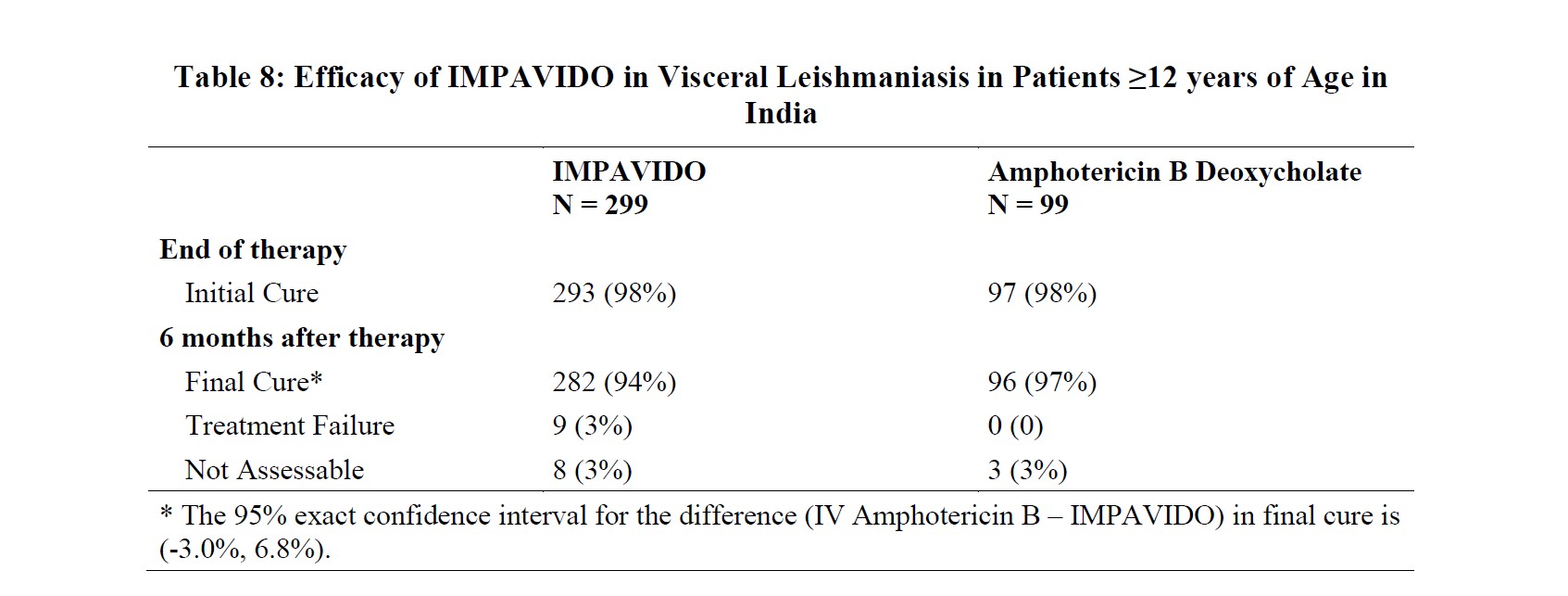
Table 8 (Table 8)

Table 8 (Table 8)
A data table titled 'Efficacy of IMPAVIDO in Visceral Leishmaniasis in Patients ≥12 years of Age in India' comparing IMPAVIDO (N=299) and Amphotericin B Deoxycholate (N=99). It shows results at end of therapy and six months after therapy including Initial Cure, Final Cure, Treatment Failure, and Not Assessable percentages for each treatment group.*
FDA Label Image

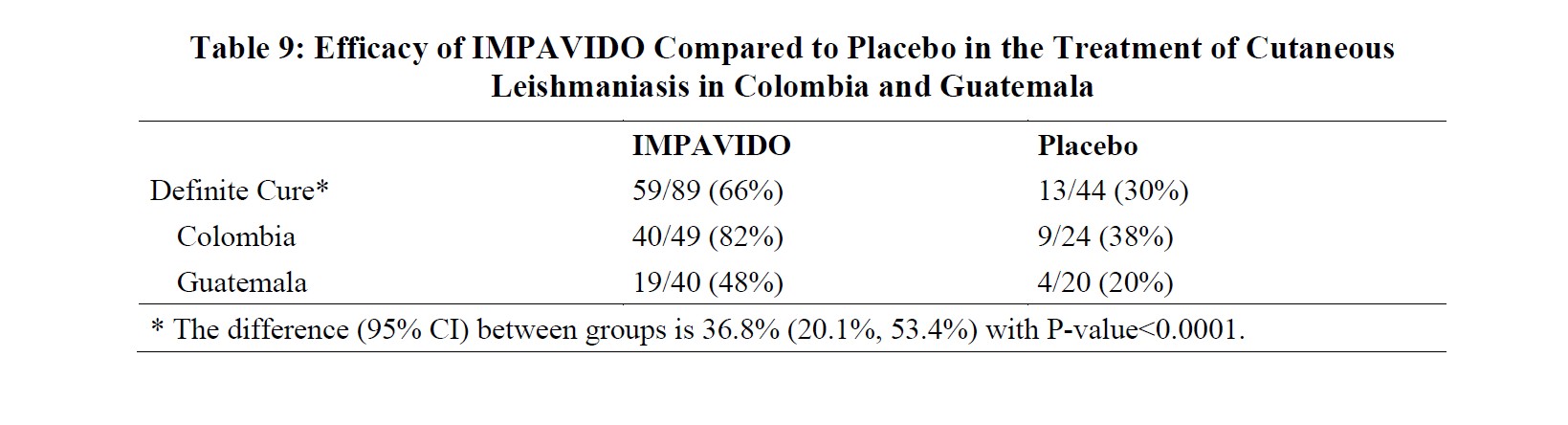
Table 9 (Table 9)

Table 9 (Table 9)
A data table titled 'Efficacy of IMPAVIDO Compared to Placebo in the Treatment of Cutaneous Leishmaniasis in Colombia and Guatemala'. It compares definite cure rates between IMPAVIDO and placebo groups overall and by country (Colombia and Guatemala). Cure rates for IMPAVIDO are higher than placebo in all categories, with specific percentages and counts provided for each group.*

* About these descriptions: Image descriptions on this page are generated by automated AI analysis of the product label images from the manufacturer's FDA label submission (SPL). They are provided for reference only and may contain errors or omissions. Always rely on the printed label itself and the official FDA labeling, and consult a pharmacist or healthcare professional with any questions about this product.