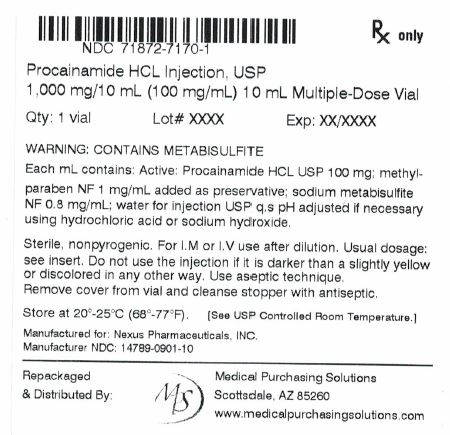
Other
Rx only
Complete Heart Block: Procainamide should not be administered to patients with complete heart block because of its effects in suppressing nodal or ventricular pacemakers and the hazard of asystole. It may be difficult to recognize complete heart block in patients with ventricular tachycardia, but if significant slowing of ventricular rate occurs during PA treatment without evidence of A-V conduction appearing, PA should be stopped. In cases of second degree A-V block or various types of hemiblock, PA should be avoided or discontinued because of the possibility of increased severity of block, unless the ventricular rate is controlled by an electrical pacemaker.
Idiosyncratic Hypersensitivity: In patients sensitive to procaine or other ester-type local anesthetics, cross sensitivity to PA is unlikely. However, it should be borne in mind, and PA should not be used if it produces acute allergic dermatitis, asthma, or anaphylactic symptoms.
Lupus Erythematosus: An established diagnosis of systemic lupus erythematosus is a contraindication to PA therapy, since aggravation of symptoms is highly likely.
Torsades de Pointes: In the unusual ventricular arrhythmia called “les torsades de pointes” (twistings of the points), characterized by alternation of one or more ventricular premature beats in the directions of the QRS complexes on ECG in persons with prolonged Q-T and often enhanced U waves, Group 1A antiarrhythmic drugs are contraindicated. Administration of PA in such cases may aggravate this special type of ventricular extrasystole or tachycardia instead of suppressing it.
Blood Dyscrasias: Agranulocytosis, bone marrow depression, neutropenia, hypoplastic anemia and thrombocytopenia in patients receiving procainamide hydrochloride have been reported at a rate of approximately 0.5%. Most of these patients received procainamide within the recommended dosage range. Fatalities have occurred (with approximately 20 25 percent mortality in reported cases of agranulocytosis). Since most of these events have been noted during the first 12 weeks of therapy, it is recommended that complete blood counts including white cell, differential and platelet counts be performed at weekly intervals for the first three months of therapy, and periodically thereafter. Complete blood counts should be performed promptly if the patient develops any signs of infection (such as fever, chills, sore throat or stomatitis), bruising or bleeding. If any of these hematologic disorders are identified, procainamide therapy should be discontinued. Blood counts usually return to normal within one month of discontinuation. Caution should be used in patients with pre-existing marrow failure or cytopenia of any type. (See ADVERSE REACTIONS).