Hand Sanitizer Global Care
Product Images NDC 72146-025

View Photos of Packaging, Regulatory Labels, and Product Appearance

Product Visual Gallery

This gallery contains 2 technical images submitted to the FDA as part of the official labeling for Hand Sanitizer Global Care (NDC 72146-025). Unlike standard consumer photos, these assets often include clinical data figures, molecular chemical structures, and official manufacturer packaging layouts.

As provided by Target Price Inc., these visuals offer a comprehensive scientific overview of the product's physical and chemical identity, aiding pharmacists and researchers in product verification and study.

Product Images & Figures Index

FDA Label Image

Bottle (Bottle)

Bottle (Bottle)
This is a drug facts label for a hand sanitizer with an active ingredient of isopropyl alcohol 70%, which is an antimicrobial agent. It can be used to reduce bacteria on the skin but should not be used on the face or broken skin. It is flammable, and caution should be taken when using around heat or flames. In case of eye contact, flush with water and seek medical attention. Children under six must be supervised when using this product. Inactive ingredients include water, propylene glycol, glycerin, triethanolamine, and carbomer.*
FDA Label Image

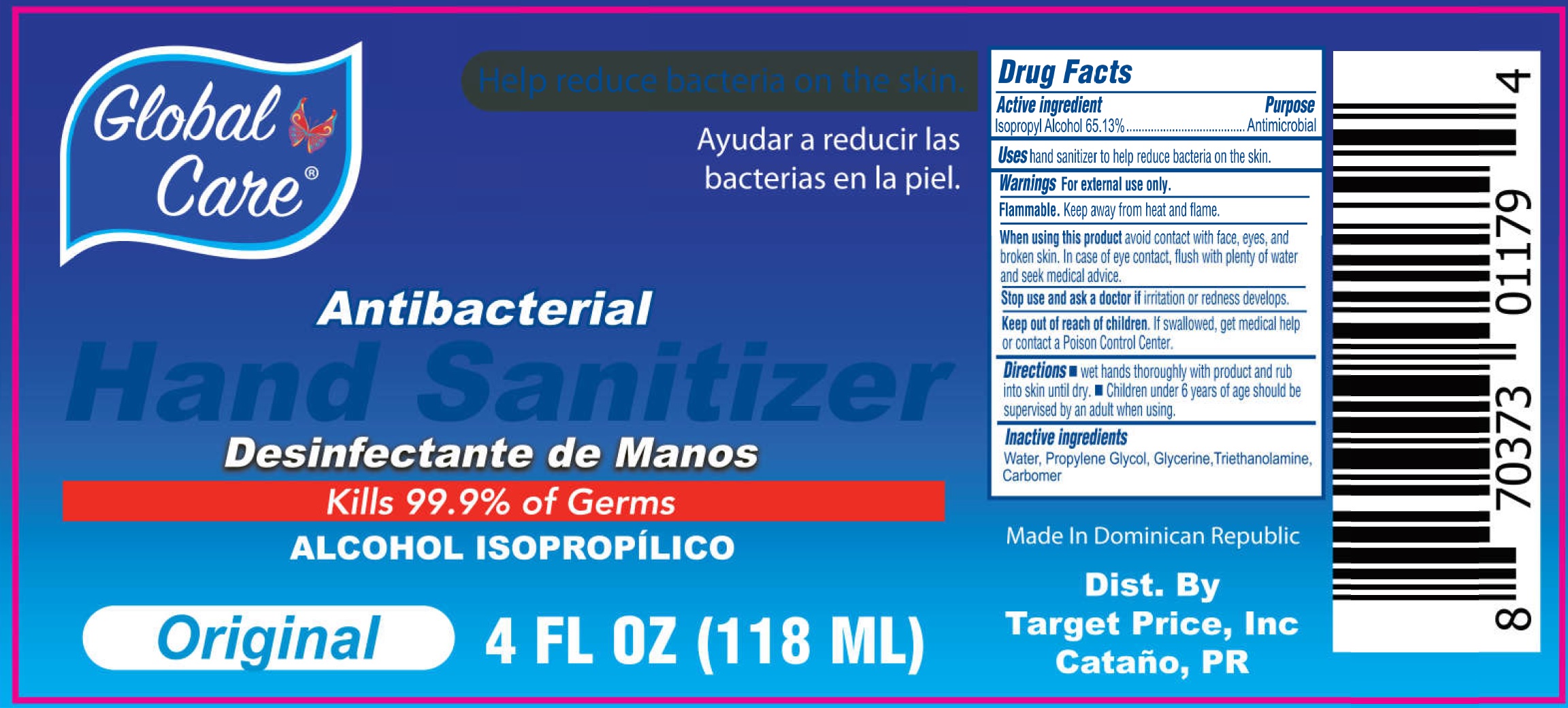
Bottle2 (Bottle2)

Bottle2 (Bottle2)
Active ingredient Isopropyl Alcohol 65.13% is an antimicrobial agent used in hand sanitizer to help reduce bacteria on the skin. This product is a hand disinfectant designed for external use only. It is highly flammable and must be kept away from heat and flames. Avoid contact with eyes, face, and broken skin. In case of eye contact, flush with water and seek medical advice. Antibacterial Tytilos helps to kill 99.9% of germs. Children under 6 years of age should be supervised by an adult when using. The product contains water, propylene glycol, glycerine, triethanolamine, and carbomer. The product is manufactured in the Dominican Republic and distributed by Target Price, Inc.*

* These product label images have been analyzed using experimental machine learning. Please verify findings with the primary label text.