Dutasteride Capsule, Liquid Filled
Product Images NDC 72162-1296

View Photos of Packaging, Regulatory Labels, and Product Appearance

Product Visual Gallery

This gallery contains 11 technical images submitted to the FDA as part of the official labeling for Dutasteride (NDC 72162-1296). Unlike standard consumer photos, these assets often include clinical data figures, molecular chemical structures, and official manufacturer packaging layouts.

As provided by Bryant Ranch Prepack, these visuals offer a comprehensive scientific overview of the product's physical and chemical identity, aiding pharmacists and researchers in product verification and study.

FDA Label Image

Fig 1 (Fig1)

Fig 1 (Fig1)
Figure 1 shows the change from baseline in the AUA-ST score in a pooled analysis of randomized, double-blind, placebo-controlled trials. The graph displays the average change in AUASI over time, ranging from 0 to 35. The x-axis represents the months of treatment, while the y-axis represents the change in score. The graph includes data for both the placebo group (n=212) and the dutasteride group (n=212).*
FDA Label Image

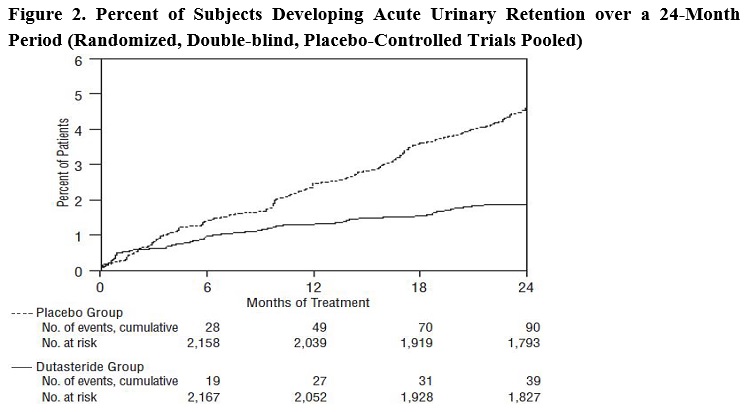
Fig 2 (Fig2)

Fig 2 (Fig2)
Figure 2 shows the percentage of subjects developing acute urinary retention over a 24-month period in randomized, double-blind, placebo-controlled trials. The graph displays the percent of patients affected over time, with the x-axis representing the months of treatment and the y-axis representing the percentage of patients affected. The placebo group and the dutasteride group are compared in terms of the number of events and the number of patients at risk at each time point.*
FDA Label Image

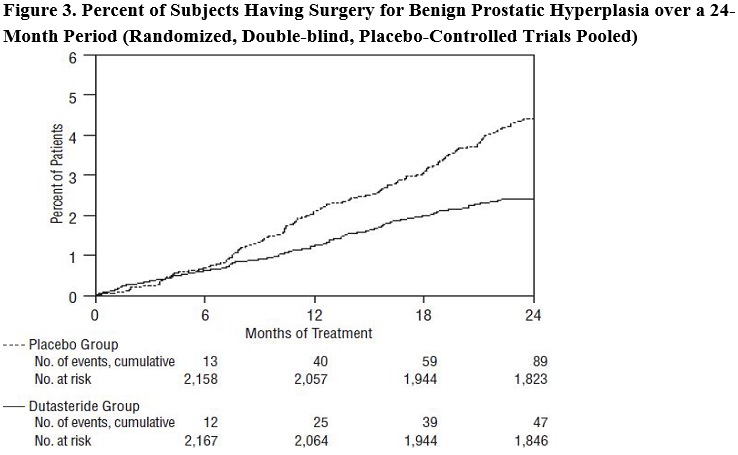
Fig 3 (Fig3)

Fig 3 (Fig3)
Figure 3 shows the percentage of subjects who underwent surgery for Benign Prostatic Hyperplasia (BPH) over a 24-month period. The data is from randomized, double-blind, placebo-controlled trials combined. The graph displays the months of treatment on the x-axis (6, 12, 18, and 24 months) and the y-axis represents the percent of subjects having surgery. The placebo group had 13 events at 6 months, 40 events at 12 months, 59 events at 18 months, and 89 events at 24 months. In comparison, the Dutasteride group had 12 events at 6 months, 2 events at 12 months, 29 events at 18 months, and 47 events at 24 months. The number of subjects at risk at each time point is also provided for both groups.*
FDA Label Image

Fig 4 (Fig4)

Fig 4 (Fig4)
Figure 4 shows the percent change in prostate volume from baseline in randomized, double-blind, placebo-controlled trials. The graph displays the months of treatment on the x-axis and the percent change in prostate volume on the y-axis. The data includes placebo groups (labeled as "Phcebo") and groups treated with Dutasteride (labeled as "Dutasteride"). The number of participants in each group is also provided.*
FDA Label Image

Fig 5 (Fig5)

FDA Label Image

Fig 6 (Fig6)

FDA Label Image

Fig 7 (Fig7)

FDA Label Image

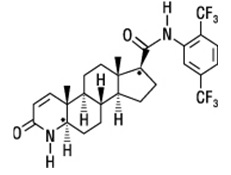
Structure (Structure)

FDA Label Image

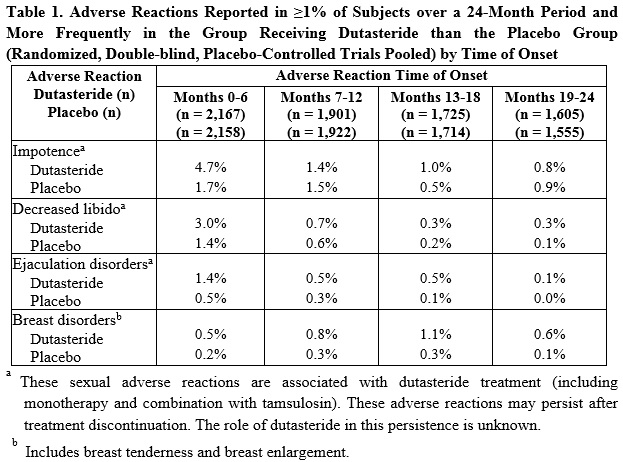
Tab 1 (Tab1)

Tab 1 (Tab1)
This text provides a table showing the adverse reactions reported in a study evaluating the use of Dutasteride compared to a placebo group over a 24-month period. The table includes the time of onset for these adverse reactions, which include impotence, decreased libido, ejaculation disorders, and breast disorders. It also mentions that the sexual adverse reactions associated with dutasteride treatment may persist after treatment discontinuation, and the role of dutasteride in this persistence is unknown.*
FDA Label Image

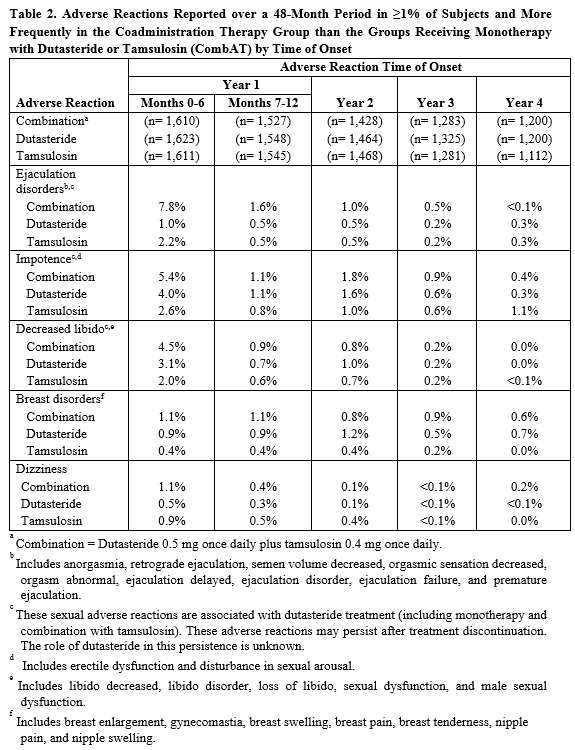
Tab 2 (Tab2)

Tab 2 (Tab2)
Table 2 shows the adverse reactions reported in a 43-month period in subjects receiving a combination therapy of dutasteride and tamsulosin compared to those receiving monotherapy with either dutasteride or tamsulosin. The adverse reactions are categorized based on the time of onset, such as the first year, months 6-12, year 2, year 3, and beyond. The table includes the percentage of subjects experiencing each adverse reaction for each time period. The adverse reactions include ejaculation disorders, impotence, decreased libido, breast disorders, and dizziness. The combination therapy group shows different percentages for these adverse reactions compared to the monotherapy groups. It is noted that some sexual adverse reactions may persist even after treatment discontinuation, and the role of dutasteride in this persistence is unknown.*
FDA Label Image

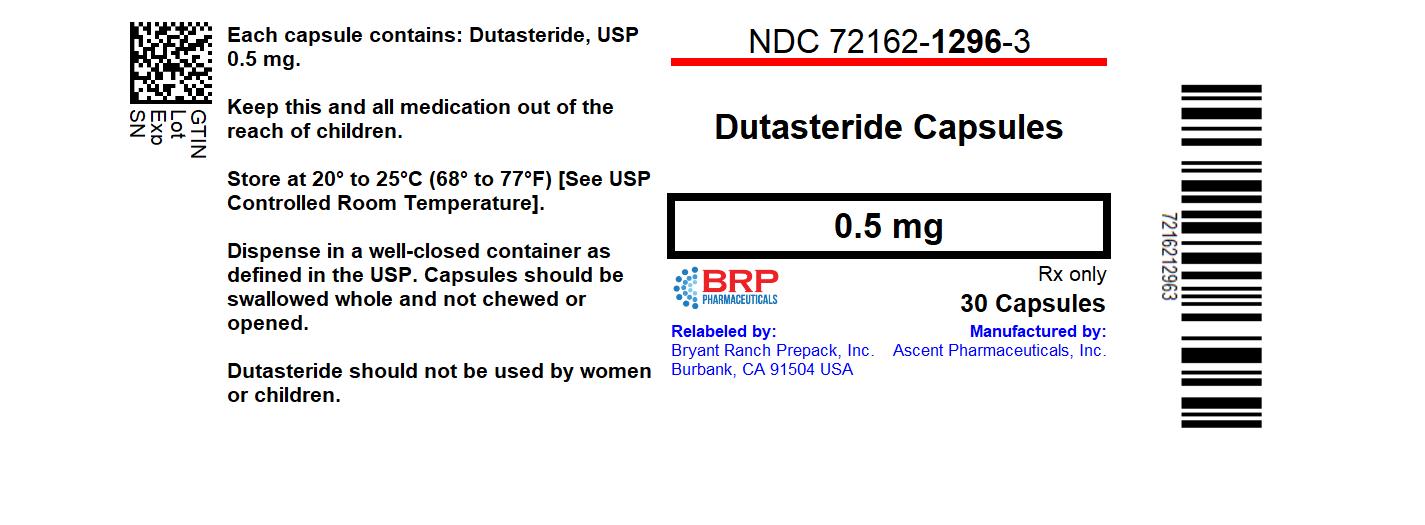
Label (Lbl721621296)

* These product label images have been analyzed using experimental machine learning. Please verify findings with the primary label text.