Pregabalin Capsule
Product Images NDC 72162-1548

View Photos of Packaging, Regulatory Labels, and Product Appearance

Product Visual Gallery

This gallery contains 14 technical images submitted to the FDA as part of the official labeling for Pregabalin (NDC 72162-1548). Unlike standard consumer photos, these assets often include clinical data figures, molecular chemical structures, and official manufacturer packaging layouts.

As provided by Bryant Ranch Prepack, these visuals offer a comprehensive scientific overview of the product's physical and chemical identity, aiding pharmacists and researchers in product verification and study.

FDA Label Image

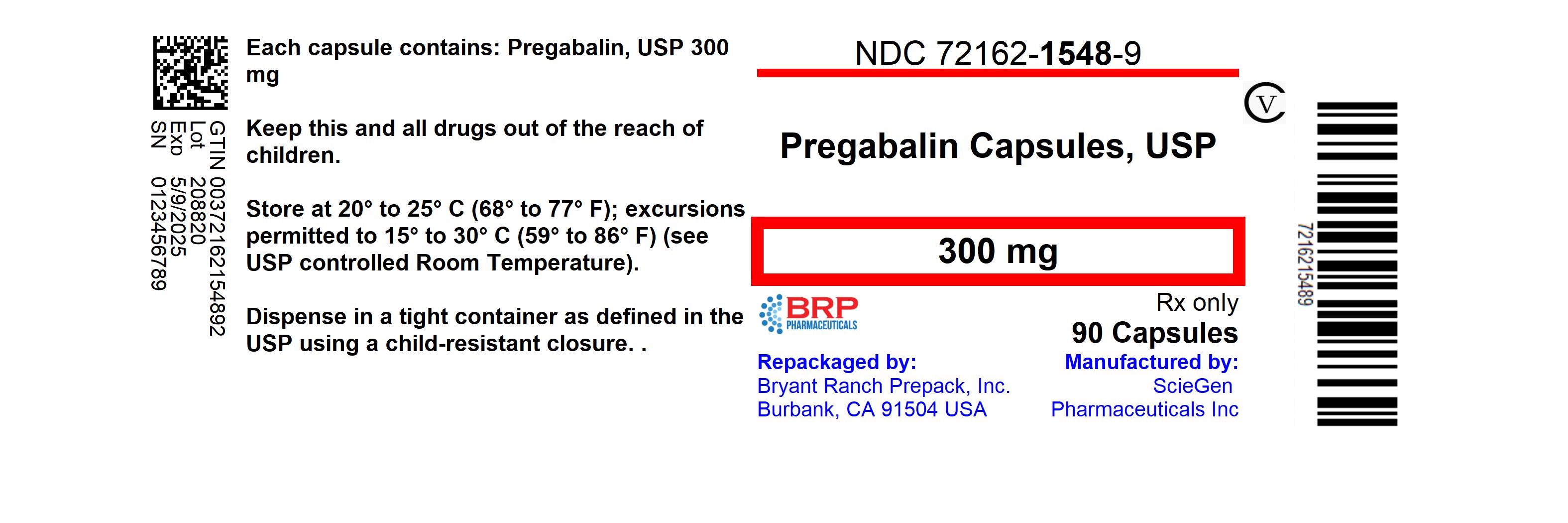
Label (Lbl721621548)
FDA Label Image

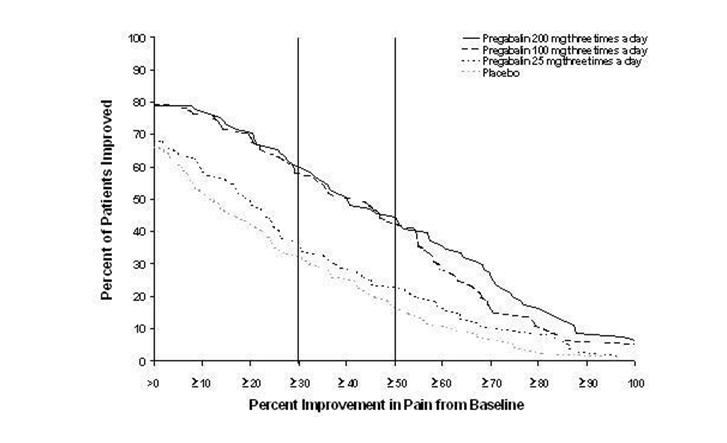
Figure 1 (Pregabalin Fig01)

FDA Label Image

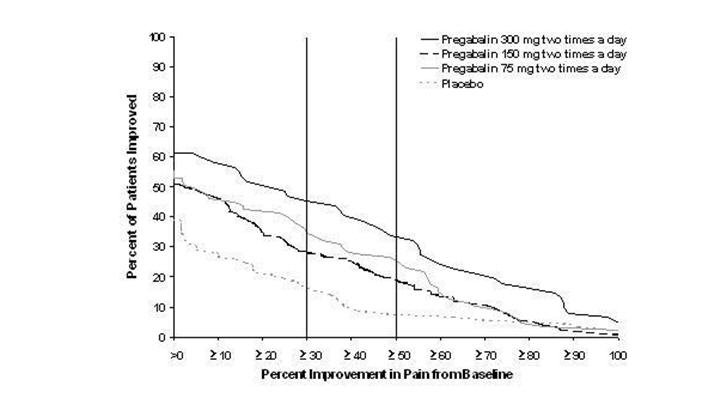
Figure 2 (Pregabalin Fig02)

Figure 2 (Pregabalin Fig02)
The text is a table showing the percentage improvement in pain from baseline for patients who were given Pregabalin 160 mg for three days. The table also shows some numerical values but without clear context or explanation making it hard to understand.*
FDA Label Image

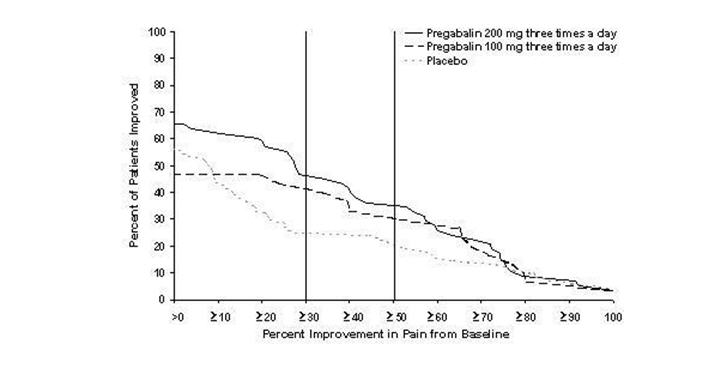
Figure 3 (Pregabalin Fig03)

FDA Label Image

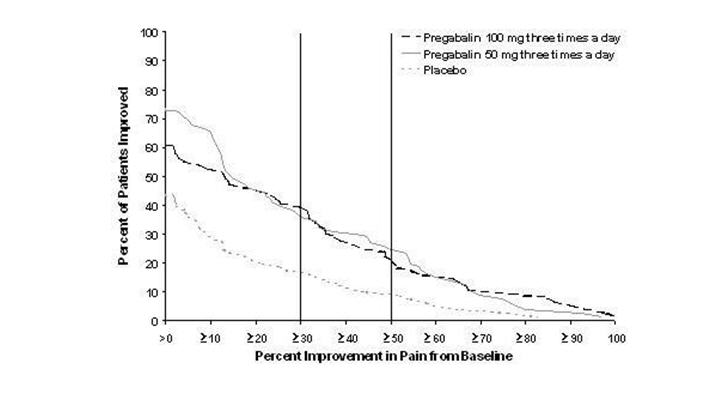
Figure 4 (Pregabalin Fig04)

FDA Label Image

Figure 5 (Pregabalin Fig05)

Figure 5 (Pregabalin Fig05)
This is a clinical trial report for three different groups of patients receiving different doses of medication for pain management: Fregabalin 100mg three times a day, Pregabalin 80mg three times a day, and a placebo group. The table shows the percentage of patients who reported improvement in their pain levels, which ranges from 38% to 88%. The last row shows the percentage of improvement in pain from the baseline, however, the quality is too low to accurately interpret the numbers.*
FDA Label Image

Figure 6 (Pregabalin Fig06)

Figure 6 (Pregabalin Fig06)
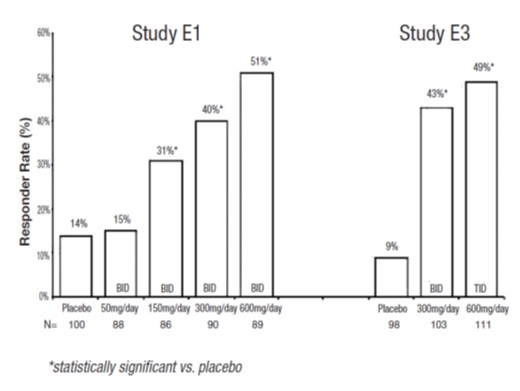
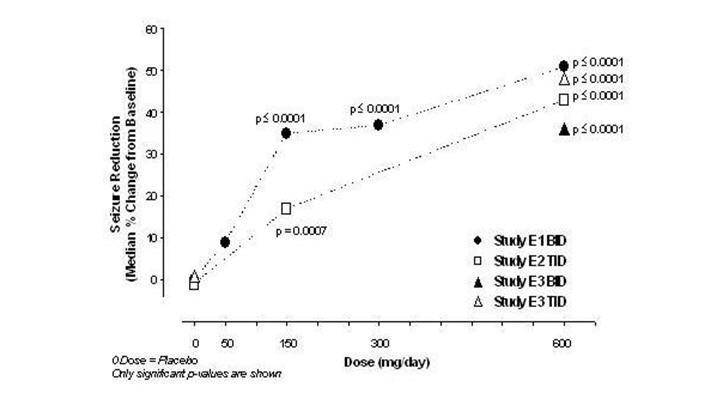
This is a study or clinical trial with different arms, labeled E1, E2, E3, and S5, which involved the administration of different doses of an unknown drug, with the addition of a placebo group. The doses evaluated were 50mg/day, 150mg/day, 300mg/day, and 600mg/day. The results showed that at least one of the doses was statistically significant compared to the placebo group. No further details about the study or drug are available.*
FDA Label Image

Figure 7 (Pregabalin Fig07)

FDA Label Image

Figure 9 (Pregabalin Fig08)

Figure 9 (Pregabalin Fig08)
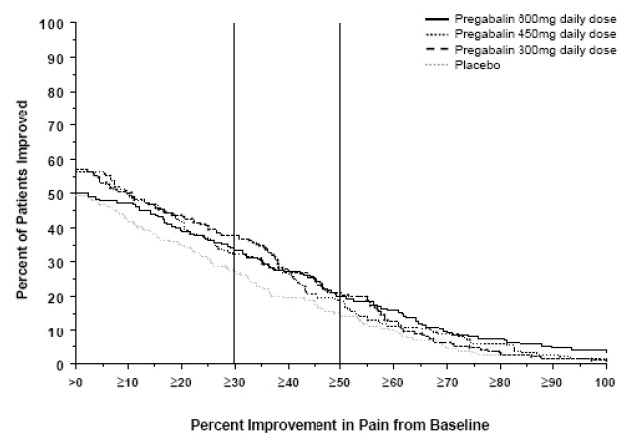
The text provides a chart representing the percentage of patients who improved with Pregabalin doses of 300mg and 450mg compared to a placebo, for the improvement in pain from baseline. Therefore, it does not allow for a useful description and its value is mostly visual.*
FDA Label Image

Figure 10 (Pregabalin Fig09)

Figure 10 (Pregabalin Fig09)
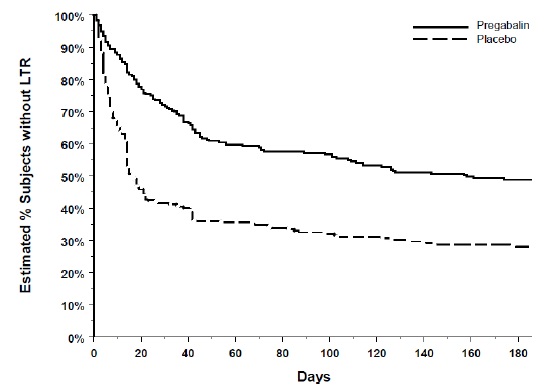
This is a table showing the estimated percentage of subjects without LTR (likely to respond) in clinical trials for Progabain and Placebo over a period of 120-180 days. It appears that Progabain has a higher estimated percentage of subjects likely to respond compared to Placebo.*
FDA Label Image

Figure 11 (Pregabalin Fig10)

FDA Label Image

Figure 12 (Pregabalin Fig11)

Figure 12 (Pregabalin Fig11)
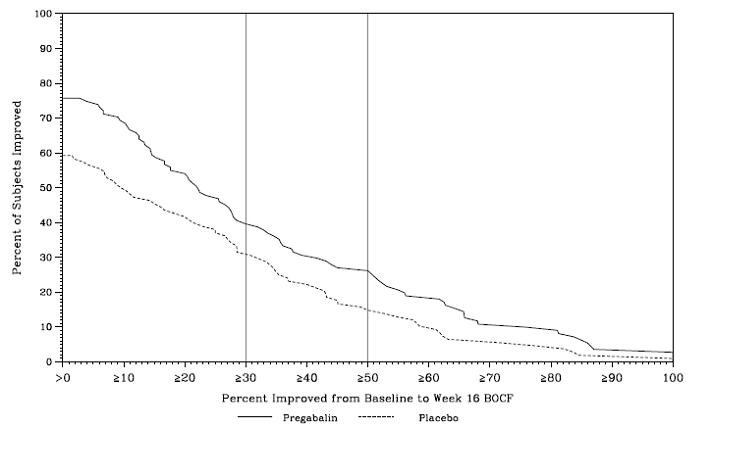
The text is a graph showing the "Percent Improved from Baseline to Week 16" for two groups: one taking pregabalin and the other taking a placebo. The vertical axis represents the percent of subjects improved ranging from 0 to 100. The horizontal axis shows values from 200 to 280. There are numbers listed horizontally in between these two values ranging from 210 to 270.*
FDA Label Image

Cockcroft And Gault Equation (Pregabalin Formula)

Cockcroft And Gault Equation (Pregabalin Formula)
This is a formula used for calculating creatinine clearance (CLcr) in patients to evaluate kidney function. It involves multiplying the difference between 140 and the patient's age in years by their weight in kilograms. This product is then multiplied by 0.85 if the patient is female. The final step is to multiply the result by the patient's serum creatinine level in milligrams per deciliter (mg/dL).*
FDA Label Image

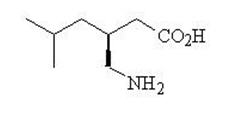
Chemical Structure (Pregabalin Str)

* These product label images have been analyzed using experimental machine learning. Please verify findings with the primary label text.