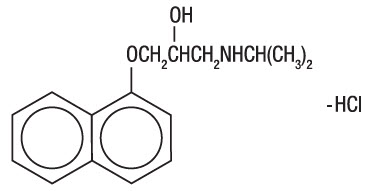
Propranolol is a nonselective, beta-adrenergic receptor-blocking agent possessing no other autonomic nervous system activity. It specifically competes with beta-adrenergic receptor-stimulating agents for available receptor sites. When access to beta-receptor sites is blocked by propranolol, the chronotropic, inotropic, and vasodilator responses to beta-adrenergic stimulation are decreased proportionately. At dosages greater than required for beta blockade, propranolol also exerts a quinidine-like or anesthetic-like membrane action, which affects the cardiac action potential. The significance of the membrane action in the treatment of arrhythmias is uncertain.
Propranolol Hydrochloride Extended-Release Capsules, USP, should not be considered a simple mg-for-mg substitute for conventional propranolol and the blood levels achieved do not match (are lower than) those of two to four times daily dosing with the same dose (see DOSAGE AND ADMINISTRATION). When changing to Propranolol Hydrochloride Extended-Release Capsules, USP, from conventional propranolol, a possible need for retitration upwards should be considered, especially to maintain effectiveness at the end of the dosing interval. In most clinical settings, however, such as hypertension or angina where there is little correlation between plasma levels and clinical effect, Propranolol Hydrochloride Extended-Release Capsules, USP, have been therapeutically equivalent to the same mg dose of conventional propranolol as assessed by 24-hour effects on blood pressure and on 24-hour exercise responses of heart rate, systolic pressure, and rate pressure product.
Propranolol should be used with caution in patients with impaired hepatic or renal function. Propranolol Hydrochloride Extended-Release Capsules, USP, are not indicated for the treatment of hypertensive emergencies.
Beta-adrenergic receptor blockade can cause reduction of intraocular pressure. Patients should be told that Propranolol Hydrochloride Extended-Release Capsules, USP, may interfere with the glaucoma screening test. Withdrawal may lead to a return of increased intraocular pressure.
While taking beta-blockers, patients with a history of severe anaphylactic reaction to a variety of allergens may be more reactive to repeated challenge, either accidental, diagnostic, or therapeutic. Such patients may be unresponsive to the usual doses of epinephrine used to treat allergic reaction.
If ingestion is or may have been recent, evacuate gastric contents, taking care to prevent pulmonary aspiration.
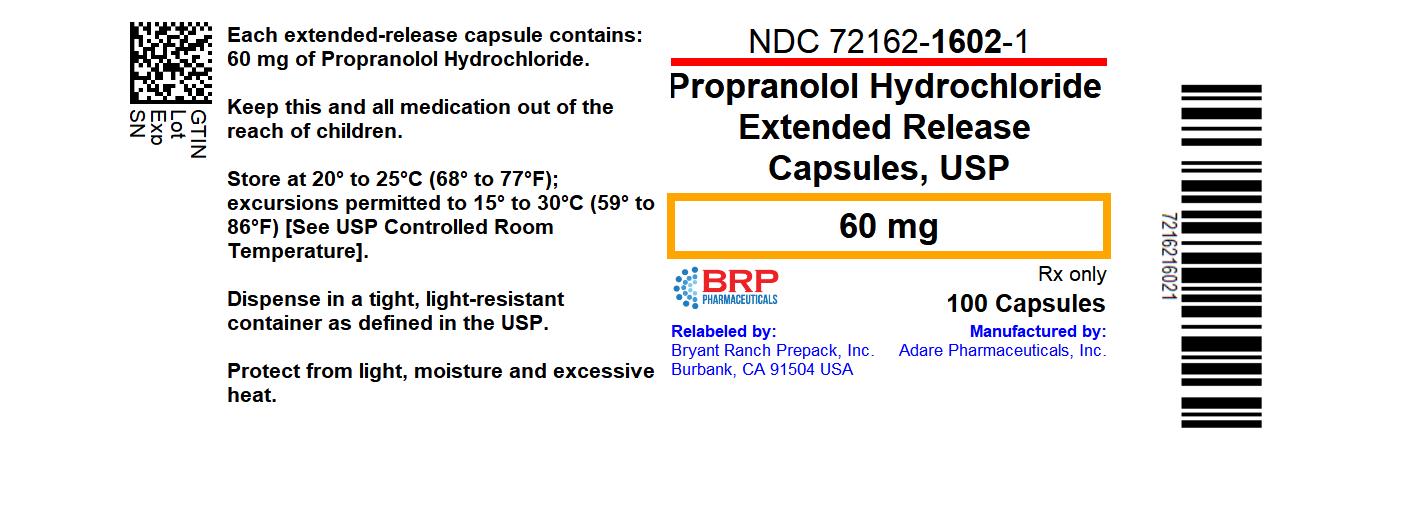
Propranolol Hydrochloride Extended-Release Capsules, USP, provide propranolol hydrochloride in a sustained-release capsule for administration once daily. If patients are switched from propranolol hydrochloride tablets to Propranolol Hydrochloride Extended-Release Capsules, USP, care should be taken to assure that the desired therapeutic effect is maintained. Propranolol Hydrochloride Extended-Release Capsules, USP, should not be considered a simple mg-for-mg substitute for propranolol hydrochloride tablets. Propranolol Hydrochloride Extended-Release Capsules, USP, have different kinetics and produces lower blood levels. Retitration may be necessary, especially to maintain effectiveness at the end of the 24-hour dosing interval.