Dextroamphetamine Sulfate Tablet
FDA Label NDC 72162-2349

66 label sections · Submitted to the FDA by Bryant Ranch Prepack · Indications, Dosage, Usage, and Precautions

Structured Product Label

The following Structured Product Label (SPL) was submitted to the FDA by Bryant Ranch Prepack for the product Dextroamphetamine Sulfate (NDC 72162-2349). This document serves as the official prescribing information, containing essential scientific data and clinical materials required for healthcare providers and patients.

This specific version of the label includes detailed information regarding warning: abuse, misuse, and addiction, description, inactive ingredients, clinical pharmacology, pharmacokinetics, indications and usage, contraindications, abuse, misuse, and addiction, and other regulatory disclosures. Use the navigation below to review specific sections of the FDA submission.

Label Section Quick Index

Warning: Abuse, Misuse, And Addiction

Dextroamphetamine sulfate has a high potential for abuse and misuse, which can lead to the development of a substance use disorder, including addiction. Misuse and abuse of CNS stimulants, including dextroamphetamine sulfate, can result in overdose and death (see OVERDOSAGE), and this risk is increased with higher doses or unapproved methods of administration, such as snorting or injection.

Before prescribing dextroamphetamine sulfate, assess each patient's risk for abuse, misuse, and addiction. Educate patients and their families about these risks, proper storage of the drug, and proper disposal of any unused drug. Throughout dextroamphetamine sulfate treatment, reassess each patient's risk of abuse, misuse, and addiction and frequently monitor for signs and symptoms of abuse, misuse, and addiction (see WARNINGSand DRUG ABUSE and DEPENDENCE).

Description

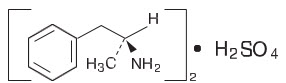
Dextroamphetamine sulfate, USP is the dextro isomer of the compound d,l-amphetamine sulfate, a sympathomimetic amine of the amphetamine group. Chemically, dextroamphetamine is d-alpha-methylphenethylamine, and is present in all forms of dextroamphetamine sulfate, USP as the neutral sulfate. The structural formula is as follows: 

Chemical Structure (Dextroamphetamine 01)

Chemical Structure (Dextroamphetamine 01)

(C 9H 13N) 2∙H 2SO 4M.W.368.49

Inactive Ingredients

Each tablet, for oral administration, contains dextroamphetamine sulfate, USP in either 5 mg, 10 mg, 15 mg, 20 mg or 30 mg. Each tablet also contains the following inactive ingredients: colloidal silicon dioxide, crospovidone, microcrystalline cellulose and stearic acid.

The 5 mg tablets also contain D&C Red #27 and FD&C Yellow #6. The 10 mg tablets also contain FD&C Red #40, FD&C Yellow #6 and FD&C Blue #2. The 15 mg tablets also contain FD&C Blue #1, FD&C Blue #2, and FD&C Red #40. The 20 mg tablets also contain FD&C Blue #1 and D&C Red #27. The 30 mg tablets also contain D&C Yellow #10.

Clinical Pharmacology

Amphetamines are non-catecholamine, sympathomimetic amines with CNS stimulant activity. Peripheral actions include elevations of systolic and diastolic blood pressures and weak bronchodilator and respiratory stimulant action.

There is neither specific evidence which clearly establishes the mechanism whereby amphetamines produce mental and behavioral effects in children, nor conclusive evidence regarding how these effects relate to the condition of the central nervous system.

Pharmacokinetics

The pharmacokinetics of the tablet and sustained-release capsule were compared in 12 healthy subjects. The extent of bioavailability of the sustained-release capsule was similar compared to the immediate-release tablet. Following administration of three 5 mg tablets, average maximal dextroamphetamine plasma concentrations (C max) of 36.6 ng/mL were achieved at approximately 3 hours. Following administration of one 15 mg sustained-release capsule, maximal dextroamphetamine plasma concentrations were obtained approximately 8 hours after dosing. The average C maxwas 23.5 ng/mL. The average plasma T½ was similar for both the tablet and sustained-release capsule and was approximately 12 hours.

In 12 healthy subjects, the rate and extent of dextroamphetamine absorption were similar following administration of the sustained-release capsule formulation in the fed (58 to 75 gm fat) and fasted state.

Indications And Usage

Dextroamphetamine sulfate tablets, USP are indicated for:

  • Narcolepsy.
  • Attention Deficit Disorder with Hyperactivity:As an integral part of a total treatment program which typically includes other remedial measures (psychological, educational, social) for a stabilizing effect in pediatric patients (ages 3 to 16 years) with a behavioral syndrome characterized by the following group of developmentally inappropriate symptoms: moderate to severe distractibility, short attention span, hyperactivity, emotional lability, and impulsivity. The diagnosis of this syndrome should not be made with finality when these symptoms are only of comparatively recent origin. Nonlocalizing (soft) neurological signs, learning disability, and abnormal EEG may or may not be present, and a diagnosis of central nervous system dysfunction may or may not be warranted.

Contraindications

Known hypersensitivity to amphetamine products.

During or within 14 days following the administration of monoamine oxidase inhibitors (hypertensive crises may result).

Abuse, Misuse, And Addiction

Dextroamphetamine sulfate has a high potential for abuse and misuse. The use of dextroamphetamine sulfate exposes individuals to the risks of abuse and misuse, which can lead to the development of a substance use disorder, including addiction. Amphetamine sulfate can be diverted for non-medical use into illicit channels or distribution (see DRUG ABUSE and DEPENDENCE). Misuse and abuse of CNS stimulants, including dextroamphetamine sulfate, can result in overdose and death (see OVERDOSAGE), and this risk is increased with higher doses or unapproved methods of administration, such as snorting or injection.

Before prescribing dextroamphetamine sulfate, assess each patient's risk for abuse, misuse, and addiction. Educate patients and their families about these risks and proper disposal of any unused drug. Advise patients to store amphetamine sulfate in a safe place, preferably locked, and instruct patients to not give dextroamphetamine sulfate to anyone else. Throughout dextroamphetamine sulfate treatment, reassess each patient's risk of abuse, misuse, and addiction and frequently monitor for signs and symptoms of abuse, misuse, and addiction.

Educate patients and their families about the risks of abuse, misuse, and addiction of dextroamphetamine sulfate, which can lead to overdose and death, and proper disposal of any unused drug (see WARNINGS, DRUG ABUSE AND DEPENDENCE, and OVERDOSAGE). Advise patients to store dextroamphetamine sulfate in a safe place, preferably locked, and instruct patients to not give dextroamphetamine sulfate to anyone else.

Risks To Patients With Serious Cardiac Disease

Sudden death has been reported in patients with structural cardiac abnormalities or other serious cardiac disease who are treated with CNS stimulants at the recommended ADHD dosages.

Avoid dextroamphetamine sulfate use in patients with known structural cardiac abnormalities, cardiomyopathy, serious cardiac arrhythmia, coronary artery disease, or other serious cardiac disease.

Advise patients that there are potential risks to patients with serious cardiac disease, including sudden death, with dextroamphetamine sulfate use. Instruct patients to contact a healthcare provider immediately if they develop symptoms such as exertional chest pain, unexplained syncope, or other symptoms suggestive of cardiac disease (see WARNINGS).

Increased Blood Pressure And Heart Rate

CNS stimulants cause an increase in blood pressure (mean increase about 2 to 4 mm Hg) and heart rate (mean increase about 3 to 6 bpm). Monitor all patients for potential tachycardia and hypertension.

Advise patients that dextroamphetamine sulfate can elevate blood pressure and heart rate (see WARNINGS).

Motor And Verbal Tics, And Worsening Of Tourette's Syndrome

CNS stimulants, including dextroamphetamine sulfate, have been associated with the onset or exacerbation of motor and verbal tics. Worsening of Tourette's syndrome has also been reported. Assess the family history and clinically evaluate patients for tics or Tourette's syndrome before initiating dextroamphetamine sulfate. Regularly monitor patients for the emergence or worsening of tics or Tourette's syndrome with dextroamphetamine sulfate, and discontinue treatment if clinically appropriate.

Advise patients that motor and verbal tics and worsening of Tourette's Syndrome may occur during treatment with dextroamphetamine sulfate. Instruct the patients to notify their healthcare provider if emergence or worsening of tics or Tourette's syndrome occurs (see WARNINGS).

Amphetamines may impair the ability of the patient to engage in potentially hazardous activities such as operating machinery or vehicles; the patient should therefore be cautioned accordingly.

Information For Patients

Advise the patient to read the FDA-approved patient labeling (Medication Guide).

Drug/Laboratory Test Interactions

  • Amphetamines can cause a significant elevation in plasma corticosteroid levels. This increase is greatest in the evening.
  • Amphetamines may interfere with urinary steroid determinations.

Carcinogenesis/Mutagenesis

Mutagenicity studies and long-term studies in animals to determine the carcinogenic potential of dextroamphetamine sulfate have not been performed.

Nursing Mothers

Amphetamines are excreted in human milk. Mothers taking amphetamines should be advised to refrain from nursing.

Pediatric Use

Long-term effects of amphetamines in pediatric patients have not been well established.

Amphetamines are not recommended for use in pediatric patients under 3 years of age with Attention Deficit Disorder with Hyperactivity described under INDICATIONS AND USAGE.

Clinical experience suggests that in psychotic pediatric patients, administration of amphetamines may exacerbate symptoms of behavior disturbance and thought disorder.

Amphetamines have been reported to exacerbate motor and phonic tics and Tourette's syndrome. Therefore, clinical evaluation for tics and Tourette's syndrome in pediatric patients and their families should precede use of stimulant medications.

Data are inadequate to determine whether chronic administration of amphetamines may be associated with growth inhibition; therefore, growth should be monitored during treatment.

Drug treatment is not indicated in all cases of Attention Deficit Disorder with Hyperactivity and should be considered only in light of the complete history and evaluation of the pediatric patient. The decision to prescribe amphetamines should depend on the physician's assessment of the chronicity and severity of the pediatric patient's symptoms and their appropriateness for his/her age. Prescription should not depend solely on the presence of one or more of the behavioral characteristics.

When these symptoms are associated with acute stress reactions, treatment with amphetamines is usually not indicated.

Cardiovascular

Palpitations, tachycardia, elevation of blood pressure. There have been isolated reports of cardiomyopathy associated with chronic amphetamine use.

Central Nervous System

Psychotic episodes at recommended doses (rare), overstimulation, restlessness, dizziness, insomnia, euphoria, dyskinesia, dysphoria, tremor, headache, exacerbation of motor and verbal tics and Tourette's syndrome.

Gastrointestinal

Dryness of the mouth, unpleasant taste, diarrhea, constipation, intestinal ischemia, and other gastrointestinal disturbances. Anorexia and weight loss may occur as undesirable effects.

Allergic

Urticaria.

Endocrine

Impotence, changes in libido, frequent or prolonged erections.

Musculoskeletal

Rhabdomyolysis.

Drug Abuse And Dependence

Dextroamphetamine sulfate tablets are a Schedule II controlled substance.

Abuse

Dextroamphetamine sulfate has a high potential for abuse and misuse which can lead to the development of a substance use disorder, including addiction (see WARNINGS). Dextroamphetamine sulfate can be diverted for non-medical use into illicit channels or distribution.

Abuse is the intentional non-therapeutic use of a drug, even once, to achieve a desired psychological or physiological effect. Misuse is the intentional use, for therapeutic purposes, of a drug by an individual in a way other than prescribed by a health care provider or for whom it was not prescribed. Drug addiction is a cluster of behavioral, cognitive, and physiological phenomena that may include a strong desire to take the drug, difficulties in controlling drug use (e.g., continuing drug use despite harmful consequences, giving a higher priority to drug use than other activities and obligations), and possible tolerance or physical dependence.

Misuse and abuse of amphetamines may cause increased heart rate, respiratory rate, or blood pressure; sweating; dilated pupils; hyperactivity; restlessness; insomnia; decreased appetite; loss of coordination; tremors; flushed skin; vomiting; and/or abdominal pain. Anxiety, psychosis, hostility, aggression, and suicidal or homicidal ideation have also been observed with CNS stimulants abuse and/or misuse. Misuse and abuse of CNS stimulants, including dextroamphetamine sulfate, can result in overdose and death (see OVERDOSAGE), and this risk is increased with higher doses or unapproved methods of administration, such as snorting or injection.

Dosage And Administration

Amphetamines should be administered at the lowest effective dosage and dosage should be individually adjusted. Late evening doses should be avoided because of the resulting insomnia.

Narcolepsy

Usual dose is 5 to 60 mg per day in divided doses, depending on the individual patient response.

Narcolepsy seldom occurs in children under 12 years of age; however, when it does, dextroamphetamine sulfate may be used. The suggested initial dose for patients aged 6 to 12 is 5 mg daily; daily dose may be raised in increments of 5 mg at weekly intervals until optimal response is obtained. In patients 12 years of age and older, start with 10 mg daily; daily dosage may be raised in increments of 10 mg at weekly intervals until an optimal response is obtained. If bothersome adverse reactions appear (e.g., insomnia or anorexia), dosage should be reduced. Give first dose on awakening; additional doses (1 or 2) at intervals of 4 to 6 hours.

Attention Deficit Disorder With Hyperactivity

Not recommended for pediatric patients under 3 years of age.

In pediatric patients from 3 to 5 years of age,start with 2.5 mg daily; daily dosage may be raised in increments of 2.5 mg at weekly intervals until optimal response is obtained.

In pediatric patients 6 years of age and older,start with 5 mg once or twice daily; daily dosage may be raised in increments of 5 mg at weekly intervals until optimal response is obtained. Only in rare cases will it be necessary to exceed a total of 40 mg per day.

Give first dose on awakening; additional doses (1 or 2) at intervals of 4 to 6 hours.

Where possible, drug administration should be interrupted occasionally to determine if there is a recurrence of behavioral symptoms sufficient to require continued therapy.

Prior to treating patients with dextroamphetamine sulfate tablets assess:

  • for the presence of cardiac disease (i.e., perform a careful history, family history of sudden death or ventricular arrhythmia, and physical exam) (see WARNINGS).
  • the family history and clinically evaluate patients for motor or verbal tics or Tourette's syndrome (see WARNINGS).

How Supplied

Dextroamphetamine sulfate tablets, USP are supplied as follows:

5 mg - Pink, oval tablet, debossed "5" on one side and "MIA" score on the other side.

  • NDC 72162-2349-3: 30 Tablets in a BOTTLE
  • Store at 20° to 25°C (68° to 77°F); excursions permitted 15° to 30°C (59° to 86°F). [See USP Controlled Room Temperature]

    Dispense in a tight, light-resistant container as defined in the USP, with a child-resistant closure (as required).

    KEEP THIS AND ALL MEDICATIONS OUT OF THE REACH OF CHILDREN.

    Repackaged/Relabeled by:
    Bryant Ranch Prepack, Inc.
    Burbank, CA 91504

Other

DEA Order Form Required.

Pharmacist: Medication Guide to be dispensed to Patients.

Manufactured for:
Wilshire Pharmaceuticals, Inc.
Atlanta, GA 30328

DEX-PI-12  Rev. MAR2024

Package Label.Principal Display Panel

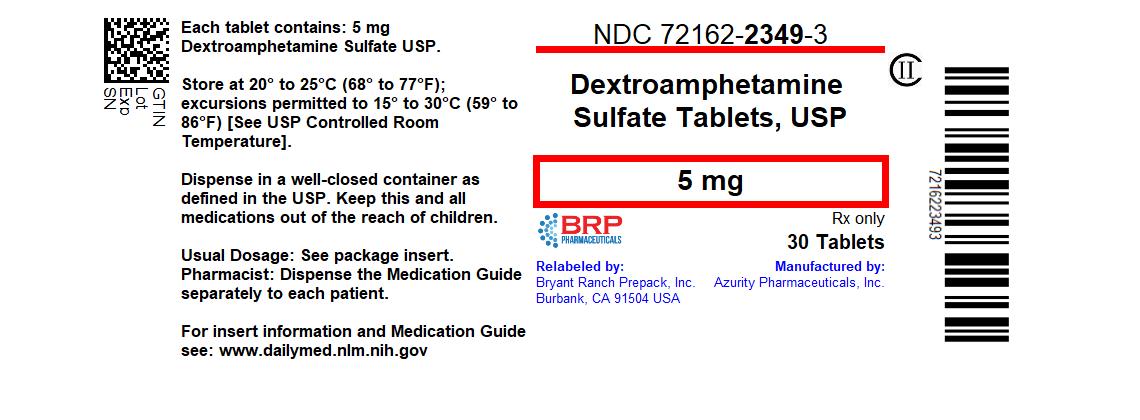
Dextroamphetamine Sulfate Tablets 5 mg (CII)

Label (Lbl721622349)

Label (Lbl721622349)

* Please review the disclaimer below.