Aripiprazole Tablet
Product Images NDC 72162-2369

View Photos of Packaging, Regulatory Labels, and Product Appearance

Product Visual Gallery

This gallery contains 11 technical images submitted to the FDA as part of the official labeling for Aripiprazole (NDC 72162-2369). Unlike standard consumer photos, these assets often include clinical data figures, molecular chemical structures, and official manufacturer packaging layouts.

As provided by Bryant Ranch Prepack, these visuals offer a comprehensive scientific overview of the product's physical and chemical identity, aiding pharmacists and researchers in product verification and study.

FDA Label Image

Aripiprazole-fig-16.jpg (Aripiprazole Fig 16)

Aripiprazole-fig-16.jpg (Aripiprazole Fig 16)
A Kaplan-Meier survival curve chart comparing the proportion of subjects with relapse over days from randomization between Aripiprazole and placebo groups. The x-axis shows days from randomization (0 to 182), and the y-axis shows the proportion with relapse (0.0 to 1.0). The chart includes numbers of subjects at risk at various time points for both groups.*
FDA Label Image

Aripiprazole-fig-17 (Aripiprazole Fig 17)

Aripiprazole-fig-17 (Aripiprazole Fig 17)
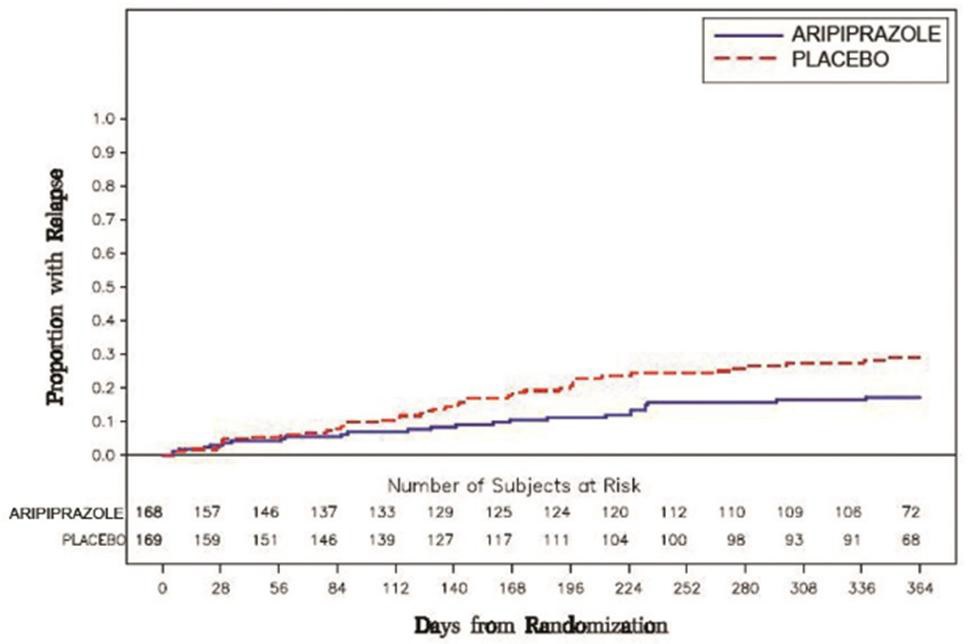
A line graph depicting the proportion of subjects experiencing relapse over 364 days from randomization, comparing Aripiprazole to placebo. The x-axis shows days from randomization, and the y-axis shows the proportion with relapse. The graph includes the number of subjects at risk over time for both Aripiprazole and placebo groups.*
FDA Label Image

Effects Of Other Drugs On Dehydro-aripiprazole (Aripiprazole Fig10)

Effects Of Other Drugs On Dehydro-aripiprazole (Aripiprazole Fig10)
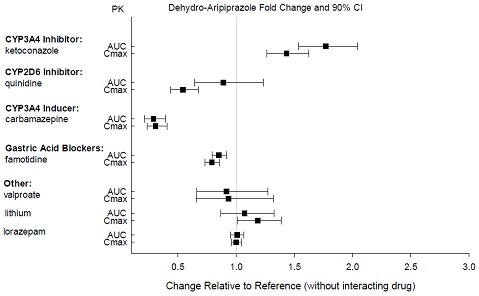
A pharmacokinetic chart depicting the fold change and 90% confidence interval in AUC and Cmax of dehydro-aripiprazole with various interacting drugs, including CYP3A4 inhibitors (ketoconazole), CYP2D6 inhibitors (quinidine), CYP3A4 inducers (carbamazepine), gastric acid blockers (famotidine), and others such as valproate, lithium, and lorazepam.*
FDA Label Image

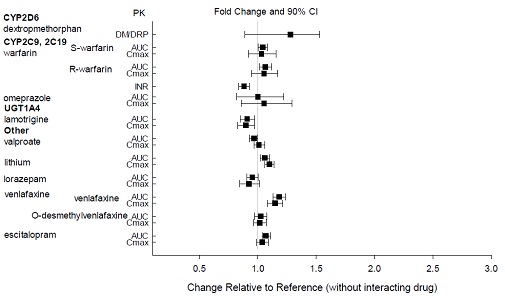
Effects Of Aripiprazole On Pharmacokinetics Of Other Drugs (Aripiprazole Fig11)

Effects Of Aripiprazole On Pharmacokinetics Of Other Drugs (Aripiprazole Fig11)
A chart depicting the fold change and 90% confidence interval in pharmacokinetic parameters (AUC and Cmax) and pharmacodynamic parameter (INR) for various drugs and enzymes relative to a reference without interacting drug. Drugs and enzymes listed include CYP2D6, CYP2C9/2C19, S-warfarin, R-warfarin, omeprazole, UGT1A4, lamotrigine, valproate, lithium, lorazepam, venlafaxine, O-desmethylvenlafaxine, and escitalopram.*
FDA Label Image

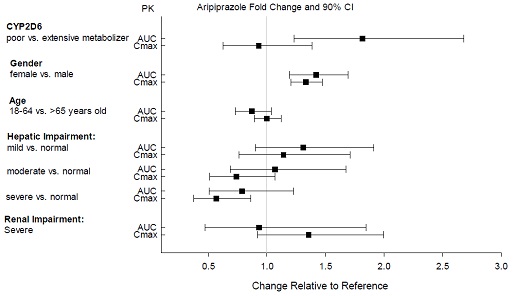
Effects Of Intrinsic Factors On Aripiprazole (Aripiprazole Fig12)

Effects Of Intrinsic Factors On Aripiprazole (Aripiprazole Fig12)
A pharmacokinetic chart showing aripiprazole fold change with 90% confidence intervals across different variables including CYP2D6 metabolizer status, gender, age groups, hepatic impairment levels, and severe renal impairment. The horizontal axis represents the change relative to reference for AUC and Cmax values.*
FDA Label Image

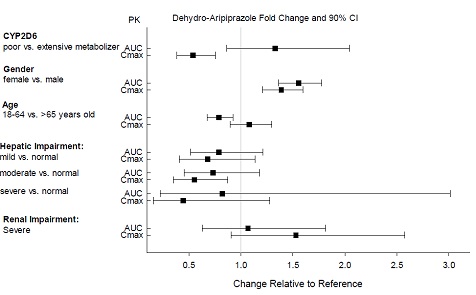
Effects Of Intrinsic Factors On Dehydro-aripiprazole (Aripiprazole Fig13)

Effects Of Intrinsic Factors On Dehydro-aripiprazole (Aripiprazole Fig13)
A forest plot titled 'Dehydro-Aripiprazole Fold Change and 90% CI' showing the effects of various factors on pharmacokinetic measures AUC and Cmax relative to reference values. Factors include CYP2D6 metabolizer status, gender, age, hepatic and renal impairment. The x-axis represents change relative to reference, ranging from 0.5 to 3.0.*
FDA Label Image

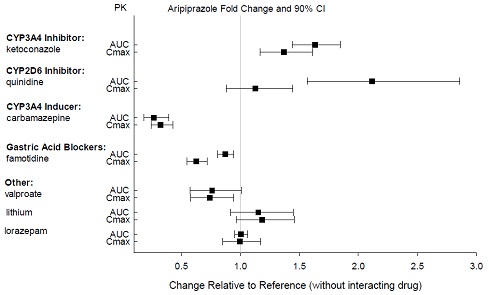
Effects Of Other Drugs On Aripiprazole (Aripiprazole Fig9)

Effects Of Other Drugs On Aripiprazole (Aripiprazole Fig9)
A pharmacokinetic chart titled 'Aripiprazole Fold Change and 90% CI' showing the effect of various inhibitors and other drugs on Aripiprazole's AUC and Cmax levels. The x-axis represents change relative to reference without interacting drug, ranging from 0.0 to 3.0. Drugs listed include CYP3A4 inhibitor (ketoconazole), CYP2D6 inhibitor (quinidine), CYP3A4 inducer (carbamazepine), gastric acid blockers (famotidine), and others (valproate, lithium, lorazepam). Data points with confidence intervals are plotted for each drug and pharmacokinetic parameter.*
FDA Label Image

Aripiprazole-fig-18 (Aripiprazole Fig 18)

Aripiprazole-fig-18 (Aripiprazole Fig 18)
A line graph depicting the least-squares mean change in YGTSS Total TIC Score from baseline over eight weeks of treatment. The graph includes three lines representing Aripiprazole low dose, Aripiprazole high dose, and placebo groups, showing decreasing scores over time with varying rates of change.*
FDA Label Image

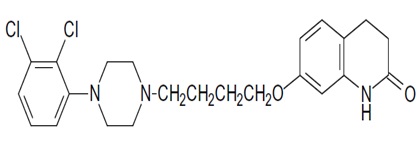
Aripiprazole Structure (Aripiprazole Fig8)

Aripiprazole Structure (Aripiprazole Fig8)
Chemical structure diagram of aripiprazole, showing its molecular framework with chlorine-substituted benzene, piperazine ring, and a quinolinone moiety, consistent with the active ingredient aripiprazole.*
FDA Label Image

Aripiprazole-graph (Aripiprazole Graph)

Aripiprazole-graph (Aripiprazole Graph)
A Kaplan-Meier survival curve chart showing the proportion of subjects with relapse over 182 days from randomization, comparing Aripiprazole and Placebo groups. The chart includes a legend, x-axis labeled as days from randomization, and a table beneath indicating the number of subjects at risk at various time points for both groups.*
FDA Label Image

Label (Lbl721622369)

Label (Lbl721622369)
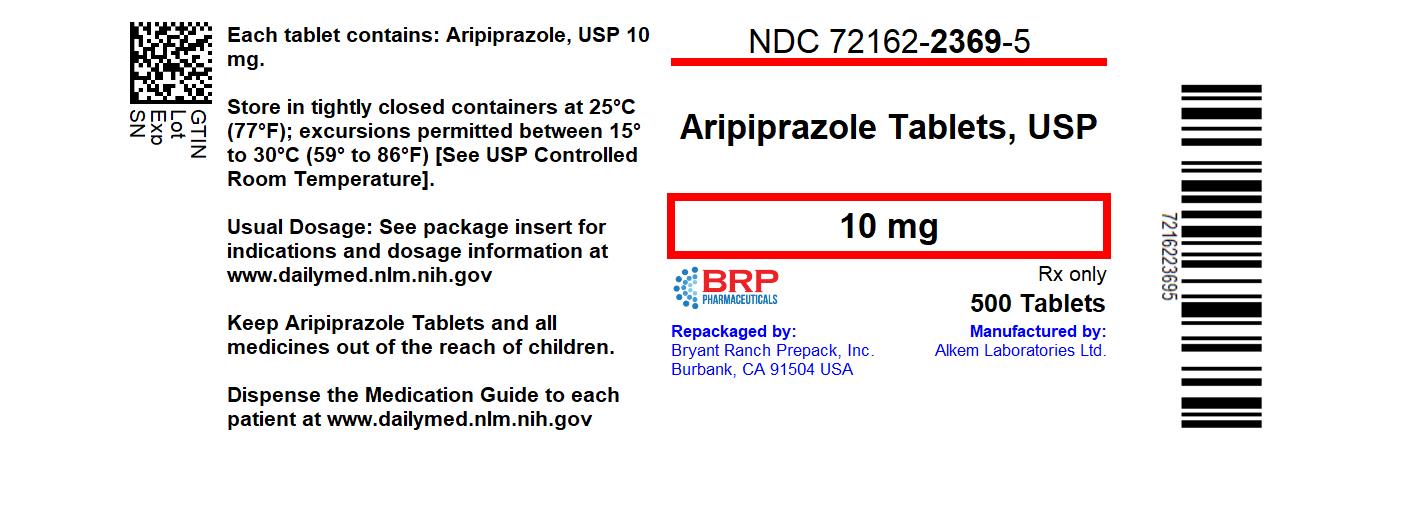
Aripiprazole Tablets, USP 10 mg oral tablet label showing NDC 72162-2369-5. The label indicates 500 tablets per container, repackaged by Bryant Ranch Prepack, Inc., Burbank, CA, and manufactured by Alkem Laboratories Ltd. Storage instructions and dosage website references appear on the label.*

* About these descriptions: Image descriptions on this page are generated by automated AI analysis of the product label images from the manufacturer's FDA label submission (SPL). They are provided for reference only and may contain errors or omissions. Always rely on the printed label itself and the official FDA labeling, and consult a pharmacist or healthcare professional with any questions about this product.