Levetiracetam Solution
Product Images NDC 72162-2639

View Photos of Packaging, Regulatory Labels, and Product Appearance

Product Visual Gallery

This gallery contains 8 technical images submitted to the FDA as part of the official labeling for Levetiracetam (NDC 72162-2639). Unlike standard consumer photos, these assets often include clinical data figures, molecular chemical structures, and official manufacturer packaging layouts.

As provided by Bryant Ranch Prepack, these visuals offer a comprehensive scientific overview of the product's physical and chemical identity, aiding pharmacists and researchers in product verification and study.

FDA Label Image

Label (Lbl721622639)
Label (Lbl721622639)
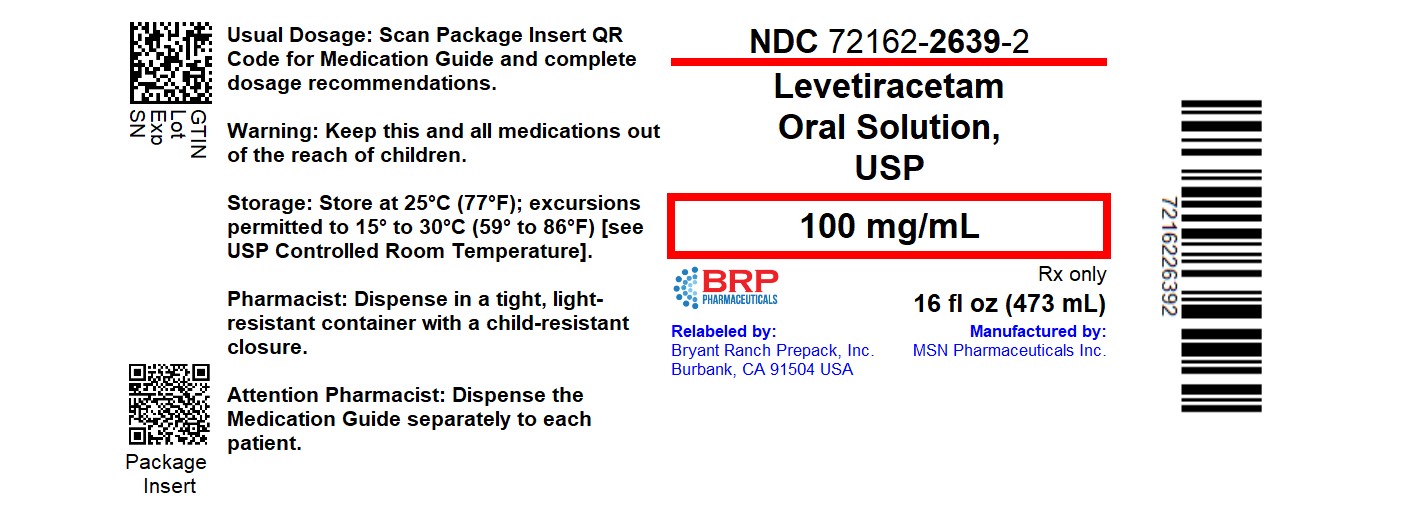
Levetiracetam Oral Solution USP 100 mg/mL label showing the NDC number 72162-2639-2. The label includes storage instructions to keep at controlled room temperature and warnings to keep medication out of reach of children. It lists Bryant Ranch Prepack as the relabeler and MSN Pharmaceuticals Inc. as the manufacturer. The package size is 16 fl oz (473 mL). Two QR codes are present for dosage information and package insert.*
FDA Label Image

Levetiracetam-figure-1 (Levetiracetam Figure 1)

Levetiracetam-figure-1 (Levetiracetam Figure 1)
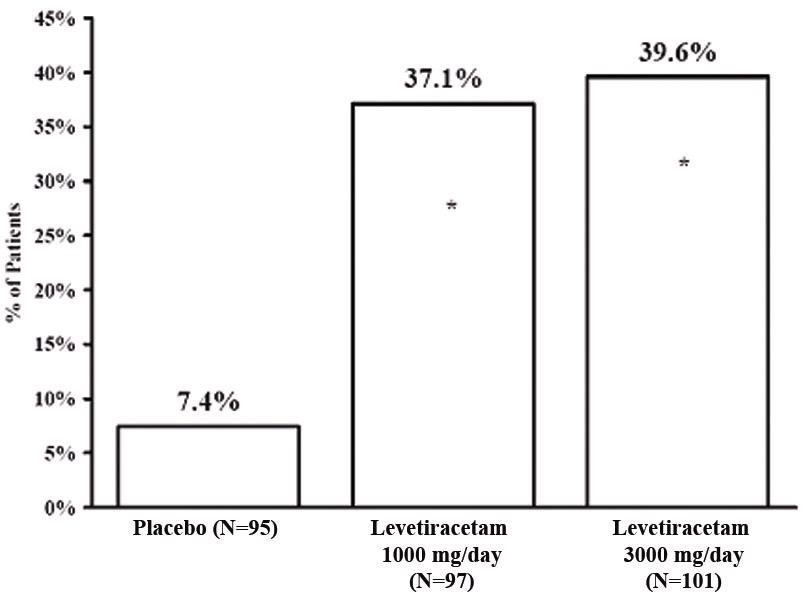
A bar chart depicting the percentage of patients across three groups: Placebo (N=95), Levetiracetam 1000 mg/day (N=97), and Levetiracetam 3000 mg/day (N=101). The y-axis shows the percent of patients, ranging from 0% to 45%. Percentages are 7.4% for Placebo, 37.1% for Levetiracetam 1000 mg/day, and 39.6% for Levetiracetam 3000 mg/day.*
FDA Label Image

Levetiracetam-figure-2 (Levetiracetam Figure 2)

Levetiracetam-figure-2 (Levetiracetam Figure 2)
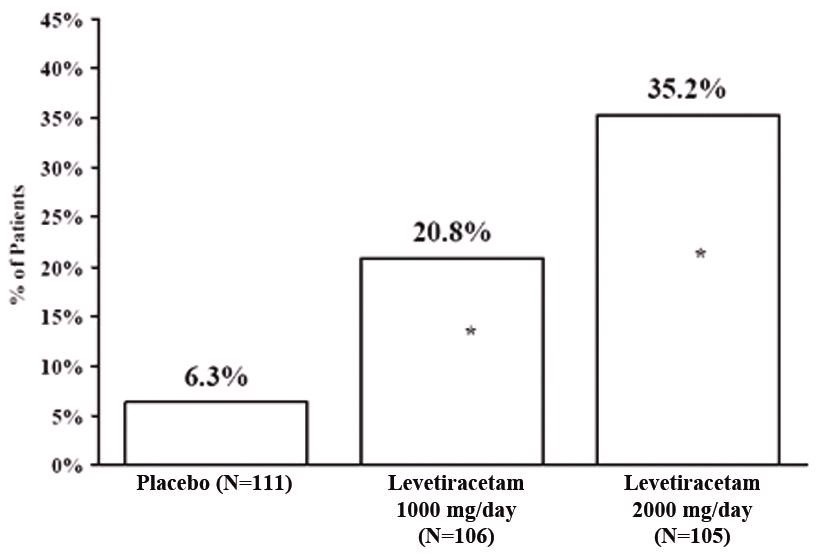
A bar chart comparing the percentage of patients for three groups: placebo (6.3%), levetiracetam 1000 mg/day (20.8%), and levetiracetam 2000 mg/day (35.2%). The y-axis represents the percent of patients ranging from 0% to 45%, with numerical values displayed above each bar showing patient percentages and sample sizes (N). An asterisk is present on the levetiracetam bars.*
FDA Label Image

Levetiracetam-figure-3 (Levetiracetam Figure 3)

Levetiracetam-figure-3 (Levetiracetam Figure 3)
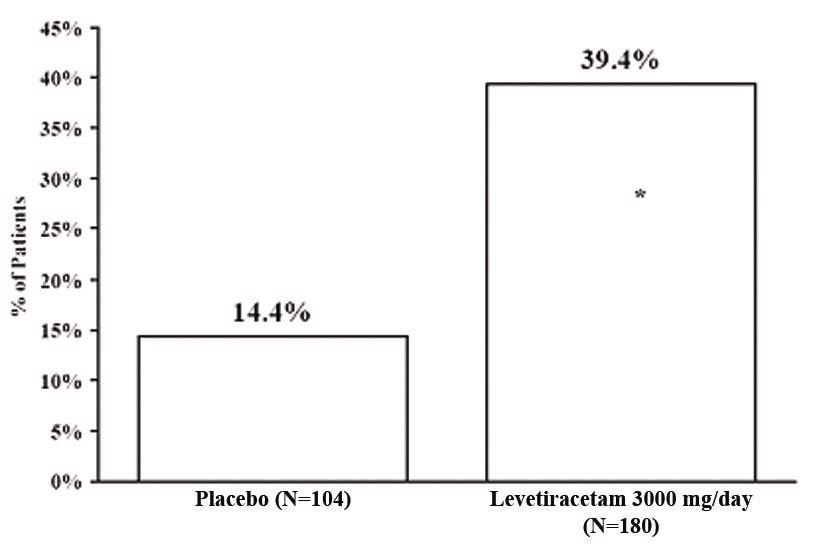
A bar chart comparing the percentage of patients responding to placebo versus levetiracetam 3000 mg/day. The placebo group (N=104) shows a 14.4% response rate, while the levetiracetam group (N=180) shows a higher response rate of 39.4%. The y-axis represents the percentage of patients.*
FDA Label Image

Levetiracetam-figure-4 (Levetiracetam Figure 4)

Levetiracetam-figure-4 (Levetiracetam Figure 4)
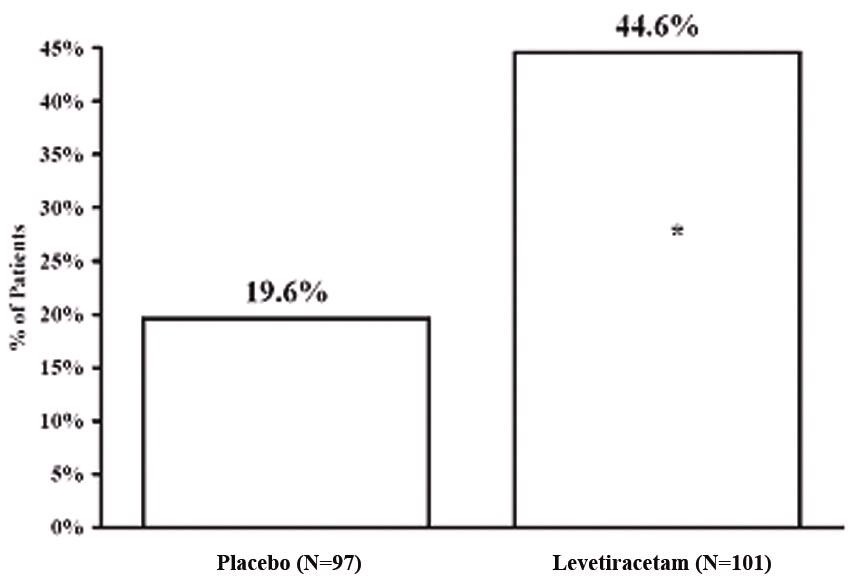
A bar graph comparing the percentage of patients for placebo (19.6%) versus levetiracetam (44.6%). The x-axis shows treatment groups (Placebo with N=97 and Levetiracetam with N=101), and the y-axis represents the percentage of patients from 0% to 45%. The levetiracetam group bar is significantly higher than the placebo group.*
FDA Label Image

Levetiracetam-figure-5 (Levetiracetam Figure 5)

Levetiracetam-figure-5 (Levetiracetam Figure 5)
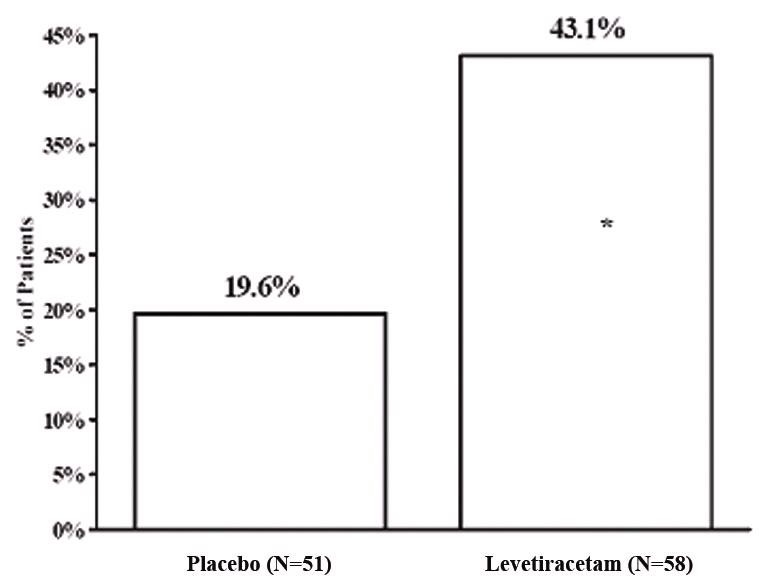
A bar graph comparing the percentage of patients between two groups: Placebo (N=51) and Levetiracetam (N=58). The y-axis represents the percentage of patients, ranging from 0% to 45%. The Placebo group shows 19.6%, while the Levetiracetam group shows 43.1% of patients.*
FDA Label Image

Levetiracetam-figure-6 (Levetiracetam Figure 6)

Levetiracetam-figure-6 (Levetiracetam Figure 6)
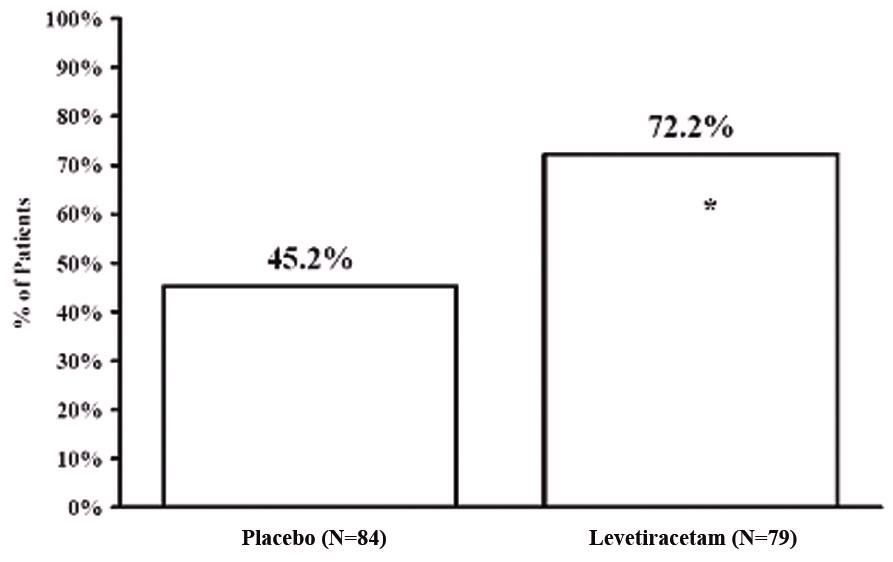
A bar chart comparing the percentage of patients between two groups: Placebo (N=84) and Levetiracetam (N=79). The y-axis represents the percentage of patients from 0% to 100%. The Placebo group shows 45.2%, and the Levetiracetam group shows 72.2%, with an asterisk indicating statistical significance.*
FDA Label Image

Levetiracetam-structure (Levetiracetam Structure)

Levetiracetam-structure (Levetiracetam Structure)
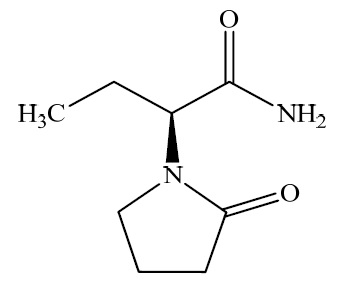
Chemical structure of levetiracetam, showing its molecular arrangement including a pyrrolidone ring and an amide group.*

* About these descriptions: Image descriptions on this page are generated by automated AI analysis of the product label images from the manufacturer's FDA label submission (SPL). They are provided for reference only and may contain errors or omissions. Always rely on the printed label itself and the official FDA labeling, and consult a pharmacist or healthcare professional with any questions about this product.