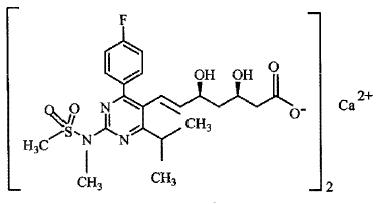
Table 1. Adverse Reactions1Reported in ≥ 2% of Patients Treated with rosuvastatin calcium and > Placebo in Placebo-Controlled Trials (% of Patients)
Adverse reactions
| Rosuvastatin calcium
5 mg
N=291
| Rosuvastatin
Calcium
10 mg
N=283
| Rosuvastatin calcium
20 mg
N=64
| Rosuvastatin calcium
40 mg
N=106
| Total Rosuvastatin calcium
5 mg to 40 mg N=744
| Placebo
N=382
|
Headache
| 5.5
| 4.9
| 3.1
| 8.5
| 5.5
| 5
|
Nausea
| 3.8
| 3.5
| 6.3
| 0
| 3.4
| 3.1
|
Myalgia
| 3.1
| 2.1
| 6.3
| 1.9
| 2.8
| 1.3
|
Asthenia
| 2.4
| 3.2
| 4.7
| 0.9
| 2.7
| 2.6
|
Constipation
| 2.1
| 2.1
| 4.7
| 2.8
| 2.4
| 2.4
|
1Adverse reaction by COSTART preferred term
Other adverse reactions reported in clinical studies were abdominal pain, dizziness, hypersensitivity (including rash, pruritus, urticaria, and angioedema) and pancreatitis. The following laboratory abnormalities have also been reported: dipstick-positive proteinuria and microscopic hematuria [see Warnings and Precautions (5.4)]; elevated creatine phosphokinase, transaminases, glucose, glutamyl transpeptidase, alkaline phosphatase, and bilirubin; and thyroid function abnormalities.
In a clinical trial, involving 981 participants treated with rosuvastatin 40 mg (n=700) or placebo (n=281) with a mean treatment duration of 1.7 years, 5.6% of subjects treated with rosuvastatin calcium versus 2.8% of placebo- treated subjects discontinued due to adverse reactions. The most common adverse reactions that led to treatment discontinuation were: myalgia, hepatic enzyme increased, headache, and nausea.
Adverse reactions reported in ≥ 2% of patients and at a rate greater than placebo are shown in Table 2.
Table 2. Adverse Reaction1Reported in ≥ 2% of Patients Treated with rosuvastatin calcium and > Placebo in a Trial (% of Patients)
Adverse Reactions
| Rosuvastatin calcium 40 mg N=700
| Placebo N=281
|
Myalgia
| 12.7
| 12.1
|
Arthralgia
| 10.1
| 7.1
|
Headache
| 6.4
| 5.3
|
Dizziness
| 4
| 2.8
|
Increased CPK
| 2.6
| 0.7
|
Abdominal pain
| 2.4
| 1.8
|
ALT > 3x ULN2
| 2.2
| 0.7
|
1Adverse reactions by MedDRA preferred term.
2Frequency recorded as abnormal laboratory value.
In a clinical trial, 17,802 participants were treated with rosuvastatin 20 mg (n=8901) or placebo (n=8901) for a mean duration of 2 years. A higher percentage of rosuvastatin-treated patients versus placebo-treated patients, 6.6% and 6.2%, respectively, discontinued study medication due to an adverse event, irrespective of treatment causality. Myalgia was the most common adverse reaction that led to treatment discontinuation.
There was a significantly higher frequency of diabetes mellitus reported in patients taking rosuvastatin (2.8%) versus patients taking placebo (2.3%). Mean HbA1c was significantly increased by 0.1% in rosuvastatin-treated patients compared to placebo-treated patients. The number of patients with a HbA1c > 6.5% at the end of the trial was significantly higher in rosuvastatin-treated versus placebo-treated patients [see Warnings and Precautions (5.5)].
Adverse reactions reported in ≥ 2% of patients and at a rate greater than placebo are shown in Table 3.
Table 3. Adverse Reaction1Reported in ≥ 2% of Patients Treated with rosuvastatin calcium and > Placebo in a Trial (% of Patients)
Adverse Reactions
| Rosuvastatin calcium 20 mg N=8901
| Placebo N=8901
|
Myalgia
| 7.6
| 6.6
|
Arthralgia
| 3.8
| 3.2
|
Constipation
| 3.3
| 3.0
|
Diabetes mellitus
| 2.8
| 2.3
|
Nausea
| 2.4
| 2.3
|
1Treatment-emergent adverse reactions by MedDRA preferred term.
Table 4. Effect of Coadministered Drugs on Rosuvastatin Systemic Exposure
Coadministered drug and dosing regimen
| Rosuvastatin
|
|
| Mean Ratio
(ratio with/without coadministered drug)
No Effect = 1.0
|
| Dose (mg)1
| Change in AUC
| Change in Cmax
|
Cyclosporine – stable dose required
(75 mg – 200 mg BID)
| 10 mg QD for 10 days
| 7.12
| 112
|
Atazanavir/ritonavir combination 300 mg/100 mg QD for 8 days
| 10 mg
| 3.12
| 72
|
Simeprevir 150 mg QD, 7 days
| 10 mg, single dose
| 2.82
(2.3 to 3.4)3
| 3.22
(2.6 to 3.9)3
|
Lopinavir/ritonavir combination 400 mg/100 mg BID for 17 days
| 20 mg QD for 7 days
| 2.12
(1.7 to 2.6)3
| 52
(3.4 to 6.4)3
|
Gemfibrozil 600 mg BID for 7 days
| 80 mg
| 1.92
(1.6 to 2.2)3
| 2.22
(1.8 to 2.7)3
|
Eltrombopag 75 mg QD, 5 days
| 10 mg
| 1.6
(1.4 to 1.7)3
| 2
(1.8 to 2.3)3
|
Darunavir 600 mg/ritonavir 100 mg
BID, 7 days
| 10 mg QD for 7 days
| 1.5
(1.0 to 2.1)3
| 2.4
(1.6 to 3.6)3
|
Tipranavir/ritonavir combination 500 mg/200mg BID for 11 days
| 10 mg
| 1.4
(1.2 to 1.6)3
| 2.2
(1.8 to 2.7)3
|
Dronedarone 400 mg BID
| 10 mg
| 1.4
|
|
Itraconazole 200 mg QD, 5 days
| 10 mg or 80 mg
| 1.4
(1.2 to 1.6)3
1.3
(1.1 to 1.4)3
| 1.4
(1.2 to 1.5)3
1.2
(0.9 to 1.4)3
|
Ezetimibe 10 mg QD, 14 days
| 10 mg QD for 14 days
| 1.2
(0.9 to 1.6)3
| 1.2
(0.8 to 1.6)3
|
Fosamprenavir/ritonavir
700 mg/100 mg BID for 7 days
| 10 mg
| 1.1
| 1.5
|
Fenofibrate 67 mg TID for 7 days
| 10 mg
| ↔
| 1.2
(1.1 to 1.3)3
|
Rifampicin 450 mg QD, 7 days
| 20 mg
| ↔
|
|
Aluminum & magnesium hydroxide combination antacid
Administered simultaneously Administered 2 hours apart
| 40 mg
40 mg
| 0.52
(0.4 to 0.5)3
0.8
(0.7 to 0.9)3
| 0.52
(0.4 to 0.6)3
0.8
(0.7 to 1.0)3
|
Ketoconazole 200 mg BID for 7 days
| 80 mg
| 1
(0.8 to 1.2)3
| 1
(0.7 to 1.3)3
|
Fluconazole 200 mg QD for 11 days
| 80 mg
| 1.1
(1.0 to 1.3)3
| 1.1
(0.9 to 1.4)3
|
Erythromycin 500 mg QID for 7 days
| 80 mg
| 0.8
(0.7 to 0.9)3
| 0.7
(0.5 to 0.9)3
|
1Single dose unless otherwise noted.
2Clinically significant [see Dosage and Administration (2) and Warnings and Precautions (5)]
3Mean ratio with 90% CI (with/without coadministered drug, e.g., 1= no change, 0.7 = 30% decrease, 11=11 fold increase in exposure)
Table 5. Effect of Rosuvastatin Coadministration on Systemic Exposure to Other Drugs
Rosuvastatin Dosage Regimen
| Coadministered Drug
|
|
| Mean Ratio (ratio with/without coadministered drug)No Effect = 1.0
|
| Name and Dose
| Change in AUC
| Change in Cmax
|
40 mg QD for 10 days
|
Warfarin1
25 mg single dose
| R- Warfarin 1.0
(1.0 to 1.1)2
S-Warfarin 1.1
(1.0 to 1.1)2
| R-Warfarin 1.0
(0.9 to 1.0)2
S-Warfarin 1.0
(0.9 to 1.1)2
|
40 mg QD for 12 days
| Digoxin
0.5 mg single dose
| 1.0
(0.9 to 1.2)2
| 1.0
(0.9 to 1.2)2
|
40 mg QD for 28 days
|
Oral Contraceptive
(ethinyl estradiol 0.035 mg & norgestrel 0.180, 0.215 and
0.250 mg) QD for 21 Days
|
EE 1.3
(1.2 to 1.3)2
NG 1.3
(1.3 to 1.4)2
|
EE 1.3
(1.2 to 1.3)2
NG 1.2
(1.1 to 1.3)2
|
EE = ethinyl estradiol, NG = norgestrel
1Clinically significant pharmacodynamic effects [see Warnings and Precautions (5.3)]
2Mean ratio with 90% CI (with/without coadministered drug, e.g., 1= no change, 0.7=30% decrease, 11=11-fold increase in exposure)
Table 9. Dose-Response in Patients with Primary Hypertriglyceridemia Over 6 Weeks Dosing Median (Min, Max) Percent Change From Baseline
Dose
| Placebo (n=26)
| Rosuvastatin calcium
5 mg
(n=25)
| Rosuvastatin calcium
10 mg
(n=23)
| Rosuvastatin calcium
20 mg
(n=27)
| Rosuvastatin calcium
40 mg
(n=25)
|
Triglycerides
| 1 (-40, 72)
| -21 (-58, 38)
| -37 (-65, 5)
| -37 (-72, 11)
| -43 (-80, -7)
|
nonHDL-C
| 2 (-13, 19)
| -29 (-43, -8)
| -49 (-59, -20)
| -43 (-74, 12)
| -51 (-62, -6)
|
VLDL-C
| 2 (-36, 53)
| -25 (-62, 49)
| -48 (-72, 14)
| -49 (-83, 20)
| -56 (-83, 10)
|
Total-C
| 1 (-13, 17)
| -24 (-40, -4)
| -40 (-51, -14)
| -34 (-61, -11)
| -40 (-51, -4)
|
LDL-C
| 5 (-30, 52)
| -28 (-71, 2)
| -45 (-59, 7)
| -31 (-66, 34)
| -43 (-61, -3)
|
HDL-C
| -3 (-25, 18)
| 3 (-38, 33)
| 8 (-8, 24)
| 22 (-5, 50)
| 17 (-14, 63)
|