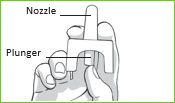
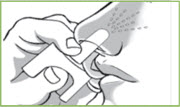
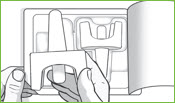
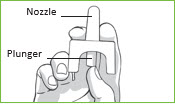
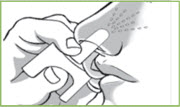
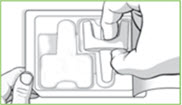
Second Dose (if needed): A second dose, when required, may be administered after at least 4 hours after the initial dose. If the second dose is to be administered, use a new blister pack of VALTOCO.
Maximum Dosage and Treatment Frequency: Do not use more than 2 doses of VALTOCO to treat a single episode.
It is recommended that VALTOCO be used to treat no more than one episode every five days and no more than five episodes per month.
Diazepam Rectal Gel
In studies previously conducted with diazepam rectal gel, adverse event data were collected from double-blind, placebo-controlled studies and open-label studies. The majority of adverse events were mild to moderate in severity and transient in nature.
Two patients who received diazepam rectal gel died seven to 15 weeks following treatment; neither of these deaths was deemed related to diazepam rectal gel.
The most frequent adverse reactions (at least 4%) in the two double-blind, placebo-controlled studies were somnolence, headache, and diarrhea. Adverse events were usually mild or moderate in intensity.
Approximately 1.4% of the 573 patients who received diazepam rectal gel in clinical trials of epilepsy discontinued treatment because of an adverse event. The adverse reaction most frequently associated with discontinuation (occurring in three patients) was somnolence. Other adverse reactions most commonly associated with discontinuation and occurring in two patients were hypoventilation and rash. Adverse reactions associated with discontinuation occurring in one patient were asthenia, hyperkinesia, incoordination, vasodilatation, and urticaria.
In the two double-blind, placebo-controlled, parallel-group studies [see Clinical Studies (14)], the proportion of patients who discontinued treatment because of adverse events was 2% for the group treated with Diazepam rectal gel, versus 2% for the placebo group. In the diazepam rectal gel group, one patient discontinued because of rash and one patient discontinued because of lethargy.
Table 3: Adverse Reactions That Occurred in Greater Than 1% Of Patients in Parallel-Group, Placebo-Controlled Trials with Diazepam Rectal Gel and More Common Than Placebo| Adverse Reaction | Diazepam Rectal Gel
N=101
% | Placebo
N=104
% |
|---|
| Somnolence | 23 | 8 |
| Headache | 5 | 4 |
| Diarrhea | 4 | <1 |
| Ataxia | 3 | <1 |
| Dizziness | 3 | 2 |
| Euphoria | 3 | 0 |
| Incoordination | 3 | 0 |
| Rash | 3 | 0 |
| | |
| Asthma | 2 | 0 |
| Vasodilation | 2 | 0 |
VALTOCO (Diazepam Nasal Spray)
Clinical studies of patients with epilepsy 6 years of age and older were conducted to support the safety and tolerability of VALTOCO for the treatment of acute repetitive seizures. A total of 190 patients 6 years of age and older received VALTOCO, of whom 114 received VALTOCO for at least 6 months, and 67 for at least 1 year. Other than adverse reactions related to local nasal administration, the adverse reactions reported in these studies were similar to those seen in the efficacy trials of diazepam rectal gel.
The most common local adverse reactions that occurred in VALTOCO-treated patients were nasal discomfort (6%), nasal congestion (3%), epistaxis (3%), and dysgeusia (2%).
Other Adverse Reactions
Diazepam rectal gel has previously been administered to 573 patients with epilepsy during all clinical trials, only some of which were placebo-controlled. All of the events listed below occurred in at least 1% of the 573 individuals exposed to diazepam rectal gel.
Body as a Whole: Asthenia
Cardiovascular: Hypotension, vasodilatation
Nervous: Agitation, confusion, convulsion, dysarthria, emotional lability, speech disorder, thinking abnormal, vertigo
Respiratory: Hiccup
The following infrequent adverse events have been reported previously with diazepam use: depression, slurred speech, syncope, changes in libido, urinary retention, bradycardia, cardiovascular collapse, nystagmus, urticaria, neutropenia, and jaundice.
Paradoxical reactions such as acute hyperexcited states, anxiety, hallucinations, increased muscle spasticity, insomnia, rage, sleep disturbances and stimulation have been reported with other diazepam products. If these events occur with the use of VALTOCO, the prescriber should consider discontinuation of use.
Inhibitors of CYP2C19 and CYP3A4
Inhibitors of CYP2C19 (e.g., cimetidine, quinidine, and tranylcypromine) and CYP3A4 (e.g., ketoconazole, troleandomycin, and clotrimazole) could decrease the rate of diazepam elimination; therefore, adverse reactions to VALTOCO may be increased.
Inducers of CYP2C19 and CYP3A4
Inducers of CYP2C19 (e.g., rifampin) and CYP3A4 (e.g., carbamazepine, phenytoin, dexamethasone, and phenobarbital) could increase the rate of diazepam elimination; therefore, efficacy of VALTOCO may be decreased.
Pregnancy Exposure Registry
There is a pregnancy exposure registry that monitors pregnancy outcomes in women exposed to antiepileptic drugs (AEDs), such as VALTOCO, during pregnancy. Encourage women who are taking VALTOCO during pregnancy to enroll in the North American Antiepileptic Drug (NAAED) Pregnancy Registry by calling 1-888-233-2334 or visiting http://www.aedpregnancyregistry.org.
Risk Summary
There are no adequate data on the use of VALTOCO in pregnant women. Available data suggest that the class of benzodiazepines is not associated with marked increases in risk for congenital anomalies. Although some early epidemiological studies suggested a relationship between benzodiazepine use in pregnancy and congenital anomalies such as cleft lip and or palate, these studies had considerable limitations. More recently completed studies of benzodiazepine use in pregnancy have not consistently documented elevated risks for specific congenital anomalies. There is insufficient evidence to assess the effect of benzodiazepine pregnancy exposure on neurodevelopment.
There are clinical considerations regarding exposure to benzodiazepines during the second and third trimesters of pregnancy or immediately prior to or during childbirth. These risks include decreased fetal movement and/or fetal heart rate variability, floppy infant syndrome, dependence, and withdrawal (see Clinical Considerations and Human Data).
In animal studies, administration of diazepam during the organogenesis period of pregnancy resulted in increased incidences of fetal malformations at doses greater than those used clinically. Data for diazepam and other benzodiazepines suggest the possibility of increased neuronal cell death and long-term effects on neurobehavioral and immunological function based on findings in animals following prenatal or early postnatal exposure at clinically relevant doses (see Animal Data).
Advise a pregnant woman and women of childbearing age of the potential risk to a fetus.
In the U.S. general population, the estimated background risk of major birth defects and miscarriage in clinically recognized pregnancies is 2% to 4% and 15% to 20%, respectively. The estimated background risk of major birth defects and miscarriage for the indicated population is unknown.
Clinical Considerations
Fetal/Neonatal Adverse Reactions
Infants born to mothers who have taken benzodiazepines during the later stages of pregnancy can develop dependence, and subsequently withdrawal, during the postnatal period. Clinical manifestations of withdrawal or neonatal abstinence syndrome may include hypertonia, hyperreflexia, hypoventilation, irritability, tremors, diarrhea, and vomiting. These complications can appear shortly after delivery to 3 weeks after birth and persist from hours to several months depending on the degree of dependence and the pharmacokinetic profile of the benzodiazepine. Symptoms may be mild and transient or severe. Standard management for neonatal withdrawal syndrome has not yet been defined. Observe newborns who are exposed to VALTOCO in utero during the later stages of pregnancy for symptoms of withdrawal and manage accordingly.
Labor and Delivery
Administration of benzodiazepines immediately prior to or during childbirth can result in a floppy infant syndrome, which is characterized by lethargy, hypothermia, hypotonia, respiratory depression, and difficulty feeding. Floppy infant syndrome occurs mainly within the first hours after birth and may last up to 14 days. Observe exposed newborns for these symptoms and manage accordingly.
Data
Human Data
Congenital Anomalies
Although there are no adequate and well-controlled studies of VALTOCO in pregnant women, there is information about benzodiazepines as a class. Dolovich et al. published a meta-analysis of 23 studies that examined the effects of benzodiazepine exposure during the first trimester of pregnancy. Eleven of the 23 studies included in the meta-analysis considered the use of chlordiazepoxide and diazepam and not other benzodiazepines. The authors considered case-control and cohort studies separately. The data from the cohort studies did not suggest an increased risk for major malformations (OR 0.90; 95% CI 0.61—1.35) or for oral cleft (OR 1.19; 95% CI 0.34—4.15). The data from the case-control studies suggested an association between benzodiazepines and major malformations (OR 3.01, 95% CI 1.32— 6.84) and oral cleft (OR 1.79; 95% CI 1.13—2.82). The limitations of this meta-analysis included the small number of reports included in the analysis, and that most cases for analyses of both oral cleft and major malformations came from only three studies. A follow up to that meta-analysis included 3 new cohort studies that examined risk for major malformations and one study that considered cardiac malformations. The authors found no new studies with an outcome of oral clefts. After the addition of the new studies, the odds ratio for major malformations with first trimester exposure to benzodiazepines was 1.07 (95% CI 0.91—1.25).
Neonatal Withdrawal and Floppy Infant Syndrome
Neonatal withdrawal syndrome and symptoms suggestive of floppy infant syndrome associated with administration of benzodiazepines during the later stages of pregnancy and peripartum period have been reported. Findings in published scientific literature suggest that the major neonatal side effects of benzodiazepines include sedation and dependence with withdrawal signs. Data from observational studies suggest that fetal exposure to benzodiazepines is associated with the neonatal adverse events of hypotonia, respiratory problems, hypoventilation, low Apgar score, and neonatal withdrawal syndrome.
Animal Data
Diazepam has been shown to produce increased incidences of fetal malformations in mice and hamsters when given orally at single doses of 100 mg/kg or greater (approximately 13 times the maximum recommended human dose [MRHD = 0.6mg/kg/day] or greater on a mg/m2 basis). Cleft palate and exencephaly are the most common and consistently reported malformations produced in these species by administration of high, maternally-toxic doses of diazepam during organogenesis.
In published animal studies, administration of benzodiazepines or other drugs that enhance GABAergic inhibition to neonatal rats has been reported to result in widespread apoptotic neurodegeneration in the developing brain at plasma concentrations relevant for seizure control in humans. The window of vulnerability to these changes in rats (postnatal days 0-14) includes a period of brain development that takes place during the third trimester of pregnancy in humans.
Risk Summary
Diazepam is excreted in human milk.
There are no data to assess the effects of VALTOCO and/or its active metabolite(s) on the breastfed infant or on milk production. Postmarketing experience suggests that breastfed infants of mothers taking benzodiazepines, such as VALTOCO, may have effects of lethargy, somnolence, and poor sucking.
The developmental and health benefits of breastfeeding should be considered along with the mother's clinical need for VALTOCO nasal spray and any potential adverse effects on the breastfed infant from VALTOCO or from the underlying maternal condition.
Absorption
Pharmacokinetic information for VALTOCO following nasal administration was obtained from studies conducted in healthy adult subjects, as well as adult and pediatric patients with epilepsy 6 years of age and older.
In a pharmacokinetic study in healthy adult subjects, the highest plasma diazepam concentrations after nasal administration of VALTOCO was reached in 1.5 hours. The estimated volume of distribution of diazepam at steady-state is 0.8 to 1.0 L/kg. The absolute bioavailability of VALTOCO relative to intravenous diazepam was 97%. The mean elimination half-life of diazepam following administration of a 10 mg dose of VALTOCO was found to be about 49.2 hours. In another pharmacokinetic study in healthy adult subjects, diazepam plasma exposures (Cmax and AUC) increased approximately proportional to dose from 5 mg to 20 mg.
In a relative bioavailability study in healthy adult subjects, diazepam exposure (Cmax and AUCs) was evaluated following administration of 15 and 20 mg of VALTOCO nasal spray and diazepam rectal gel. The diazepam PK parameters were 2 to 4-fold less variable for VALTOCO and within the range of those seen with diazepam rectal gel.
In a pharmacokinetic study in patients with epilepsy, pharmacokinetic parameters were similar between seizure versus non-seizure states.
Distribution
Both diazepam and its major active metabolite desmethyldiazepam bind extensively to plasma proteins (95-98%).
Metabolism and Elimination
In vitro studies using human liver preparations suggest that CYP2C19 and CYP3A4 are the principal isozymes involved in the initial oxidative metabolism of diazepam. It has been reported in the literature that diazepam is extensively metabolized to one major active metabolite, desmethyldiazepam, and two minor active metabolites, 3- hydroxydiazepam (temazepam) and 3-hydroxy-N-diazepam (oxazepam), in plasma. At therapeutic doses, desmethyldiazepam is found in plasma at concentrations equivalent to those of diazepam while oxazepam and temazepam are not usually detectable. The metabolism of diazepam is primarily hepatic and involves demethylation (involving primarily CYP2C19 and CYP3A4) and 3-hydroxylation (involving primarily CYP3A4), followed by glucuronidation. The marked inter-individual variability in the clearance of diazepam reported in the literature is probably attributable to variability of CYP2C19 (which is known to exhibit genetic polymorphism; about 3-5% of Caucasians have little or no activity and are "poor metabolizers") and CYP3A4. No inhibition was demonstrated in the presence of inhibitors selective for CYP2A6, CYP2C9, CYP2D6, CYP2E1, or CYP1A2, indicating that these enzymes are not significantly involved in metabolism of diazepam.
Specific Populations
Geriatric Patients
A study of single dose IV administration of diazepam (0.1 mg/kg) indicates that the elimination half-life of diazepam increases linearly with age, ranging from about 15 hours at 18 years (healthy young adults) to about 100 hours at 95 years (healthy elderly) with a corresponding decrease in clearance of free diazepam [see Use in Specific Populations (8.5)].
Pediatric Patients
Literature review indicates that following IV administration (0.33 mg/kg), diazepam has a half-life in pediatric patients 6 to 12 years of age of approximately 15-21 hours.
Patients with Renal Impairment
The pharmacokinetics of diazepam have not been studied in subjects with renal impairment.
Patients with Hepatic Impairment
No pharmacokinetic studies were conducted with VALTOCO in subjects with hepatic impairment. Literature review indicates that following administration of 0.1 to 0.15 mg/kg of diazepam intravenously, the half-life of diazepam was prolonged by two to five-fold in subjects with alcoholic cirrhosis (n=24) compared to age-matched control subjects (n=37) with a corresponding decrease in clearance by half. However, the exact degree of hepatic impairment in these subjects was not characterized in this literature.
Effect of Gender, Race, and Cigarette Smoking
No targeted pharmacokinetic studies have been conducted to evaluate the effect of gender, race, and cigarette smoking on the pharmacokinetics of diazepam. However, covariate analysis of a population of treated patients following administration of diazepam rectal gel, indicated that neither gender nor cigarette smoking had any effect on the pharmacokinetics of diazepam.
Carcinogenesis
The carcinogenic potential of diazepam delivered by the intranasal route of administration has not been evaluated. In studies in which mice and rats were administered diazepam orally in the diet at a dose of 75 mg/kg/day (approximately 10 and 20 times, respectively, the maximum recommended human dose [MRHD=0.6 mg/kg/day] on a mg/m2 basis) for 80 and 104 weeks, respectively, an increased incidence of liver tumors was observed in males of both species.
Mutagenesis
The data currently available are inadequate to determine the mutagenic potential of diazepam.
Impairment of Fertility
Reproduction studies with orally administered diazepam in rats showed decreases in the number of pregnancies and in the number of surviving offspring following administration of an oral dose of 100 mg/kg/day (approximately 27 times the MRHD on a mg/m2 basis) prior to and during mating and throughout gestation and lactation. No adverse effects on fertility or offspring viability were noted at a dose of 80 mg/kg/day (approximately 22 times the MRHD on a mg/m2 basis).
Concomitant use with Opioids
Concomitant use of benzodiazepines, including VALTOCO, and opioids may result in profound sedation, respiratory depression, coma, and death. Do not use such drugs concomitantly unless supervised by a health care provider [see Warnings and Precautions (5.1)].
Drug Abuse and Dependence
Diazepam is a Schedule IV controlled substance and can produce drug dependence. It is recommended that patients be treated with VALTOCO no more frequently than every five days and no more than five times per month.
Addiction-prone individuals (such as drug addicts or alcoholics) should be under careful surveillance when receiving diazepam or other psychotropic agents because of the predisposition of such patients to habituation and dependence.
Abrupt discontinuation of diazepam following chronic regular use has resulted in withdrawal symptoms, similar in character to those noted with barbiturates and alcohol (convulsions, tremor, abdominal and muscle cramps, vomiting and sweating). The more severe withdrawal symptoms have usually been limited to those patients who had received excessive doses over an extended period of time. Generally milder withdrawal symptoms (e.g., dysphoria and insomnia) have been reported following abrupt discontinuation of benzodiazepines taken continuously at therapeutic levels for several months.
Important Treatment Instructions
Instruct patients and caregivers on what is and is not an intermittent and stereotypic episode of increased seizure activity (i.e., seizure cluster) that is appropriate for treatment, and the timing of administration in relation to the onset of the episode.
Instruct patients and caregivers on what to observe following administration, and what would constitute an outcome requiring immediate medical attention.
Instruct patients and caregivers not to administer a second dose of VALTOCO if they are concerned by the patient's breathing, the patient requires emergency rescue treatment with assisted breathing or intubation, or there is excessive sedation [see Use in Specific Populations (8.6)].
Advise patients and caregivers on how frequently they can treat successive seizure cluster episodes over time.
Pregnancy
Instruct patients to inform their healthcare provider if they are pregnant or are planning to become pregnant. Several studies have suggested an increased risk of congenital malformations associated with the use of benzodiazepine drugs. Animal studies have demonstrated an effect on early brain development and long-term cognitive effects with exposure to anesthetic and sedation drugs in the third trimester of gestation. Encourage patients to enroll in the North American Antiepileptic Drug (NAAED) Pregnancy Registry if they become pregnant while taking VALTOCO. The registry is collecting information about the safety of antiepileptic drugs during pregnancy [see Use in Specific Populations (8.1)].
Lactation
Instruct patients to inform their healthcare provider if they are nursing [see Use in Specific Populations (8.2)].
VALTOCO and NEURELIS are a registered trademarks of Neurelis, Inc.
Manufactured for: Neurelis, Inc.
San Diego, CA 92130 USA
By: Catalent Pharma Solutions
Morrisville, NC 27560 USA
© 2019 Neurelis, Inc. All right reserved.
Neurelis Rev. 2019.12.a