Sodium Phenylacetate And Sodium Benzoate Injection
Product Images NDC 72266-236

View Photos of Packaging, Regulatory Labels, and Product Appearance

Product Visual Gallery

This gallery contains 7 technical images submitted to the FDA as part of the official labeling for Sodium Phenylacetate And Sodium Benzoate (NDC 72266-236). Unlike standard consumer photos, these assets often include clinical data figures, molecular chemical structures, and official manufacturer packaging layouts.

As provided by Fosun Pharma Usa Inc, these visuals offer a comprehensive scientific overview of the product's physical and chemical identity, aiding pharmacists and researchers in product verification and study.

FDA Label Image

Carton Label (Carton Label)

FDA Label Image

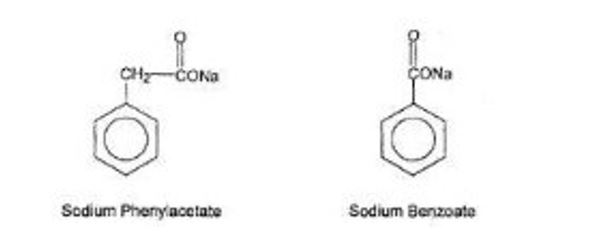
Figure 1 (Chemical Structure)

FDA Label Image

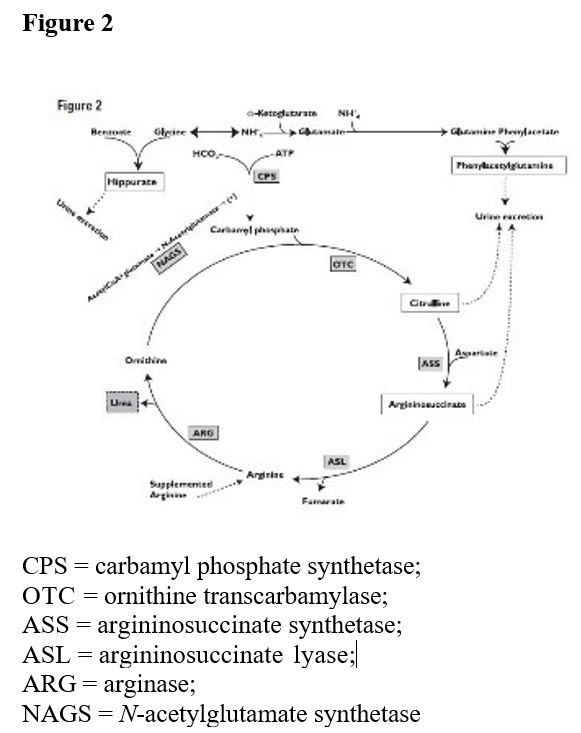
Figure 2 (Figure 2)

Figure 2 (Figure 2)
This is a figure illustrating the names and abbreviations of different enzymes involved in the urea cycle, a biochemical process that converts toxic ammonia into urea. The enzymes listed are: carbamyl phosphate synthetase (CPS), ornithine transcarbamylase (OTC), argininosuccinate synthetase (ASS), argininosuccinate lyase (ASL), arginase (ARG), and N-acetylglutamate synthetase (NAGS).*
FDA Label Image

Table 1 (Table 1 Revised)

Table 1 (Table 1 Revised)
This is a dosage and administration table for Sodium Phenylacetate and Sodium Benzoate injection, used for patients with CPS, OTC, ASS, and ASL deficiencies. The components of infusion solution must be diluted with sterile 10% Dextrose Injection before administration. The table provides dosage information for loading and maintenance phases for patients of different weights and deficiencies.*
FDA Label Image

Table 2 (Table 2)

Table 2 (Table 2)
Table 2 shows the adverse reactions that were seen in 23% of patients treated with Sodium Phenylacetate and Sodium Benzoate Injection. The table lists the number and percentage of patients who experienced different types of adverse events, such as anemia, vomiting, injection-site reaction, fever, urinary tract infections, respiratory distress, and hypotension, among others.*
FDA Label Image

Table 3 (Table 3)

Table 3 (Table 3)
The given text describes the baseline characteristics and diagnoses of a study population consisting of 316 patients, with gender distribution of 158 males (50%) and 150 females (49%). The age of the patients ranged from 0 to 530 years, with a mean age of 62 (SD=859). The patients were categorized into different age groups, with 34% being 0-4 years old and 29% being between 21-24 years old. The text also specifies the enzyme deficiencies in the patients, including ornithine transcarbamylase deficiency, argininosuccinate syathetase deficiency, carbamyl phosphate synthetase deficiency, argininosuccinate lyase deficiency, arginase deficiency, and transient hyperammonemia. Additionally, the diagnoses of some patients were unknown or pending, while others had acidemia, HHH syndrome, carnitine translocase deficiency, liver disease, HMG CoA Iyase deficiency, non-ketotic hyperglycinemia, suspected fatty acid oxidation deficiency, or valproic-acid-induced hyperammonemia.*
FDA Label Image

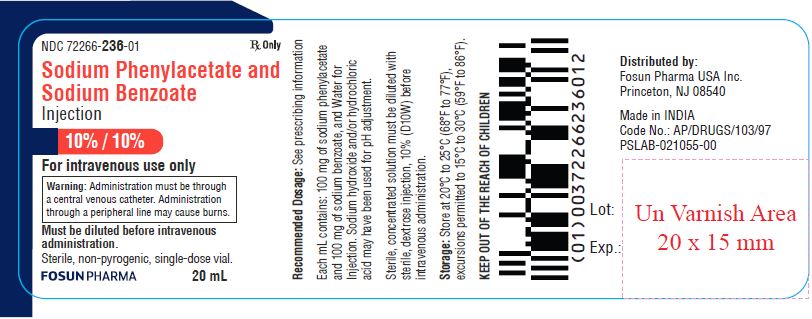
Vial Label (Vial Label)

Vial Label (Vial Label)
This is a drug label for an injection containing Sodium Phenylacetate and Sodium Benzoate. It is to be used intravenously and must be administered through a central venous catheter. Administering it through a peripheral line may cause adverse reactions. The drug must be diluted before administration. The label also gives information on dosage and ingredients. The injection has been manufactured in India and distributed by Fosun Pharma USA Inc. The drug is sterile and non-pyrogenic. The label also includes some warnings, precautions, and storage conditions for the drug.*

* These product label images have been analyzed using experimental machine learning. Please verify findings with the primary label text.