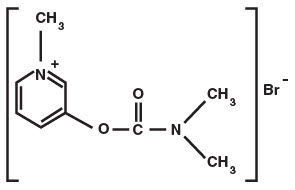
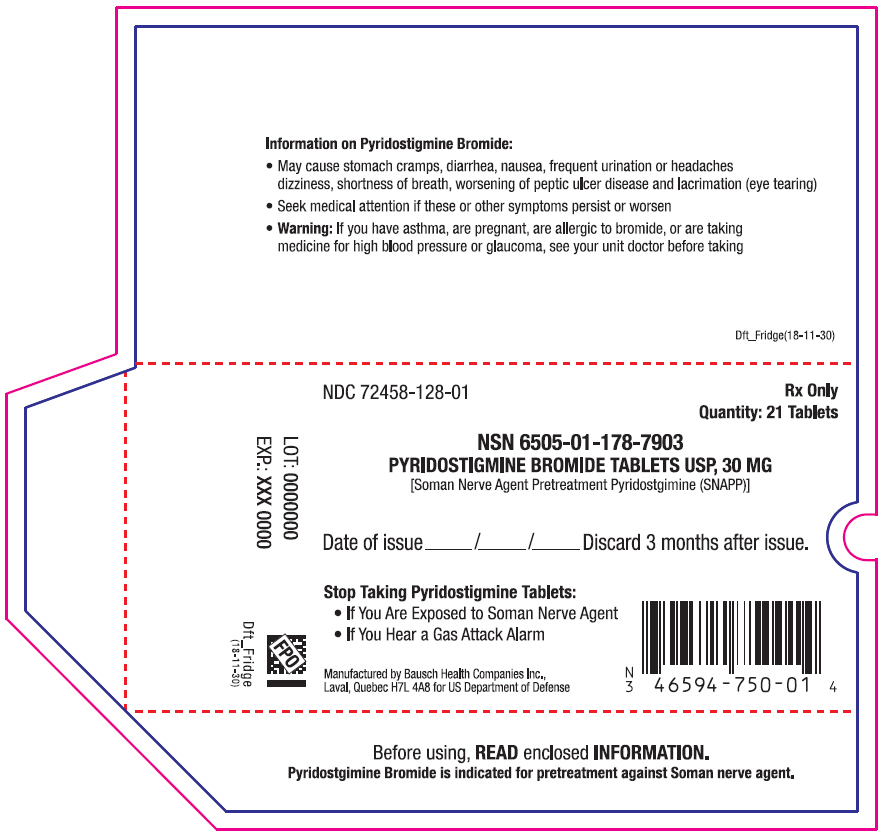
Pregnancy Category B
Pyridostigmine bromide produced no teratogenic effects in rats given up to 30 mg/kg/day and in rabbits given up to 45 mg/kg/day orally during the period of organogenesis. These doses are 3 and 10 times, respectively, the recommended human dose of 90 mg on an mg/m2 basis. In rats, a slight degree of delayed skeletal ossification was seen at 30 mg/kg, a dose which caused maternal toxicity, and a slight increase in the incidence of hydronephrosis was seen at all dose levels (lowest dose tested was 3 mg/kg). In rabbits, a slight increase in the incidence of hydronephrosis was seen at 45 mg/kg, a dose that caused maternal toxicity and increased incidences of blood vessel variations were seen at all doses (lowest dose tested was 5 mg/kg). There are no adequate and well-controlled studies in pregnant women. Because animal reproduction studies are not always predictive of human response, this drug should be used during pregnancy only if clearly needed.
Renal Impairment
In anephric patients (n = 4), the elimination half-life increased 3 fold and the systemic clearance decreased by 75%. [See Use in Specific Populations (8.6).]
Hepatic Impairment
No information is available on the pharmacokinetics of pyridostigmine bromide in hepatic impaired patients.
Gender
The clearance of pyridostigmine bromide is not influenced by gender.
Elderly
In a pyridostigmine bromide study in the elderly (71 to 85 years), the elimination half-life of pyridostigmine was similar to the half-life in the young (21 to 51 years). However, the systemic plasma clearance was 30% lower in the elderly.
Carcinogenicity
No long-term studies to evaluate carcinogenicity have been performed in animals.
Mutagenicity
Pyridostigmine bromide was mutagenic and clastogenic in an in vitro mammalian gene mutation assay in mouse lymphoma cells, in the presence of metabolic activation only. Pyridostigmine bromide was not mutagenic in an in vitro bacterial reverse mutation assay (Ames Test) or in an in vitro mammalian gene mutation assay in Chinese hamster ovary cells, and was not clastogenic in an in vitro assay in Chinese hamster ovary cells or in an in vivo mouse micronucleus assay.
Impairment of Fertility
Pyridostigmine bromide did not impair fertility in male and female rats given oral doses of up to 45 mg/kg/day (5 times the recommended human daily dose of 90 mg on a mg/m2 basis) beginning at 10 (males) or 2 (females) weeks prior to mating.
Distributed by: Defense Logistics Agency Troop Support, Philadelphia
Medical Directorate
700 Robbins Ave
Philadelphia, PA 19111
For: Office of the Surgeon General
U.S. Army Medical Materiel Development Activity
ATTN: MCMR-UMR
1430 Veterans Drive
Fort Detrick, MD 21702-5012