Qutenza Kit
Product Images NDC 72512-928

21 FDA label images from Averitas Pharma Inc · Packaging, Regulatory Labels, and Product Appearance

Product Visual Gallery

This gallery contains 21 technical images submitted to the FDA as part of the official labeling for Qutenza (NDC 72512-928). Unlike standard consumer photos, these assets often include clinical data figures, molecular chemical structures, and official manufacturer packaging layouts.

As provided by Averitas Pharma Inc, these visuals offer a comprehensive scientific overview of the product's physical and chemical identity, aiding pharmacists and researchers in product verification and study.

FDA Label Image

Figure 2.3-1 (Image 01)

Figure 2.3-1 (Image 01)
An instructional illustration showing a person drawing a dashed circular mark on the lower abdomen, presumably indicating an application site. The figure includes part of the torso with a belt and hand holding a writing instrument positioned on the skin.*
FDA Label Image

Figure 2.3-2 (Image 02)

Figure 2.3-2 (Image 02)
An instructional illustration shows a person applying a rectangular patch to the lower abdominal area, demonstrating the proper placement for using the Qutenza kit. The image focuses on hand placement and patch positioning on the skin.*
FDA Label Image

Figure 2.3-3 (Image 03)

Figure 2.3-3 (Image 03)
An instructional illustration shows a hand applying a patch to the lower back or abdomen area of a person. The image is likely related to the application instructions for Qutenza (capsaicin) kit by Averitas Pharma Inc.*
FDA Label Image

Figure 2.3-4 (Image 04)

Figure 2.3-4 (Image 04)
An instructional illustration showing a person wearing gloves applying the Qutenza kit patch to the lower torso or abdomen area. The image depicts hand positioning and placement guidance for the capsaicin topical treatment patch kit.*
FDA Label Image

Figure 2.3-5 (Image 05)

Figure 2.3-5 (Image 05)
An illustration showing a person applying a treatment patch to the lower abdomen area. The person's torso is partially visible, with one hand holding the patch and positioning it on the skin near the waistline, demonstrating the application method.*
FDA Label Image

Figure 2.3-6 (Image 001)

Figure 2.3-6 (Image 001)
An instructional illustration showing a gloved hand holding a pen or marker and drawing a dotted line around the side and top of a human foot, likely indicating an area boundary for treatment or application.*
FDA Label Image

Figure 2.3-7 (Image 002)

Figure 2.3-7 (Image 002)
Illustration showing a hand applying a patch to the top of a foot near the toes. The image is likely instructional, demonstrating how to place a patch on the foot area.*
FDA Label Image

Figure 2.3-8 (Image 003)

Figure 2.3-8 (Image 003)
An instructional illustration showing a person wearing gloves applying a patch to the bottom of a foot, indicating the proper placement technique for topical administration.*
FDA Label Image

Figure 2.3-9 (Image 004)

Figure 2.3-9 (Image 004)
An instructional illustration showing hands wrapping or applying a bandage or tape around an ankle or foot. The focus is on the technique for securing the bandage around the joint area.*
FDA Label Image

Figure 2.3-10 (Image 005)

Figure 2.3-10 (Image 005)
An instructional illustration showing a gloved hand applying a topical treatment with a swab or applicator to a marked area on the bottom of a foot. The diagram depicts the process of administering the medication, likely related to the Qutenza capsaicin kit.*
FDA Label Image

Structural Formula Of Capsaicin (Image 06)

Structural Formula Of Capsaicin (Image 06)
Chemical structure diagram of capsaicin, the active ingredient in Qutenza, showing the molecular arrangement including a methoxyphenol group connected to an amide linkage and a hydrophobic alkyl chain.*
FDA Label Image

Figure 2 (Image 07)

Figure 2 (Image 07)
A line graph comparing the proportion of patients versus percent improvement from baseline for Qutenza and a low-dose control. The graph shows two descending curves, with Qutenza consistently above the low-dose control, indicating a higher proportion of patients achieving improvement.*
FDA Label Image

Figure 3 (Image 08)

Figure 3 (Image 08)
A line graph comparing the proportion of patients responding over 12 weeks to Qutenza versus a low-dose control. The x-axis represents weeks, and the y-axis shows the proportion of patients. The graph shows Qutenza maintaining a higher response proportion than the control throughout the period.*
FDA Label Image

Figure 4 (Image 09)

Figure 4 (Image 09)
A line graph comparing the proportion of patients by percent improvement from baseline for Qutenza versus a low-dose control. The x-axis represents percent improvement from baseline (0 to 100), and the y-axis shows the proportion of patients (0 to 100). Qutenza is represented with a solid line, and the low-dose control with a dashed line.*
FDA Label Image

Figure 5 (Image 10)

Figure 5 (Image 10)
A line chart comparing the proportion of patients responding over 12 weeks between Qutenza and a low-dose control. The vertical axis shows the proportion of patients from 0% to 100%, and the horizontal axis shows weeks from 0 to 12. The Qutenza group consistently shows a higher response proportion than the low-dose control group throughout the study period.*
FDA Label Image

Figure-6 (Figure 6)

Figure-6 (Figure 6)
A line graph comparing the proportion of patients against the percent reduction from baseline for two treatments: Qutenza and placebo. The graph shows two lines, one solid blue representing Qutenza and one dashed red representing placebo, with the proportion of patients decreasing as percent reduction increases.*
FDA Label Image

Figure-7 (Figure 7)

Figure-7 (Figure 7)
A line graph comparing the proportion of patients over a 12-week period between Qutenza (capsaicin) and placebo groups. The x-axis represents weeks, and the y-axis represents the proportion of patients. The Qutenza group is represented with a blue line and placebo with a red dashed line. An annotation notes that the same patients may not have responded at each time point.*
FDA Label Image
FDA Label Image

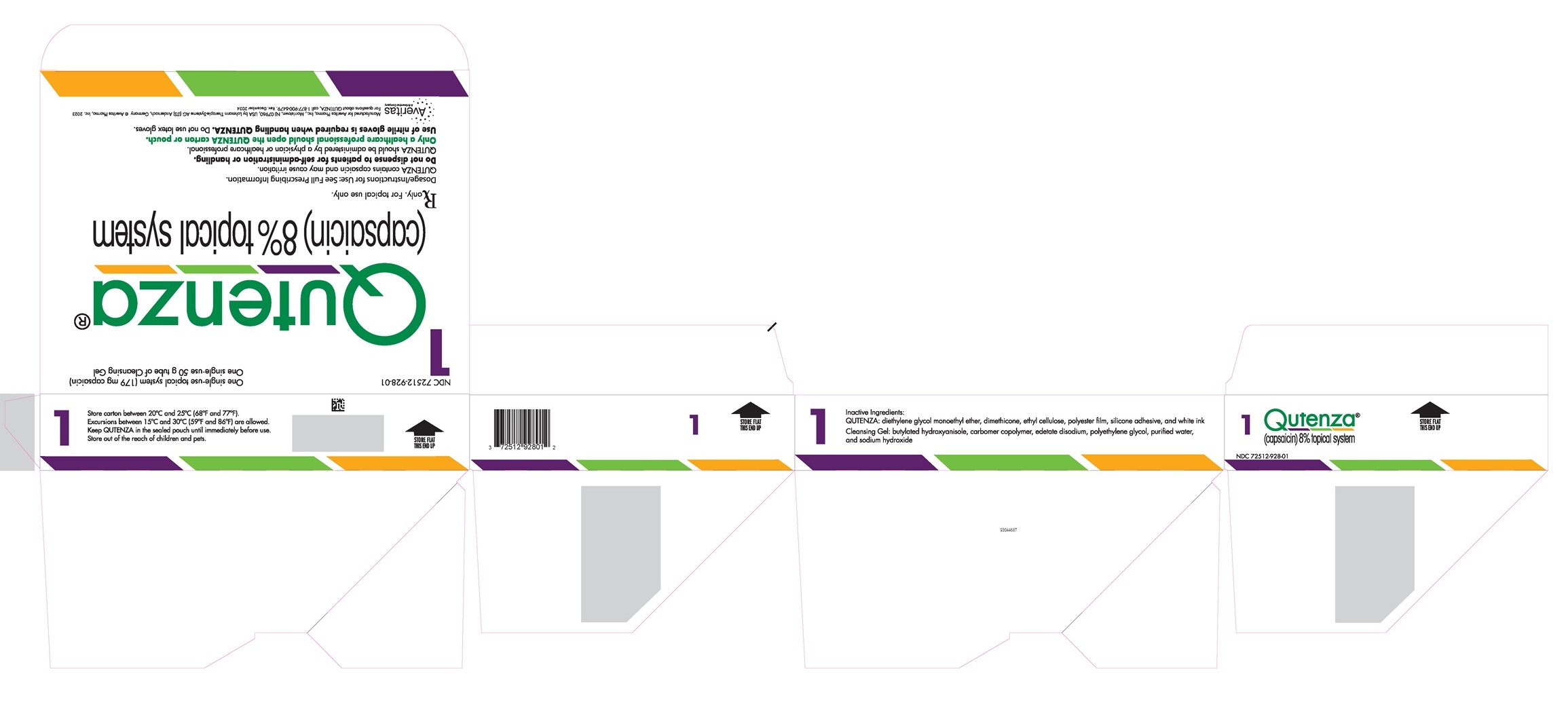
Carton Label (1 Topical System) (Small Image 12)

Carton Label (1 Topical System) (Small Image 12)
Flat packaging label for Qutenza (capsaicin) 8% topical system kit by Averitas Pharma Inc. The label features the product name, strength, dosage form, and inactive ingredients. It includes storage instructions and barcode. The design uses green, purple, and orange accents on a white background.*
FDA Label Image

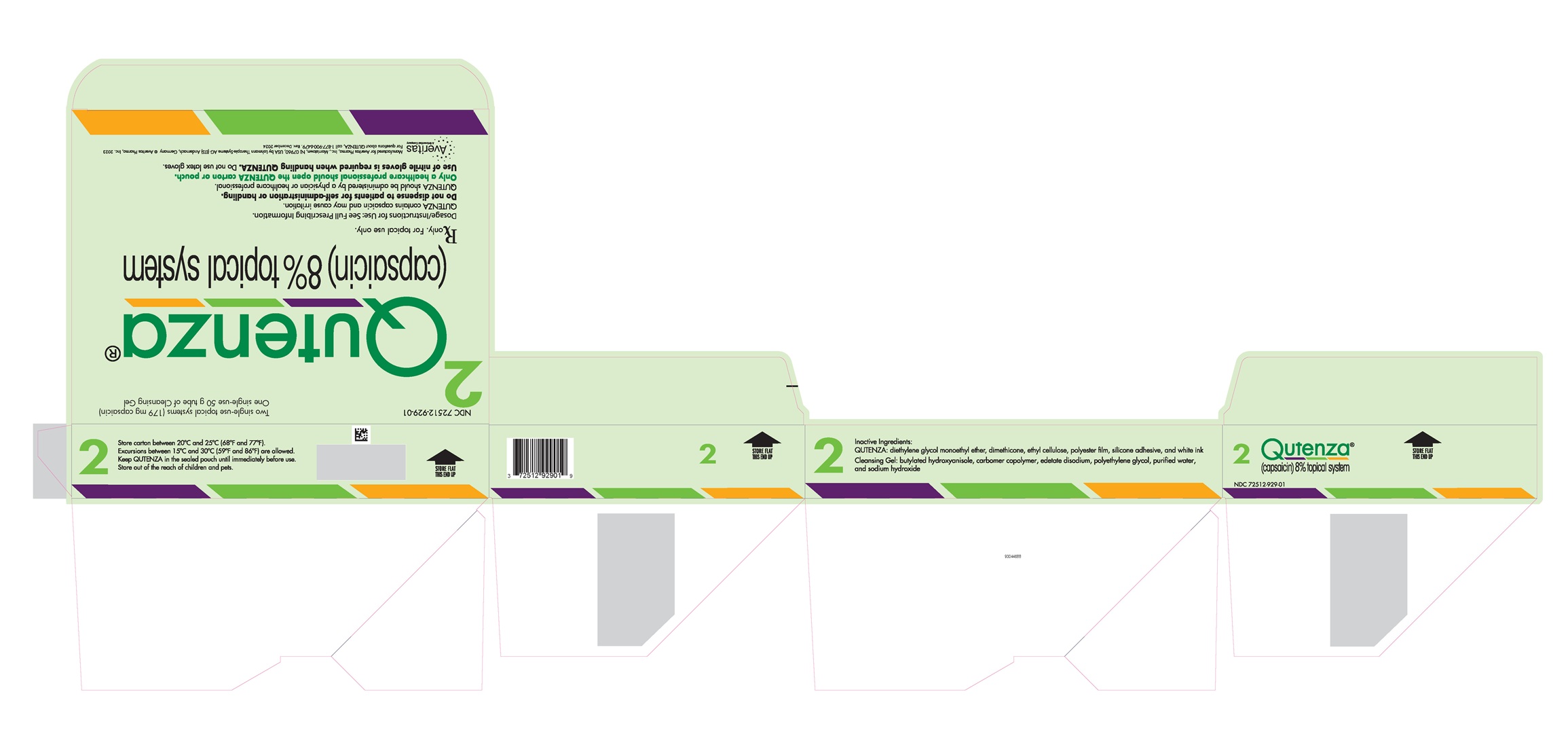
Carton Label (2 Topical Systems) (Small Image 13)

Carton Label (2 Topical Systems) (Small Image 13)
Packaging label for Qutenza (capsaicin) 8% topical system kit by Averitas Pharma Inc. The label features the product name, concentration, dosage form as a topical system, and storage instructions. It also lists inactive ingredients and includes branding colors with green, orange, and purple accents.*
FDA Label Image

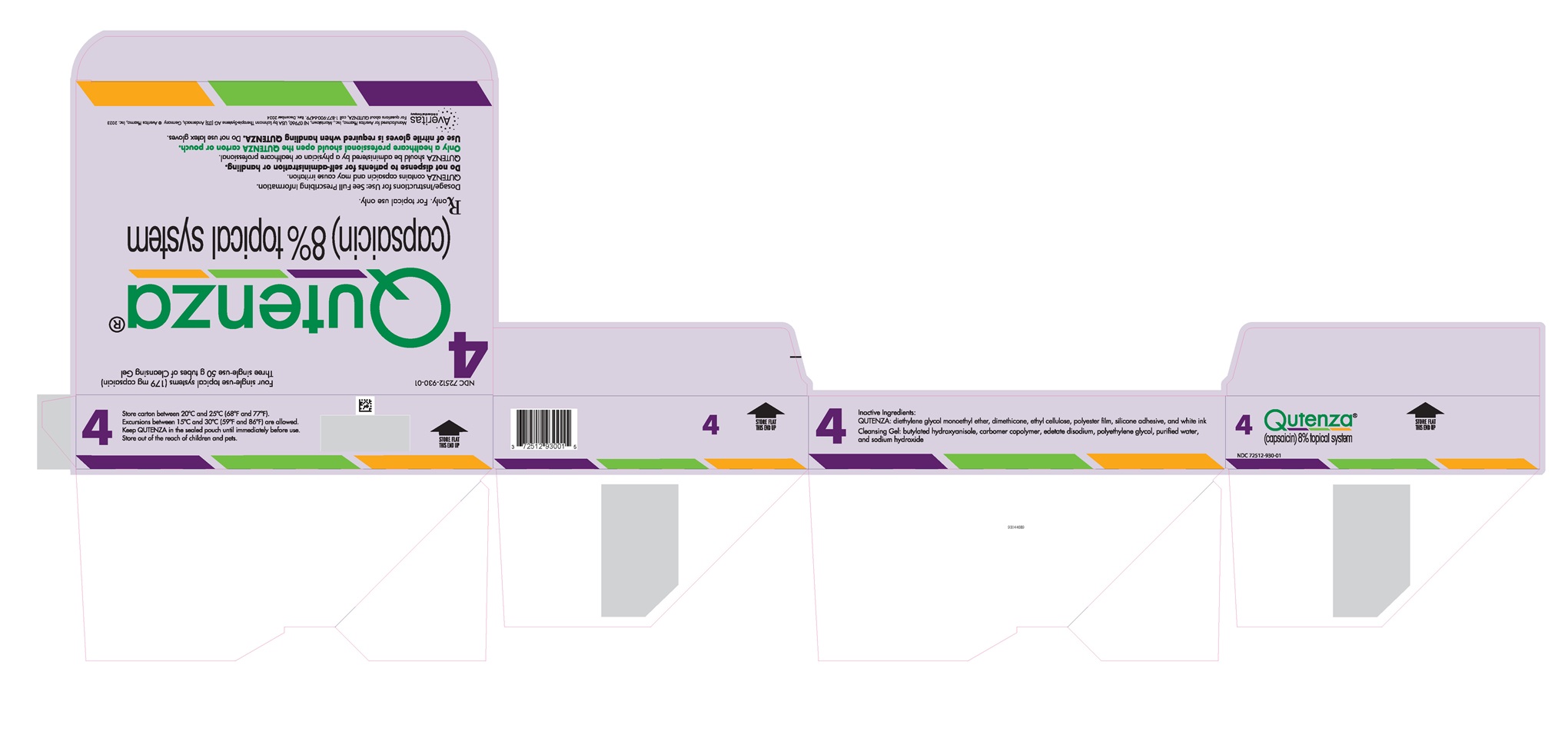
Carton Label (4 Topical Systems) (Small Image 14)

Carton Label (4 Topical Systems) (Small Image 14)
Packaging label for Qutenza (capsaicin) 8% topical system kit by Averitas Pharma Inc. The label is mostly light purple with green, orange, and purple accents, displaying the product name and strength prominently. It includes usage instructions, storage conditions, a barcode, and lists inactive ingredients. The label indicates the product is a prescription drug topical system with four single-use systems per package.*

* About these descriptions: Image descriptions on this page are generated by automated AI analysis of the product label images from the manufacturer's FDA label submission (SPL). They are provided for reference only and may contain errors or omissions. Always rely on the printed label itself and the official FDA labeling, and consult a pharmacist or healthcare professional with any questions about this product.