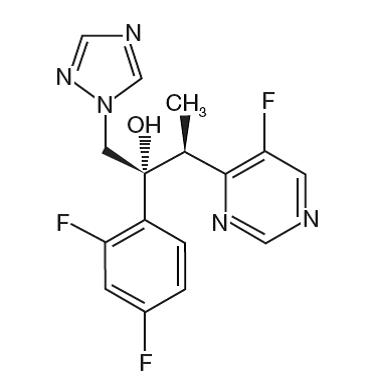
# Not evaluated in patients with EC.
If patient's response is inadequate, the oral maintenance dose may be increased from 200 mg every 12 hours (similar to 3 mg/kg intravenously every 12 hours) to 300 mg every 12 hours (similar to 4 mg/kg intravenously every 12 hours). For adult patients weighing less than 40 kg, the oral maintenance dose may be increased from 100 mg every 12 hours to 150 mg every 12 hours. If patient is unable to tolerate 300 mg orally every 12 hours, reduce the oral maintenance dose by 50 mg steps to a minimum of 200 mg every 12 hours (or to 100 mg every 12 hours for adult patients weighing less than 40 kg).
If patient is unable to tolerate 4 mg/kg intravenously every 12 hours, reduce the intravenous maintenance dose to 3 mg/kg every 12 hours.
The maintenance dose of voriconazole should be reduced in adult patients with mild to moderate hepatic impairment, Child-Pugh Class A and B. There are no PK data to allow for dosage adjustment recommendations in patients with severe hepatic impairment (Child-Pugh Class C).
Duration of therapy should be based on the severity of the patient's underlying disease, recovery from immunosuppression, and clinical response.
Adult patients with baseline liver function tests (ALT, AST) of up to 5 times the upper limit of normal (ULN) were included in the clinical program. Dose adjustments are not necessary for adult patients with this degree of abnormal liver function, but continued monitoring of liver function tests for further elevations is recommended [see Warnings and Precautions (5.1)].
It is recommended that the recommended voriconazole loading dose regimens be used, but that the maintenance dose be halved in adult patients with mild to moderate hepatic cirrhosis (Child-Pugh Class A and B) [see Clinical Pharmacology (12.3)].
Voriconazole has not been studied in adult patients with severe hepatic cirrhosis (Child-Pugh Class C) or in patients with chronic hepatitis B or chronic hepatitis C disease. Voriconazole has been associated with elevations in liver function tests and with clinical signs of liver damage, such as jaundice. Voriconazole for injection should only be used in patients with severe hepatic impairment if the benefit outweighs the potential risk. Patients with hepatic impairment must be carefully monitored for drug toxicity.
Dosage adjustment of voriconazole for injection in pediatric patients with hepatic impairment has not been established [see Use in Specific Populations (8.4)].
The pharmacokinetics of orally administered voriconazole are not significantly affected by renal impairment. Therefore, no adjustment is necessary for oral dosing in patients with mild to severe renal impairment [see Clinical Pharmacology (12.3)].
In patients with moderate or severe renal impairment (creatinine clearance <50 mL/min) who are receiving an intravenous infusion of voriconazole, accumulation of the intravenous vehicle, SBECD, occurs. Oral voriconazole should be administered to these patients, unless an assessment of the benefit/risk to the patient justifies the use of intravenous voriconazole. Serum creatinine levels should be closely monitored in these patients, and, if increases occur, consideration should be given to changing to oral voriconazole therapy [see Warnings and Precautions (5.7)].
Voriconazole and the intravenous vehicle, SBECD, are dialyzable. A 4-hour hemodialysis session does not remove a sufficient amount of voriconazole to warrant dose adjustment [see Clinical Pharmacology (12.3)].
Dosage adjustment of voriconazole in pediatric patients with renal impairment has not been established [see Use in Specific Populations (8.4)].
The powder is reconstituted with 19 mL of Water for Injection to obtain an extractable volume of 20 mL of clear concentrate containing 10 mg/mL of voriconazole. It is recommended that a standard 20 mL (non-automated) syringe be used to ensure that the exact amount (19 mL) of Water for Injection is dispensed. Discard the vial if a vacuum does not pull the diluent into the vial. Shake the vial until all the powder is dissolved.
Voriconazole for injection must be infused over 1 to 3 hours, at a concentration of 5 mg/mL or less. Therefore, the required volume of the 10 mg/mL voriconazole for injection concentrate should be further diluted as follows (appropriate diluents listed below):
- 1.Calculate the volume of 10 mg/mL voriconazole for injection concentrate required based on the patient's weight (see Table 3).
- 2.In order to allow the required volume of voriconazole for injection concentrate to be added, withdraw and discard at least an equal volume of diluent from the infusion bag or bottle to be used. The volume of diluent remaining in the bag or bottle should be such that when the 10 mg/mL voriconazole for injection concentrate is added, the final concentration is not less than 0.5 mg/mL nor greater than 5 mg/mL.
- 3.Using a suitable size syringe and aseptic technique, withdraw the required volume of voriconazole for injection concentrate from the appropriate number of vials and add to the infusion bag or bottle. Discard Partially Used Vials.
The final voriconazole for injection solution must be infused over 1 to 3 hours at a maximum rate of 3 mg/kg per hour.
Table 3: Required Volumes of 10 mg/mL Voriconazole for Injection Concentrate | Volume of Voriconazole for Injection Concentrate (10 mg/mL) required for: |
|---|
Body Weight
(kg) | 3 mg/kg dose
(number of vials) | 4 mg/kg dose
(number of vials) | 6 mg/kg dose
(number of vials) | 8 mg/kg dose
(number of vials) | 9 mg/kg dose
(number of vials) |
|---|
10 | - | 4 mL (1) | - | 8 mL (1) | 9 mL (1) |
15 | - | 6 mL (1) | - | 12 mL (1) | 13.5 mL (1) |
20 | - | 8 mL (1) | - | 16 mL (1) | 18 mL (1) |
25 | - | 10 mL (1) | - | 20 mL (1) | 22.5 mL (2) |
30 | 9 mL (1) | 12 mL (1) | 18 mL (1) | 24 mL (2) | 27 mL (2) |
35 | 10.5 mL (1) | 14 mL (1) | 21 mL (2) | 28 mL (2) | 31.5 mL (2) |
40 | 12 mL (1) | 16 mL (1) | 24 mL (2) | 32 mL (2) | 36 mL (2) |
45 | 13.5 mL (1) | 18 mL (1) | 27 mL (2) | 36 mL (2) | 40.5 mL (3) |
50 | 15 mL (1) | 20 mL (1) | 30 mL (2) | 40 mL (2) | 45 mL (3) |
55 | 16.5 mL (1) | 22 mL (2) | 33 mL (2) | 44 mL (3) | 49.5 mL (3) |
60 | 18 mL (1) | 24 mL (2) | 36 mL (2) | 48 mL (3) | 54 mL (3) |
65 | 19.5 mL (1) | 26 mL (2) | 39 mL (2) | 52 mL (3) | 58.5 mL (3) |
70 | 21 mL (2) | 28 mL (2) | 42 mL (3) | - | - |
75 | 22.5 mL (2) | 30 mL (2) | 45 mL (3) | - | - |
80 | 24 mL (2) | 32 mL (2) | 48 mL (3) | - | - |
85 | 25.5 mL (2) | 34 mL (2) | 51 mL (3) | - | - |
90 | 27 mL (2) | 36 mL (2) | 54 mL (3) | - | - |
95 | 28.5 mL (2) | 38 mL (2) | 57 mL (3) | - | - |
100 | 30 mL (2) | 40 mL (2) | 60 mL (3) | - | - |
Voriconazole for injection is a single-dose unpreserved sterile lyophile. Therefore, from a microbiological point of view, once reconstituted, the product should be used immediately. If not used immediately, in-use storage times and conditions prior to use are the responsibility of the user and should not be longer than 24 hours at 2°C to 8°C (36°F to 46°F). This medicinal product is for single use only and any unused solution should be discarded. Only clear solutions without particles should be used.
The reconstituted solution can be diluted with:
0.9% Sodium Chloride USP
Lactated Ringers USP
5% Dextrose and Lactated Ringers USP
5% Dextrose and 0.45% Sodium Chloride USP
5% Dextrose USP
5% Dextrose and 20 mEq Potassium Chloride USP
0.45% Sodium Chloride USP
5% Dextrose and 0.9% Sodium Chloride USP
The compatibility of voriconazole for injection with diluents other than those described above is unknown (see Incompatibilities below).
Parenteral drug products should be inspected visually for particulate matter and discoloration prior to administration, whenever solution and container permit.
Incompatibilities
Voriconazole for injection must not be diluted with 4.2% Sodium Bicarbonate Infusion. The mildly alkaline nature of this diluent caused slight degradation of voriconazole after 24 hours storage at room temperature. Although refrigerated storage is recommended following reconstitution, use of this diluent is not recommended as a precautionary measure. Compatibility with other concentrations is unknown.
Clinical Trials Experience in Adults
Overview
The most frequently reported adverse reactions (see Table 4) in the adult therapeutic trials were visual disturbances (18.7%), fever (5.7%), nausea (5.4%), rash (5.3%), vomiting (4.4%), chills (3.7%), headache (3%), liver function test increased (2.7%), tachycardia (2.4%), hallucinations (2.4%). The adverse reactions which most often led to discontinuation of voriconazole therapy were elevated liver function tests, rash, and visual disturbances [see Warning and Precautions (5.1, 5.4) and Adverse Reactions (6.1)].
The data described in Table 4 reflect exposure to voriconazole in 1655 patients in nine therapeutic studies. This represents a heterogeneous population, including immunocompromised patients, e.g., patients with hematological malignancy or HIV and non-neutropenic patients. This subgroup does not include healthy subjects and patients treated in the compassionate use and non-therapeutic studies. This patient population was 62% male, had a mean age of 46 years (range 11 to 90, including 51 patients aged 12 to 18 years), and was 78% White and 10% Black. Five hundred sixty one patients had a duration of voriconazole therapy of greater than 12 weeks, with 136 patients receiving voriconazole for over six months. Table 4 includes all adverse reactions which were reported at an incidence of ≥2% during voriconazole therapy in the all therapeutic studies population, studies 307/602 and 608 combined, or study 305, as well as events of concern which occurred at an incidence of <2%.
In study 307/602, 381 patients (196 on voriconazole, 185 on amphotericin B) were treated to compare voriconazole to amphotericin B followed by other licensed antifungal therapy (OLAT) in the primary treatment of patients with acute IA. The rate of discontinuation from voriconazole study medication due to adverse reactions was 21.4% (42/196 patients). In study 608, 403 patients with candidemia were treated to compare voriconazole (272 patients) to the regimen of amphotericin B followed by fluconazole (131 patients). The rate of discontinuation from voriconazole study medication due to adverse reactions was 19.5% out of 272 patients. Study 305 evaluated the effects of oral voriconazole (200 patients) and oral fluconazole (191 patients) in the treatment of EC. The rate of discontinuation from voriconazole study medication in Study 305 due to adverse reactions was 7% (14/200 patients). Laboratory test abnormalities for these studies are discussed under Clinical Laboratory Values below.
Table 4: Adverse Reactions Rate ≥ 2% on Voriconazole or Adverse Reactions of Concern in Therapeutic Studies Population, Studies 307/602-608 Combined, or Study 305. Possibly Related to Therapy or Causality Unknown*
| Therapeutic Studies§ | Studies 307/602 and 608
(IV/ oral therapy) | Study 305
(oral therapy) |
|---|
| Voriconazole
N=1655 | Voriconazole
N=468 | Ampho B†
N=185 | Ampho B→ Fluconazole
N=131 | Voriconazole
N=200 | Fluconazole
N=191 |
|---|
| N (%) | N (%) | N (%) | N (%) | N (%) | N (%) |
|---|
Special Senses‡ | | | | | | |
Abnormal vision | 310 (18.7) | 63 (13.5) | 1 (0.5) | 0 | 31 (15.5) | 8 (4.2) |
Photophobia | 37 (2.2) | 8 (1.7) | 0 | 0 | 5 (2.5) | 2 (1) |
Chromatopsia | 20 (1.2) | 2 (0.4) | 0 | 0 | 2 (1) | 0 |
Body as a Whole | | | | | | |
Fever | 94 (5.7) | 8 (1.7) | 25 (13.5) | 5 (3.8) | 0 | 0 |
Chills | 61 (3.7) | 1 (0.2) | 36 (19.5) | 8 (6.1) | 1 (0.5) | 0 |
Headache | 49 (3) | 9 (1.9) | 8 (4.3) | 1 (0.8) | 0 | 1 (0.5) |
Cardiovascular System | | | | | | |
Tachycardia | 39 (2.4) | 6 (1.3) | 5 (2.7) | 0 | 0 | 0 |
Digestive System | | | | | | |
Nausea | 89 (5.4) | 18 (3.8) | 29 (15.7) | 2 (1.5) | 2 (1) | 3 (1.6) |
Vomiting | 72 (4.4) | 15 (3.2) | 18 (9.7) | 1 (0.8) | 2 (1) | 1 (0.5) |
Liver function tests abnormal | 45 (2.7) | 15 (3.2) | 4 (2.2) | 1 (0.8) | 6 (3) | 2 (1) |
Cholestatic jaundice | 17 (1) | 8 (1.7) | 0 | 1 (0.8) | 3 (1.5) | 0 |
Metabolic and Nutritional Systems | | | | | | |
Alkaline phosphatase increased | 59 (3.6) | 19 (4.1) | 4 (2.2) | 3 (2.3) | 10 (5) | 3 (1.6) |
Hepatic enzymes increased | 30 (1.8) | 11 (2.4) | 5 (2.7) | 1 (0.8) | 3 (1.5) | 0 |
SGOT increased | 31 (1.9) | 9 (1.9) | 0 | 1 (0.8) | 8 (4) | 2 (1) |
SGPT increased | 29 (1.8) | 9 (1.9) | 1 (0.5) | 2 (1.5) | 6 (3) | 2 (1) |
Hypokalemia | 26 (1.6) | 3 (0.6) | 36 (19.5) | 16 (12.2) | 0 | 0 |
Bilirubinemia | 15 (0.9) | 5 (1.1) | 3 (1.6) | 2 (1.5) | 1 (0.5) | 0 |
Creatinine increased | 4 (0.2) | 0 | 59 (31.9) | 10 (7.6) | 1 (0.5) | 0 |
Nervous System | | | | | | |
Hallucinations | 39 (2.4) | 13 (2.8) | 1 (0.5) | 0 | 0 | 0 |
Skin and Appendages | | | | | | |
Rash | 88 (5.3) | 20 (4.3) | 7 (3.8) | 1 (0.8) | 3 (1.5) | 1 (0.5) |
Urogenital | | | | | | |
Kidney function abnormal | 10 (0.6) | 6 (1.3) | 40 (21.6) | 9 (6.9) | 1 (0.5) | 1 (0.5) |
Acute kidney failure | 7 (0.4) | 2 (0.4) | 11 (5.9) | 7 (5.3) | 0 | 0 |
* Study 307/602: IA; Study 608: candidemia; Study 305: EC
† Amphotericin B followed by other licensed antifungal therapy
‡ See Warnings and Precautions (5.4)
§ Studies 303, 304, 305, 307, 309, 602, 603, 604, 608
Visual Disturbances
Voriconazole treatment-related visual disturbances are common. In therapeutic trials, approximately 21% of patients experienced abnormal vision, color vision change and/or photophobia. Visual disturbances may be associated with higher plasma concentrations and/or doses.
The mechanism of action of the visual disturbance is unknown, although the site of action is most likely to be within the retina. In a study in healthy subjects investigating the effect of 28-day treatment with voriconazole on retinal function, voriconazole caused a decrease in the electroretinogram (ERG) waveform amplitude, a decrease in the visual field, and an alteration in color perception. The ERG measures electrical currents in the retina. These effects were noted early in administration of voriconazole and continued through the course of study drug treatment. Fourteen days after the end of dosing, ERG, visual fields and color perception returned to normal [see Warnings and Precautions (5.4)].
Dermatological Reactions
Dermatological reactions were common in patients treated with voriconazole. The mechanism underlying these dermatologic adverse reactions remains unknown.
Severe cutaneous adverse reactions (SCARs), including Stevens-Johnson syndrome (SJS), toxic epidermal necrolysis (TEN), and drug reaction with eosinophilia and systemic symptoms (DRESS) have been reported during treatment with voriconazole. Erythema multiforme has also been reported during treatment with voriconazole [see Warnings and Precautions (5.5) and Adverse Reactions (6.2)].
Voriconazole has also been associated with additional photosensitivity related skin reactions such as pseudoporphyria, cheilitis, and cutaneous lupus erythematosus [see Warnings and Precautions (5.6) and Adverse Reactions (6.2)].
Less Common Adverse Reactions
The following adverse reactions occurred in <2% of all voriconazole-treated patients in all therapeutic studies (N=1655). This listing includes events where a causal relationship to voriconazole cannot be ruled out or those which may help the physician in managing the risks to the patients. The list does not include events included in Table 4 above and does not include every event reported in the voriconazole clinical program.
Body as a Whole: abdominal pain, abdomen enlarged, allergic reaction, anaphylactoid reaction [see Warnings and Precautions (5.3)], ascites, asthenia, back pain, chest pain, cellulitis, edema, face edema, flank pain, flu syndrome, graft versus host reaction, granuloma, infection, bacterial infection, fungal infection, injection site pain, injection site infection/inflammation, mucous membrane disorder, multi-organ failure, pain, pelvic pain, peritonitis, sepsis, substernal chest pain.
Cardiovascular: atrial arrhythmia, atrial fibrillation, AV block complete, bigeminy, bradycardia, bundle branch block, cardiomegaly, cardiomyopathy, cerebral hemorrhage, cerebral ischemia, cerebrovascular accident, congestive heart failure, deep thrombophlebitis, endocarditis, extrasystoles, heart arrest, hypertension, hypotension, myocardial infarction, nodal arrhythmia, palpitation, phlebitis, postural hypotension, pulmonary embolus, QT interval prolonged, supraventricular extrasystoles, supraventricular tachycardia, syncope, thrombophlebitis, vasodilatation, ventricular arrhythmia, ventricular fibrillation, ventricular tachycardia (including torsade de pointes) [see Warnings and Precautions (5.2)].
Digestive: anorexia, cheilitis, cholecystitis, cholelithiasis, constipation, diarrhea, duodenal ulcer perforation, duodenitis, dyspepsia, dysphagia, dry mouth, esophageal ulcer, esophagitis, flatulence, gastroenteritis, gastrointestinal hemorrhage, GGT/LDH elevated, gingivitis, glossitis, gum hemorrhage, gum hyperplasia, hematemesis, hepatic coma, hepatic failure, hepatitis, intestinal perforation, intestinal ulcer, jaundice, enlarged liver, melena, mouth ulceration, pancreatitis, parotid gland enlargement, periodontitis, proctitis, pseudomembranous colitis, rectal disorder, rectal hemorrhage, stomach ulcer, stomatitis, tongue edema.
Endocrine: adrenal cortex insufficiency, diabetes insipidus, hyperthyroidism, hypothyroidism.
Hemic and Lymphatic: agranulocytosis, anemia (macrocytic, megaloblastic, microcytic, normocytic), aplastic anemia, hemolytic anemia, bleeding time increased, cyanosis, DIC, ecchymosis, eosinophilia, hypervolemia, leukopenia, lymphadenopathy, lymphangitis, marrow depression, pancytopenia, petechia, purpura, enlarged spleen, thrombocytopenia, thrombotic thrombocytopenic purpura.
Metabolic and Nutritional: albuminuria, BUN increased, creatine phosphokinase increased, edema, glucose tolerance decreased, hypercalcemia, hypercholesteremia, hyperglycemia, hyperkalemia, hypermagnesemia, hypernatremia, hyperuricemia, hypocalcemia, hypoglycemia, hypomagnesemia, hyponatremia, hypophosphatemia, peripheral edema, uremia.
Musculoskeletal: arthralgia, arthritis, bone necrosis, bone pain, leg cramps, myalgia, myasthenia, myopathy, osteomalacia, osteoporosis.
Nervous System: abnormal dreams, acute brain syndrome, agitation, akathisia, amnesia, anxiety, ataxia, brain edema, coma, confusion, convulsion, delirium, dementia, depersonalization, depression, diplopia, dizziness, encephalitis, encephalopathy, euphoria, Extrapyramidal Syndrome, grand mal convulsion, Guillain-Barré syndrome, hypertonia, hypesthesia, insomnia, intracranial hypertension, libido decreased, neuralgia, neuropathy, nystagmus, oculogyric crisis, paresthesia, psychosis, somnolence, suicidal ideation, tremor, vertigo.
Respiratory System: cough increased, dyspnea, epistaxis, hemoptysis, hypoxia, lung edema, pharyngitis, pleural effusion, pneumonia, respiratory disorder, respiratory distress syndrome, respiratory tract infection, rhinitis, sinusitis, voice alteration.
Skin and Appendages: alopecia, angioedema, contact dermatitis, discoid lupus erythematosis, eczema, erythema multiforme, exfoliative dermatitis, fixed drug eruption, furunculosis, herpes simplex, maculopapular rash, melanoma, melanosis, photosensitivity skin reaction, pruritus, pseudoporphyria, psoriasis, skin discoloration, skin disorder, skin dry, Stevens-Johnson syndrome, squamous cell carcinoma (including cutaneous SCC in situ, or Bowen’s disease), sweating, toxic epidermal necrolysis, urticaria.
Special Senses: abnormality of accommodation, blepharitis, color blindness, conjunctivitis, corneal opacity, deafness, ear pain, eye pain, eye hemorrhage, dry eyes, hypoacusis, keratitis, keratoconjunctivitis, mydriasis, night blindness, optic atrophy, optic neuritis, otitis externa, papilledema, retinal hemorrhage, retinitis, scleritis, taste loss, taste perversion, tinnitus, uveitis, visual field defect.
Urogenital: anuria, blighted ovum, creatinine clearance decreased, dysmenorrhea, dysuria, epididymitis, glycosuria, hemorrhagic cystitis, hematuria, hydronephrosis, impotence, kidney pain, kidney tubular necrosis, metrorrhagia, nephritis, nephrosis, oliguria, scrotal edema, urinary incontinence, urinary retention, urinary tract infection, uterine hemorrhage, vaginal hemorrhage.
Clinical Laboratory Values in Adults
The overall incidence of transaminase increases >3× upper limit of normal (not necessarily comprising an adverse reaction) was 17.7% (268/1514) in adult subjects treated with voriconazole for therapeutic use in pooled clinical trials. Increased incidence of liver function test abnormalities may be associated with higher plasma concentrations and/or doses. The majority of abnormal liver function tests either resolved during treatment without dose adjustment or resolved following dose adjustment, including discontinuation of therapy.
Voriconazole has been infrequently associated with cases of serious hepatic toxicity including cases of jaundice and rare cases of hepatitis and hepatic failure leading to death. Most of these patients had other serious underlying conditions.
Liver function tests should be evaluated at the start of and during the course of voriconazole therapy. Patients who develop abnormal liver function tests during voriconazole therapy should be monitored for the development of more severe hepatic injury. Patient management should include laboratory evaluation of hepatic function (particularly liver function tests and bilirubin). Discontinuation of voriconazole must be considered if clinical signs and symptoms consistent with liver disease develop that may be attributable to voriconazole [see Warnings and Precautions (5.1)].
Acute renal failure has been observed in severely ill patients undergoing treatment with voriconazole. Patients being treated with voriconazole are likely to be treated concomitantly with nephrotoxic medications and may have concurrent conditions that can result in decreased renal function. It is recommended that patients are monitored for the development of abnormal renal function. This should include laboratory evaluation of serum creatinine.
Tables 5 to 7 show the number of patients with hypokalemia and clinically significant changes in renal and liver function tests in three randomized, comparative multicenter studies. In study 305, patients with EC were randomized to either oral voriconazole or oral fluconazole. In study 307/602, patients with definite or probable IA were randomized to either voriconazole or amphotericin B therapy. In study 608, patients with candidemia were randomized to either voriconazole or the regimen of amphotericin B followed by fluconazole.
Table 5: Protocol 305 – Patients with Esophageal Candidiasis Clinically Significant Laboratory Test Abnormalities | Criteria* | Voriconazole | Fluconazole |
|---|
| | n/N (%) | n/N (%) |
|---|
T. Bilirubin | >1.5× ULN | 8/185 (4.3) | 7/186 (3.8) |
AST | >3× ULN | 38/187 (20.3) | 15/186 (8.1) |
ALT | >3× ULN | 20/187 (10.7) | 12/186 (6.5) |
Alkaline Phosphatase | >3× ULN | 19/187 (10.2) | 14/186 (7.5) |
n = number of patients with a clinically significant abnormality while on study therapy
N = total number of patients with at least one observation of the given lab test while on study therapy
AST= Aspartate aminotransferase; ALT=alanine aminotransferase
ULN = upper limit of normal
*Without regard to baseline value
Table 6: Protocol 307/602 – Primary Treatment of Invasive Aspergillosis Clinically Significant Laboratory Test Abnormalities
| Criteria* | Voriconazole | Amphotericin B† |
|---|
| | n/N (%) | n/N (%) |
|---|
T. Bilirubin | >1.5× ULN | 35/180 (19.4) | 46/173 (26.6) |
AST | >3× ULN | 21/180 (11.7) | 18/174 (10.3) |
ALT | >3× ULN | 34/180 (18.9) | 40/173 (23.1) |
Alkaline Phosphatase | >3× ULN | 29/181 (16) | 38/173 (22) |
Creatinine | >1.3× ULN | 39/182 (21.4) | 102/177 (57.6) |
Potassium | <0.9× LLN | 30/181 (16.6) | 70/178 (39.3) |
n = number of patients with a clinically significant abnormality while on study therapy
N = total number of patients with at least one observation of the given lab test while on study therapy
AST= Aspartate aminotransferase; ALT=alanine aminotransferase
ULN = upper limit of normal
LLN = lower limit of normal
* Without regard to baseline value
† Amphotericin B followed by other licensed antifungal therapy
Table 7: Protocol 608 – Treatment of Candidemia Clinically Significant Laboratory Test Abnormalities | Criteria* | Voriconazole | Amphotericin B followed by Fluconazole |
|---|
| | n/N (%) | n/N (%) |
|---|
T. Bilirubin | >1.5× ULN | 50/261 (19.2) | 31/115 (27) |
AST | >3× ULN | 40/261 (15.3) | 16/116 (13.8) |
ALT | >3× ULN | 22/261 (8.4) | 15/116 (12.9) |
Alkaline Phosphatase | >3× ULN | 59/261 (22.6) | 26/115 (22.6) |
Creatinine | >1.3× ULN | 39/260 (15) | 32/118 (27.1) |
Potassium | <0.9× LLN | 43/258 (16.7) | 35/118 (29.7) |
n = number of patients with a clinically significant abnormality while on study therapy
N = total number of patients with at least one observation of the given lab test while on study therapy
AST= Aspartate aminotransferase; ALT=alanine aminotransferase
ULN = upper limit of normal
LLN = lower limit of normal
* Without regard to baseline value
Clinical Trials Experience in Pediatric Patients
The safety of voriconazole was investigated in 105 pediatric patients aged 2 to less than 18 years, including 52 pediatric patients less than 18 years of age who were enrolled in the adult therapeutic studies.
Serious Adverse Reactions and Adverse Reactions Leading to Discontinuation
In clinical studies, serious adverse reactions occurred in 46% (48/105) of voriconazole treated pediatric patients. Treatment discontinuations due to adverse reactions occurred in 12 /105 (11%) of all patients. Hepatic adverse reactions (i.e. ALT increased; liver function test abnormal; jaundice) 6% (6/105) accounted for the majority of voriconazole treatment discontinuations.
Most Common Adverse Reactions
The most common adverse reactions occurring in ≥5% of pediatric patients receiving voriconazole in the pooled pediatric clinical trials are displayed by body system, in Table 8.
- Table 8: Adverse Reactions Occurring in ≥5% of Pediatric Patients Receiving Voriconazole in the Pooled Pediatric Clinical Trials
Body System | Adverse Reaction | Pooled Pediatric Data Reflects all adverse reactions and not treatment-related only. N=105 n (%) |
Blood and Lymphatic Systems Disorders | Thrombocytopenia | 10 (10) |
Cardiac Disorders | Tachycardia | 7 (7) |
Eye Disorders | Visual Disturbances Pooled reports include such terms as: amaurosis (partial or total blindness without visible change in the eye); asthenopia (eye strain); chromatopsia (abnormally colored vision); color blindness; diplopia; photopsia; retinal disorder; vision blurred, visual acuity decreased, visual brightness; visual impairment. Several patients had more than one visual disturbance. | 27 (26) |
Photophobia | 6 (6) |
Gastrointestinal Disorders | Vomiting | 21 (20) |
Nausea | 14 (13) |
Abdominal pain Pooled reports include such terms as: abdominal pain and abdominal pain, upper. | 13 (12) |
Diarrhea | 12 (11) |
Abdominal distention | 5 (5) |
Constipation | 5 (5) |
General Disorders and Administration Site Conditions | Pyrexia | 25 (25) |
Peripheral edema | 9 (9) |
Mucosal inflammation | 6 (6) |
Infections and Infestations | Upper respiratory tract infection | 5 (5) |
Investigations | ALT abnormal Pooled reports include such terms as: ALT abnormal and ALT increased. | 9 (9) |
LFT abnormal | 6 (6) |
Metabolism and Nutrition Disorders | Hypokalemia | 11 (11) |
Hyperglycemia | 7 (7) |
Hypocalcemia | 6 (6) |
Hypophosphotemia | 6 (6) |
Hypoalbuminemia | 5 (5) |
Hypomagnesemia | 5 (5) |
Nervous System Disorders | Headache | 10 (10) |
Dizziness | 5 (5) |
Psychiatric Disorders | Hallucinations Pooled reports include such terms as: hallucination; hallucination, auditory; hallucination, visual. Several patients had both visual and auditory hallucinations. | 5 (5) |
Renal and Urinary Disorders | Renal impairment Pooled reports include such terms as: renal failure and a single patient with renal impairment. | 5 (5) |
Respiratory Disorders | Epistaxis | 17 (16) |
Cough | 10 (10) |
Dyspnea | 6 (6) |
Hemoptysis | 5 (5) |
Skin and Subcutaneous Tissue Disorders | Rash Pooled reports include such terms as: rash; rash generalized; rash macular; rash maculopapular; rash pruritic. | 14 (13) |
Vascular Disorders | Hypertension | 12 (11) |
Hypotension | 9 (9) |
Abbreviations: ALT = alanine aminotransferase; LFT = liver function test
The following adverse reactions with incidence less than 5% were reported in 105 pediatric patients treated with voriconazole:
Blood and Lymphatic System Disorders: anemia, leukopenia, pancytopenia
Cardiac Disorders: bradycardia, palpitations, supraventricular tachycardia
Eye Disorders: dry eye, keratitis
Ear and Labyrinth Disorders: tinnitus, vertigo
Gastrointestinal Disorders: abdominal tenderness, dyspepsia
General Disorders and Administration Site Conditions: asthenia, catheter site pain, chills, hypothermia, lethargy
Hepatobiliary Disorders: cholestasis, hyperbilirubinemia, jaundice
Immune System Disorders: hypersensitivity, urticaria
Infections and Infestations: conjunctivitis
Laboratory Investigations: AST increased, blood creatinine increased, gamma-glutamyl transferase increased
Metabolism and Nutrition Disorders: hypercalcemia, hypermagnesemia, hyperphosphatemia, hypoglycemia
Musculoskeletal and Connective Tissue Disorders: arthralgia, myalgia
Nervous System Disorders: ataxia, convulsion, dizziness, nystagmus, paresthesia, syncope
Psychiatric Disorders: affect lability, agitation, anxiety, depression, insomnia
Respiratory Disorders: bronchospasm, nasal congestion, respiratory failure, tachypnea
Skin and Subcutaneous Tissue Disorders: alopecia, dermatitis (allergic, contact, and exfoliative), pruritus
Vascular Disorders: flushing, phlebitis
Hepatic-Related Adverse Reactions in Pediatric Patients
The frequency of hepatic-related adverse reactions in pediatric patients exposed to voriconazole in therapeutic studies was numerically higher than that of adults (28.6% compared to 24.1%, respectively). The higher frequency of hepatic adverse reactions in the pediatric population was mainly due to an increased frequency of liver enzyme elevations (21.9% in pediatric patients compared to 16.1% in adults), including transaminase elevations (ALT and AST combined) 7.6% in the pediatric patients compared to 5.1% in adults.
Clinical Laboratory Values in Pediatric Patients
The overall incidence of transaminase increases >3x upper limit of normal was 27.2% (28/103) in pediatric and 17.7% (268/1514) in adult patients treated with voriconazole in pooled clinical trials. The majority of abnormal liver function tests either resolved on treatment with or without dose adjustment or after voriconazole discontinuation.
A higher frequency of clinically significant liver laboratory abnormalities, irrespective of baseline laboratory values (>3x ULN ALT or AST), was consistently observed in the combined therapeutic pediatric population (15.5% AST and 22.5% ALT) when compared to adults (12.9% AST and 11.6% ALT). The incidence of bilirubin elevation was comparable between adult and pediatric patients. The incidence of hepatic abnormalities in pediatric patients is shown in Table 9.
Table 9: Incidence of Hepatic Abnormalities among Pediatric Subjects
Criteria | n/N (%) |
Total bilirubin | >1.5x ULN | 19/102 (19) |
AST | >3.0x ULN | 16/103 (16) |
ALT | >3.0x ULN | 23/102 (23) |
Alkaline Phosphatase | >3.0x ULN | 8/97 (8) |
n = number of patients with a clinically significant abnormality while on study therapy
N = total number of patients with at least one observation of the given lab test while on study therapy
AST = Aspartate aminotransferase; ALT = alanine aminotransferase
ULN = upper limit of normal
Dermatological Reactions
Increased risk of skin toxicity with concomitant use of methotrexate, a drug associated with UV reactivation, was observed in postmarketing reports [see Warnings and Precautions (5.6) and Adverse Reactions (6.1)].
Adults
Skeletal: fluorosis and periostitis have been reported during long-term voriconazole therapy [see Warnings and Precautions (5.12)].
Eye disorders: prolonged visual adverse reactions, including optic neuritis and papilledema [see Warnings and Precautions (5.4)].
Skin and Appendages: drug reaction with eosinophilia and systemic symptoms (DRESS) has been reported [see Warnings and Precautions (5.5) and Adverse Reactions (6.1)].
Endocrine disorders: adrenal insufficiency, Cushing’s syndrome (when voriconazole has been used concomitantly with corticosteroids) [see Warnings and Precautions (5.8)].
Pediatric Patients
There have been postmarketing reports of pancreatitis in pediatric patients.
Risk Summary
Voriconazole can cause fetal harm when administered to a pregnant woman. There are no available data on the use of voriconazole in pregnant women. In animal reproduction studies, oral voriconazole was associated with fetal malformations in rats and fetal toxicity in rabbits. Cleft palates and hydronephrosis/hydroureter were observed in rat pups exposed to voriconazole during organogenesis at and above 10 mg/kg (0.3 times the RMD of 200 mg every 12 hours based on body surface area comparisons). In rabbits, embryomortality, reduced fetal weight and increased incidence of skeletal variations, cervical ribs and extrasternal ossification sites were observed in pups when pregnant rabbits were orally dosed at 100 mg/kg (6 times the RMD based on body surface area comparisons) during organogenesis. Rats exposed to voriconazole from implantation to weaning experienced increased gestational length and dystocia, which were associated with increased perinatal pup mortality at the 10 mg/kg dose [see Data]. If this drug is used during pregnancy, or if the patient becomes pregnant while taking this drug, inform the patient of the potential hazard to the fetus [see Warnings and Precautions (5.9)].
The background risk of major birth defects and miscarriage for the indicated populations is unknown. In the U.S. general population, the estimated background risk of major birth defects and miscarriage in clinically recognized pregnancies is 2 to 4% and 15 to 20% respectively.
Data
Animal Data
Voriconazole was administered orally to pregnant rats during organogenesis (gestation days 6 to 17) at 10, 30, and 60 mg/kg/day. Voriconazole was associated with increased incidences of the malformations hydroureter and hydronephrosis at 10 mg/kg/day or greater, approximately 0.3 times the recommended human dose (RMD) based on body surface area comparisons, and cleft palate at 60 mg/kg, approximately 2 times the RMD based on body surface area comparisons. Reduced ossification of sacral and caudal vertebrae, skull, pubic, and hyoid bone, supernumerary ribs, anomalies of the sternebrae, and dilatation of the ureter/renal pelvis were also observed at doses of 10 mg/kg or greater. There was no evidence of maternal toxicity at any dose.
Voriconazole was administered orally to pregnant rabbits during the period of organogenesis (gestation days 7 to 19) at 10, 40, and 100 mg/kg/day. Voriconazole was associated with increased post-implantation loss and decreased fetal body weight, in association with maternal toxicity (decreased body weight gain and food consumption) at 100 mg/kg/day (6 times the RMD based on body surface area comparisons). Fetal skeletal variations (increases in the incidence of cervical rib and extra sternebral ossification sites) were observed at 100 mg/kg/day.
In a peri- and postnatal toxicity study in rats, voriconazole was administered orally to female rats from implantation through the end of lactation at 1, 3, and 10 mg/kg/day. Voriconazole prolonged the duration of gestation and labor and produced dystocia with related increases in maternal mortality and decreases in perinatal survival of F1 pups at 10 mg/kg/day, approximately 0.3 times the RMD.
Risk Summary
No data are available regarding the presence of voriconazole in human milk, the effects of voriconazole on the breastfed infant, or the effects on milk production. The developmental and health benefits of breastfeeding should be considered along with the mother's clinical need for voriconazole and any potential adverse effects on the breastfed child from voriconazole or from the underlying maternal condition.
Contraception
Advise females of reproductive potential to use effective contraception during treatment with voriconazole. The coadministration of voriconazole with the oral contraceptive, Ortho-Novum® (35 mcg ethinyl estradiol and 1 mg norethindrone), results in an interaction between these two drugs, but is unlikely to reduce the contraceptive effect. Monitoring for adverse reactions associated with oral contraceptives and voriconazole is recommended [see Drug Interactions (7) and Clinical Pharmacology (12.3)].
Exposure-Response Relationship for Efficacy and Safety
In 10 clinical trials (N=1121), the median values for the average and maximum voriconazole plasma concentrations in individual patients across these studies was 2.51 mcg/mL (inter-quartile range 1.21 to 4.44 mcg/mL) and 3.79 mcg/mL (inter-quartile range 2.06 to 6.31 mcg/mL), respectively. A pharmacokinetic-pharmacodynamic analysis of patient data from 6 of these 10 clinical trials (N=280) could not detect a positive association between mean, maximum or minimum plasma voriconazole concentration and efficacy. However, pharmacokinetic/pharmacodynamic analyses of the data from all 10 clinical trials identified positive associations between plasma voriconazole concentrations and rate of both liver function test abnormalities and visual disturbances [see Adverse Reactions (6)].
Cardiac Electrophysiology
A placebo-controlled, randomized, crossover study to evaluate the effect on the QT interval of healthy male and female subjects was conducted with three single oral doses of voriconazole and ketoconazole. Serial ECGs and plasma samples were obtained at specified intervals over a 24-hour post dose observation period. The placebo-adjusted mean maximum increases in QTc from baseline after 800, 1200, and 1600 mg of voriconazole and after ketoconazole 800 mg were all <10 msec. Females exhibited a greater increase in QTc than males, although all mean changes were <10 msec. Age was not found to affect the magnitude of increase in QTc. No subject in any group had an increase in QTc of ≥60 msec from baseline. No subject experienced an interval exceeding the potentially clinically relevant threshold of 500 msec. However, the QT effect of voriconazole combined with drugs known to prolong the QT interval is unknown [see Contraindications (4) and Drug Interactions (7)].
Mechanism of Action
Voriconazole is an azole antifungal drug. The primary mode of action of voriconazole is the inhibition of fungal cytochrome P-450-mediated 14 alpha-lanosterol demethylation, an essential step in fungal ergosterol biosynthesis. The accumulation of 14 alpha-methyl sterols correlates with the subsequent loss of ergosterol in the fungal cell wall and may be responsible for the antifungal activity of voriconazole.
Resistance
A potential for development of resistance to voriconazole is well known. The mechanisms of resistance may include mutations in the gene ERG11 (encodes for the target enzyme, lanosterol 14-α-demethylase), upregulation of genes encoding the ATP-binding cassette efflux transporters i.e., Candida drug resistance (CDR) pumps and reduced access of the drug to the target, or some combination of those mechanisms. The frequency of drug resistance development for the various fungi for which this drug is indicated is not known.
Fungal isolates exhibiting reduced susceptibility to fluconazole or itraconazole may also show reduced susceptibility to voriconazole, suggesting cross-resistance can occur among these azoles. The relevance of cross-resistance and clinical outcome has not been fully characterized. Clinical cases where azole cross-resistance is demonstrated may require alternative antifungal therapy.
Antimicrobial Activity
Voriconazole has been shown to be active against most isolates of the following microorganisms, both in vitro and in clinical infections.
Aspergillus fumigatus
Aspergillus flavus
Aspergillus niger
Aspergillus terreus
Candida albicans
Candida glabrata (In clinical studies, the voriconazole MIC90 was 4 mcg/mL)*
Candida krusei
Candida parapsilosis
Candida tropicalis
Fusarium spp. including Fusarium solani
Scedosporium apiospermum
*In clinical studies, voriconazole MIC90 for C. glabrata baseline isolates was 4 mcg/mL; 13/50 (26%) C. glabrata baseline isolates were resistant (MIC ≥4 mcg/mL) to voriconazole. However, based on 1054 isolates tested in surveillance studies the MIC90 was 1 mcg/mL.
The following data are available, but their clinical significance is unknown. At least 90 percent of the following fungi exhibit an in vitro minimum inhibitory concentration (MIC) less than or equal to the susceptible breakpoint for voriconazole against isolates of similar genus or organism group. However, the effectiveness of voriconazole in treating clinical infections due to these fungi has not been established in adequate and well-controlled clinical trials:
Candida lusitaniae
Candida guilliermondii
Susceptibility Testing
For specific information regarding susceptibility test interpretive criteria and associated test methods and quality control standards recognized by FDA for this drug, please see: https://www.fda.gov/STIC.
Study 307/602 – Primary Therapy of Invasive Aspergillosis
The efficacy of voriconazole compared to amphotericin B in the primary treatment of acute IA was demonstrated in 277 patients treated for 12 weeks in a randomized, controlled study (Study 307/602). The majority of study patients had underlying hematologic malignancies, including bone marrow transplantation. The study also included patients with solid organ transplantation, solid tumors, and AIDS. The patients were mainly treated for definite or probable IA of the lungs. Other aspergillosis infections included disseminated disease, CNS infections and sinus infections. Diagnosis of definite or probable IA was made according to criteria modified from those established by the National Institute of Allergy and Infectious Diseases Mycoses Study Group/European Organisation for Research and Treatment of Cancer (NIAID MSG/EORTC).
Voriconazole was administered intravenously with a loading dose of 6 mg/kg every 12 hours for the first 24 hours followed by a maintenance dose of 4 mg/kg every 12 hours for a minimum of 7 days. Therapy could then be switched to the oral formulation at a dose of 200 mg every 12 hours. Median duration of IV voriconazole therapy was 10 days (range 2 to 85 days). After IV voriconazole therapy, the median duration of PO voriconazole therapy was 76 days (range 2 to 232 days).
Patients in the comparator group received conventional amphotericin B as a slow infusion at a daily dose of 1 to 1.5 mg/kg/day. Median duration of IV amphotericin therapy was 12 days (range 1 to 85 days). Treatment was then continued with OLAT, including itraconazole and lipid amphotericin B formulations. Although initial therapy with conventional amphotericin B was to be continued for at least two weeks, actual duration of therapy was at the discretion of the investigator. Patients who discontinued initial randomized therapy due to toxicity or lack of efficacy were eligible to continue in the study with OLAT treatment.
A satisfactory global response at 12 weeks (complete or partial resolution of all attributable symptoms, signs, radiographic/bronchoscopic abnormalities present at baseline) was seen in 53% of voriconazole treated patients compared to 32% of amphotericin B treated patients (Table 15). A benefit of voriconazole compared to amphotericin B on patient survival at Day 84 was seen with a 71% survival rate on voriconazole compared to 58% on amphotericin B (Table 13).
Table 13 also summarizes the response (success) based on mycological confirmation and species.
Table 13: Overall Efficacy and Success by Species in the Primary Treatment of Acute Invasive Aspergillosis Study 307/602
| Voriconazole | Ampho B‡ | Stratified Difference
(95% CI)§ |
|---|
| n/N (%) | n/N (%) | |
Efficacy as Primary Therapy | | | |
Satisfactory Global Response* | 76/144 (53) | 42/133 (32) | 21.8%
(10.5%, 33%)
p<0.0001 |
Survival at Day 84† | 102/144 (71) | 77/133 (58) | 13.1%
(2.1%, 24.2%) |
Success by Species | | | |
| Success n/N (%) | |
Overall success | 76/144 (53) | 42/133 (32) | |
Mycologically confirmed¶ | 37/84 (44) | 16/67 (24) | |
Aspergillus spp. # | | | |
A. fumigatus | 28/63 (44) | 12/47 (26) | |
A. flavus | 3/6 | 4/9 | |
A. terreus | 2/3 | 0/3 | |
A. niger | 1/4 | 0/9 | |
A. nidulans | 1/1 | 0/0 | |
* Assessed by independent Data Review Committee (DRC)
† Proportion of subjects alive
‡ Amphotericin B followed by other licensed antifungal therapy
§ Difference and corresponding 95% confidence interval are stratified by protocol
¶ Not all mycologically confirmed specimens were speciated
# Some patients had more than one species isolated at baseline
Study 304 – Primary and Salvage Therapy of Aspergillosis
In this non-comparative study, an overall success rate of 52% (26/50) was seen in patients treated with voriconazole for primary therapy. Success was seen in 17/29 (59%) with Aspergillus fumigatus infections and 3/6 (50%) patients with infections due to non-fumigatus species [A. flavus (1/1); A. nidulans (0/2); A. niger (2/2); A. terreus (0/1)]. Success in patients who received voriconazole as salvage therapy is presented in Table 14.
Study 309/604 – Treatment of Patients with Invasive Aspergillosis who were Refractory to, or Intolerant of, other Antifungal Therapy
Additional data regarding response rates in patients who were refractory to, or intolerant of, other antifungal agents are also provided in Table 16. In this non-comparative study, overall mycological eradication for culture-documented infections due to fumigatus and non-fumigatus species of Aspergillus was 36/82 (44%) and 12/30 (40%), respectively, in voriconazole treated patients. Patients had various underlying diseases and species other than A. fumigatus contributed to mixed infections in some cases.
For patients who were infected with a single pathogen and were refractory to, or intolerant of, other antifungal agents, the satisfactory response rates for voriconazole in studies 304 and 309/604 are presented in Table 14.
Table 14: Combined Response Data in Salvage Patients with Single Aspergillus Species (Studies 304 and 309/604) | Success
n/N |
|---|
A. fumigatus | 43/97 (44%) |
A. flavus | 5/12 |
A. nidulans | 1/3 |
A. niger | 4/5 |
A. terreus | 3/8 |
A. versicolor | 0/1 |
Nineteen patients had more than one species of Aspergillus isolated. Success was seen in 4/17 (24%) of these patients.
Scedosporium apiospermum - Successful response to voriconazole therapy was seen in 15 of 24 patients (63%). Three of these patients relapsed within 4 weeks, including 1 patient with pulmonary, skin and eye infections, 1 patient with cerebral disease, and 1 patient with skin infection. Ten patients had evidence of cerebral disease and 6 of these had a successful outcome (1 relapse). In addition, a successful response was seen in 1 of 3 patients with mixed organism infections.
Fusarium spp. - Nine of 21 (43%) patients were successfully treated with voriconazole. Of these 9 patients, 3 had eye infections, 1 had an eye and blood infection, 1 had a skin infection, 1 had a blood infection alone, 2 had sinus infections, and 1 had disseminated infection (pulmonary, skin, hepatosplenic). Three of these patients (1 with disseminated disease, 1 with an eye infection and 1 with a blood infection) had Fusarium solani and were complete successes. Two of these patients relapsed, 1 with a sinus infection and profound neutropenia and 1 post surgical patient with blood and eye infections.
Powder for Solution for Injection
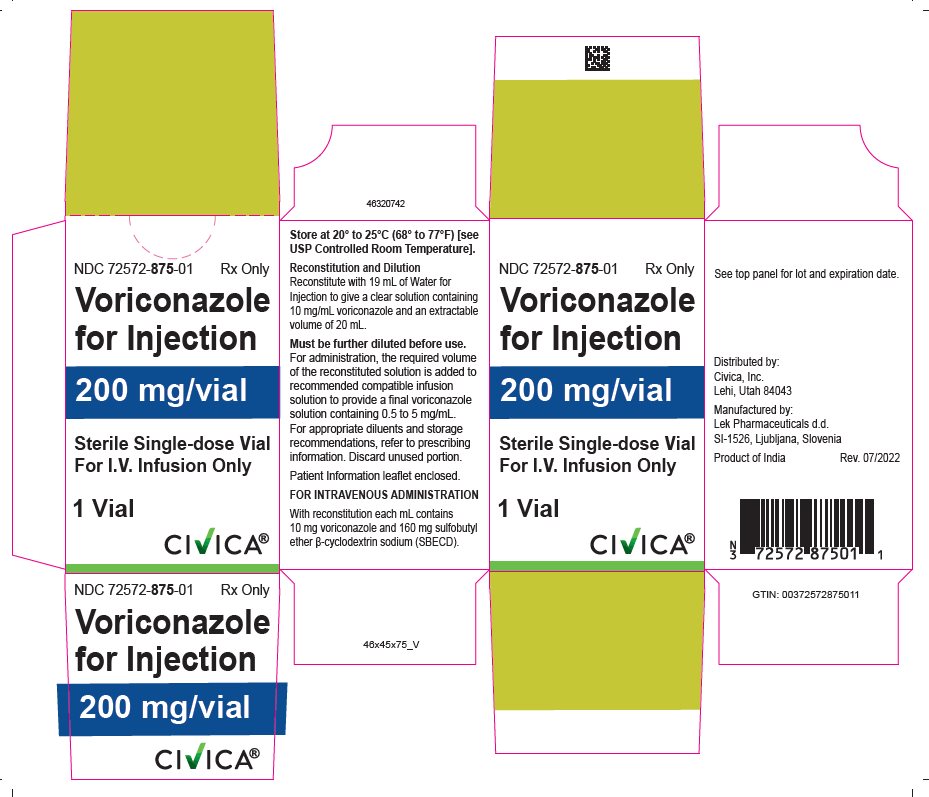
Voriconazole for injection is supplied in a single-dose vial as a sterile lyophilized powder equivalent to 200 mg voriconazole and 3200 mg sulfobutyl ether beta-cyclodextrin sodium (SBECD).
Individually packaged vials of 200 mg voriconazole for injection
(NDC 72572-875-01)
Visual Disturbances
Patients should be instructed that visual disturbances such as blurring and sensitivity to light may occur with the use of voriconazole for injection.
Photosensitivity