Beqalzi Tablet, Film Coated
FDA Label NDC 72579-020

Full FDA labeling including Indications, Dosage, Usage, and Precautions

Structured Product Label

The following Structured Product Label (SPL) was submitted to the FDA by Beone Medicines Usa, Inc. for the product Beqalzi (NDC 72579-020). This document serves as the official prescribing information, containing essential scientific data and clinical materials required for healthcare providers and patients.

This specific version of the label includes detailed information regarding 1 indications and usage, 2.1 important safety information, 2.2 recommended dosage for mantle cell lymphoma, 2.3 dosage modifications for adverse reactions, 2.4 dosage modifications for drug interactions, 2.5 administration, 3 dosage forms and strengths, 4 contraindications, and other regulatory disclosures. Use the navigation below to review specific sections of the FDA submission.

1 Indications And Usage

BEQALZI is indicated for the treatment of adult patients with relapsed or refractory mantle cell lymphoma (MCL) after at least two lines of systemic therapy, including a Bruton's tyrosine kinase (BTK) inhibitor.

This indication is approved under accelerated approval based on response rate and durability of response. Continued approval for this indication may be contingent upon verification and description of clinical benefit in a confirmatory trial(s) [see Clinical Studies (14.1)].

2.1 Important Safety Information

  • BEQALZI can cause tumor lysis syndrome (TLS), especially during the ramp-up phase or during restart after a dosage interruption [see Warnings and Precautions (5.1)].
  • Initiate BEQALZI with a dose ramp-up. For dose interruption lasting greater than 7 days, adjust the restart BEQALZI dose as instructed [see Dosage and Administration (2.3) and (2.4)].
  • Assess patient risk for TLS and whether hospitalization for monitoring is warranted.
  • Initiate prophylactic hydration and anti-hyperuricemics before the first dose of BEQALZI and continue as appropriate.
  • Correct pre-existing electrolyte abnormalities before the first dose.
  • Monitor blood chemistries closely [see Warnings and Precautions (5.1)].

2.2 Recommended Dosage For Mantle Cell Lymphoma

BEQALZI dosing begins with a 4-week ramp-up. The ramp-up dosing schedule is designed to gradually reduce tumor burden (debulk) and decrease the risk of TLS.

4-Week Dose Ramp-Up Schedule

Administer BEQALZI orally once daily, according to the ramp-up dosing schedule shown in Table 1.

Table 1: Dosing Schedule for 4-Week Ramp-Up Phase
Week NumberDaysDaily DoseNumber of Tablets per Dose
Week 1Days 1 to 31 mgOne 1 mg tablet
Days 4 to 72 mgTwo 1 mg tablets
Week 2Days 1 to 35 mgOne 5 mg tablet
Days 4 to 710 mgTwo 5 mg tablets
Week 3Days 1 to 320 mgOne 20 mg tablet
Days 4 to 740 mgTwo 20 mg tablets
Week 4Days 1 to 380 mgOne 80 mg tablet
Days 4 to 7160 mgTwo 80 mg tablets

The Starter Pack provides the first 4 weeks of BEQALZI according to the ramp-up schedule [see How Supplied/Storage and Handling (16)].

Target Dose Week 5 and Beyond

After completion of the 4-week ramp-up phase, the recommended dosage of BEQALZI is 320 mg (four 80 mg tablets) taken orally once daily until disease progression or unacceptable toxicity.

Dosing after treatment interruption greater than 7 days is described in Table 3 [see Dosage Modifications for Adverse Reactions (2.3)].

2.3 Dosage Modifications For Adverse Reactions

Table 2 provides recommended BEQALZI dosage modifications for adverse reactions.

Table 3 provides temporary dose modifications upon restart after dose interruptions lasting more than 7 days.

Table 4 provides recommended modifications to the target dose after adverse reactions are resolved.

Table 2: Recommended BEQALZI Dosage Modifications for Adverse Reactions
Adverse Reaction

Adverse reactions were graded using NCI CTCAE version 5.0.

OccurrenceDosage Modification
Tumor Lysis Syndrome
Any blood chemistry changes or symptoms suggestive of TLS [see Warnings and Precautions (5.1)]AnyInterrupt BEQALZI.
Upon resolution of lab abnormalities, resume BEQALZI.
  • For interruptions lasting 7 days or less, resume planned dosing.
  • For interruptions lasting more than 7 days, see Table 3 for dosage when resuming treatment.
Hematologic Toxicity
Grade ≥3 febrile neutropeniaFirstInterrupt BEQALZI.
Resume BEQALZI at the same dose upon recovery.
Second and subsequentInterrupt BEQALZI.

A maximum of 2 dose reductions is recommended.


Upon recovery to Grade 1 or baseline level, resume BEQALZI and follow dose reduction guidelines in Table 3 and Table 4.
Platelet count <50,000/mm3 with significant bleeding
Platelet count <25,000/mm3
Neutrophil count <500/mm3 lasting greater than 7 consecutive days
FirstInterrupt BEQALZI.
Resume BEQALZI at the same dose upon recovery to Grade 1 or baseline level.
Second and subsequentInterrupt BEQALZI.
Upon recovery to Grade 1 or baseline level, resume BEQALZI and follow dose reduction guidelines in Table 3 and Table 4.
Nonhematologic Toxicity
Grade 3 nonhematologic toxicity

Patients may continue taking BEQALZI for the following:

  • Grade 3 gastrointestinal toxicity (i.e., nausea, vomiting, diarrhea) unless unresponsive to treatment ≥3 days.
  • Asymptomatic biochemical laboratory abnormalities, other than TLS, that resolve in 7 days or less.
FirstInterrupt BEQALZI.
Upon recovery to Grade 1 or baseline level, resume BEQALZI at the same dose.
Second and subsequentInterrupt BEQALZI.
Upon recovery to Grade 1 or baseline level, resume BEQALZI and follow dose reduction guidelines in Table 3 and Table 4.
Grade 4 nonhematologic toxicityFirstInterrupt BEQALZI.
Upon recovery to Grade 1 or baseline level, resume BEQALZI and follow dose reduction guidelines in Table 3 and Table 4.
Second and subsequentInterrupt BEQALZI.
Upon recovery to Grade 1 or baseline level, resume BEQALZI and follow dose reduction guidelines in Table 3 and Table 4.

For patients with a dose interruption lasting 7 days or less:

  • During ramp-up phase (Weeks 1 to 4): Resume BEQALZI and continue the remaining ramp-up schedule.
  • During the target dose (Week 5 and beyond): Resume BEQALZI once the adverse reaction has resolved. Refer to Table 2 and Table 4 if a modified target dose is needed.
  • For patients with a dose interruption lasting more than 7 days:

    • During ramp-up phase (Weeks 1 to 4): Restart BEQALZI at the dose shown in Table 3 based on the dose at the time of interruption, then re-escalate following the ramp-up schedule.
    • During the target dose (Week 5 and beyond): Restart BEQALZI at the dose shown in Table 3 based on the dose at the time of interruption. Then, re-escalate to target dose determined per Table 4 when clinically appropriate.
    • Table 3: Dose to Restart BEQALZI After a Dose Interruption Greater than 7 Days
      Dose at Time of Interruption (mg)Highest Restart Dose (mg)

      The physician may restart at a lower dose than noted.

      1 mg1 mg

      Resume on Day 1 of the individual restart pack. Instruct patients to follow the dosing schedule printed on the blister card starting on Day 1 (1 tablet daily on Days 1 through 3, then 2 tablets daily on Days 4 through 7).

      2 mg1 mg
      5 mg2 mg

      Resume on Day 4 of the individual restart pack. Instruct patients to remove and dispose of single tablets labeled Days 1 through 3 and restart taking tablets labeled Day 4 (2 tablets daily) of the individual restart pack.

      10 mg5 mg
      20 mg10 mg
      40 mg20 mg
      80 mg40 mg
      160 mg80 mg
      320 mg160 mg
      Table 4: Recommended Modification of Target Dose Level for Adverse Reactions
      Target Dose Level at InterruptionModified Target Dose Level
      320 mg160 mg
      160 mg80 mg
      80 mgDiscontinue

2.4 Dosage Modifications For Drug Interactions

Strong or Moderate CYP3A Inhibitors

Concomitant strong CYP3A inhibitors are contraindicated at initiation and during ramp-up of BEQALZI. For dose adjustments after ramp-up, see Table 5. Avoid moderate CYP3A inhibitors during initiation and at the 1 mg and 2 mg dose of sonrotoclax.

Table 5: Management of Potential BEQALZI Interactions with CYP3A Inhibitors
Concomitant DrugDuring Initiation and Ramp-Up PhaseTarget Daily Dose
(after ramp-up phase)
Strong CYP3A inhibitorsContraindicatedReduce BEQALZI dose to 20 mg.
Moderate CYP3A inhibitors

Consider alternative medicinal products or reduce the sonrotoclax dose as described in Table 6.

Avoid concomitant use of moderate CYP3A inhibitors at 1 mg and 2 mg dose of sonrotoclax. Reduce all other doses of sonrotoclax by at least 4-fold (see Table 6).Reduce BEQALZI dose to 80 mg.

Resume the BEQALZI dosage that was used prior to treatment with a strong or moderate CYP3A inhibitor at least 5 days after discontinuation of the inhibitor.

Table 6: BEQALZI Dose with Moderate CYP3A Inhibitor
Original Sonrotoclax Dose (mg)Sonrotoclax Dose When Administered with a Moderate CYP3A Inhibitor
1 mgAvoid moderate CYP3A inhibitor
2 mgAvoid moderate CYP3A inhibitor
5 mg1 mg
10 mg2 mg
20 mg5 mg
40 mg10 mg
80 mg20 mg
160 mg40 mg
320 mg80 mg

2.5 Administration

Take BEQALZI tablets with a meal once a day at the same approximate time. Swallow tablets whole with a glass of water. Do not break, chew, or crush the tablets.

Missed Dose

If a dose of BEQALZI is missed within 8 hours of when it is usually taken, instruct the patient to take the missed dose as soon as possible with a meal and resume the normal daily dosing schedule. If a dose is missed by more than 8 hours, instruct the patient to not take the missed dose, and resume the usual dosing schedule the next day.

If the patient vomits following a dose, instruct the patient to not take an additional dose that day, and resume the usual dosing schedule the next day.

3 Dosage Forms And Strengths

Tablet StrengthDescription
1 mgPurple, oval, film-coated tablets with 1 debossed on one side.
5 mgPurple, oval, film-coated tablets with 5 debossed on one side.
20 mgPurple, oblong, film-coated tablets with 20 debossed on one side.
80 mgPurple, oval, film-coated tablets with 80 debossed on one side.

4 Contraindications

Concomitant use of sonrotoclax with strong CYP3A inhibitors at initiation and during the ramp-up phase is contraindicated in patients due to the potential for increased risk of tumor lysis syndrome [see Drug Interactions (7.1)].

5.1 Tumor Lysis Syndrome

BEQALZI can cause serious or life-threatening tumor lysis syndrome (TLS). BEQALZI can cause rapid reduction in tumor and changes in blood chemistries consistent with TLS that require prompt management. This can occur as early as 4 hours after the first dose, at any dose increases, and upon restart following dosage interruption. Laboratory or clinical TLS occurred in 7% of the 115 patients with MCL who followed the recommended dose ramp-up.

Risk factors for TLS include higher tumor burden such as bulky lymphadenopathy or lymphocytosis and reduced renal function.

Assess all patients for TLS risk and provide appropriate prophylaxis, including hydration and anti-hyperuricemics begun prior to the first dose of BEQALZI. Correct relevant chemistry abnormalities prior to starting BEQALZI. Consider hospitalization with intravenous hydration and monitoring and employ more frequent monitoring for patients with high TLS risk. Monitor blood chemistries and manage abnormalities promptly. Interrupt dosing if needed; when restarting BEQALZI, follow the dose modification guidance [see Dosage and Administration (2.3)].

Concomitant use of sonrotoclax with strong or moderate CYP3A inhibitors increases sonrotoclax exposure, which may increase the risk of TLS at initiation and during the ramp-up phase [see Dosage and Administration (2.4) and Drug Interactions (7.1)].

5.2 Serious Infections

BEQALZI can cause fatal or serious infections [see Adverse Reactions (6.1)]. Among patients who received BEQALZI at the recommended dosage in the clinical trial, serious infections occurred in 14% of patients and Grade 3 or higher infections in 17%, with fatal infections in 2.6% of patients. The most common Grade 3 or greater infection was pneumonia (10%). Monitor for signs and symptoms of infection and treat appropriately. Consider prophylactic antimicrobials and immunoglobulins according to guidelines. Withhold or dose reduce BEQALZI based on severity [see Dosage and Administration (2.3)].

5.3 Neutropenia

BEQALZI can cause serious or severe cytopenias, including neutropenia.

Among 115 patients with MCL who received BEQALZI, new or worsening Grade 3 or 4 decrease in neutrophils developed in 18% (Grade 4, 6%). Febrile neutropenia occurred in 1.7% of patients. Monitor complete blood counts throughout treatment. Based on severity, reduce dose, interrupt, or permanently discontinue BEQALZI [see Dosage and Administration (2.3)].

5.4 Embryo-Fetal Toxicity

Based on findings in animals and its mechanism of action, BEQALZI can cause fetal harm when administered to a pregnant woman. In embryo-fetal development toxicity studies conducted in pregnant mice and rabbits, oral administration of sonrotoclax during the period of organogenesis caused adverse developmental outcomes, including structural abnormalities and altered fetal growth at approximately ≥2 times the clinical exposure based on the area under the concentration-time curve (AUC) at the recommended dose in humans (320 mg/day).

Advise patients of the potential risk to a fetus. Advise females of reproductive potential to use effective contraception during treatment with BEQALZI and for 1 week after the last dose. Advise males with female partners of reproductive potential to use effective contraception during treatment and for 1 week after the last dose [see Use in Specific Populations (8.1, 8.3)].

6.1 Clinical Trials Experience

Because clinical trials are conducted under widely varying conditions, adverse reaction rates observed in the clinical trials of a drug cannot be directly compared to rates in the clinical trials of another drug and may not reflect the rates observed in practice.

Mantle Cell Lymphoma

The safety of BEQALZI was evaluated in 115 adult patients with previously treated MCL in a single-arm, multicenter clinical trial, BGB-11417-201 (NCT05471843) [see Clinical Studies (14.1)]. The trial required prior receipt of anti-CD20–based therapy and a BTK inhibitor. The trial excluded patients on moderate or strong CYP3A inhibitors or strong CYP3A inducers and required an absolute neutrophil count (ANC) ≥1000/mm3; platelets ≥75,000/mm3; creatinine clearance ≥50 mL/min; AST and ALT ≤3 × upper limit of normal (ULN); and serum total bilirubin ≤2 × ULN.

Patients received BEQALZI 320 mg orally once daily following completion of a 4-week ramp-up dosing schedule. Of the 115 patients who received BEQALZI, 52% were exposed for at least 6 months and 34% were exposed for at least 1 year.

Serious adverse reactions were reported in 37% of patients who received BEQALZI, most frequently (≥2%) from pneumonia (10%). Fatal adverse reactions occurred in 4.3% of patients, including from pneumonia (2.6%) and sudden death (1.7%).

Adverse reactions led to dose interruption of BEQALZI in 27% of patients, dose reduction in 0.9%, and permanent discontinuation in 8%. The most common reasons for dose interruption were infections (10%) and neutropenia (5%). The most common adverse reaction leading to treatment discontinuation was infection (1.7%).

Table 7 summarizes select adverse reactions in Study BGB-11417-201, excluding laboratory terms.

Table 7: Adverse Reactions (≥10%) in Patients with MCL Who Received BEQALZI in BGB-11417-201
Adverse ReactionBEQALZI
(N=115)
All Grades (%)Grade 3 or 4 (%)
Infections
Pneumonia

Includes pneumonia, COVID-19 pneumonia, pneumonia bacterial, and other related terms.

16

Additionally includes three fatal cases (2.6%) of pneumonia.

10
Upper respiratory tract infection

Includes upper respiratory tract infection, pharyngitis, sinusitis, and other related terms.

121.7
General Disorders
Fatigue

Includes fatigue and asthenia.

160.9
Edema

Includes edema peripheral, generalized edema, and other related terms.

140
Pyrexia100.9
Gastrointestinal Disorders
Diarrhea141.7
Constipation100
Skin and Subcutaneous Tissue Disorders
Rash

Includes rash, dermatitis, drug eruption, and other related terms.

100
Musculoskeletal and Connective Tissue Disorders
Musculoskeletal pain

Includes musculoskeletal pain, back pain, bone pain, and other related terms.

100

Clinically relevant adverse reactions in <10% of patients who received BEQALZI included: TLS, headache, nausea, vomiting, mucositis, peripheral sensory neuropathy, febrile neutropenia, pneumonitis, herpes zoster infection, and sepsis.

Table 8 summarizes new or worsening laboratory abnormalities throughout treatment. Grade 4 laboratory abnormalities in ≥2% of patients included decreases in neutrophils (6%) and platelet count (3.5%).

Table 8: Select Laboratory Abnormalities (≥20%) That Worsened from Baseline in Patients with Previously Treated MCL Who Received BEQALZI
Laboratory Abnormality

The denominator used to calculate the rate varied from 103 to 115 based on the number of patients with a baseline value and at least one post-treatment value.

BEQALZI
All Grades, %Grade 3 or 4 (%)
Hematology
Lymphocytes decreased6629
Hemoglobin decreased529
Neutrophils decreased5018
Platelets decreased369
Chemistry
Calcium decreased421.7
Uric acid increased420
Glucose increased350
Creatinine increased321.7
Potassium decreased304.3
Sodium decreased299
Aspartate aminotransferase increased272.8
Alkaline phosphatase increased250
Alanine aminotransferase increased220.9
Calcium increased210

7.1 Effects Of Other Drugs On Beqalzi

Strong or Moderate CYP3A Inhibitors

Concomitant use of strong CYP3A inhibitors during the initiation and ramp-up phase with BEQALZI is contraindicated. After the ramp-up phase, reduce the target dose of BEQALZI as in Table 5 [see Dosage and Administration (2.4)].

For dose modifications of sonrotoclax with moderate CYP3A inhibitors, see Dosage and Administration (2.4).

Sonrotoclax is a CYP3A substrate [see Clinical Pharmacology (12.3)]. Concomitant use with strong and moderate CYP3A inhibitors increase sonrotoclax exposure [see Clinical Pharmacology (12.3)], which may increase the risk of BEQALZI adverse reactions.

Strong or Moderate CYP3A Inducers

Avoid concomitant use of strong or moderate CYP3A inducers with BEQALZI.

Sonrotoclax is a CYP3A substrate [see Clinical Pharmacology (12.3)]. Concomitant use with strong CYP3A inducers decreases sonrotoclax exposure [see Clinical Pharmacology (12.3)], which may reduce effectiveness of sonrotoclax.

8.1 Pregnancy

Risk Summary

Based on findings in animals and its mechanism of action [see Clinical Pharmacology (12.1)], BEQALZI can cause embryo-fetal harm when administered to pregnant women. There are no available data on BEQALZI use in pregnant women to evaluate for a drug-associated risk.

In animal reproduction studies, oral administration of sonrotoclax to pregnant mice and rabbits during the period of organogenesis resulted in adverse developmental outcomes, including structural abnormalities and altered fetal growth, at maternal exposures approximately ≥2 times the human exposure (AUC) at the recommended dose of 320 mg daily (see Data). Advise patients of the potential risk to a fetus.

In the U.S. general population, the estimated background risk of major birth defects and miscarriage in clinically recognized pregnancies is 2% to 4% and 15% to 20%, respectively.

Data

Animal Data

Sonrotoclax was administered orally to pregnant mice at doses of 100, 300, and 1000 mg/kg/day during organogenesis (gestation days 6-15). Decreased fetal body weight and crown-rump length were noted at all doses. At the dose of 100 mg/kg/day in mice, the maternal exposure was approximately 8 times the human exposure at the recommended dose of 320 mg once daily.

Sonrotoclax was administered orally to pregnant rabbits at doses of 15, 75, and 300 mg/kg/day during organogenesis (gestation days 6-19). Fetal external (absent or open eye, cleft lip, misshapen mouth, acephalostoma) malformations were noted at 300 mg/kg/day. At the dose of 300 mg/kg/day in rabbits, the maternal exposure was approximately 2 times the human exposure at the recommended dose of 320 mg once daily.

8.2 Lactation

Risk Summary

There are no data on the presence of sonrotoclax or its metabolites in human milk or the effects on the breastfed child or milk production. Because of the potential for serious adverse reactions in a breastfed child, advise women not to breastfeed during treatment with BEQALZI and for 1 week after the last dose.

8.3 Females And Males Of Reproductive Potential

Based on findings in animals and its mechanism of action, BEQALZI can cause fetal harm when administered to pregnant women [see Use in Specific Populations (8.1)].

Pregnancy Testing

Verify pregnancy status in females of reproductive potential prior to initiating BEQALZI.

Contraception

Females

Advise females of reproductive potential to use effective contraception during treatment with BEQALZI and for 1 week after the last dose.

Males

Advise males with female partners of reproductive potential to use effective contraception during treatment with BEQALZI and for 1 week after the last dose.

Infertility

Based on findings in animals, BEQALZI may impair male and female fertility. Fertility findings were reversible in animals [see Nonclinical Toxicology (13.1)].

8.4 Pediatric Use

The safety and effectiveness of BEQALZI in pediatric patients have not been established.

8.5 Geriatric Use

Of the 115 patients with MCL who were treated with BEQALZI, 74 (64%) were 65 years old or older and 26 (23%) were 75 years old or older. Patients aged 65 years and older experienced higher rates of serious adverse reactions (42%) compared to younger patients (29%). Clinical studies of BEQALZI did not include sufficient numbers of patients to determine whether efficacy differs in patients 65 years of age or older compared to younger patients.

8.6 Renal Impairment

No dose adjustments are recommended for patients with mild or moderate renal impairment (estimated glomerular filtration rate (eGFR) ≥30 mL/min). BEQALZI has not been studied in patients with severe renal impairment (eGFR <30 mL/min) [see Clinical Pharmacology (12.3)].

8.7 Hepatic Impairment

No dose adjustments are recommended for patients with mild or moderate hepatic impairment (bilirubin ≤3 × upper limit of normal [ULN] and any aspartate aminotransferase [AST]). BEQALZI has not been studied in patients with severe hepatic impairment (bilirubin >3 × ULN and any AST) [see Clinical Pharmacology (12.3)].

11 Description

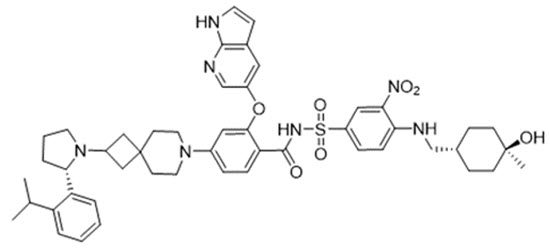
BEQALZI tablets contain sonrotoclax, a B-cell lymphoma 2 (BCL-2) inhibitor. The molecular formula of sonrotoclax is C49H59N7O7S and the chemical name is N-[4-({[(1r,4r)-4-hydroxy-4-methylcyclohexyl]methyl}amino)-3-nitrobenzene-1-sulfonyl]-4-(2-{(2S)-2-[2-(propan-2-yl)phenyl]pyrrolidin-1-yl}-7-azaspiro[3.5]nonan-7-yl)-2-[(1H-pyrrolo[2,3- b]pyridin-5-yl)oxy]benzamide.

The molecular weight of sonrotoclax is 890.11 Daltons.

Sonrotoclax has the following structure:

Chemical Structure (Beqalzi 01)

Chemical Structure (Beqalzi 01)

BEQALZI tablets for oral use contain 1, 5, 20, or 80 mg of sonrotoclax. Each tablet contains the following inactive ingredients: anhydrous dibasic calcium phosphate, colloidal silicon dioxide (20 and 80 mg only), croscarmellose sodium, hydroxypropyl methylcellulose acetate succinate, magnesium stearate, microcrystalline cellulose, talc (20 and 80 mg only). The tablet film coating contains FD&C Blue No. 1/brilliant blue FCF aluminum lake, FD&C Red No. 40/allura red ac aluminum lake, polyethylene glycol, polyvinyl alcohol, soy lecithin, talc, and titanium dioxide.

12.1 Mechanism Of Action

Sonrotoclax is an inhibitor of B-cell lymphoma 2 (BCL-2) protein. Overexpression of BCL-2 in various cancers mediates cell survival and has been associated with chemotherapeutic resistance. Sonrotoclax binds to the BCL-2 protein, displacing pro-apoptotic proteins, thereby inducing apoptosis of cells. In nonclinical studies, sonrotoclax demonstrated cytotoxicity in cancer cells overexpressing BCL-2, with a series of intrinsic apoptotic events, including caspase activation.

12.2 Pharmacodynamics

Sonrotoclax exposure-response relationships and the time course of pharmacodynamic response have not been fully characterized.

Cardiac Electrophysiology

Administration of sonrotoclax has the potential to increase the QTc interval. The largest mean increase in QTc interval was 7 ms (upper confidence interval = 14 ms) after administration of sonrotoclax (320 mg once daily) with a low-fat meal in patients with mature B-cell malignancies. There is insufficient information to characterize the QTc effects of sonrotoclax at higher concentrations above recommended dose.

12.3 Pharmacokinetics

Sonrotoclax pharmacokinetics were determined following a single dose or at steady state at the approved recommended dosage of 320 mg once daily and are presented as mean (CV%), unless otherwise specified.

Sonrotoclax area under the plasma drug concentration-time curve (AUC0-24 h) is 3395 (55%) ng∙h/mL and maximum plasma concentration (Cmax) is 353 (49%) ng/mL, following 320 mg once daily with a low-fat meal. Sonrotoclax Cmax and AUC0-tau increase in a less than dose proportional manner over the dosage range of 320 mg to 640 mg (1 to 2 times the highest approved recommended dosage). Limited systemic accumulation of sonrotoclax was observed following repeated administration.

Absorption

The median Tmax of sonrotoclax is 4 hours (ranged from 1 to 8 hours) following 320 mg once daily dosing.

Effect of Food

Sonrotoclax AUC and Cmax increased by approximately 1.5-fold following administration with a low-fat meal (approximately 333-500 kilocalories, 25% fat calories). Sonrotoclax AUC increased by 2-fold and Cmax by 2.4-fold following administration with a high-fat meal (1000 kilocalories, 50% fat).

Distribution

The geometric mean apparent volume of distribution of sonrotoclax is 482 (38%) L. Sonrotoclax plasma protein binding is 99% across a concentration range of 1 to 10 µM. The blood-to-plasma ratio is 0.6 to 0.7.

Elimination

The mean terminal elimination half-life (t½) of sonrotoclax ranges from 4 to 6 hours. The geometric mean apparent oral clearance (CL/F) of sonrotoclax is 94 (62%) L/h.

Metabolism

Sonrotoclax is primarily metabolized by CYP3A and to a lesser extent by CYP2C8 in vitro.

Excretion

After a single radiolabeled sonrotoclax dose of 20 mg to healthy subjects, approximately 86% of the dose was recovered in feces (19.5% unchanged) and 0.28% in urine (0.04% unchanged).

Specific Populations

No clinically meaningful differences in the pharmacokinetics of sonrotoclax were observed based on race, age (27-91 years), sex, weight (37-165 kg), mild to moderate renal impairment (eGFR ≥30 mL/min) or mild to moderate hepatic impairment (bilirubin ≤3 × upper limit of normal (ULN) and any aspartate aminotransferase (AST)). The effect of severe renal impairment (eGFR <30 mL/min) or severe hepatic impairment (total bilirubin >3 × ULN with any AST) on sonrotoclax pharmacokinetics is unknown.

Drug Interactions Studies

Clinical Studies and Model-Informed Approaches

Strong CYP3A inhibitors:

Sonrotoclax AUC increased 11-fold and Cmax increased 4-fold following concomitant administration of itraconazole (strong CYP3A inhibitor and P-gp inhibitor).

Sonrotoclax AUC increased 13-fold and Cmax increased 7-fold following concomitant administration of posaconazole (strong CYP3A inhibitor).

Strong CYP3A inducers: Sonrotoclax AUC decreased to 35% and Cmax to 58% following concomitant use of phenytoin (strong CYP3A inducer).

Other drugs: No clinically significant differences in sonrotoclax pharmacokinetics were observed following concomitant administration with gastric acid reducing agents (proton pump inhibitors, H2-receptor antagonists).

In Vitro Studies

CYP450 Enzymes: Sonrotoclax is not an inhibitor of CYP1A2, CYP2B6, CYP2C8, CYP2C9, CYP2C19, and CYP2D6. Sonrotoclax inhibits CYP3A in vitro, but this is not anticipated to have a clinically meaningful impact. Sonrotoclax is not an inducer of CYP1A2, CYP2B6, or CYP3A4.

Transporters: Sonrotoclax is a substrate of P-gp and BCRP but not OATP1B1 or OATP1B3. Sonrotoclax does not inhibit P-gp, BCRP OATP1B1, OATP1B3, OAT1, OAT3, OCT1, OCT2, MATE1, or MATE2-K.
13.1 Carcinogenesis, Mutagenesis, Impairment Of Fertility

Carcinogenesis

Carcinogenicity studies have not been conducted with sonrotoclax.

Mutagenesis

Sonrotoclax was not mutagenic in a bacterial mutagenicity (Ames) assay and not clastogenic in a chromosome aberration assay in mammalian cells or in an in vivo bone marrow micronucleus assay in mice.

Impairment of Fertility

Fertility studies in animals have not been conducted with sonrotoclax. In a repeat dose, 13-week toxicity study in mice treated with oral administration of sonrotoclax at 20, 100, or 300 mg/kg/day, changes were reported in female reproductive organs at all doses, including the development of ovarian cysts, vaginal mucification, and uterine atrophy. At the dose of 20 mg/kg/day in mice, exposures (AUC) were approximately the same as the human exposure at the recommended dose. In a repeat dose, 13-week toxicity study in dogs treated with oral administration of sonrotoclax at 10, 30, or 100 mg/kg/day, changes were reported in male reproductive organs at all doses, including atrophy, necrosis, and vacuolation of the epididymis with reduced sperm, and atrophy of the prostate and testis. At the dose of 10 mg/kg/day in dogs, exposures were approximately 2 times the human exposure at the recommended dose. Reversibility was noted in both species by the end of the recovery period.

14.1 Mantle Cell Lymphoma

The efficacy of BEQALZI was evaluated in a single-arm, multicenter clinical trial, BGB-11417-201 (NCT05471843). Efficacy was based on 103 adults with relapsed or refractory MCL who previously received anti-CD20–based therapy and a BTK inhibitor. The trial required an ANC ≥1000/mm3, platelets ≥75,000/mm3, and AST and ALT ≤3 × upper limit of normal (ULN). The trial excluded patients with central nervous system lymphoma, prior BCL-2 inhibitor, or an ECOG performance status >2.

Following completion of the ramp-up dosing schedule, patients received BEQALZI at 320 mg orally once daily.

The median age was 68 years (range: 39 to 85 years); 74% were male; 58% were White, 33% Asian, and 3% Black or African American. Most patients (93%) had an ECOG performance of 0 to 1.

Patients had a median of 3 prior lines of therapy (range: 1 to 8), with 89% having at least 2 and 60% having at least 3 prior lines of therapy. All patients were exposed to at least one covalent or noncovalent BTK inhibitor, most commonly ibrutinib (53%), zanubrutinib (27%), and pirtobrutinib (14%). Other prior therapies included lenalidomide in 19%, autologous HSCT in 17%, and CAR-T therapy in 2%. The simplified Mantle Cell Lymphoma International Prognostic Index (sMIPI) score was low in 35%, intermediate in 36%, and high in 29% of patients. High ≥30%) Ki-67 expression was detected in 35% of patients.

Efficacy was established based on overall response rate (ORR) and duration of response (DOR), as assessed by an independent review committee (IRC) using 2014 Lugano criteria. Efficacy results are shown in Table 9. The median time to response was 1.9 months (range: 1.6 to 6.2). The estimated median follow-up for DOR was 11.9 months.

Table 9: Efficacy Results per IRC in Patients with Previously Treated MCL
OutcomeBEQALZI
(N=103)
Abbreviations: CI: confidence interval; DOR: duration of response; NE: not estimable
Overall Response Rate
Overall response, n54 (52%)
  (95% CI, %)42, 62
Complete response, n16 (16%)
Partial response, n38 (37%)
Duration of Response
Median DOR (95% CI), months

Kaplan-Meier estimate.

15.8 (7.4, NE)

16 How Supplied/Storage And Handling

How Supplied

PackageNumber of TabletsNDC Number
Starter pack cartonEach starter pack carton contains 4 weekly blister pack wallets:
  • Week 1 (11 × 1 mg tablets)
  • Week 2 (11 × 5 mg tablets)
  • Week 3 (11 × 20 mg tablets)
  • Week 4 (11 × 80 mg tablets)
72579-015-04
Individual restart packs
1 mg wallet in carton (Week 1 wallet)11 × 1 mg tablets72579-020-01
5 mg wallet in carton (Week 2 wallet)11 × 5 mg tablets72579-017-01
20 mg wallet in carton (Week 3 wallet)11 × 20 mg tablets72579-025-01
80 mg wallet in carton (Week 4 wallet)11 × 80 mg tablets72579-022-01
Additional packs
20 mg wallet in carton14 × 20 mg tablets72579-025-02
80 mg bottle in carton120 × 80 mg tablets72579-022-08

BEQALZI 1 mg film-coated tablets are purple, oval, and debossed with 1 on one side.

BEQALZI 5 mg film-coated tablets are purple, oval, and debossed with 5 on one side.

BEQALZI 20 mg film-coated tablets are purple, oblong, and debossed with 20 on one side.

BEQALZI 80 mg film-coated tablets are purple, oval, and debossed with 80 on one side.

Storage And Handling

Storage

Store at 20°C to 25°C (68°F to 77°F); excursions permitted between 15°C and 30°C (59°F and 86°F) [See USP Controlled Room Temperature].

Storage of blister wallets: Store tablets in the original blister package; do not transfer the tablets to a different container.

17 Patient Counseling Information

Advise patients to read the FDA-approved patient labeling (Medication Guide).

Tumor Lysis Syndrome

Advise patients of the potential risk of TLS, particularly at treatment initiation, during the ramp-up phase, and with restarting the dose after an interruption, and to immediately report any signs and symptoms associated with this event (fever, chills, nausea, vomiting, confusion, shortness of breath, seizure, irregular heartbeat, decreased urination, unusual tiredness, muscle cramps or twitches) to their healthcare provider (HCP) for evaluation [see Warnings and Precautions (5.1)].

Advise patients to be adequately hydrated when taking BEQALZI to reduce the risk of TLS. The recommended volume is 6 to 8 glasses (approximately 1.5 to 2 liters) of water daily starting 1-2 days before taking BEQALZI, on the day of the first dose, on any day the dose is increased until target dose is reached, and at restart, if applicable [see Dosage and Administration (2.1)].

Advise patients of the importance of keeping scheduled appointments for blood work or other laboratory tests [see Dosage and Administration (2.1)].

Advise patients that it may be necessary to take BEQALZI in the hospital or medical office setting to allow monitoring for TLS.

Serious Infections

Advise patients to contact their healthcare provider immediately if they develop a fever or any signs of infection [see Warnings and Precautions (5.2)].

Neutropenia

Advise patients of the need for periodic monitoring of blood counts [see Warnings and Precautions (5.3)].

Drug Interactions

Advise patients to avoid consuming grapefruit products, Seville oranges, or star fruit during treatment with BEQALZI. BEQALZI may interact with some drugs; therefore, advise patients to inform their healthcare provider of the use of any prescription medication, over-the-counter drugs, vitamins, and herbal products [see Contraindications (4) and Drug Interactions (7.1)].

Embryo-Fetal Toxicity

Advise pregnant women and females of reproductive potential of the potential risk to a fetus. Advise females of reproductive potential to inform their healthcare provider of a known or suspected pregnancy [see Warnings and Precautions (5.4) and Use in Specific Populations (8.1)].

Advise females of reproductive potential to use effective contraception during treatment with BEQALZI and for 1 week after the last dose. Advise males with female partners of reproductive potential to use effective contraception during treatment with BEQALZI and for 1 week after the last dose [see Use in Specific Populations (8.3)].

Lactation

Advise women not to breastfeed during treatment with BEQALZI and for 1 week after the last dose [see Use in Specific Populations (8.2)].

Infertility

Advise males and females of reproductive potential that BEQALZI may impair fertility [see Use in Specific Populations (8.3)].

Administration Instructions

Advise patients to take BEQALZI exactly as prescribed and not to change their dose or to stop taking BEQALZI unless they are told to do so by their healthcare provider. Advise patients to take BEQALZI orally once daily, at approximately the same time each day, according to their healthcare provider's instructions and that the tablets should be swallowed whole with a meal and a glass of water without being broken, chewed, or crushed [see Dosage and Administration (2.5)].

Missed Dose

Advise patients if BEQALZI is missed within 8 hours, to take it as soon as possible with a meal on the same day with a return to the normal schedule the following day. If they miss a dose by more than 8 hours, advise patients to not take the missed dose and resume the usual dosing schedule the next day. Advise patients not to take any additional dose that day if they vomit after taking BEQALZI, and to take the next dose at the usual time the following day [see Dosage and Administration (2.5)].

Restarting After Treatment Interruption

Advise patients to contact their healthcare provider before restarting BEQALZI after stopping treatment. Advise patients that:

  • Their healthcare provider will determine the correct dose based on their previous dose and how long they were off treatment.
  • Depending on how long they were off treatment, they may resume at the same dose where they left off, or they may need to restart at a lower dose.
  • If needed, individual restart packs are available outside of the starter pack for restart dosing as prescribed by their healthcare provider.
    • They may be instructed to resume dosing on Day 1 or Day 4 of the restart pack depending on their prescribed restart dose.
    • If instructed to start on Day 4, they will not use all tablets in the blister pack and should remove and dispose of tablets from Days 1 through 3 in order to avoid confusion or accidental use.
    • They should not use leftover packs from previous treatment without consulting their healthcare provider.

Other

Manufactured for:
BeOne Medicines USA, Inc.
Pennington, NJ 08534
BEQALZI is a trademark owned by BeOne Medicines I GmbH or its affiliates.
©BeOne Medicines I GmbH 2026. All rights reserved.

Spl Medguide

Push the tablets from Days 1, 2, and 3 through the back of the blister pack and throw away the unused tablets in the trash.
  • Start taking BEQALZI with the tablets labeled "Day 4" on the blister pack. Take 2 tablets every day for four days.
  • Follow your healthcare provider's instructions about what to do next after you finish this blister pack.
  • If you restart BEQALZI with tablets in a bottle:
    • Follow your healthcare provider's instructions about how many tablets to take each day.
  • MEDICATION GUIDE
    BEQALZI™ [bee KAHL zee]
    (sonrotoclax)
    Tablets
    This Medication Guide has been approved by the U.S. Food and Drug AdministrationIssued: 5/2026  
    What is the most important information I should know about BEQALZI?
    BEQALZI can cause serious side effects, including:
    • Tumor lysis syndrome (TLS). TLS is caused by the fast breakdown of cancer cells. TLS can cause kidney failure, the need for dialysis treatment, and can be life-threatening. TLS can happen when you first start treatment with BEQALZI, when your dose is increased, or when you restart BEQALZI after stopping treatment. You will receive other medicines before starting and during treatment with BEQALZI to help reduce your risk of TLS. You may also need to receive intravenous (IV) fluids into your vein. Your healthcare provider will do blood tests to check your risk for TLS before you start treatment and during treatment with BEQALZI. It is important to keep your appointments for blood tests.
      Tell your healthcare provider right away if you get any symptoms of TLS during treatment with BEQALZI, including:
    • nausea
    • vomiting
    • diarrhea
    • muscle cramps, weakness, or twitching
    • fatigue
    • decreased urination
    • swelling in your legs, ankles, or feet
    • numbness or tingling, especially around your mouth or in your hands and feet
    • confusion or difficulty staying alert
    • irregular or fast heart rate
    • seizures
    Drink plenty of water during treatment with BEQALZI to help reduce your risk of getting TLS.
    Drink 6 to 8 glasses (about 1.5 to 2 liters) of water daily:
    • starting 1 to 2 days before your first dose,
    • on the day of your first dose,
    • each time your dose is increased, and
    • if you restart BEQALZI after stopping treatment.
    • Serious infections. BEQALZI can cause death or serious infections. Your healthcare provider will monitor you for signs and symptoms of infection and treat you as needed. Tell your healthcare provider right away if you develop a fever or any signs of an infection.
    • See "What are the possible side effects of BEQALZI?" for more information about side effects.
    What is BEQALZI?
    BEQALZI is a prescription medicine used to treat adults with:
    • mantle cell lymphoma (MCL) that has come back or did not respond to previous treatment, and
    • who have already received at least 2 treatments for their cancer, including a Bruton's tyrosine kinase (BTK) inhibitor medicine.
    • It is not known if BEQALZI is safe and effective in children.
    Who should not take BEQALZI?
    Certain medicines must not be taken when you first start taking BEQALZI and while your dose is being slowly increased because of the increased risk of tumor lysis syndrome (TLS).
    • Tell your healthcare provider about all the medicines you take, including prescription and over-the-counter medicines, vitamins, and herbal supplements. BEQALZI and other medicines may affect each other causing serious side effects.
    • Do not start new medicines during treatment with BEQALZI without first talking with your healthcare provider.
    Before taking BEQALZI, tell your healthcare provider about all of your medical conditions, including if you:
    • have kidney problems.
    • have problems with your body salts or electrolytes, such as potassium, phosphorus, or calcium.
    • have a history of high uric acid levels in your blood or gout.
    • are pregnant or plan to become pregnant. BEQALZI can harm your unborn baby.
      Females who are able to become pregnant:
      • Your healthcare provider should do a pregnancy test before you start treatment with BEQALZI.
      • Use effective birth control (contraception) during treatment and for 1 week after the last dose of BEQALZI.
      • Tell your healthcare provider right away if you become pregnant or think you might be pregnant during treatment with BEQALZI.
      • Males with female partners who are able to become pregnant:
        • Use effective birth control (contraception) during treatment and for 1 week after the last dose of BEQALZI.
        • are breastfeeding or plan to breastfeed. It is not known if BEQALZI passes into your breast milk. Do not breastfeed during treatment and for 1 week after the last dose of BEQALZI.
        • Tell your healthcare provider about all the medicines you take, including prescription and over-the-counter medicines, vitamins, and herbal supplements. Taking BEQALZI with certain other medicines may affect how BEQALZI works and cause serious side effects. See "Who should not take BEQALZI?"
    How should I take BEQALZI?
    • Take BEQALZI exactly as your healthcare provider tells you to take it.
    • Do not change your dose of BEQALZI or stop taking BEQALZI unless your healthcare provider tells you to. If your healthcare provider stops and restarts BEQALZI, see "How should I restart BEQALZI after my healthcare provider stopped treatment?"
    • When you first take BEQALZI:
      • You may need to take BEQALZI at a hospital or clinic to be monitored for TLS.
      • Your healthcare provider will start BEQALZI at a low dose. Your dose will slowly be increased two times each week over a 4-week period until you reach your target dose. Follow your healthcare provider's instructions carefully while increasing to the target dose.
      • Take BEQALZI 1 time a day with a meal at about the same time each day.
      • Swallow BEQALZI tablets whole with a glass of water. Follow the instructions about drinking water described in the "What is the most important information I should know about BEQALZI?" section of this Medication Guide.
      • Do not break, chew, or crush the tablets.
      • If you miss a dose of BEQALZI and it has been less than 8 hours, take your dose as soon as possible with a meal and resume the normal daily dosing schedule. If you miss a dose of BEQALZI and it has been more than 8 hours, skip the missed dose and take the next dose at your usual time.
      • If you vomit after taking BEQALZI, do not take an extra dose. Take the next dose at your usual time the next day.
    How should I restart BEQALZI after my healthcare provider stopped treatment?
    • If you have side effects, your healthcare provider may tell you to stop taking BEQALZI for a period of time.
    • Do not restart BEQALZI on your own. Call your healthcare provider before you start taking BEQALZI again.
    • Your healthcare provider will tell you:
      • when it is safe to restart BEQALZI,
      • which dose to take when you restart,
      • how to take your restart dose.
      • You may restart at the same dose you were taking, or your healthcare provider may have you restart at a lower dose. This depends on how long you have stopped taking BEQALZI.
      • Your healthcare provider will restart your treatment using a blister pack or tablets in a bottle. Your healthcare provider may prescribe a new restart pack. Do not use leftover blister packs from your previous treatment without talking to your healthcare provider.
      • If you restart BEQALZI with a new blister pack:
        • Your healthcare provider may tell you to start at the beginning of the blister pack (Day 1) or in the middle of the blister pack (Day 4).
        • If you are told to start on Day 4 of the blister pack:
    a.b.c.
    What should I avoid while taking BEQALZI?
    Avoid drinking grapefruit juice and eating grapefruit products, Seville oranges (often used in marmalades), or star fruit during treatment with BEQALZI. These products may increase the amount of BEQALZI in your blood.
    What are the possible side effects of BEQALZI?
    BEQALZI can cause serious side effects, including:
    • See "What is the most important information I should know about BEQALZI?"
    • Decreased white blood cell count (neutropenia). BEQALZI can cause serious or severe decreased white blood cell counts, which can increase the risk of infection. Your healthcare provider will check your blood counts during treatment with BEQALZI.
    • The most common side effects of BEQALZI include pneumonia and tiredness.
      The most common abnormal blood tests with BEQALZI are decreased white blood cell counts.
      Your healthcare provider may decrease your dose, temporarily stop, or completely stop treatment with BEQALZI if you get certain side effects.
      BEQALZI may cause fertility problems in males and females, which may affect your ability to have a child. Talk to your healthcare provider if you have concerns about fertility.
      These are not all the possible side effects of BEQALZI.
      Call your doctor for medical advice about side effects. You may report side effects to FDA at 1-800-FDA-1088.
    How should I store BEQALZI?
    • Store BEQALZI at room temperature between 68°F and 77°F (20°C and 25°C).
    • For BEQALZI blister packs, store the tablets in the original blister package. Do not transfer the tablets to a different container.
    • Keep BEQALZI and all medicines out of the reach of children.
    General information about the safe and effective use of BEQALZI.
    Medicines are sometimes prescribed for purposes other than those listed in a Medication Guide. Do not use BEQALZI for a condition for which it was not prescribed. Do not give BEQALZI to other people, even if they have the same symptoms that you have. It may harm them. You can ask your pharmacist or healthcare provider for information about BEQALZI that is written for health professionals.
    What are the ingredients in BEQALZI?
    Active ingredient: sonrotoclax
    Inactive ingredients: anhydrous dibasic calcium phosphate, colloidal silicon dioxide (20 and 80 mg only), croscarmellose sodium, hydroxypropyl methylcellulose acetate succinate, magnesium stearate, microcrystalline cellulose, talc (20 and 80 mg only). The film coating contains: FD&C Blue No. 1/brilliant blue FCF aluminum lake, FD&C Red No. 40/allura red ac aluminum lake, polyethylene glycol, polyvinyl alcohol, soy lecithin, talc, and titanium dioxide.
    Manufactured for:
    BeOne Medicines USA, Inc.
    Pennington, NJ 08534
    BEQALZI is a trademark owned by BeOne Medicines I GmbH or its affiliates.
    ©BeOne Medicines I GmbH 2026. All rights reserved.

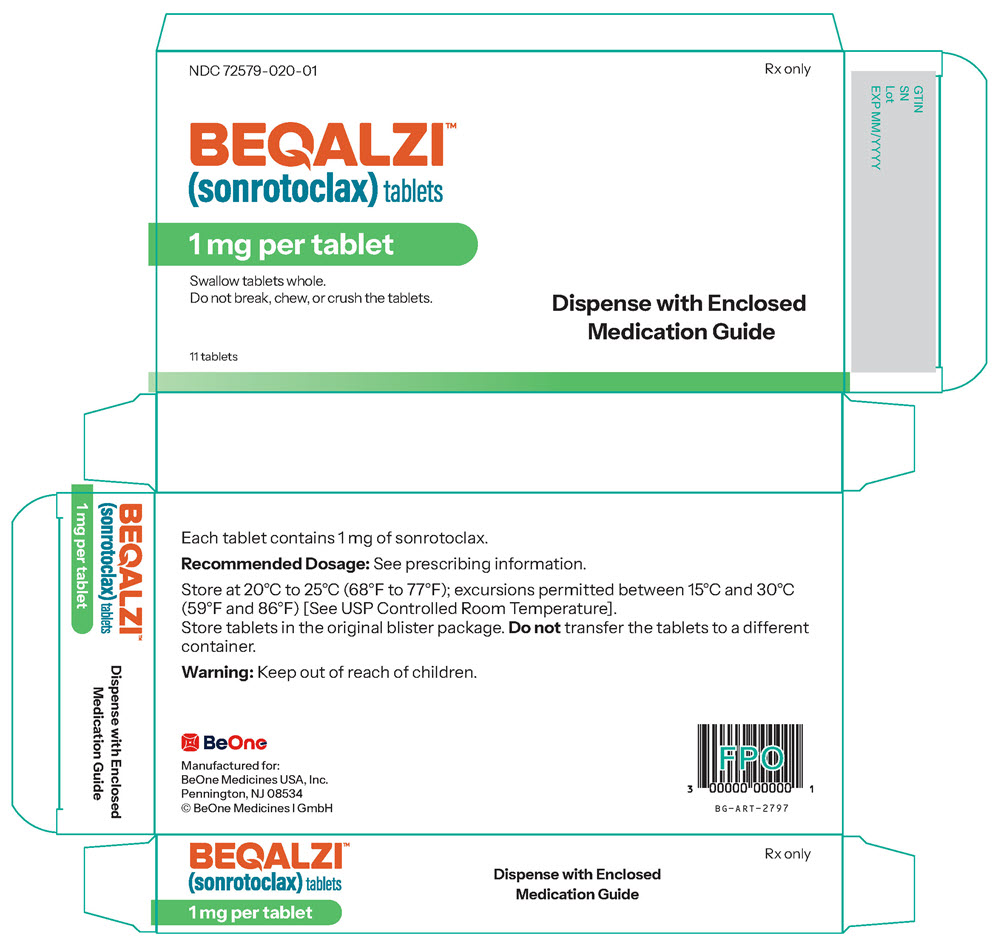
    Principal Display Panel - 1 Mg Tablet Blister Pack Carton

    NDC 72579-020-01
    Rx only

    BEQALZI™
    (sonrotoclax) tablets

    1 mg per tablet

    Swallow tablets whole.
    Do not break, chew, or crush the tablets.

    Dispense with Enclosed
    Medication Guide

    11 tablets

    Principal Display Panel (1 mg Tablet Blister Pack Carton)

    Principal Display Panel (1 mg Tablet Blister Pack Carton)

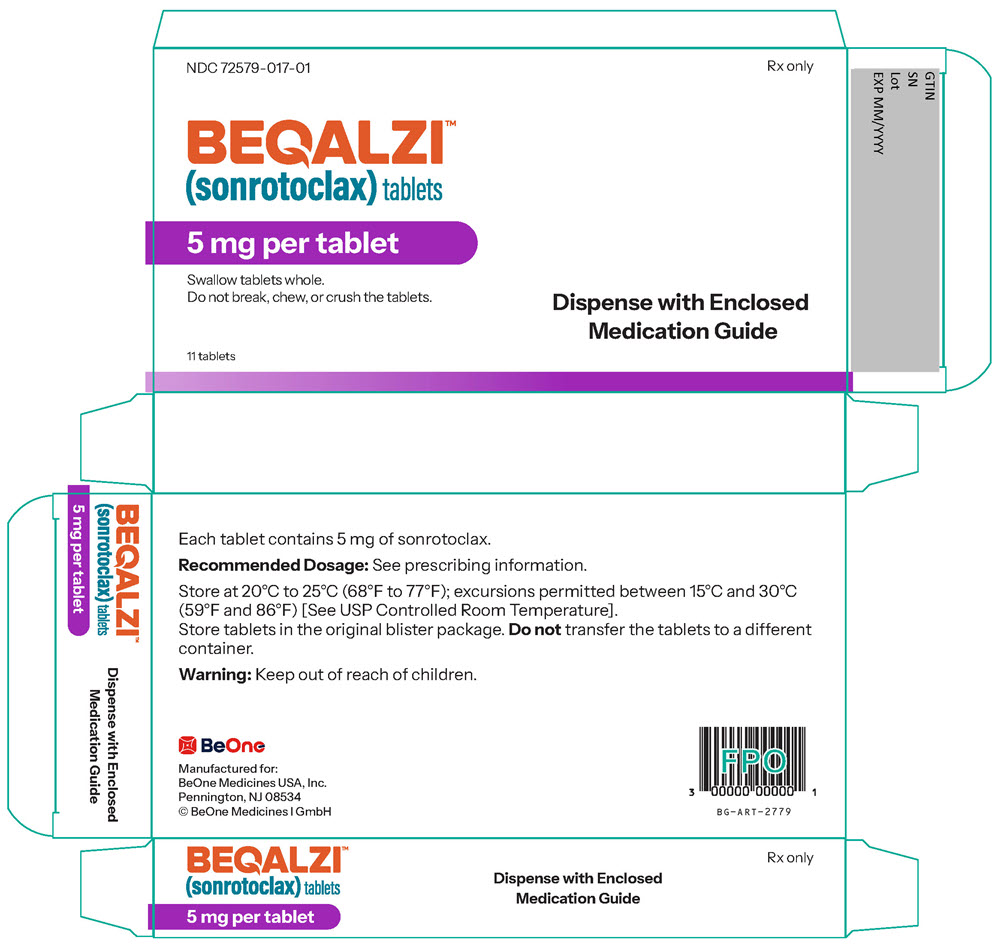
    Principal Display Panel - 5 Mg Tablet Blister Pack Carton

    NDC 72579-017-01
    Rx only

    BEQALZI™
    (sonrotoclax) tablets

    5 mg per tablet

    Swallow tablets whole.
    Do not break, chew, or crush the tablets.

    Dispense with Enclosed
    Medication Guide

    11 tablets

    Principal Display Panel (5 mg Tablet Blister Pack Carton)

    Principal Display Panel (5 mg Tablet Blister Pack Carton)

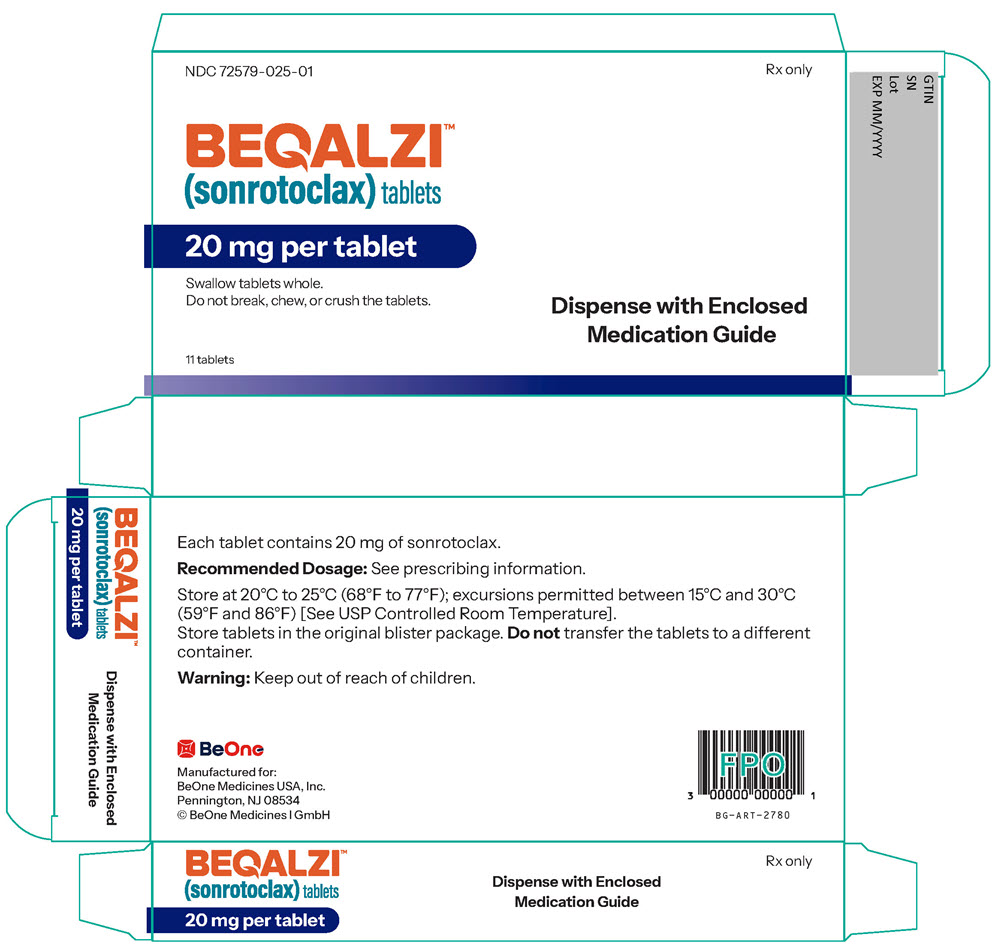
    Principal Display Panel - 20 Mg Tablet Blister Pack Carton

    NDC 72579-025-01
    Rx only

    BEQALZI™
    (sonrotoclax) tablets

    20 mg per tablet

    Swallow tablets whole.
    Do not break, chew, or crush the tablets.

    Dispense with Enclosed
    Medication Guide

    11 tablets

    Principal Display Panel (20 mg Tablet Blister Pack Carton)

    Principal Display Panel (20 mg Tablet Blister Pack Carton)

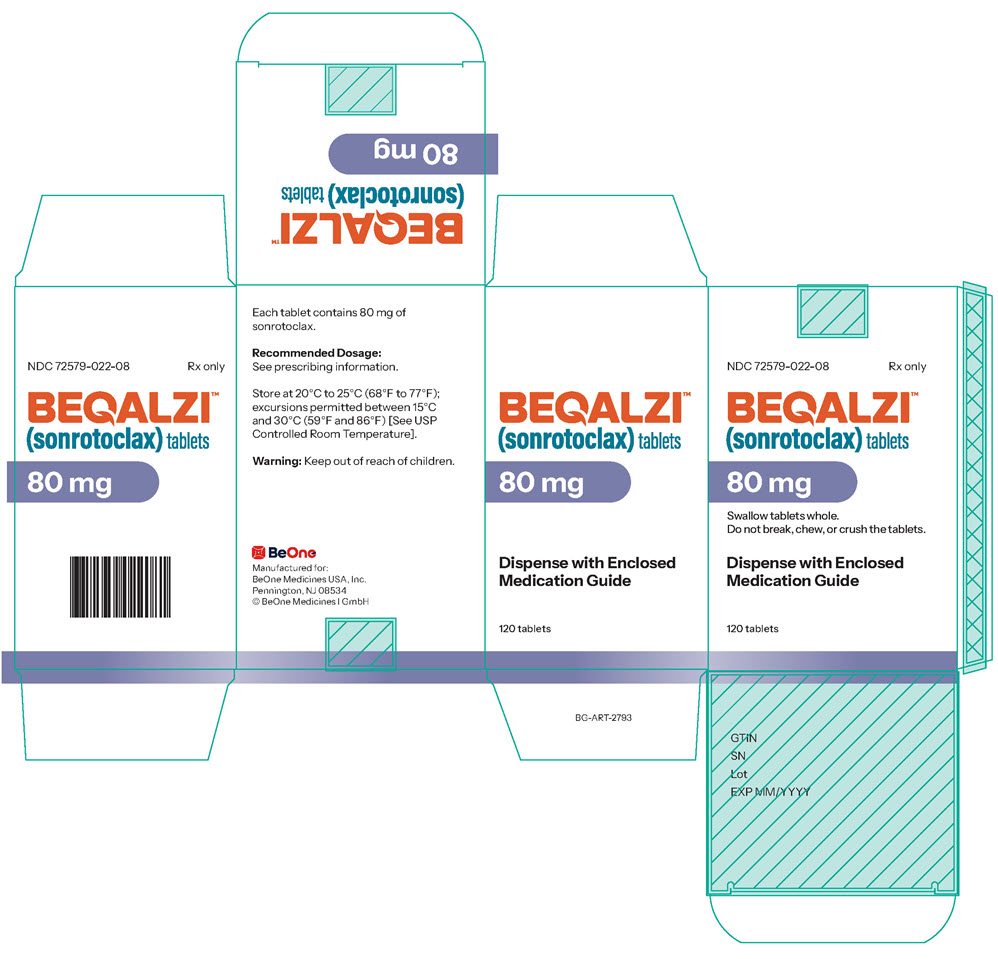
    Principal Display Panel - 80 Mg Tablet Bottle Carton

    NDC 72579-022-08
    Rx only

    BEQALZI™
    (sonrotoclax) tablets

    80 mg

    Swallow tablets whole.
    Do not break, chew, or crush the tablets.

    Dispense with Enclosed
    Medication Guide

    120 tablets

    Principal Display Panel (80 mg Tablet Bottle Carton)

    Principal Display Panel (80 mg Tablet Bottle Carton)

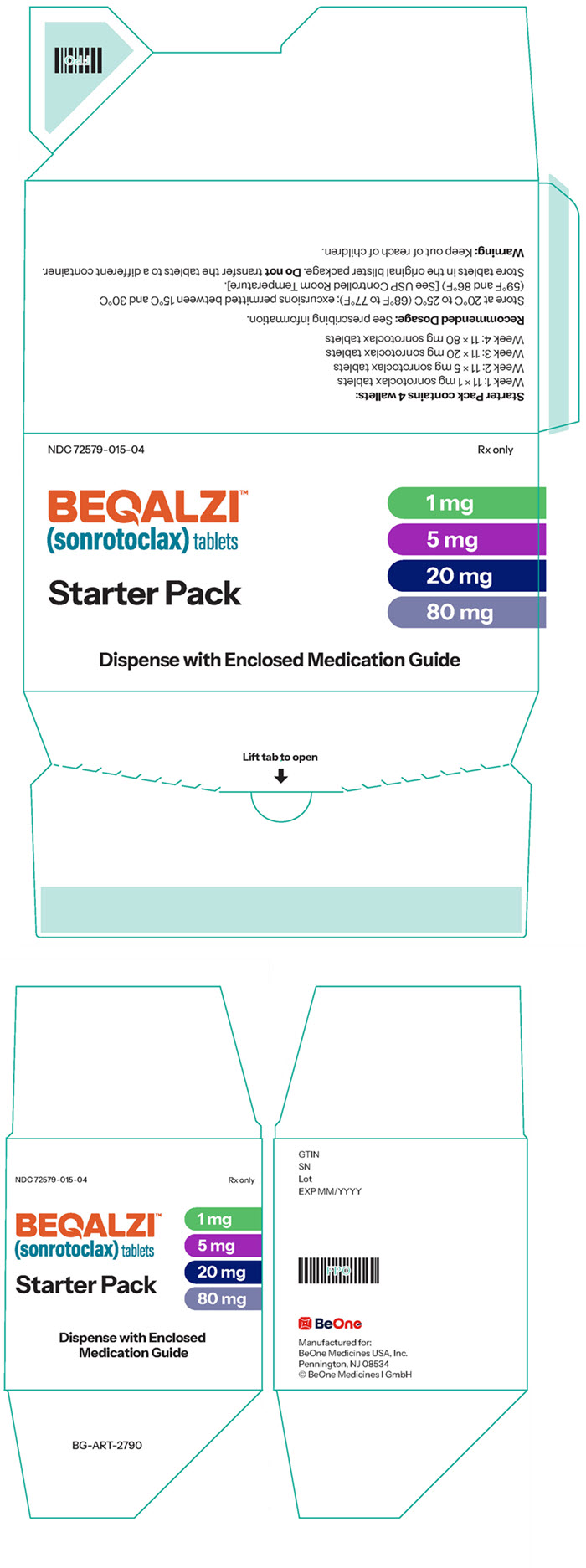
    Principal Display Panel - Kit Carton

    NDC 72579-015-04
    Rx only

    BEQALZI™
    (sonrotoclax) tablets

    Starter Pack

    1 mg

    5 mg

    20 mg

    80 mg

    Dispense with Enclosed Medication Guide

    Principal Display Panel (Kit Carton)

    Principal Display Panel (Kit Carton)

    * Please review the disclaimer below.