-
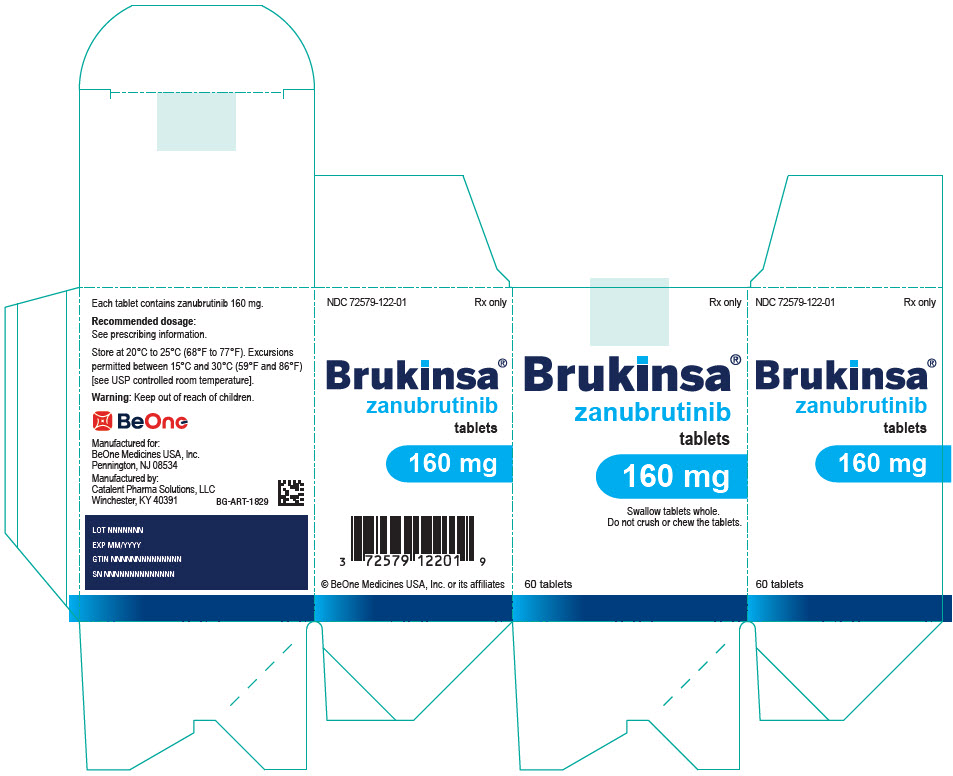
Administer BRUKINSA tablets with or without food [see Clinical Pharmacology (12.3)]. Advise patients to swallow tablets whole with water and not to chew or crush the tablets. The tablets can be split in half as prescribed by the healthcare provider.
Missed Dose
If a dose of BRUKINSA is missed, it should be taken as soon as possible on the same day with a return to the normal schedule the following day.
Mantle Cell Lymphoma (MCL)
The safety of BRUKINSA was evaluated in 118 patients with MCL who received at least one prior therapy in two single-arm clinical trials, BGB-3111-206 [NCT03206970] and BGB-3111-AU-003 [NCT02343120] [see Clinical Studies (14.1)]. The median age of patients who received BRUKINSA in studies BGB-3111-206 and BGB-3111-AU-003 was 62 years (range: 34 to 86), 75% were male, 75% were Asian, 21% were White, and 94% had an ECOG performance status of 0 to 1. Patients had a median of 2 prior lines of therapy (range: 1 to 4). The BGB-3111-206 trial required a platelet count ≥75 × 109/L and an absolute neutrophil count ≥1 × 10⁹/L independent of growth factor support, hepatic enzymes ≤2.5 × upper limit of normal, total bilirubin ≤1.5 × ULN. The BGB-3111-AU-003 trial required a platelet count ≥50 × 109/L and an absolute neutrophil count ≥1 × 10⁹/L independent of growth factor support, hepatic enzymes ≤3 × upper limit of normal, total bilirubin ≤1.5 × ULN. Both trials required a creatinine clearance (CLcr) ≥30 mL/min. Both trials excluded patients with prior allogeneic hematopoietic stem cell transplant, exposure to a BTK inhibitor, known infection with HIV, and serologic evidence of active hepatitis B or hepatitis C infection, and patients requiring strong CYP3A inhibitors or strong CYP3A inducers. Patients received BRUKINSA 160 mg twice daily or 320 mg once daily. Among patients receiving BRUKINSA, 79% were exposed for 6 months or longer, and 68% were exposed for greater than one year.
Fatal adverse reactions within 30 days of the last dose of BRUKINSA occurred in 8 (7%) of 118 patients with MCL. Fatal cases included pneumonia in 2 patients and cerebral hemorrhage in one patient.
Serious adverse reactions were reported in 36 patients (31%). The most frequent serious adverse reactions that occurred were pneumonia (11%) and hemorrhage (5%).
Of the 118 patients with MCL treated with BRUKINSA, 8 (7%) patients discontinued treatment due to adverse reactions in the trials. The most frequent adverse reaction leading to treatment discontinuation was pneumonia (3.4%). One (0.8%) patient experienced an adverse reaction leading to dose reduction (hepatitis B).
Table 3 summarizes the adverse reactions in BGB-3111-206 and BGB-3111-AU-003.
Table 3: Adverse Reactions (≥10%) in Patients Receiving BRUKINSA in BGB-3111-206 and BGB-3111-AU-003 Trials| Body System | Adverse Reaction | Percent of Patients (N=118) |
|---|
| All Grades % | Grade 3 or Higher % |
|---|
| Infections and infestations | Upper respiratory tract infection Upper respiratory tract infection includes upper respiratory tract infection, upper respiratory tract infection viral. | 39 | 0 |
| Pneumonia Pneumonia includes pneumonia, pneumonia fungal, pneumonia cryptococcal, pneumonia streptococcal, atypical pneumonia, lung infection, lower respiratory tract infection, lower respiratory tract infection bacterial, lower respiratory tract infection viral. | 15 | 10 Includes fatal adverse reaction. |
| Urinary tract infection | 11 | 0.8 |
| Skin and subcutaneous tissue disorders | Rash Rash includes all related terms containing rash. | 36 | 0 |
| Bruising Bruising includes all related terms containing bruise, bruising, contusion, ecchymosis. | 14 | 0 |
| Gastrointestinal disorders | Diarrhea | 23 | 0.8 |
| Constipation | 13 | 0 |
| Vascular disorders | Hypertension | 12 | 3.4 |
| Hemorrhage Hemorrhage includes all related terms containing hemorrhage, hematoma. | 11 | 3.4 |
| Musculoskeletal and connective tissue disorders | Musculoskeletal pain Musculoskeletal pain includes musculoskeletal pain, musculoskeletal discomfort, myalgia, back pain, arthralgia, arthritis. | 14 | 3.4 |
| Respiratory, thoracic, and mediastinal disorders | Cough | 12 | 0 |
Other clinically significant adverse reactions that occurred in <10% of patients with mantle cell lymphoma include major hemorrhage (defined as ≥ Grade 3 hemorrhage or CNS hemorrhage of any grade) (5%) and headache (4.2%).
Table 4: Selected Laboratory AbnormalitiesBased on laboratory measurements.
(>20%) in Patients with MCL in Studies BGB-3111-206 and BGB-3111-AU-003| Laboratory Parameter | Percent of Patients (N=118) |
|---|
| All Grades (%) | Grade 3 or 4 (%) |
|---|
| Hematologic abnormalities |
| Neutrophils decreased | 45 | 20 |
| Lymphocytosis Asymptomatic lymphocytosis is a known effect of BTK inhibition. | 41 | 16 |
| Platelets decreased | 40 | 7 |
| Hemoglobin decreased | 27 | 6 |
| Chemistry abnormalities |
| Blood uric acid increased | 29 | 2.6 |
| ALT increased | 28 | 0.9 |
| Bilirubin increased | 24 | 0.9 |
Waldenström's Macroglobulinemia (WM)
The safety of BRUKINSA was investigated in two cohorts of Study BGB-3111-302 (ASPEN). Cohort 1 included 199 patients with MYD88 mutation (MYD88MUT) WM, randomized to and treated with either BRUKINSA (101 patients) or ibrutinib (98 patients). The trial also included a non-randomized arm, Cohort 2, with 26 wild type MYD88 (MYD88WT) WM patients and 2 patients with unknown MYD88 status [see Clinical Studies (14.2)].
Among patients who received BRUKINSA, 93% were exposed for 6 months or longer, and 89% were exposed for greater than 1 year.
In Cohort 1 of the ASPEN study safety population (N=101), the median age of patients who received BRUKINSA was 70 years (45-87 years old); 67% were male, 86% were White, 4% were Asian, and 10% were not reported (unknown race). In Cohort 2 of the ASPEN study safety population (N=28), the median age of patients who received BRUKINSA was 72 (39-87 years old); 50% were male, 96% were White, and 4% were not reported (unknown race).
In Cohort 1, serious adverse reactions occurred in 44% of patients who received BRUKINSA. Serious adverse reactions in >2% of patients included influenza (3%), pneumonia (4%), neutropenia and neutrophil count decreased (3%), hemorrhage (4%), pyrexia (3%), and febrile neutropenia (3%). In Cohort 2, serious adverse reactions occurred in 39% of patients. Serious adverse reactions in >2 patients included pneumonia (14%).
Permanent discontinuation of BRUKINSA due to an adverse reaction occurred in 2% of patients in Cohort 1 and included hemorrhage (1 patient), and neutropenia and neutrophil count decreased (1 patient); in Cohort 2, permanent discontinuation of BRUKINSA due to an adverse reaction occurred in 7% of patients and included subdural hemorrhage (1 patient) and diarrhea (1 patient).
Dosage interruptions of BRUKINSA due to an adverse reaction occurred in 32% of patients in Cohort 1 and in 29% in Cohort 2. Adverse reactions which required dosage interruption in >2% of patients included neutropenia, vomiting, hemorrhage, thrombocytopenia, and pneumonia in Cohort 1. Adverse reactions leading to dosage interruption in >2 patients in Cohort 2 included pneumonia and pyrexia.
Dose reductions of BRUKINSA due to an adverse reaction occurred in 11% of patients in Cohort 1 and in 7% in Cohort 2. Adverse reactions which required dose reductions in >2% of patients included neutropenia in Cohort 1. Adverse reaction leading to dose reduction occurred in 2 patients in Cohort 2 (each with one event: diarrhea and pneumonia).
Table 5 summarizes the adverse reactions in Cohort 1 in ASPEN.
Table 5: Adverse Reactions (≥10%) Occurring in Patients with WM Who Received BRUKINSA in Cohort 1| Body System | Adverse Reaction | BRUKINSA (N=101) | Ibrutinib (N=98) |
|---|
All Grades
(%) | Grade 3 or 4
(%) | All Grades
(%) | Grade 3 or 4
(%) |
|---|
| Infections and infestations | Upper respiratory tract infection Upper respiratory tract infection includes upper respiratory tract infection, laryngitis, nasopharyngitis, sinusitis, rhinitis, viral upper respiratory tract infection, pharyngitis, rhinovirus infection, upper respiratory tract congestion. | 44 | 0 | 40 | 2 |
| Pneumonia Pneumonia includes lower respiratory tract infection, lung infiltration, pneumonia, pneumonia aspiration, pneumonia viral. | 12 | 4 | 26 | 10 |
| Urinary tract infection | 11 | 0 | 13 | 2 |
| Gastrointestinal disorders | Diarrhea | 22 | 3 | 34 | 2 |
| Nausea | 18 | 0 | 13 | 1 |
| Constipation | 16 | 0 | 7 | 0 |
| Vomiting | 12 | 0 | 14 | 1 |
| General disorders | Fatigue Fatigue includes asthenia, fatigue, lethargy. | 31 | 1 | 25 | 1 |
| Pyrexia | 16 | 4 | 13 | 2 |
| Edema peripheral | 12 | 0 | 20 | 0 |
| Skin and subcutaneous tissue disorders | Bruising Bruising includes all related terms containing bruise, contusion, or ecchymosis. | 20 | 0 | 34 | 0 |
| Rash Rash includes all related terms rash, maculo-papular rash, erythema, rash erythematous, drug eruption, dermatitis allergic, dermatitis atopic, rash pruritic, dermatitis, photodermatoses, dermatitis acneiform, stasis dermatitis, vasculitic rash, eyelid rash, urticaria, skin toxicity. | 29 | 0 | 32 | 0 |
| Pruritus | 11 | 1 | 6 | 0 |
| Musculoskeletal and connective tissue disorders | Musculoskeletal pain Musculoskeletal pain includes back pain, arthralgia, pain in extremity, musculoskeletal pain, myalgia, bone pain, spinal pain, musculoskeletal chest pain, neck pain, arthritis, musculoskeletal discomfort. | 45 | 9 | 39 | 1 |
| Muscle spasms | 10 | 0 | 28 | 1 |
| Nervous system disorders | Headache | 18 | 1 | 14 | 1 |
| Dizziness | 13 | 1 | 12 | 0 |
| Respiratory, thoracic, and mediastinal disorders | Cough | 16 | 0 | 18 | 0 |
| Dyspnea | 14 | 0 | 7 | 0 |
| Vascular disorders | Hemorrhage Hemorrhage includes epistaxis, hematuria, conjunctival hemorrhage, hematoma, rectal hemorrhage, periorbital hemorrhage, mouth hemorrhage, post procedural hemorrhage, hemoptysis, skin hemorrhage, hemorrhoidal hemorrhage, ear hemorrhage, eye hemorrhage, hemorrhagic diathesis, periorbital hematoma, subdural hemorrhage, wound hemorrhage, gastric hemorrhage, lower gastrointestinal hemorrhage, spontaneous hematoma, traumatic hematoma, traumatic intracranial hemorrhage, tumor hemorrhage, retinal hemorrhage, hematochezia, diarrhea hemorrhagic, hemorrhage, melena, post-procedural hematoma, subdural hematoma, anal hemorrhage, hemorrhagic disorder, pericardial hemorrhage, postmenopausal hemorrhage, stoma site hemorrhage, subarachnoid hemorrhage. | 42 | 4 | 43 | 9 |
| Hypertension | 14 | 9 | 19 | 14 |
Clinically relevant adverse reactions in <10% of patients who received BRUKINSA included localized infection, atrial fibrillation or atrial flutter, and hematuria.
Table 6 summarizes the laboratory abnormalities in ASPEN.
Table 6: Select Laboratory AbnormalitiesBased on laboratory measurements.
(≥20%) that Worsened from Baseline in Patients with WM Who Received BRUKINSA in Cohort 1| Laboratory Abnormality | BRUKINSA The denominator used to calculate the rate varied from 86 to 101 based on the number of patients with a baseline value and at least one post-treatment value. | Ibrutinib |
|---|
All Grades
(%) | Grade 3 or 4
(%) | All Grades
(%) | Grade 3 or 4
(%) |
|---|
| Hematologic abnormalities |
| Neutrophils decreased | 50 | 24 | 34 | 9 |
| Platelets decreased | 35 | 8 | 39 | 5 |
| Hemoglobin decreased | 20 | 7 | 20 | 7 |
| Chemistry abnormalities |
| Glucose increased | 45 | 2.3 | 33 | 2.3 |
| Creatinine increased | 31 | 1 | 21 | 1 |
| Calcium decreased | 27 | 2 | 26 | 0 |
| Potassium increased | 24 | 2 | 12 | 0 |
| Phosphate decreased | 20 | 3.1 | 18 | 0 |
| Urate increased | 16 | 3.2 | 34 | 6 |
| Bilirubin increased | 12 | 1 | 33 | 1 |
Marginal Zone Lymphoma
The safety of BRUKINSA was evaluated in 88 patients with previously treated MZL in two single-arm clinical studies, BGB-3111-214 and BGB-3111-AU-003 [see Clinical Studies (14.3)]. The trials required an absolute neutrophil count ≥1 × 10⁹/L, platelet count ≥50 or ≥75 × 109/L and adequate hepatic function and excluded patients requiring a strong CYP3A inhibitor or inducer. Patients received BRUKINSA 160 mg twice daily (97%) or 320 mg once daily (3%). The median age in both studies combined was 70 years (range: 37 to 95), 52% were male, 64% were White, and 19% were Asian. Most patients (92%) had an ECOG performance status of 0 to 1. Eighty percent received BRUKINSA for 6 months or longer, and 67% received treatment for more than one year.
Two fatal adverse reactions (2.3%) occurred within 30 days of the last dose of BRUKINSA, including myocardial infarction and a Covid-19–related death.
Serious adverse reactions occurred in 40% of patients. The most frequent serious adverse reactions were pyrexia (8%) and pneumonia (7%).
Adverse reactions lead to treatment discontinuation in 6% of patients, dose reduction in 2.3%, and dose interruption in 34%. The leading cause of dose modification was respiratory tract infections (13%).
Table 7 summarizes selected adverse reactions in BGB-3111-214 and BGB-3111-AU-003.
Table 7: Adverse Reactions Occurring in ≥10% Patients with MZL Who Received BRUKINSA| Body System | Adverse Reaction | BRUKINSA (N=88) |
|---|
All Grades
(%) | Grade 3 or 4
(%) |
|---|
| Infections and infestations | Upper respiratory tract infection Upper respiratory tract infection includes upper respiratory tract infection, nasopharyngitis, sinusitis, tonsillitis, rhinitis, viral upper respiratory tract infection. | 26 | 3.4 |
| Urinary tract infection Urinary tract infection includes urinary tract infection, cystitis, Escherichia urinary tract infection, pyelonephritis, cystitis. | 11 | 2.3 |
| Pneumonia Pneumonia includes COVID-19 pneumonia, pneumonia, bronchopulmonary aspergillosis, lower respiratory tract infection, organizing pneumonia. ,Includes 2 fatalities from COVID-19 pneumonia. | 10 | 6 |
| Gastrointestinal disorders | Diarrhea Diarrhea includes diarrhea and diarrhea hemorrhagic. | 25 | 3.4 |
| Abdominal pain Abdominal pain includes abdominal pain, abdominal pain upper, abdominal discomfort. | 14 | 2.3 |
| Nausea | 13 | 0 |
| Skin and subcutaneous tissue disorders | Bruising Bruising includes contusion, ecchymosis, increased tendency to bruise, post procedural contusion. | 24 | 0 |
| Rash Rash includes rash, rash maculo-papular, rash pruritic, dermatitis, dermatitis allergic, dermatitis atopic, dermatitis contact, drug reaction with eosinophilia and systemic symptoms, erythema, photosensitivity reaction, rash erythematous, rash papular, seborrheic dermatitis. | 21 | 0 |
| Musculoskeletal and connective tissue disorders | Musculoskeletal pain Musculoskeletal pain includes back pain, arthralgia, musculoskeletal pain, myalgia, pain in extremity, musculoskeletal chest pain, bone pain, musculoskeletal discomfort, neck pain. | 27 | 1.1 |
| Vascular disorders | Hemorrhage Hemorrhage includes epistaxis, hematuria, hemorrhoidal hemorrhage, hematoma, hemoptysis, conjunctival hemorrhage, diarrhea hemorrhagic, hemorrhage urinary tract, mouth hemorrhage, pulmonary hematoma, subcutaneous hematoma, gingival bleeding, melena, upper gastrointestinal hemorrhage. | 23 | 1.1 |
| General disorders | Fatigue Fatigue includes fatigue, lethargy, asthenia. | 21 | 2.3 |
| Respiratory, thoracic, and mediastinal disorders | Cough Cough includes cough and productive cough. | 10 | 0 |
Clinically relevant adverse reactions in <10% of patients who received BRUKINSA included peripheral neuropathy, second primary malignancies, dizziness, edema, headache, petechiae, purpura, and atrial fibrillation or flutter.
Table 8 summarizes select laboratory abnormalities.
Table 8: Select Laboratory Abnormalities (≥20%) that Worsened from Baseline in Patients with MZL| Laboratory Abnormality The denominator used to calculate the rate varied from 87 to 88 based on the number of patients with a baseline value and at least one post-treatment value. | BRUKINSA |
|---|
| All Grades (%) | Grade 3 or 4 (%) |
|---|
| Hematologic abnormalities |
| Neutrophils decreased | 43 | 15 |
| Platelets decreased | 33 | 10 |
| Lymphocytes decreased | 32 | 8 |
| Hemoglobin decreased | 26 | 6 |
| Chemistry abnormalities |
| Glucose increased | 54 | 4.6 |
| Creatinine increased | 34 | 1.1 |
| Phosphate decreased | 27 | 2.3 |
| Calcium decreased | 23 | 0 |
| ALT increased | 22 | 1.1 |
Chronic Lymphocytic Leukemia or Small Lymphocytic Lymphoma
The safety data described below reflect exposure to BRUKINSA (160 mg twice daily) in 675 patients with CLL from two randomized controlled clinical trials [see Clinical Studies (14.4)]. The trials required patients to be unsuitable for fludarabine, cyclophosphamide, and rituximab (FCR) therapy defined as age ≥65 years, or age 18 to <65 years with either a total Cumulative Illness Rating Scale (CIRS) >6, CLcr 30 to 69 mL/min, or history of serious or frequent infections. The trial excluded patients with AST or ALT ≥2 times the upper limit of normal (ULN) or bilirubin ≥3 times (ULN) and patients requiring a strong CYP3A inhibitor or inducer.
SEQUOIA
The safety of BRUKINSA monotherapy in patients with previously untreated CLL/SLL was evaluated in a randomized, multicenter, open-label, actively controlled trial [see Clinical Studies (14.4)]. Patients without deletion of chromosome 17p13.1 (17p deletion) (Cohort 1) received either BRUKINSA 160 mg twice daily until disease progression or unacceptable toxicity (n=240) or bendamustine plus rituximab (BR) for 6 cycles (n=227). Bendamustine was dosed at 90 mg/m2/day intravenously on the first 2 days of each cycle, and rituximab was dosed at 375 mg/m2 on day 1 of Cycle 1 and 500 mg/m2 on day 1 of Cycles 2 to 6.
Additionally, the same BRUKINSA regimen was evaluated in 111 patients with previously untreated CLL/SLL with 17p deletion in a non-randomized single arm (Cohort 2).
Randomized Cohort: Previously Untreated CLL/SLL without 17p Deletion
In patients with previously untreated CLL/SLL without 17p deletion, the median age was 70, 62% were male, 89% were White, 2% were Asian, and 2% were Black. Most patients (93%) had an ECOG performance status of 0 to 1.
The median duration of exposure to BRUKINSA was 26 months, with 71% exposed for more than 2 years.
Serious adverse reactions occurred in 36% of patients who received BRUKINSA. Serious adverse reactions that occurred in ≥5% of patients were COVID-19, pneumonia, and second primary malignancy (5% each). Fatal adverse reactions occurred in 11 (4.6%) patients with the leading cause of death being COVID-19 (2.1%).
Adverse reactions led to permanent discontinuation of BRUKINSA in 8% of patients, dose reduction in 8%, and dose interruption in 46%. The most common adverse reactions leading to permanent discontinuation were second primary malignancy and COVID-19. The leading causes of dose modification (≥5% of all patients) were respiratory infections (COVID-19, pneumonia) and hemorrhage.
Table 9 summarizes select adverse reactions in this randomized cohort.
Table 9: Adverse Reactions in ≥10% Patients with Previously Untreated CLL/SLL without 17p Deletion in SEQUOIA | CLL/SLL without 17p deletion |
|---|
| BRUKINSA
(N=240) | BR
(N=227) |
|---|
System Organ Class
Preferred Term | All Grades
(%) | Grade 3 or 4
(%) | All Grades
(%) | Grade 3 or 4
(%) |
|---|
| Musculoskeletal and connective tissue disorders |
| Musculoskeletal pain Musculoskeletal pain: musculoskeletal pain, arthralgia, back pain, pain in extremity, myalgia, neck pain, spinal pain, musculoskeletal discomfort, bone pain. | 33 | 1.7 | 17 | 0.4 |
| Infections and infestations |
| Upper respiratory tract infection Upper respiratory tract infection: upper respiratory tract infection, nasopharyngitis, sinusitis, rhinitis, pharyngitis, upper respiratory tract congestion, laryngitis, tonsillitis and upper respiratory tract inflammation, and related terms. | 28 | 1.3 | 15 | 0.9 |
| Pneumonia Pneumonia: pneumonia, COVID-19 pneumonia, lower respiratory tract infection, lung infiltration, and related terms including specific types of infection. | 13 Includes 3 fatal outcomes. | 5 | 8 Includes 2 fatal outcomes. | 4 |
| Vascular disorders |
| Hemorrhage Hemorrhage: all terms containing hematoma, hemorrhage, hemorrhagic, and related terms indicative of bleeding. | 27 | 4 | 4 | 0.4 |
| Hypertension Includes multiple similar adverse reaction terms. | 14 | 7 | 5 | 2.6 |
| Skin and subcutaneous tissue disorders |
| Rash Rash: Rash, dermatitis, drug eruption, and related terms. | 24 | 1.3 | 30 | 5 |
| Bruising | 24 | 0 | 2.6 | 0 |
| Respiratory, thoracic, and mediastinal disorders |
| Cough | 15 | 0 | 10 | 0 |
| Gastrointestinal disorders |
| Diarrhea | 14 | 0.8 | 12 | 0.9 |
| Constipation | 10 | 0.4 | 18 | 0 |
| Nausea | 10 | 0 | 33 | 1.3 |
| General disorders |
| Fatigue Fatigue: fatigue, asthenia, and lethargy. | 14 | 1.3 | 21 | 1.8 |
| Neoplasms |
| Second primary malignancy Second primary malignancy: includes non-melanoma skin cancer, malignant solid tumors (including lung, renal, genitourinary, breast, ovarian, and rectal), and chronic myeloid leukemia. | 13 | 6 | 1.3 | 0.4 |
| Nervous system disorders |
| Headache | 12 | 0 | 8 | 0 |
| Dizziness Dizziness: dizziness and vertigo. | 11 | 0.8 | 5 | 0 |
Other clinically significant adverse reactions occurring in <10% of BRUKINSA recipients in this cohort included COVID-19 (9%), edema (8%), abdominal pain (8%), urinary tract infection (7%), and atrial fibrillation or flutter (3.3%).
Table 10 summarizes select laboratory abnormalities in this cohort.
Table 10: Select Laboratory Abnormalities (≥20%) that Worsened from Baseline in Patients with Previously Untreated CLL/SLL without 17p Deletion in SEQUOIA| Laboratory Abnormality The denominator used to calculate the rate was 239 in the BRUKINSA arm and 227 in the BR arm, based on the number of patients with a baseline value and at least one post-treatment value. Grading is based on NCI CTCAE criteria. | BRUKINSA | BR |
|---|
All Grades
(%) | Grade 3 or 4
(%) | All Grades
(%) | Grade 3 or 4
(%) |
|---|
| Hematologic abnormalities |
| Neutrophils decreased | 37 | 15 | 80 | 53 |
| Hemoglobin decreased | 29 | 2.5 | 66 | 8 |
| Platelets decreased | 27 | 1.7 | 61 | 11 |
| Leukocytes increased | 21 Lymphocytes increased in 15%. | 21 | 0.4 | 0.4 |
| Chemistry abnormalities |
| Glucose increased Nonfasting conditions. | 55 | 7 | 67 | 10 |
| Creatinine increased | 22 | 0.8 | 18 | 0.4 |
| Magnesium increased | 22 | 0 | 14 | 0.4 |
| Alanine aminotransferase increased | 21 | 2.1 | 23 | 2.2 |
Single-Arm Cohort: Previously Untreated CLL/SLL and 17p Deletion
In 111 patients with previously untreated, 17p del CLL/SLL, the median age was 70, 71% were male, 95% were White, and 1% were Asian. Most patients (87%) had an ECOG performance status of 0 to 1. The median duration of exposure to BRUKINSA was 30 months.
Fatal adverse reactions occurred in 3 (2.7%) patients, including pneumonia, renal insufficiency, and aortic dissection (1 patient each).
Serious adverse reactions occurred in 41% of patients treated with BRUKINSA. Serious adverse reactions reported in ≥5% of patients were pneumonia (8%) and second primary malignancy (7%).
Adverse reactions led to treatment discontinuation in 5% of patients, dose reduction in 5%, and dose interruption in 51%. The leading causes of dose modification (≥5% of all patients) were pneumonia, neutropenia, second primary malignancy, and diarrhea.
Table 11 summarizes select adverse reactions in this cohort.
Table 11: Adverse Reactions in ≥10% of Patients with Previously Untreated CLL/SLL and 17p Deletion in SEQUOIA | CLL/SLL with 17p Deletion |
|---|
| BRUKINSA
(N=111) |
|---|
System Organ Class
Preferred Term | All Grades
(%) | Grade 3 or 4
(%) |
|---|
| Infections and infestations |
| Upper respiratory tract infection Upper respiratory tract infection: upper respiratory tract infection, nasopharyngitis, sinusitis, rhinitis, pharyngitis, upper respiratory tract congestion, upper respiratory tract inflammation, viral upper respiratory tract infection, and related terms. | 38 | 0 |
| Pneumonia Pneumonia: pneumonia, COVID-19 pneumonia, lower respiratory tract infection, and related terms including specific types of infection. | 20 Includes 1 fatal outcome. | 8 |
| Musculoskeletal and connective tissue disorders |
| Musculoskeletal pain Musculoskeletal pain: musculoskeletal pain, arthralgia, back pain, pain in extremity, myalgia, neck pain, bone pain. | 38 | 2.7 |
| Skin and subcutaneous tissue disorders |
| Rash Rash: Rash, dermatitis, toxic skin eruption, and related terms. | 28 | 0 |
| Bruising Bruising: all terms containing bruise, bruising, contusion, or ecchymosis. | 26 | 0.9 |
| Vascular disorders |
| Hemorrhage Hemorrhage: all terms containing hematoma, hemorrhage, hemorrhagic, and related terms indicative of bleeding. | 28 | 4.5 |
| Hypertension | 11 | 5.4 |
| Neoplasms |
| Second primary malignancy Second primary malignancy: includes non-melanoma skin cancer, malignant solid tumors (including bladder, lung, renal, breast, prostate, ovarian, pelvis, and ureter), and malignant melanoma. | 22 Includes non-melanoma skin cancer in 13%. | 6 |
| Gastrointestinal disorders |
| Diarrhea | 18 | 0.9 |
| Nausea | 16 | 0 |
| Constipation | 15 | 0 |
| Abdominal pain | 12 | 1.8 |
| Respiratory, thoracic, and mediastinal disorders |
| Cough Includes multiple similar adverse reaction terms. | 18 | 0 |
| Dyspnea | 13 | 0 |
| General disorders and administration site conditions |
| Fatigue Fatigue: fatigue, asthenia, and lethargy. | 14 | 0.9 |
| Nervous system disorders |
| Headache | 11 | 1.8 |
Clinically significant adverse reactions occurring in <10% of BRUKINSA recipients in this cohort included urinary tract infection (8%), edema (7%), atrial fibrillation or flutter (4.5%), and COVID-19 (3.6%).
Table 12 summarizes select laboratory abnormalities in this cohort.
Table 12: Select Laboratory Abnormalities (≥20%) that Worsened from Baseline in Patients with Previously Untreated CLL/SLL and 17p Deletion in SEQUOIA| Laboratory Abnormality The denominator used to calculate the rate varied from 110 to 111 based on the number of patients with a baseline value and at least one post-treatment value. Grading is based on NCI CTCAE criteria. | BRUKINSA |
|---|
| All Grades (%) | Grade 3 or 4 (%) |
|---|
| Hematologic abnormalities |
| Neutrophils decreased | 42 | 19 Grade 4, 9%. |
| Hemoglobin decreased | 26 | 3.6 |
| Platelets decreased | 23 | 0.9 |
| Chemistry abnormalities |
| Glucose increased Nonfasting conditions. | 52 | 6 |
| Magnesium increased | 31 | 0 |
| Creatinine increased | 27 | 0.9 |
ALPINE
The safety of BRUKINSA monotherapy was evaluated in patients with previously treated CLL/SLL in a randomized, multicenter, open-label, actively controlled trial [see Clinical Studies (14.4)]. In ALPINE, 324 patients received BRUKINSA monotherapy, 160 mg orally twice daily and 324 patients received ibrutinib monotherapy, 420 mg orally daily until disease progression or unacceptable toxicity.
In ALPINE, the median duration of exposure was 24 months for BRUKINSA. Adverse reactions leading to death in the BRUKINSA arm occurred in 24 (7%) patients. Adverse reactions leading to death that occurred in >1% of patients were pneumonia (2.8%) and COVID-19 infection (1.9%).
One hundred and four patients in the BRUKINSA arm (32%) reported ≥1 serious adverse reaction. Serious adverse reactions occurring in ≥5% of patients were pneumonia (10%), COVID-19 (7%), and second primary malignancies (5%).
Adverse reactions led to treatment discontinuation in 13% of patients, dose reduction in 11%, and dose interruption in 42%. The leading cause of treatment discontinuation was pneumonia. The leading causes of dose modification (≥5% of all patients) were respiratory infections (COVID-19, pneumonia) and neutropenia.
Table 13 summarizes select adverse reactions in ALPINE.
Table 13: Adverse Reactions in ≥10% of Patients with Relapsed or Refractory CLL/SLL Who Received BRUKINSA in ALPINESystem Organ Class
Preferred Term | BRUKINSA
(N=324) | Ibrutinib
(N=324) |
|---|
All Grades
(%) | Grade 3 or 4
(%) | All Grades
(%) | Grade 3 or 4
(%) |
|---|
| Infections and infestations |
| Upper respiratory tract infection Upper respiratory tract infection: upper respiratory tract infection, sinusitis, pharyngitis, rhinitis, nasopharyngitis, laryngitis, tonsillitis, and related terms. | 27 | 1.2 | 22 | 1.2 |
| Pneumonia Pneumonia: Pneumonia, COVID-19 pneumonia, lower respiratory tract infection, lung infiltration, and related terms including specific types of infection. | 18 Includes fatal outcomes: pneumonia (9 patients), COVID-19 (8 patients), and hemorrhage (1 patient). | 9 | 19 Includes fatal outcomes: pneumonia (10 patients), COVID-19 (9 patients), and hemorrhage (2 patients). | 11 |
| COVID-19 COVID-19: COVID-19, COVID-19 pneumonia, postacute COVID-19 syndrome, SARS-CoV-2 test positive. | 14 | 7 | 10 | 4.6 |
| Musculoskeletal and connective tissue disorders |
| Musculoskeletal pain Musculoskeletal pain: musculoskeletal pain, arthralgia, back pain, pain in extremity, myalgia, neck pain, spinal pain, bone pain, and musculoskeletal discomfort. | 26 | 0.6 | 28 | 0.6 |
| Vascular disorders |
| Hemorrhage Hemorrhage: all terms containing hematoma, hemorrhage, hemorrhagic, and related terms indicative of bleeding. | 24 | 2.5 | 26 | 3.7 |
| Hypertension Includes multiple similar adverse reaction terms. | 19 | 13 | 20 | 13 |
| Skin and subcutaneous tissue disorders |
| Rash Rash: Rash, Dermatitis, and related terms. | 20 | 1.2 | 21 | 0.9 |
| Bruising Bruising: all terms containing bruise, bruising, contusion, or ecchymosis. | 16 | 0 | 14 | 0 |
| Gastrointestinal disorders |
| Diarrhea | 14 | 1.5 | 22 | 0.9 |
| General disorders |
| Fatigue Fatigue: asthenia, fatigue, lethargy. | 13 | 0.9 | 14 | 0.9 |
| Respiratory, thoracic, and mediastinal disorders |
| Cough | 11 | 0.3 | 11 | 0 |
| Nervous system disorders |
| Dizziness | 10 | 0 | 7 | 0 |
Clinically relevant adverse reactions in <10% of patients who received BRUKINSA included urinary tract infection (9%), supraventricular arrhythmias (9%) including atrial fibrillation or flutter (4.6%), abdominal pain (8%), headache (8%), pruritus (6.2%), constipation (5.9%), and edema (4.6%).
Table 14 summarizes select laboratory abnormalities in ALPINE.
Table 14: Select Laboratory Abnormalities (≥20%) that Worsened from Baseline in Patients Who Received BRUKINSA in ALPINE| Laboratory Abnormality The denominator used to calculate the rate was 321 in the BRUKINSA arm, and varied from 320 to 321 in the ibrutinib arm, based on the number of patients with a baseline value and at least one post-treatment value. Grading is based on NCI CTCAE criteria. | BRUKINSA | Ibrutinib |
|---|
All Grades
(%) | Grade 3 or 4
(%) | All Grades
(%) | Grade 3 or 4
(%) |
|---|
| Hematologic abnormalities |
| Neutrophils decreased | 43 | 15 | 33 | 16 |
| Hemoglobin decreased | 28 | 4 | 32 | 3.7 |
| Lymphocytes increased | 24 | 19 | 26 | 19 |
| Platelets decreased | 22 | 4 | 24 | 3.4 |
| Chemistry abnormalities |
| Glucose increased | 52 | 5 | 29 | 2.8 |
| Creatinine increased | 26 | 0 | 23 | 0 |
| Phosphate decreased | 21 | 2.5 | 13 | 2.2 |
| Calcium decreased | 21 | 0.6 | 29 | 0 |
Follicular Lymphoma
The safety of BRUKINSA in combination with obinutuzumab was evaluated in 143 adult patients with relapsed or refractory follicular lymphoma (FL) in study BGB-3111-212 (ROSEWOOD), a randomized, multicenter, open-label trial [see Clinical Studies (14.5)]. The trial required an absolute neutrophil count ≥1 × 10⁹/L, platelet count ≥50 × 109/L, and CLcr ≥30 mL/min and excluded patients requiring a strong CYP3A inhibitor or inducer.
Patients were randomized to receive either BRUKINSA 160 mg twice daily until disease progression or unacceptable toxicity plus obinutuzumab (n=143) or obinutuzumab monotherapy (n=71). Obinutuzumab was dosed at 1,000 mg intravenously on Days 1, 8, and 15 of Cycle 1; on Day 1 of Cycles 2 to 6; and then every 8 weeks for up to 20 doses. At the discretion of the investigator, obinutuzumab was administered intravenously on Day 1 (100 mg) and on Day 2 (900 mg) of Cycle 1 instead of 1,000 mg on Day 1 of Cycle 1.
In patients who received BRUKINSA in combination with obinutuzumab, the median age was 63, 49% were female, 63% were White, and 21% were Asian. Most patients (97%) had an ECOG performance status of 0 to 1. The median duration of BRUKINSA treatment was 12 months, with 24% of patients treated for at least 2 years.
Serious adverse reactions occurred in 35% of patients who received BRUKINSA in combination with obinutuzumab. Serious adverse reactions in ≥5% of patients included pneumonia (11%) and COVID-19 (10%). Fatal adverse reactions occurred in 4.2% of patients, with the leading cause of death being COVID-19 (2.1%).
Adverse reactions led to permanent discontinuation of BRUKINSA in 17% of patients, dose reduction in 9%, and dose interruption in 40%. Adverse reactions leading to permanent discontinuation in ≥2% of patients were pneumonia, COVID-19, and second primary malignancy. The leading causes of BRUKINSA dosage modification (42% of all patients) were pneumonia, COVID-19, thrombocytopenia, and neutropenia.
Table 15 summarizes adverse reactions in BGB-3111-212.
Table 15: Adverse Reactions in ≥10% of Patients with Relapsed or Refractory FL Who Received BRUKINSA in Study BGB-3111-212System Organ Class
Preferred Term | BGB-3111-212 |
|---|
BRUKINSA + Obinutuzumab
(N=143) | Obinutuzumab
(N=71) |
|---|
All Grades
(%) | Grade 3 or 4
(%) | All Grades
(%) | Grade 3 or 4
(%) |
|---|
| General disorders and administration site conditions |
| Fatigue Includes multiple related terms. ,Fatigue: Fatigue, asthenia, and lethargy. | 27 | 1.4 | 25 | 1.4 |
| Pyrexia | 13 | 0 | 20 | 0 |
| Musculoskeletal and connective tissue disorders |
| Musculoskeletal pain, Musculoskeletal pain: Back pain, musculoskeletal pain, musculoskeletal discomfort, noncardiac chest pain, neck pain, pain in extremity, myalgia, spinal pain, bone pain, arthralgia, and related terms. | 22 | 3.5 | 23 | 1.4 |
| Vascular disorders | | | | |
| Hemorrhage, Hemorrhage: All terms containing hematoma, hemorrhage, hemorrhagic, and related terms indicative of bleeding. | 20 | 1.4 | 10 | 1.4 |
| Gastrointestinal disorders |
| Diarrhea | 18 | 2.8 | 17 | 1.4 |
| Constipation | 13 | 0 | 9 | 0 |
| Abdominal pain | 11 | 2.1 | 11 | 0 |
| Infections and infestations |
| Upper respiratory tract infection, Upper respiratory tract infection: Upper respiratory tract infection, sinusitis, pharyngitis, laryngitis, rhinitis, nasopharyngitis, laryngopharyngitis, tonsillitis bacterial, and related terms. | 17 | 2.8 | 10 | 0 |
| Pneumonia, Pneumonia: Pneumonia, COVID-19 pneumonia, lung infiltration, lung consolidation, and related terms including specific types of infection. ,Includes fatal outcomes: COVID-19 (3 patients), pneumonia (2 patients), dyspnea (1 patient). | 15 | 13 | 11 | 7 |
| COVID-19, | 13 | 9 | 11 | 4.2 |
| Herpes virus infection Herpes virus infection: Herpes viral infection, herpes zoster, herpes simplex, herpes simplex reactivation, varicella, and Epstein-Barr viremia. | 11 | 2.1 | 1.4 | 0 |
| Urinary tract infection Urinary tract infection: Urinary tract infection, cystitis, pyelonephritis, and related terms. | 10 | 1.4 | 7 | 0 |
| Respiratory, thoracic, and mediastinal disorders | | | |
| Cough | 14 | 0 | 14 | 0 |
| Dyspnea, | 11 | 2.1 | 13 | 0 |
| Skin and subcutaneous tissue disorders |
| Rash, Rash: Rash, erythema, dermatitis, drug eruption, skin reaction, and related terms. | 11 | 0 | 14 | 0 |
Clinically relevant adverse reactions in <10% of patients who received BRUKINSA in combination with obinutuzumab included bruising, edema, pruritus, petechiae, vomiting, headache, arthralgia, hypertension, sepsis, cardiac arrhythmias, renal insufficiency, febrile neutropenia, transaminase elevation, and pneumonitis.
Table 16: Select Laboratory Abnormalities (≥20%) that Worsened from Baseline in Patients Who Received BRUKINSA in Study BGB-3111-212| Laboratory Abnormality The denominator used to calculate the rate was 122 in the BRUKINSA + obinutuzumab arm, and varied from 56 to 58 in the obinutuzumab arm, based on the number of patients with a baseline value and at least one post-treatment value. Grading is based on NCI CTCAE criteria. | BGB-3111-212 |
|---|
| BRUKINSA + Obinutuzumab | Obinutuzumab |
|---|
All Grades
(%) | Grade 3 or 4
(%) | All Grades
(%) | Grade 3 or 4
(%) |
|---|
| Hematologic abnormalities |
| Platelets decreased | 65 | 11 | 43 | 11 |
| Neutrophils decreased | 47 | 17 | 42 | 14 |
| Hemoglobin decreased | 31 | 0.8 | 23 | 0 |
| Lymphocytes decreased | 30 | 11 | 51 | 25 |
| Chemistry | |
| Glucose increased Nonfasting conditions. | 53 | 8 | 41 | 9 |
| Alanine aminotransferase increased | 23 | 0 | 28 | 0 |
| Phosphate decreased | 21 | 0.8 | 14 | 0 |
Risk Summary
Based on findings in animals, BRUKINSA can cause fetal harm when administered to pregnant women. There are no available data on BRUKINSA use in pregnant women to evaluate for a drug-associated risk of major birth defects, miscarriage, or adverse maternal or fetal outcomes. In animal reproduction studies, oral administration of zanubrutinib to pregnant rats during the period of organogenesis was associated with fetal heart malformation at approximately 5-fold human exposures (see Data). Women should be advised to avoid pregnancy while taking BRUKINSA. If BRUKINSA is used during pregnancy, or if the patient becomes pregnant while taking BRUKINSA, the patient should be apprised of the potential hazard to the fetus.
The estimated background risk of major birth defects and miscarriage for the indicated population is unknown. All pregnancies have a background risk of birth defect, loss, or other adverse outcomes. In the U.S. general population, the estimated background risk of major birth defects and miscarriage in clinically recognized pregnancies is 2% to 4% and 15% to 20%, respectively.
Data
Animal Data
Embryo-fetal development toxicity studies were conducted in both rats and rabbits. Zanubrutinib was administered orally to pregnant rats during the period of organogenesis at doses of 30, 75, and 150 mg/kg/day. Malformations in the heart (2 or 3-chambered hearts) were noted at all dose levels in the absence of maternal toxicity. The dose of 30 mg/kg/day is approximately 5 times the exposure (AUC) in patients receiving the recommended dose of 160 mg twice daily.
Administration of zanubrutinib to pregnant rabbits during the period of organogenesis at 30, 70, and 150 mg/kg/day resulted in postimplantation loss at the highest dose. The dose of 150 mg/kg is approximately 32 times the exposure (AUC) in patients at the recommended dose and was associated with maternal toxicity.
In a pre and postnatal developmental toxicity study, zanubrutinib was administered orally to rats at doses of 30, 75, and 150 mg/kg/day from implantation through weaning. The offspring from the middle and high dose groups had decreased body weights preweaning, and all dose groups had adverse ocular findings (e.g., cataract, protruding eye). The dose of 30 mg/kg/day is approximately 5 times the AUC in patients receiving the recommended dose.
Risk Summary
There are no data on the presence of zanubrutinib or its metabolites in human milk, the effects on the breastfed child, or the effects on milk production. Because of the potential for serious adverse reactions from BRUKINSA in a breastfed child, advise lactating women not to breastfeed during treatment with BRUKINSA and for two weeks following the last dose.
Pregnancy Testing
Pregnancy testing is recommended for females of reproductive potential prior to initiating BRUKINSA therapy.
Contraception
Females
Advise female patients of reproductive potential to use effective contraception during treatment with BRUKINSA and for 1 week following the last dose of BRUKINSA. If this drug is used during pregnancy, or if the patient becomes pregnant while taking this drug, the patient should be informed of the potential hazard to a fetus.
Males
Advise men to avoid fathering a child while receiving BRUKINSA and for 1 week following the last dose of BRUKINSA.
BTK Occupancy in PBMCs and Lymph Nodes
The median steady-state BTK occupancy in peripheral blood mononuclear cells was maintained at 100% over 24 hours at a total daily dose of 320 mg in patients with B-cell malignancies. The median steady-state BTK occupancy in lymph nodes was 94% to 100% following the approved recommended dosage.
Cardiac Electrophysiology
At the approved recommended doses (160 mg twice daily or 320 mg once daily), there were no clinically relevant effects on the QTc interval. The effect of BRUKINSA on the QTc interval above the therapeutic exposure has not been evaluated.
In Vitro Platelet Aggregation
In blood samples from healthy donors, patients on anticoagulant or antiplatelet therapy, and those with severe renal dysfunction, zanubrutinib demonstrated inhibition of platelet aggregation mediated by collagen, CRP-XL, or rhodocytin. Zanubrutinib did not show meaningful inhibition of platelet aggregation for ADP and PAR4-AP.
Absorption
The median tmax of zanubrutinib is 2 hours.
Effect of Food
BRUKINSA Capsules:
Zanubrutinib AUC decreased 7% and Cmax increased 3% following administration of BRUKINSA capsules with a high-fat meal (1,000 calories, 50% fat) in healthy subjects.
BRUKINSA Tablets:
Zanubrutinib AUC increased up to 17% and Cmax up to 79% following administration of BRUKINSA tablets with a high-fat meal (1,000 calories, 50% fat) in healthy subjects.
Distribution
The geometric mean (%CV) apparent volume of distribution (Vz/F) of zanubrutinib is 537 (73%) L. The plasma protein binding of zanubrutinib is approximately 94% and the blood-to-plasma ratio is 0.7 to 0.8.
Elimination
The mean half-life (t½) of zanubrutinib is approximately 2 to 4 hours following a single oral zanubrutinib dose of 160 mg or 320 mg. The geometric mean (%CV) apparent oral clearance (CL/F) of zanubrutinib is 128 (58%) L/h.
Metabolism
Zanubrutinib is primarily metabolized by cytochrome P450(CYP)3A.
Excretion
Following a single radiolabeled zanubrutinib dose of 320 mg to healthy subjects, approximately 87% of the dose was recovered in feces (38% unchanged) and 8% in urine (less than 1% unchanged).
Specific Populations
No clinically significant differences in the pharmacokinetics of zanubrutinib were observed based on age (19 to 90 years), sex, race (Asian, White, and Other), body weight (36 to 144 kg), or mild, moderate or severe renal impairment (CLcr ≥15 mL/min as estimated by Cockcroft-Gault). The effect of dialysis on zanubrutinib pharmacokinetics is unknown.
Hepatic Impairment
The total AUC of zanubrutinib increased by 11% in subjects with mild hepatic impairment (Child-Pugh class A), by 21% in subjects with moderate hepatic impairment (Child-Pugh class B), and by 60% in subjects with severe hepatic impairment (Child-Pugh class C) relative to subjects with normal liver function. The unbound AUC of zanubrutinib increased by 23% in subjects with mild hepatic impairment (Child-Pugh class A), by 43% in subjects with moderate hepatic impairment (Child-Pugh class B) and by 194% in subjects with severe hepatic impairment (Child-Pugh class C) relative to subjects with normal liver function.
Drug Interaction Studies
Clinical Studies and Model-Informed Approaches
CYP3A Inhibitors: Coadministration of multiple doses of CYP3A inhibitors increases zanubrutinib Cmax and AUC (Table 18).
Table 18: Observed or Predicted Increase in Zanubrutinib Exposure After Coadministration of CYP3A Inhibitors| Coadministered CYP3A Inhibitor | Increase in Zanubrutinib Cmax | Increase in Zanubrutinib AUC |
|---|
| Observed |
| Itraconazole (200 mg once daily) The assessment was conducted in healthy subjects with a single dose of zanubrutinib 20 mg. | 157% | 278% |
| Fluconazole (400 mg once daily) The assessment was conducted in patients with B-cell lymphoma administered multiple doses of zanubrutinib at the respective recommended zanubrutinib dosages in Table 1. | 81% | 88% |
| Diltiazem (180 mg once daily) | 62% | 62% |
| Voriconazole (200 mg twice daily) | 229% | 230% |
| Clarithromycin (250 mg twice daily) | 101% | 92% |
| Predicted |
| Posaconazole suspension (100 mg once daily) The predicted values were based on simulations with patients administered multiple doses of zanubrutinib at the respective recommended dosages in Table 1. | 169% | 180% |
| Posaconazole suspension (100 mg twice daily) | 207% | 279% |
| Posaconazole delayed-release tablets (300 mg once daily) | 232% | 407% |
| Posaconazole intravenously (300 mg once daily) | 205% | 333% |
| Itraconazole (200 mg once daily) | 273% | 320% |
CYP3A Inducers: Coadministration of multiple doses of rifampin (strong CYP3A inducer) decreased the zanubrutinib Cmax by 92% and AUC by 93%. Coadministration of multiple doses of rifabutin (moderate CYP3A inducer) decreased the zanubrutinib Cmax by 48% and AUC by 44%.
Coadministration of multiple doses of efavirenz (moderate CYP3A inducer) is predicted to decrease zanubrutinib Cmax by 58% and AUC by 60%.
CYP3A Substrates: Coadministration of multiple doses of zanubrutinib decreased midazolam (CYP3A substrate) Cmax by 30% and AUC by 47%.
CYP2C19 Substrates: Coadministration of multiple doses of zanubrutinib decreased omeprazole (CYP2C19 substrate) Cmax by 20% and AUC by 36%.
Other CYP Substrates: No clinically significant differences were observed with warfarin (CYP2C9 substrate) pharmacokinetics when coadministered with zanubrutinib.
Transporter Systems: Coadministration of multiple doses of zanubrutinib increased digoxin (P-gp substrate) Cmax by 34% and AUC by 11%. No clinically significant differences in the pharmacokinetics of rosuvastatin (BCRP substrate) were observed when coadministered with zanubrutinib.
Gastric Acid Reducing Agents: No clinically significant differences in zanubrutinib pharmacokinetics were observed when coadministered with gastric acid reducing agents (proton pump inhibitors, H2-receptor antagonists).
In Vitro Studies
CYP Enzymes: Zanubrutinib is an inducer of CYP2B6 and CYP2C8.
Transporter Systems: Zanubrutinib is likely to be a substrate of P-gp. Zanubrutinib is not a substrate or inhibitor of OAT1, OAT3, OCT2, OATP1B1, or OATP1B3.
ASPEN Cohort 2
Cohort 2 enrolled patients with MYD88 wildtype (MYD88WT) or MYD88 mutation unknown WM (N=26 and 2, respectively) and received BRUKINSA 160 mg twice daily. The median age was 72 years (range: 39 to 87) with 43% >75 years, 50% were male, 96% were White, and 4% were not reported (unknown race). Eighty-six percent of patients had a baseline ECOG performance status 0 or 1 and 14% had a baseline performance status of 2. Twenty-three of the 28 patients in Cohort 2 had relapsed or refractory disease.
In Cohort 2, response (CR+VGPR+PR) as assessed by IRC using IWWM-6 or modified IWWM-6 was seen in 50% (13 out of 26 response evaluable patients; 95% CI: 29.9, 70.1).
SEQUOIA
The efficacy of BRUKINSA in patients with previously untreated CLL/SLL was evaluated in a multicenter, open-label trial (SEQUOIA; NCT03336333). The trial required patients to be unsuitable for FCR therapy defined as either age ≥65 years or age 18 to <65 with a total Cumulative Illness Rating Scale (CIRS) >6, creatinine clearance 30 to 69 mL/min, or history of serious or recurrent infection. Patients without 17p deletion (17p del) were randomized to receive either BRUKINSA 160 mg twice daily until disease progression or unacceptable toxicity (n=241) or bendamustine plus rituximab (BR) for 6 cycles (n=238). Bendamustine was dosed at 90 mg/m2/day intravenously on the first 2 days of each cycle, and rituximab was dosed at 375 mg/m2 on day 1 of Cycle 1 and 500 mg/m2 on day 1 of Cycles 2 to 6 with a 28-day cycle length. Randomization was stratified by age, Binet stage, immunoglobulin variable region heavy chain (IGHV) mutational status, and geographic region.
Additionally, the same BRUKINSA regimen was evaluated in 110 patients with previously untreated 17p del CLL/SLL in a non-randomized cohort.
Efficacy is summarized according to cohort.
Randomized Cohort: Previously Untreated CLL/SLL without 17p Deletion
In the randomized cohort of patients with previously untreated CLL/SLL without 17p deletion, the median age was 70 years; 62% were male, 89% were White, 3% were Asian, and 1% were Black. Fifty-three percent of patients had an unmutated IGHV gene and 29% had Binet Stage C disease. Baseline characteristics were generally similar between treatment arms.
Efficacy in this cohort was based on progression-free survival as assessed by an IRC. Efficacy results are presented in Table 22 and Figure 1.
Table 22: Efficacy Results per IRC in Patients with Previously Untreated CLL/SLL without 17p Deletion in SEQUOIA (Randomized Cohort)| Parameter Efficacy was assessed using the 2008 International Workshop for Chronic Lymphocytic Leukemia (iwCLL) guidelines and 2014 Lugano criteria for SLL. | CLL/SLL without del(17p) |
|---|
BRUKINSA
(N=241) | Bendamustine + Rituximab
(N=238) |
|---|
| CI=Confidence interval, CR=complete response, CRi=complete response with incomplete hematopoietic recovery, HR=hazard ratio, NE=not estimable, nPR=nodular partial response, ORR=overall response rate, PFS=progression-free survival, PR=partial response. |
| Progression-free survival |
| Number of Events, n | 36 (15%) | 71 (30%) |
| Disease Progression | 27 (11%) | 59 (25%) |
| Death | 9 (3.7%) | 12 (5%) |
| Median PFS (95% CI), months Based on Kaplan-Meier estimation. Estimated median follow-up for PFS was 25 months. | NE (NE, NE) | 33.7 (28.1, NE) |
| HR (95% CI) Based on a stratified Cox-regression model with bendamustine + rituximab as the reference group. | 0.42 (0.28, 0.63) |
| P-value Based on a stratified log-rank test, with a 2-sided significance level of 0.0372. | <0.0001 |
| Overall response rate Defined as CR, CRi, PR, and nPR. No patients had CRi as best response. |
| ORR, n (%) | 225 (93) | 203 (85) |
| 95% CI, % | (89, 96) | (80, 90) |
| CR, n (%) | 16 (7) | 36 (15) |
| nPR, n (%) | 3 (1.2) | 14 (6) |
| PR, n (%) | 206 (85) | 153 (64) |
Figure 1: Kaplan-Meier Plot of IRC-Assessed Progression-Free Survival in Patients with Previously Untreated CLL/SLL without 17p Deletion in SEQUOIA
At the time of analysis, overall survival data were immature. With an estimated median follow-up of 25.7 months, median overall survival was not reached in either arm, with fewer than 7% of patients experiencing an event.
Single-Arm Cohort: Previously Untreated CLL/SLL with 17p Deletion
In this cohort, 110 patients with previously untreated CLL/SLL and centrally confirmed 17p deletion received BRUKINSA 160 mg twice daily until disease progression or unacceptable toxicity.
The median age was 70, 71% were male, 95% were White, and 1% were Asian. Sixty percent of patients had an unmutated IGHV gene and 35% had Binet Stage C disease.
Efficacy was based on overall response rate and duration of response as assessed by an IRC. Efficacy results are presented in Table 23.
Table 23: Efficacy Results per IRC in Patients with Previously Untreated CLL/SLL and 17p Deletion in SEQUOIA| Parameter Efficacy was assessed using the 2008 iwCLL guidelines and Lugano criteria for SLL. | del(17p) CLL/SLL
N=110 |
|---|
| DOR=duration of response. A + sign indicates a censored observation. |
| Overall response rate Defined as CR, CRi, PR, and nPR. No patients had CRi as best response. |
| ORR, n (%) | 97 (88) |
| (95% CI, %) | (81, 94) |
| CR, n (%) | 7 (6) |
| nPR, n (%) | 2 (1.8) |
| PR, n (%) | 88 (80) |
| Time to response |
| Median (range), months | 2.9 (1.9 to 13.9) |
| Duration of response |
| Median DOR (95% CI), Kaplan-Meier estimate. Estimated median follow-up for DOR was 25.1 months. months | NE (NE, NE) |
| Range, months | (5.6 to 35.9+) |
| Rate at 12 months, % (95% CI) | 96 (89, 98) |
| Rate at 18 months, % (95% CI) | 95 (88, 98) |
ALPINE
The efficacy of BRUKINSA in patients with relapsed or refractory CLL/SLL was evaluated in ALPINE, a randomized, multicenter, open-label, actively controlled trial (NCT03734016). The trial enrolled 652 patients with relapsed or refractory CLL/SLL after at least 1 systemic therapy. The patients were randomized in a 1:1 ratio to receive either BRUKINSA 160 mg orally twice daily (n=327) or ibrutinib 420 mg orally once daily (n=325), each administered until disease progression or unacceptable toxicity.
Randomization was stratified by age, geographic region, refractoriness to last therapy, and 17p deletion/TP53 mutation status.
Baseline characteristics were similar between treatment arms. Overall, the median age was 67 years, 68% were male, 81% were White, 14% were Asian, and 1% were Black. Forty-three percent had advanced stage disease, 73% had an unmutated IGHV gene, and 23% had 17p deletion or TP53 mutation. Patients had a median of one prior line of therapy (range: 1-8), 18% of patients had ≥3 prior lines of therapy, 78% had prior chemoimmunotherapy, and 2.3% had prior BCL2 inhibitor.
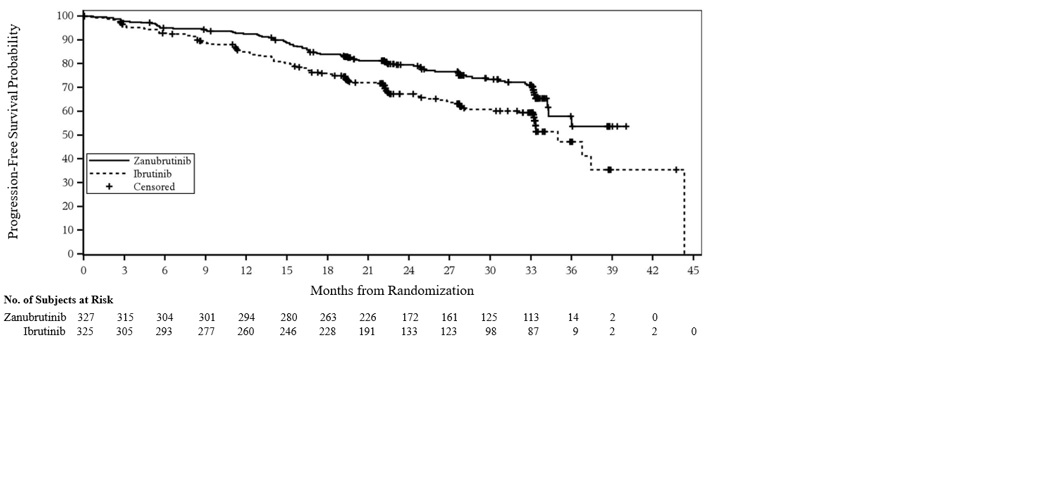
Efficacy was based on overall response rate and duration of response as determined by an IRC. For progression-free survival per IRC, the final analysis occurred with a median follow-up of 31 months. Efficacy results are shown in Table 24 and Figure 2.
Table 24: Efficacy Results per IRC in Patients with Relapsed or Refractory CLL/SLL in ALPINE| Parameter Efficacy was based on 2008 iwCLL guidelines for CLL and the Lugano criteria for SLL. | BRUKINSA
(N=327) | Ibrutinib
(N=325) |
|---|
| CI=Confidence interval, CR=complete response, CRi=complete response with incomplete hematopoietic recovery, DOR=duration of response, HR=hazard ratio, NE=not estimable, nPR=nodular partial response, ORR=overall response rate, PR=partial response. A + sign indicates a censored observation. |
| Overall response rate Defined as CR + CRi + nPR + PR. No patients had CRi as best response. |
| ORR, n (%) | 263 (80) | 237 (73) |
| (95% CI, %) | (76, 85) | (68, 78) |
| CR, n (%) | 13 (4) | 8 (2.5) |
| nPR, n (%) | 1 (0.3) | 0 (0) |
| PR, n (%) | 249 (76) | 229 (70) |
| Response Rate Ratio (95% CI) Estimate stratified by randomization stratification factors. | 1.10 (1.01, 1.20) |
| 2-sided p-value 2-sided significance level of 0.0469 was allocated for ORR superiority testing. | 0.0264 |
| Duration of response |
| Median DOR (95% CI) Based on Kaplan-Meier estimate. Estimated median follow-up for DOR was 14.1 months. | NE (NE, NE) | NE (NE, NE) |
| Range, months | (1.4 to 30.4+) | (1.9+ to 30.8+) |
| Rate at 12 months, % (95% CI) | 92 (87, 95) | 86 (80, 91) |
| Progression-free survival |
| Events, n (%) | 88 (27) | 120 (37) |
| Median PFS (95% CI), months Based on Kaplan-Meier estimation. Estimated median follow-up for PFS was 30.7 months. | NE (34.3, NE) | 35 (33.2, 44.3) |
| HR (95% CI) Based on a stratified Cox-regression model with ibrutinib as the reference group. | 0.65 (0.49, 0.86) |
| 2-sided p-value Based on a stratified log-rank test. | 0.0024 |
The median time to response was 5.5 months for BRUKINSA and 5.6 months for ibrutinib.
Figure 2: Kaplan-Meier Plot of Progression-Free Survival by IRC in ALPINE
At the time of final analysis, the median overall survival was not reached in either arm. There were a total of 108 deaths: 48 (14.7%) in the zanubrutinib arm and 60 (18.5%) in the ibrutinib arm.
How Supplied
| Strength | Description | Package Size | NDC Number |
|---|
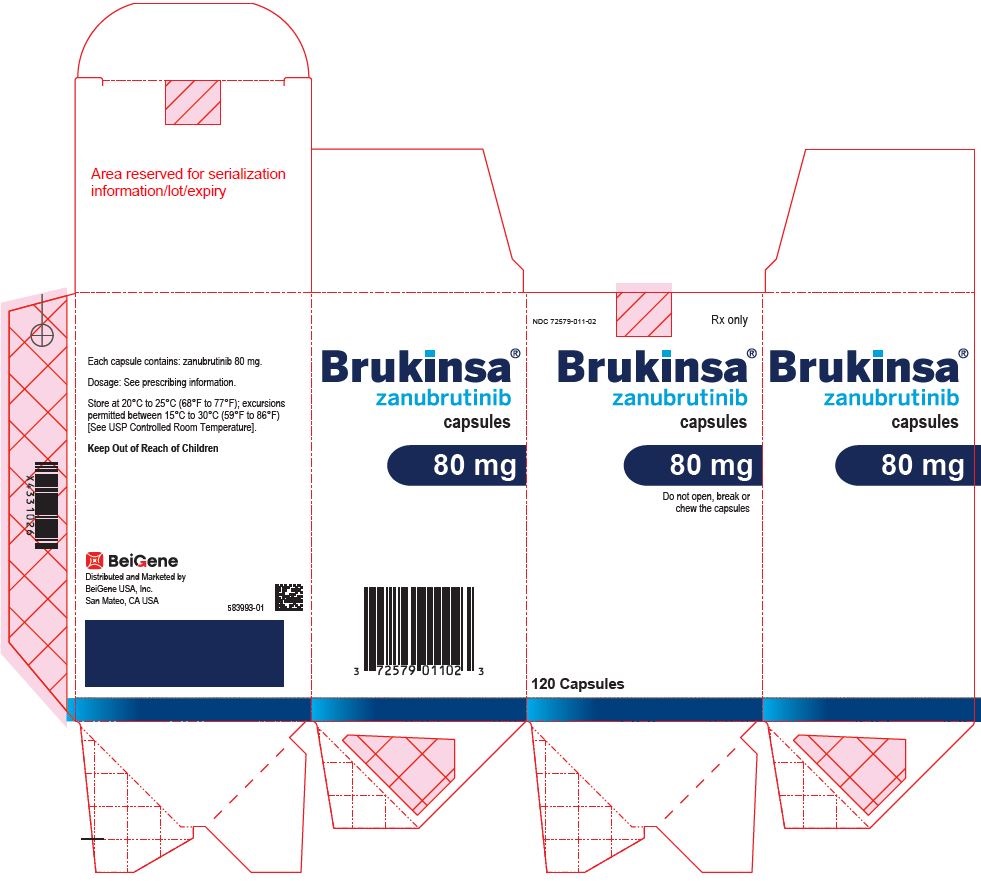
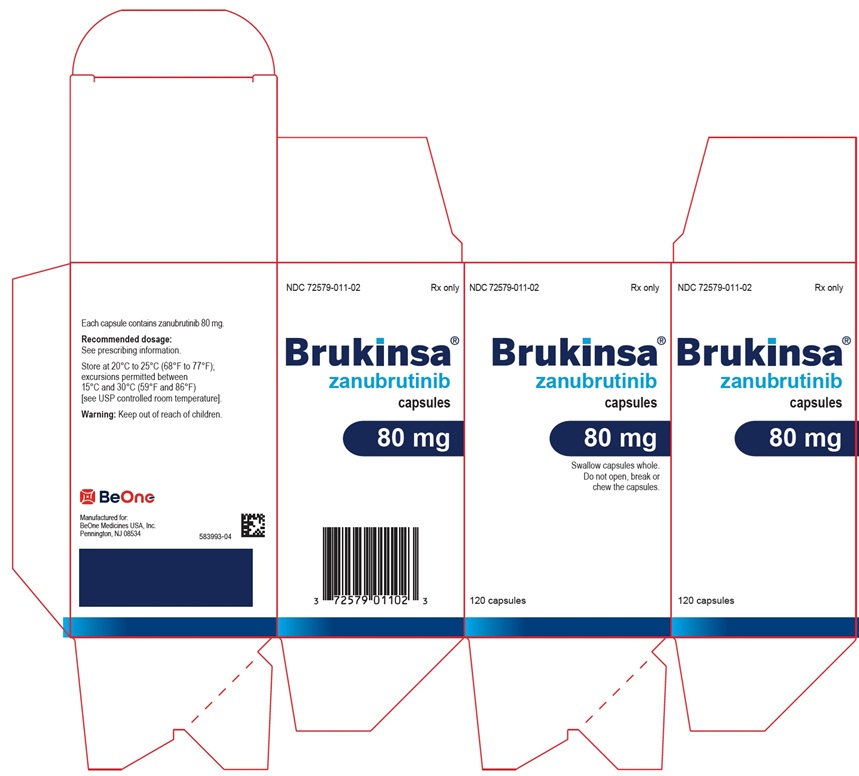
| 80 mg | white to off-white opaque capsule, marked with "ZANU 80" in black ink | 120-count capsules in a bottle with a child-resistant cap | 72579-011-02 |
| 160 mg | blue, oval, film-coated tablets debossed with "zanu" on one side and functional scoring on the other side | 60-count tablets in a bottle with a child-resistant cap | 72579-122-01 |
Hemorrhage
Inform patients to report signs or symptoms of severe bleeding. Inform patients that BRUKINSA may need to be interrupted for major surgeries or procedures [see Warnings and Precautions (5.1)].
Infections
Inform patients to report signs or symptoms suggestive of infection [see Warnings and Precautions (5.2)].
Cytopenias
Inform patients that they will need periodic blood tests to check blood counts during treatment with BRUKINSA [see Warnings and Precautions (5.3)].
Second Primary Malignancies
Inform patients that other malignancies have been reported in patients who have been treated with BRUKINSA, including skin cancer and other solid tumors. Advise patients to use sun protection and have monitoring for development of other cancers [see Warnings and Precautions (5.4)].
Cardiac Arrhythmias
Counsel patients to report any signs of palpitations, lightheadedness, dizziness, fainting, shortness of breath, and chest discomfort [see Warnings and Precautions (5.5)].
Hepatotoxicity, Including Drug-Induced Liver Injury
Inform patients that liver problems, including drug-induced liver injury and abnormalities in liver tests, may develop during BRUKINSA treatment. Advise patients to contact their healthcare provider immediately if they experience abdominal discomfort, dark urine, or jaundice [see Warnings and Precautions (5.6)].
Embryo-Fetal Toxicity
Advise pregnant women and females of reproductive potential of the potential hazard to a fetus and to use effective contraception during treatment and for 1 week after the last dose of BRUKINSA [see Warnings and Precautions (5.7)]. Advise males with female sexual partners of reproductive potential to use effective contraception during BRUKINSA treatment and for 1 week after the last dose of BRUKINSA [see Use in Specific Populations (8.3)].
Lactation
Advise females not to breastfeed during treatment with BRUKINSA and for 2 weeks after the last dose [see Use in Specific Populations (8.2)].
Administration Instructions
- BRUKINSA capsules may be taken with or without food. Advise patients that BRUKINSA capsules should be swallowed whole with a glass of water and not to open, break, or chew the capsules [see Dosage and Administration (2.1)].
- BRUKINSA tablets may be taken with or without food. Advise patients that BRUKINSA tablets should be swallowed whole with a glass of water and not to chew or crush the tablets. Tablets can be split in half as prescribed by the healthcare provider [see Dosage and Administration (2.1)].
Missed Dose
Advise patients that if they miss a dose of BRUKINSA, they may still take it as soon as possible on the same day with a return to the normal schedule the following day [see Dosage and Administration (2.1)].
Drug Interactions
Advise patients to inform their healthcare providers of all concomitant medications, including over-the-counter medications, vitamins, and herbal products [see Drug Interactions (7.1)].
BRUKINSA Capsules:
Manufactured for:
BeOne Medicines USA, Inc.
Pennington, NJ 08534
BRUKINSA Tablets:
Manufactured for:
BeOne Medicines USA, Inc.
Pennington, NJ 08534
BRUKINSA® is a registered trademark owned by BeOne Medicines I GmbH or its affiliates.
© BeOne Medicines I GmbH, 2026. All Rights Reserved.