A similar pattern of liver enzyme elevation, low neutrophil count, low platelet count and lipid elevations is noted with tocilizumab products treatment in the PJIA and SJIA populations. Monitor neutrophils, platelets, ALT and AST at the time of the second administration and thereafter every 4 to 8 weeks for PJIA and every 2 to 4 weeks for SJIA. Monitor lipids as above for approved adult indications [see Dosage and Administration (2.9)].
In the 24 week, controlled clinical studies, the rate of infections in the tocilizumab-IV monotherapy group was 119 events per 100 patient-years and was similar in the methotrexate monotherapy group. The rate of infections in the 4 mg per kg and 8 mg per kg tocilizumab-IV plus DMARD group was 133 and 127 events per 100 patient- years, respectively, compared to 112 events per 100 patient-years in the placebo plus DMARD group. The most commonly reported infections (5% to 8% of patients) were upper respiratory tract infections and nasopharyngitis.
The overall rate of infections with tocilizumab-IV in the all exposure population remained consistent with rates in the controlled periods of the studies.
In the 24 week, controlled clinical studies, the rate of serious infections in the tocilizumab-IV monotherapy group was 3.6 per 100 patient-years compared to 1.5 per 100 patient-years in the methotrexate group. The rate of serious infections in the 4 mg per kg and 8 mg per kg tocilizumab-IV plus DMARD group was 4.4 and 5.3 events per 100 patient-years, respectively, compared to 3.9 events per 100 patient-years in the placebo plus DMARD group.
In the all-exposure population, the overall rate of serious infections remained consistent with rates in the controlled periods of the studies. The most common serious infections included pneumonia, urinary tract infection, cellulitis, herpes zoster, gastroenteritis, diverticulitis, sepsis and bacterial arthritis. Cases of opportunistic infections have been reported [see Warnings and Precautions (5.1)].
In the cardiovascular outcomes Study WA25204, the rate of serious infections in the tocilizumab 8 mg/kg IV every 4 weeks group, with or without DMARD, was 4.5 per 100 patient-years, and the rate in the etanercept 50 mg weekly SC group, with or without DMARD, was 3.2 per 100 patient-years [see Clinical Studies (14.1)].
During the 24 week, controlled clinical trials, the overall rate of gastrointestinal perforation was 0.26 events per 100 patient-years with tocilizumab-IV therapy.
In the all-exposure population, the overall rate of gastrointestinal perforation remained consistent with rates in the controlled periods of the studies. Reports of gastrointestinal perforation were primarily reported as complications of diverticulitis including generalized purulent peritonitis, lower GI perforation, fistula and abscess. Most patients who developed gastrointestinal perforations were taking concomitant nonsteroidal anti- inflammatory medications (NSAIDs), corticosteroids, or methotrexate [see Warnings and Precautions (5.2)]. The relative contribution of these concomitant medications versus tocilizumab-IV to the development of GI perforations is not known.
In the 24 week, controlled clinical studies, adverse events associated with the infusion (occurring during or within 24 hours of the start of infusion) were reported in 8% and 7% of patients in the 4 mg per kg and 8 mg per kg tocilizumab-IV plus DMARD group, respectively, compared to 5% of patients in the placebo plus DMARD group. The most frequently reported event on the 4 mg per kg and 8 mg per kg dose during the infusion was hypertension (1% for both doses), while the most frequently reported event occurring within 24 hours of finishing an infusion were headache (1% for both doses) and skin reactions (1% for both doses), including rash, pruritus and urticaria. These events were not treatment limiting.
Hypersensitivity reactions requiring treatment discontinuation, including anaphylaxis, associated with tocilizumab-IV were reported in 0.1% (3 out of 2644) in the 24 week, controlled trials and in 0.2% (8 out of 4009) in the all-exposure population. These reactions were generally observed during the second to fourth infusion of tocilizumab-IV. Appropriate medical treatment should be available for immediate use in the event of a serious hypersensitivity reaction [see Warnings and Precautions (5.6)].
In the 24 week, controlled clinical studies, decreases in neutrophil counts below 1000 per mm3 occurred in 1.8% and 3.4% of patients in the 4 mg per kg and 8 mg per kg tocilizumab-IV plus DMARD group, respectively, compared to 0.1% of patients in the placebo plus DMARD group. Approximately half of the instances of ANC below 1000 per mm3 occurred within 8 weeks of starting therapy. Decreases in neutrophil counts below 500 per mm3 occurred in 0.4% and 0.3% of patients in the 4 mg per kg and 8 mg per kg tocilizumab-IV plus DMARD, respectively, compared to 0.1% of patients in the placebo plus DMARD group. There was no clear relationship between decreases in neutrophils below 1000 per mm3 and the occurrence of serious infections.
In the all-exposure population, the pattern and incidence of decreases in neutrophil counts remained consistent with what was seen in the 24 week controlled clinical studies [see Warnings and Precautions (5.4)].
In the 24 week, controlled clinical studies, decreases in platelet counts below 100,000 per mm3 occurred in 1.3% and 1.7% of patients on 4 mg per kg and 8 mg per kg tocilizumab-IV plus DMARD, respectively, compared to 0.5% of patients on placebo plus DMARD, without associated bleeding events.
In the all-exposure population, the pattern and incidence of decreases in platelet counts remained consistent with what was seen in the 24 week controlled clinical studies [see Warnings and Precautions (5.4)].
In the all-exposure population, the elevations in ALT and AST remained consistent with what was seen in the 24 week, controlled clinical trials.
Elevations in lipid parameters (total cholesterol, LDL, HDL, triglycerides) were first assessed at 6 weeks following initiation of tocilizumab-IV in the controlled 24 week clinical trials. Increases were observed at this time point and remained stable thereafter. Increases in triglycerides to levels above 500 mg per dL were rarely observed. Changes in other lipid parameters from baseline to week 24 were evaluated and are summarized below:
- –Mean LDL increased by 13 mg per dL in the tocilizumab 4 mg per kg+DMARD arm, 20 mg per dL in the tocilizumab 8 mg per kg+DMARD, and 25 mg per dL in tocilizumab 8 mg per kg monotherapy.
- –Mean HDL increased by 3 mg per dL in the tocilizumab 4 mg per kg+DMARD arm, 5 mg per dL in the tocilizumab 8 mg per kg+DMARD, and 4 mg per dL in tocilizumab 8 mg per kg monotherapy.
- –Mean LDL/HDL ratio increased by an average of 0.14 in the tocilizumab 4 mg per kg+DMARD arm, 0.15 in the tocilizumab 8 mg per kg+DMARD, and 0.26 in tocilizumab 8 mg per kg monotherapy.
- –ApoB/ApoA1 ratios were essentially unchanged in tocilizumab-treated patients.
Elevated lipids responded to lipid lowering agents.
In the all-exposure population, the elevations in lipid parameters remained consistent with what was seen in the 24 week, controlled clinical trials.
Immunogenicity
The observed incidence of anti-drug antibodies is highly dependent on the sensitivity and specificity of the assay. Differences in assay methods preclude meaningful comparisons of the incidence of anti-drug antibodies in the studies described below with the incidence of anti-drug antibodies in other studies, including those of tocilizumab or of other tocilizumab products.
In the 24 week, controlled clinical studies, a total of 2876 patients have been tested for anti-tocilizumab antibodies. Forty-six patients (2%) developed positive anti-tocilizumab antibodies, of whom 5 had an associated, medically significant, hypersensitivity reaction leading to withdrawal. Thirty patients (1%) developed neutralizing antibodies.
Malignancies
During the 24 week, controlled period of the studies, 15 malignancies were diagnosed in patients receiving tocilizumab-IV, compared to 8 malignancies in patients in the control groups. Exposure-adjusted incidence was similar in the tocilizumab-IV groups (1.32 events per 100 patient-years) and in the placebo plus DMARD group (1.37 events per 100 patient-years).
In the all-exposure population, the rate of malignancies remained consistent with the rate observed in the 24 week, controlled period [see Warnings and Precautions (5.5)].
Other Adverse Reactions
Adverse reactions occurring in 2% or more of patients on 4 or 8 mg per kg tocilizumab-IV plus DMARD and at least 1% greater than that observed in patients on placebo plus DMARD are summarized in Table 2.
Table 2 Adverse Reactions Occurring in at Least 2% or More of Patients on 4 or 8 mg per kg Tocilizumab plus DMARD and at Least 1% Greater Than That Observed in Patients on Placebo plus DMARD| 24 Week Phase 3 Controlled Study Population |
|---|
| Tocilizumab
8 mg per kg MONOTHERAPY | Methotrexate | Tocilizumab
4 mg per kg + DMARDs | Tocilizumab
8 mg per kg + DMARDs | Placebo + DMARDs |
|---|
| Preferred Term | N = 288
(%) | N = 284
(%) | N = 774
(%) | N = 1582
(%) | N = 1170
(%) |
|---|
Upper Respiratory
Tract Infection |
7 |
5 |
6 |
8 |
6 |
| Nasopharyngitis | 7 | 6 | 4 | 6 | 4 |
| Headache | 7 | 2 | 6 | 5 | 3 |
| Hypertension | 6 | 2 | 4 | 4 | 3 |
| ALT increased | 6 | 4 | 3 | 3 | 1 |
| Dizziness | 3 | 1 | 2 | 3 | 2 |
| Bronchitis | 3 | 2 | 4 | 3 | 3 |
| Rash | 2 | 1 | 4 | 3 | 1 |
| Mouth Ulceration | 2 | 2 | 1 | 2 | 1 |
| Abdominal Pain Upper | 2 | 2 | 3 | 3 | 2 |
| Gastritis | 1 | 2 | 1 | 2 | 1 |
| Transaminase increased | 1 | 5 | 2 | 2 | 1 |
Other infrequent and medically relevant adverse reactions occurring at an incidence less than 2% in rheumatoid arthritis patients treated with tocilizumab-IV in controlled trials were:
Infections and Infestations: oral herpes simplex
Gastrointestinal disorders: stomatitis, gastric ulcer
Investigations: weight increased, total bilirubin increased
Blood and lymphatic system disorders: leukopenia
General disorders and administration site conditions: edema peripheral
Respiratory, thoracic, and mediastinal disorders: dyspnea, cough
Eye disorders: conjunctivitis
Renal disorders: nephrolithiasis
Endocrine disorders: hypothyroidism
Injection Site Reactions
In the 6-month control period, in SC-I, the frequency of ISRs was 10.1% (64/631) and 2.4% (15/631) for the weekly tocilizumab-SC and placebo SC (IV-arm) groups, respectively. In SC-II, the frequency of ISRs was 7.1% (31/437) and 4.1% (9/218) for the every other week tocilizumab-SC and placebo groups, respectively. These ISRs (including erythema, pruritus, pain and hematoma) were mild to moderate in severity. The majority resolved without any treatment and none necessitated drug discontinuation.
Immunogenicity
In the 6-month control period in SC-I, 0.8% (5/625) in the tocilizumab-SC arm and 0.8% (5/627) in the IV arm developed anti-tocilizumab antibodies; of these, all developed neutralizing antibodies. In SC-II, 1.6% (7/434) in the tocilizumab-SC arm compared with 1.4 % (3/217) in the placebo arm developed anti- tocilizumab antibodies; of these, 1.4% (6/434) in the tocilizumab-SC arm and 0.5% (1/217) in the placebo arm also developed neutralizing antibodies.
A total of 1454 (>99%) patients who received tocilizumab-SC in the all exposure group have been tested for anti- tocilizumab antibodies. Thirteen patients (0.9%) developed anti-tocilizumab antibodies, and, of these, 12 patients (0.8%) developed neutralizing antibodies.
The rate is consistent with previous intravenous experience. No correlation of antibody development to adverse events or loss of clinical response was observed.
Laboratory Abnormalities
Neutropenia
During routine laboratory monitoring in the 6-month controlled clinical trials, a decrease in neutrophil count below 1 × 10⁹/L occurred in 2.9% and 3.7% of patients receiving tocilizumab-SC weekly and every other week, respectively.
There was no clear relationship between decreases in neutrophils below 1 × 10⁹/L and the occurrence of serious infections.
Thrombocytopenia
During routine laboratory monitoring in the tocilizumab-SC 6-month controlled clinical trials, none of the patients had a decrease in platelet count to ≤50,000/mm3.
Elevated Liver Enzymes
During routine laboratory monitoring in the 6-month controlled clinical trials, elevation in ALT or AST ≥3 × ULN occurred in 6.5% and 1.4% of patients, respectively, receiving tocilizumab-SC weekly and 3.4% and 0.7% receiving tocilizumab-SC every other week.
Lipid Parameters Elevations
During routine laboratory monitoring in the tocilizumab-SC 6-month clinical trials, 19% of patients dosed weekly and 19.6% of patients dosed every other week and 10.2% of patients on placebo experienced sustained elevations in total cholesterol > 6.2 mmol/l (240 mg/dL), with 9%, 10.4% and 5.1% experiencing a sustained increase in LDL to 4.1 mmol/l (160 mg/dL) receiving tocilizumab-SC weekly, every other week and placebo, respectively.
Infections
The rate of infections in the tocilizumab-IV all exposure population was 163.7 per 100 patient years. The most common events observed were nasopharyngitis and upper respiratory tract infections. The rate of serious infections was numerically higher in patients weighing less than 30 kg treated with 10 mg/kg tocilizumab (12.2 per 100 patient years) compared to patients weighing at or above 30 kg, treated with 8 mg/kg tocilizumab (4.0 per 100 patient years). The incidence of infections leading to dose interruptions was also numerically higher in patients weighing less than 30 kg treated with 10 mg/kg tocilizumab (21%) compared to patients weighing at or above 30 kg, treated with 8 mg/kg tocilizumab (8%).
Infusion Reactions
In PJIA patients, infusion-related reactions are defined as all events occurring during or within 24 hours of an infusion. In the tocilizumab-IV all exposure population, 11 patients (6%) experienced an event during the infusion, and 38 patients (20.2%) experienced an event within 24 hours of an infusion. The most common events occurring during infusion were headache, nausea and hypotension, and occurring within 24 hours of infusion were dizziness and hypotension. In general, the adverse drug reactions observed during or within 24 hours of an infusion were similar in nature to those seen in RA and SJIA patients [see Adverse Reactions (6.1 and 6.7)].
No clinically significant hypersensitivity reactions associated with tocilizumab and requiring treatment discontinuation were reported.
Immunogenicity
One patient, in the 10 mg/kg less than 30 kg group, developed positive anti-tocilizumab antibodies without developing a hypersensitivity reaction and subsequently withdrew from the study.
Laboratory Abnormalities
Neutropenia
During routine laboratory monitoring in the tocilizumab-IV all exposure population, a decrease in neutrophil counts below 1 × 10⁹ per L occurred in 3.7% of patients.
There was no clear relationship between decreases in neutrophils below 1 × 10⁹ per L and the occurrence of serious infections.
Thrombocytopenia
During routine laboratory monitoring in the tocilizumab-IV all exposure population, 1% of patients had a decrease in platelet count at or less than 50,000 per mm3 without associated bleeding events.
Elevated Liver Enzymes
During routine laboratory monitoring in the tocilizumab-IV all exposure population, elevation in ALT or AST at or greater than 3 × ULN occurred in 4% and less than 1% of patients, respectively.
Lipids
During routine laboratory monitoring in the tocilizumab all exposure population, elevation in total cholesterol greater than 1.5-2 × ULN occurred in one patient (0.5%) and elevation in LDL greater than 1.5-2 × ULN occurred in one patient (0.5%).
Injection Site Reactions
During the 1-year study, a frequency of 28.8% (15/52) ISRs was observed in tocilizumab-SC treated PJIA patients. These ISRs occurred in a greater proportion of patients at or above 30 kg (44.0%) compared with patients below 30 kg (14.8%). All ISRs were mild in severity and none of the ISRs required patient withdrawal from treatment or dose interruption. A higher frequency of ISRs was observed in tocilizumab-SC treated PJIA patients compared to what was seen in adult RA or GCA patients [see Adverse Reactions (6.2 and 6.3)].
Immunogenicity
Three patients, 1 patient below 30 kg and 2 patients at or above 30 kg, developed positive anti-tocilizumab antibodies with neutralizing potential without developing a serious or clinically significant hypersensitivity reaction. One patient subsequently withdrew from the study.
Neutropenia
During routine laboratory monitoring in the tocilizumab-SC all exposure population, a decrease in neutrophil counts below 1 × 10⁹ per L occurred in 15.4% of patients, and was more frequently observed in the patients less than 30 kg (25.9%) compared to patients at or above 30 kg (4.0%). There was no clear relationship between decreases in neutrophils below 1 × 10⁹ per L and the occurrence of serious infections.
Infections
In the 12 week controlled phase, the rate of all infections in the tocilizumab-IV group was 345 per 100 patient- years and 287 per 100 patient-years in the placebo group. In the open label extension over an average duration of 73 weeks of treatment, the overall rate of infections was 304 per 100 patient-years.
In the 12 week controlled phase, the rate of serious infections in the tocilizumab-IV group was 11.5 per 100 patient years. In the open label extension over an average duration of 73 weeks of treatment, the overall rate of serious infections was 11.4 per 100 patient years. The most commonly reported serious infections included pneumonia, gastroenteritis, varicella, and otitis media.
Macrophage Activation Syndrome
In the 12 week controlled study, no patient in any treatment group experienced macrophage activation syndrome (MAS) while on assigned treatment; 3 per 112 (3%) developed MAS during open-label treatment with tocilizumab-IV. One patient in the placebo group escaped to tocilizumab-IV 12 mg per kg at Week 2 due to severe disease activity, and ultimately developed MAS at Day 70. Two additional patients developed MAS during the long-term extension. All 3 patients had tocilizumab-IV dose interrupted (2 patients) or discontinued (1 patient) for the MAS event, received treatment, and the MAS resolved without sequelae. Based on a limited number of cases, the incidence of MAS does not appear to be elevated in the tocilizumab-IV SJIA clinical development experience; however no definitive conclusions can be made.
Infusion Reactions
Patients were not premedicated, however most patients were on concomitant corticosteroids as part of their background treatment for SJIA. Infusion related reactions were defined as all events occurring during or within 24 hours after an infusion. In the 12 week controlled phase, 4% of tocilizumab-IV and 0% of placebo treated patients experienced events occurring during infusion. One event (angioedema) was considered serious and life- threatening, and the patient was discontinued from study treatment.
Within 24 hours after infusion, 16% of patients in the tocilizumab-IV treatment group and 5% of patients in the placebo group experienced an event. In the tocilizumab-IV group the events included rash, urticaria, diarrhea, epigastric discomfort, arthralgia and headache. One of these events, urticaria, was considered serious.
Anaphylaxis
Anaphylaxis was reported in 1 out of 112 patients (less than 1%) treated with tocilizumab-IV during the controlled and open label extension study [see Warnings and Precautions (5.6)].
Immunogenicity
All 112 patients were tested for anti-tocilizumab antibodies at baseline. Two patients developed positive anti- tocilizumab antibodies: one of these patients experienced serious adverse events of urticaria and angioedema consistent with an anaphylactic reaction which led to withdrawal; the other patient developed macrophage activation syndrome while on escape therapy and was discontinued from the study.
Laboratory Abnormalities
Neutropenia
During routine monitoring in the 12 week controlled phase, a decrease in neutrophil below 1 × 10⁹ per L occurred in 7% of patients in the tocilizumab-IV group, and in no patients in the placebo group. In the open label extension over an average duration of 73 weeks of treatment, a decreased neutrophil count occurred in 17% of the tocilizumab-IV group. There was no clear relationship between decrease in neutrophils below 1 × 10⁹ per L and the occurrence of serious infections.
Thrombocytopenia
During routine monitoring in the 12 week controlled phase, 1% of patients in the tocilizumab-IV group and 3% in the placebo group had a decrease in platelet count to no more than 100,000 per mm3.
In the open label extension over an average duration of 73 weeks of treatment, decreased platelet count occurred in 4% of patients in the tocilizumab-IV group, with no associated bleeding.
Elevated Liver Enzymes
During routine laboratory monitoring in the 12 week controlled phase, elevation in ALT or AST at or above 3× ULN occurred in 5% and 3% of patients, respectively in the tocilizumab-IV group and in 0% of placebo patients.
In the open label extension over an average duration of 73 weeks of treatment, the elevation in ALT or AST at or above 3× ULN occurred in 13% and 5% of tocilizumab-IV treated patients, respectively.
Lipids
During routine laboratory monitoring in the 12 week controlled phase, elevation in total cholesterol greater than 1.5× ULN – 2× ULN occurred in 1.5% of the tocilizumab-IV group and in 0% of placebo patients. Elevation in LDL greater than 1.5× ULN – 2× ULN occurred in 1.9% of patients in the tocilizumab-IV group and 0% of the placebo group.
In the open label extension study over an average duration of 73 weeks of treatment, the pattern and incidence of elevations in lipid parameters remained consistent with the 12 week controlled study data.
Injection Site Reactions (ISRs)
A total of 41.2% (21/51) SJIA patients experienced ISRs to tocilizumab-SC. The most common ISRs were erythema, pruritus, pain, and swelling at the injection site. The majority of ISRs reported were Grade 1 events and all ISRs reported were non-serious and none required patient withdrawal from treatment or dose interruption.
Immunogenicity
Forty-six of the 51 (90.2%) patients who were tested for anti-tocilizumab antibodies at baseline had at least one post-baseline screening assay result. No patient developed positive anti-tocilizumab antibodies post-baseline.
Laboratory Abnormalities
In the pooled safety population of EMPACTA, COVACTA, and REMDACTA, neutrophil counts <1000 cells/mcl occurred in 3.4% of patients who received tocilizumab and 0.5% of patients who received placebo. Platelet counts <50,000 cells/mcl occurred in 3.2% of patients who received tocilizumab and 1.5% of patients who received placebo. ALT or AST at or above 5× ULN occurred in 11.7% of patients who received tocilizumab and 9.9% of patients who received placebo.
Risk Summary
The available data with tocilizumab products from a pregnancy exposure registry, retrospective cohort study, pharmacovigilance, and published literature are insufficient to draw conclusions about a drug-associated risk of major birth defects, miscarriage, or other adverse maternal or fetal outcomes. These studies had methodological limitations, including small sample size of tocilizumab exposed groups, missing exposure and outcomes information, and lack of adjustment for cofounders. Monoclonal antibodies, such as tocilizumab products, are actively transported across the placenta during the third trimester of pregnancy and may affect immune response in the in utero exposed infant [see Clinical Considerations]. In animal reproduction studies, intravenous administration of tocilizumab to Cynomolgus monkeys during organogenesis caused abortion/embryo-fetal death at doses 1.25 times and higher than the maximum recommended human dose by the intravenous route of 8 mg per kg every 2 to 4 weeks. The literature in animals suggests that inhibition of IL-6 signaling may interfere with cervical ripening and dilatation and myometrial contractile activity leading to potential delays of parturition [see Data]. Based on the animal data, there may be a potential risk to the fetus.
The estimated background risk of major birth defects and miscarriage for the indicated population is unknown. All pregnancies have a background risk of birth defect, loss or other adverse outcomes. In the U.S. general population, the estimated background risk of major birth defects and miscarriage in clinically recognized pregnancies is 2 to 4% and 15 to 20%, respectively.
Clinical Considerations
Fetal/Neonatal adverse reactions
Monoclonal antibodies are increasingly transported across the placenta as pregnancy progresses, with the largest amount transferred during the third trimester. Risks and benefits should be considered prior to administering live or live-attenuated vaccines to infants exposed to Tocilizumab-anoh in utero [see Warnings and Precautions 5.9)].
Disease-associated Maternal Risk
Published data suggest that the risk of adverse pregnancy outcomes in women with rheumatoid arthritis is associated with increased disease activity. Adverse pregnancy outcomes include preterm delivery (before 37 weeks of gestation), low birth weight (less than 2500 g) infants, and small for gestational age at birth.
Data
Animal Data
An embryo-fetal developmental toxicity study was performed in which pregnant Cynomolgus monkeys were treated intravenously with tocilizumab at daily doses of 2, 10, or 50 mg/ kg during organogenesis from gestation day (GD) 20-50. Although there was no evidence for a teratogenic/dysmorphogenic effect at any dose, tocilizumab produced an increase in the incidence of abortion/embryo-fetal death at doses 1.25 times and higher the MRHD by the intravenous route at maternal intravenous doses of 10 and 50 mg/ kg. Testing of a murine analogue of tocilizumab in mice did not yield any evidence of harm to offspring during the pre- and postnatal development phase when dosed at 50 mg/kg intravenously with treatment every three days from implantation (GD 6) until post-partum day 21 (weaning). There was no evidence for any functional impairment of the development and behavior, learning ability, immune competence and fertility of the offspring.
Parturition is associated with significant increases of IL-6 in the cervix and myometrium. The literature suggests that inhibition of IL-6 signaling may interfere with cervical ripening and dilatation and myometrial contractile activity leading to potential delays of parturition. For mice deficient in IL-6 (ll6-/- null mice), parturition was delayed relative to wild-type (ll6+/+) mice. Administration of recombinant IL-6 to ll6-/- null mice restored the normal timing of delivery.
Risk Summary
No information is available on the presence of tocilizumab products in human milk, the effects of the drug on the breastfed infant, or the effects of the drug on milk production. Maternal immunoglobulin G (IgG) is present in human milk. If tocilizumab products are transferred into human milk, the effects of local exposure in the gastrointestinal tract and potential limited systemic exposure in the infant to tocilizumab products are unknown. The lack of clinical data during lactation precludes clear determination of the risk of tocilizumab products to an infant during lactation; therefore the developmental and health benefits of breastfeeding should be considered along with the mother's clinical need for Tocilizumab-anoh and the potential adverse effects on the breastfed child from Tocilizumab-anoh or from the underlying maternal condition.
Systemic Juvenile Idiopathic Arthritis – Intravenous Use
A multicenter, open-label, single arm study to evaluate the PK, safety and exploratory PD and efficacy of tocilizumab over 12-weeks in SJIA patients (N=11) under 2 years of age was conducted. Patients received intravenous tocilizumab 12 mg/kg every two weeks. Concurrent use of stable background treatment with corticosteroids, MTX, and/or non-steroidal anti-inflammatory drugs was permitted. Patients who completed the 12-week period could continue to the optional extension period (a total of 52-weeks or until the age of 2 years, whichever was longer).
The primary PK endpoints (Cmax, Ctrough and AUC2weeks) of tocilizumab at steady-state in this study were within the ranges of these parameters observed in patients with SJIA aged 2 to 17 years.
The safety and immunogenicity of tocilizumab for patients with SJIA under 2 years of age was assessed descriptively. SAEs, AEs leading to discontinuation, and infectious AEs were reported by 27.3%, 36.4%, and 81.8% of patients. Six patients (54.5%) experienced hypersensitivity reactions, defined as all adverse events occurring during or within 24 hours after an infusion considered related to tocilizumab. Three of these patients experienced serious hypersensitivity reactions and were withdrawn from the study. Three patients with hypersensitivity reactions (two with serious hypersensitivity reactions) developed treatment induced anti- tocilizumab antibodies after the event. There were no cases of MAS based on the protocol-specified criteria, but 2 cases of suspected MAS based on Ravelli criteria
Ravelli A, Minoia F, Davì S on behalf of the Paediatric Rheumatology International Trials Organisation, the Childhood Arthritis and Rheumatology Research Alliance, the Pediatric Rheumatology Collaborative Study Group, and the Histiocyte Society, et al. 2016 Classification Criteria for Macrophage Activation Syndrome Complicating Systemic Juvenile Idiopathic Arthritis. Annals of the Rheumatic Diseases 2016;75:481-489.
.
Intravenous Infusion
Tocilizumab-anoh injection is a sterile, clear to slightly opalescent, colorless to pale yellow, preservative-free solution for further dilution prior to intravenous infusion with a pH of approximately 6.0. Each single-dose vial, formulated with a histidine and L-histidine hydrochloride monohydrate buffered solution, is available at a concentration of 20 mg/mL containing 80 mg/4 mL, 200 mg/10 mL, or 400 mg/20 mL of Tocilizumab-anoh. Each mL of solution contains histidine (0.74 mg), L-histidine hydrochloride monohydrate (1.09 mg), methionine (8.95 mg), polysorbate 80 (0.5 mg), threonine (19.06 mg), and Water for Injection, USP.
Subcutaneous Injection
Tocilizumab-anoh injection is a sterile, clear to slightly opalescent, colorless to yellow, preservative-free, histidine buffered solution for subcutaneous use with a pH of approximately 6.0.
It is supplied in a ready-to-use, single-dose 0.9 mL prefilled syringe (PFS) with a needle safety device or a ready- to-use, single-dose 0.9 mL autoinjector that delivers 162 mg tocilizumab-anoh, histidine (0.7 mg), L-histidine hydrochloride monohydrate (1.0 mg), methionine (8.1 mg), polysorbate 80 (0.2 mg), threonine (17.2 mg), and Water for Injection, USP.
Rheumatoid Arthritis - Intravenous and Subcutaneous Administration
The pharmacokinetics in healthy subjects and RA patients suggest that PK is similar between the two populations.
The population PK model was developed from an analysis dataset composed of an IV dataset of 1793 patients from Study I, Study III, Study IV, and Study V, and from an IV and SC dataset of 1759 patients from Studies SC- I and SC-II. Cmean is included in place of AUCtau, since for dosing regimens with different inter-dose intervals, the mean concentration over the dosing period characterizes the comparative exposure better than AUCtau.
At high serum concentrations, when total clearance of tocilizumab is dominated by linear clearance, a terminal half-life of approximately 21.5 days was derived from the population parameter estimates.
For doses of 4 mg/kg tocilizumab given every 4 weeks intravenously, the estimated median (range) Cmax, Ctrough, and Cmean of tocilizumab at steady state were 86.1 (44.8–202) mcg/mL, 0.1 (0.0–14.6) mcg/mL, and 18.0 (8.9– 50.7) mcg/mL, respectively. For doses of 8 mg/kg tocilizumab given every 4 weeks intravenously, the estimated median (range) Cmax, Ctrough, and Cmean of tocilizumab were 176 (75.4–557) mcg/mL, 13.4 (0.1–154) mcg/mL, and 54.0 (17–260) mcg/mL, respectively. Cmax increased dose-proportionally between doses of 4 and 8 mg/kg IV every 4 weeks, while a greater than dose-proportional increase was observed in Cmean and Ctrough. At steady-state, Cmean and Ctrough were 3.0 and 134 fold higher at 8 mg/kg as compared to 4 mg/kg, respectively.
The accumulation ratios for AUC and Cmax after multiple doses of 4 and 8 mg/kg IV Q4W are low, while the accumulation ratios for Ctrough are higher (2.62 and 2.47, respectively). For Cmax, greater than 90% of the steady- state value was reached after the 1st IV infusion. For AUCtau and Cmean, 90% of the steady-state value was reached after the 1st and 3rd infusion for 4 mg/kg and 8 mg/kg IV, while for Ctrough, approximately 90% of the steady- state value was reached after the 4th IV infusion after both doses.
For doses of 162 mg given every other week subcutaneously, the estimated median (range) steady-state Cmax, Ctrough, and Cmean of tocilizumab were 12.1 (0.4–49.3) mcg/mL, 4.1 (0.0–34.2) mcg/mL, and 9.2 (0.2– 43.6) mcg/mL, respectively.
For doses of 162 mg given every week subcutaneously, the estimated median (range) steady-state Cmax, Ctrough, and Cmean of tocilizumab were 49.8 (3–150) mcg/mL, 42.9 (1.3–144) mcg/mL, and 47.3 (2.4–147) mcg/mL, respectively. Exposures after the 162 mg SC QW regimen were greater by 5.1 (Cmean) to 10.5 fold (Ctrough) compared to the 162 mg SC Q2W regimen.
Accumulation ratios after multiple doses of either SC regimen were higher than after IV regimen with the highest ratios for Ctrough (6.02 and 6.30, for 162 mg SC Q2W and 162 mg SC QW, respectively). The higher accumulation for Ctrough was expected based on the nonlinear clearance contribution at lower concentrations. For Cmax, greater than 90% of the steady-state value was reached after the 5th SC and the 12th SC injection with the Q2W and QW regimens, respectively. For AUCtau and Cmean, 90% of the steady-state value was reached after the 6th and 12th injections for the 162 mg SC Q2W and QW regimens, respectively. For Ctrough, approximately 90% of the steady- state value was reached after the 6th and 12th injections for the 162 mg SC Q2W and QW regimens, respectively.
Population PK analysis identified body weight as a significant covariate impacting the pharmacokinetics of tocilizumab. When given IV on a mg/kg basis, individuals with body weight ≥ 100 kg are predicted to have mean steady-state exposures higher than mean values for the patient population. Therefore, tocilizumab doses exceeding 800 mg per infusion are not recommended in patients with RA [see Dosage and Administration (2.2)]. Due to the flat dosing employed for SC administration of tocilizumab, no modifications are necessary by this dosing route.
Giant Cell Arteritis – Subcutaneous and Intravenous Administration
The pharmacokinetics of tocilizumab SC in GCA patients was determined using a population pharmacokinetic analysis on a dataset composed of 149 GCA patients treated with 162 mg subcutaneously every week or with 162 mg subcutaneously every other week.
For the 162 mg every week dose, the estimated median (range) steady-state Cmax, Ctrough and Cmean of tocilizumab SC were 72.1 (12.2–151) mcg/mL, 67.2 (10.7–145) mcg/mL, and 70.6 (11.7–149) mcg/mL, respectively. The accumulation ratios for Cmean or AUCtau, Ctrough, and Cmax were 10.9, 9.6, and 8.9, respectively. Steady state was reached after 17 weeks. For the 162 mg every other week dose, the estimated median (range) steady-state Cmax, Ctrough, and Cmean of tocilizumab were 17.2 (1.1–56.2) mcg/mL, 7.7 (0.1–37.3) mcg/mL, and 13.7 (0.5– 49) mcg/mL, respectively. The accumulation ratios for Cmean or AUCtau, Ctrough, and Cmax were 2.8, 5.6, and 2.3 respectively. Steady-state was reached after 14 weeks.
The pharmacokinetics of tocilizumab IV in GCA patients was characterized by a non-compartmental pharmacokinetic analysis which included 22 patients treated with 6 mg/kg intravenously every 4 weeks for 20 weeks. The median (range) Cmax, Ctrough and Cmean of tocilizumab at steady state were 178 (115-320) mcg/mL, 22.7 (3.38-54.5) mcg/mL and 57.5 (32.9-110) mcg/mL, respectively. Steady state trough concentrations were within the range observed in GCA patients treated with 162 mg TCZ SC administered every week or every other week.
Based on pharmacokinetic exposure and extrapolation between RA and GCA patients, when given IV on a mg/kg basis, tocilizumab doses exceeding 600 mg per infusion are not recommended in patients with GCA [see Dosage and Administration (2.3)].
Polyarticular Juvenile Idiopathic Arthritis – Intravenous and Subcutaneous Administration
The pharmacokinetics of tocilizumab (TCZ) in PJIA patients was characterized by a population pharmacokinetic analysis which included 188 patients who were treated with TCZ IV or 52 patients treated with TCZ SC.
For doses of 8 mg/kg tocilizumab (patients with a body weight at or above 30 kg) given every 4 weeks intravenously, the estimated median (range) Cmax, Ctrough, and Cmean of tocilizumab at steady state were 181 (114–331) mcg/mL, 3.28 (0.02–35.4) mcg/mL, and 38.6 (22.2–83.8) mcg/mL, respectively. For doses of 10 mg/kg tocilizumab (patients with a body weight less than 30 kg) given every 4 weeks intravenously, the estimated median (range) Cmax, Ctrough, and Cmean of tocilizumab were 167 (125–220) mcg/mL, 0.35 (0– 11.8) mcg/mL, and 30.8 (16.0–48.0) mcg/mL, respectively.
The accumulation ratios were 1.05 and 1.16 for AUC4weeks, and 1.43 and 2.22 for Ctrough for 10 mg/kg (BW less than 30 kg) and 8 mg/kg (BW at or above 30 kg) intravenous doses, respectively. No accumulation for Cmax was observed. Following 10 mg/kg and 8 mg/kg TCZ IV every 4 weeks doses in PJIA patients (aged 2 to 17 years), steady state concentrations (trough and average) were within the range of exposures in adult RA patients following 4 mg/kg and 8 mg/kg every 4 weeks, and steady state peak concentrations in PJIA patients were comparable to those following 8 mg/kg every 4 weeks in adult RA patients.
For doses of 162 mg tocilizumab (patients with a body weight at or above 30 kg) given every 2 weeks subcutaneously, the estimated median (range) Cmax, Ctrough, and Cmean of tocilizumab were 29.7 (7.56– 50.3) mcg/mL, 12.7 (0.19–23.8) mcg/mL, and 23.0 (3.86–36.9) mcg/mL, respectively. For doses of 162 mg tocilizumab (patients with a body weight less than 30 kg) given every 3 weeks subcutaneously, the estimated median (range) Cmax, Ctrough, and Cmean of tocilizumab were 62.4 (39.4–121) mcg/mL, 13.4 (0.21– 52.3) mcg/mL, and 35.7 (17.4–91.8) mcg/mL, respectively.
The accumulation ratios were 1.46 and 2.04 for AUC4weeks, 2.08 and 3.58 for Ctrough, and 1.32 and 1.72 for Cmax, for 162 mg given every 3 weeks (BW less than 30 kg) and 162 mg given every 2 weeks (BW at or above 30 kg) subcutaneous doses, respectively. Following subcutaneous dosing, steady state Ctrough was comparable for patients in the two body weight groups, while steady-state Cmax and Cmean were higher for patients in the less than 30 kg group compared to the group at or above 30 kg. All patients treated with TCZ SC had steady-state Ctrough at or higher than that achieved with TCZ IV across the spectrum of body weights. The average and trough concentrations in patients after subcutaneous dosing were within the range of those achieved in adult patients with RA following the subcutaneous administration of the recommended regimens.
Systemic Juvenile Idiopathic Arthritis – Intravenous and Subcutaneous Administration
The pharmacokinetics of tocilizumab (TCZ) in SJIA patients was characterized by a population pharmacokinetic analysis which included 89 patients who were treated with TCZ IV or 51 patients treated with TCZ SC.
For doses of 8 mg/kg tocilizumab (patients with a body weight at or above 30 kg) given every 2 weeks intravenously, the estimated median (range) Cmax, Ctrough, and Cmean of tocilizumab were 253 (120– 404) mcg/mL, 70.7 (5.26–127) mcg/mL, and 117 (37.6–199) mcg/mL, respectively. For doses of 12 mg/kg tocilizumab (patients with a body weight less than 30 kg) given every 2 weeks intravenously, the estimated median (range) Cmax, Ctrough, and Cmean of tocilizumab were 274 (149–444) mcg/mL, 65.9 (19.0–135) mcg/mL, and 124 (60–194) mcg/mL, respectively.
The accumulation ratios were 1.95 and 2.01 for AUC4weeks, and 3.41 and 3.20 for Ctrough for 12 mg/kg (BW less than 30 kg) and 8 mg/kg (BW at or above 30 kg) intravenous doses, respectively. Accumulation data for Cmax were 1.37 and 1.42 for 12 mg/kg (BW less than 30 kg) and 8 mg/kg (BW at or above 30 kg) intravenous doses, respectively. Following every other week dosing with tocilizumab IV, steady state was reached by 8 weeks for both body weight groups. Mean estimated tocilizumab exposure parameters were similar between the two dose groups defined by body weight.
For doses of 162 mg tocilizumab (patients with a body weight at or above 30 kg) given every week subcutaneously, the estimated median (range) Cmax, Ctrough, and Cmean of tocilizumab were 89.8 (26.4– 190) mcg/mL, 72.4 (19.5–158) mcg/mL, and 82.4 (23.9–169) mcg/mL, respectively. For doses of 162 mg tocilizumab (patients with a body weight less than 30 kg) given every 2 weeks subcutaneously, the estimated median (range) Cmax, Ctrough, and Cmean of tocilizumab were 127 (51.7–266) mcg/mL, 64.2 (16.6–136) mcg/mL, and 92.7 (38.5–199) mcg/mL, respectively.
The accumulation ratios were 2.27 and 4.28 for AUC4weeks, 3.21 and 4.39 for Ctrough, and 1.88 and 3.66 for Cmax, for 162 mg given every 2 weeks (BW less than 30 kg) and 162 mg given every week (BW at or above 30 kg) subcutaneous doses, respectively. Following subcutaneous dosing, steady state was reached by 12 weeks for both body weight groups. All patients treated with tocilizumab SC had steady-state Cmax lower than that achieved with tocilizumab IV across the spectrum of body weights. Trough and mean concentrations in patients after SC dosing were similar to those achieved with tocilizumab IV across body weights.
COVID-19 -Intravenous Administration
The pharmacokinetics of tocilizumab in COVID-19 patients was characterized by a population pharmacokinetic analysis of a dataset composed of 380 adult patients treated with tocilizumab 8mg/kg intravenously (IV) in the COVACTA study [see Clinical Studies (14.9)] and another clinical study.
For one dose of 8 mg/kg tocilizumab IV, the estimated median (range) Cmax and Cday28 of tocilizumab were 151 (77.5-319) mcg/mL and 0.229 (0.00119-19.4) mcg/mL, respectively. For two doses of 8 mg/kg tocilizumab IV separated by at least 8 hours, the estimated median (range) Cmax and Cday28 of tocilizumab was 290 (152-604) mcg/mL and 7.04 (0.00474-54.8) mcg/mL, respectively. The weight-tiered dosing used in RECOVERY study, 800 mg for patients >90 kg, 600 mg for patients >65 and ≤90 kg, 400 mg for patients >40 and ≤65 kg, and 8mg/kg for patients ≤40 kg, is comparable to 8 mg/kg dosing and is expected to have similar exposure.
Absorption
Following subcutaneous dosing, the absorption half-life was around 4 days in RA and GCA patients. The bioavailability for the subcutaneous formulation was 80%.
Following subcutaneous dosing in PJIA patients, the absorption half-life was around 2 days, and the bioavailability for the subcutaneous formulation in PJIA patients was 96%.
Following subcutaneous dosing in SJIA patients, the absorption half-life was around 2 days, and the bioavailability for the SC formulation in SJIA patients was 95%.
In RA patients the median values of Tmax were 2.8 days after the tocilizumab every week dose and 4.7 days after the tocilizumab every other week dose.
In GCA patients, the median values of Tmax were 3 days after the tocilizumab every week dose and 4.5 days after the tocilizumab every other week dose.
Distribution
Following intravenous dosing, tocilizumab undergoes biphasic elimination from the circulation. In rheumatoid arthritis patients the central volume of distribution was 3.5 L and the peripheral volume of distribution was 2.9 L, resulting in a volume of distribution at steady state of 6.4 L.
In GCA patients, the central volume of distribution was 4.09 L, the peripheral volume of distribution was 3.37 L resulting in a volume of distribution at steady state of 7.46 L.
In pediatric patients with PJIA, the central volume of distribution was 1.98 L, the peripheral volume of distribution was 2.1 L, resulting in a volume of distribution at steady state of 4.08 L.
In pediatric patients with SJIA, the central volume of distribution was 1.87 L, the peripheral volume of distribution was 2.14 L resulting in a volume of distribution at steady state of 4.01 L.
In COVID-19 patients treated with one or two infusions of tocilizumab 8 mg/kg intravenously separated by 8 hours, the estimated central volume of distribution was 4.52 L, and the estimated peripheral volume of distribution was 4.23 L, resulting in a volume of distribution of 8.75 L.
Elimination
Tocilizumab is eliminated by a combination of linear clearance and nonlinear elimination. The concentration- dependent nonlinear elimination plays a major role at low tocilizumab concentrations. Once the nonlinear pathway is saturated, at higher tocilizumab concentrations, clearance is mainly determined by the linear clearance. The saturation of the nonlinear elimination leads to an increase in exposure that is more than dose-proportional. The pharmacokinetic parameters of tocilizumab do not change with time.
Population pharmacokinetic analyses in any patient population tested so far indicate no relationship between apparent clearance and the presence of anti-drug antibodies.
The linear clearance in the population pharmacokinetic analysis was estimated to be 12.5 mL per h in RA patients, 6.7 mL per h in GCA patients, 5.8 mL per h in pediatric patients with PJIA, and 5.7 mL per h in pediatric patients with SJIA. In COVID-19 patients, serum concentrations were below the limit of quantification after 35 days on average following one infusion of tocilizumab 8 mg/kg intravenously. The average linear clearance in the population pharmacokinetic analysis was estimated to be 17.6 mL per hour in patients with baseline ordinal scale category 3 (OS 3, patients requiring supplemental oxygen), 22.5 mL per hour in patients with baseline OS 4 (patients requiring high-flow oxygen or non-invasive ventilation), 29 mL per hour in patients with baseline OS 5 (patients requiring mechanical ventilation), and 35.4 mL per hour in patients with baseline OS 6 (patients requiring extracorporeal membrane oxygenation (ECMO) or mechanical ventilation and additional organ support).
Due to the dependence of total clearance on tocilizumab serum concentrations, the half-life of tocilizumab is also concentration-dependent and varies depending on the serum concentration level.
For intravenous administration in RA patients, the concentration-dependent apparent t1/2 is up to 11 days for 4 mg per kg and up to 13 days for 8 mg per kg every 4 weeks in patients with RA at steady-state. For subcutaneous administration in RA patients, the concentration-dependent apparent t1/2 is up to 13 days for 162 mg every week and 5 days for 162 mg every other week in patients with RA at steady-state.
In GCA patients at steady state, the effective t1/2 of tocilizumab varied between 18.3 and 18.9 days for 162 mg subcutaneously every week dosing regimen and between 4.2 and 7.9 days for 162 mg subcutaneously every other week dosing regimen. For intravenous administration in GCA patients, the TCZ concentration-dependent apparent t1/2 was 13.2 days following 6 mg/kg every 4 weeks.
The t1/2 of tocilizumab in children with PJIA is up to 17 days for the two body weight categories (8 mg/kg for body weight at or above 30 kg or 10 mg/kg for body weight below 30 kg) during a dosing interval at steady state. For subcutaneous administration, the t1/2 of tocilizumab in PJIA patients is up to 10 days for the two body weight categories (every other week regimen for body weight at or above 30 kg or every 3 week regimen for body weight less than 30 kg) during a dosing interval at steady state.
The t1/2 of tocilizumab intravenous in pediatric patients with SJIA is up to 16 days for the two body weight categories (8 mg/kg for body weight at or above 30 kg and 12 mg/kg for body weight below 30 kg every other week) during a dosing interval at steady-state. Following subcutaneous administration, the effective t1/2 of tocilizumab subcutaneous in SJIA patients is up to 14 days for both the body weight categories (162 mg every week for body weight at or above 30 kg and 162 mg every two weeks for body weight below 30 kg) during a dosing interval at steady state.
Specific Populations
Population pharmacokinetic analyses in adult rheumatoid arthritis patients and GCA patients showed that age, gender and race did not affect the pharmacokinetics of tocilizumab. Linear clearance was found to increase with body size. In RA patients, the body weight-based dose (8 mg per kg) resulted in approximately 86% higher exposure in patients who are greater than 100 kg in comparison to patients who are less than 60 kg. There was an inverse relationship between tocilizumab exposure and body weight for flat dose subcutaneous regimens.
In GCA patients treated with tocilizumab-SC, higher exposure was observed in patients with lower body weight. For the 162 mg every week subcutaneous dosing regimen, the steady-state Cmean was 51% higher in patients with body weight less than 60 kg compared to patients weighing between 60 to 100 kg. For the 162 mg every other week subcutaneous regimen, the steady-state Cmean was 129% higher in patients with body weight less than 60 kg compared to patients weighing between 60 to 100 kg. There is limited data for patients above 100 kg (n=7).
In COVID-19 patients, exposure following body-weight-based intravenous dosing (8 mg per kg tocilizumab up to 100 kg body weight with a maximum dose of 800 mg) was dependent on body weight and disease severity assessed by an ordinal scale (OS). Within an OS category, compared to patients with a mean body weight of 80 kg, exposure was 20% lower in patients weighing less than 60 kg. Exposure in patients weighing more than 100 kg was in the same range as exposure in patients with a mean body weight of 80 kg. For an 80 kg patient, exposure decreases as OS category increases; for each category increase, exposure decreases by 13%.
Patients with Hepatic Impairment
No formal study of the effect of hepatic impairment on the pharmacokinetics of tocilizumab was conducted.
Patients with Renal Impairment
No formal study of the effect of renal impairment on the pharmacokinetics of tocilizumab was conducted.
Most of the RA and GCA patients in the population pharmacokinetic analysis had normal renal function or mild renal impairment. Mild renal impairment (estimated creatinine clearance less than 80 mL per min and at or above 50 mL per min based on Cockcroft-Gault formula) did not impact the pharmacokinetics of tocilizumab.
Approximately one-third of the patients in the tocilizumab-SC GCA clinical trial had moderate renal impairment at baseline (estimated creatinine clearance of 30-59 mL/min). No impact on tocilizumab exposure was noted in these patients.
No dose adjustment is required in patients with mild or moderate renal impairment.
Drug Interaction Studies
In vitro data suggested that IL-6 reduced mRNA expression for several CYP450 isoenzymes including CYP1A2, CYP2B6, CYP2C9, CYP2C19, CYP2D6 and CYP3A4, and this reduced expression was reversed by co-incubation with tocilizumab at clinically relevant concentrations. Accordingly, inhibition of IL-6 signaling in RA patients treated with tocilizumab may restore CYP450 activities to higher levels than those in the absence of tocilizumab leading to increased metabolism of drugs that are CYP450 substrates. Its effect on CYP2C8 or transporters (e.g., P-gp) is unknown. This is clinically relevant for CYP450 substrates with a narrow therapeutic index, where the dose is individually adjusted. Upon initiation of Tocilizumab-anoh, in patients being treated with these types of medicinal products, therapeutic monitoring of the effect (e.g., warfarin) or drug concentration (e.g., cyclosporine or theophylline) should be performed and the individual dose of the medicinal product adjusted as needed. Caution should be exercised when Tocilizumab-anoh is coadministered with drugs where decrease in effectiveness is undesirable, e.g., oral contraceptives (CYP3A4 substrates) [see Drug Interactions (7.2)].
Simvastatin
Simvastatin is a CYP3A4 and OATP1B1 substrate. In 12 RA patients not treated with tocilizumab, receiving 40 mg simvastatin, exposures of simvastatin and its metabolite, simvastatin acid, was 4- to 10-fold and 2-fold higher, respectively, than the exposures observed in healthy subjects. One week following administration of a single infusion of tocilizumab (10 mg per kg), exposure of simvastatin and simvastatin acid decreased by 57% and 39%, respectively, to exposures that were similar or slightly higher than those observed in healthy subjects. Exposures of simvastatin and simvastatin acid increased upon withdrawal of tocilizumab in RA patients. Selection of a particular dose of simvastatin in RA patients should take into account the potentially lower exposures that may result after initiation of Tocilizumab-anoh (due to normalization of CYP3A4) or higher exposures after discontinuation of Tocilizumab-anoh.
Omeprazole
Omeprazole is a CYP2C19 and CYP3A4 substrate. In RA patients receiving 10 mg omeprazole, exposure to omeprazole was approximately 2 fold higher than that observed in healthy subjects. In RA patients receiving 10 mg omeprazole, before and one week after tocilizumab infusion (8 mg per kg), the omeprazole AUCinf decreased by 12% for poor (N=5) and intermediate metabolizers (N=5) and by 28% for extensive metabolizers (N=8) and were slightly higher than those observed in healthy subjects.
Dextromethorphan
Dextromethorphan is a CYP2D6 and CYP3A4 substrate. In 13 RA patients receiving 30 mg dextromethorphan, exposure to dextromethorphan was comparable to that in healthy subjects. However, exposure to its metabolite, dextrorphan (a CYP3A4 substrate), was a fraction of that observed in healthy subjects. One week following administration of a single infusion of tocilizumab (8 mg per kg), dextromethorphan exposure was decreased by approximately 5%. However, a larger decrease (29%) in dextrorphan levels was noted after tocilizumab infusion.
Clinical Response
The percentages of intravenous tocilizumab-treated patients achieving ACR 20, 50 and 70 responses are shown in Table 4. In all intravenous studies, patients treated with 8 mg per kg tocilizumab had higher ACR 20, ACR 50, and ACR 70 response rates versus MTX- or placebo-treated patients at week 24.
During the 24 week controlled portions of Studies I to V, patients treated with tocilizumab at a dose of 4 mg per kg in patients with inadequate response to DMARDs or TNF antagonist therapy had lower response rates compared to patients treated with tocilizumab 8 mg per kg.
Table 4 Clinical Response at Weeks 24 and 52 in Active and Placebo Controlled Trials of Intravenous Tocilizumab (Percent of Patients)| Percent of Patients |
|---|
| Response Rate | Study I | Study II | Study III | Study IV | Study V |
|---|
| MTX | Tocilizumab
8 mg per kg | Placebo + MTX | Tocilizumab
4 mg per kg + MTX | Tocilizumab
8 mg per kg + MTX | Placebo + MTX | Tocilizumab
4 mg per kg + MTX | Tocilizumab
8 mg per kg + MTX | Placebo + DMARDs | Tocilizumab
8 mg per kg + DMARDs | Placebo + MTX | Tocilizumab
4 mg per kg + MTX | Tocilizumab
8 mg per kg + MTX |
|---|
| N=284 | N=286 | N=393 | N=399
(95% CI) | N=398
(95% CI) | N=204 | N=213
(95% CI) | N=205
(95% CI) | N=413 | N=803
(95% CI) | N=158 | N=161
(95% CI) | N=170
(95% CI) |
|---|
| | (95% CI) | | | | | | | | | | | |
|---|
| ACR 20 | | | | | | | | | | | | | |
| Week 24 | 53% | 70%
(0.11, 0.27) | 27% | 51%
(0.17, 0.29) | 56%
(0.23, 0.35) | 27% | 48%
(0.15, 0.32) | 59%
(0.23, 0.41) | 24% | 61%
(0.30, 0.40) | 10% | 30%
(0.15, 0.36) | 50%
(0.36, 0.56) |
| Week 52 | N/A | N/A | 25% | 47%
(0.15, 0.28) | 56%
(0.25, 0.38) | N/A | N/A | N/A | N/A | N/A | N/A | N/A | N/A |
| ACR 50 | | | | | | | | | | | | | |
| Week 24 | 34% | 44%
(0.04, 0.20) | 10% | 25%
(0.09, 0.20) | 32%
(0.16, 0.28) | 11% | 32%
(0.13, 0.29) | 44%
(0.25, 0.41) | 9% | 38%
(0.23, 0.33) | 4% | 17%
(0.05, 0.25) | 29%
(0.21, 0.41) |
| Week 52 | N/A | N/A | 10% | 29%
(0.14, 0.25) | 36%
(0.21, 0.32) | N/A | N/A | N/A | N/A | N/A | N/A | N/A | N/A |
| ACR 70 | | | | | | | | | | | | | |
| Week 24 | 15% | 28%
(0.07, 0.22) | 2% | 11%
(0.03, 0.13) | 13%
(0.05, 0.15) | 2% | 12%
(0.04, 0.18) | 22%
(0.12, 0.27) | 3% | 21%
(0.13, 0.21) | 1% | 5%
(-0.06, 0.14) | 12%
(0.03, 0.22) |
| Week 52 | N/A | N/A | 4% | 16%
(0.08, 0.17) | 20%
(0.12, 0.21) | N/A | N/A | N/A | N/A | N/A | N/A | N/A | N/A |
| Major Clinical Responses
Major clinical response is defined as achieving an ACR 70 response for a continuous 24 week period. | | | | | | | | | | | | | |
| Week 52 | N/A | N/A | 1% | 4%
(0.01, 0.06) | 7%
(0.03, 0.09) | N/A | N/A | N/A | N/A | N/A | N/A | N/A | N/A |
In study II, a greater proportion of patients treated with 4 mg per kg and 8 mg per kg tocilizumab + MTX achieved a low level of disease activity as measured by a DAS 28-ESR less than 2.6 compared with placebo+MTX treated patients at week 52. The proportion of tocilizumab-treated patients achieving DAS 28-ESR less than 2.6, and the number of residual active joints in these responders in Study II are shown in Table 5.
Table 5 Proportion of Patients with DAS28-ESR Less Than 2.6 with Number of Residual Active Joints in Trials of Intravenous Tocilizumab| Study II |
|---|
| Placebo + MTX
N = 393 | Tocilizumab 4 mg per kg + MTX
N = 399 | Tocilizumab 8 mg per kg
+ MTX
N = 398 |
|---|
| *n denotes numerator of all the percentage. Denominator is the intent-to-treat population. Not all patients received DAS28 assessments at Week 52. |
| DAS28-ESR less than 2.6 | | | |
Proportion of responders at week 52 (n)
95% confidence interval | 3% (12) | 18% (70)
0.10, 0.19 | 32% (127)
0.24, 0.34 |
| Of responders, proportion with 0 active joints (n) | 33% (4) | 27% (19) | 21% (27) |
| Of responders, proportion with 1 active joint (n) | 8% (1) | 19% (13) | 13% (16) |
| Of responders, proportion with 2 active joints (n) | 25% (3) | 13% (9) | 20% (25) |
| Of responders, proportion with 3 or more active joints (n) | 33% (4) | 41% (29) | 47% (59) |
The results of the components of the ACR response criteria for Studies III and V are shown in Table 6. Similar results to Study III were observed in Studies I, II and IV.
Table 6 Components of ACR Response at Week 24 in Trials of Intravenous Tocilizumab | Study III | Study V |
|---|
| Tocilizumab
4 mg per kg + MTX | Tocilizumab
8 mg per kg + MTX | Placebo + MTX | Tocilizumab
4 mg per kg + MTX | Tocilizumab
8 mg per kg + MTX | Placebo + MTX |
|---|
| N=213 | N=205 | N=204 | N=161 | N=170 | N=158 |
|---|
| Component (mean) | Baseline | Week 24 | Baseline | Week 24 | Baseline | Week 24 | Baseline | Week 24 | Baseline | Week 24 | Baseline | Week 24 |
|---|
| Number of tender joints (0-68) | 33 | 19
-7.0
(-10.0, -4.1) | 32 | 14.5
-9.6
(-12.6, -6.7) | 33 | 25 | 31 | 21
-10.8
(-14.6, -7.1) | 32 | 17
-15.1
(-18.8, -11.4) | 30 | 30 |
| Number of swollen joints (0-66) | 20 | 10
-4.2
(-6.1, -2.3) | 19.5 | 8
-6.2
(-8.1, -4.2) | 21 | 15 | 19.5 | 13
-6.2
(-9.0, -3.5) | 19 | 11
-7.2
(-9.9, -4.5) | 19 | 18 |
| Pain | 61 | 33
-11.0
(-17.0, -5.0) | 60 | 30
-15.8
(-21.7, -9.9) | 57 | 43 | 63.5 | 43
-12.4
(-22.1, -2.1) | 65 | 33
-23.9
(-33.7, -14.1) | 64 | 48 |
| Patient global assessment | 66 | 34
-10.9
(-17.1, -4.8) | 65 | 31
-14.9
(-20.9, -8.9) | 64 | 45 | 70 | 46
-10.0
(-20.3, 0.3) | 70 | 36
-17.4
(-27.8, -7.0) | 71 | 51 |
| Physician global assessment | 64 | 26
-5.6
(-10.5, -0.8) | 64 | 23
-9.0
(-13.8, -4.2) | 64 | 32 | 66.5 | 39
-10.5
(-18.6, -2.5) | 66 | 28
-18.2
(-26.3, -10.0) | 67.5 | 43 |
| Disability index (HAQ)
Health Assessment Questionnaire: 0 = best, 3 = worst; 20 questions; 8 categories: dressing and grooming, arising, eating, walking, hygiene, reach, grip, and activities. | 1.64 | 1.01
-0.18
(-0.34, -0.02) | 1.55 | 0.96
-0.21
(-0.37, -0.05) | 1.55 | 1.21 | 1.67 | 1.39
-0.25
(-0.42, -0.09) | 1.75 | 1.34
-0.34
(-0.51, -0.17) | 1.70 | 1.58 |
| CRP (mg per dL) | 2.79 | 1.17
-1.30
(-2.0, -0.59) | 2.61 | 0.25
-2.156
(-2.86, -1.46) | 2.36 | 1.89 | 3.11 | 1.77
-1.34
(-2.5, -0.15) | 2.80 | 0.28
-2.52
(-3.72, -1.32) | 3.705 | 3.06 |
The percent of ACR 20 responders by visit for Study III is shown in Figure 1. Similar response curves were observed in studies I, II, IV, and V.
Radiographic Response
In Study II, structural joint damage was assessed radiographically and expressed as change in total Sharp-Genant score and its components, the erosion score and joint space narrowing score. Radiographs of hands/wrists and forefeet were obtained at baseline, 24 weeks, 52 weeks, and 104 weeks and scored by readers unaware of treatments group and visit number. The results from baseline to week 52 are shown in Table 7. Tocilizumab 4 mg per kg slowed (less than 75% inhibition compared to the control group) and tocilizumab 8 mg per kg inhibited (at least 75% inhibition compared to the control group) the progression of structural damage compared to placebo plus MTX at week 52.
Table 7 Mean Radiographic Change from Baseline to Week 52 in Study II | Placebo + MTX | Tocilizumab
4 mg per kg + MTX | Tocilizumab
8 mg per kg + MTX |
|---|
| N=294 | N=343 | N=353 |
|---|
| SD = standard deviation |
| Week 52 Week 52 analysis employs linearly extrapolated data for patients after escape, withdrawal, or loss to follow up. | | | |
| Total Sharp-Genant Score, Mean (SD) | 1.17
(3.14) | 0.33
(1.30) | 0.25
(0.98) |
Adjusted Mean difference
(95%CI) | | -0.83
(-1.13, -0.52) | -0.90
(-1.20, -0.59) |
| Erosion Score, Mean (SD) | 0.76
(2.14) | 0.20
(0.83) | 0.15
(0.77) |
Adjusted Mean difference
(95%CI) | | -0.55
(-0.76, -0.34) | -0.60
(-0.80, -0.39) |
| Joint Space Narrowing Score, Mean (SD) | 0.41
(1.71) | 0.13
(0.72) | 0.10
(0.49) |
Adjusted Mean difference
(95%CI) | | -0.28
(-0.44, -0.11) | -0.30
(-0.46, -0.14) |
The mean change from baseline to week 104 in Total Sharp-Genant Score for the tocilizumab 4 mg per kg groups was 0.47 (SD = 1.47) and for the 8 mg per kg groups was 0.34 (SD = 1.24). By the week 104, most patients in the control (placebo + MTX) group had crossed over to active treatment, and results are therefore not included for comparison. Patients in the active groups may have crossed over to the alternate active dose group, and results are reported per original randomized dose group.
In the placebo group, 66% of patients experienced no radiographic progression (Total Sharp-Genant Score change ≤ 0) at week 52 compared to 78% and 83% in the tocilizumab 4 mg per kg and 8 mg per kg, respectively. Following 104 weeks of treatment, 75% and 83% of patients initially randomized to tocilizumab 4 mg per kg and 8 mg per kg, respectively, experienced no progression of structural damage compared to 66% of placebo treated patients.
Health Related Outcomes
In Study II, physical function and disability were assessed using the Health Assessment Questionnaire Disability Index (HAQ-DI). Both dosing groups of tocilizumab demonstrated a greater improvement compared to the placebo group in the AUC of change from baseline in the HAQ-DI through week 52. The mean change from baseline to week 52 in HAQ-DI was 0.6, 0.5, and 0.4 for tocilizumab 8 mg per kg, tocilizumab 4 mg per kg, and placebo treatment groups, respectively. Sixty-three percent (63%) and sixty percent (60%) of patients in the tocilizumab 8 mg per kg and tocilizumab 4 mg per kg treatment groups, respectively, achieved a clinically relevant improvement in HAQ-DI (change from baseline of ≥ 0.3 units) at week 52 compared to 53% in the placebo treatment group.
Other Health-Related Outcomes
General health status was assessed by the Short Form Health Survey (SF-36) in Studies I – V. Patients receiving tocilizumab demonstrated greater improvement from baseline compared to placebo in the Physical Component Summary (PCS), Mental Component Summary (MCS), and in all 8 domains of the SF-36.
Cardiovascular Outcomes
Study WA25204 (NCT01331837) was a randomized, open-label (sponsor-blinded), 2-arm parallel-group, multicenter, non-inferiority, cardiovascular (CV) outcomes trial in patients with a diagnosis of moderate to severe RA. This CV safety study was designed to exclude a moderate increase in CV risk in patients treated with tocilizumab compared with a TNF inhibitor standard of care (etanercept).
The study included 3,080 seropositive RA patients with active disease and an inadequate response to non- biologic disease-modifying anti-rheumatic drugs, who were aged ≥50 years with at least one additional CV risk factor beyond RA. Patients were randomized 1:1 to IV tocilizumab 8 mg/kg Q4W or SC etanercept 50 mg QW and followed for an average of 3.2 years. The primary endpoint was the comparison of the time-to-first occurrence of any component of a composite of major adverse CV events (MACE; non-fatal myocardial infarction, non-fatal stroke, or CV death), with the final intent-to-treat analysis based on a total of 161 confirmed CV events (83/1538 [5.4%] for tocilizumab; 78/1542 [5.1%] for etanercept) reviewed by an independent and blinded adjudication committee.
Non-inferiority of tocilizumab to etanercept for cardiovascular risk was determined by excluding >80% relative increase in the risk of MACE. The estimated hazard ratio (HR) for the risk of MACE comparing tocilizumab to etanercept was 1.05; 95% CI (0.77, 1.43).
Radiographic Response
In study SC-II, the progression of structural joint damage was assessed radiographically and expressed as a change from baseline in the van der Heijde modified total Sharp score (mTSS). At week 24, significantly less radiographic progression was observed in patients receiving tocilizumab-SC every other week plus DMARD(s) compared to placebo plus DMARD(s); mean change from baseline in mTSS of 0.62 vs. 1.23, respectively, with an adjusted mean difference of -0.60 (-1.1, -0.1). These results are consistent with those observed in patients treated with intravenous tocilizumab.
Health Related Outcomes
In studies SC-I and SC-II, the mean decrease from baseline to week 24 in HAQ-DI was 0.6, 0.6, 0.4 and 0.3, and the proportion of patients who achieved a clinically relevant improvement in HAQ-DI (change from baseline of ≥ 0.3 units) was 65%, 67%, 58% and 47%, for the subcutaneous every week, intravenous 8 mg/kg, subcutaneous every other week, and placebo treatment groups, respectively.
Other Health-Related Outcomes
General health status was assessed by the SF-36 in Studies SC-I and SC-II. In Study SC-II, patients receiving tocilizumab every other week demonstrated greater improvement from baseline compared to placebo in the PCS, MCS, and in all 8 domains of the SF-36. In Study SC-I, improvements in these scores were similar between tocilizumab-SC every week and tocilizumab-IV 8 mg/kg.
Systemic Features
Of patients with fever or rash at baseline, those treated with tocilizumab had fewer systemic features; 35 out of 41 (85%) became fever free (no temperature recording at or above 37.5°C in the preceding 14 days) compared to 5 out of 24 (21%) of placebo-treated patients, and 14 out of 22 (64%) became free of rash compared to 2 out of 18 (11%) of placebo-treated patients. Responses were consistent in the open label extension (data available through 44 weeks).
Corticosteroid Tapering
Of the patients receiving oral corticosteroids at baseline, 8 out of 31 (26%) placebo and 48 out of 70 (69%), tocilizumab patients achieved a JIA ACR 70 response at week 6 or 8 enabling corticosteroid dose reduction. Seventeen (24%) tocilizumab patients versus 1 (3%) placebo patient were able to reduce the dose of corticosteroid by at least 20% without experiencing a subsequent JIA ACR 30 flare or occurrence of systemic symptoms to week 12. In the open label portion of the study, by week 44, there were 44 out of 103 (43%) tocilizumab patients off oral corticosteroids. Of these 44 patients 50% were off corticosteroids 18 weeks or more.
Health Related Outcomes
Physical function and disability were assessed using the Childhood Health Assessment Questionnaire Disability Index (CHAQ-DI). Seventy-seven percent (58 out of 75) of patients in the tocilizumab treatment group achieved a minimal clinically important improvement in CHAQ-DI (change from baseline of ≥ 0.13 units) at week 12 compared to 19% (7 out of 37) in the placebo treatment group.
RECOVERY (Randomised Evaluation of COVID-19 Therapy) Collaborative Group Study in Hospitalized Adults Diagnosed with COVID-19
RECOVERY was a randomized, controlled, open-label, multicenter platform study conducted in the United Kingdom to evaluate the efficacy and safety of potential treatments in hospitalized adult patients with severe COVID-19 pneumonia. Eligible patients for the tocilizumab portion of the study had clinically suspected or laboratory-confirmed SARS-CoV-2 infection and no medical contraindications to any of the treatments and had clinical evidence of progressive COVID-19 (defined as oxygen saturation <92% on room air or receiving oxygen therapy, and CRP ≥75 mg/L). Patients were then randomized to receive either standard of care (SoC) or intravenous tocilizumab at a weight-tiered dosing comparable to the recommended dosage [see Clinical Pharmacology (12.3)] in addition to SoC.
Efficacy analyses were performed in the intent-to-treat (ITT) population comprising 4116 adult patients who were randomized to the tocilizumab + SoC arm (n=2022) or to the SoC arm (n=2094). The mean age of participants was 64 years (range: 20 to 101), and patients were 67% male, 76% White, 11% Asian, 3% Black or African American, and 1% mixed race. At baseline, 0.2% of patients were not on supplemental oxygen, 45% of patients required low flow oxygen, 41% of patients required non-invasive ventilation or high-flow oxygen, and 14% of patients required invasive mechanical ventilation; 82% of patients were reported to be receiving systemic corticosteroids.
The primary efficacy endpoint was time to death through Day 28. The results for the overall population and the subgroups of patients who were or were not receiving systemic corticosteroids at time of randomization are summarized in Table 11.
Table 11 Mortality through Day 28 in RECOVERY | Tocilizumab+ SoC N=2022
n (%) | SoC
N=2094
n (%) | Hazard Ratio
(95% CI) | Risk Difference
(95% CI) |
|---|
| Mortality | 621 (30.7%) | 729 (34.9%) | 0.85 (0.76, 0.94)
p= 0.0028 | -4.1% (-7.0, -1.3) |
| By baseline receipt of corticosteroid use |
| Mortality for patients receiving systemic corticosteroids at randomization | 482/1664 (29.0%) | 600/1721 (34.9%) | 0.79 (0.70, 0.89) | -5.9% (-9.1, -2.8) |
| Mortality for patients not receiving systemic corticosteroids at randomization | 139/357 (39.0%) | 127/367 (34.6%) | 1.16 (0.91, 1.48) | 4.4% (-2.6, 11.5) |
EMPACTA
EMPACTA was a randomized, double-blind, placebo-controlled, multicenter study to evaluate intravenous tocilizumab 8 mg/kg in combination with SoC in hospitalized, non-ventilated adult patients with COVID-19 pneumonia. Eligible patients were at least 18 years of age, had confirmed SARS-CoV-2 infection by a positive reverse-transcriptase polymerase chain reaction (RT-PCR) result, had pneumonia confirmed by radiography, and had SpO2 < 94% on ambient air.
Of the 389 patients randomized, efficacy analyses were performed in the modified intent-to-treat (mITT) population comprising 377 patients who were randomized and received study medication (249 in the tocilizumab arm; 128 in the placebo arm). The mean age of participants was 56 years (range: 20 to 95); 59% of patients were male, 56% were of Hispanic or Latino ethnicity, 53% were White, 20% were American Indian/Alaska Native, 15% were Black/African American and 2% were Asian. At baseline, 9% patients were not on supplemental oxygen, 64% patients required low flow oxygen, 27% patients required high-flow oxygen, and 73% were on corticosteroids.
The primary efficacy endpoint evaluated time to progression to mechanical ventilation or death through Day 28. The hazard ratio comparing tocilizumab to placebo was 0.56 (95% CI, 0.33 to 0.97), a statistically significant result (log-rank, p-value = 0.036). The cumulative proportion of patients who required mechanical ventilation or died by Day 28 was 12.0% (95% CI, 8.5% to 16.9%) in the tocilizumab arm and 19.3% (95% CI, 13.3% to 27.4%) in the placebo arm.
Mortality at Day 28 was 10.4% in the tocilizumab arm versus 8.6% in the placebo arm (weighted difference (tocilizumab arm - placebo arm): 2.0% [95% CI, -5.2% to 7.8%]).
COVACTA
COVACTA was a randomized, double-blind, placebo-controlled, multicenter study to evaluate intravenous tocilizumab 8 mg/kg in combination with SoC for the treatment of adult patients hospitalized with severe COVID- 19 pneumonia. The study randomized 452 patients who were at least 18 years of age with confirmed SARS-CoV- 2 infection by a positive RT-PCR result, had pneumonia confirmed by radiography, and had oxygen saturation of 93% or lower on ambient air or a ratio of arterial oxygen partial pressure to fractional inspired oxygen of 300 mmHg or less. At baseline, 3% of patients were not on supplemental oxygen, 28% were on low flow oxygen, 30% were on non-invasive ventilation or high flow oxygen, 38% were on invasive mechanical ventilation, and 22% were on corticosteroids. The primary efficacy endpoint was clinical status on Day 28 assessed on a 7-category ordinal scale that ranged from "discharged" to "death." There were no statistically significant differences observed in the distributions of clinical status on the 7-category ordinal scale at Day 28 when comparing the tocilizumab arm to the placebo arm.
Mortality at Day 28 was 19.7% in the tocilizumab arm versus 19.4% in the placebo arm (weighted difference (tocilizumab arm - placebo arm): 0.3% [95% CI, -7.6 to 8.2]).
REMDACTA
REMDACTA was a randomized, double-blind, placebo-controlled, multicenter study to evaluate intravenous tocilizumab 8 mg/kg in combination with intravenous remdesivir (RDV) 200 mg on Day 1 followed by 100 mg once daily for a total of 10 days in hospitalized patients with severe COVID-19 pneumonia. The study randomized 649 adult patients with SARS-CoV-2 infection confirmed by a positive polymerase chain reaction (PCR) result, pneumonia confirmed by radiography, and who required supplemental oxygen > 6 L/min to maintain SpO2 >93%. At baseline, 7% of patients were on low flow oxygen, 80% were on non-invasive ventilation or high flow oxygen, 14% were on invasive mechanical ventilation, and 84% were on corticosteroids.
The primary efficacy endpoint was time from randomization to hospital discharge or 'ready for discharge' up to Day 28. There was no statistically significant difference between the treatment arms with respect to time to hospital discharge or "ready for discharge" through Day 28.
Mortality at Day 28 was 18.1% in the tocilizumab + RDV arm versus 19.5% in the placebo +RDV arm (weighted difference (tocilizumab arm - placebo arm): -1.3% [95% CI, -7.8% to 5.2%]).
Mortality Across Studies in Patients Receiving Baseline Corticosteroids
A study-level meta-analysis was conducted on EMPACTA, COVACTA, REMDACTA and RECOVERY studies. For each of the four studies, the risk difference through Day 28 was estimated by the Kaplan-Meier method in the subgroup of patients receiving baseline corticosteroids, summarized in Figure 2. Patients from the RECOVERY trial represent 78.8% of the total sample size in this meta-analysis. The combined risk difference showed that tocilizumab treatment (n=2261) resulted in a 4.61% absolute reduction in the risk of death at Day 28 (risk difference=-4.6%; 95% CI: -7.3% to -1.9%) compared to SoC (n=2034).
Figure 2 Risk Differences Through Day 28 for Baseline Corticosteroid Use Subpopulation in RECOVERY, EMPACTA, COVACTA and REMDACTA studies
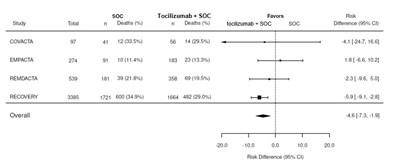
Figure 2 (Tocilizumab 02)
For Intravenous Infusion
Tocilizumab-anoh injection is a preservative-free, sterile clear to slightly opalescent, colorless to pale yellow solution for intravenous infusion supplied in a single-dose vial packaged within cartons in the following strengths and packaging configurations:
- 80 mg/ 4 mL (20 mg/mL): carton of one vial (NDC 72606-048-01); carton of 4 vials (NDC 72606-048-02).
- 200 mg/ 10 mL (20 mg/mL): carton of one vial (NDC 72606-049-01); carton of 4 vials (NDC 72606-049-02).
- 400 mg/ 20 mL (20 mg/mL): carton of one vial (NDC 72606-050-01); carton of 4 vials (NDC 72606-050-02).
For Subcutaneous Injection
Tocilizumab-anoh injection is supplied as a preservative-free, sterile, clear to slightly opalescent, colorless to yellow solution for subcutaneous administration. The following packaging configurations are available:
- Each single-dose prefilled syringe delivers 162 mg/0.9 mL: carton of one syringe (NDC 72606-051-01); carton of 4 syringes (NDC 72606-051-02); carton of 3 packs of 4 syringes (NDC 72606-051-03). The syringe plunger stopper and needle cover are not made with natural rubber latex.
- Each single-dose prefilled autoinjector 162 mg/0.9 mL: carton of one syringe (NDC 72606-051-04); carton of 4 syringes (NDC 72606-051-05); carton of 3 packs of 4 syringes (NDC 72606-051-06). The syringe plunger stopper and needle cover are not made with natural rubber latex.
Serious Infections
Inform patients that Tocilizumab-anoh may lower their resistance to infections [see Warnings and Precautions (5.1)]. Instruct the patient of the importance of contacting their doctor immediately when symptoms suggesting infection appear in order to assure rapid evaluation and appropriate treatment.
Gastrointestinal Perforation
Inform patients that some patients who have been treated with Tocilizumab-anoh have had serious side effects in the stomach and intestines [see Warnings and Precautions (5.2)]. Instruct the patient of the importance of contacting their doctor immediately when symptoms of fever, severe, persistent abdominal pain, and change in bowel habits appear to assure rapid evaluation and appropriate treatment.
Hypersensitivity and Serious Allergic Reactions
Inform patients that some patients who have been treated with Tocilizumab-anoh have developed serious allergic reactions, including anaphylaxis, as well as serious skin reactions [see Warnings and Precautions (5.6)]. Advise patients to stop taking Tocilizumab-anoh and seek immediate medical attention if they experience any symptom of serious allergic reactions (including rash, hives, and swelling of the face, lips, tongue, and throat that may cause difficulty in breathing or swallowing).
Instruction on Injection Technique
Assess patient suitability for home use for subcutaneous injection. Perform the first injection under the supervision of a qualified healthcare professional. If a patient or caregiver is to administer subcutaneous Tocilizumab-anoh, instruct him/her in injection techniques and assess his/her ability to inject subcutaneously to ensure proper administration of subcutaneous Tocilizumab-anoh and the suitability for home use [see Instructions for Use].
Prior to use, remove the prefilled syringe (PFS) or autoinjector from the refrigerator and allow to sit at room temperature outside of the carton for 30 minutes (PFS) or 45 minutes (autoinjector), out of the reach of children. Do not warm Tocilizumab-anoh in any other way.
Advise patients to consult their healthcare provider if the full dose is not received.
A puncture-resistant container for disposal of needles, syringes and autoinjectors should be used and should be kept out of the reach of children. Instruct patients or caregivers in the technique as well as proper needle, syringe and autoinjector disposal, and caution against reuse of these items.
Pregnancy
Inform female patients of reproductive potential that Tocilizumab-anoh may cause fetal harm and to inform their prescriber of a known or suspected pregnancy [see Use in Specific Populations (8.1)].
Tocilizumab-anoh
Manufactured by:
CELLTRION, Inc.
23, Academy-ro, Yeonsu-gu,
Incheon, 22014, Republic of Korea
US License Number 1996
Distributed by:
CELLTRION USA, Inc.
One Evertrust Plaza Suite 1207
Jersey City, NJ 07302


