Tablets for oral suspension may be substituted for tablets in adults and pediatric patients 12 years and older with difficulty swallowing the tablets. Use the number of tablets for oral suspension needed to achieve the recommended dose.
The safety of OXBRYTA was evaluated in the HOPE trial based on data from 88 patients with SCD who received OXBRYTA 1,500 mg and 91 patients who received placebo orally once daily [see Clinical Studies (14.1)]. Seventy-four patients received OXBRYTA 1,500 mg once daily for ≥24 weeks, 65 patients for ≥48 weeks, and 63 patients completed the 72-week treatment period.
In patients who received OXBRYTA 1,500 mg once daily the median age was 24 years (range:12 to 59 years); 65% female; 66% Black or African American and 23% Arab/Middle Eastern; and 65% receiving hydroxyurea at baseline.
Serious adverse reactions occurred in 3% (3/88) of patients receiving OXBRYTA 1,500 mg, which included headache, drug hypersensitivity, and pulmonary embolism occurring in 1 patient each. Permanent discontinuation due to an adverse reaction (Grades 1-4) occurred in 5% (4/88) of patients who received OXBRYTA 1,500 mg.
Dosage modifications (dose reduction or dosing interruption) due to adverse reactions occurred in 14% (12/88) of patients who received OXBRYTA 1,500 mg. The adverse reactions requiring dosage modification included rash (4.5%), diarrhea (3.4%), headache (2.3%), nausea (2.3%), abdominal pain (1.1%), and drug hypersensitivity (1.1%).
The safety profile observed in pediatric patients 12 to <17 years treated with OXBRYTA in the HOPE trial was similar to that seen in adult patients.
The most common adverse reactions occurring in ≥10% of patients treated with OXBRYTA 1,500 mg with a difference of >3% compared to placebo are summarized in Table 4.
- Drug hypersensitivity
Pediatric Patients 4 to <12 Years
The safety of OXBRYTA in pediatric patients 4 to <12 years with SCD was evaluated in an open-label, Phase 2 study [see Clinical Studies (14.2)]. In this study, 45 patients 4 to <12 years of age received doses of OXBRYTA tablets for oral suspension based on weight at baseline. Thirty-five patients received OXBRYTA for 24 weeks and 26 patients for 48 weeks. The most common adverse reactions (>10%) reported in pediatric patients 4 to <12 years were pyrexia (36%), vomiting (33%), rash (20%), abdominal pain (18%), diarrhea (18%), and headache (18%).
The overall safety profile of OXBRYTA in pediatric patients 4 to <12 years was similar to that seen in adults and pediatric patients 12 years and older.
Strong or Moderate CYP3A4 Inducers
Coadministration of strong or moderate CYP3A4 inducers may decrease voxelotor plasma and whole blood concentrations and may lead to reduced efficacy.
Avoid coadministration of OXBRYTA with strong or moderate CYP3A4 inducers. Increase the OXBRYTA dosage when coadministration with a strong or moderate CYP3A4 inducer is unavoidable [see Dosage and Administration (2.5, 2.6) and Clinical Pharmacology (12.3)].
Risk Summary
There are no available data on OXBRYTA use in pregnant women to evaluate for a drug-associated risk of major birth defects, miscarriage, or adverse maternal or fetal outcomes. In animal reproduction studies, oral administration of voxelotor to pregnant rats and rabbits during organogenesis at exposures up to 2.8-times (rats) and 0.3-times (rabbits) the exposure at the maximum recommended human dose resulted in no adverse developmental effects (see Data).
The estimated background risk of major birth defects and miscarriage for the indicated population is approximately 14% and up to 43%, respectively. All pregnancies have a background risk of birth defect, loss, or other adverse outcomes.
There are adverse effects on maternal and fetal outcomes associated with SCD in pregnancy (see Clinical Considerations). OXBRYTA should only be used during pregnancy if the benefit of the drug outweighs the potential risk.
Clinical Considerations
Disease-Associated Maternal and/or Embryo/Fetal Risk
Women with SCD have an increased risk of adverse pregnancy outcomes for the mother and the fetus. Pregnant women are at greater risk for vasoocclusive crises, pre-eclampsia, eclampsia, and maternal mortality. For the fetus, there is an increased risk for intrauterine growth restriction, preterm delivery, low birth weight, and perinatal mortality.
Data
Animal Data
In embryo-fetal development studies, voxelotor was administered orally to pregnant rats at 15, 50, and 250 mg/kg/day (gestation days 7 through 17) and rabbits at 25, 75, and 150 mg/kg/day (gestation days 7 through 19) through organogenesis. Maternal toxicity was observed at the highest dose levels in these studies equivalent to 2.8-times (rats) and 0.3-times (rabbits) the exposures in patients receiving OXBRYTA at the recommended daily dose. There was no evidence of adverse developmental outcomes in rats or rabbits.
In a pre- and postnatal development study, voxelotor was administered orally to pregnant rats at 15, 50 and 250 mg/kg/day (gestation day 6 through lactation day 20). Maternal gestational body weights were decreased at 250 mg/kg/day, which continued to the end of lactation. The findings in offspring included reduced survival and reduced body weights throughout lactation, weaning and maturation. The effects in offspring were observed at the maternal dose of 250 mg/kg/day with an exposure approximately 2.8-times the exposure in patients at the recommended dose.
Risk Summary
There are no data on the presence of voxelotor in human milk, the effects on the breastfed child, or the effects on milk production. Voxelotor was detected in milk in lactating rats. Plasma concentrations of voxelotor in pregnant rats were higher than the concentration in milk. When a drug is present in animal milk, it is likely that the drug will be present in human milk. The concentration of voxelotor in animal milk does not necessarily predict the concentration of drug in human milk. Because of the potential for serious adverse reactions in the breastfed child, including changes in the hematopoietic system, advise patients that breastfeeding is not recommended during treatment with OXBRYTA, and for at least 2 weeks after the last dose.
Cardiac Electrophysiology
At plasma concentrations approximately 2-fold above therapeutic concentrations, voxelotor does not prolong QT interval to any clinically relevant extent.
Absorption
The median plasma and whole blood Tmax of voxelotor after oral administration is 2 hours. The mean peak concentrations in whole blood and RBCs are observed between 6 and 18 hours after oral administration.
Effect of Food
A high-fat, high-calorie meal increased voxelotor AUC by 42% and Cmax by 45% in whole blood relative to AUC and Cmax in the fasted state. Similarly, AUC increased by 42% and Cmax increased by 95% in plasma.
Distribution
Voxelotor apparent volume of distribution of the central compartment and peripheral compartment are 333 L and 72.3 L in plasma, respectively. Protein binding is 99.8% in vitro. The blood-to-plasma ratio is approximately 17:1 in patients with SCD.
Elimination
The geometric mean (%CV) terminal elimination half-life of voxelotor in patients with SCD is 38.7 hours (30.2%) with concentrations in plasma, whole blood, and RBCs declining in parallel. The apparent oral clearance of voxelotor was estimated as 6.1 L/h in plasma in patients with SCD.
Metabolism
In vitro and in vivo studies indicate that voxelotor is extensively metabolized through Phase I (oxidation and reduction), Phase II (glucuronidation) and combinations of Phase I and II metabolism. Metabolism of voxelotor is mediated by CYP3A4, CYP3A5, CYP2B6, CYP2C19, CYP2C9, UGT1A1, and UGT1A9.
Excretion
Following the administration of radiolabeled voxelotor, approximately 62.6% of the dose and its metabolites are excreted into feces (33.3% unchanged) and 35.5% in urine (0.08% unchanged).
Specific Populations
No clinically significant differences in the pharmacokinetics of voxelotor were observed based on age (12 to 59 years), sex, body weight (28 to 135 kg), or mild to severe renal impairment (creatinine clearance [CLcr] 15-89 mL/min).
Pediatric Patients
The pharmacokinetic exposures of voxelotor in whole blood and plasma were similar between pediatric patients 4 to <17 years and adults following the recommended dosage [see Dosage and Administration (2)].
Patients with Renal Impairment
There was no clinically significant effect of renal function on the excretion of voxelotor. Following a single 900 mg dose of voxelotor, whole blood exposures in subjects with severe renal impairment (eGFR <30 mL/min/1.73 m2) were 25% lower compared to healthy controls.
The unbound plasma concentrations were comparable. OXBRYTA has not been evaluated in patients with end stage renal disease requiring dialysis.
Patients with Hepatic Impairment
The voxelotor AUC in whole blood were 14% and 15% higher in subjects with mild and moderate hepatic impairment (Child Pugh A and B) and 90% higher in subjects with severe hepatic impairment (Child Pugh C) compared to subjects with normal hepatic function.
Patients with HbSC Genotype
Voxelotor steady state whole blood AUC and Cmax were 50% and 45% higher in HbSC genotype patients (n=11) compared to HbSS genotype (n=220) patients and voxelotor steady state plasma AUC and Cmax were 23% and 15% higher in HbSC genotype patients compared to HbSS genotype patients.
Drug Interaction Studies
Clinical Studies and Model-Informed Approaches
Effect of Strong CYP3A4 Inhibitors on Voxelotor: concomitant use of OXBRYTA with itraconazole increased voxelotor AUC in healthy subjects by 11%.
Effect of Strong or Moderate CYP3A4 Inducers on Voxelotor: concomitant use of OXBRYTA with rifampin (a strong CYP3A4 inducer) is predicted to decrease voxelotor AUC in patients by up to 40%, and efavirenz (a moderate CYP3A4 inducer) is predicted to decrease voxelotor AUC in patients by up to 24%.
Effect of Acid Reducing Agents on Voxelotor: coadministration of omeprazole (proton pump inhibitor) with OXBRYTA did not alter voxelotor exposure.
Effect of Voxelotor on CYP450 Enzymes: in vivo voxelotor inhibits CYP3A4, but not CYP1A2, CYP2C9, CYP2C19, CYP2C8, or CYP2D6. The observed exposure increase of the CYP3A4 substrate midazolam in healthy subjects was 1.6-fold and the predicted increase in patients after multiple dosing is 2.5-fold.
Effect of Voxelotor on P-gp: concomitant use of OXBRYTA with digoxin (a P-gp substrate) did not alter digoxin to a clinically relevant extent.
In Vitro Studies
CYP Enzymes: voxelotor is a reversible and time-dependent inhibitor as well as an inducer of CYP2B6.
Transporter Systems: voxelotor is not an inhibitor of P-gp, BCRP, OATP1B1, OATP1B3, OCT2, OAT1, OAT3, MATE1, MATE2-K, or BSEP. Voxelotor is not a substrate of P-gp, BCRP, OATP1A2, OATP1B1, OATP1B3, or BSEP.
Hypersensitivity Reactions
Advise patients that serious hypersensitivity reactions including DRESS may occur, and to notify their healthcare providers if they develop generalized rash, urticaria, shortness of breath, facial swelling, swelling around their eyes, lips, or tongue, fever, fatigue, muscle and/or joint pain, swollen glands, and eosinophilia [see Warnings and Precautions (5.1)]. Inform patients that some severe hypersensitivity reactions may affect their internal organs (such as liver, kidneys, lungs) and their blood cells. Advise patients to stop OXBRYTA if a severe hypersensitivity reaction is suspected.
Breastfeeding
Advise women not to breastfeed while they are on OXBRYTA therapy [see Use in Specific Populations (8.2)].
Dosage and Administration
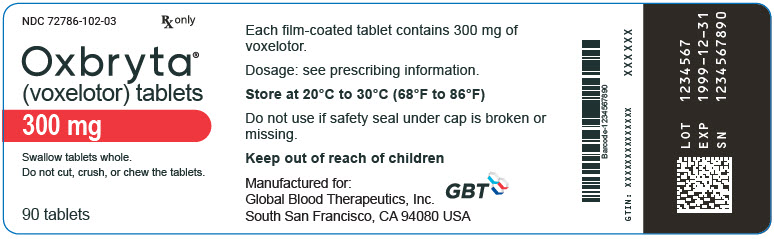
To avoid a dosing error from using the wrong formulation of OXBRYTA, strongly advise patients and caregivers to visually inspect the tablets to verify the correct formulation each time the prescription is filled [see Dosage and Administration (2) and How Supplied/Storage and Handling (16)].
Advise patients to:
- Store OXBRYTA at 20°C to 30°C (68°F to 86°F).
- Continue taking OXBRYTA every day for as long as their physician tells them.
- Do not take St John's wort while taking OXBRYTA.
- Swallow OXBRYTA tablets whole. Do not cut, crush, or chew the tablets.
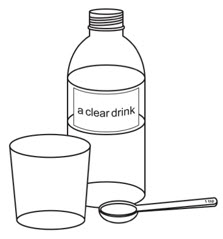
- Do not swallow whole, cut, crush, or chew OXBRYTA tablets for oral suspension. Disperse OXBRYTA tablets for oral suspension in room temperature clear drink (such as drinking water, clear soda, apple juice, clear electrolyte drinks, clear flavored drinks, or clear sports drinks) before administration. The amount of liquid needed to disperse the tablets for oral suspension will depend on the dose (number of tablets prescribed) [see Dosage and Administration (2.7)].
- Take OXBRYTA with or without food.
- If a dose is missed or not consumed entirely, resume dosing the following day [see Dosage and Administration (2.7)].
This product's label may have been updated. For most recent prescribing information, please visit www.pfizer.com. For medical information about OXBRYTA, please visit www.pfizermedinfo.com or call 1-800-438-1985.
Distributed by
Global Blood Therapeutics, Inc
A subsidiary of Pfizer Inc.
South San Francisco, CA 94080
LAB-1554-1.0