Meloxicam Tablet
Product Images NDC 72789-447

View Photos of Packaging, Regulatory Labels, and Product Appearance

Product Visual Gallery

This gallery contains 15 technical images submitted to the FDA as part of the official labeling for Meloxicam (NDC 72789-447). Unlike standard consumer photos, these assets often include clinical data figures, molecular chemical structures, and official manufacturer packaging layouts.

As provided by Pd-rx Pharmaceuticals, Inc., these visuals offer a comprehensive scientific overview of the product's physical and chemical identity, aiding pharmacists and researchers in product verification and study.

FDA Label Image

Image (72789446)

Image (72789446)
This text provides information about Meloxicam tablets, including dosage, storage instructions, expiration date, and FDA reporting details. It advises against consuming alcohol while taking the medication and emphasizes keeping it away from children. It also includes a reorder number and lot number for tracking purposes. The tablets are to be taken a specified number of times per day with food. Additionally, it mentions organoleptic markings and provides a website for a medication guide for patients. The tablets are light yellow in color and come in a package of 14 tablets.*
FDA Label Image

Image (72789447)

Image (72789447)
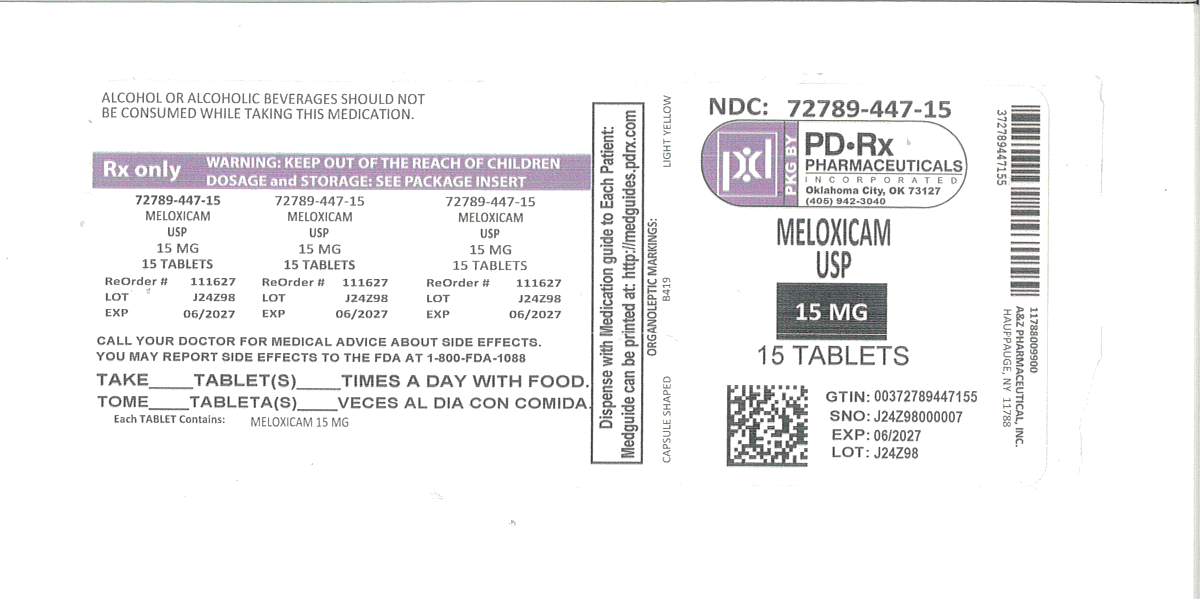
This is a prescription medication warning against consuming alcohol while taking Meloxicam 15mg tablets. It also includes dosage and storage information, a reminder to consult a doctor about side effects, and a note to dispense with medication guide to each patient. The pills are light yellow, capsule-shaped, containing Meloxicam 15mg. Additional details like NDC number (72789-447-15) and expiration date are mentioned. Patients are advised to take the tablet(s) with food. The text provides a website for printing the medication guide.*
FDA Label Image

Mg1 (Mg1)

Mg1 (Mg1)
This text provides essential information about the risks associated with NSAIDs, mentioning how their use can have adverse effects with increased doses or prolonged use. It also emphasizes avoiding NSAIDs before or after certain procedures or events, such as heart surgery (CABG) and a recent heart attack. Following your healthcare provider's advice is crucial to avoid any negative impact on your health.*
FDA Label Image

Mg2 (Mg2)

Mg2 (Mg2)
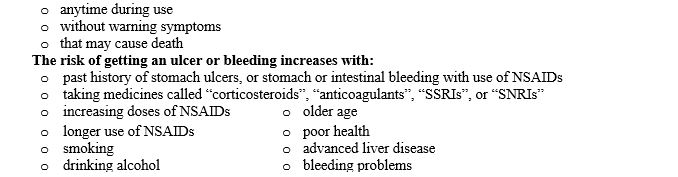
This text provides important information regarding the potential risks associated with the use of NSAIDs (nonsteroidal anti-inflammatory drugs) such as the increased risk of ulcers, bleeding, and related complications. It highlights factors that can contribute to the elevated risk, including past history of stomach issues, certain medications, smoking, alcohol consumption, advancing age, poor health, liver disease, and bleeding problems. It emphasizes the need to watch out for warning signs during NSAID use, which could be crucial for preventing severe outcomes like death.*
FDA Label Image

Mg3 (Mg3)

Mg3 (Mg3)
This text provides guidelines for taking medication: follow the prescription strictly, use the lowest effective dose, and consult a healthcare professional. The last line appears to have some issues with and is not readable.*
FDA Label Image

Mg4 (Mg4)

Mg4 (Mg4)
This text is describing symptoms that may indicate a serious medical condition. It mentions shortness of breath, trouble breathing, slurred speech, chest pain, swelling of the face or throat, and weakness on one side of the body. These symptoms could be indicative of a stroke, heart attack, allergic reaction, or other medical emergencies. It is important to seek immediate medical attention if experiencing any of these symptoms.*
FDA Label Image

Mg5 (Mg5)

Mg5 (Mg5)
This text lists various symptoms that may indicate serious health issues. These symptoms include nausea, fatigue, diarrhea, itching, yellowing of the skin or eyes, indigestion or stomach pain, flu-like symptoms, vomiting blood, presence of blood in bowel movements, unusual weight gain, skin rash or blisters with fever, and swelling in the arms, legs, hands, and feet. If you experience any of these symptoms, it is important to seek medical attention.*
FDA Label Image

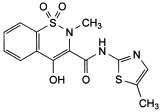
Structural (Structural Formula)

FDA Label Image

Table 1a (Table 1a)

Table 1a (Table 1a)
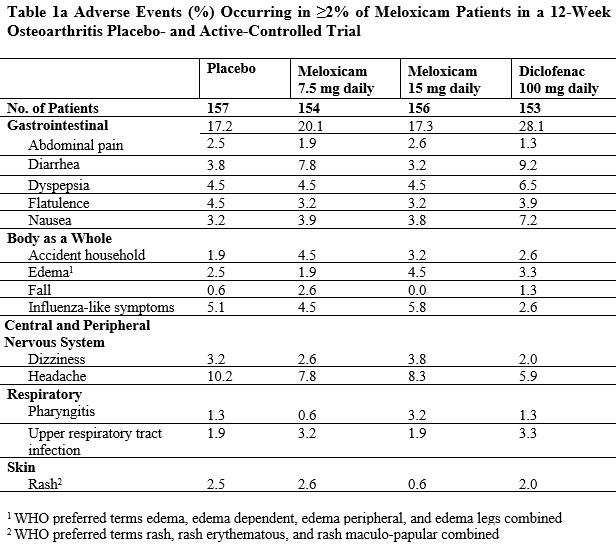
This data shows the percentage of adverse events occurring in at least 22% of Meloxicam patients participating in a 12-week osteoarthritis trial compared to those on placebo and active control (Diclofenac). The adverse events highlighted include gastrointestinal issues, abdominal pain, diarrhea, accidental household injuries, edema, falls, influenza-like symptoms, dizziness, headaches, respiratory conditions, and skin reactions such as rash. The number of patients experiencing each adverse event is also provided for comparison.*
FDA Label Image

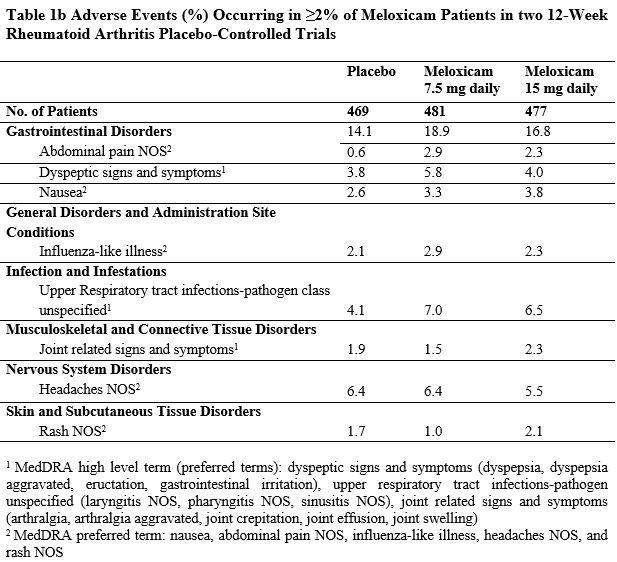
Table 1b (Table 1b)

Table 1b (Table 1b)
The provided text contains a detailed breakdown of adverse events occurring in Rheumatoid Arthritis patients taking Meloxicam in two 12-week placebo-controlled trials. It includes the percentages of various adverse events like gastrointestinal disorders, abdominal pain, dyspeptic signs, nausea, general disorders, influenza-like illness, infection, musculoskeletal disorders, nervous system disorders, headaches, and skin-related issues. The data distinguishes between patients using Meloxicam 7.5mg daily and 15mg daily in comparison to the placebo group. These are important findings for evaluating the safety profile of Meloxicam in managing Rheumatoid Arthritis.*
FDA Label Image

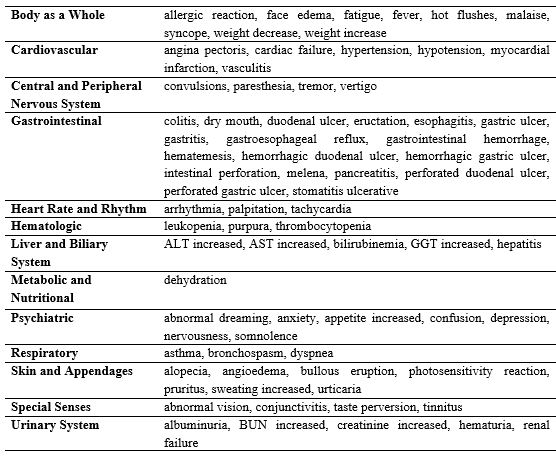
Table 2.1 (Table 2.1)

Table 2.1 (Table 2.1)
This information provides a comprehensive list of potential side effects and reactions associated with a medication or treatment. It categorizes various symptoms and conditions that may affect different systems of the body, such as cardiovascular, nervous, gastrointestinal, metabolic, and respiratory systems, among others. The list includes details like allergic reactions, weight changes, cardiovascular issues like hypertension and myocardial infarction, gastrointestinal problems such as ulcers and hemorrhage, and metabolic changes related to liver and biliary functions. Additionally, it touches on psychiatric symptoms, skin reactions, and urinary system abnormalities that may occur. This resource can help healthcare professionals and patients be aware of possible outcomes when using the specific treatment.*
FDA Label Image

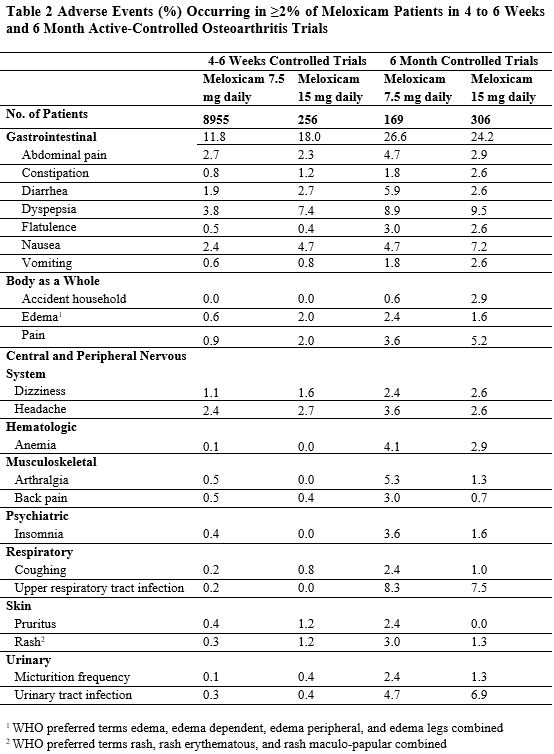
Table 2 (Table 2)

Table 2 (Table 2)
This text provides information on adverse events (%) occurring in more than 2% of Meloxicam patients in 4 to 6 weeks and 6-month active-controlled osteoarthritis trials. It includes data for different durations and dosages of Meloxicam, along with the percentages for various adverse events such as gastrointestinal issues, headaches, musculoskeletal problems, and respiratory symptoms, among others. The table also notes the WHO preferred terms for certain conditions like edema and rash.*
FDA Label Image

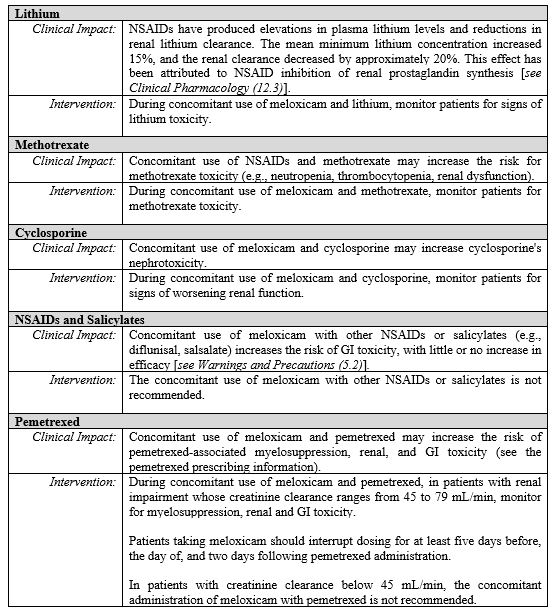
Table 3.1 (Table 3.1)

Table 3.1 (Table 3.1)
This text provides crucial information about potential drug interactions involving meloxicam, a nonsteroidal anti-inflammatory drug (NSAID). It discusses the clinical impact of combining meloxicam with lithium, methotrexate, cyclosporine, other NSAIDs, and pemetrexed. The text outlines interventions to monitor patients for signs of toxicity or adverse effects when these medications are used together. The emphasis is on preventing adverse reactions and ensuring patient safety during concurrent use of these medications.*
FDA Label Image

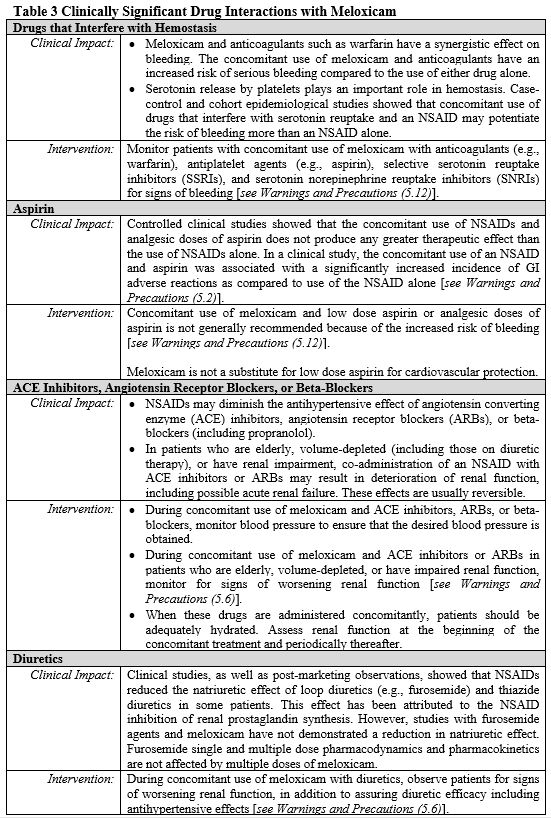
Table 3 (Table 3)

Table 3 (Table 3)
This text provides valuable information on clinically significant drug interactions with Meloxicam. It discusses how the use of Meloxicam in combination with various medications such as anticoagulants, serotonin reuptake inhibitors, aspirin, ACE inhibitors, diuretics, and others can impact hemostasis, bleeding risk, cardiovascular protection, antihypertensive effects, and renal function. The text highlights the importance of monitoring patients for signs of bleeding, worsening renal function, and ensuring the desired therapeutic effects are obtained while using Meloxicam with these medications. It also emphasizes the need for caution and appropriate interventions when these drugs are administered concomitantly to minimize adverse effects.*
FDA Label Image

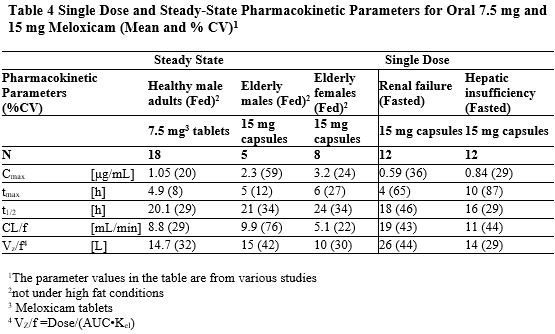
Image Description (Table 4)

Image Description (Table 4)
This text provides a table showing the single dose and steady-state pharmacokinetic parameters for oral 7.5 mg and 15 mg Meloxicam, including mean values and percentage coefficient of variation (% CV). The data seems to be comparing the pharmacokinetic parameters of different doses of Meloxicam under normal fat conditions. The table may include absorption-related parameters such as area under the curve (AUC) and the absorption rate constant (Ka).*

* These product label images have been analyzed using experimental machine learning. Please verify findings with the primary label text.