Lamivudine And Zidovudine Tablet, Film Coated
Product Images NDC 72865-144

View Photos of Packaging, Regulatory Labels, and Product Appearance

Product Visual Gallery

This gallery contains 8 technical images submitted to the FDA as part of the official labeling for Lamivudine And Zidovudine (NDC 72865-144). Unlike standard consumer photos, these assets often include clinical data figures, molecular chemical structures, and official manufacturer packaging layouts.

As provided by Xlcare Pharmaceuticals, Inc, these visuals offer a comprehensive scientific overview of the product's physical and chemical identity, aiding pharmacists and researchers in product verification and study.

FDA Label Image

15 mg/300 mg-60 Ct (Lamivudine And Zidovudine Cl 60 Ct)
15 mg/300 mg-60 Ct (Lamivudine And Zidovudine Cl 60 Ct)
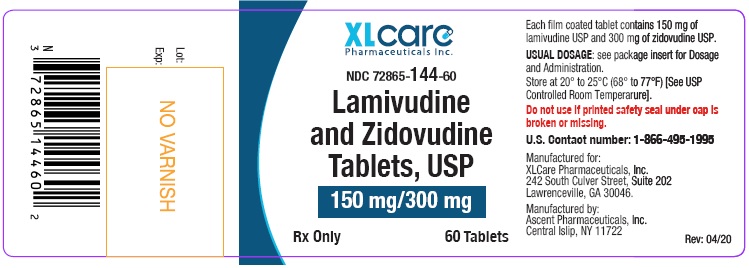
XLcare Pharmaceuticals presents their Lamivudine and Zidovudine tablets, which come in a bottle of 60 pills. Each film-coated tablet contains 150 mg of Lamivudine USP and 300 mg of Zidovudine USP, with the recommended dosage provided in the package insert. These tablets should be stored in a controlled temperature environment between 20°-25°C (66°-77° F), and should not be used if the printed safety seal is missing or broken. For further information, call the U.S. contact number provided at 1-866-495-1995. The tablets are manufactured by Ascent Pharmaceuticals and distributed by X\ Care Pharmaceuticals in Lawrenceville, GA.*
FDA Label Image

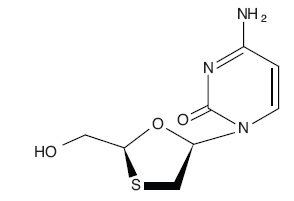
Structure-lamivudine (Struct Lamivudine)

FDA Label Image

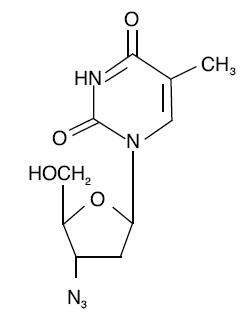
Structure-zidovudine (Struct Zidovudine)

FDA Label Image

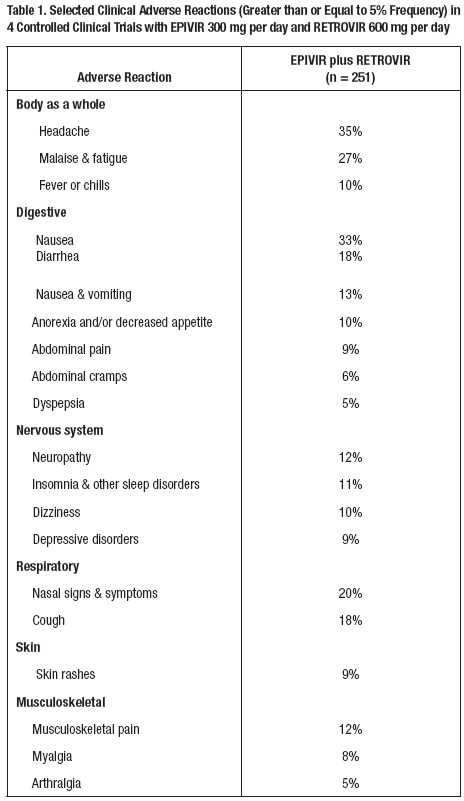
Table 1 (Table 1)

Table 1 (Table 1)
This table provides a breakdown of the clinical adverse reactions observed in 4 controlled clinical trials that used a daily dosage of 300mg of EPIVIR and 600mg of RETROVIR. Common adverse reactions that occurred with a frequency greater than or equal to 5% included headache, malaise and fatigue, fever, nausea, diarrhea, vomiting, appetite loss, abdominal pain, neuropathy, insomnia, dizziness, respiratory symptoms, skin rashes, and musculoskeletal pain.*
FDA Label Image

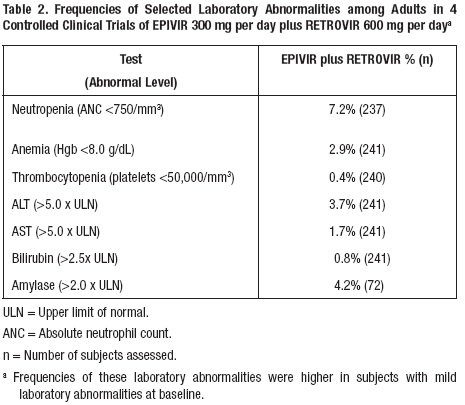
Table 2 (Table 2)

Table 2 (Table 2)
Table 2 shows the frequencies of laboratory abnormalities observed in four clinical trials of EPIVIR and RETROVIR combination therapy. The table lists the percentages and numbers of individuals experiencing abnormal levels of neutrophils, hemoglobin, platelets, ALT, AST, bilirubin, and amylase. Additionally, the upper limit of normal is defined as ULN and ANG represents the absolute neutrophil count. The note highlights that the frequencies of these laboratory abnormalities were greater in those who had mild laboratory abnormalities at baseline.*
FDA Label Image

Table 3 (Table 3)

Table 3 (Table 3)
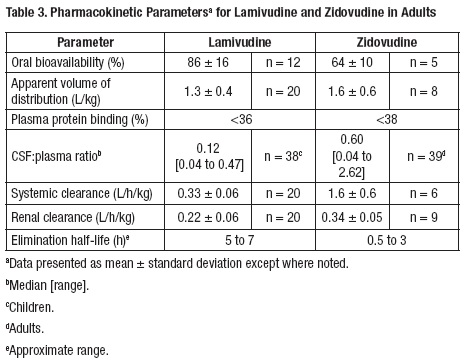
This is a table presenting pharmacokinetic parameters for Lamivudine and Zidovudine in adults. It shows values such as oral bioavailability, apparent volume of distribution, plasma protein binding, systemic clearance, renal clearance, and elimination half-life. The values are presented as mean and standard deviation unless noted otherwise. There is also a note that this data is specific to adults and not children.*
FDA Label Image

Table 4 (Table 4)

Table 4 (Table 4)
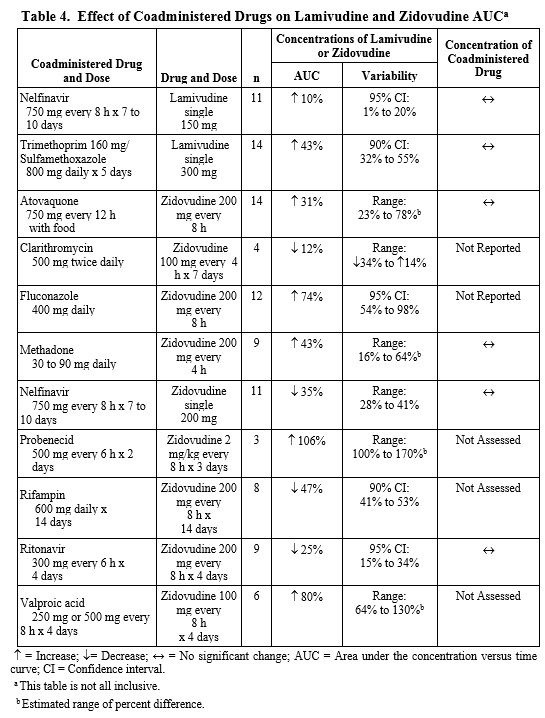
The text describes the effect of coadministered drugs on Lamivudine and Zidovudine AUC. The table shows the concentrations of Lamivudine or Zidovudine and the coadministered drug along with the AUC (Area under the concentration versus curve) for both drugs. Different drugs such as Nelfinavir, Trimetoprim Sulfametoxazole, Atovaquone, Clarithromycin, Fluconazole, Ethadone, and Ritonavir were coadministered with Lamivudine or Zidovudine. The table shows whether there was an increase, decrease, or no significant change in AUC. The estimated range of percent difference is also given.*
FDA Label Image

Table 5 (Table 5)

Table 5 (Table 5)
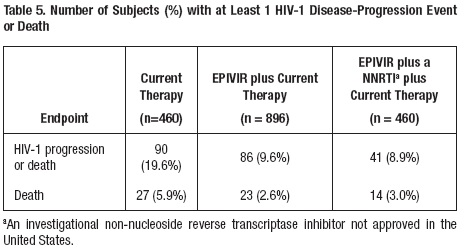
The table shows the number and percentage of subjects who experienced at least one HIV-1 disease progression event or death during the study. Different therapies were evaluated, including EPIVIR plus a current therapy, EPIVIR plus Curtent, and NNRTP plus Current Therapy. The study endpoint had 1460 participants, and the percentage of subjects who experienced HIV1 progression or death was 19.6%, 9.6%, and 16.9% for the different therapies, respectively. There were also a few deaths recorded during the study. The investigational non-nucleoside reverse transcriptase inhibitor was not approved in the United States.*

* These product label images have been analyzed using experimental machine learning. Please verify findings with the primary label text.