Aripiprazole Tablet
Product Images NDC 72865-181

35 FDA label images from Xlcare Pharmaceuticals, Inc. · Packaging, Regulatory Labels, and Product Appearance

Product Visual Gallery

This gallery contains 35 technical images submitted to the FDA as part of the official labeling for Aripiprazole (NDC 72865-181). Unlike standard consumer photos, these assets often include clinical data figures, molecular chemical structures, and official manufacturer packaging layouts.

As provided by Xlcare Pharmaceuticals, Inc., these visuals offer a comprehensive scientific overview of the product's physical and chemical identity, aiding pharmacists and researchers in product verification and study.

FDA Label Image

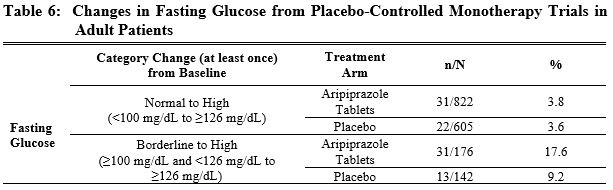
Tab 6 (Table 6)

Tab 6 (Table 6)
A data table titled 'Changes in Fasting Glucose from Placebo-Controlled Monotherapy Trials in Adult Patients' comparing the percentages of patients in Aripiprazole tablet and placebo groups who experienced category changes in fasting glucose levels from baseline.*
FDA Label Image

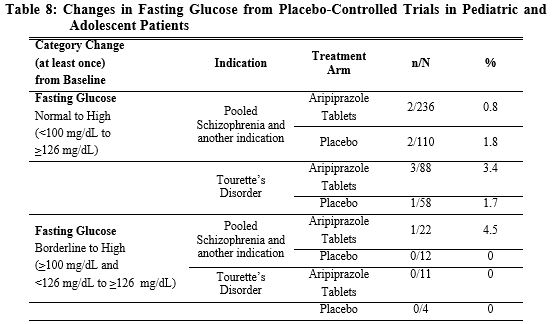
Tab 8 (Table 8)

Tab 8 (Table 8)
A data table titled 'Changes in Fasting Glucose from Placebo-Controlled Trials in Pediatric and Adolescent Patients.' It shows fasting glucose category changes (Normal to High and Borderline to High) by indication (Pooled Schizophrenia and another indication, Tourette's Disorder) and treatment arm (Aripiprazole Tablets vs. Placebo), with counts and percentages for each group.*
FDA Label Image

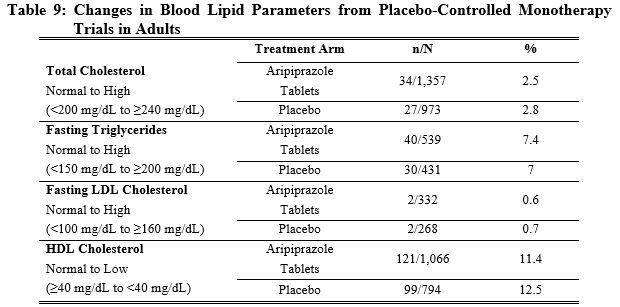
Tab 9 (Table 9)

Tab 9 (Table 9)
A table titled 'Changes in Blood Lipid Parameters from Placebo-Controlled Monotherapy Trials in Adults' comparing Aripiprazole tablets and placebo across four lipid parameters: Total Cholesterol, Fasting Triglycerides, Fasting LDL Cholesterol, and HDL Cholesterol. It details the shift from normal to high or normal to low levels, sample sizes (n/N), and percentages for each treatment arm.*
FDA Label Image

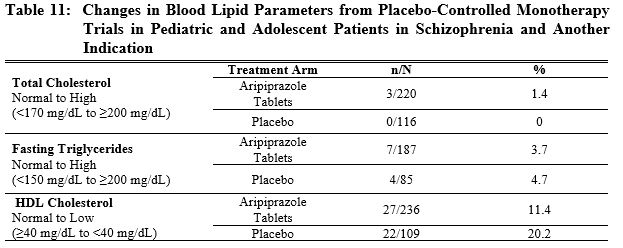
Tab 11 (Table 11)

Tab 11 (Table 11)
A data table showing changes in blood lipid parameters—Total Cholesterol, Fasting Triglycerides, and HDL Cholesterol—in pediatric and adolescent patients from placebo-controlled monotherapy trials. The table compares treatment arms of Aripiprazole Tablets and placebo, listing patient counts and percentages for shifts in lipid categories.*
FDA Label Image

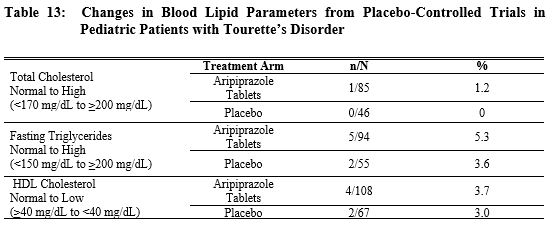
Tab 13 (Table 13)

Tab 13 (Table 13)
A data table titled 'Changes in Blood Lipid Parameters from Placebo-Controlled Trials in Pediatric Patients with Tourette's Disorder.' It compares lipid parameter changes between Aripiprazole tablets and placebo groups, including total cholesterol, fasting triglycerides, and HDL cholesterol, with corresponding patient counts and percentages.*
FDA Label Image

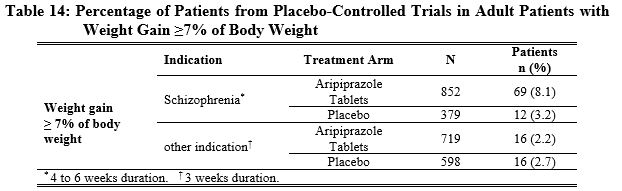
Tab 14 (Table 14)

Tab 14 (Table 14)
A data table presenting the percentage of adult patients experiencing weight gain of 7% or more of body weight in placebo-controlled trials with Aripiprazole tablets. It compares patient counts and percentages between Aripiprazole and placebo groups for schizophrenia and other indications, noting trial durations of 4 to 6 weeks and 3 weeks respectively.*
FDA Label Image

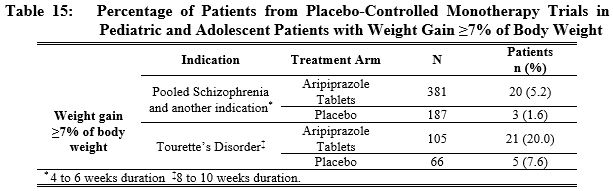
Tab 15 (Table 15)

Tab 15 (Table 15)
A data table showing the percentage of pediatric and adolescent patients with weight gain ≥7% of body weight in placebo-controlled monotherapy trials. It compares Aripiprazole tablets with placebo in pooled schizophrenia and another indication, and in Tourette's disorder, listing sample sizes and patient percentages.*
FDA Label Image

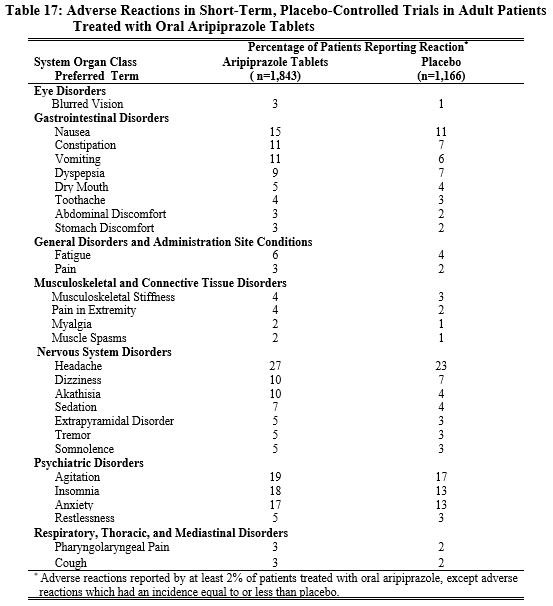
Tab 17 (Table 17)

Tab 17 (Table 17)
A data table listing adverse reactions from short-term, placebo-controlled trials in adult patients treated with oral Aripiprazole tablets. The table compares the percentage of patients reporting reactions for Aripiprazole versus placebo across various system organ classes such as eye disorders, gastrointestinal disorders, nervous system disorders, psychiatric disorders, and others.*
FDA Label Image

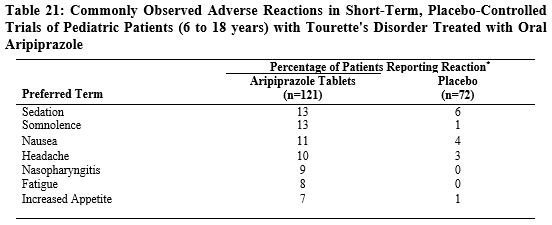
Tab 21 (Table 21)

Tab 21 (Table 21)
A data table titled 'Commonly Observed Adverse Reactions in Short-Term, Placebo-Controlled Trials of Pediatric Patients (6 to 18 years) with Tourette's Disorder Treated with Oral Aripiprazole.' It compares the percentage of patients reporting specific adverse reactions between Aripiprazole tablets and placebo. Adverse reactions listed include sedation, somnolence, nausea, headache, nasopharyngitis, fatigue, and increased appetite.*
FDA Label Image

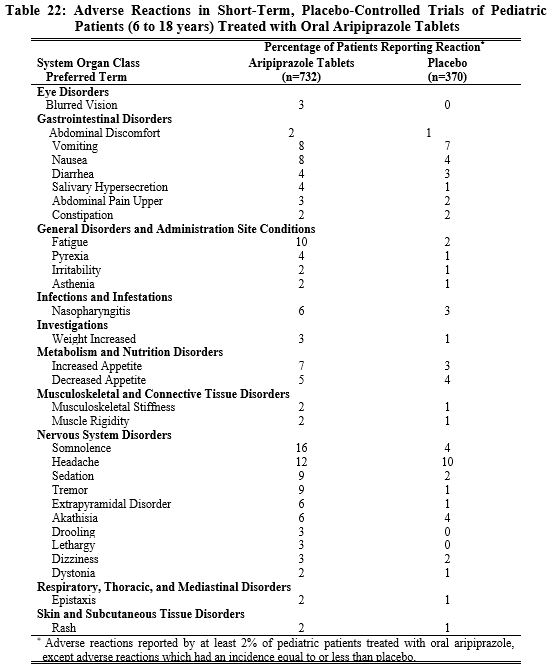
Tab 22 (Table 22)

Tab 22 (Table 22)
Table showing adverse reactions reported in short-term, placebo-controlled trials of pediatric patients (ages 6 to 18) treated with oral Aripiprazole tablets compared to placebo. It lists system organ classes and specific adverse reactions with corresponding percentages of patients reporting each reaction for Aripiprazole (n=732) and placebo (n=370) groups.*
FDA Label Image

Tab 25 (Table 25)

Tab 25 (Table 25)
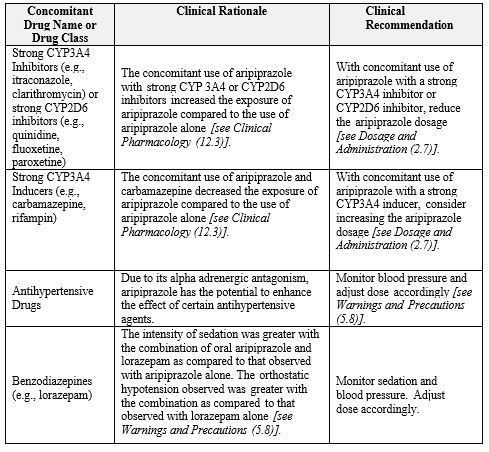
A table presenting clinical considerations for aripiprazole when taken with concomitant drug classes. It details clinical rationale and recommendations for use with CYP3A4 and CYP2D6 inhibitors and inducers, antihypertensive drugs, and benzodiazepines, including dosage adjustments and monitoring advice for blood pressure and sedation.*
FDA Label Image

Structure.jpg (Structure)

Structure.jpg (Structure)
Chemical structure of Aripiprazole, showing its molecular framework including chlorinated aromatic rings and heterocyclic components.*
FDA Label Image

Figure-1 (Figure 1)

Figure-1 (Figure 1)
A pharmacokinetic chart showing the effect of various other drugs on aripiprazole, illustrating fold changes and 90% confidence intervals in AUC and Cmax values relative to a reference without interacting drugs. Drugs listed include CYP3A4 inhibitor ketoconazole, CYP2D6 inhibitor quinidine, CYP3A4 inducer carbamazepine, gastric acid blockers famotidine, and other drugs such as valproate, lithium, and lorazepam.*
FDA Label Image

Figure-2 (Figure 2)

Figure-2 (Figure 2)
A chart showing the effect of various drugs on the pharmacokinetics of dehydro-aripiprazole. It presents fold changes and 90% confidence intervals for AUC and Cmax values relative to a reference without interacting drugs. The chart includes CYP3A4 inhibitors and inducers, gastric acid blockers, and other drugs like valproate, lithium, and lorazepam.*
FDA Label Image

Figure-3 (Figure 3)

Figure-3 (Figure 3)
A scatter plot chart titled 'Effect of Aripiprazole on Other Drugs' showing fold change and 90% confidence intervals for various drugs relative to a reference without interacting drug. The x-axis represents change relative to reference from 0.5 to 3.0, while the y-axis lists different drugs including CYP2D6, dextrmethorphan, CYP2C9, 2C19, warfarin (S- and R-), omeprazole, lamotrigine, valproate, lithium, lorazepam, venlafaxine and its metabolite O-desmethylvenlafaxine, and escitalopram. Data points indicate pharmacokinetic parameters such as AUC, Cmax, and INR for the listed drugs.*
FDA Label Image

Figure-4 (Figure 4)

Figure-4 (Figure 4)
A chart titled 'Aripiprazole Fold Change and 90% CI' illustrating pharmacokinetic changes (AUC and Cmax) relative to reference values across special populations, including CYP2D6 metabolizer status, gender, age, hepatic impairment, and renal impairment. The x-axis shows change relative to reference, and data points with confidence intervals are plotted for each condition.*
FDA Label Image

Figure-5 (Figure 5)

Figure-5 (Figure 5)
A pharmacokinetic chart depicting Dehydro-Aripiprazole fold change with 90% confidence intervals (CI) relative to reference across various conditions including CYP2D6 metabolizer status, gender, age groups, hepatic impairment severity, and severe renal impairment. The variables shown are AUC and Cmax fold changes compared to reference values.*
FDA Label Image

Figure-6 (Figure 6)

Figure-6 (Figure 6)
Kaplan-Meier curve showing the proportion of subjects with relapse over time (days from randomization) comparing Aripiprazole and placebo groups. The graph includes the number of subjects at risk at various time points for both groups.*
FDA Label Image

14 (5.11)

14 (5.11)
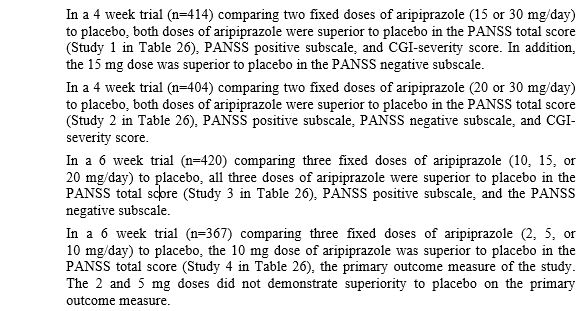
This text panel summarizes clinical trial results comparing various fixed oral doses of aripiprazole tablets (2 mg, 5 mg, 10 mg, 15 mg, 20 mg, and 30 mg per day) to placebo. It details study durations ranging from 4 to 6 weeks and evaluates outcomes using PANSS total score, PANSS positive and negative subscales, and CGI-severity score.*
FDA Label Image

Tab 26 (Table 26)

Tab 26 (Table 26)
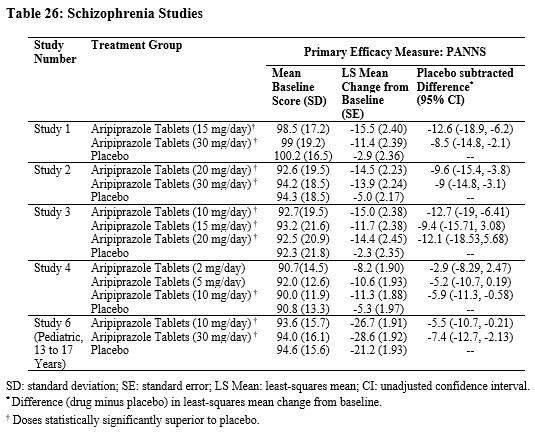
Data table titled 'Schizophrenia Studies' presenting efficacy results from multiple clinical studies of Aripiprazole Tablets at various dosages (2 mg to 30 mg daily) compared to placebo. The table includes study numbers, treatment groups, mean baseline scores, least-squares mean changes from baseline, and placebo-subtracted differences with confidence intervals, focusing on PANSS (Positive and Negative Syndrome Scale) scores.*
FDA Label Image

Figure 7 (Figure 7)

Figure 7 (Figure 7)
A line graph showing the proportion of subjects with relapse over days from randomization, comparing Aripiprazole to placebo. The x-axis represents days from randomization (0 to 182), and the y-axis shows the proportion with relapse (0.0 to 1.0). The graph includes two lines: a solid line for Aripiprazole and a dashed line for placebo, with placebo showing a higher relapse proportion over time. The number of subjects at risk is displayed below the x-axis for both groups at various time points.*
FDA Label Image

Figure 8 (Figure 8)

Figure 8 (Figure 8)
A line graph comparing the proportion of relapse over 364 days from randomization between Aripiprazole and placebo groups. The x-axis represents days from randomization, while the y-axis shows the proportion with relapse. The graph includes numbers of subjects at risk at various time points for both Aripiprazole and placebo.*
FDA Label Image

Figure 9 (Figure 9)

Figure 9 (Figure 9)
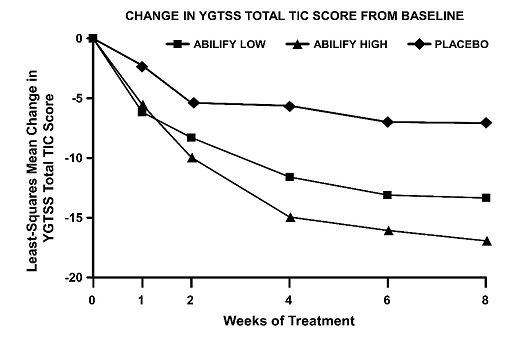
A line graph showing the change in YGTSS total TIC score from baseline over 8 weeks of treatment. The graph compares three groups: Abilify Low, Abilify High, and Placebo, with the Y-axis representing least squares mean change in score and the X-axis representing weeks of treatment.*
FDA Label Image

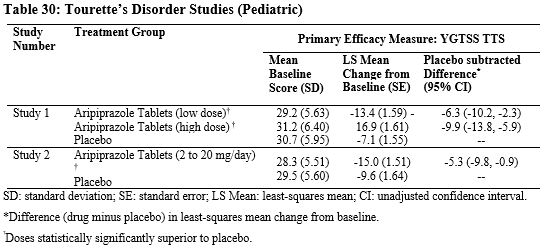
Tab 30 (Table 30)

Tab 30 (Table 30)
A data table titled 'Tourette's Disorder Studies (Pediatric),' showing study numbers, treatment groups including Aripiprazole Tablets at various doses and placebo, and primary efficacy measure YGTSS TTS values with baseline scores, LS mean changes, and placebo-subtracted differences with confidence intervals. The table notes standard deviation, standard error, and statistically significant dosing effects compared to placebo.*
FDA Label Image

Mg1 (Mg1)

Mg1 (Mg1)
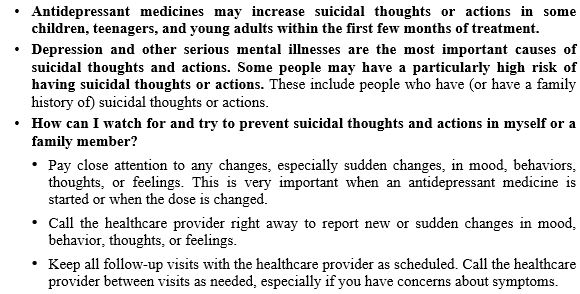
A text panel discussing the risk of suicidal thoughts or actions associated with antidepressant medicines, emphasizing vigilant monitoring during early treatment. It includes advice on how to watch for and prevent such thoughts in oneself or a family member, highlighting the importance of communication with healthcare providers and maintaining scheduled visits.*
FDA Label Image

Mg2 (Mg2)

Mg2 (Mg2)
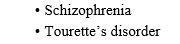
A text panel listing two medical conditions: Schizophrenia and Tourette's disorder, likely indicating disease indications or treatment targets associated with the product Aripiprazole tablets by XLCare Pharmaceuticals, Inc.*
FDA Label Image

Mg3 (Mg3)

Mg3 (Mg3)
A text panel providing general health and safety advice including guidance not to over-exercise, to stay inside in cool places during hot weather, avoid excessive sun exposure and heavy clothing, and to drink plenty of water.*
FDA Label Image

Mg4 (Mg4)

Mg4 (Mg4)
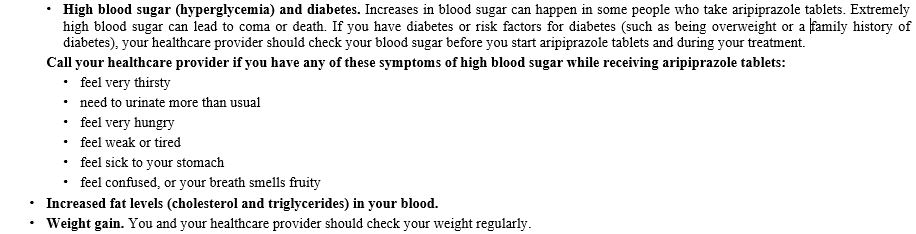
Text panel from the prescribing information for Aripiprazole tablets outlining warnings about high blood sugar (hyperglycemia) and diabetes risk, symptoms to monitor such as excessive thirst and frequent urination, increased cholesterol and triglyceride levels, and advice to regularly monitor weight with healthcare provider guidance.*
FDA Label Image

Mg5 (Mg5)

Mg5 (Mg5)
Text panel from Aripiprazole oral tablets providing information about pregnancy considerations, including instructions to consult a healthcare provider and details about registering with the National Pregnancy Registry for Atypical Antipsychotics via a phone number and website.*
FDA Label Image

2 mg- 500s (2 mg 500s)

2 mg- 500s (2 mg  500s)
Label for Aripiprazole Tablets, USP 2 mg, oral tablets manufactured by XLCare Pharmaceuticals, Inc. The label includes the NDC 72865-180-05 and states the product contains 500 tablets. It notes pharmacist dispensing guidance, storage instructions, and manufacturer details for XLCare Pharmaceuticals and Ascent Pharmaceuticals.*
FDA Label Image

5 mg- 500s (5 mg 500s)

5 mg- 500s (5 mg  500s)
Label for Aripiprazole Tablets, USP 5 mg by XLCare Pharmaceuticals, Inc. The label indicates the NDC code 72865-181-05 and that the package contains 500 tablets. It notes the requirement for a pharmacist to dispense the medication guide separately. Storage instructions and manufacturer information are provided, including manufacturing by Ascent Pharmaceuticals, Inc.*
FDA Label Image

10 mg- 500s (10 mg 500s)

10 mg- 500s (10 mg  500s)
Bottle label for Aripiprazole Tablets USP 10 mg. The label shows the brand name Aripiprazole, strength 10 mg, dosage form tablets, and package quantity of 500 tablets. It includes manufacturer information for XLCare Pharmaceuticals, Inc. and Ascent Pharmaceuticals, Inc. Additional text includes storage instructions, prescription status (Rx only), and a note for pharmacists to dispense medication guides.*
FDA Label Image

15 mg- 500s (15 mg 500s)

15 mg- 500s (15 mg  500s)
Label for Aripiprazole Tablets, USP 15 mg oral tablets by XLCare Pharmaceuticals, Inc. The label includes NDC 72865-183-05 and states a bottle count of 500 tablets. It specifies pharmacist instructions to dispense the Medication Guide separately and storage conditions at 20 to 25°C. Manufacturer information for XLCare Pharmaceuticals and Ascent Pharmaceuticals is also visible.*
FDA Label Image

20 mg- 500s (20 mg 500s)

20 mg- 500s (20 mg  500s)
Label for Aripiprazole Tablets, USP 20 mg oral tablets, manufactured for XLCare Pharmaceuticals, Inc. The label indicates a package containing 500 tablets, with an NDC of 72865-184-05. Instructions mention dispensing a medication guide to patients and storage recommendations at controlled room temperature. Manufacturer details for both XLCare Pharmaceuticals, Inc. and Ascent Pharmaceuticals, Inc. are included.*
FDA Label Image

30 mg- 500s (30 mg 500s)

30 mg- 500s (30 mg  500s)
Label for Aripiprazole Tablets USP 30 mg by XLCare Pharmaceuticals, Inc. The label shows the product name, strength (30 mg), dosage form (tablet), and package quantity of 500 tablets. It includes storage instructions, dispensing information, barcode, and manufacturer details for XLCare Pharmaceuticals, Inc. and Ascent Pharmaceuticals, Inc.*

* About these descriptions: Image descriptions on this page are generated by automated AI analysis of the product label images from the manufacturer's FDA label submission (SPL). They are provided for reference only and may contain errors or omissions. Always rely on the printed label itself and the official FDA labeling, and consult a pharmacist or healthcare professional with any questions about this product.