Meloxicam Tablet
Product Images NDC 72865-332

View Photos of Packaging, Regulatory Labels, and Product Appearance

Product Visual Gallery

This gallery contains 19 technical images submitted to the FDA as part of the official labeling for Meloxicam (NDC 72865-332). Unlike standard consumer photos, these assets often include clinical data figures, molecular chemical structures, and official manufacturer packaging layouts.

As provided by Xlcare Pharmaceuticals, Inc., these visuals offer a comprehensive scientific overview of the product's physical and chemical identity, aiding pharmacists and researchers in product verification and study.

FDA Label Image

15-100 (15 100)

15-100 (15 100)
This is a medication label for Meloxicam tablets USP containing 15 mg of Meloxicam per tablet. The tablets are manufactured by Ascent Pharmaceuticals Inc. and distributed by XLCare Pharmaceuticals Inc. The label provides guidance on storage conditions, dosage, and dispensing information. It is recommended to keep the tablets in a dry place at controlled room temperature and out of reach of children. It also advises referencing the accompanying prescribing information for proper use.*
FDA Label Image

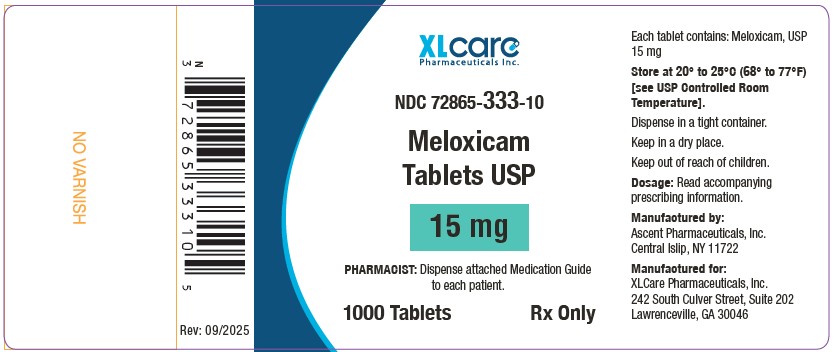
15-1000 (15 1000)

15-1000 (15 1000)
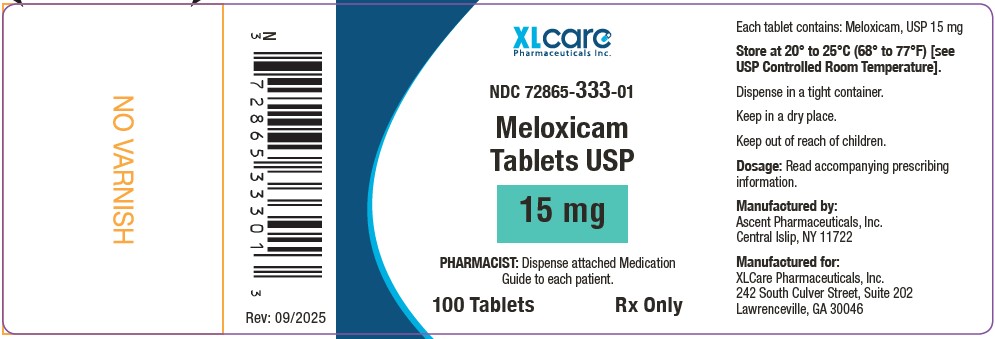
This text provides information about Meloxicam Tablets USP containing 15mg of Meloxicam. It includes instructions for storage, dosage, and manufacturing details by Ascent Pharmaceuticals, Inc. for XLCare Pharmaceuticals, Inc. It also lists the NDC number as 72865-333-10 and advises to keep the tablets in a tight container in a dry place and out of reach of children.*
FDA Label Image

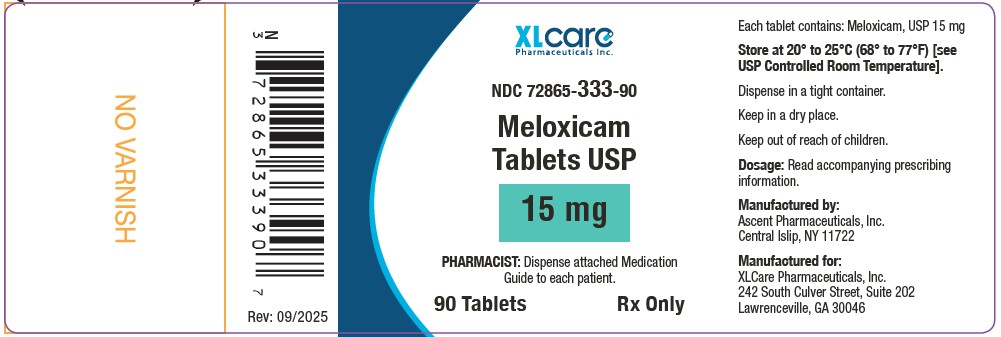
15-90 (15 90)

15-90 (15 90)
Description: The text provides information about Meloxicam tablets USP, with each tablet containing 15 mg of Meloxicam. It includes instructions for storage, dosage, and manufacturer details for the medication. The text also mentions the NDC (National Drug Code) number and advises pharmacists to dispense the medication guide to each patient.*
FDA Label Image

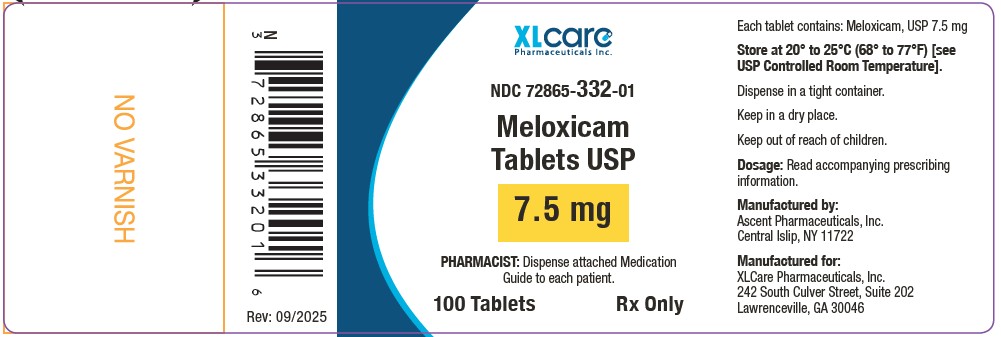
7.5-100 (7.5 100)

7.5-100 (7.5 100)
This is a description of Meloxicam tablets, each containing 7.5mg of Meloxicam USP. It provides instructions for storage, dosage, and dispensing, including the recommendation to keep the tablets in a dry place and out of reach of children. The medication guide is to be dispensed to each patient by the pharmacist. The tablets are manufactured by Ascent Pharmaceuticals, Inc. for XLCare Pharmaceuticals, Inc.*
FDA Label Image

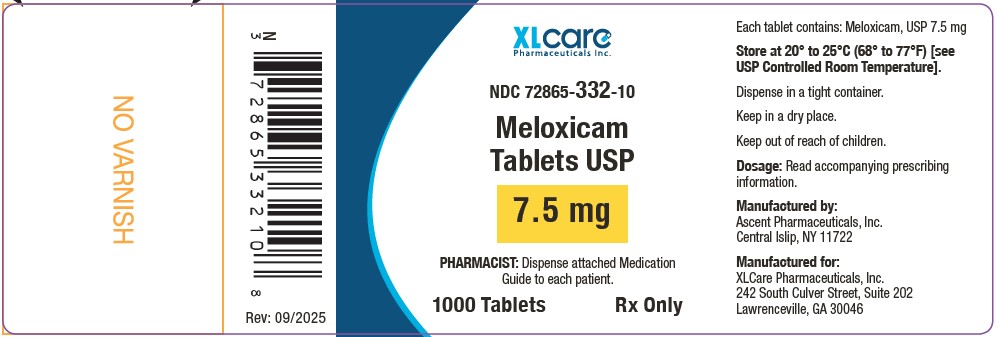
7.5-1000 (7.5 1000)

7.5-1000 (7.5 1000)
This is a medication label for Meloxicam Tablets USP 7.5 mg. It includes information such as dosage instructions, storage conditions, manufacturer details, and pharmacist instructions. The tablets are dispensed with a medication guide for each patient and should be kept in a dry place at a controlled room temperature. The medication is manufactured by Ascent Pharmaceuticals, Inc. for XLCare Pharmaceuticals, Inc.*
FDA Label Image

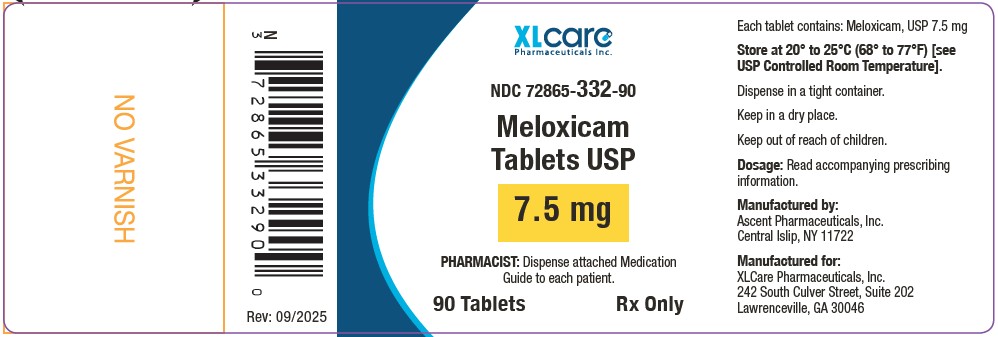
7.5-90 (7.5 90)

7.5-90 (7.5 90)
This text contains information about a medication called Meloxicam in tablet form, with a strength of 7.5mg. It provides guidance for pharmacists to dispense the medication to patients along with a Medication Guide. Instructions include storage conditions, dosage information, and manufacturer details. The medication is manufactured by Ascent Pharmaceuticals, Inc., based in Central Islip, NY, and is distributed by XLCare Pharmaceuticals, Inc., located in Lawrenceville, GA.*
FDA Label Image

Mg1 (Mg1)

Mg1 (Mg1)
This text provides information about the risks associated with taking NSAIDs (nonsteroidal anti-inflammatory drugs) in certain situations. It advises against using NSAIDs before or after a heart surgery known as coronary artery bypass graft (CABG). It also warns against taking NSAIDs after a recent heart attack unless instructed by a healthcare provider, as it may increase the risk of another heart attack.*
FDA Label Image

Mg2 (Mg2)

Mg2 (Mg2)
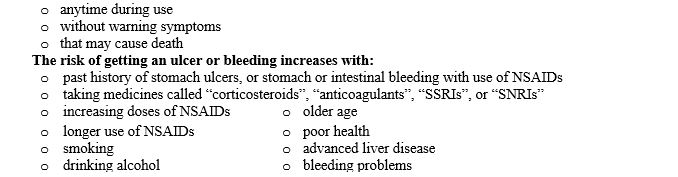
This text provides important information about the potential risks associated with the use of NSAIDs (Non-Steroidal Anti-Inflammatory Drugs). It highlights factors that may increase the risk of ulcers or bleeding when using these medications, such as a history of stomach ulcers, taking certain types of medications, increasing NSAID doses, smoking, alcohol consumption, older age, poor health, liver disease, and bleeding problems. It emphasizes that these risks can occur at any time during NSAID use and without warning symptoms, potentially leading to serious consequences such as death.*
FDA Label Image

Mg3 (Mg3)

FDA Label Image

Mg4 (Mg4)

Mg4 (Mg4)
This text describes symptoms related to health concerns such as shortness of breath, trouble breathing, slurred speech, chest pain, swelling of the face or throat, and weakness in one side of the body. These symptoms may indicate a serious medical condition and require immediate attention.*
FDA Label Image

Mg5 (Mg5)

Mg5 (Mg5)
This text provides a list of symptoms to watch out for, such as nausea, fatigue, diarrhea, itching, yellow skin/eyes, stomach pain, flu-like symptoms, vomiting blood, blood in bowel movement, unusual weight gain, skin rash with fever, and swelling in arms, legs, hands, and feet. These symptoms may indicate various health issues and should be monitored closely.*
FDA Label Image

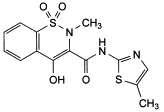
Structural (Structural Formula)

FDA Label Image

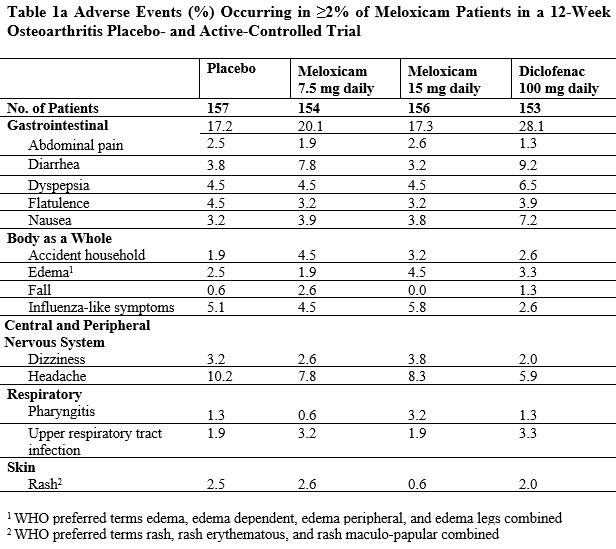
Table 1a (Table 1a)

Table 1a (Table 1a)
This is a table showing adverse events (%) occurring in at least 22% of Meloxicam patients compared to placebo and diclofenac in a 12-week placebo- and active-controlled trial for osteoarthritis. The adverse events include gastrointestinal issues, abdominal pain, diarrhea, household accidents, edema, falls, influenza-like symptoms, dizziness, headaches, respiratory problems, and skin rashes. The table provides data on the number of patients experiencing each adverse event in the different treatment groups.*
FDA Label Image

Table 1b (Table 1b)

Table 1b (Table 1b)
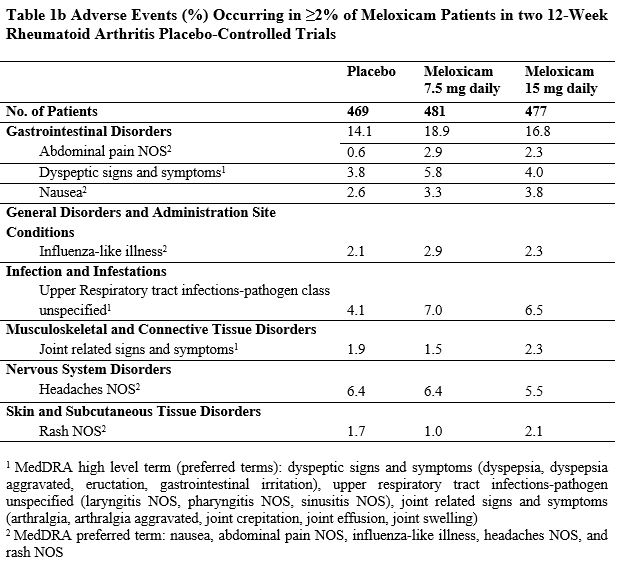
Table 1b provides information on the adverse events (%) occurring in more than 2% of Meloxicam patients in two 12-week Rheumatoid Arthritis Placebo-Controlled Trials. The table includes data on the number of patients, as well as different adverse events such as Gastrointestinal Disorders, General Disorders and Administration Site Conditions, Infection and Infestations, Musculoskeletal and Connective Tissue Disorders, Nervous System Disorders, and Skin and Subcutaneous issues. Specific adverse events listed include abdominal pain, dyspeptic signs and symptoms, nausea, influenza-like illness, headaches, and rash, with corresponding percentages for placebo, Meloxicam 7.5mg daily, and Meloxicam 15 mg daily. Additionally, the table provides MedDRA high level terms and preferred terms for certain adverse events such as dyspeptic signs and symptoms, upper respiratory tract infections, joint-related signs and symptoms, nausea, abdominal pain, influenza-like illness, headaches, and rash.*
FDA Label Image

Table 2.1 (Table 2.1)

Table 2.1 (Table 2.1)
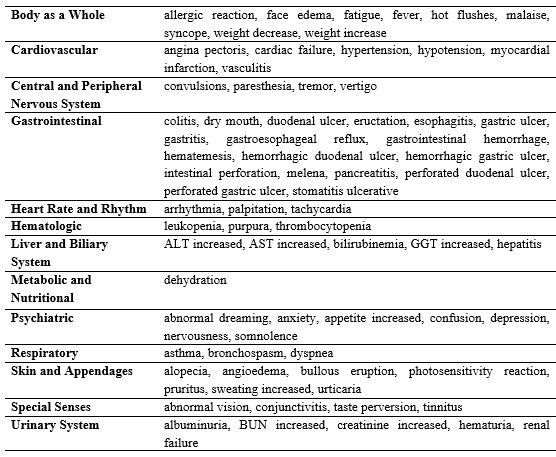
This text provides a comprehensive list of potential side effects and symptoms that may occur in different body systems when utilizing a certain medication or treatment. It covers various areas such as the body as a whole, cardiovascular system, central and peripheral nervous system, gastrointestinal system, heart rate and rhythm, hematologic system, liver and biliary system, metabolic and hydration system, nutritional system, psychiatric system, respiratory system, skin and appendages, special senses, and urinary system. The list includes symptoms like allergic reactions, fatigue, weight changes, cardiac issues, gastrointestinal problems, psychiatric symptoms, respiratory issues, skin reactions, abnormal vision, and urinary problems. It emphasizes the importance of monitoring and recognizing these symptoms during treatment for appropriate management.*
FDA Label Image

Table 2 (Table 2)

Table 2 (Table 2)
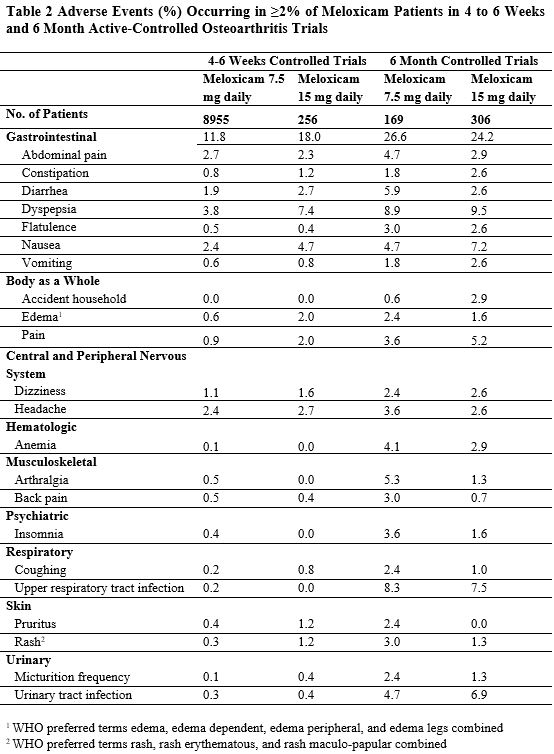
The provided text includes data on adverse events occurring in Meloxicam patients in 4 to 6 weeks and 6-month active-controlled osteoarthritis trials. The table lists various side effects reported, including gastrointestinal issues, abdominal pain, constipation, diarrhea, dyspepsia, flatulence, nausea, vomiting, body aches, household accidents, edema, skin issues, respiratory problems, psychological effects, and urinary issues. The text mentions the WHO preferred terms for the combined reporting of edema and rash-related terms in the study.*
FDA Label Image

Table 3.1 (Table 3.1)

Table 3.1 (Table 3.1)
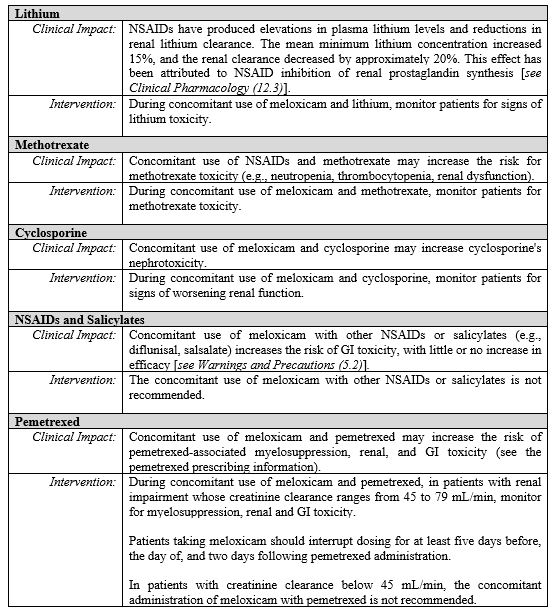
This text provides valuable information about potential drug interactions involving the medication meloxicam. It highlights the clinical impacts and interventions when meloxicam is used concomitantly with lithium, methotrexate, cyclosporine, NSAIDs, salicylates, and pemetrexed. The text emphasizes monitoring patients for signs of toxicity and adjusting dosages or avoiding concurrent use to prevent harmful effects. It is crucial for healthcare professionals to be aware of these interactions to ensure the safe and effective use of medications in patients.*
FDA Label Image

Table 3 (Table 3)

Table 3 (Table 3)
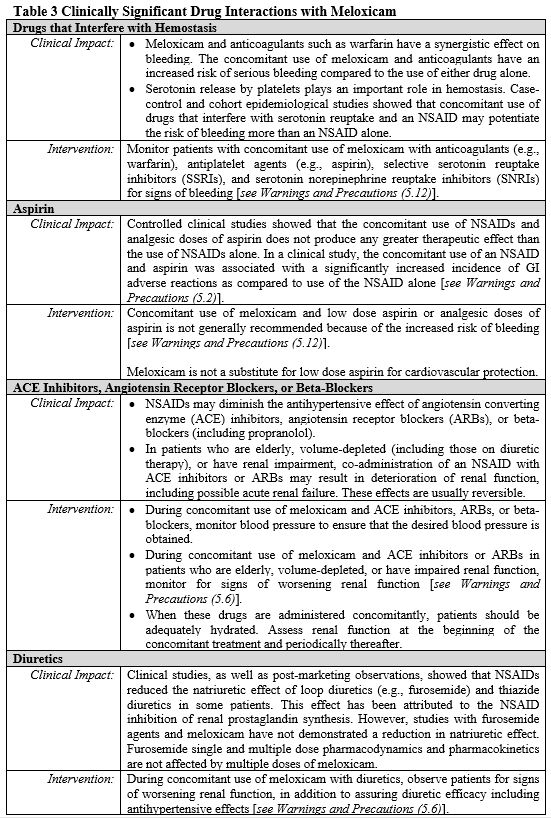
This text provides information on clinically significant drug interactions with meloxicam. It discusses the impact of drugs that interfere with hemostasis when used concurrently with meloxicam, including anticoagulants and NSAIDs. The text also highlights the potential risks and interventions for managing bleeding when using meloxicam with certain medications like aspirin. Additionally, it touches on interactions with ACE inhibitors, angiotensin receptor blockers, beta-blockers, and diuretics, emphasizing the importance of monitoring blood pressure and renal function during concurrent use. This information serves as a valuable guide for healthcare professionals to ensure safe and effective medication management when prescribing meloxicam in combination with other drugs.*
FDA Label Image

Image Description (Table 4)

Image Description (Table 4)
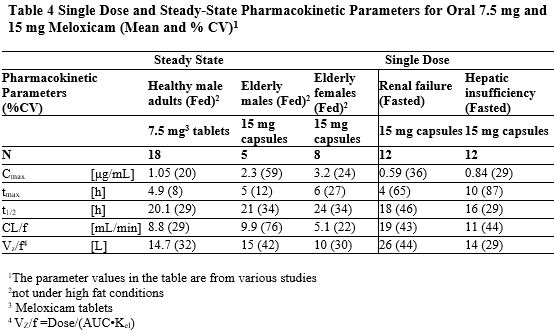
This information provides a summary of the single dose and steady-state pharmacokinetic parameters for oral 7.5 mg and 15 mg Meloxicam, showing mean and % CV values. The table includes data from different studies not conducted under high-fat conditions. It also mentions Meloxicam tablets and a pharmacokinetic formula related to dose and AUC.*

* These product label images have been analyzed using experimental machine learning. Please verify findings with the primary label text.