Tofacitinib Tablet, Film Coated
Product Images NDC 72865-367

12 FDA label images from Xlcare Pharmaceuticals Inc · Packaging, Regulatory Labels, and Product Appearance

Product Visual Gallery

This gallery contains 12 technical images submitted to the FDA as part of the official labeling for Tofacitinib (NDC 72865-367). Unlike standard consumer photos, these assets often include clinical data figures, molecular chemical structures, and official manufacturer packaging layouts.

As provided by Xlcare Pharmaceuticals Inc, these visuals offer a comprehensive scientific overview of the product's physical and chemical identity, aiding pharmacists and researchers in product verification and study.

FDA Label Image

121 (Tofacitinib Structure)
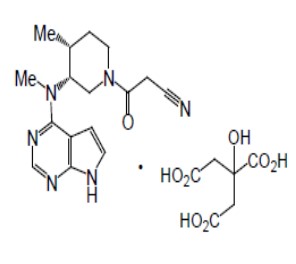
121 (Tofacitinib Structure)
Chemical structure diagram of the active ingredient Tofacitinib along with its associated chemical form depicted with molecular bonds and chemical groups.*
FDA Label Image

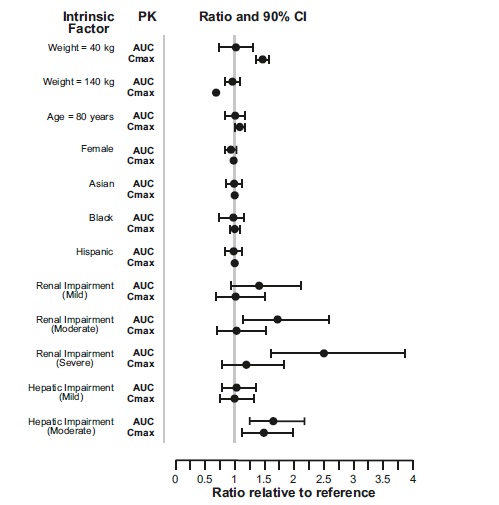
787 (Tofacitinib Figure 1)

787 (Tofacitinib Figure 1)
A dot plot graph illustrating the pharmacokinetic ratio and 90% confidence intervals of AUC and Cmax for various intrinsic factors related to Tofacitinib. Factors include weight (40 kg, 140 kg), age (80 years), sex (female), race (Asian, Black, Hispanic), and degrees of renal and hepatic impairment (mild, moderate, severe). The x-axis shows the ratio relative to reference from 0 to 4, indicating variability in drug exposure.*
FDA Label Image

758 (Tofacitinib Figure 2)

758 (Tofacitinib Figure 2)
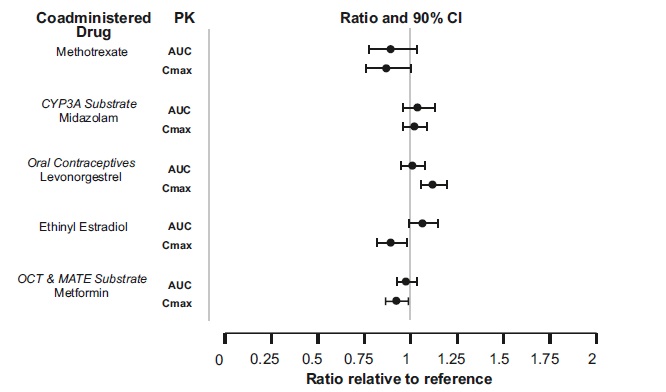
A comparative plot showing the pharmacokinetic ratios (AUC and Cmax) with 90% confidence intervals for various coadministered drugs relative to reference values. The drugs listed include Methotrexate, Midazolam (CYP3A substrate), Levonorgestrel (oral contraceptive), Ethinyl Estradiol, and Metformin (OCT & MATE substrate). The x-axis represents the ratio relative to reference on a scale from 0 to 2.*
FDA Label Image

222 (Tofacitinib Figure 3)

222 (Tofacitinib Figure 3)
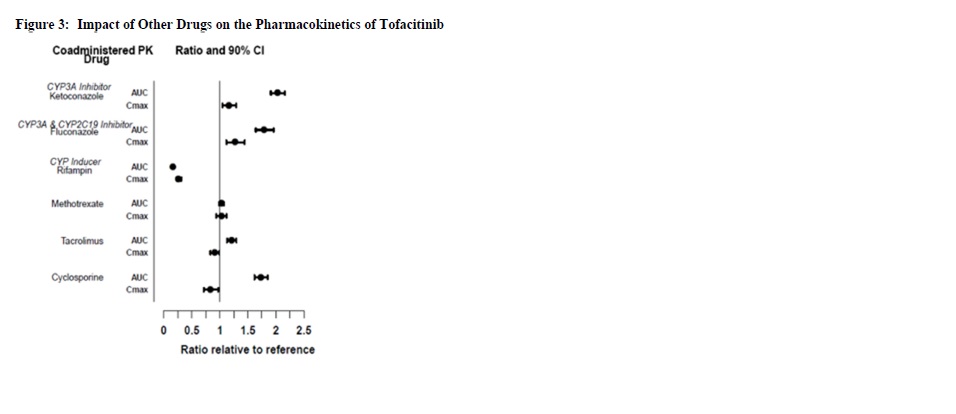
A scatter plot titled 'Impact of Other Drugs on the Pharmacokinetics of Tofacitinib' showing the ratio and 90% confidence interval for various coadministered drugs. The x-axis represents the ratio relative to reference, ranging from 0 to 2.5, while the y-axis lists drugs including Ketoconazole, Fluconazole, Rifampin, Methotrexate, Tacrolimus, and Cyclosporine. The plot shows pharmacokinetic parameters AUC and Cmax for each drug.*
FDA Label Image

989 (Tofacitinib Figure 4)

989 (Tofacitinib Figure 4)
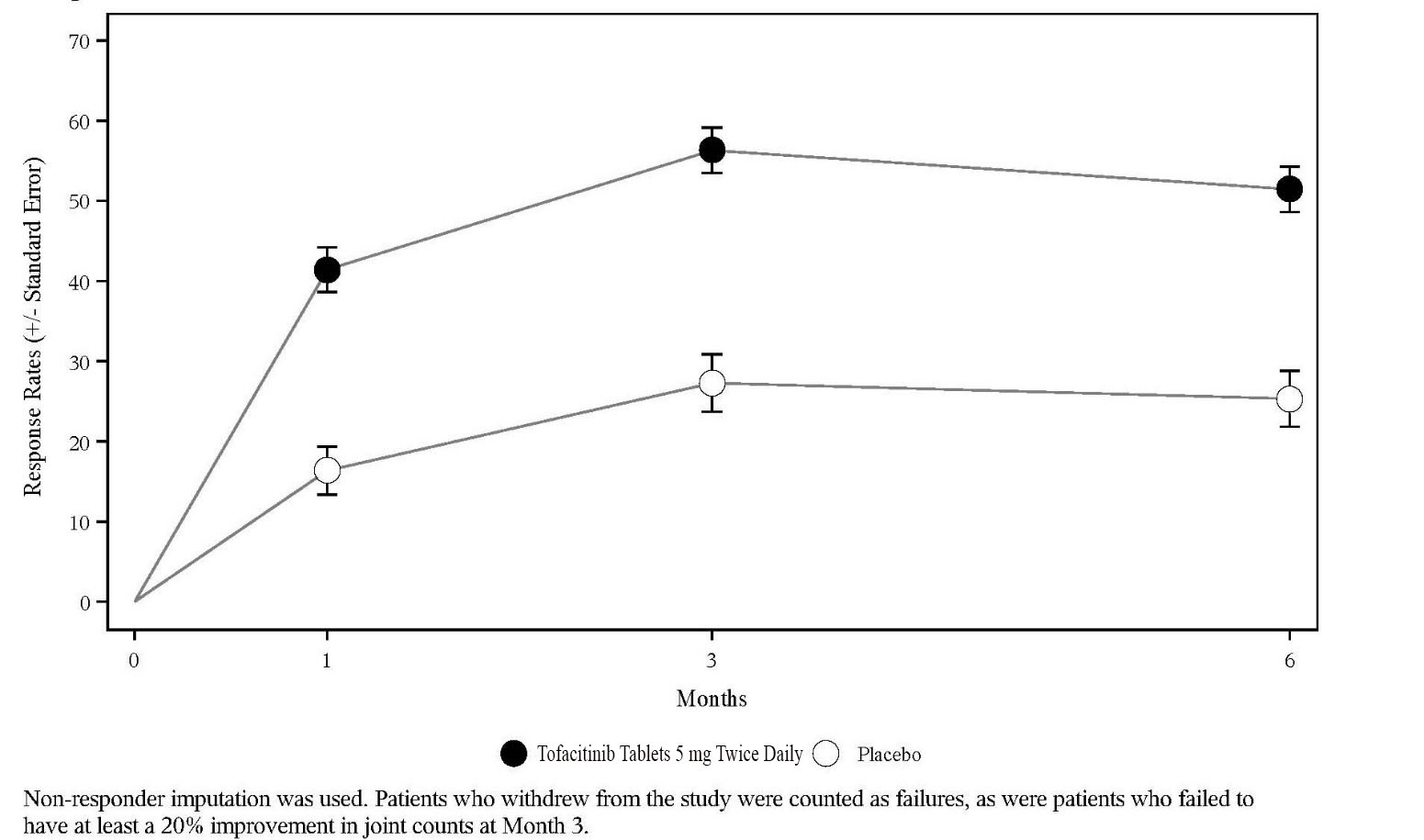
Line graph illustrating response rates over 0, 1, 3, and 6 months comparing Tofacitinib Tablets 5 mg twice daily (black circles) versus placebo (white circles), with error bars showing standard error. The graph includes a note on non-responder imputation and criteria for failures in joint count improvement at Month 3.*
FDA Label Image

985 (Tofacitinib Figure 5)

985 (Tofacitinib Figure 5)
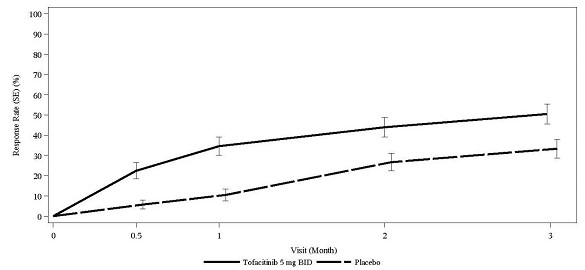
A line graph comparing response rates (%) over a 3-month period between two groups: Tofacitinib 5 mg BID and placebo. The x-axis represents visit months (0, 0.5, 1, 2, 3), and the y-axis shows response rate percentages with error bars indicating standard error.*
FDA Label Image

454 (Tofacitinib Figure 6)

454 (Tofacitinib Figure 6)
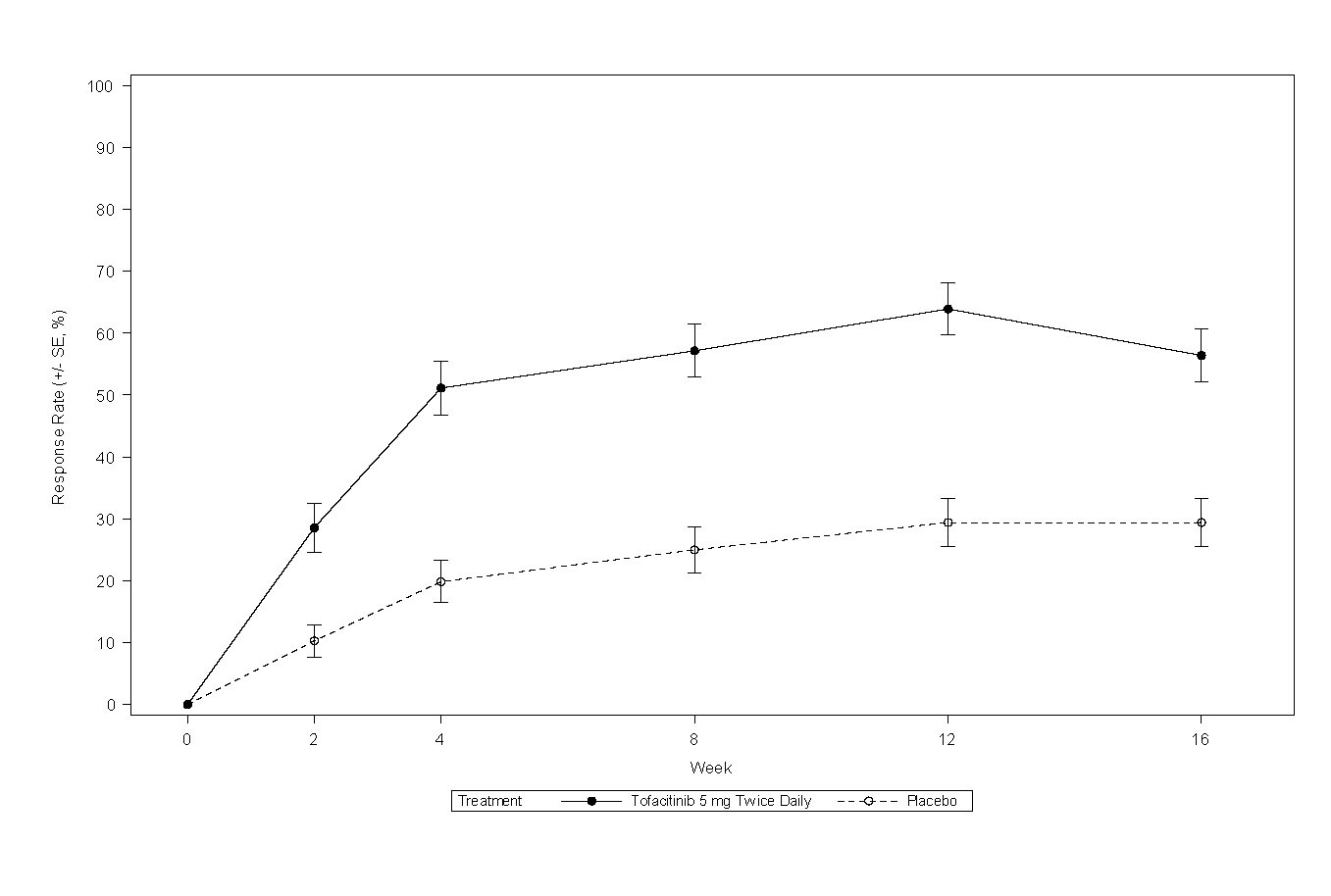
A line graph comparing the response rate over weeks between Tofacitinib 5 mg twice daily and placebo. The x-axis represents weeks (0 to 16), and the y-axis represents response rate percentage (0 to 100%). The Tofacitinib treatment shows a higher response rate than placebo throughout the time period, with data points connected by solid lines and placebo by dashed lines with markers. Error bars indicate variability around the mean response rates.*
FDA Label Image

878 (Tofacitinib Figure 7)

878 (Tofacitinib Figure 7)
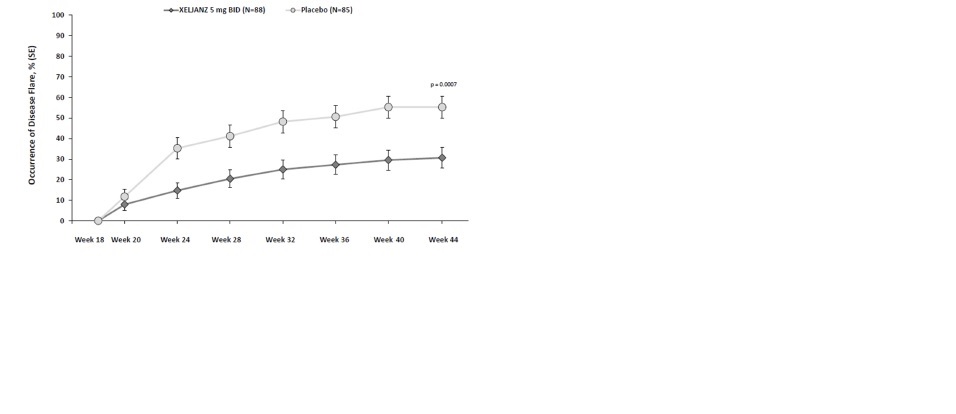
A line graph comparing the occurrence of disease flare percentages over time (weeks 18 to 44) between XELJANZ 5 mg BID and placebo groups. The XELJANZ group shows a consistently lower percentage of disease flares compared to placebo, with statistical significance indicated at week 44 (p = 0.0007). Error bars represent standard error.*
FDA Label Image

659 (Tofacitinib 5mg 60s)

659 (Tofacitinib 5mg 60s)
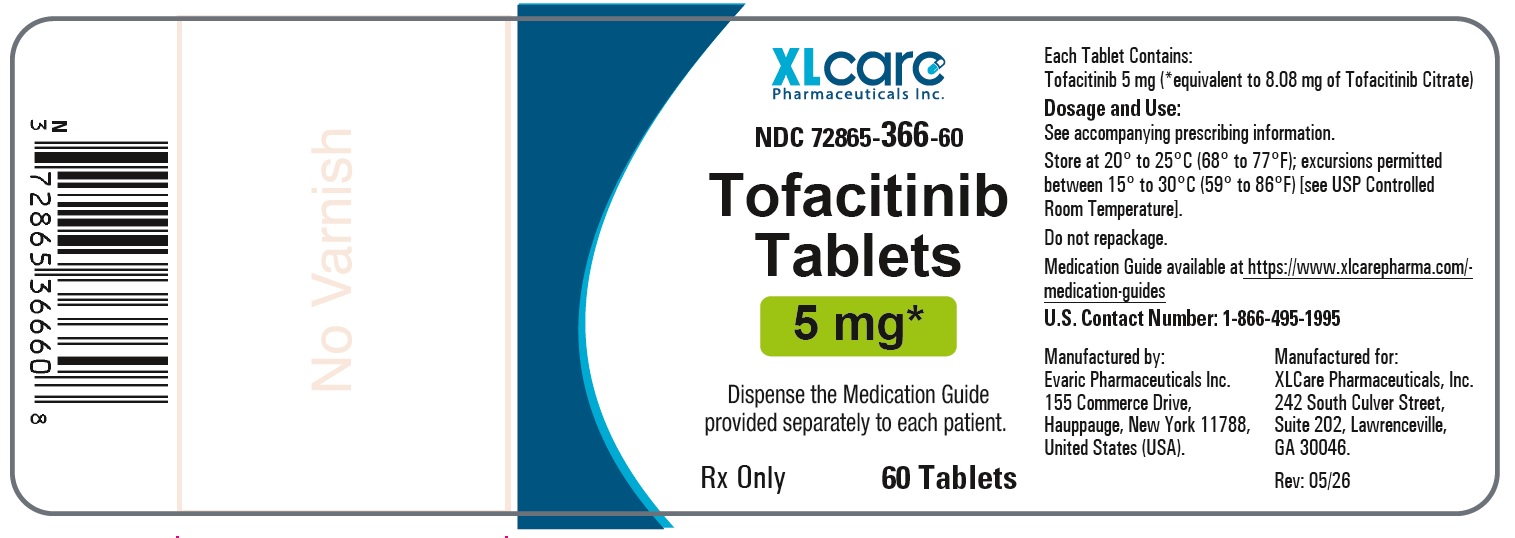
Label for Tofacitinib Tablets 5 mg by XLCare Pharmaceuticals Inc. The film-coated tablets are supplied in a package containing 60 tablets. The label includes a barcode, dosage strength prominently displayed, storage instructions, contact information, manufacture details from Evaric Pharmaceuticals Inc., and a note to dispense the medication guide separately to patients.*
FDA Label Image

878 (Tofacitinib 5mg 120s)

878 (Tofacitinib 5mg 120s)
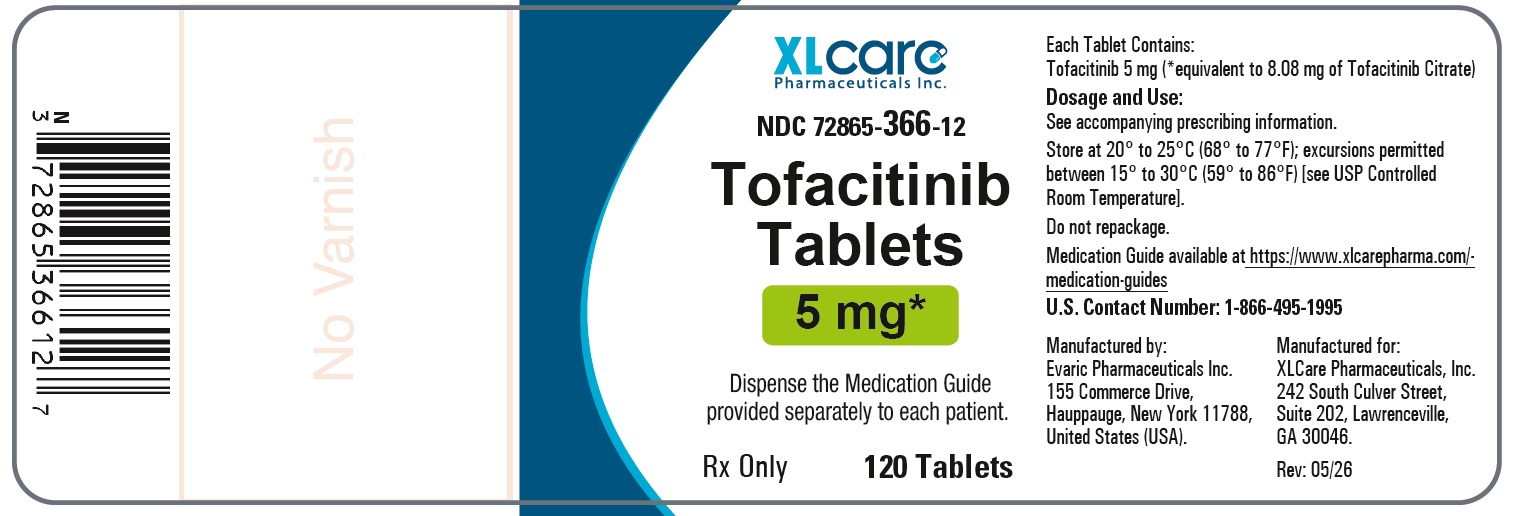
Tofacitinib Tablets 5 mg film-coated oral tablets label from XLCare Pharmaceuticals Inc. The label shows the NDC 72865-366-12 with a package size of 120 tablets. It includes instructions to dispense the medication guide separately and storage information. Manufacturer and contact details are provided for Evaric Pharmaceuticals Inc. and XLCare Pharmaceuticals Inc.*
FDA Label Image

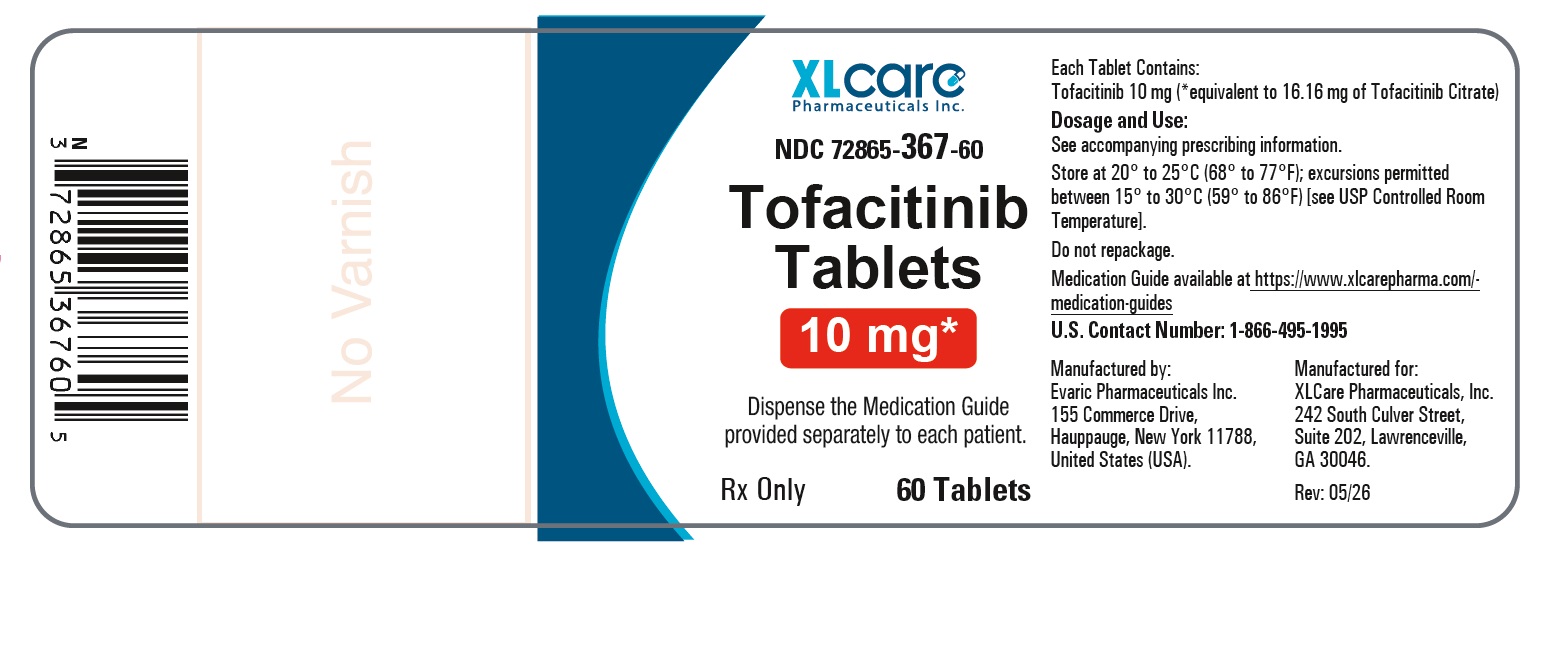
654 (Tofacitinib 10mg 60s)

654 (Tofacitinib 10mg 60s)
Tofacitinib Tablets 10 mg film-coated oral tablets packaging label from XLCare Pharmaceuticals Inc. The label indicates a package containing 60 tablets. It includes storage instructions, manufacturer and distributor information, and a medication guide reference with a U.S. contact number. The label has a barcode and notes that each tablet contains 10 mg of Tofacitinib.*
FDA Label Image

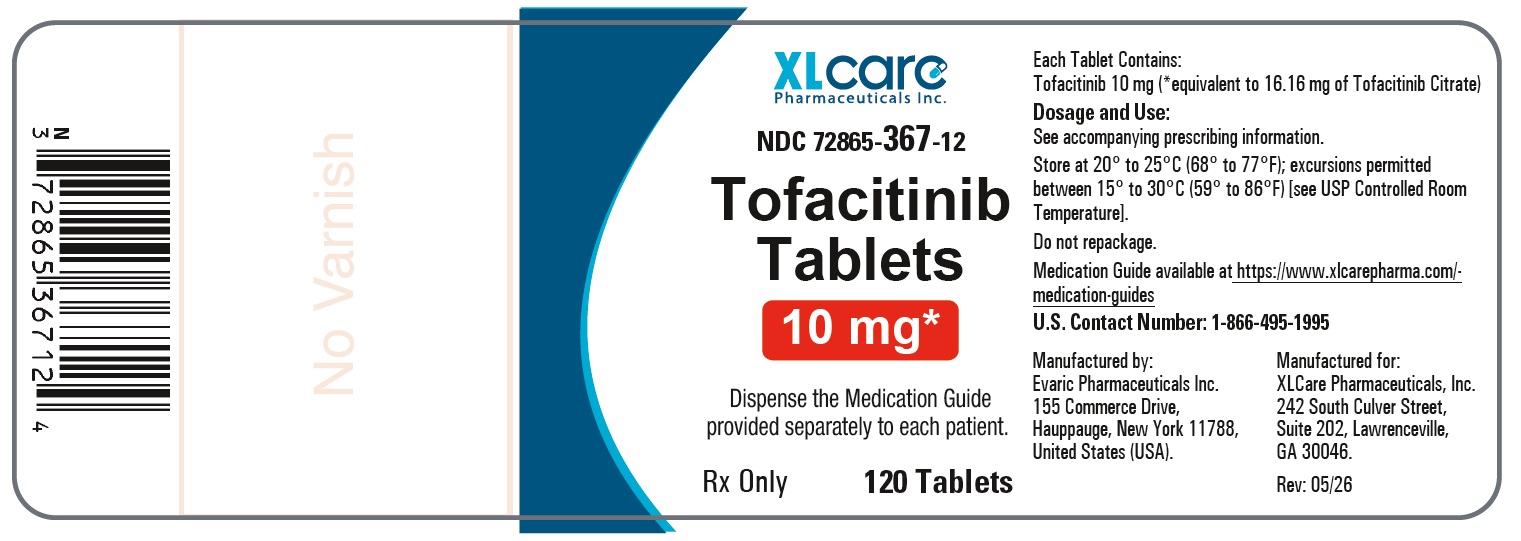
365 (Tofacitinib 10mg 120s)

365 (Tofacitinib 10mg 120s)
Tofacitinib Tablets 10 mg film-coated tablet label by XLcare Pharmaceuticals Inc. The label includes the NDC 72865-367-12 and states a bottle count of 120 tablets. It provides storage instructions, manufacturer and distributor contact information, and directs users to a Medication Guide online. The label emphasizes Rx only status and dosage guidance is referenced to accompanying prescribing information.*

* About these descriptions: Image descriptions on this page are generated by automated AI analysis of the product label images from the manufacturer's FDA label submission (SPL). They are provided for reference only and may contain errors or omissions. Always rely on the printed label itself and the official FDA labeling, and consult a pharmacist or healthcare professional with any questions about this product.