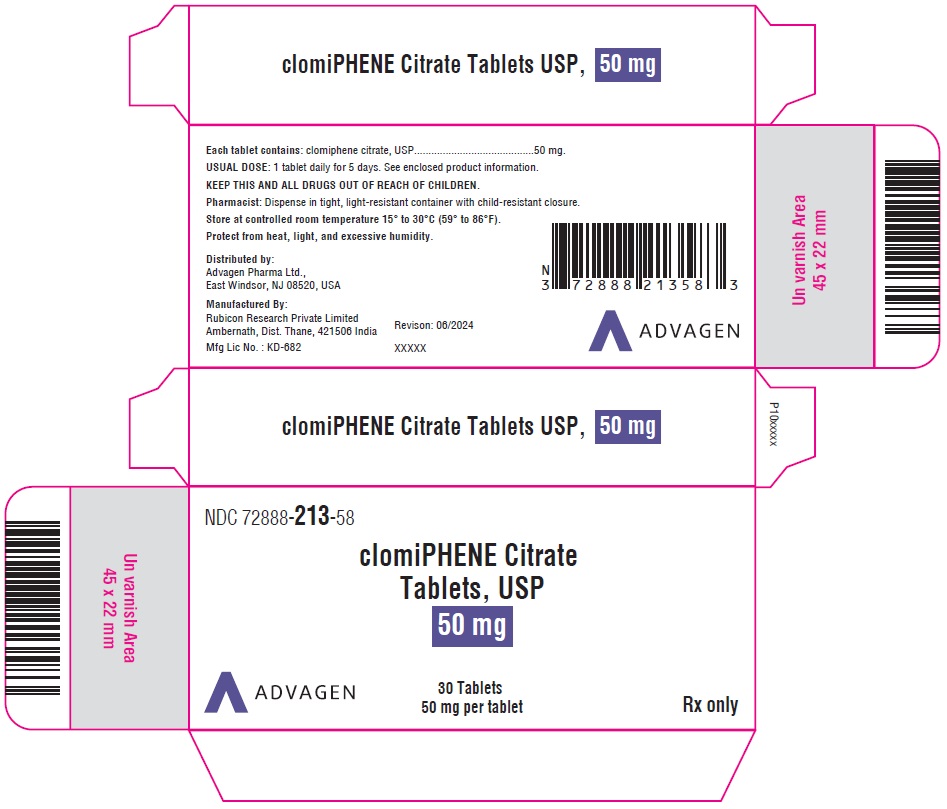
General
Careful attention should be given to the selection of candidates for clomiphene citrate therapy. Pelvic examination is necessary prior to clomiphene citrate treatment and before each subsequent course (see
CONTRAINDICATIONSand
WARNINGS).
Information for Patients
The purpose and risks of clomiphene citrate therapy should be presented to the patient before starting treatment. It should be emphasized that the goal of clomiphene citrate therapy is ovulation for subsequent pregnancy. The physician should counsel the patient with special regard to the following potential risks:
Visual Symptoms:Advise that blurring or other visual symptoms occasionally may occur during or shortly after clomiphene citrate therapy. It should be made clear to the patient that, in some instances, visual disturbances may be prolonged, and possibly irreversible, especially with increased dosage or duration of therapy. Warn that visual symptoms may render such activities as driving a car or operating machinery more hazardous than usual, particularly under conditions of variable lighting (see
WARNINGS).
The patient should be instructed to inform the physician whenever any unusual visual symptoms occur. If the patient has any visual symptoms, treatment should be discontinued and complete ophthalmologic evaluation performed.
Abdominal/Pelvic Pain or Distention:Ovarian enlargement may occur during or shortly after therapy with clomiphene citrate. To minimize the risks associated with ovarian enlargement, the patient should be instructed to inform the physician of any abdominal or pelvic pain, weight gain, discomfort, or distention after taking clomiphene citrate (see
WARNINGS).
Metabolism Disorders:Cases of hypertriglyceridemia have been reported. Preexisting or family history of hyperlipidemia and use of higher than recommended dose and/or longer duration of treatment with clomiphene citrate are associated with a risk of hypertriglyceridemia. Periodic monitoring of plasma triglycerides is recommended in patients with preexisting or family history of hyperlipidemia (see
ADVERSE REACTIONS). Pretreatment screening of triglyceride levels is recommended in patients initiating clomiphene citrate therapy.
Gastrointestinal Disorders:Cases of pancreatitis have been reported.
Multiple Pregnancy:Inform the patient that there is an increased chance of multiple pregnancy, including bilateral tubal pregnancy and coexisting tubal and intrauterine pregnancy, when conception occurs in relation to clomiphene citrate therapy. The potential complications and hazards of multiple pregnancy should be explained.
Spontaneous Abortion and Congenital Anomalies:Inform the patient that the available data suggest no increase in the rates of spontaneous abortion (miscarriage) or congenital anomalies with maternal clomiphene citrate use compared to rates in the general population.
During clinical investigation, the experience from patients with known pregnancy outcome (
Table 1) shows a spontaneous abortion rate of 20.4% and stillbirth rate of 1.0%. (See
CLINICAL STUDIES). Among the birth anomalies spontaneously reported as individual cases since commercial availability of clomiphene citrate, the proportion of neural tube defects has been high among pregnancies associated with ovulation induced by clomiphene citrate, but this has not been supported by data from population-based studies.
Drug Interactions
Drug interactions with clomiphene citrate have not been documented.
Carcinogenesis, Mutagenesis, Impairment of Fertility
Long-term toxicity studies in animals have not been performed to evaluate the carcinogenic or mutagenic potential of clomiphene citrate.
Oral administration of clomiphene citrate to male rats at doses of 0.3 or 1 mg/kg/day caused decreased fertility, while higher doses caused temporary infertility. Oral doses of 0.1 mg/kg/day in female rats temporarily interrupted the normal cyclic vaginal smear pattern and prevented conception. Doses of 0.3 mg/kg/day slightly reduced the number of ovulated ova and corpora lutea, while 3 mg/kg/day inhibited ovulation.
Pregnancy
Fetal Risk Summary
Clomiphene citrate use in pregnant women is contraindicated, as clomiphene citrate treatment does not offer benefit in this population.
Available human data do not suggest an increased risk for congenital anomalies above the background population risk. However, animal reproductive toxicology studies showed increased embryo-fetal loss and structural malformations in offspring. If this drug is used during pregnancy, or if the patient becomes pregnant while taking this drug, the patient should be apprised of the potential risks to the fetus.
Clinical Considerations
To avoid inadvertent clomiphene citrate administration during early pregnancy, appropriate tests should be utilized during each treatment cycle to determine whether ovulation and/or pregnancy occurs. Patients should be evaluated carefully to exclude ovarian enlargement or ovarian cyst formation between each treatment cycle. The next course of clomiphene citrate therapy should be delayed until these conditions have been excluded.
Human Data
The available human data from epidemiologic studies do not show any apparent cause and effect relationship between clomiphene citrate periconceptual exposure and an increased risk of overall birth defects, or any specific anomaly. However, due to the small number of cases of congenital anomalies occurring in clomiphene citrate treated women, these epidemiologic studies were only able to rule out large differences in risk. The studies did not consider factors associated with female subfertility and were unable to adjust for other important confounders. In addition, available data do not support an increased rate of spontaneous abortion among subfertile women treated with clomiphene citrate for ovulation induction.
Animal Data
Oral administration of clomiphene citrate to pregnant rats during organogenesis at doses of 1 to 2 mg/kg/day resulted in hydramnion and weak, edematous fetuses with wavy ribs and other temporary bone changes. Doses of 8 mg/kg/day or more also caused increased resorptions and dead fetuses, dystocia, and delayed parturition, and 40 mg/kg/day resulted in increased maternal mortality. Single doses of 50 mg/kg caused fetal cataracts, while 200 mg/kg caused cleft palate. Following injection of clomiphene citrate 2 mg/kg to mice and rats during pregnancy, the offspring exhibited metaplastic changes of the reproductive tract. Newborn mice and rats injected during the first few days of life also developed metaplastic changes in uterine and vaginal mucosa, as well as premature vaginal opening and anovulatory ovaries. These findings are similar to the abnormal reproductive behavior and sterility described with other estrogens and antiestrogens.
In rabbits, some temporary bone alterations were seen in fetuses from dams given oral doses of 20 or 40 mg/kg/day during pregnancy, but not following 8 mg/kg/day. No permanent malformations were observed in those studies. Also, rhesus monkeys given oral doses of 1.5 to 4.5 mg/kg/day for various periods during pregnancy did not have any abnormal offspring.
Nursing Mothers
It is not known whether clomiphene citrate is excreted in human milk. Because many drugs are excreted in human milk, caution should be exercised if clomiphene citrate is administered to a nursing woman. In some patients, clomiphene citrate may reduce lactation.
Ovarian Cancer
Prolonged use of clomiphene citrate tablets may increase the risk of a borderline or invasive ovarian tumor (see
ADVERSE REACTIONS).