Mineral Sunstick
Product Images NDC 73088-108

View Photos of Packaging, Regulatory Labels, and Product Appearance

Product Visual Gallery

This gallery contains 2 technical images submitted to the FDA as part of the official labeling for Mineral Sunstick (NDC 73088-108). Unlike standard consumer photos, these assets often include clinical data figures, molecular chemical structures, and official manufacturer packaging layouts.

As provided by Tubby Todd, these visuals offer a comprehensive scientific overview of the product's physical and chemical identity, aiding pharmacists and researchers in product verification and study.

FDA Label Image

Mineral Sunstick Outer Carton (Mineral Sunstick Outer Carton)
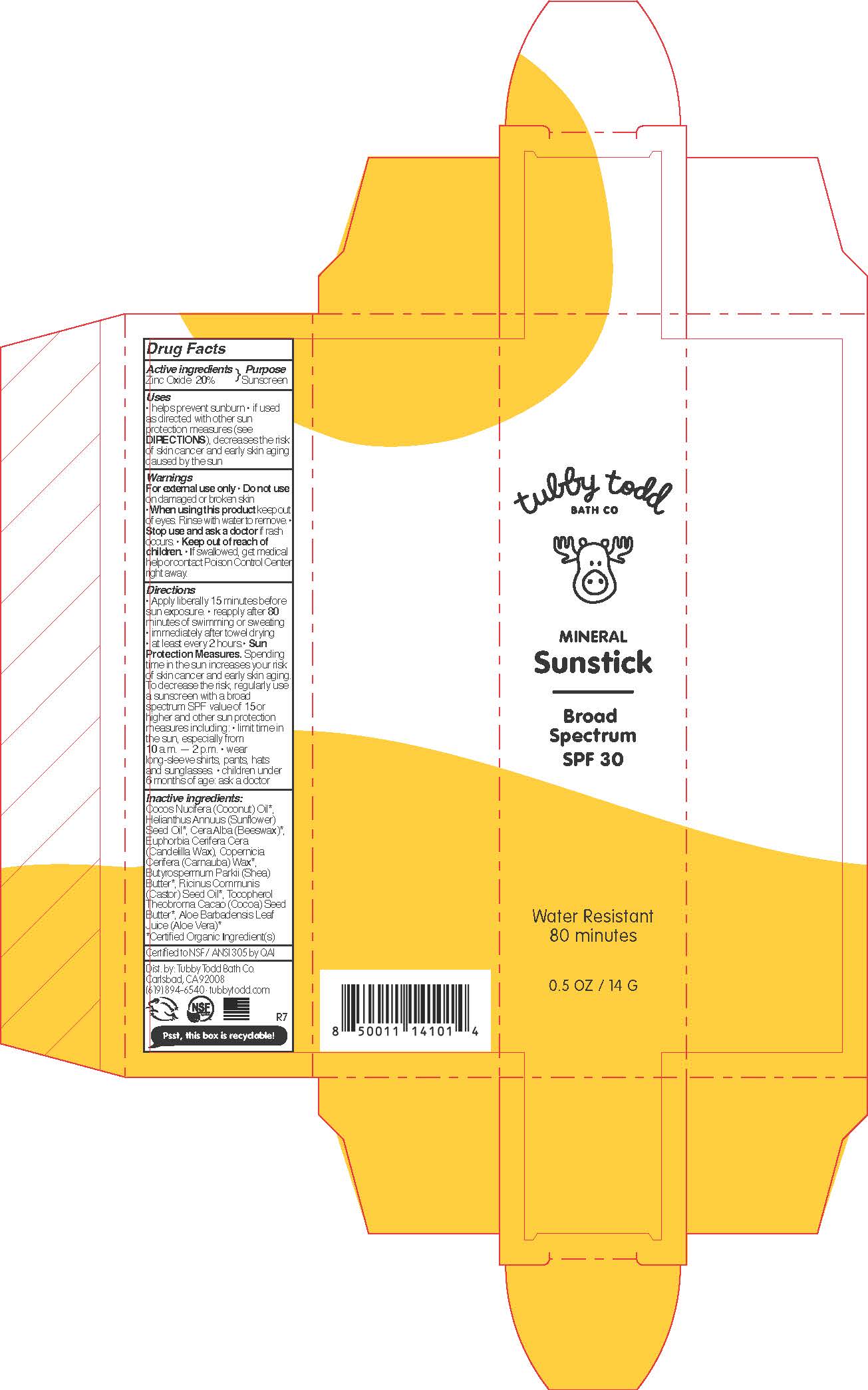
Mineral Sunstick Outer Carton (Mineral Sunstick Outer Carton)
This is a description of a mineral sunstick with broad spectrum SPF 30. The product is water-resistant for up to 80 minutes and contains active ingredients like Cocos Nucifera (Coconut) Oil and Helianthus Annuus (Sunflower) Seed Oil. The sunstick helps prevent sunburn and reduces the risk of skin cancer and early skin aging caused by the sun. It is recommended for external use only, and one should avoid using it on damaged or broken skin. The directions include instructions to apply liberally before sun exposure, reapply after swimming or sweating, and at least every 2 hours. It is certified NSF/ANSI 305 by QAI and produced by Tubby Todd Bath Co.*
FDA Label Image

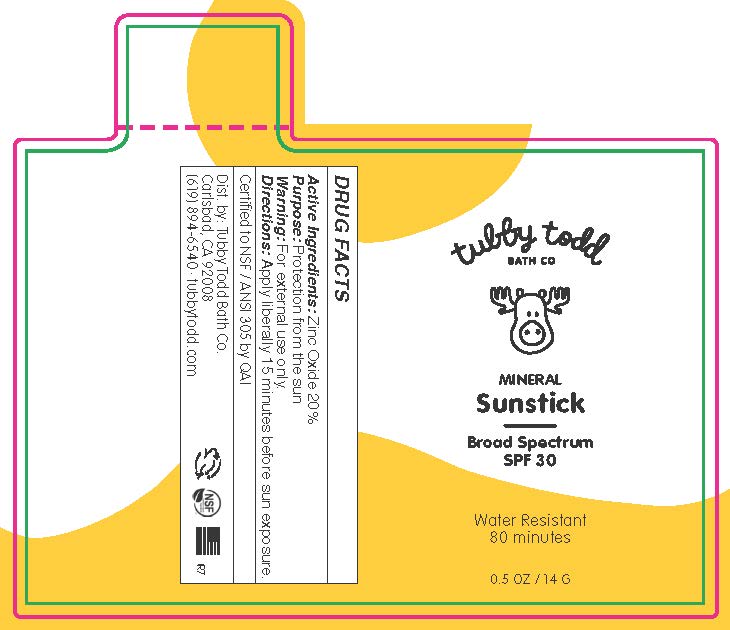
Mineral Sunstick Tube (Mineral Sunstick Tube)

Mineral Sunstick Tube (Mineral Sunstick Tube)
This is a description of a Mineral Sunstick with SPF 30 and water resistance for up to 80 minutes. The active ingredient is Zinc Oxide at 20%, providing protection from the sun for external use. The directions recommend applying the Sunstick at least 15 minutes before sun exposure. Additionally, it is certified to NSF/ANSI 305 standards by QAI. Distributed by Tubby Todd Bath Co. in Carlsbad, CA, the product can be purchased by contacting (619) 894-6540 or visiting tubbytodd.com.*

* These product label images have been analyzed using experimental machine learning. Please verify findings with the primary label text.