Tadalafil Tablet
Product Images NDC 73190-032

View Photos of Packaging, Regulatory Labels, and Product Appearance

Product Visual Gallery

This gallery contains 8 technical images submitted to the FDA as part of the official labeling for Tadalafil (NDC 73190-032). Unlike standard consumer photos, these assets often include clinical data figures, molecular chemical structures, and official manufacturer packaging layouts.

As provided by Avkare, these visuals offer a comprehensive scientific overview of the product's physical and chemical identity, aiding pharmacists and researchers in product verification and study.

FDA Label Image

Ab0f57c0-figure-01 (Ab0f57c0 Figure 01)
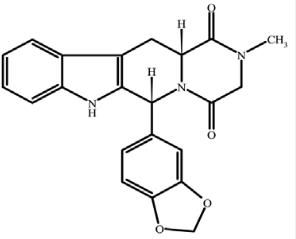
Ab0f57c0-figure-01 (Ab0f57c0 Figure 01)
Chemical structure of tadalafil, the active ingredient in the product TADALAFIL. The diagram shows the molecular arrangement and bonds characteristic of tadalafil's chemical composition.*
FDA Label Image

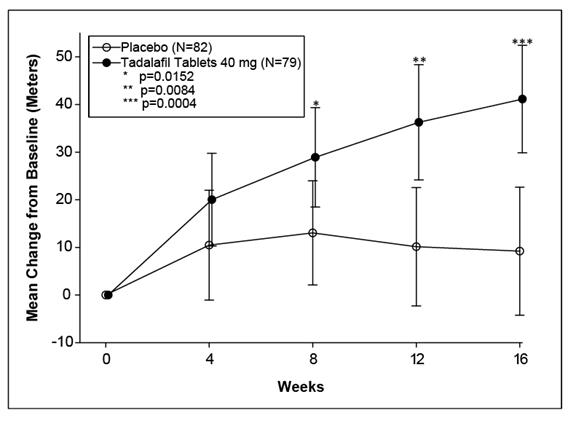
Ab0f57c0-figure-02 (Ab0f57c0 Figure 02)

Ab0f57c0-figure-02 (Ab0f57c0 Figure 02)
A line graph comparing mean change from baseline (meters) over 16 weeks between placebo and tadalafil tablets 40 mg groups. The graph plots time on the x-axis (0, 4, 8, 12, 16 weeks) and mean change from baseline on the y-axis, showing tadalafil with increasing improvement over time compared to placebo. Statistical significance is indicated for several time points.*
FDA Label Image

Ab0f57c0-figure-03 (Ab0f57c0 Figure 03)

Ab0f57c0-figure-03 (Ab0f57c0 Figure 03)
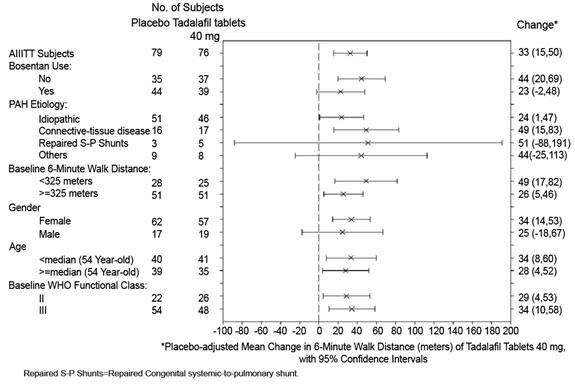
A horizontal bar chart illustrating the placebo-adjusted mean change in 6-minute walk distance (meters) for subjects treated with 40 mg Tadalafil tablets versus placebo. The chart compares various subgroups including Bosentan use, PAH etiology, baseline walk distance, gender, age, and WHO functional class, showing mean changes with 95% confidence intervals.*
FDA Label Image

Ab0f57c0-figure-04 (Ab0f57c0 Figure 04)

Ab0f57c0-figure-04 (Ab0f57c0 Figure 04)
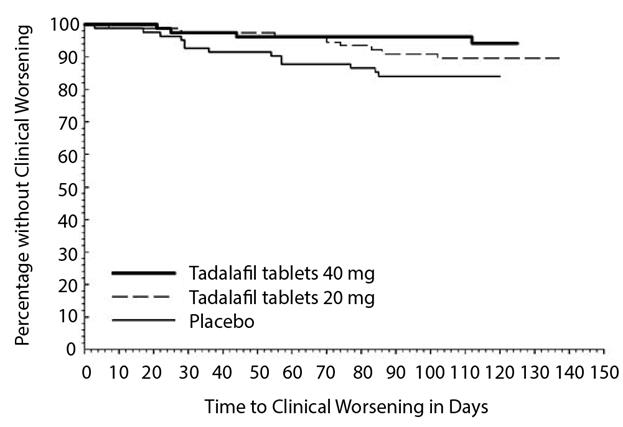
A line graph depicting the percentage without clinical worsening over time in days. The graph compares three groups: Tadalafil tablets 40 mg, Tadalafil tablets 20 mg, and placebo. The Y-axis represents the percentage without clinical worsening, and the X-axis shows time in days up to 150.*
FDA Label Image

20 mg 60 Tablets (Ab0f57c0 Figure 05)

20 mg 60 Tablets (Ab0f57c0 Figure 05)
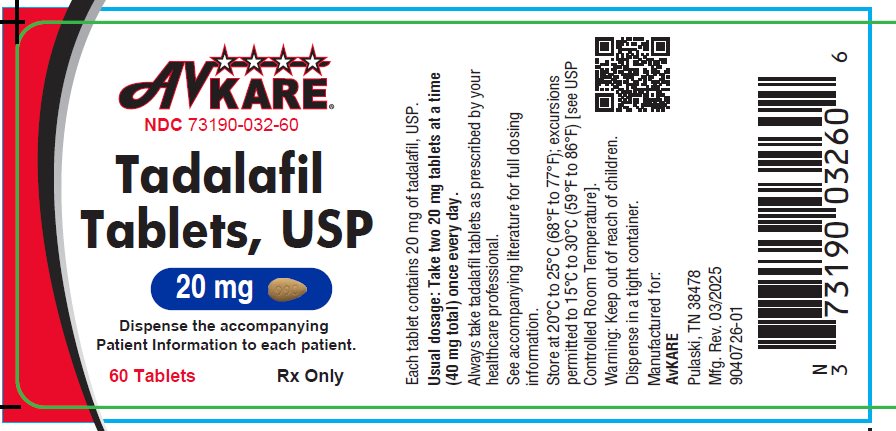
TADALAFIL 20 mg tablets label from AvKARE for oral use. The label shows the brand name, strength (20 mg), and an image of the tablet. It states the package contains 60 tablets, Rx only, with dosing instructions and storage information included. The NDC number 73190-032-60 is printed along with barcodes and manufacturer details.*
FDA Label Image

Figure 1 (Image 01)

Figure 1 (Image 01)
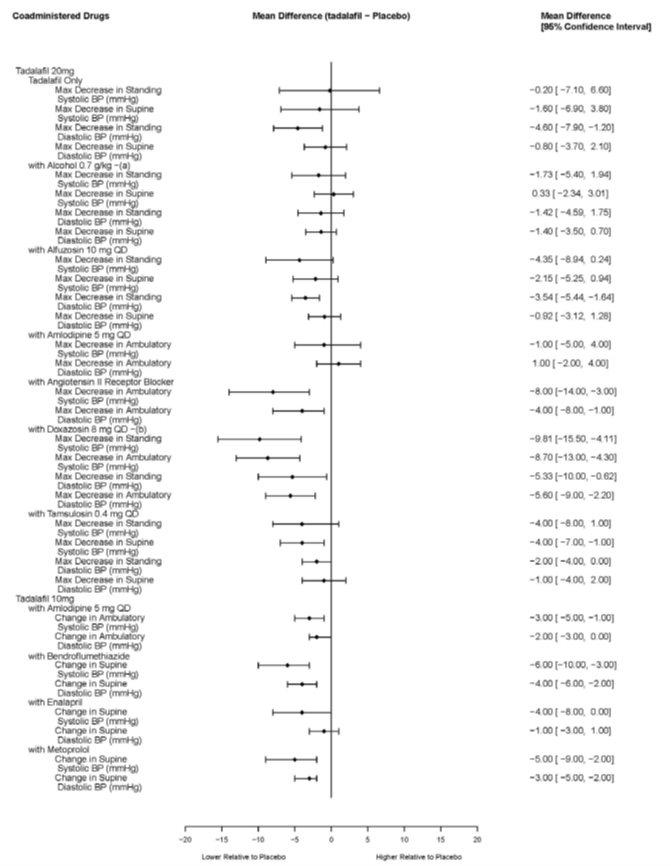
The chart depicts mean differences with 95% confidence intervals comparing tadalafil versus placebo on blood pressure metrics. It includes various coadministered drugs listed on the vertical axis and measures changes in systolic and diastolic blood pressure in standing, supine, and ambulatory positions. A horizontal axis shows the scale of differences ranging from lower to higher relative to placebo.*
FDA Label Image

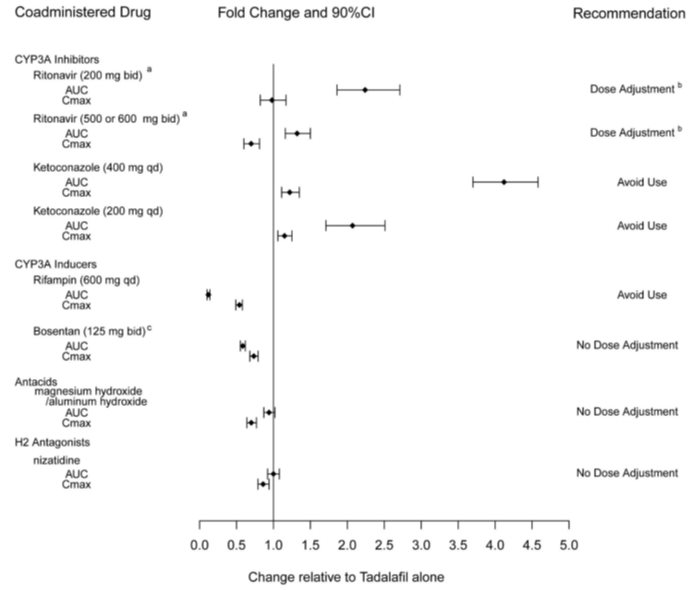
Figure 2 (Image 02)

Figure 2 (Image 02)
A dot plot chart comparing fold changes with 90% confidence intervals in pharmacokinetic parameters AUC and Cmax for Tadalafil when coadministered with various drugs. The x-axis shows change relative to Tadalafil alone, ranging from 0 to 5. Drugs listed include CYP3A inhibitors (Ritonavir, Ketoconazole), CYP3A inducers (Rifampin, Bosentan), antacids, and H2 antagonists, with corresponding recommendations on dose adjustment or avoidance.*
FDA Label Image

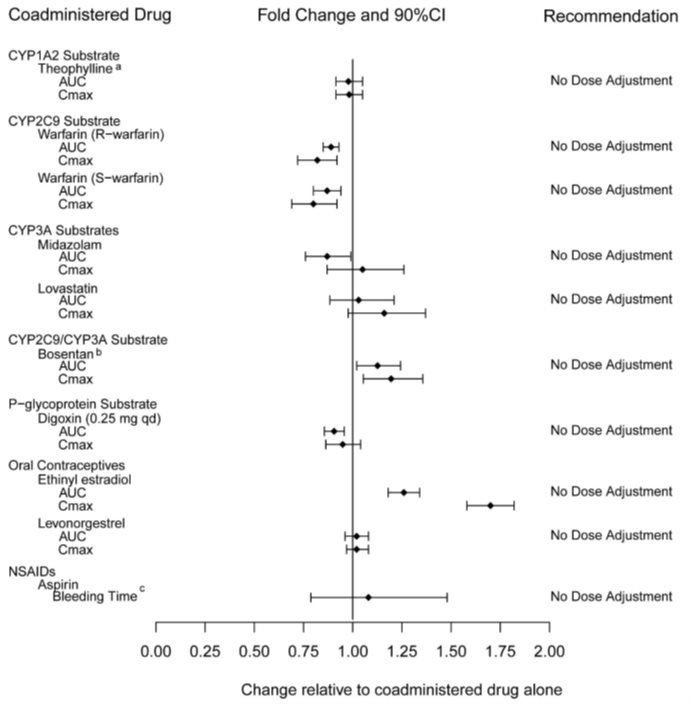
Figure3 (Image 03)

Figure3 (Image 03)
A chart showing fold change and 90% confidence intervals for various coadministered drugs with tadalafil, including substrates of CYP1A2, CYP2C9, CYP3A, P-glycoprotein, oral contraceptives, and NSAIDs. The x-axis represents change relative to the coadministered drug alone. The chart includes recommendations, all indicating no dose adjustment needed.*

* About these descriptions: Image descriptions on this page are generated by automated AI analysis of the product label images from the manufacturer's FDA label submission (SPL). They are provided for reference only and may contain errors or omissions. Always rely on the printed label itself and the official FDA labeling, and consult a pharmacist or healthcare professional with any questions about this product.