Other
Rx Only
Oral Anticoagulants
Thyroid hormones appear to increase catabolism of vitamin K-dependent clotting factors. If oral anticoagulants are also being given, compensatory increases in clotting factor synthesis are impaired. Patients stabilized on oral anticoagulants who are found to require thyroid replacement therapy should be watched very closely when thyroid is started. If a patient is truly hypothyroid, it is likely that a reduction in anticoagulant dosage will be required. No special precautions appear to be necessary when oral anticoagulant therapy is begun in a patient already stabilized on maintenance thyroid replacement therapy.
Insulin or Oral Hypoglycemics
Initiating thyroid replacement therapy may cause increases in insulin or oral hypoglycemic requirements. The effects seen are poorly understood and depend upon a variety of factors such as dose and type of thyroid preparations and endocrine status of the patient. Patients receiving insulin or oral hypoglycemics should be closely watched during initiation of thyroid replacement therapy.
Cholestyramine or Colestipol
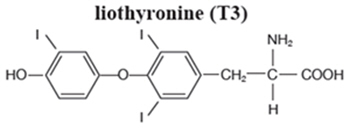
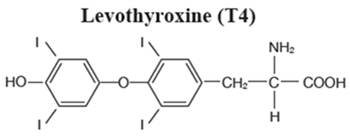
Cholestyramine or colestipol binds both levothyroxine (T4) and liothyronine (T3) in the intestine, thus impairing absorption of these thyroid hormones. In vitro studies indicate that the binding is not easily removed. Therefore four to five hours should elapse between administration of cholestyramine or colestipol and thyroid hormones.
Estrogen, Oral Contraceptives
Estrogens tend to increase serum thyroxine-binding globulin (TBg). In a patient with a nonfunctioning thyroid gland who is receiving thyroid replacement therapy, free levothyroxine (T4) may be decreased when estrogens are started thus increasing thyroid requirements. However, if the patient's thyroid gland has sufficient function, the decreased free levothyroxine (T4) will result in a compensatory increase in levothyroxine (T4) output by the thyroid. Therefore, patients without a functioning thyroid gland who are on thyroid replacement therapy may need to increase their thyroid dose if estrogens or estrogen-containing oral contraceptives are given.
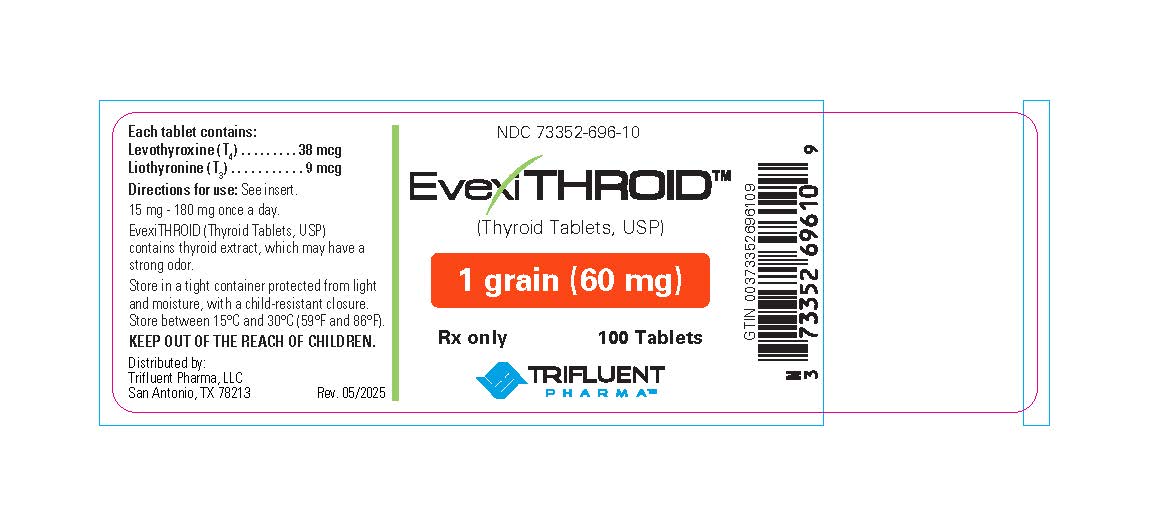
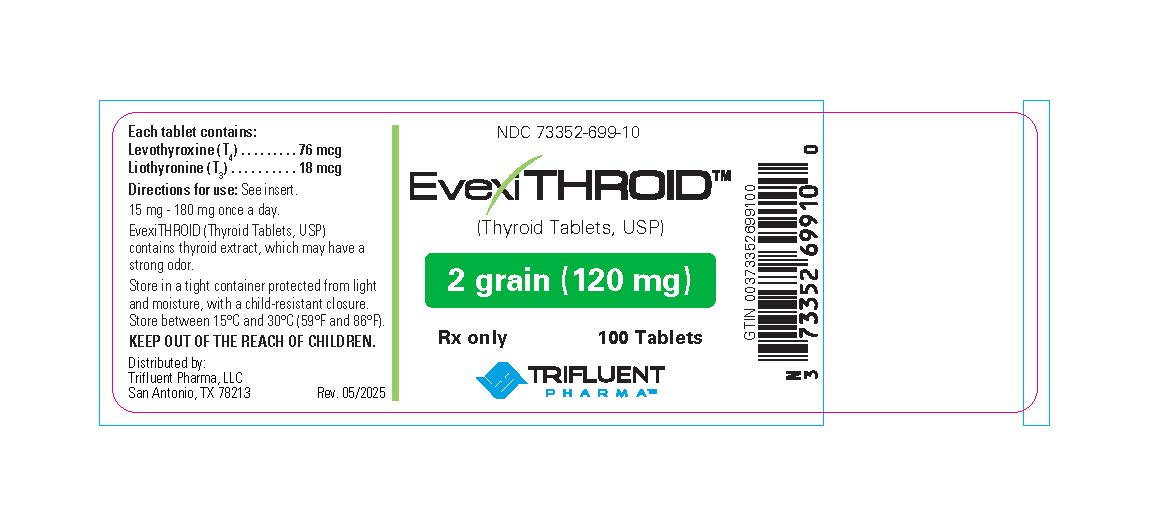
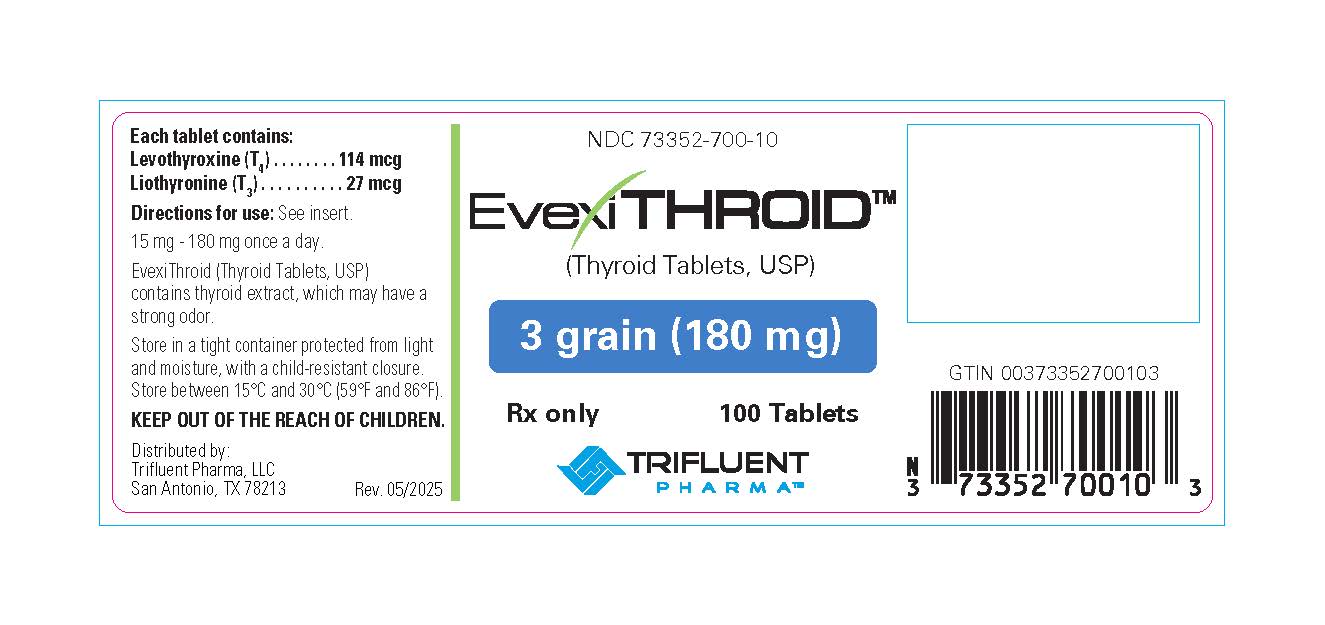
*EvexiTHROID (Thyroid Tablets, USP) has not been approved by FDA as a new drug.
All prescription substitutions and/or recommendations using this product shall be made subject to state and federal statutes as applicable.
Please note: This is not an Orange Book product and has not been subjected to FDA therapeutic equivalency or other equivalency testing. No representation is made as to generic status or bioequivalency. Each person recommending a prescription substitution using this product shall make such recommendations based on each such person's professional opinion and knowledge, upon evaluating the active ingredients, excipients, inactive ingredients and chemical information provided herein.
Distributed by:
Trifluent Pharma, LLC
San Antonio, TX 78213
Revision: 05/2025