Arcalyst Injection, Powder, Lyophilized, For Solution
Product Images NDC 73604-914

35 FDA label images from Kiniksa Pharmaceuticals (uk), Ltd. · Packaging, Regulatory Labels, and Product Appearance

Product Visual Gallery

This gallery contains 35 technical images submitted to the FDA as part of the official labeling for Arcalyst (NDC 73604-914). Unlike standard consumer photos, these assets often include clinical data figures, molecular chemical structures, and official manufacturer packaging layouts.

As provided by Kiniksa Pharmaceuticals (uk), Ltd., these visuals offer a comprehensive scientific overview of the product's physical and chemical identity, aiding pharmacists and researchers in product verification and study.

FDA Label Image

Figure 1 (Arcalyst 01)

Figure 1 (Arcalyst 01)
A line graph depicting the Group Mean Daily Key Symptom Score over Study Weeks comparing ARCALYST and Placebo treatments. The timeline is divided into three phases: Part A Baseline (no treatment), Part A Double-blind ARCALYST vs. Placebo, and Single-blind ARCALYST Treatment Phase. ARCALYST treatment scores decrease notably compared to placebo during the Double-blind phase, with scores converging during the Single-blind phase.*
FDA Label Image

Figure 2 (Arcalyst 02)

Figure 2 (Arcalyst 02)
A line graph depicting mean Pain NRS scores and CRP levels over 12 weeks (W1-W12) and baseline (BL) to day 4 (D4) in patients receiving Arcalyst. The graph shows a decrease in Pain NRS mean values and CRP mean values over time, with corresponding patient counts and data tables for each time point below the graph.*
FDA Label Image

Figure 3 (Arcalyst 03)

Figure 3 (Arcalyst 03)
A Kaplan-Meier survival curve chart comparing the probability of no pericarditis recurrence over time (weeks) between ARCALYST (rilonacept) and placebo groups. The ARCALYST group shows a higher probability of no recurrence, with the x-axis labeled as Time (weeks) and y-axis as Probability of No Pericarditis Recurrence (%). The chart includes a statistical summary with hazard ratio and p-value, as well as a table indicating the number of subjects at risk at various time points for both groups.*
FDA Label Image

Figure A (Arcalyst 03a)

Figure A (Arcalyst 03a)
An instructional illustration showing components for preparing an Arcalyst injection. Included are needles with caps (two 18G x 1-1/2 inch or 1-inch needles, one 26G x 1/2 inch needle), two syringes, alcohol wipes, Arcalyst vial, sterile water for injection vial, gauze pad, and a sharps container for disposal.*
FDA Label Image

Figure B (Arcalyst 03b)

Figure B (Arcalyst 03b)
An instructional illustration showing a syringe labeled with 0.1 mL increment markings, including zoomed-in detail of measurement scale between 2.0 and 2.5 mL. The syringe includes a plunger and a needle with a needle cover (cap).*
FDA Label Image

Figure C (Arcalyst 03c)

Figure C (Arcalyst 03c)
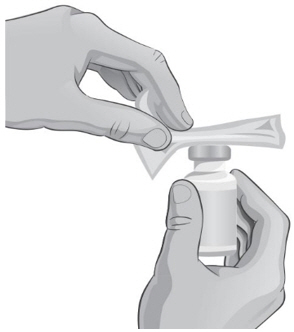
An instructional illustration showing a pair of hands removing a protective seal from the top of a medicine vial. This likely represents preparation of a vial containing a lyophilized powder medication for injection.*
FDA Label Image

Figure D (Arcalyst 03d)

Figure D (Arcalyst 03d)
A black and white instructional illustration showing hands breaking the neck of a vial or ampule for injection. The hands are bending the top part of the vial or ampule away from the body to open it safely.*
FDA Label Image

Figure E (Arcalyst 03e)

Figure E (Arcalyst 03e)
An instructional illustration showing two hands manipulating a syringe. The left hand holds the syringe barrel while the right hand grips the plunger, with arrows indicating a twisting or turning motion to prepare the syringe, likely for injection preparation.*
FDA Label Image

Figure F (Arcalyst 03f)

Figure F (Arcalyst 03f)
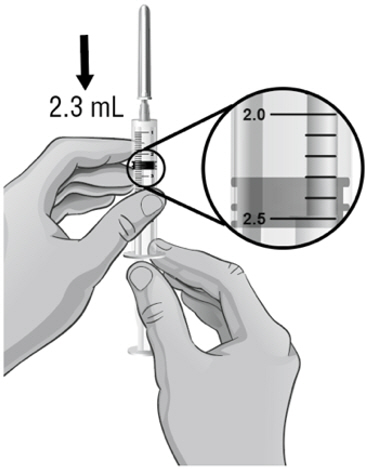
An instructional illustration showing a person holding a syringe with both hands, drawing fluid to the 2.3 mL mark as indicated by an arrow and a close-up view of the syringe's measurement scale between 2.0 and 2.5 mL.*
FDA Label Image

Figure G (Arcalyst 03g)

Figure G (Arcalyst 03g)
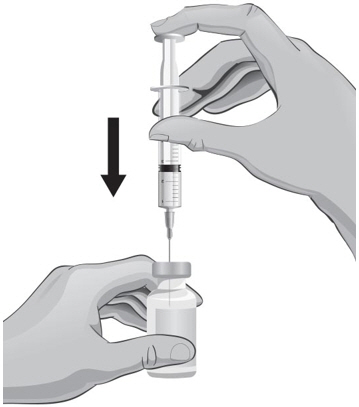
An instructional illustration showing two gloved hands preparing an injection. One hand holds a vial while the other inserts a syringe needle into the vial, with a downward arrow indicating the needle insertion direction. This likely relates to the preparation of a subcutaneous injection dose.*
FDA Label Image

Figure H (Arcalyst 03h)

Figure H (Arcalyst 03h)
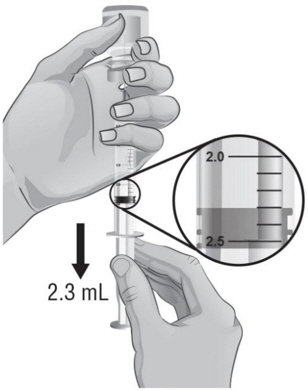
An instructional illustration showing two hands preparing a syringe for injection. The upper hand holds a vial while the lower hand holds a syringe, withdrawing liquid. An inset magnifies the syringe measurement markings, indicating 2.3 mL of liquid being drawn.*
FDA Label Image

Figure I (Arcalyst 03i)

Figure I (Arcalyst 03i)
An illustration showing a syringe drawing liquid from a vial, with an enlarged view highlighting the syringe measurement at 2.3 mL. The image demonstrates the correct dosage volume to be drawn, related to the preparation of an injection.*
FDA Label Image

Figure J (Arcalyst 03j)

Figure J (Arcalyst 03j)
An instructional illustration showing hands drawing liquid from a vial into a syringe. One hand holds the vial steady, the other pushes the syringe plunger down, indicated by a black downward arrow, demonstrating a step in preparing an injection solution.*
FDA Label Image

Figure K (Arcalyst 03k)

Figure K (Arcalyst 03k)
An instructional illustration showing a vial with a stopper, a syringe with needle attached, and a needle cap, along with arrows indicating key parts of the vial stopper. The image likely relates to preparation or administration steps for an injection product.*
FDA Label Image

Figure L (Arcalyst 03l)

Figure L (Arcalyst 03l)
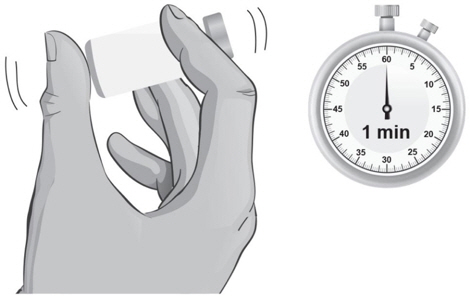
An instructional illustration showing a hand shaking a vial of medication alongside a stopwatch indicating a one-minute duration, demonstrating proper mixing or preparation technique for an injection.*
FDA Label Image

Figure M (Arcalyst 03m)

Figure M (Arcalyst 03m)
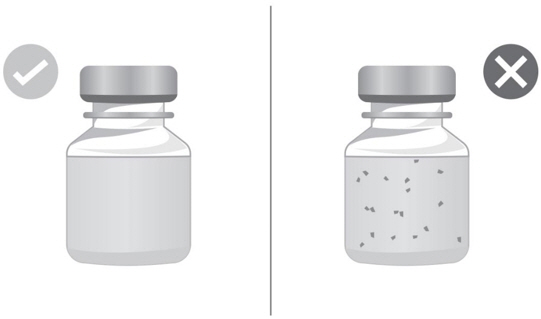
An instructional illustration showing two vials side-by-side for preparation guidance. The left vial is clear with a checkmark above it, indicating the correct appearance. The right vial contains visible particles with an X mark, indicating an incorrect or unusable appearance. Both vials have a gray cap and a blank label area.*
FDA Label Image

Figure N (Arcalyst 03n)

Figure N (Arcalyst 03n)
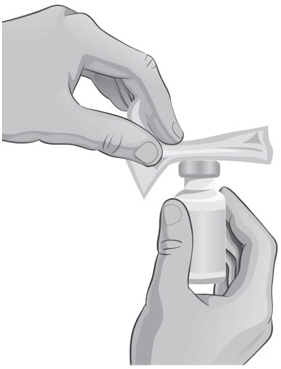
An instructional illustration showing a hand holding a vial and another hand peeling off a protective seal covering the vial's cap, likely demonstrating how to prepare a vial of Arcalyst (rilonacept) injection powder for solution for subcutaneous use.*
FDA Label Image

Figure O (Arcalyst 03o)

Figure O (Arcalyst 03o)
An instructional illustration showing two hands stretching a Y-shaped rubber or silicone component sideways in opposite directions. The background is plain, and the focus is on the manipulation of the flexible part, likely related to assembly or preparation of the injection device.*
FDA Label Image

Figure P (Arcalyst 03p)

Figure P (Arcalyst 03p)
An instructional illustration showing two hands preparing a subcutaneous injection using a syringe and vial. The image depicts turning or twisting the syringe cap or needle to attach or detach it from the syringe barrel, indicated by an arrow symbol.*
FDA Label Image

Figure Q (Arcalyst 03q)

Figure Q (Arcalyst 03q)
An illustration depicting hands preparing a syringe for injection. One hand holds the syringe barrel with a needle attached, while the other hand presses the plunger. This image likely demonstrates the preparation or administration technique of a subcutaneous injection.*
FDA Label Image

Figure R (Arcalyst 03r)

Figure R (Arcalyst 03r)
An instructional illustration showing hands drawing liquid from a vial using a syringe, indicated by a downward arrow. This likely represents the preparation of the Arcalyst injection prior to subcutaneous administration.*
FDA Label Image

Figure S (Arcalyst 03s)

Figure S (Arcalyst 03s)
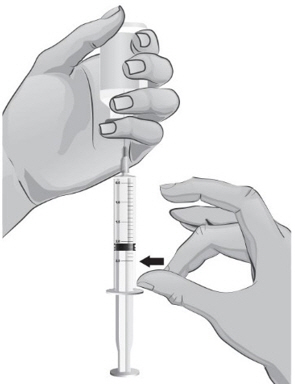
Illustration showing two hands preparing a syringe from a vial. One hand holds the vial upside down while the other pulls back the syringe plunger to draw liquid medication into the syringe.*
FDA Label Image

Figure T (Arcalyst 03t)

Figure T (Arcalyst 03t)
An instructional illustration showing two hands preparing a syringe. One hand holds a vial upside down, with the syringe needle inserted into the vial, while the other hand pulls back the syringe plunger to draw liquid. An arrow highlights the plunger being pulled back.*
FDA Label Image

Figure U (Arcalyst 03u)

Figure U (Arcalyst 03u)
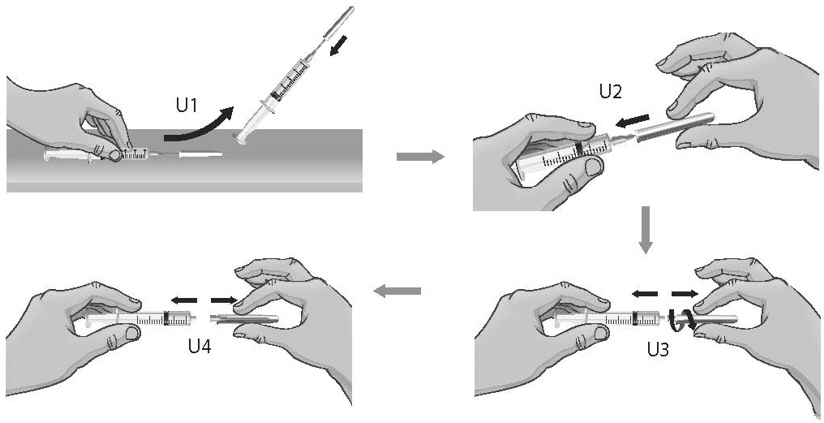
An instructional illustration showing four steps for preparing a subcutaneous injection using a syringe and a vial. The steps depict removing a cap, drawing liquid into the syringe, attaching a needle, and preparing the syringe for injection. The hands demonstrate proper handling and assembly technique.*
FDA Label Image

Figure V (Arcalyst 03v)

Figure V (Arcalyst 03v)
An instructional illustration showing two hands bending a tube in opposite directions, indicated by arrows, likely demonstrating how to prepare or use a component related to a medicinal injection product.*
FDA Label Image

Figure W (Arcalyst 03w)

Figure W (Arcalyst 03w)
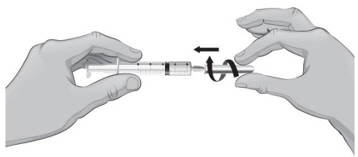
An instructional illustration showing two hands holding a syringe. One hand is gripping the syringe barrel while the other hand appears to be twisting the syringe cap or plunger, indicated by an arrow and rotational symbol. The image likely demonstrates a step in the preparation or administration of an injection.*
FDA Label Image

Figure X (Arcalyst 03x)

Figure X (Arcalyst 03x)
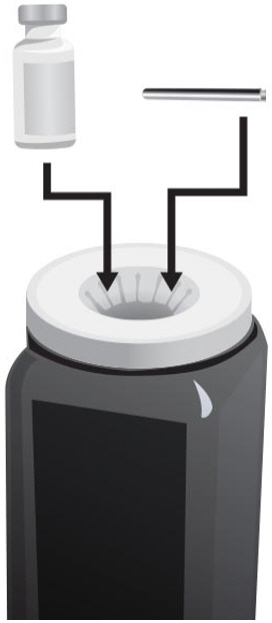
An instructional illustration showing a vial and needle being aligned and inserted into a device or container opening, likely demonstrating preparation steps for a subcutaneous injection or reconstitution of an injectable drug solution.*
FDA Label Image

Figure Y (Arcalyst 03y)

Figure Y (Arcalyst 03y)
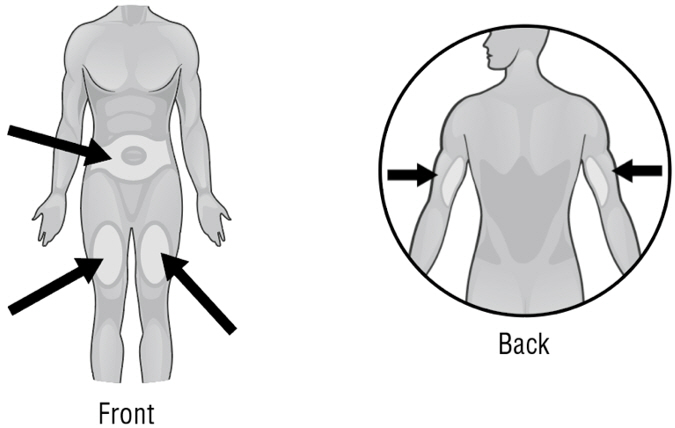
An instructional illustration showing recommended subcutaneous injection sites on the human body for Arcalyst (rilonacept) injection. The front view highlights the abdomen and front thighs with arrows indicating injection areas, while the back view shows the upper arms with arrows pointing to injection sites.*
FDA Label Image

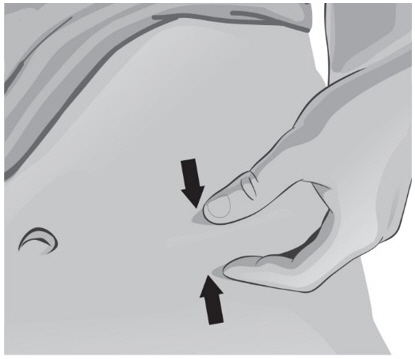
Figure Z (Arcalyst 03z)

Figure Z (Arcalyst 03z)
An instructional illustration depicting a hand pinching the skin on a person's abdomen, likely demonstrating a subcutaneous injection technique. Black arrows indicate the direction of the pinch, guiding proper skin tenting for injection.*
FDA Label Image

Figure Aa (Arcalyst 03za)

Figure Aa (Arcalyst 03za)
An instructional illustration showing the proper technique for subcutaneous injection of Arcalyst (rilonacept) injection, powder, lyophilized, for solution. The image depicts a hand holding a syringe at a 90-degree angle to the patient's skin, with the needle about to be inserted into the subcutaneous tissue.*
FDA Label Image

Figure Bb (Arcalyst 03zb)

Figure Bb (Arcalyst 03zb)
An instructional diagram illustrating a subcutaneous injection technique. The image shows a hand holding a syringe at a 45-degree angle to the skin of the arm, with a drop of liquid at the needle tip, demonstrating the proper angle and method for administering a subcutaneous injection.*
FDA Label Image

Figure Cc (Arcalyst 03zc)

Figure Cc (Arcalyst 03zc)
An instructional illustration showing a hand applying a cotton or gauze pad on the skin at the injection site, which is on the abdomen. A syringe is depicted approaching the area with an arrow indicating the direction for a subcutaneous injection. This likely demonstrates the preparation or administration procedure for Arcalyst injection.*
FDA Label Image

Figure Dd (Arcalyst 03zd)

Figure Dd (Arcalyst 03zd)
An instructional illustration showing a vial with a rubber stopper and its components highlighted by arrows. Also includes a syringe and a separate vial, likely representing the components used for preparing an injection solution.*
FDA Label Image

Principal Display Panel (220 mg Vial Carton)

Principal Display Panel (220 mg Vial Carton)
Packaging label for Arcalyst (rilonacept) injection, 220 mg per vial. The label specifies this is a lyophilized powder for subcutaneous injection, requiring reconstitution and refrigeration at 2°C to 8°C (36°F to 46°F). The labeler is Kiniksa Pharmaceuticals (UK), Ltd. The package contains one single-dose vial and includes storage and handling instructions.*
FDA Label Image

Arcalyst 05

Arcalyst 05
Packaging label for Arcalyst injection powder, lyophilized, for solution containing rilonacept. The label indicates a strength of 220 mg per vial for subcutaneous use only. The label states it must be reconstituted and stored refrigerated at 2°C to 8°C (36°F to 46°F) until use. The packaging contains four single-dose vials. Manufactured by Kiniksa Pharmaceuticals (UK), Ltd.*

* About these descriptions: Image descriptions on this page are generated by automated AI analysis of the product label images from the manufacturer's FDA label submission (SPL). They are provided for reference only and may contain errors or omissions. Always rely on the printed label itself and the official FDA labeling, and consult a pharmacist or healthcare professional with any questions about this product.