Camzyos Capsule, Gelatin Coated
Product Images NDC 73625-113

View Photos of Packaging, Regulatory Labels, and Product Appearance

Product Visual Gallery

This gallery contains 15 technical images submitted to the FDA as part of the official labeling for Camzyos (NDC 73625-113). Unlike standard consumer photos, these assets often include clinical data figures, molecular chemical structures, and official manufacturer packaging layouts.

As provided by Myokardia, Inc., these visuals offer a comprehensive scientific overview of the product's physical and chemical identity, aiding pharmacists and researchers in product verification and study.

FDA Label Image

15mglabel (15mglabel)
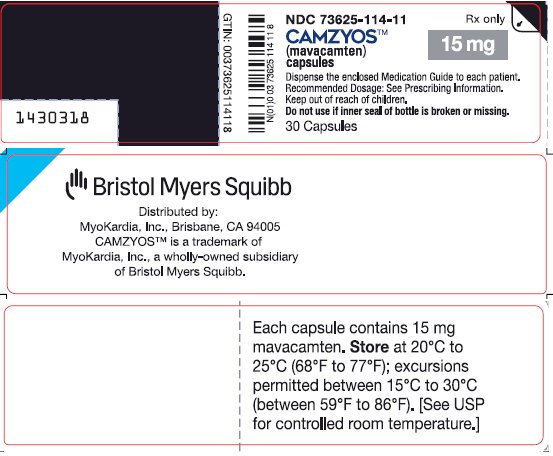
15mglabel (15mglabel)
CAMZYOS™ is a medication in capsule form containing 15mg of mavacamten. It is recommended to consult prescribing information for accurate dosing. It is distributed by MyoKardia Inc., which is a subsidiary of Bristol Myers Squibb. Each bottle contains 30 capsules and must be kept out of reach of children. It should not be used if the seal is broken or missing. The medication should be stored at a temperature between 20°C to 25°C (68°F to 77°F) with excursions permissible to between 15°C to 30°C (between 59°F to 86°F).*
FDA Label Image

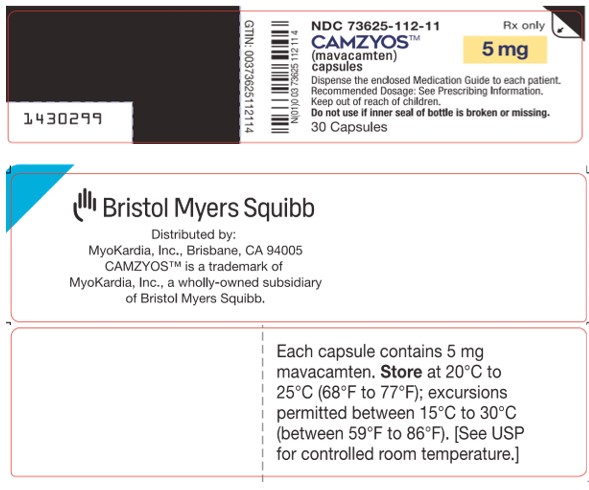
5mglabel (5mglabel)

5mglabel (5mglabel)
CAMZYOST is a medication that comes in capsule form with each capsule containing 5mg of Mavacamten. The medication is distributed by a company called MyoKardia, Inc., which is a subsidiary of Bristol Myers Squibb. The medication comes in a bottle that contains 30 capsules and it is advisable to keep it out of reach of children. It is essential to follow the recommended dosage as stated in the prescription information. Additionally, it is not advisable to use the medication if the seal on the bottle is broken or missing. It is recommended to store the medication at a temperature between 20°C to 25°C but excursions are allowed between 15°C to 30°C.*
FDA Label Image

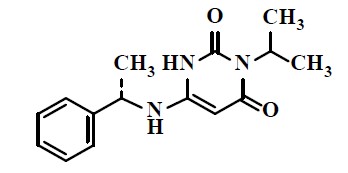
Chemical_structure (Chemical Structure)

FDA Label Image

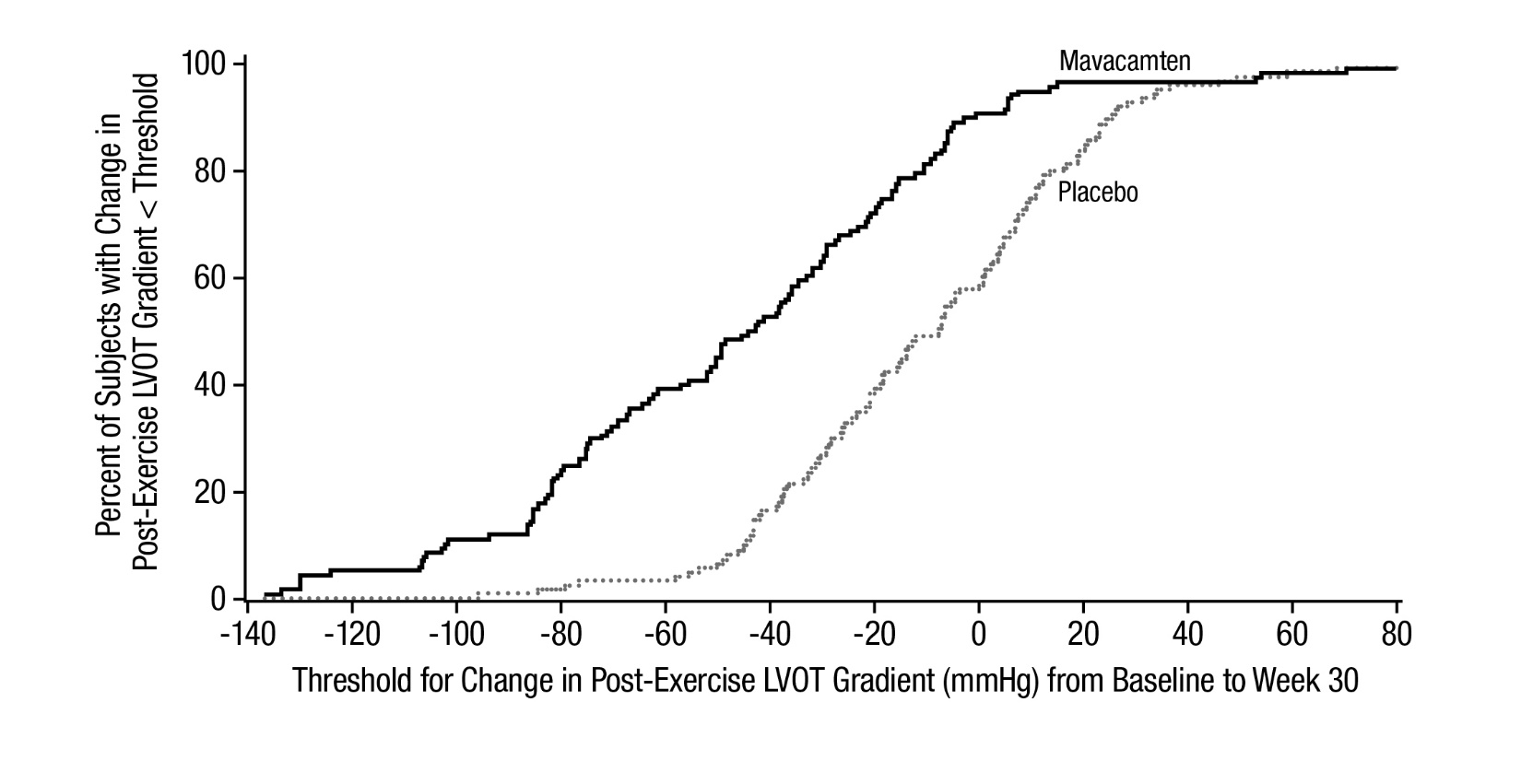
Fig_cumulativedistributionofchangefrombaselinetoweek30inlvotpeakgradient (Fig Cumulativedistributionofchangefrombaselinetoweek30inlvotpeakgradient)

Fig_cumulativedistributionofchangefrombaselinetoweek30inlvotpeakgradient (Fig Cumulativedistributionofchangefrombaselinetoweek30inlvotpeakgradient)
This text is a chart presenting the percentage of subjects experiencing a change in post-exercise LVOT gradient below a certain threshold for the drug Mavacamten compared to a placebo. The x-axis shows the threshold for the change in post-exercise LVOT gradient in mmHg from baseline to week 30. The y-axis shows the percentage of subjects. There is also a graph with a range of -140 to 60 on the x-axis and 0 to 100 on the y-axis.*
FDA Label Image

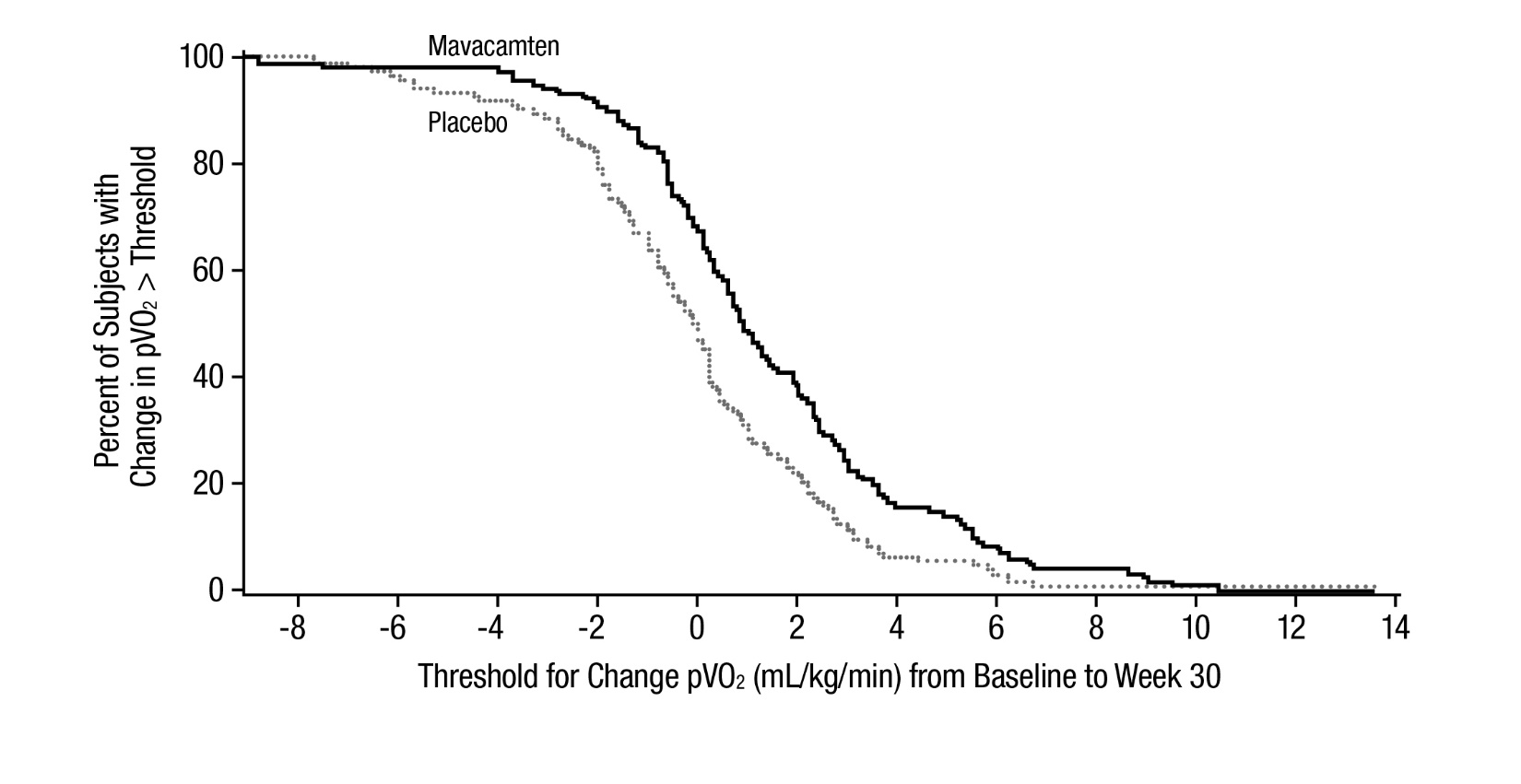
Fig_cumulativedistributionofchangefrombaselinetoweek30inpvo2 (Fig Cumulativedistributionofchangefrombaselinetoweek30inpvo2)

Fig_cumulativedistributionofchangefrombaselinetoweek30inpvo2 (Fig Cumulativedistributionofchangefrombaselinetoweek30inpvo2)
The text is describing a chart that shows the percentage of subjects with a change in pVO2 above a certain threshold at different points in time. The x-axis is denoted in units of the threshold for change in pVO2 (mL/kg/min) from baseline to week 30. However, there is not enough information to explain what pVO2 or Mavacamten refer to.*
FDA Label Image

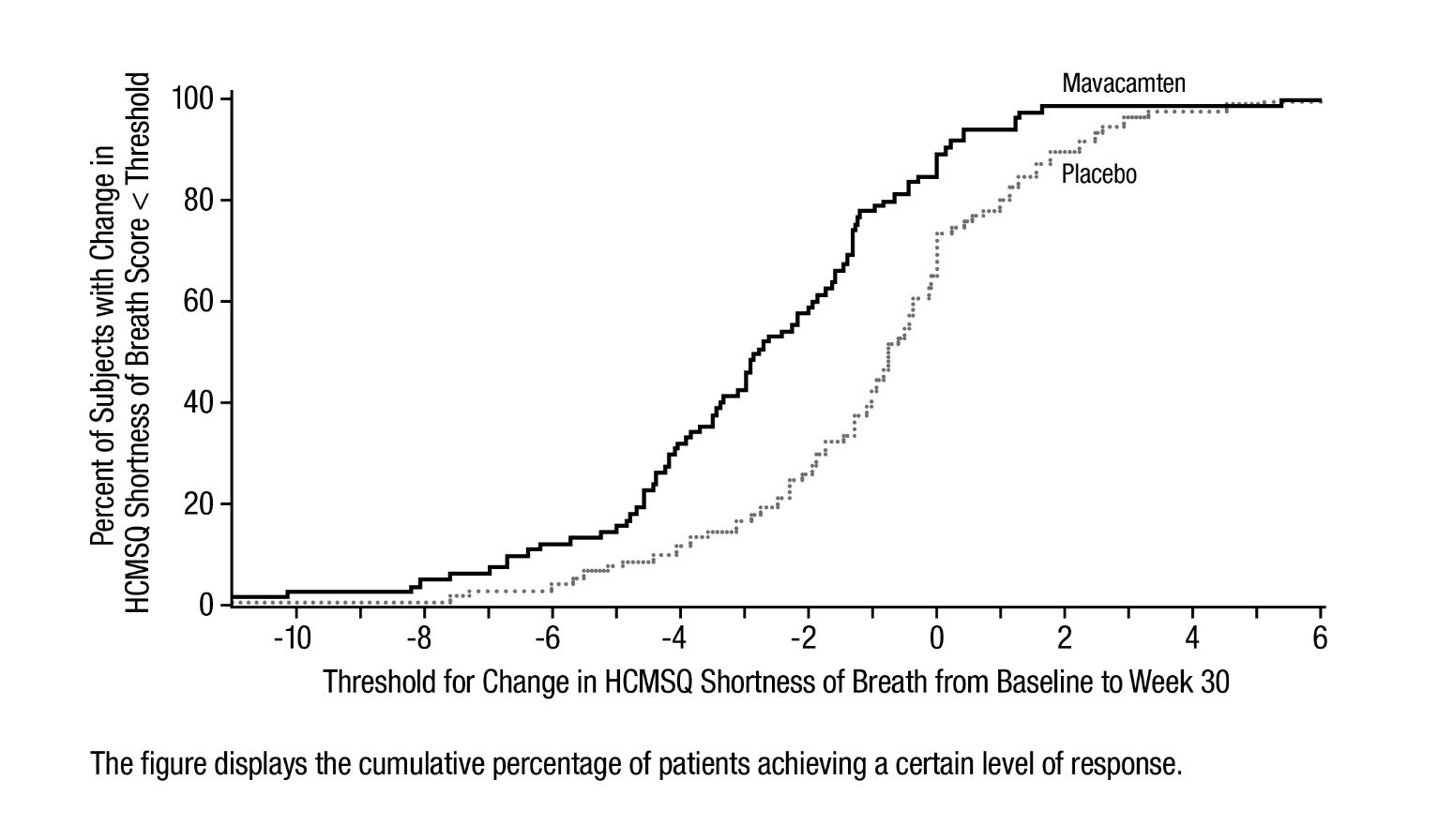
Fig_hcmsqshortnessofbreathdomaincummlativedistributionofchangefrombaselinetoweek30 (Fig Hcmsqshortnessofbreathdomaincummlativedistributionofchangefrombaselinetoweek30)

Fig_hcmsqshortnessofbreathdomaincummlativedistributionofchangefrombaselinetoweek30 (Fig Hcmsqshortnessofbreathdomaincummlativedistributionofchangefrombaselinetoweek30)
The text describes a figure displaying the percentage of subjects with a change in HCMSAQ Shortness of Breath score below a certain threshold. The threshold is indicated on the x-axis, with negative and positive values, and the percentage of patients achieving a certain level of response is indicated on the y-axis. The figure shows a cumulative distribution, with higher percentages of patients achieving lower levels of response. The figure is likely related to the evaluation of a medication or treatment called Mavacamten.*
FDA Label Image

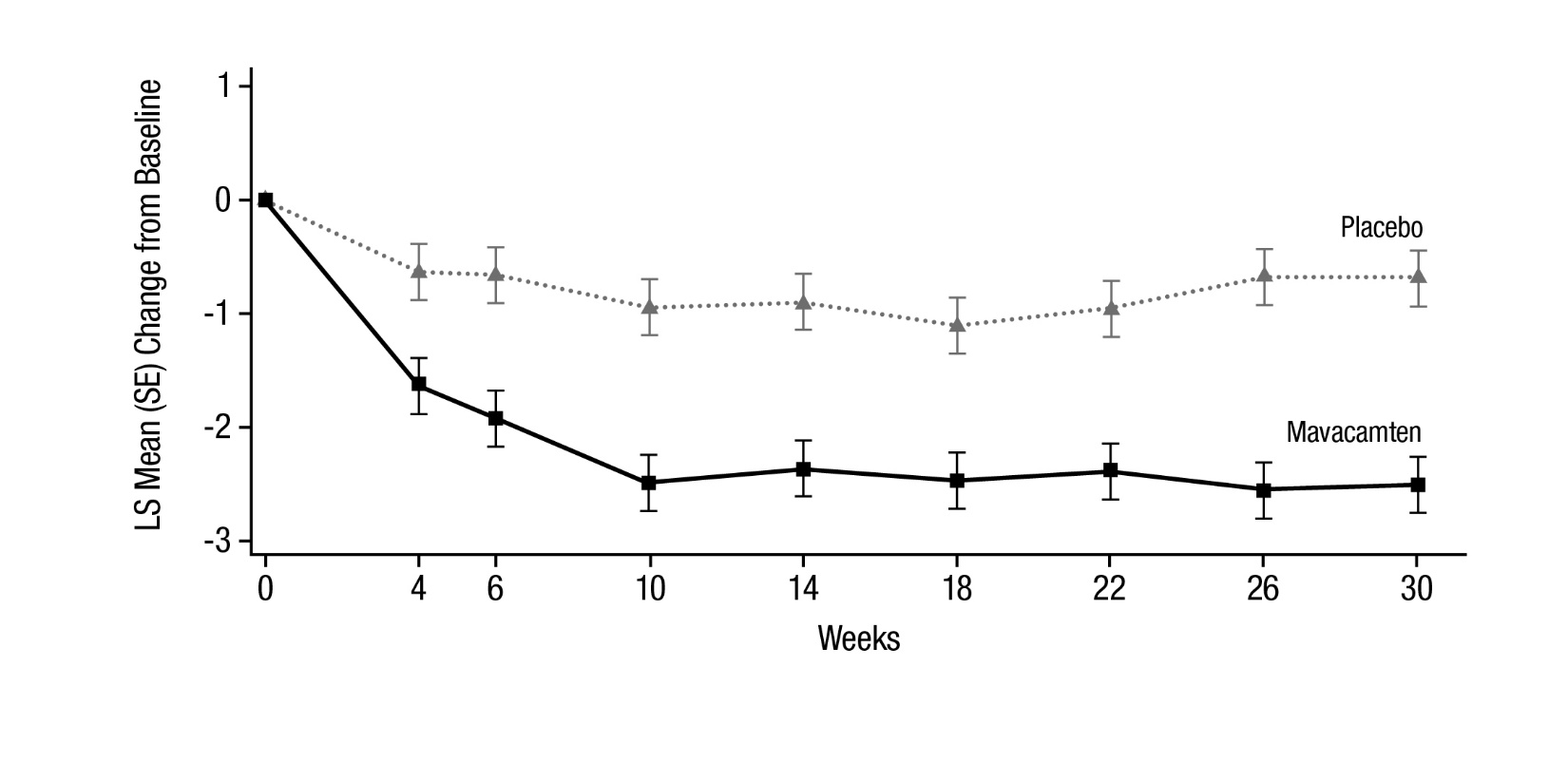
Fig_hcmsqshortnessofbreathdomainmeanchangefrombaselineovertime (Fig Hcmsqshortnessofbreathdomainmeanchangefrombaselineovertime)

FDA Label Image

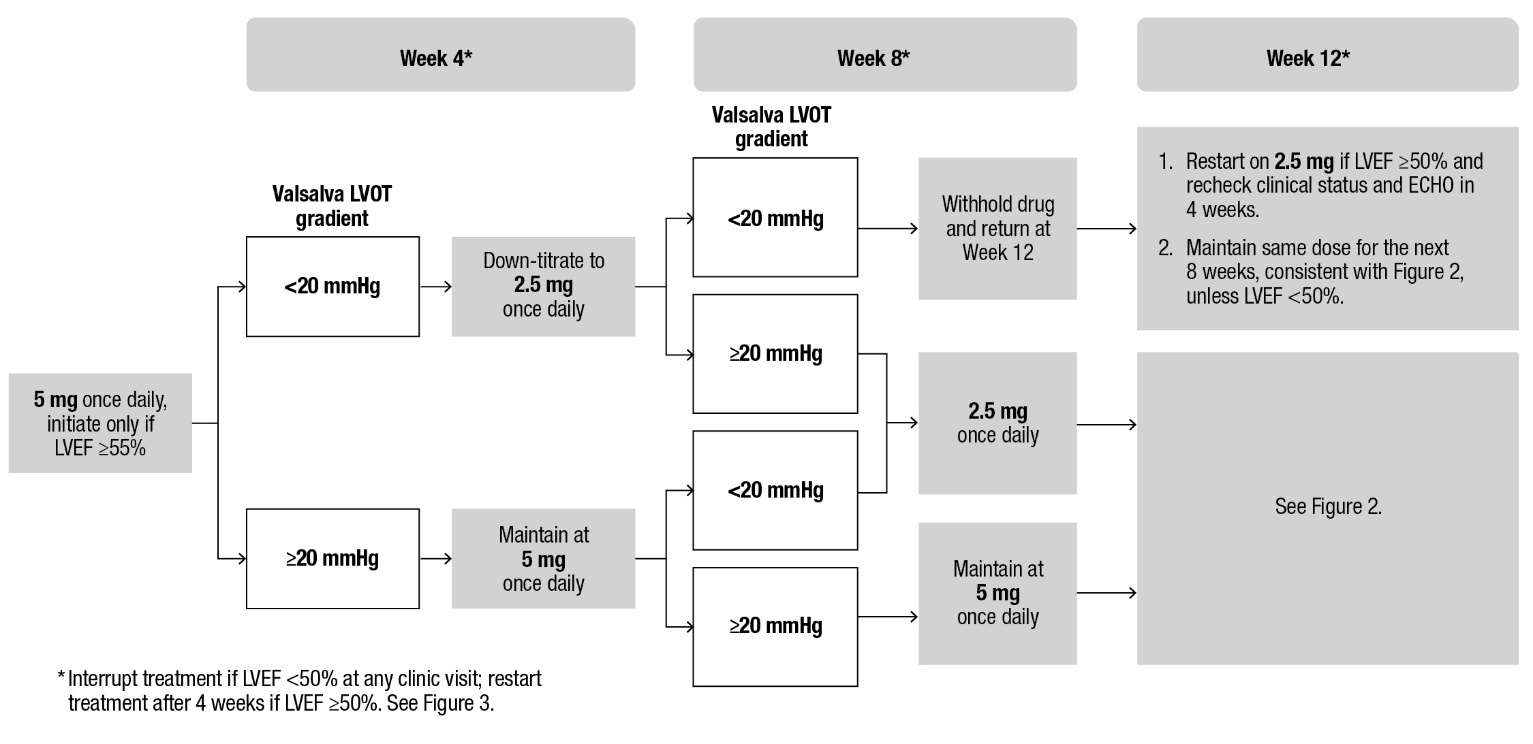
Fig_initiationphase (Fig Initiationphase)

FDA Label Image

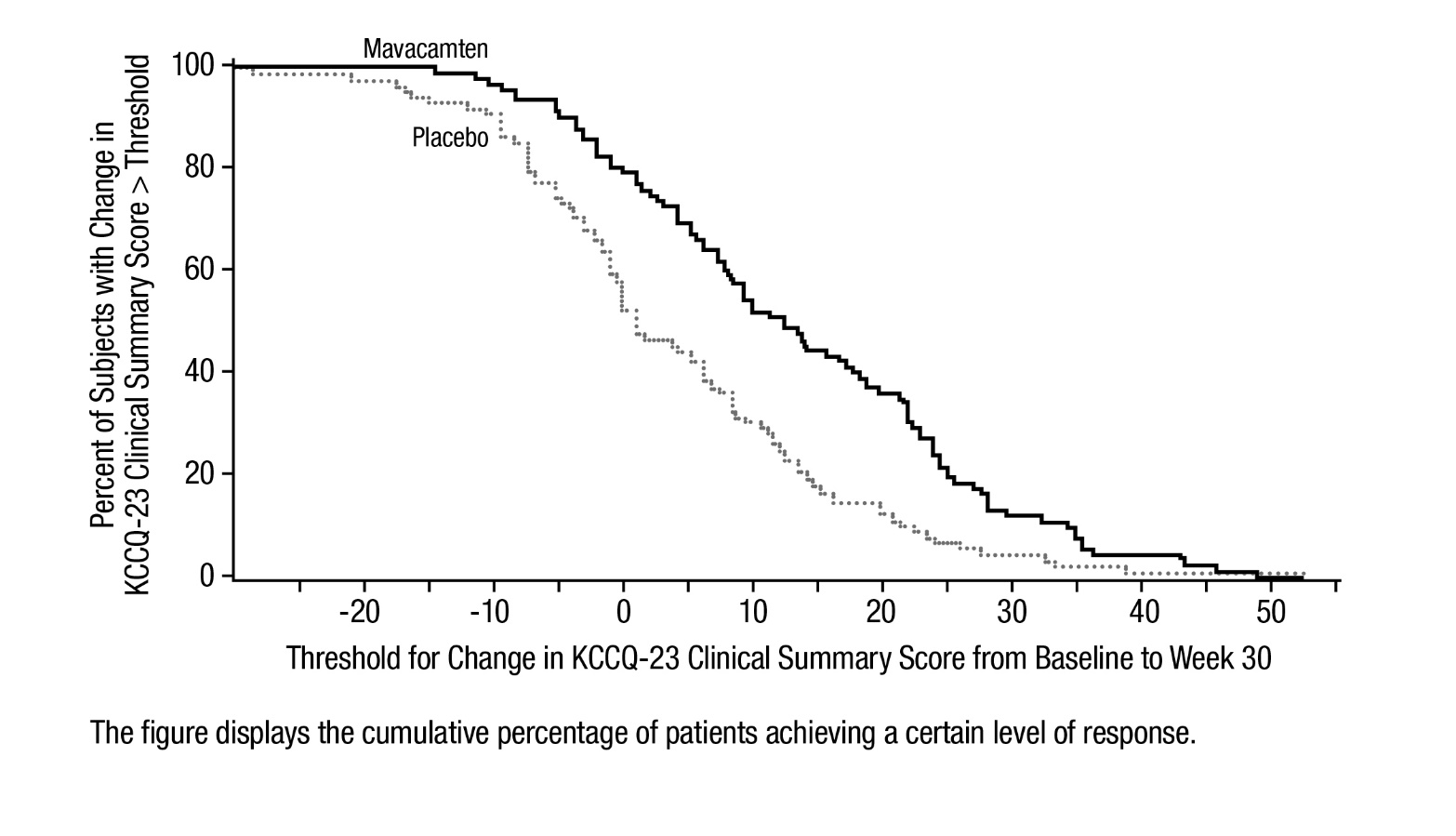
Fig_kccq-23clinicalsummaryscorecumalativedistributionofchangefrombaselinetoweek30 (Fig Kccq 23clinicalsummaryscorecumalativedistributionofchangefrombaselinetoweek30)

Fig_kccq-23clinicalsummaryscorecumalativedistributionofchangefrombaselinetoweek30 (Fig Kccq 23clinicalsummaryscorecumalativedistributionofchangefrombaselinetoweek30)
The text describes a figure showing the percent of subjects with a change in KCCQ-23 Clinical Summary Score > Threshold. The figure displays the cumulative percentage of patients achieving a certain level of response. No additional information is available.*
FDA Label Image

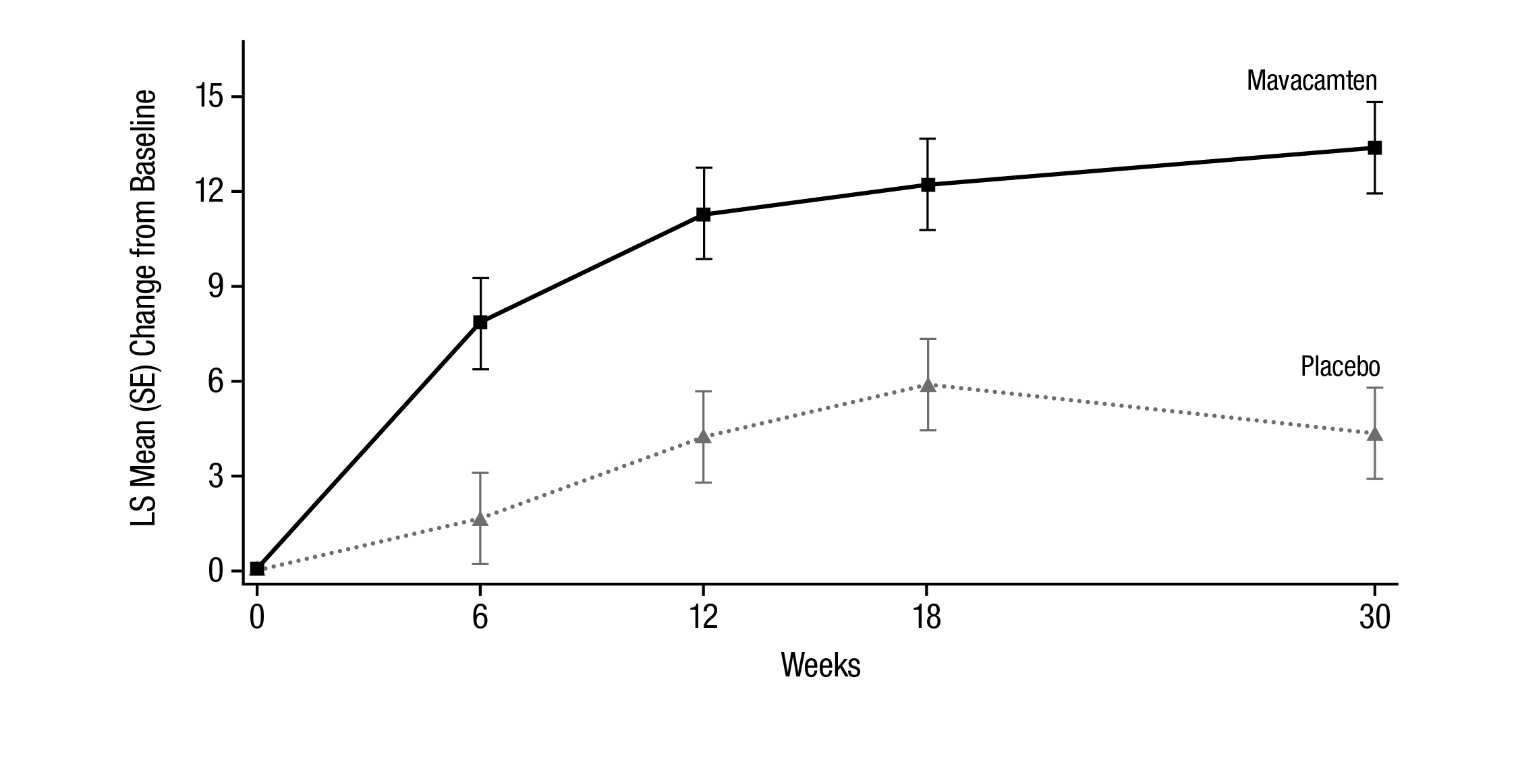
Fig_kccq-23clinicalsummaryscoremeanchangefrombaselineovertime (Fig Kccq 23clinicalsummaryscoremeanchangefrombaselineovertime)

FDA Label Image

Fig_maintenancephase (Fig Maintenancephase)

Fig_maintenancephase (Fig Maintenancephase)
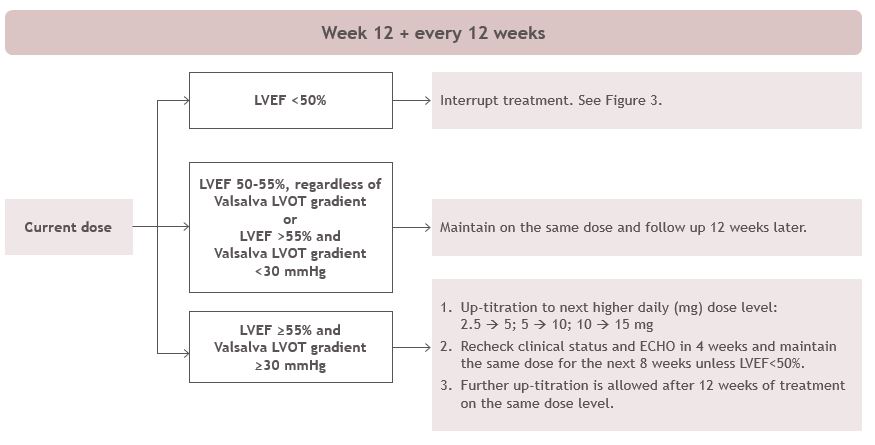
This text describes the recommended actions for adjusting medication dose based on the left ventricular ejection fraction (LVEF) and Valsalva LVOT gradient of a patient. If the LVEF is <50%, treatment should be interrupted. If the LVEF is 50-55% or >55% with a gradient of <30 mmHg, the same dosage can be maintained and reviewed after 12 weeks. If the LVEF is >55% with a gradient of 230 mmHg, the dosage should be increased and the clinical status and ECHO should be rechecked after 4 weeks. After 12 weeks of treatment on the same dose level, further up-titration is allowed.*
FDA Label Image

Fig_subgroupanalysisoftheprimarycompositefunctionalendpoint (Fig Subgroupanalysisoftheprimarycompositefunctionalendpoint)

Fig_subgroupanalysisoftheprimarycompositefunctionalendpoint (Fig Subgroupanalysisoftheprimarycompositefunctionalendpoint)
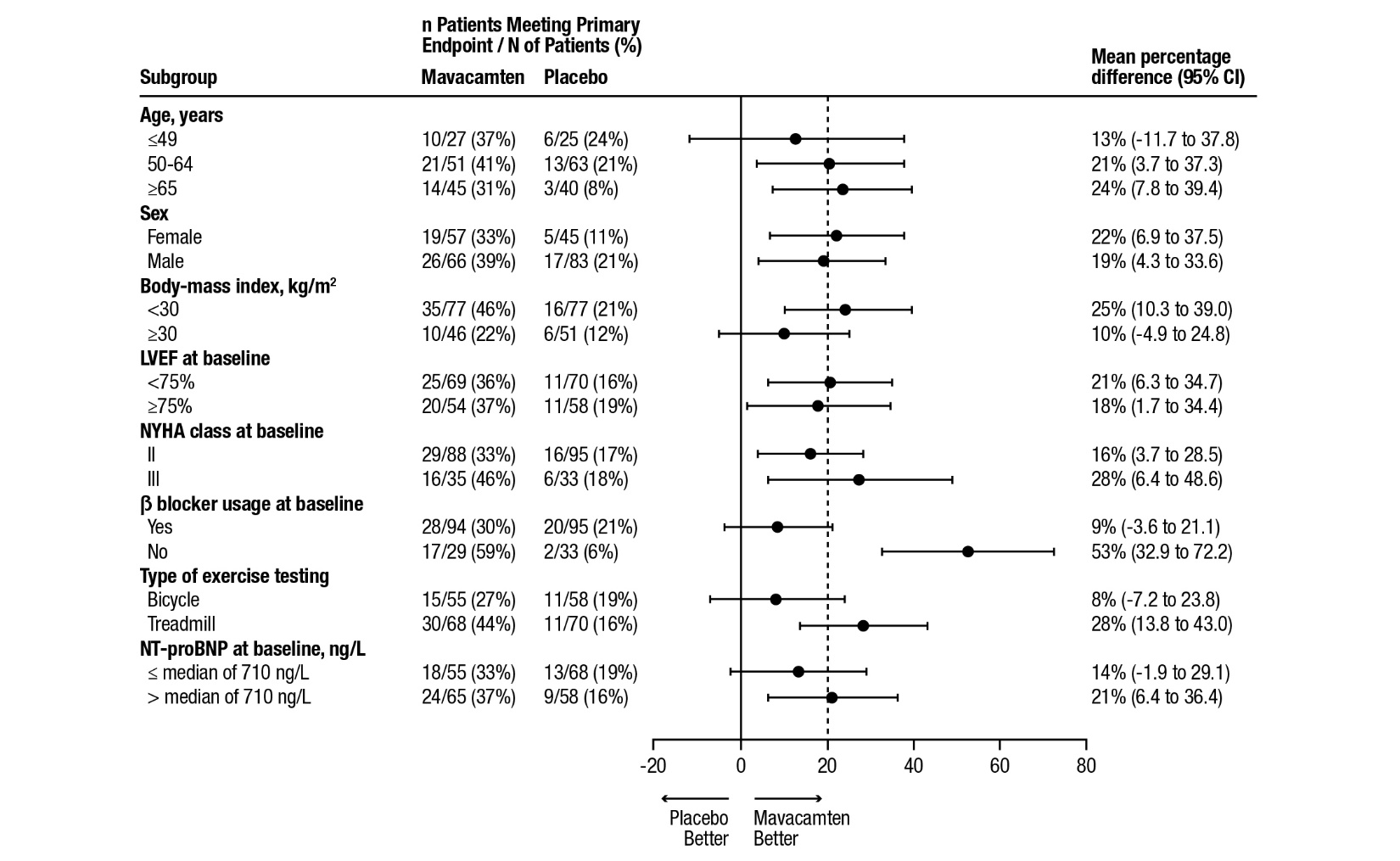
This is a table that shows the percentage of patients meeting the primary endpoint in different subgroups, with mavacamten and placebo, for a certain clinical trial. The different subgroups are categorized based on age, sex, body mass index, LVEF at baseline, NYHA class at baseline, beta-blocker usage at baseline, and type of exercise testing. The results show that mavacamten is better than placebo for all subgroups.*
FDA Label Image

Fig_treatmentinterruption (Fig Treatmentinterruption)

Fig_treatmentinterruption (Fig Treatmentinterruption)
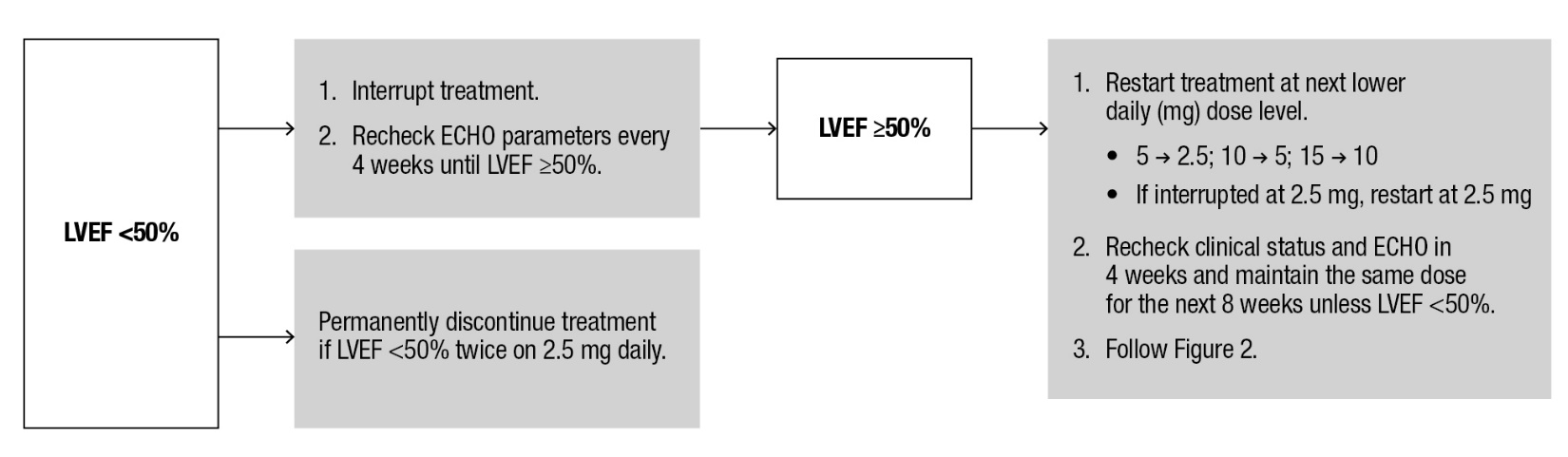
The text describes a treatment plan for interrupting medication at a certain dosage level and restarting at a lower level for the purpose of checking ECHO parameters. If the LVEF (left ventricular ejection fraction) is above 50%, the treatment can be continued at the same dose. If the LVEF is below 50% twice at the 2.5mg daily dose level, then the medication should be permanently discontinued. The plan recommends rechecking the clinical status and ECHO in 4 weeks and following Figure 2.*
FDA Label Image

2_5mglabel (Image 01)

2_5mglabel (Image 01)
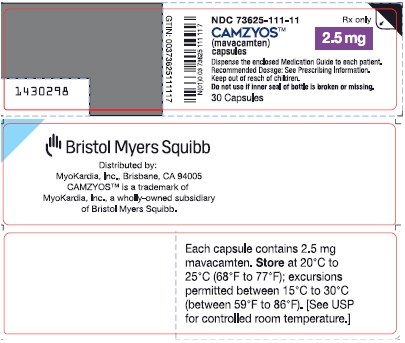
This is a medication description. The name of the medication is not provided, but the capsules contain 2.5 mg of mavacamen. The medication should be stored between 20°C and 25°C (68°F to 77°F) with excursions permitted between 15°C to 30°C (between 59°F to 85°F). It also mentions to see USP for controlled oom temperature.*
FDA Label Image

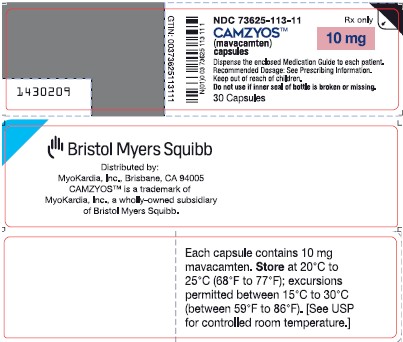
10mglabel (Image 02)

10mglabel (Image 02)
This is a description of a medication with the name NDG 73625-113-11. The medication is in capsule form and each capsule contains 10mg mavacamten. It is manufactured by Bristol Myers Squibb and should be stored at a temperature of 20°C to 25°C. The medication should not be stored outside the range of 15°C to 30°C (59°F to 86°F) as specified by USP for controlled room temperature.*
* These product label images have been analyzed using experimental machine learning. Please verify findings with the primary label text.