Tamsulosin Hydrochloride
Product Images NDC 73750-099

View Photos of Packaging, Regulatory Labels, and Product Appearance

Product Visual Gallery

This gallery contains 7 technical images submitted to the FDA as part of the official labeling for Tamsulosin Hydrochloride (NDC 73750-099). Unlike standard consumer photos, these assets often include clinical data figures, molecular chemical structures, and official manufacturer packaging layouts.

As provided by Qyk Brands Llc, these visuals offer a comprehensive scientific overview of the product's physical and chemical identity, aiding pharmacists and researchers in product verification and study.

FDA Label Image

73750 099 Copy

73750 099 Copy
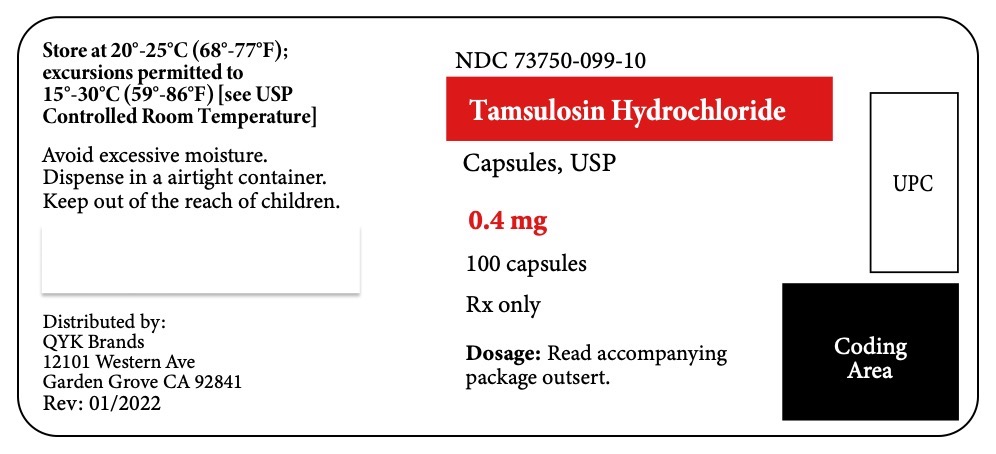
Label for Tamsulosin Hydrochloride capsules, USP, 0.4 mg strength. The label specifies a count of 100 capsules, distributed by QYK Brands LLC, Garden Grove, CA. Storage instructions include keeping at 20°-25°C with permitted excursions to 15°-30°C. The label also includes warnings to avoid moisture and keep out of reach of children.*
FDA Label Image

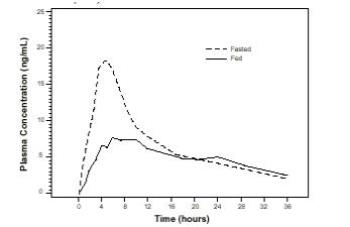
Figure 1 mean Plasma Tamsulosin Hydrochloride Concentrations Following Single-dose Administration Of Tamsulosin Hydrochloride Capsules 0.4 mg Under Fasted And Fed Conditions (n = 8) (Figure 1)

Figure 1 mean Plasma Tamsulosin Hydrochloride Concentrations Following Single-dose Administration Of Tamsulosin Hydrochloride Capsules 0.4 mg Under Fasted And Fed Conditions (n = 8) (Figure 1)
A line graph showing plasma concentration (ng/mL) versus time (hours) with curves comparing fasted and fed states. The fasted state is represented by a dashed line showing a higher peak concentration around 4 hours, while the fed state is a solid line with a lower peak and a more gradual increase.*
FDA Label Image

Figure 2a mean Change From Baseline In Total Aua Symptom Score (0-35) Study 1 (Figure 2 A)

Figure 2a mean Change From Baseline In Total Aua Symptom Score (0-35) Study 1 (Figure 2 A)
A line graph depicting mean change over time in response to treatment for Tamsulosin hydrochloride at doses of 0.4 mg and 0.8 mg, compared to placebo. The x-axis shows duration of treatment in weeks, and the y-axis shows mean change values. Data points and trends for each treatment group are marked with different symbols and lines.*
FDA Label Image

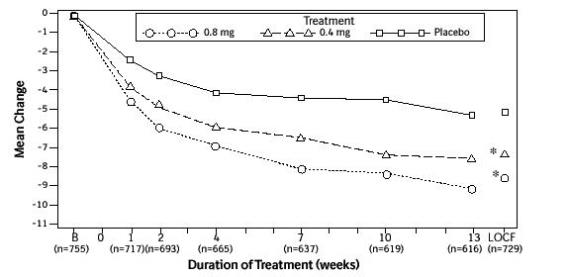
Figure 2b mean Change From Baseline In Total Aua Symptom Score (0-35) Study 2 (Figure 2 B)

Figure 2b mean Change From Baseline In Total Aua Symptom Score (0-35) Study 2 (Figure 2 B)
A line graph displaying mean change over weeks of treatment comparing three groups: 0.8 mg, 0.4 mg, and placebo. The x-axis represents duration of treatment in weeks (0 to 13), and the y-axis shows mean change values, with the three treatment groups plotted as different line styles and markers. Sample sizes for each time point are indicated below the x-axis.*
FDA Label Image

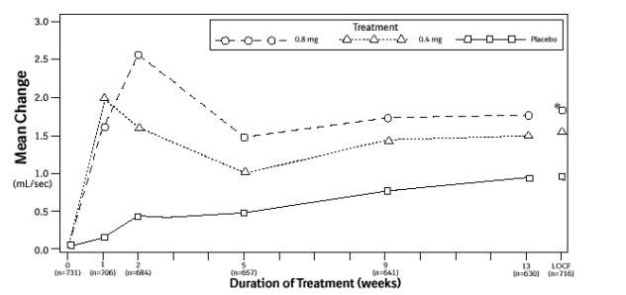
Figure 3a mean Increase In Peak Urine Flow Rate (ml/sec) Study 1 (Figure 3 A)

Figure 3a mean Increase In Peak Urine Flow Rate (ml/sec) Study 1 (Figure 3 A)
A line graph depicting mean change in a measured variable (mL/sec) over a duration of treatment in weeks. The graph compares results for three groups: 0.8 mg treatment, 0.4 mg treatment, and placebo, illustrating differences in response over 13 weeks and at the last observation carried forward (LOCF) stage.*
FDA Label Image

Figure 3b mean Increase In Peak Urine Flow Rate (ml/sec) Study 2 (Figure 3 B)

Figure 3b mean Increase In Peak Urine Flow Rate (ml/sec) Study 2 (Figure 3 B)
A line graph showing mean change in flow rate (mL/sec) over treatment duration in weeks. The chart compares three treatments: 0.8 mg, 0.4 mg, and placebo. The graph includes data points with sample sizes for each time interval.*
FDA Label Image

Structure (Structure)

Structure (Structure)
Chemical structure of tamsulosin hydrochloride, showing its molecular components and arrangement including aromatic rings and functional groups as part of the compound's molecular formula.*

* About these descriptions: Image descriptions on this page are generated by automated AI analysis of the product label images from the manufacturer's FDA label submission (SPL). They are provided for reference only and may contain errors or omissions. Always rely on the printed label itself and the official FDA labeling, and consult a pharmacist or healthcare professional with any questions about this product.