Hand Sanitizer
Product Images NDC 74334-0000

View Photos of Packaging, Regulatory Labels, and Product Appearance

Product Visual Gallery

This gallery contains 2 technical images submitted to the FDA as part of the official labeling for Hand Sanitizer (NDC 74334-0000). Unlike standard consumer photos, these assets often include clinical data figures, molecular chemical structures, and official manufacturer packaging layouts.

As provided by Ranger Creek Brewing & Distilling, Llc, these visuals offer a comprehensive scientific overview of the product's physical and chemical identity, aiding pharmacists and researchers in product verification and study.

FDA Label Image

Label 1 Gal Final July 2020
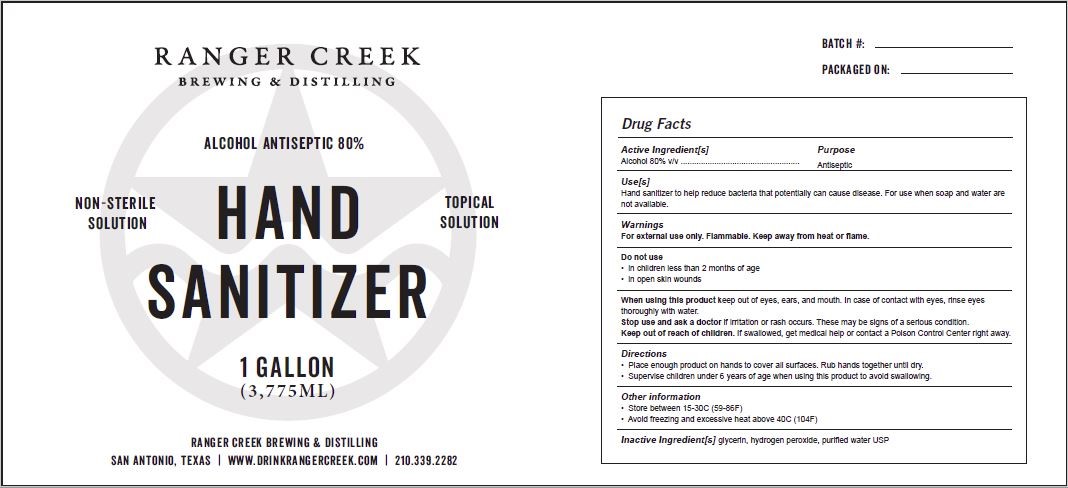
Label 1 Gal Final July 2020
This is a description of a Ranger Creek Brewing & Distilling alcohol antiseptic solution that is 80% non-sterile and used as a topical sanitizer meant to eliminate bacteria. This solution comes in 1-gallon packaging. The contact information of the company producing it, Ranger Creek Brewing & Distilling, is listed as well as their website and phone number. The batch number of the product is also mentioned. Furthermore, drug facts are included, as well as warnings and directions for use. However, there are some typos and unclear phrases that may make this product unsafe to use.*
FDA Label Image

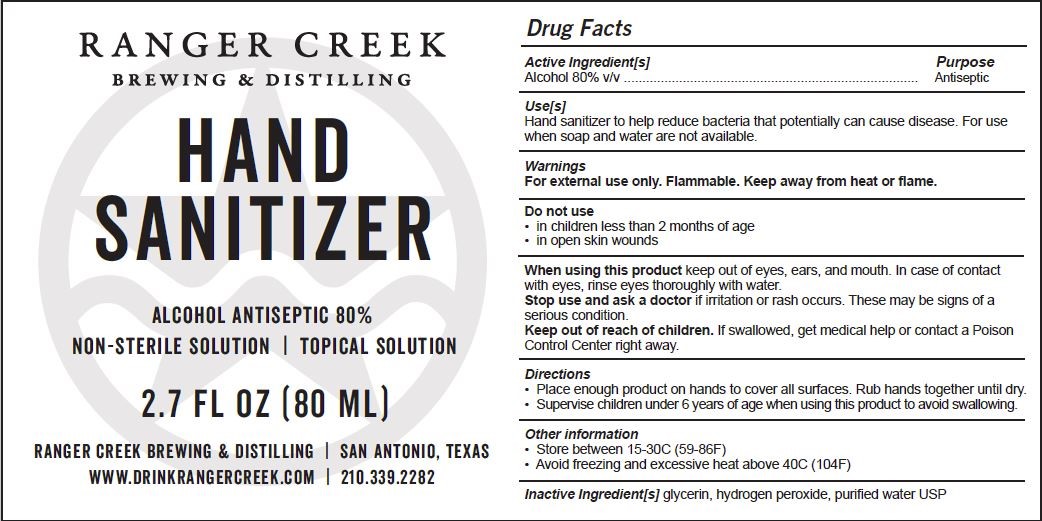
Label 80ml Final July 2020

Label 80ml Final July 2020
RANGER CREEK BREWING & DISTILLING from San Antonio, Texas, produces a non-sterile, topical solution of Alcohol Antiseptic 80% in a 2.7 fl oz (80 mL) bottle of hand sanitizer. This product is aimed to reduce bacteria that could cause diseases when soap and water are not available. However, it should not be used on children under two months of age or on open skin wounds. If contact with eyes, rinse thoroughly with water. If irritation occurs, discontinue use and consult a physician. Keep the product out of reach from children and flammable sources. Store between 15-30°C (59-86°F), and avoid extreme heat above 40°C (104°F).*

* These product label images have been analyzed using experimental machine learning. Please verify findings with the primary label text.