Vydal Scented Hand Sanitizer
Product Images NDC 74563-003

View Photos of Packaging, Regulatory Labels, and Product Appearance

Product Visual Gallery

This gallery contains 1 technical images submitted to the FDA as part of the official labeling for Vydal Scented Hand Sanitizer (NDC 74563-003). Unlike standard consumer photos, these assets often include clinical data figures, molecular chemical structures, and official manufacturer packaging layouts.

As provided by List Distillery, Llc, these visuals offer a comprehensive scientific overview of the product's physical and chemical identity, aiding pharmacists and researchers in product verification and study.

Product Images & Figures Index

FDA Label Image

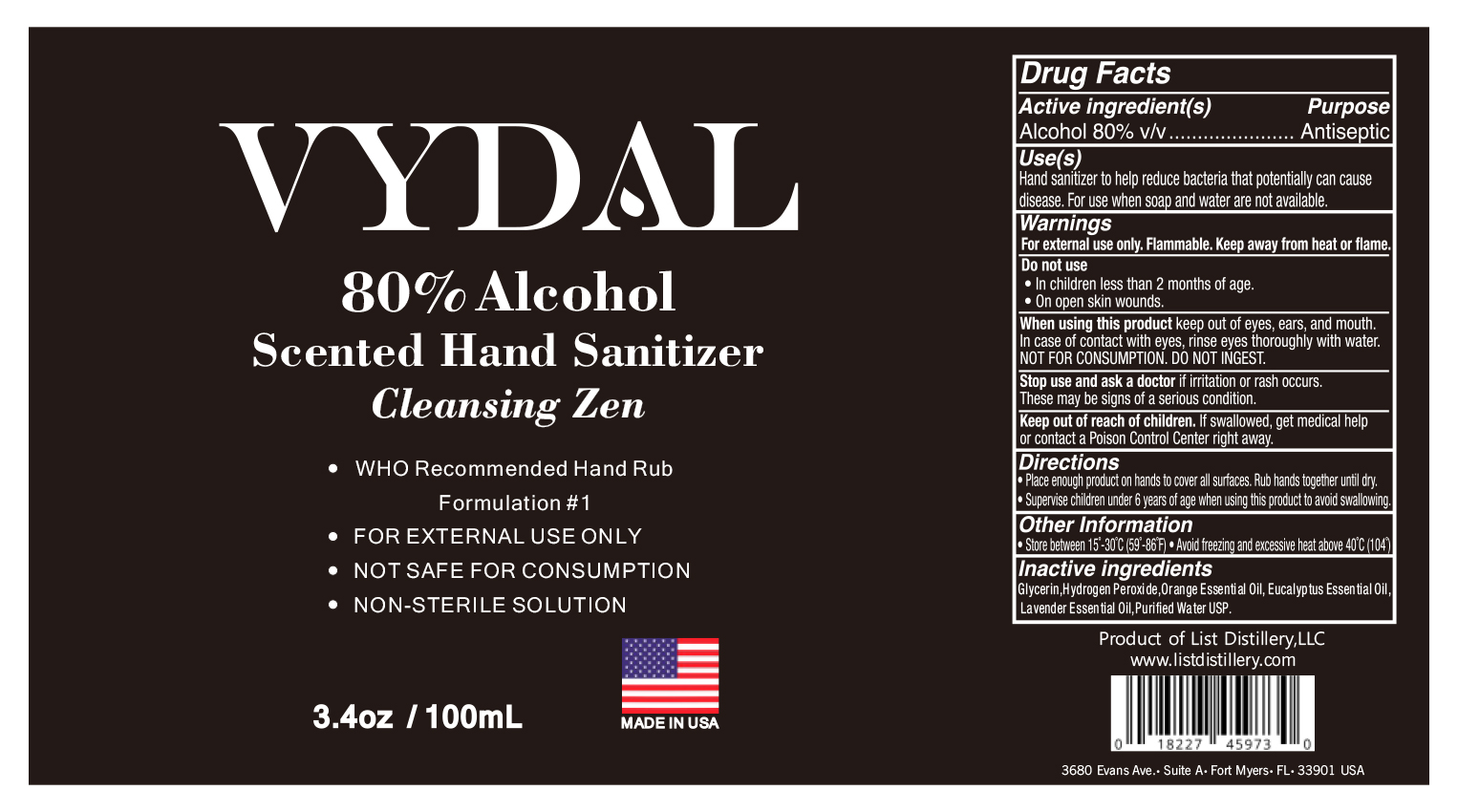
Vydal 100 mL Label

Vydal 100 mL Label
This is a hand sanitizer named "VYDAL" with a cleansing Zen scent, containing 80% alcohol as the active ingredient. It is recommended by the WHO as a hand rub formulation for external use only. It helps reduce bacteria that can potentially cause diseases, and it can be used when soap and water are not available. The product comes in a non-sterile solution in a 3.4oz/100mL container. The sanitizer is flammable and must be kept away from heat or flame, and is not safe for children less than 2 months of age or on open skin wounds. The user must keep the product away from their eyes, ears, and mouth, and in case of contact with eyes, rinse them thoroughly with water. The product should not be ingested and is for external use only. If irritation or rash occurs, the user must stop using the product and see a doctor. The sanitizer must be kept out of reach of children, and if swallowed, medical help must be sought immediately. The inactive ingredients include purified water, hydrogen peroxide, glycerin, Orange Essential Oil, Eucalyptus Essential Oil, and Lavender Essential Oil. The product is manufactured by List Distillery LLC in Fort Myers, USA, and it should be stored at 15-30°C (59"-86F) while avoiding freezing and excessive heat above 40 (104).*

* These product label images have been analyzed using experimental machine learning. Please verify findings with the primary label text.